

Do you want to discover all the secrets of dry gin? Botanical history, tasting tips and 2026 trends? I'll accompany you in a complete guide for true enthusiasts.
The Complete Guide to Dry Gin: Discover Everything in 2026
Jan 1, 2026

Are you ready to discover all the secrets of dry gin in 2026? If so, you're in the right place!
This definitive guide will take you on a journey through history, production, botanicals, and trends, so you can truly understand this gin like a true expert.
You'll discover interesting facts, tasting tips, differences between different types, and ideas for surprising pairings. Want to know how to choose the perfect bottle or what's the hottest new releases right now? Keep reading!
Let your curiosity guide you and turn every sip into a unique experience.
What is Dry Gin: Definition and Characteristics
Have you ever thought about how many stories lie behind a bottle of gin? In this section, you'll discover the origins, characteristics, and botanicals that make this spirit unique, as well as the differences from other types of gin. Prepare to enter the world of dry gin and recognize its every nuance.
Origins and history
Dry gin has ancient and fascinating roots. It all began in 17th-century Holland, where genever was used as a medicinal remedy. From there, the recipe reached England, becoming popular in the 18th century thanks to a true "gin craze." Over time, distillation was perfected, and "London Dry Gin" was born, a symbol of purity and quality.
Botanicals began to play a key role in the first historic gins, such as Plymouth Gin and Tanqueray. The spread of gin in England marked the beginning of a true taste revolution. If you'd like to learn more about the anecdotes and key milestones, I recommend reading Gin History and Curiosities .
Distinctive features
But what makes dry gin so special? According to EU regulations, dry gin must have a predominant juniper aroma and be free of added sugars. Only then can it maintain its characteristic dryness and clarity.
Compared to other types, London gin stands out for its botanical balance and crystalline clarity. Its color is always clear, its aromatic profile elegant. It's no coincidence that gin is the base of so many classic cocktails.
The main botanicals used
Juniper is at the heart of gin, but it's certainly not the only botanical used. Here are the most common ones in European distilleries:
Juniper
Coriander
Angelica root
Iris root
Lemon and orange zest
Today, many distilleries are experimenting with pink pepper, cardamom, flowers, and even Mediterranean herbs. In Italy, gins like Atlantide focus on exotic and original botanicals, offering modern interpretations of dry gin.
Differences between types of gin
Have you ever wondered how dry gin differs from other gins? Here's a quick table:
Typology |
Main features |
Typical usage |
|---|---|---|
London Dry Gin |
Clean, sugar-free |
Classic cocktails |
Old Tom Gin |
Sweeter, sugarier |
Tom Collins, Martinez |
Sloe Gin |
Flavored with plums |
Alone, dessert |
Compound Gin |
Botanicals infused, not distilled |
Experimental mixology |
Navy Strength |
High alcohol content |
Robust cocktails |
Consumption data shows that London gin is the most versatile and popular, especially in gin and tonics and martinis. It's not just a matter of taste, but also of creative possibilities behind the bar.
Dry Gin Production Process: From Distillation to Bottle
Gin production is a fascinating journey, from selecting the raw materials to bottling. Have you ever thought about how much care and passion goes into creating a bottle of quality gin? Let's explore each stage of this journey, combining tradition, innovation, and environmental awareness.
Raw materials and selection of botanicals
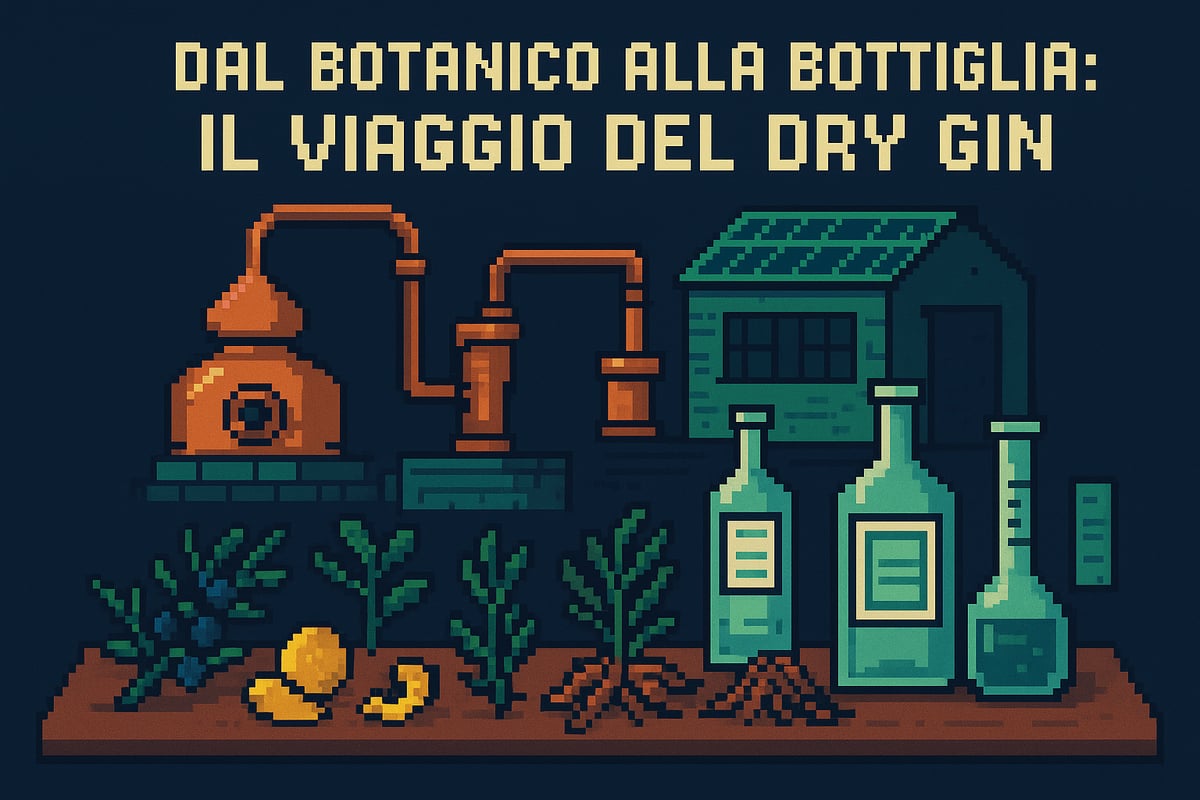
It all starts with a base of the highest-quality neutral alcohol, essential for enhancing the botanical notes in gin. Choosing the botanicals is a true ritual: juniper, coriander, angelica, citrus roots and peels are just a few of the key ingredients. Today, many distilleries are focusing on local and sustainable botanicals, creating unique and environmentally friendly aromatic profiles.
In Italy, the trend is to highlight regional and organic ingredients, such as Ligurian lavender or Sicilian citrus fruits. Others are turning to more exotic botanicals, like Mezzanotte London Dry Gin. This is a carefully selected blend of classic botanicals (sweet orange and coriander) combined with more unusual ones (cocoa and kombawa leaves). This makes London gin increasingly an expression of place and the creativity of master distillers.
Distillation techniques
Distillation is the soul of gin. There are two main methods: pot still distillation, in which the botanicals are immersed in water and alcohol inside the still, or steam distillation, in which alcoholic vapors pass through the botanicals.
In recent years, many distilleries have adopted innovative technologies such as Rotavapor or vacuum distillation, which allow them to extract delicate aromas and preserve the freshness of the botanicals. The choice of technique has a profound impact on the gin's personality.
Step-by-step production phases
Curious to learn how gin is made, step by step? It begins with the maceration of the botanicals in alcohol, respecting the times and temperatures determined for each ingredient. Then comes the actual distillation: here the fractions are separated, eliminating the heads and tails to obtain only the aromatic core.
After distillation, the spirit rests and is filtered to achieve the right balance. Finally, it's bottled, often using sustainable and aesthetically pleasing packaging. Each step is crucial to ensuring the quality and authenticity of the gin that reaches your glass.
Quality, transparency and certifications
The quality of gin is also recognized by transparency and certifications. Many Italian labels today boast organic certifications or membership with organizations like the Gin Guild. The traceability of raw materials is crucial: knowing where the botanicals come from and how they are processed makes all the difference.
On the most accurate labels, you'll find detailed information about botanicals, batch numbers, and even tasting notes. This approach has fostered the growth of certified craft distilleries, increasingly popular with discerning gin enthusiasts.
Innovation and sustainability in production
The future of gin also depends on sustainability. More and more distilleries are using renewable energy, recyclable packaging, and recovering spent botanicals to reduce their environmental impact. In Italy, the number of green producers is constantly growing, a sign of growing awareness of the planet.
Some virtuous initiatives involve collaborations with local farmers and circular economy projects. Choosing a sustainable gin means not only drinking with pleasure, but also with awareness.
Gin Today: Trends, Market, and Consumption in 2026
Have you ever wondered why gin has become the undisputed star of Italian cocktail bars? Gin is experiencing a real boom today: it's not just a passing fad, but a cultural phenomenon that resonates across generations. Let's explore what's happening in the market, what the new trends are, and how dry gin consumption will evolve in 2026.

The gin boom in Italy and around the world
In recent years, gin has seen impressive growth both in Italy and around the world. Recent data confirms that Italy has firmly established itself among the top five European markets for gin consumption. From 2020 to 2026, gin consumption increased by 25%, despite the overall decline in spirits, as reported in this detailed analysis .
The sector's turnover is growing rapidly, and Italian gin exports are soaring to new records. Numerous specialized gin and cocktail bars have sprung up in cities like Milan, Rome, and Florence, while gin-themed festivals and events are multiplying every year.
New trends and emerging styles
The gin landscape is constantly evolving. More and more distilleries are focusing on artisanal and small-batch gins, with limited production and a strong focus on local botanicals. Botanicals characterized by intense aromas and seasonal ingredients are winning over even the most discerning palates.
There's no shortage of flavored and colorful gins, which are popular with young people and bring a breath of creativity to cocktails. Noteworthy are the collaborations between distilleries, chefs, and designers, resulting in innovative and original labels launched in 2025 and 2026.
The role of Italian gin on the international scene
Italian gin is also establishing itself as a symbol of excellence abroad. Many producers have received prestigious awards for the quality and originality of their creations. What makes Italian-made gin unique? The use of Mediterranean botanicals, artisanal care, and a strong local identity.
Exports are constantly growing, and Italian gins are now prominent on international cocktail lists. Successful examples, such as gins produced in Piedmont, Marche, and Sicily, demonstrate how collaboration between Italian and international distilleries yields surprising results.
Consumption, targets and occasions of use
The profile of gin consumers in 2026 is increasingly diverse: young adults, professionals, and mixology enthusiasts. Dry gin is chosen both as an aperitif and after-dinner drink, but also as a key ingredient in sophisticated cocktails.
Recent statistics show a slight female predominance among Italian consumers. Need some advice? Choose the right gin for the occasion: for an elegant dinner, opt for a complex gin, while for a casual aperitif, opt for a fresh and citrusy London Dry. Pairing it with fish, cheese, and ethnic cuisine is increasingly popular.
Future Trends: What to Expect from Gin
The future of gin promises great innovations. Distilleries are experimenting with new, exotic botanicals and previously unseen ingredients. Demand for low-alcohol and non-alcoholic gins is growing, perfect for those seeking a lighter experience without sacrificing flavor.
Personalization will be the key, with bespoke gins and virtual tastings becoming increasingly popular thanks to digitalization. Experts predict that the gin market will continue to grow in 2027, driven by the desire to experiment and Italians' passion for quality and innovation.
How to Taste and Pair Dry Gin: Expert Advice
Want to learn how to taste and pair gin like a true expert? Here you'll find everything you need for a complete sensory experience, from the right glass to the best recipes and practical tips. Ready to discover how to turn every sip of gin into a taste journey?

Professional tasting techniques
To best enjoy gin, start by choosing a balloon or tulip glass, which enhances the aromas. Pour a small amount and observe the color: the gin should be clear and bright. Raise the glass to your nose and inhale slowly, capturing notes of juniper, citrus, and spice.
While tasting, swirl the gin in your mouth to experience all the nuances. A quality gin offers a balance between freshness, dryness, and botanical complexity. A trick? Taste first at room temperature, then over ice, to see how the aromas change.
Choose large glasses
Analyze color and clarity
Smell with your eyes closed to isolate the scents
Tasting gin is a true ritual that involves all the senses.
Food pairings with Gin
Gin pairs surprisingly well with many dishes. Its freshness and aromatic profile make it perfect with raw fish, oysters, fresh cheeses, and dark chocolate. In Italy, try dry gin with delicate cured meats or citrus-based dishes.
Here is a table of recommended pairings:
Food |
Ideal match |
|---|---|
Raw fish |
Citrus Gin |
Goat cheese |
Floral Gin |
Dark chocolate |
Spiced Gin |
Sushi |
Classic Gin |
Host a dry gin-themed dinner and amaze your guests with original combinations!
The best cocktails with Dry Gin
Gin is the star of iconic cocktails like Gin and Tonic, Negroni, Martini, and Tom Collins. For a perfect Gin and Tonic, choose a neutral tonic and a garnish that enhances the dry gin's botanicals. Curious to discover all the secrets of this mix? Check out the Dry Gin and Tonic: A Complete Guide for professional tips and creative variations.
Don't forget modern twists: try a French 75 with fresh lemon or a gin sour with egg white for a velvety texture. Each cocktail highlights a different side of the dry gin.
Tips for choosing and storing
When choosing a dry gin, always read the label: look for distilleries that are transparent about the botanicals used and the production method. A good dry gin for drinking neat will have clean, lingering aromas. For cocktails, you can opt for drier or spicier versions.
Store dry gin in a cool, dark place with the cap tightly closed. An opened dry gin will maintain its qualities for up to two years if stored properly. Avoid sudden temperature changes and bottles left unopened for too long.
Tasting experiences: gin bars, events, and tours
Want to experience dry gin on the go? Specialized gin bars offer guided tastings, gourmet food pairings, and signature cocktails. In Italy, events and festivals dedicated to dry gin are growing, featuring masterclasses and distillery tours.
You can also participate in virtual tastings or themed evenings. These experiences are perfect for discovering new dry gins, learning from bartenders, and sharing your passion with other enthusiasts.
A Buying Guide to Dry Gin: How to Choose Brands, Prices, and Quality
Buying a dry gin today can seem like an adventure, right? With so many labels, styles, and prices, it can be a real challenge. But fear not, here's a practical guide to help you choose the perfect dry gin for you, stress-free and with the certainty of bringing home quality and authenticity.
What to consider before purchasing
When buying a dry gin, ask yourself: where does it come from? The distillery's reputation matters a lot. Look for transparency about the botanicals and the production process. A good dry gin often boasts quality certifications or international awards.
Always consider the quality/price ratio. Don't be fooled by packaging or marketing alone. Here are some helpful questions:
What botanicals are used?
-
Is the distillery artisanal or industrial?
Are there any official awards?
Is the price in line with the perceived quality?
Answering these questions is the first step to avoiding making mistakes when choosing a dry gin.
Price ranges and market segmentation
The world of dry gin is divided into three main tiers: entry-level, premium, and super-premium. In the entry-level range (€20-30), you'll find simple gins, perfect for cocktails. Premium gins (€30-60) offer more complex flavor profiles and elegant packaging. Super-premium gins (over €60) are often limited editions, featuring rare botanicals and artisanal production.
According to the latest statistics, the average price of a bottle of dry gin in Italy in 2026 is around €35. Here's a summary table:
Band |
Price (€) |
Characteristics |
|---|---|---|
Entry Level |
20-30 |
Simple, mixology |
Premium |
30-60 |
Complex, artisanal |
Super Premium |
60+ |
Rare, collection |
Choose based on your budget and how you intend to use it, but remember that a premium artisanal dry gin often offers a superior experience.
Where to buy: online, wine shops, large-scale retail trade, distilleries
Have you ever wondered where to buy your next dry gin? You can find a wide selection online, often with exclusive offers, but be careful: always check the seller's credibility and read reviews. Wine shops offer personalized advice and tastings, ideal if you want to discover new producers.
Supermarkets (large-scale retail trade) have competitive prices, but the selection of dry gins is limited. Distilleries, on the other hand, offer guided tours and the option to purchase directly from the producer. For those seeking something unique, the Artisan Gin Collection offers a selection of select labels, perfect for comparing styles and origins.
Always prioritize transparency and choose trusted retailers to ensure you get an authentic dry gin.
How to Read a Label and Recognize a Real Dry Gin
The label of a dry gin tells a lot: look for the words "London Dry," "Distilled," or "Handcrafted" to identify the type. Mandatory information includes the alcohol content, a list of the main botanicals, the batch number, and the distillery.
Beware of overly generic claims or labels that hide important details. A true dry gin contains no added sugars or artificial flavors. Here's what to look for:
Origin and producer
Declared botanicals
Batch number and production transparency
Certifications and awards
A clear label is often synonymous with quality and respect for the consumer.
Midnight – Italian Artisan Distillery
If you're looking for Italian excellence in dry gin, Mezzanotte is a name to remember. Founded in Pesaro in 2022, this distillery combines family tradition and continuous innovation. Every stage of production emphasizes local botanicals and sustainability, from the choice of ingredients to the recyclable packaging.
Mezzanotte was the first Italian distillery admitted to The Gin Guild , an internationally recognized mark of quality. Their range includes premium gins such as Mezzanotte London Dry Gin and Atlantide Distilled Dry Gin , also available online. They offer tasting experiences, tours, and even custom distillation services.
If your goal is an authentic, transparent, and contemporary dry gin, Mezzanotte is a surefire choice for quality and flavor.
Dry Gin FAQs: Answers from the Experts
Have questions about dry gin? Here you'll find clear answers to technical questions, debunked myths, interesting facts about botanicals, and practical advice from experts. Get ready to discover everything you need to experience the world of dry gin with awareness and curiosity.
Technical FAQs and curiosities
Have you ever wondered what the difference is between dry gin and London Dry Gin? The answer is simple: both must have juniper as the predominant note, but London Dry Gin follows stricter distillation rules and prohibits flavorings or added sugars after distillation. Dry gin, on the other hand, can also be produced without distillation as long as it has no added sugars.
Does dry gin contain gluten? Most gins, thanks to distillation, are gluten-free, but if in doubt, always choose certified products. And what about pairing it with tonic water? Choose a neutral tonic water to enhance the aromas, or an aromatic one for a different twist. Dry gin doesn't expire, but it should be stored in a cool, dark place with the cap tightly closed. These are the most frequently searched questions online!
Myths and false myths to be debunked
There are many myths about dry gin. For example, it's thought that gin always gives you a headache, but the cause is often excessive consumption or the quality of the drink. Furthermore, a copper-distilled gin contains fewer sulfites, which are the main cause of headaches. Another common misconception? That dry gin is only for cocktails. In reality, there are gins designed to be enjoyed neat, just like a good whisky.
Not all gins are created equal: each distillery chooses different botanicals and techniques, creating a unique profile. Italian gin is often considered inferior to English gin, but in recent years it has received international awards and recognition. The reality is that dry gin has evolved, breaking down many prejudices!
Insights into botanicals and aromas
If you love dry gin, you might be curious about the rarer botanicals used today. Some producers experiment with elderflower, timut pepper, or exotic citrus fruits. Botanicals profoundly influence the final flavor: just a few changes can completely change the gin's aromatic profile.
Among the emerging botanicals in 2026, you'll find ingredients like basil, rosemary, and red fruits. Some Italian gins are offering unusual recipes, such as myrtle or caper flower gin. Want to learn more about the latest innovations? Discover how experimentation and the "low alcohol" trend are revolutionizing mixology in our country thanks to innovations in the gin sector .
Practical advice from the experts
Want to start tasting dry gin with a mindful approach? Start by observing the color, then smell and taste slowly, perhaps comparing several gins. Avoid adding too much tonic water or garnish, which can overwhelm the aromatic profile. For a perfect evening, organize a tasting with friends, choosing gins of different styles.
Collecting bottles of dry gin is an increasingly popular passion. Follow blogs, events, and online communities to stay up-to-date on trends and tasting opportunities. To discover how gin is now a staple in restaurants and pizzerias, read about emerging trends in the gin market .
Now that you've discovered all the secrets of Dry Gin, don't you want to try something truly special? After seeing how important the botanicals, artisanal techniques, and passion are behind every bottle, why not continue this journey by tasting gins that truly capture the Italian soul? If you're curious about the authentic stories and contemporary flavors we've discussed, I recommend checking out our gins here: Discover our Gins
Who knows, maybe you'll find your new favorite gin!