

Discover how to build a curated gin collection: artisanal quality, cultural stories, proper storage, and targeted selection for enjoyment and value.
How to collect gin: artisanal and cultivated 2026
Mar 20, 2026

The explosion of gin varieties in recent years has made selection more complex for collectors. Over 6000 different gins are available worldwide, and deciding which bottles truly enrich a collection requires strategy. A cultivated gin collection combines artisanal quality with cultural stories, creating a personal selection of spirits that connects enjoyment and knowledge. In this article, you will learn how to deliberately select high-quality, craft gins, store them correctly, and build a collection that appeals to both your palate and your cultural interest.
Table of Contents
- Key Takeaways in Brief
- Preparation: Defining Goals and Collection Focus
- Selection: High-Quality Gins with History and Style
- Practical Steps: Gin Sources, Storage, and Verification
- Care and Collection Maintenance: Ensuring Protection and Enjoyment
- Expand Gin Collections at Mezzanotte: Discover Italian Craftsmanship
- How to Collect Gin: Frequently Asked Questions
Key Takeaways in Brief
| Point | Details |
|---|---|
| Quality over Quantity | Focus on a few high-quality craft gins rather than mass-produced items. |
| Thematic Structure | Collect by styles, origin, or botanical specifics for coherence. |
| Cultural Stories | Gins with historical or cultural backgrounds enhance personal collector value. |
| Proper Storage | Store bottles cool, dark, and upright to ensure long-term quality. |
| Targeted Sourcing | Use distilleries, specialty retailers, and auctions for limited editions. |
Preparation: Defining Goals and Collection Focus
Before buying your first bottle, you should define clear collecting goals. Are you collecting primarily for enjoyment, as an investment, or to represent thematic focal points such as regional distilleries or botanical diversity? This decision will shape your entire strategy. A pleasure collector chooses gins for tastings and cocktails, while an investor focuses on limited editions and value appreciation. Thematic collectors concentrate on specific regions, distilleries, or production methods.
Choosing the collection's focus structures your selection. Concentrate on gin types and styles to create diversity:
- London Dry Gin: classic, juniper-focused, dry
- New Western Gin: modern interpretation with diverse botanicals
- Old Tom Gin: slightly sweetened, historical style
- Navy Strength Gin: higher alcohol content, intense flavor
Craft production is another important criterion. Traditional production methods guarantee quality and authenticity. Small distilleries often produce in limited batches, which increases rarity and collector value. Choosing the right gin requires an understanding of styles and production methods.
Pro Tip: Start with three to five bottles of different styles. This foundation allows you to develop your personal taste and expand purposefully. Specialized retailers and auctions offer access to rarities not available in regular trade.
A well-thought-out collection strategy follows this process:
- Define your budget and collection goals
- Select two to three main themes
- Research distilleries and limited editions
- Start with established classics
- Gradually expand with rarities
Thematic collections based on botanical diversity or regional origin create coherence. A collector might focus on Mediterranean botanicals, another on Scandinavian distilleries. This focus simplifies purchasing decisions and creates a narrative structure for your collection.
Selection: High-Quality Gins with History and Style
Selecting high-quality gins requires knowledge of quality characteristics and cultural backgrounds. Craft production, limited editions, and unique stories distinguish collector gins from mass-produced items. Curating a gin collection means selecting bottles based on style, rarity, and cultural stories, not mere quantity.
Cultural stories significantly enhance value. Historical developments from classic London Dry origins to modern innovations such as color-changing or Amazonian botanical-infused gins show the diversity. A gin with a traceable history connects enjoyment with cultural understanding.
Premium gins are characterized by several factors:
- Hand-selected, high-quality botanicals
- Small production batches with quality control
- Transparent production information
- Awards and expert reviews
- Unique flavor profiles
The following table shows typical gin styles and their collection relevance:
| Style | Flavor Profile | Collection Specificity |
|---|---|---|
| London Dry | Juniper dominant, dry, classic | Historical significance, benchmark quality |
| New Western | Diverse botanicals, innovative | Modern interpretation, experimental spirit |
| Old Tom | Slightly sweet, historical | Rare style, cocktail renaissance |
| Navy Strength | Intense, at least 57% alcohol | Higher concentration, mixology favorite |
Botanicals and aromatic diversity are central selection criteria. Italian gins use Mediterranean herbs such as basil, citrus fruits, and olive leaves. Scandinavian distilleries rely on Nordic botanicals like lingonberries and pine cones. These regional differences create flavor diversity and cultural depth.
Limited editions are particularly valuable for collectors. Distilleries often produce special bottlings for anniversaries, with experimental botanicals, or in collaboration with artists. These bottles are numbered, have certificates of authenticity, and often increase in value. Pay attention to batch numbers and production year to ensure authenticity.
Pro Tip: Choose gins with rare regional botanicals as a collection focus. This specialization makes your collection unique and creates expert knowledge valuable for tastings and exchanges with other collectors.
You can recognize quality signals by several characteristics. Transparent distilleries name their botanicals, production methods, and production sites. Awards at international competitions such as the World Gin Awards or San Francisco World Spirits Competition are reliable indicators. Tasting notes and expert reviews help in assessment.

Practical Steps: Gin Sources, Storage, and Verification
Sourcing high-quality gins requires knowledge of the right channels. Direct purchases from distilleries guarantee authenticity and often access to exclusive bottlings. Specialty spirit retailers offer curated selections and expert knowledge. Auctions allow the acquisition of rare and discontinued bottles but require caution in verifying authenticity.
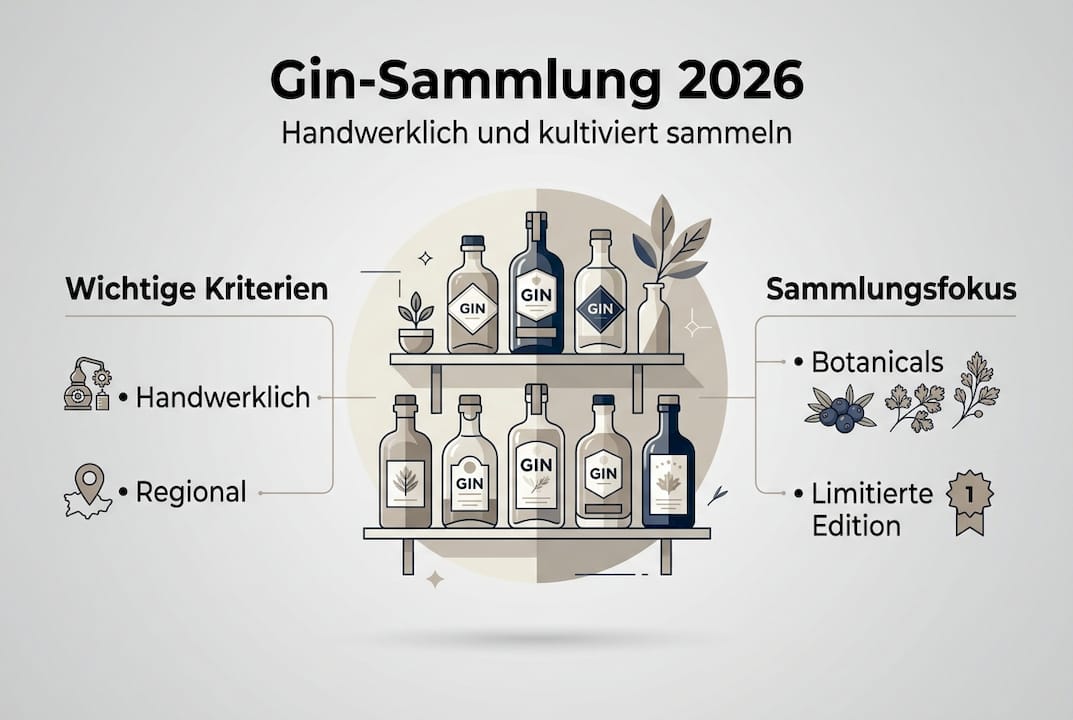
Experiences from large collections show proven strategies for sourcing and storage. The world's largest gin collections were built through systematic collecting during distillery visits, trade fairs, and specialized retailers. Networking with other collectors opens access to private sales and trades.
Proper storage ensures long-term quality:
- Temperature: constant between 15 and 20 degrees Celsius
- Light: store in the dark, avoid UV radiation
- Position: upright, to minimize cork contact with alcohol
- Humidity: moderate, to ensure label preservation
The following table shows recommended sources and their advantages:
| Source | Advantages | Recommendation for |
|---|---|---|
| Direct from distilleries | Authenticity, exclusive bottlings, background knowledge | All collectors, especially beginners |
| Specialty retailers | Curated selection, expertise, availability | Targeted collection expansion |
| Auctions | Rarities, discontinued editions, potential for value appreciation | Experienced collectors, investors |
| Trade fairs | Tastings, networking, novelties | All collectors for market overview |
Authenticity verification is essential for high-quality and rare gins. Check the following details:
- Batch number and production date on bottle and packaging
- Original seal and closure
- Label quality and print details
- Manufacturer information and contact details
- Price relative to market value
Counterfeit or improperly stored gins can show significant quality defects. Oxidation due to leaky closures alters taste and aroma. Check the fill level and bottle seal with every purchase, especially at auctions and private sales.
Pro Tip: Maintain your collection using the one-in-one-out principle. With each new purchase, consciously decide whether an existing bottle must go. This discipline keeps your collection focused and prevents uncontrolled growth without strategic value.
Gin tasting is part of quality control. Regular tastings help identify changes and refine collection decisions. Systematically note your impressions to identify patterns and preferences long-term.
You should regularly check storage conditions. Temperature and light fluctuations affect storage rooms. In summer, additional cooling may be necessary; in winter, heating air can reduce humidity. Invest in a hygrometer and thermometer for precise monitoring. Bottles with natural corks require special attention, as they can dry out.
Care and Collection Maintenance: Ensuring Protection and Enjoyment
Sustainable collection care ensures long-term value and enjoyment. Regular checks identify potential problems early. Check fill levels, closures, and label conditions at least quarterly. Document changes to identify patterns.
The one-in-one-out principle keeps collections focused and relevant. Instead of expanding indefinitely, replace bottles strategically. This method forces conscious decisions and prevents your collection from becoming an unmanageable accumulation. Quality dominates quantity.
Tasting is an essential part of collection maintenance. Regular degustations serve several purposes:
- Quality control and condition monitoring
- Refining personal taste profile
- Identifying favorites and discontinued items
- Enjoyment and appreciation of the collection
- Documentation for future purchase decisions
Classic gin cocktails showcase the versatility of your collection. Test different gins in standard recipes like Martini, Negroni, or Gin Tonic. These comparisons reveal subtle differences and help determine the optimal use for each bottle.
Pro Tip: Document your collection systematically. Create an entry for each bottle with purchase date, price, origin, tasting notes, and personal story. This documentation increases emotional value and assists with insurance and appraisal questions.
Storage conditions require continuous adjustment. Seasonal temperature fluctuations affect storage rooms. In summer, additional cooling may be needed; in winter, heating air can lower humidity. Invest in a hygrometer and thermometer for precise monitoring.
Creative mixing techniques expand your enjoyment options. Experiment with different gins in innovative cocktails. This practical application deepens your understanding of botanical profiles and mixing ratios.
Care tips for long-term quality:
- Regularly clean bottles and shelves from dust
- Avoid frequent movement of bottles
- Keep original packaging for value appreciation
- Rotate bottles for even aging
- Note opening dates for consumption planning
Tasting rituals structure enjoyment. Plan monthly degustations with a fixed format. For example, compare gins of the same category or test seasonal botanicals. This routine sharpens your palate and maximizes the enjoyment value of your collection.
Exchanging with other collectors enriches your knowledge. Online communities, tastings, and collector meetings offer networking opportunities. You gain access to insider information about upcoming releases, market trends, and sources. Share your experiences and learn from established collectors.
The balance between collecting and enjoying is crucial. A collection that is never opened misses its purpose. Clearly define enjoyment bottles and collector's items. Buy limited editions twice, if possible: one to drink, one to preserve. This strategy optimally combines both aspects.
Expand Gin Collections at Mezzanotte: Discover Italian Craftsmanship
Your cultivated gin collection deserves exceptional additions. Italian gins at Mezzanotte combine artisanal tradition with unique Mediterranean botanicals. Each bottle tells a cultural story and brings the aromatic diversity of Italy into your collection.

The craft spirits combine quality with cultural storytelling. From mythologically inspired gins to innovative interpretations of classic styles, Mezzanotte offers collector's items with character. Italian vodkas complement your collection with further artisanal rarities. Discover limited editions that stylishly expand your collection and open up new dimensions of taste.
How to Collect Gin: Frequently Asked Questions
How many bottles should a gin collection include?
Optimally, three to five bottles of different styles for a start. This foundation allows for variety without being overwhelming. Expand gradually according to personal preferences and collection goals. Quality and thematic coherence are more important than mere quantity.
How do I verify the authenticity of a rare gin?
Carefully check the batch number, original seal, and label quality. Compare details with manufacturer information on the official website. Purchase from trusted retailers or directly from distilleries. Unrealistically low prices are warning signs of counterfeits.
Where can I find limited edition gins?
Specialized spirit retailers, distillery websites, and auctions offer access to rare finds. Trade fairs and collector meetings allow for direct purchases and networking. Subscribe to distillery newsletters for advance information on new releases. Private collector groups often organize swaps.
How do I properly store my gin collection?
Store bottles in a cool, dark, and upright position. Constant temperatures between 15 and 20 degrees Celsius are ideal. Avoid direct sunlight and strong temperature fluctuations. Natural corks require moderate humidity to prevent drying out.
Why are cultural stories important for gin collections?
Stories create an emotional connection and increase personal collector value. They transform bottles from mere products into cultural artifacts. Historical contexts and production stories enrich tastings and conversations. Collectors appreciate the narrative dimension as an integral part of the enjoyment experience.
Recommendation
- Traditional Gin Production: Craftsmanship and Character – Mezzanotte | Distilleria & Spirits
- Mixing Techniques for Gin: Creative Cocktails 2026 – Mezzanotte | Distilleria & Spirits
- Understanding Gin Infusion: Art and Technique Combined – Mezzanotte | Distilleria & Spirits
- Botanicals in Gin Shape Aromatic Diversity 2026 – Mezzanotte | Distilleria & Spirits