

Discover the main types of gin botanicals: selection criteria, aromatic profiles, pairings, and practical tips for appreciating and creating unique spirits.
Discover the main types of gin botanicals and how to use them
Mar 21, 2026

Choosing the right botanicals for gin is a fascinating challenge for any craft spirits enthusiast. Each botanical contributes uniquely to the final aromatic profile, transforming a simple distillate into a complex and memorable sensory experience. The aromatic components of gin define not only the taste but also the identity and distinctive character of each bottle. In this article, we will explore the essential criteria for selecting botanicals, the most common and lesser-known types, and how to use them to create unique aromatic profiles that enhance both neat tasting and refined cocktails.
Table of Contents
- Key Points
- How to choose gin botanicals: essential criteria
- Main types of botanicals used in gin
- Botanical comparison: characteristics and impact on gin taste
- Practical tips and lesser-known botanicals to enrich gin
- Discover our selection of craft gin and craft vodka
- Frequently asked questions about gin botanicals
Key Points
| Point | Details |
|---|---|
| Role of botanicals | Each botanical uniquely contributes to the final aromatic profile and gin's identity. |
| Aromatic balance and dosage | The choice balances aroma, intensity, and overall harmony to define the gin's style, considering dosage. |
| Selection criteria | Desired aromatic profile, authentic origin, and intensity guide the choice of botanicals to create consistent spirits. |
| Main types of botanicals | Juniper berries are fundamental, and citrus adds freshness, forming the basis of the profile. |
Key Points
| Aspect | Detail |
|---|---|
| Role of botanicals | Define aromatic complexity and character of gin |
| Common botanicals | Juniper berries, citrus, coriander, angelica |
| Influence on taste | Aroma, flavor, structure, and persistence on the palate |
| Selection criteria | Balance, intensity, origin, and versatility in cocktails |
| Practical application | Enhances cocktail creation and understanding of the spirit |
Botanicals are the soul of craft gin. Understanding how to select and combine them allows you to better appreciate each sip and experiment knowingly in mixology. The choice of botanicals directly influences the sensory experience, from the first olfactory note to the persistent finish.
How to choose gin botanicals: essential criteria
The selection of botanicals requires a methodical approach that balances various complementary factors. Selecting botanicals requires a balance between aroma, flavor intensity, and overall harmony. This process determines whether the final result will be a classic, clean gin or a bold, innovative spirit.
The first fundamental criterion concerns the desired aromatic profile. You need to ask yourself if you want a floral, spicy, citrusy, or herbaceous gin. Each botanical brings specific notes that overlap and interact. A well-balanced botanical gin presents aromatic layers that progressively reveal themselves on the palate.
The origin and authenticity of the botanicals significantly influence the final quality. Fresh botanicals from certified sources guarantee more concentrated essential oils and more vivid aromas. Traceability becomes crucial when aiming for artisanal excellence.
Aromatic intensity is another decisive factor. Some botanicals like cardamom or iris root easily dominate the profile, while others like rose petals add delicate nuances. Carefully evaluate the dosage and complementary effects:
- Dominant botanicals require minimal dosages to avoid imbalance
- Supporting botanicals build complexity without overpowering
- Base botanicals create structure and persistence
- Synergistic combinations amplify desired characteristics
Pro Tip: Experiment with small batches before finalizing a recipe. Note down the exact proportions and infusion times for each botanical, creating a distillation diary that will guide you towards increasingly refined combinations.
Versatility in cocktails completes the selection criteria. A gin designed for a Negroni needs robust botanicals that can stand up to Campari and vermouth, while a gin for a Martini requires cleaner, more linear notes. Always consider the final use when selecting your botanicals.
Main types of botanicals used in gin
Botanicals in gin create aromatic diversity through well-defined categories, each with specific roles in building the final profile. Juniper berries are fundamental, providing the characteristic resinous note that legally identifies gin as such.
Juniper berries are the indispensable base. Without them, the spirit cannot be called gin according to international regulations. These berries bring resinous, slightly bitter, and balsamic notes that form the aromatic backbone. Their quality and ripeness determine whether the gin will have a greener and fresher character or a more mature and complex one.
Citrus fruits represent the second most common category. Lemon, orange, grapefruit, and bergamot peels add immediate freshness and olfactory vibrancy. The essential oils contained in the peels release terpenes that brighten the profile and balance heavier notes:
- Lemon: clean freshness and perceived acidity
- Orange: aromatic sweetness and roundness
- Grapefruit: elegant bitter notes and complexity
- Bergamot: floral and citrus sophistication
Spices build depth and structure. Coriander, angelica, cardamom, and pepper contribute earthy, spicy, and slightly pungent notes. Coriander, in particular, offers citrusy hints that pair perfectly with citrus peels, while angelica root acts as a natural fixative, binding volatile aromas and prolonging persistence.
| Botanical | Aromatic note | Intensity | Role |
|---|---|---|---|
| Juniper berries | Resinous, balsamic | High | Fundamental base |
| Coriander | Citrusy, spicy | Medium | Central complexity |
| Angelica | Earthy, musky | Medium | Aromatic fixative |
| Lemon peel | Fresh, citrusy | High | Olfactory vibrancy |
| Cardamom | Spicy, mentholated | Very high | Distinctive accent |
Floral botanicals like lavender, chamomile, and rose petals introduce delicacy and fragrant notes. They must be used with extreme caution as they risk making the gin too perfumed or soapy. When well-balanced, however, they add unparalleled elegance and sophistication.
Pro Tip: Store botanicals in airtight containers away from light and humidity. Essential oils degrade quickly when exposed to air, compromising aromatic intensity and the final quality of your gin.
Aromatic herbs complete the palette. Basil, thyme, rosemary, and sage allow for the creation of gins with unique and territorial personalities. These botanicals connect the spirit to local gastronomic tradition, creating sensory bridges between the glass and the kitchen.
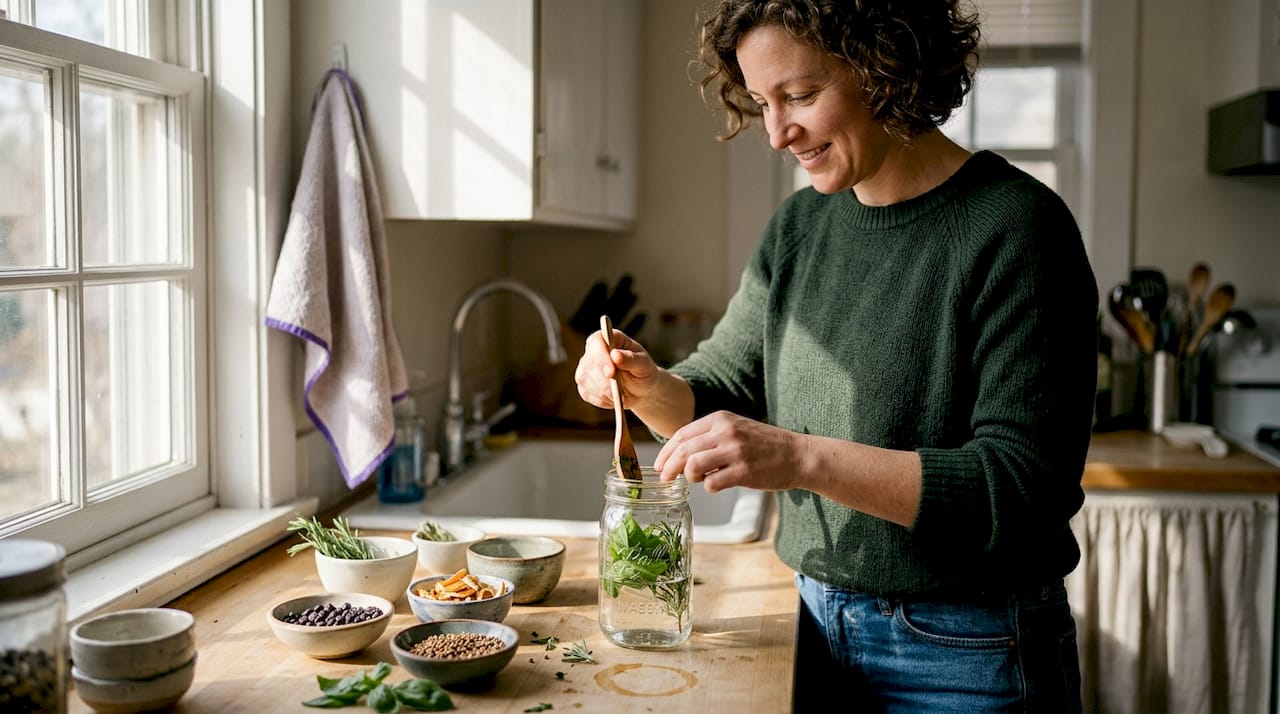
Botanical comparison: characteristics and impact on gin taste
Understanding how different botanicals combine to create distinct layers of flavor and structure allows you to better appreciate the choices of master distillers. Each botanical brings specific contributions that interact in complex and fascinating ways.
Aromatic intensity varies enormously among botanicals. While juniper requires generous dosages to express its character, spices like cardamom or nutmeg dominate even in minimal quantities. This difference requires millimeter precision in professional recipes. Gin varieties reflect these balancing choices.
Aromatic notes are classified into various sensory families. Top notes, volatile and immediate, primarily come from citrus and some fresh herbs. Heart notes, which form the central body, derive from spices and floral botanicals. Base notes, persistent and structural, emerge from roots like angelica and iris:
- Top notes: immediate, fresh, volatile (citrus, mint)
- Heart notes: central, complex, aromatic (spices, flowers)
- Base notes: persistent, structural, fixative (roots, woods)
| Botanical | Aromatic family | Impact on taste | Persistence | Ideal pairing |
|---|---|---|---|---|
| Juniper | Resinous | Piney base, slightly bitter | Long | All botanicals |
| Coriander | Citrusy-spicy | Citrusy and earthy complexity | Medium | Citrus, angelica |
| Lemon peel | Citrusy | Immediate freshness, vibrancy | Short | Coriander, basil |
| Angelica | Earthy-musky | Structure, aroma fixation | Very long | Juniper, iris |
| Cardamom | Spicy-mentholated | Warmth, exotic complexity | Medium-long | Citrus, pepper |
| Lavender | Floral | Fragrant elegance, sweetness | Medium | Rose, chamomile |
Complementary pairings follow principles of sensory balance. Bitter botanicals like gentian balance sweet ones like licorice. Earthy notes of roots pair with the freshness of citrus. Warm spices like cinnamon and cassia require fresh counterparts to avoid overly heavy profiles.
The impact on mouthfeel is an often underestimated aspect. Some botanicals like angelica and iris contribute to a more oily and enveloping texture, while others like citrus keep the profile lighter and cleaner. This characteristic directly influences how gin performs in cocktails and the perception of quality on the palate.
Pro Tip: When tasting a gin, identify the dominant botanicals in the nose, those that emerge on the first sip, and those that persist in the finish. This exercise refines your ability to recognize and appreciate aromatic complexity.
Practical tips and lesser-known botanicals to enrich gin
Beyond classic botanicals, there are less conventional ingredients that innovative botanicals differentiate craft gins and excite connoisseurs. Experimenting with these elements can lead to surprising sensory discoveries and unique profiles.
Saffron introduces earthy, slightly metallic notes and a natural golden color. Just a few stigmas can completely transform the character of a gin, adding complexity and a touch of luxury. This precious spice pairs beautifully with citrus and delicate floral botanicals.
Grains of paradise, relatives of cardamom, offer peppery spiciness with citrusy and slightly floral nuances. Originating from West Africa, these seeds were highly prized in the Middle Ages and are experiencing a resurgence in contemporary distillation. They add vibrancy and a distinctive character difficult to replicate with other spices.
Exotic and territorial botanicals allow for the creation of gins with a strong local identity:
- Sardinian myrtle: Mediterranean balsamic notes
- Japanese shiso: mentholated freshness and anise
- African baobab: fruity acidity and velvety texture
- Australian eucalyptus: intense menthol and balsamic notes
- Sichuan pepper: characteristic tingling and citrus
Balancing bold flavors with milder botanicals is key to complex yet drinkable gins. An excess of intense spices makes the spirit tiresome and one-dimensional. Always alternate dominant botanicals with supporting ones that soften and round out the overall profile.
Pro Tip: Create botanical blends before distillation, letting them macerate together for a few hours. This allows you to assess the overall harmony through smell before committing to the entire distillation process.
Extraction techniques influence the final result. Cold maceration extracts more delicate and fresh notes, while steam distillation captures more volatile essential oils. Some distillers combine both methods, separately distilling different botanicals and then assembling the distillates for total control over the profile.
"The true art of distillation lies not in the number of botanicals used, but in the ability to make them converse harmoniously, creating a whole that surpasses the sum of its parts."
For those who wish to delve deeper into practical application, the guide to craft gin cocktails offers valuable insights into how different botanicals influence mixology and which pairings enhance specific aromatic profiles.
Experimenting with fermented or smoked botanicals opens up further creative frontiers. Smoked tea, toasted woods, or fermented citrus peels introduce entirely new savory dimensions, challenging traditional definitions of gin and creating unprecedented sensory experiences.
Discover our selection of craft gin and craft vodka

After exploring the fascinating world of botanicals, it's time to put this knowledge into practice. At Mezzanotte Spirits, you'll find a curated selection of craft gin that celebrates the art of Italian distillation with carefully selected botanicals. Each bottle tells a story through its unique aromatic profile, the result of research and artisanal passion.
Our collection includes gins ranging from classic interpretations to bold creations inspired by pop culture and mythology. Also discover our craft vodka, where the purity of the distillate meets selected botanicals to create refined sensory experiences. Each product represents the excellence of Italian craft distillation, perfect for those seeking superior quality and distinctive character.
Frequently asked questions about gin botanicals
How many botanicals are needed to produce good gin?
There is no universal ideal number. Excellent gins can contain anywhere from 4 to over 30 different botanicals. Quality depends on balance and harmony, not quantity. Many classic gins use 8-12 botanicals, while craft productions experiment with broader palettes.
Are fresh botanicals better than dried ones?
Both have specific advantages. Fresh botanicals offer vibrancy and greener notes, but are seasonal and less stable. Dried botanicals guarantee a higher concentration of essential oils and consistency throughout the year. Many distillers combine both to balance freshness and intensity.
How do botanicals affect the alcohol content of gin?
Botanicals do not directly alter the alcohol content, which is determined by post-distillation dilution. However, botanicals rich in essential oils can create a perception of greater body and alcoholic "warmth," even at moderate alcohol levels. Texture influences the overall sensory perception.
Can I create homemade gin by experimenting with botanicals?
Home distillation is illegal in many countries without the appropriate license. However, you can create "infused gin" by macerating botanicals in neutral vodka, a process called compound gin. This allows you to experiment with aromatic combinations without specialized equipment or legal issues.
Which botanicals characterize Italian gin compared to other styles?
Italian gin often incorporates Mediterranean botanicals such as basil, rosemary, myrtle, Calabrian bergamot, and Tuscan juniper. This aromatic palette reflects the territory and Italian gastronomic tradition, creating more herbaceous, citrusy, and Mediterranean-cuisine-related profiles compared to gins of other origins.
Recommendation
- What gin botanicals mean: complete guide 2026 – Mezzanotte | Distillery & Spirits
- Types of gin: complete guide to varieties 2026 – Mezzanotte | Distillery & Spirits
- Guide to types of craft gin: informed choice 2026 – Mezzanotte | Distillery & Spirits
- Why use botanicals in gin for unique flavor in 2026 – Mezzanotte | Distillery & Spirits