

Discover the production, methods, and nuances of infused gins. A complete guide for enthusiasts: differences from distilled gins, botanicals, mixology, and practical tips 2026.
What is infused gin: complete guide 2026
Mar 20, 2026

Many believe that infused gin is simply gin with some flavors added after the fact. This simplistic view ignores the technical reality of this distinct process, which relies on precise methods of maceration and aromatic extraction, without redistillation. This detailed guide explores the production, organoleptic nuances, and mixology applications of infused gins, allowing you to understand what truly distinguishes these spirits from traditional distilled gins and how to best use them.
Table of Contents
- What is infused gin? Definition and method
- Differences between infused gin and traditional distilled gin
- Botanicals and flavoring: secrets of infused gins
- Preparing and using infused gin: practical tips and mixology
- Discover our unique Italian craft gins
- What are the frequently asked questions about infused gins?
Key Takeaways
| Point | Details |
|---|---|
| Technical Definition | An infused gin extracts its aromas through maceration in a neutral alcohol without subsequent redistillation. |
| Key Difference | Unlike London Dry, infused gin allows post-production additions and offers more aromatic creativity. |
| Varied Methods | Cold infusion, vapor infusion, and compound gin are the three main techniques used. |
| Mixology Application | Infused gins excel in innovative cocktails thanks to their customizable aromatic profiles. |
| Legal Precaution | Commercial sale requires specific licenses depending on the jurisdiction. |
What is infused gin? Definition and method
Infused gin is based on a fundamental principle distinct from classic distillation. An infused gin extracts its aromas through maceration in a neutral alcohol without undergoing redistillation. This approach allows for intense aromatic profiles while preserving the freshness of the botanicals used.
Production methods vary considerably depending on the desired result. Cold infusion involves macerating botanicals directly in alcohol for 24 to 48 hours at room temperature. Compound gin uses a similar process but with stricter control over proportions and durations. Vapor infusion, a hybrid technique, passes alcohol vapors through a suspended basket of botanicals, creating a more delicate extraction.
What fundamentally differentiates infused gin from distilled gin is the absence of redistillation after the botanicals are added. In a classic London Dry, the botanicals are distilled with the alcohol, then the distillate is purified. For an infused gin, the aromas are simply extracted by prolonged contact, and then the alcohol is filtered to remove solid residues. This accessible domestic method explains why so many enthusiasts venture into creating their own recipes.
Juniper berries remain the mandatory ingredient, but their role in the aromatic balance becomes more subtle in an infused gin. You can add citrus, spices, flowers, or herbs according to your creative vision. Maceration extracts not only volatile aromas but also coloring compounds and polyphenols, creating visually distinctive spirits.
The key to a successful infused gin lies in the balance between aromatic power and finesse, achieved by precise control of maceration time and the botanical-to-alcohol ratio.
The main advantages of this method include:
- Accessibility for home production without distillation equipment
- Preservation of delicate aromas that would be altered by heat
- Possibility of creating naturally colored profiles
- Flexibility to adjust recipes in real-time
Differences between infused gin and traditional distilled gin
The distinctions between these two categories go far beyond the simple production method. London Dry Gin prohibits any post-distillation additions, while infused gins allow for aromatic modifications after the initial extraction. This regulatory difference creates radically opposite taste universes.
| Criterion | Infused Gin | London Dry Gin |
|---|---|---|
| Method | Maceration without redistillation | Distillation with botanicals |
| Alcoholic Purity | Variable depending on filtration | Minimum 37.5% without additives |
| Color | Often naturally tinted | Necessarily transparent |
| Aromatic Complexity | Intense and direct profiles | Subtlety and distilled balance |
| Regulation | Less strict depending on the country | Precise European standards |
Purity represents a major point of debate between purists and innovators. Traditional distilled gins undergo several purification steps that eliminate unwanted congeners, producing a crystalline and refined spirit. Infused gins retain more organic compounds from botanicals, creating a richer texture but sometimes less clean on the palate.
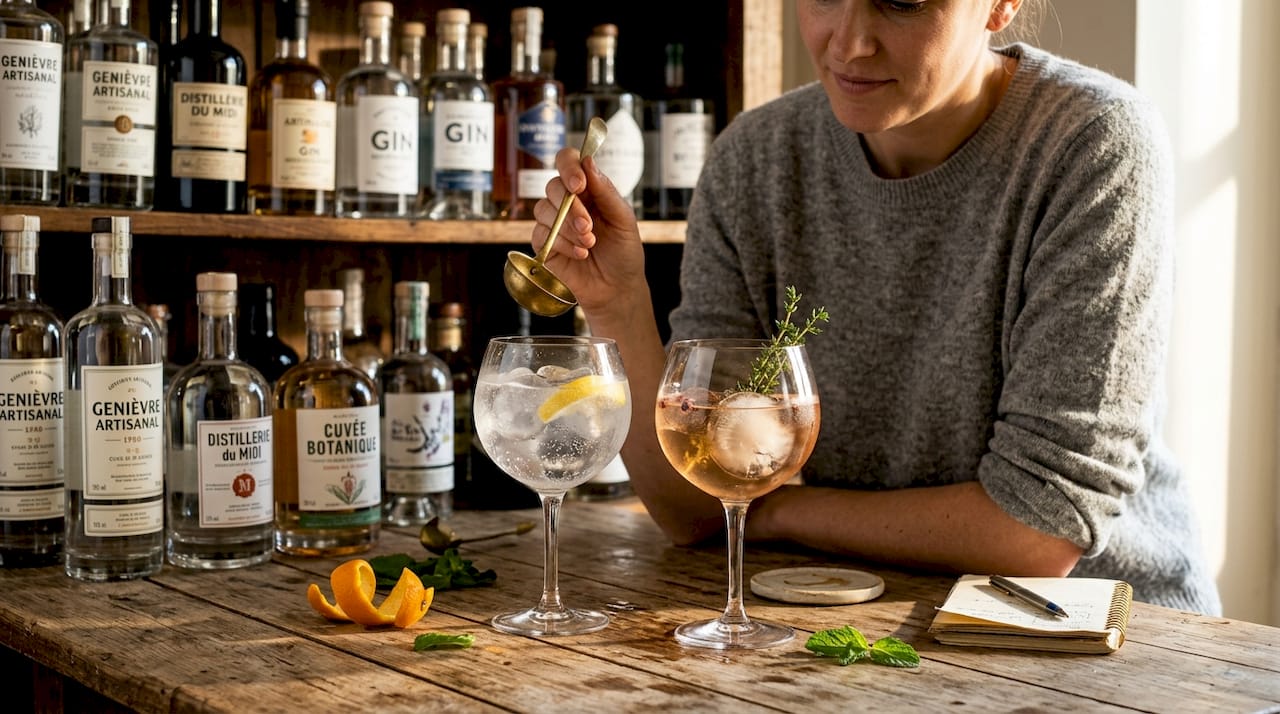
The fundamental difference with vodka lies in the requirement for juniper in gin, but this rule also applies to infused gins. You must maintain juniper as the dominant aroma even in a complex infusion, otherwise your creation technically becomes a flavored spirit and not a gin.
The creative advantages of infused gins attract many artisans:
- Extreme customization of aromatic profiles
- Creation of experimental small batches without heavy investment
- Possibility of using ultra-fresh and seasonal ingredients
- Unique storytelling around rare local botanicals
Criticism from purists mainly concerns aromatic complexity. They argue that a distilled gin develops nuances impossible to reproduce by simple maceration, because the heat of distillation creates chemical reactions that transform the aromas. Infused gins offer more direct and recognizable notes, but would lack this multi-layered depth.
Pro tip: Taste your infusion every 12 hours after the first 24 hours. Recommended durations vary, but one to two weeks allow for maximum subtlety, while overly long maceration creates excessive bitterness.
Botanicals and flavoring: secrets of infused gins
Botanicals are the soul of an infused gin and determine its unique taste identity. Ingredients include juniper berries, plants, fruits, and spices whose origin directly influences the final profile. Terroir plays a crucial role, with Italian berries offering more resinous notes than their Northern European counterparts.
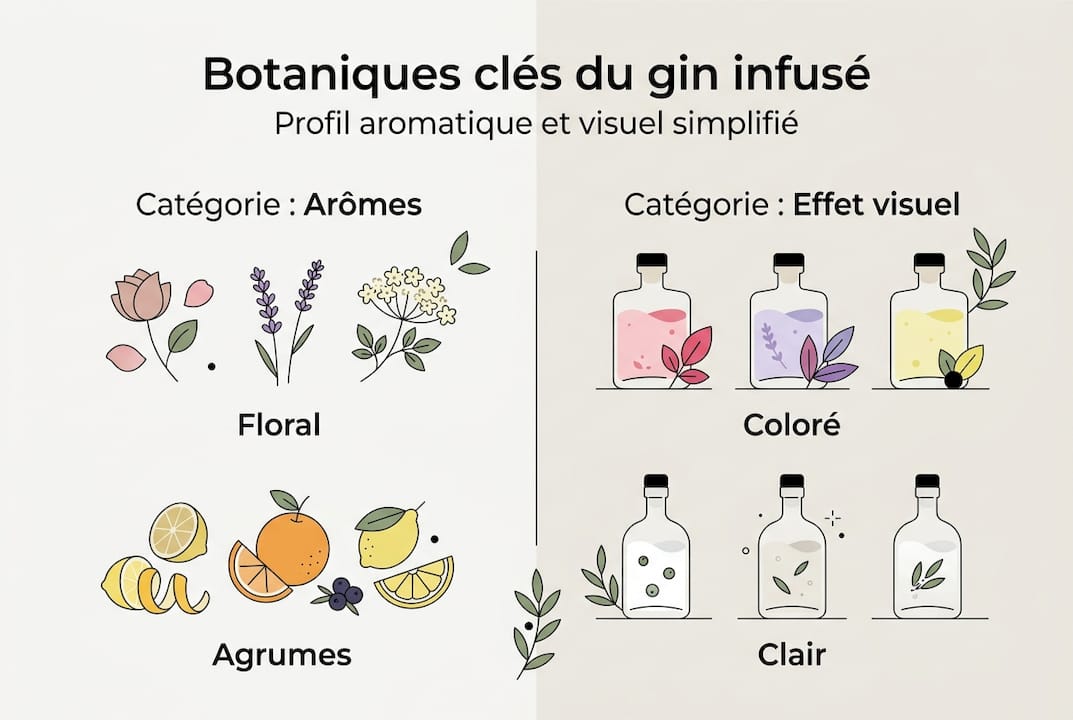
Each botanical brings specific characteristics that combine to create the final harmony. Citrus adds freshness and acidity, spices like cardamom or pepper bring warmth, while flowers like lavender or rose create delicate and fragrant notes. The aromatic diversity of botanicals allows for endless creations.
| Taste Profile | Key Botanicals | Visual Effect | Recommended Dosage |
|---|---|---|---|
| Delicate Floral | Lavender, rose, elderflower | Pale violet | 2-3g per liter |
| Vibrant Citrus | Lemon, grapefruit, yuzu | Light yellow | 5-8g per liter |
| Warm Spicy | Cardamom, pepper, ginger | Amber | 3-5g per liter |
| Colorful Fruity | Strawberry, rhubarb, blueberry | Red or pink | 10-15g per liter |
| Fresh Herbaceous | Basil, thyme, rosemary | Subtle green | 4-6g per liter |
Coloring botanicals visually transform your infused gin while adding gustatory dimensions. Strawberry creates intense pink hues with sweet notes, lavender produces delicate violets accompanied by floral perfumes, and rhubarb generates vivid pinks with a refreshing acidity. These natural colors become visual signatures that tell the story of your gin.
Local terroir and seasonality profoundly influence the quality of your infusions. Using botanicals to create a unique flavor means favoring ingredients picked at the peak of their aromatic maturity. Juniper berries harvested in autumn offer superior intensity, while winter citrus brings more concentrated essential oils.
Pro tip: Absolutely avoid toxic botanicals like cherry laurel, deadly nightshade, or certain ornamental juniper varieties. Always verify the precise botanical identity of your ingredients and prioritize suppliers specializing in food-grade botanicals. Start with conservative dosages; you can always add more but never remove once the infusion has begun.
Preparing and using infused gin: practical tips and mixology
Preparing homemade infused gin requires rigor and patience but remains accessible to any motivated enthusiast. Here are the detailed steps to successfully create your first concoction:
- Select a quality neutral alcohol of at least 40% to efficiently extract the aromas.
- Prepare your botanicals by weighing them precisely and lightly crushing them to release their oils.
- Place the botanicals in an airtight glass jar and cover with alcohol.
- Store at room temperature away from direct light.
- Gently shake the jar once a day to homogenize the extraction.
- Taste daily after 24 hours to monitor the aromatic evolution.
- Filter through a coffee filter or fine cheesecloth as soon as the balance satisfies you.
- Let it rest for 48 hours after filtration for the aromas to meld.
Aromatic balance requires constant monitoring because each botanical extracts at its own pace. Citrus fruits release their oils quickly within 24 to 36 hours, while hard spices like cinnamon require 3 to 5 days. This asynchrony explains why some distillers infuse separately and then blend, a technique that offers maximum control.
Cocktails based on infused gin exploit these distinctive aromatic profiles to create memorable taste experiences. A citrus-infused gin excels in a Tom Collins, where its freshness enhances the lemon. A floral gin sublimates a Martini by adding a subtle fragrant dimension. A spicy gin transforms a Negroni by creating extra warmth that balances the bitterness of Campari.
The five cocktails that best showcase an infused gin:
- Gin and Tonic with fruity gin and neutral tonic to let the botanicals shine
- Dry Martini with floral gin for fragrant elegance
- Bramble with berry gin to enhance fruity notes
- Aviation with lavender gin to reinforce the floral dimension
- Southside with herbaceous gin to create a botanical symphony
The intelligent pairing between gin and cocktails relies on complementarity or contrast of flavors. Pair a lemon-basil infused gin with fresh oysters, a strawberry-pink pepper gin with white chocolate, or a juniper-cardamom gin with aged cheeses. These pairings create sensory experiences that reveal hidden facets of your gin.
Pro tip: Store your infused gin in the refrigerator after opening to preserve volatile aromas. Dilute slightly with pure water if the intensity becomes too aggressive after a few weeks, as aromas continue to evolve even after filtration. Mastering the art of tasting will allow you to precisely identify when your gin reaches its peak.
Discover our unique Italian craft gins
You have now explored the technical and creative subtleties of infused gins, from their production to their use in mixology. This in-depth knowledge allows you to fully appreciate the complexity and craftsmanship behind each bottle of craft gin.

Our collection of Italian craft gins embodies this philosophy of excellence and innovation. Each gin in our range tells a unique story through its carefully selected botanicals and artisanal production methods. Whether you are looking for delicate floral profiles, bold spicy notes, or creations inspired by pop culture, our catalog offers distinctive spirits that transform every tasting into a sensory adventure. For connoisseurs of refined spirits beyond gin, also explore our craft vodkas which share the same qualitative demands and captivating storytelling.
Frequently asked questions about infused gins
What is the optimal duration for a homemade infusion?
The ideal duration varies depending on the botanicals used but is generally between 24 hours and 2 weeks. Citrus and fresh herbs reach their peak in 24 to 48 hours, while spices and roots require 5 to 7 days. Taste daily after the first day to identify when the aromatic balance satisfies you, as excessive maceration creates undesirable bitterness.
Can an infused gin be sold without distillation?
The commercial sale of alcohol requires specific licenses that vary according to your jurisdiction. In the European Union, you must obtain a production authorization and comply with labeling standards that specify the manufacturing method. An infused gin can be legally marketed if it meets the minimum alcohol content and the predominance of juniper, but you must clearly state that it is a compound gin rather than a distilled gin.
How to avoid toxic botanicals?
Always prioritize suppliers specializing in food botanicals who guarantee precise botanical identification and absence of contamination. Be wary of ornamental plants that may resemble edible varieties but contain toxins, such as cherry laurel versus bay laurel. Consult reliable botanical guides and, if in doubt, abstain rather than risk poisoning.
Is infused gin always less pure than distilled gin?
The notion of purity depends on your definition and taste priorities. A distilled gin offers superior aromatic clarity and absence of congeners due to purification steps. An infused gin retains more organic compounds from the botanicals, creating a textural richness that some appreciate. Neither is objectively superior; they simply cater to different aesthetics.
What are the best cocktails to highlight an infused gin?
Simple two- or three-ingredient cocktails allow infused gin to shine without being masked. A Gin and Tonic with neutral tonic highlights complex botanicals, a Dry Martini reveals subtle nuances, and a Tom Collins amplifies citrus freshness. Avoid cocktails that are too heavy in juices or sweet liqueurs, which would drown out the delicate aromas of your homemade infusion.
Recommendation
- 2026 Collection Gin: Complete Guide to 90% More Accuracy – Mezzanotte | Distilleria & Spirits
- How to Enjoy a Legendary Gin: Expert Guide 2026 – Mezzanotte | Distilleria & Spirits
- What is a Mediterranean Gin? Complete Guide 2026 – Mezzanotte | Distilleria & Spirits
- What is Gin Culture: Complete Guide 2026 – Mezzanotte | Distilleria & Spirits