

Discover the fascinating world of Aperitivo: from historical roots to classic Spritz variations, and Aperol vs. Campari. Your guide to authentic Italian enjoyment.
What is an Aperitivo: Tradition and Enjoyment 2026
Mar 13, 2026

The aperitivo is much more than just a pre-dinner drink. This centuries-old Italian tradition combines pleasure, conviviality, and cultural identity in a unique ceremony. While many equate the term with a simple Spritz, it conceals a complex ritual with regional nuances, carefully selected spirits, and a philosophy of slowing down. From the elegant salons of Turin to the lively bars of Milan, the aperitivo has evolved into a global phenomenon that fascinates connoisseurs worldwide. This article highlights the historical roots, characteristic drinks, and the art of celebrating an authentic aperitivo.
Table of Contents
- Key Insights into Aperitivo
- History and Cultural Roots of Aperitivo
- What Defines an Aperitivo? Drinks and Suitable Snacks
- Spritz: The Versatile Aperitivo Drink Family and its Variations
- Differences Between Aperol and Campari – Two Aperitivo Icons
- Discover Exclusive Italian Spirits at Mezzanotte
- Frequently Asked Questions about Aperitivo
Key Insights into Aperitivo
| Point | Details |
|---|---|
| Cultural Tradition | Originated in 18th-century Northern Italy as a social ritual before dinner |
| Drink and Snack | Combines bitter spirits with light, appetite-stimulating snacks |
| Spritz as an Icon | The most famous aperitivo family with countless regional and modern variations |
| Classic Liqueurs | Aperol and Campari have shaped aperitivo culture for decades with different flavour profiles |
| Social Event | Comparable to Apéro in Switzerland or Tapas in Spain as a moment of gathering |
History and Cultural Roots of Aperitivo
The aperitivo tradition emerged in the 18th century in Northern Italy, specifically Turin and Milan. These two cities developed distinct but equally fascinating expressions of this culture of enjoyment. In Turin, the aperitivo was initially established in upper-class circles, where Vermouth was served with light snacks. The aristocracy gathered in elegant salons to chat in a relaxed atmosphere before dinner and stimulate their appetites.
Milan shaped a more accessible variant of this tradition. In the bars of the Lombard capital, bitter liqueurs were combined with seltzer and accompanied by savoury appetizers. This more democratic form of aperitivo made the ritual accessible to a broader segment of the population. The Milanese interpretation emphasised the social component more strongly and transformed the aperitivo into an everyday after-work ritual.
The etymology of the term reveals much about its original function. The Latin verb "aperire" means "to open" and symbolises the stimulation of appetite before the main meal. This physiological effect was achieved through the use of herbs, roots, and bitter substances that activate digestive juices. The aperitivo was, therefore, originally a functional drink with health benefits.
Over the 19th and 20th centuries, the aperitivo evolved from an exclusive practice into a broadly established social phenomenon. Industrialisation and urbanisation contributed to workers flocking to bars after work to end their day with an aperitivo. This democratisation transformed the ritual into an identity-forming element of Italian culture.
The regional diversity of the aperitivo reflects Italy's cultural diversity. Each region developed its own preferences and recipes:
- Northern Italy prefers Vermouth-based drinks and light antipasti
- Veneto made the Spritz with Prosecco a regional specialty
- Lombardy focused on complex bitter liqueurs like Campari
- Southern Italy integrated Mediterranean flavours and local wines
The aperitivo is comparable to similar traditions in other cultures. The Swiss apéro, Spanish tapas, or French apéritif culture share the concept of social gathering with drinks and small dishes. This cultural kinship shows how deeply the need for ritualised moments of enjoyment is embedded in Mediterranean and Alpine societies. Discover the types of aperitifs to enjoy and explore to experience the diversity of this tradition.
What Defines an Aperitivo? Drinks and Suitable Snacks
An authentic aperitivo is characterised by the harmonious combination of drink and snack. The drink selection follows clear taste principles. Aperitivo drinks are typically bitter or tart, rarely sweet. This characteristic serves to stimulate the appetite and prepare the palate for the upcoming meal. Classic examples include Aperol Spritz, Campari Soda, Hugo, and Negroni.

The bitterness comes from botanical ingredients such as gentian root, wormwood, rhubarb, and cinchona bark. These herbs and roots were traditionally used in folk medicine to aid digestion. Modern aperitivo liqueurs combine these functional ingredients with citrus aromas that impart freshness and liveliness. The balance between bitterness and sweetness defines the character of each aperitivo drink.
The snack selection is as carefully considered as the drink choice. Aperitivo emphasizes the harmony between drink and snack, from light white wine with antipasti to bittersweet drinks with robust snacks. These pairings follow the principle of complementarity or contrast. Light, mild aperitifs harmonise with delicate vegetable antipasti, while strong bitter liqueurs require hearty accompaniments.
Typical aperitivo snacks include a wide range:
- Olives in various marinades and seasonings
- Grilled or pickled vegetables such as bell peppers, zucchini, and aubergines
- Cheese cubes, preferably Parmigiano Reggiano or Pecorino
- Salami and air-dried ham in thin slices
- Focaccia or grissini as a crunchy bread accompaniment
- Nuts, especially roasted almonds or cashews
- Small pizzette or tramezzini as savoury bites
The quantity of snacks varies considerably by region. In Milan, the "Apericena" has become popular, a more generous variant where the snacks are so plentiful that they can replace a full meal. This modern interpretation has expanded the traditional aperitivo and opened up new gastronomic possibilities.
The drinking recommendations for classic aperitivo drinks are based on the appetite-stimulating effect of bitter substances. Herbs like artichoke, gentian, and wormwood stimulate the production of digestive enzymes. Citrus aromas of orange, lemon, and grapefruit provide freshness and support the digestive effect. This combination makes aperitivo more than a social ritual; it is also a functional enjoyment experience.
Pro Tip: The right balance between the bitterness of the drink and the saltiness or fat content of the snack significantly enhances the taste experience. An intensely bitter Campari-based cocktail benefits from fatty cheeses or salami, while a mild Aperol Spritz harmonises with light vegetable antipasti. Experiment with different pairings to discover your personal favourite composition. The art lies in allowing neither the drink nor the snack to dominate, but rather creating a balanced symphony of flavours. Learn more about the importance of balancing bitter cocktails for a perfect aperitivo experience.
Spritz: The Versatile Aperitivo Drink Family and its Variations
The Spritz has become synonymous with Italian aperitivo enjoyment. This drink family combines simplicity with elegance and offers countless variations. The classic Spritz consists of three parts Prosecco, two parts liqueur, and one part mineral water. This formula originated in Veneto in the 1950s and from there conquered all of Italy.
However, the roots of the Spritz go further back. Austrian soldiers stationed in Veneto in the 19th century found the local wines too strong and asked for "Gespritztes," i.e., wine diluted with water. This practice laid the groundwork for the later development of the Spritz as we know it today. The addition of Prosecco and liqueur transformed the simple wine spritzer into a sophisticated aperitivo drink.
The standard preparation follows a clear ritual:
- Add ice cubes to a large wine glass or tumbler
- Pour in three parts chilled Prosecco
- Add two parts of the chosen liqueur
- Supplement with one part mineral water for perfect dilution
- Stir gently to preserve the carbonation
- Garnish with an orange slice or olive
The choice of liqueur defines the character of the Spritz. Aperol produces a mild, fruity Spritz with a bright orange colour. Campari gives the drink an intense bitterness and deeper red hue. Modern variations experiment with a variety of liqueurs. The Limoncello Spritz brings sunny citrus freshness, while the Elderflower Spritz with elderflower liqueur introduces a floral note.
Innovative bartenders have significantly expanded the Spritz family. The Italicus Spritz uses the eponymous Rosolio liqueur and combines bergamot with Mediterranean herbs. Regional specialties like the Hugo, originally from South Tyrol, replace the bitter liqueur with elderflower syrup and mint. This variant appeals to connoisseurs who prefer less bitterness.
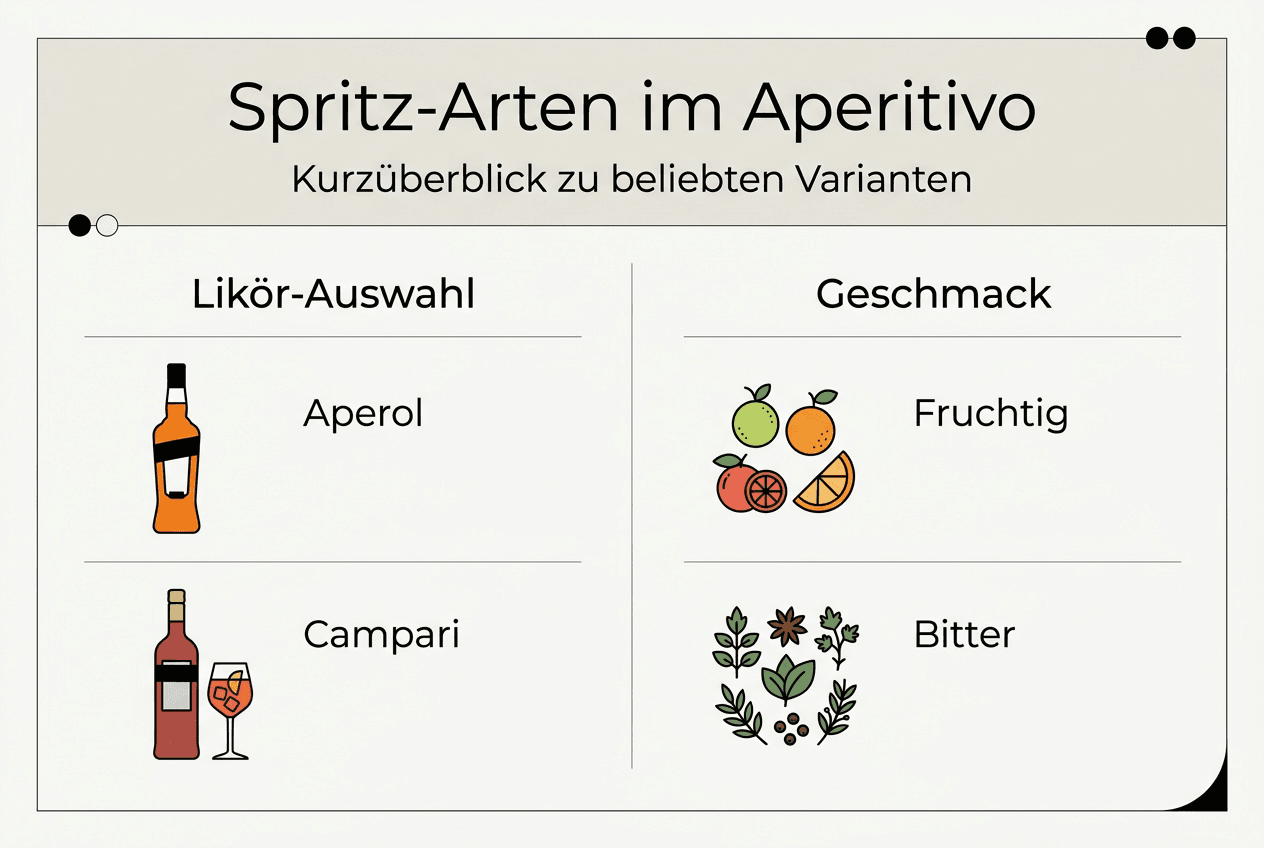
Modern interpretations integrate exotic flavours. The Yuzu Spritz uses the Japanese citrus fruit for an Asian-inspired note. White Peach Spritz combines peach liqueur with Prosecco for a summery treat. These innovations demonstrate the adaptability of the Spritz concept to contemporary taste preferences.
| Spritz Variant | Main Liqueur | Flavour Profile | Alcohol Content |
|---|---|---|---|
| Aperol Spritz | Aperol | Fruity, slightly bitter, orange | Low (approx. 8%) |
| Campari Spritz | Campari | Intensely bitter, tart, complex | Medium (approx. 12%) |
| Hugo | Elderflower Syrup | Floral, sweet, refreshing | Low (approx. 7%) |
| Limoncello Spritz | Limoncello | Citrus fresh, sweetish | Medium (approx. 10%) |
| Italicus Spritz | Italicus Rosolio | Bergamot, herbs, elegant | Medium (approx. 11%) |
Pro Tip: Creativity in choosing the liqueur opens up new taste horizons and allows for personalised aperitivo experiences. Experiment with local or artisan liqueurs to create unique Spritz variations. The quality of the Prosecco significantly influences the end result, so invest in a good sparkling wine with fine perlage. Temperature is crucial: all ingredients should be well chilled to minimise dilution. Discover Italian bitters 2026 herbal enjoyment and find inspiring cocktail per aperitivo 4 recipes for your next aperitivo round.
Differences Between Aperol and Campari – Two Aperitivo Icons
Aperol and Campari have dominated the aperitivo landscape for decades, yet they differ fundamentally in production, taste, and use. These two liqueurs represent different philosophies of bitter enjoyment and appeal to various palates. Understanding their differences allows for informed decisions when selecting drinks.
Alcohol content marks the first significant difference. Aperol contains only 11% alcohol, making it a light, summery aperitif. Campari, on the other hand, reaches 20.5 to 25% alcohol, depending on the market. This higher alcohol concentration gives Campari more body and intensity. Aperol is better suited for social afternoons, while Campari is designed for shorter, more intense moments of enjoyment.
Aperol is milder, sweeter with flavours of orange and rhubarb; Campari is more bitter with herbal and citrus notes. These taste differences result from different production methods. Aperol uses a shorter maceration of herbs and fruits, leading to a more accessible, less complex taste. Its characteristic orange colour comes from natural and artificial colourings.
Campari undergoes a longer, more intense extraction process. Over 60 ingredients, including bitter oranges, herbs, spices, and roots, are steeped in alcohol. This extended maceration extracts deeper, more complex flavours and a pronounced bitterness. The ruby red colour was originally due to cochineal but is now produced using synthetic dyes. This colour intensity makes Campari cocktails visually striking.
The flavour profiles differ significantly:
- Aperol: Sweetish with orange notes, slight bitterness, rhubarb, vanilla, floral nuances
- Campari: Intensely bitter, herbs dominate, citrus peels, spicy complexity, long finish
These differences influence their use in cocktails. Aperol is the first choice for the classic Aperol Spritz and is suitable for light, refreshing drinks. Its mildness makes it the perfect entry point for aperitivo newcomers. Campari, on the other hand, shines in classic cocktails like Negroni, Americano, and Boulevardier. Its bitterness and complexity give these drinks depth and character.
The price range reflects production differences. Aperol is generally cheaper and more widely available. Campari positions itself in the mid-price segment and is appreciated by connoisseurs for its complexity. However, both liqueurs are affordable and offer excellent value for money given their quality.
“The choice between Aperol and Campari is not a matter of right or wrong, but a preference for different taste intensities. Aperol offers accessible, fruity enjoyment for longer aperitivo moments. Campari challenges the palate with its bitterness and rewards with complex aromas that slowly unfold. Both have their firm place in a well-stocked bar.”
Seasonal suitability also differs. Aperol dominates the summer months with its lightness and freshness. Campari is better suited for cooler seasons when stronger flavours are appreciated. These differences significantly shape the aperitivo experience and enable diverse moments of enjoyment. Deepen your knowledge of amari italiani and discover the variety of Italian bitter liqueurs.
Discover Exclusive Italian Spirits at Mezzanotte
After this journey through the world of aperitivo, we would like to introduce you to a special source for authentic Italian spirits. Mezzanotte offers a curated selection of artisan distillates that perfectly complement your aperitivo culture. Our collection includes exquisite gins and vodkas, produced with unique botanicals and traditional methods.
Each product in our range tells its own story, combining Italian craftsmanship with innovative flavors. Whether you are looking for an Italian artisan gin for a sophisticated Spritz or prefer an Italian artisan vodka for creative cocktail experiments, at Mezzanotte you will find spirits that enhance your aperitivo moments. Our distillates are ideal as a base for your next aperitivo enjoyment, bringing the authenticity of Italian culinary culture directly to your glass.
Frequently Asked Questions about Aperitivo
What is the essential difference between Aperitivo and Apéro?
Aperitivo is the Italian tradition focusing on bitter liqueurs and savory snacks, while Apéro refers to the Swiss variant. Both share the concept of a social gathering before dinner but differ in regional drink and food preferences. The term Apéro is also used in other French-speaking regions.
Which snacks pair best with Aperitivo?
Light, appetite-stimulating bites such as olives, grilled vegetables, cheese cubes, and salami pair perfectly. The selection should stimulate the appetite without being too filling. Salty and slightly fatty snacks optimally balance the bitterness of the drinks.
Why is the Spritz so popular in the Aperitivo context?
The Spritz combines simplicity, refreshment, and versatility in one drink. The combination of Prosecco, liqueur, and mineral water is easy to prepare and offers countless variations. Its moderate alcohol content allows for longer moments of enjoyment without being overpowering.
How does Campari differ from Aperol in taste?
Campari is significantly more bitter, complex, and higher in alcohol content than Aperol. While Aperol emphasizes sweet orange notes, Campari is dominated by tart herbs and intense bitterness. These differences make Aperol more accessible for beginners, while Campari appeals to experienced connoisseurs.
When is the best time for an Aperitivo?
Traditionally, aperitivo is enjoyed between 6 PM and 8 PM, before dinner. This period allows for relaxation after the workday and prepares for the upcoming meal. In modern contexts, however, aperitivo can be flexibly celebrated on weekends or special occasions.
Recommendation
- 6 Types of Aperitifs: Enjoy and Discover for Connoisseurs – Mezzanotte | Distilleria & Spirits
- Top 4 Aperitivo Cocktails to Try in 2026 – Mezzanotte | Distilleria & Spirits
- Italian Bitters 2026: 40+ Herbs for Enjoyment – Mezzanotte | Distilleria & Spirits
- Gin Trends 2026: 72% Prefer Sustainable Premium Products – Mezzanotte | Distilleria & Spirits