

Discover the science behind perfect gin infusion: optimal times, botanical selection, and expert tips for harmonious flavors.
Understanding Gin Infusion: Art and Technique Combined
Mar 14, 2026

Many believe that gin infusion is just a simple soaking of herbs in alcohol, but behind it lies a fascinating combination of chemistry, craftsmanship, and culinary intuition. The truth is that the right infusion technique makes all the difference between a harmonious, aromatic masterpiece and a bitter failure. This guide explains what gin infusion really means, how infusion processes are optimally carried out, and which factors significantly influence quality and taste. The focus is on artisanal practices and exciting background information, ideal for gin lovers and ambitious home mixologists who want to take their creations to the next level.
Table of Contents
- Key Insights into Gin Infusion
- What is Gin Infusion?
- The Science and Art of Gin Infusion: Understanding Aroma Extraction
- Choosing Botanicals and Base Gin: The Perfect Duo for Aromatic Harmonies
- Legal and Safety Guidelines for Home Gin Infusion
- Discover Our Italian Artisanal Gins
- Frequently Asked Questions About Gin Infusion
Key Insights into Gin Infusion
| Point | Details |
|---|---|
| Flavor Extraction | Infusion specifically extracts essential oils and aromatic compounds from botanicals directly into the gin |
| Time Factor is Crucial | Optimal infusion duration is between 48 and 72 hours for balanced flavor profiles |
| Base Gin Selection | The choice of base gin significantly affects the end result and should match the botanicals |
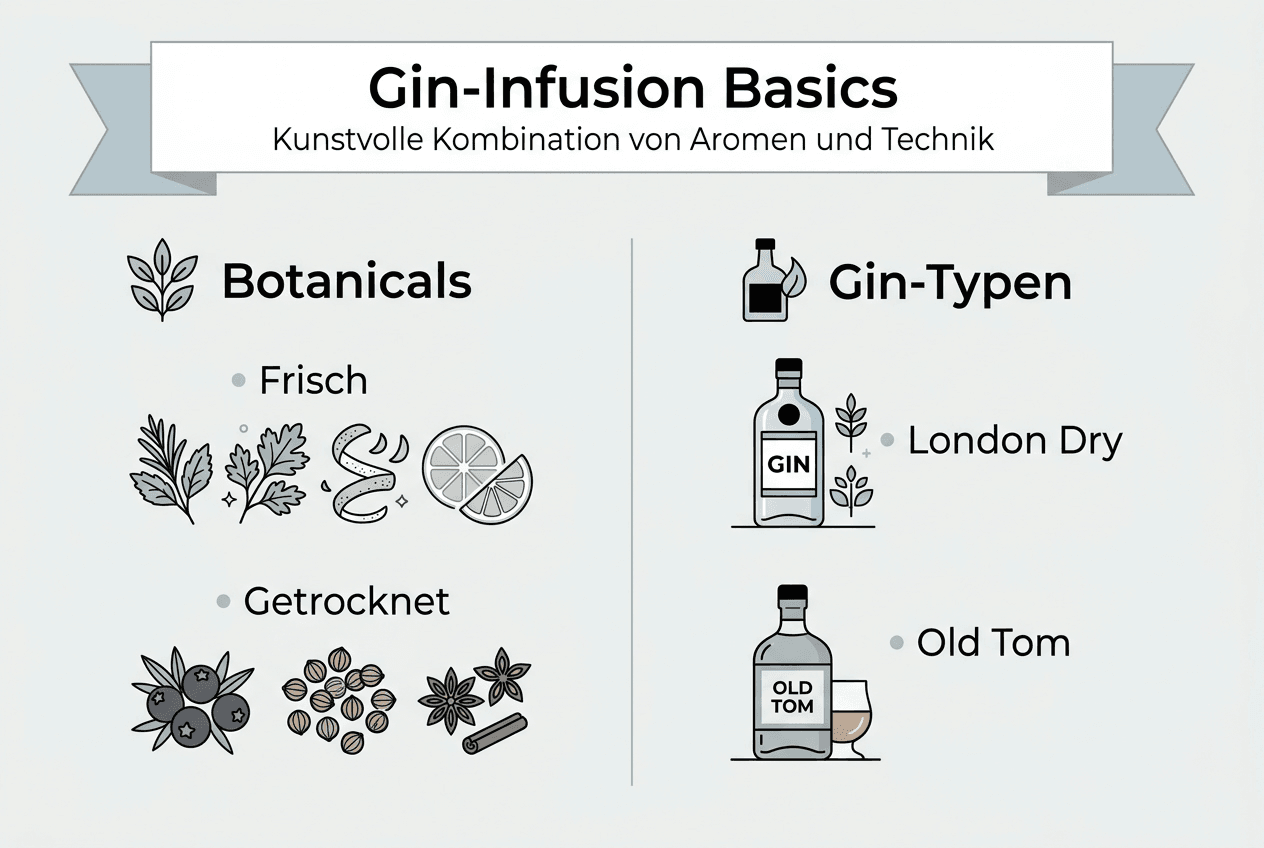
| Fresh vs. Dried | Fresh botanicals yield brighter notes, dried ones more intense colors and deeper aromas |
| Legal Aspects | Home production is subject to legal regulations; infusion is less regulated than distillation |
What is Gin Infusion?
Infusion is the extraction of flavors from botanicals into spirits like gin through a maceration process. Selected ingredients such as herbs, flowers, spices, or fruits are steeped in gin for a defined period to extract their aromas, colors, and essential oils. This method fundamentally differs from distillation processes like vapor infusion, where aromatic substances are obtained during the distillation process.
The goal of infusion is to give gin an individual, customized flavor note that goes far beyond standard profiles. Typical botanicals for infusion include rose, rosemary, citrus peels, rhubarb, ginger, and hibiscus. These ingredients not only add flavor but often also visual elements like vibrant colors to the finished product.
The botanicals in gin play a central role in the aroma profile. The freshness and quality of the ingredients used significantly influence both the taste and the color intensity of the infusion. While commercial gin producers often work with precise distillation methods, infusion allows home mixologists to conduct creative experiments and develop unique flavors.
Key factors for successful infusions:
- Quality of botanicals: Use food-grade, chemical-free ingredients
- Ratio of botanicals to gin: Too much leads to overwhelming, too little to weak flavors
- Pre-treatment: Lightly crushing or scoring can improve aroma release
- Storage during infusion: Dark, cool places prevent oxidation
Infusion can be done at home but requires controlled time and quantity parameters, as well as an understanding of the chemical processes occurring during maceration. The art lies in recognizing the perfect moment when the desired flavors are extracted, before unwanted bitter or astringent notes dominate.
The Science and Art of Gin Infusion: Understanding Aroma Extraction
Infusion is based on the extraction of essential oils and water-soluble aromatic compounds from botanicals into the alcoholic medium of the gin. Alcohol acts as an excellent solvent for many aroma compounds that could not be extracted in water alone. This process follows the principles of diffusion, where molecules move from areas of high concentration to areas of low concentration.
Optimal infusion times are 48 to 72 hours for most botanicals to achieve a balanced aroma. Too long infusion times can lead to bitterness or overwhelming flavors, as not only the desired aromatic compounds but also tannins and other astringent compounds are extracted. Too short times, on the other hand, prevent full flavor development and result in weak, underdeveloped taste profiles.
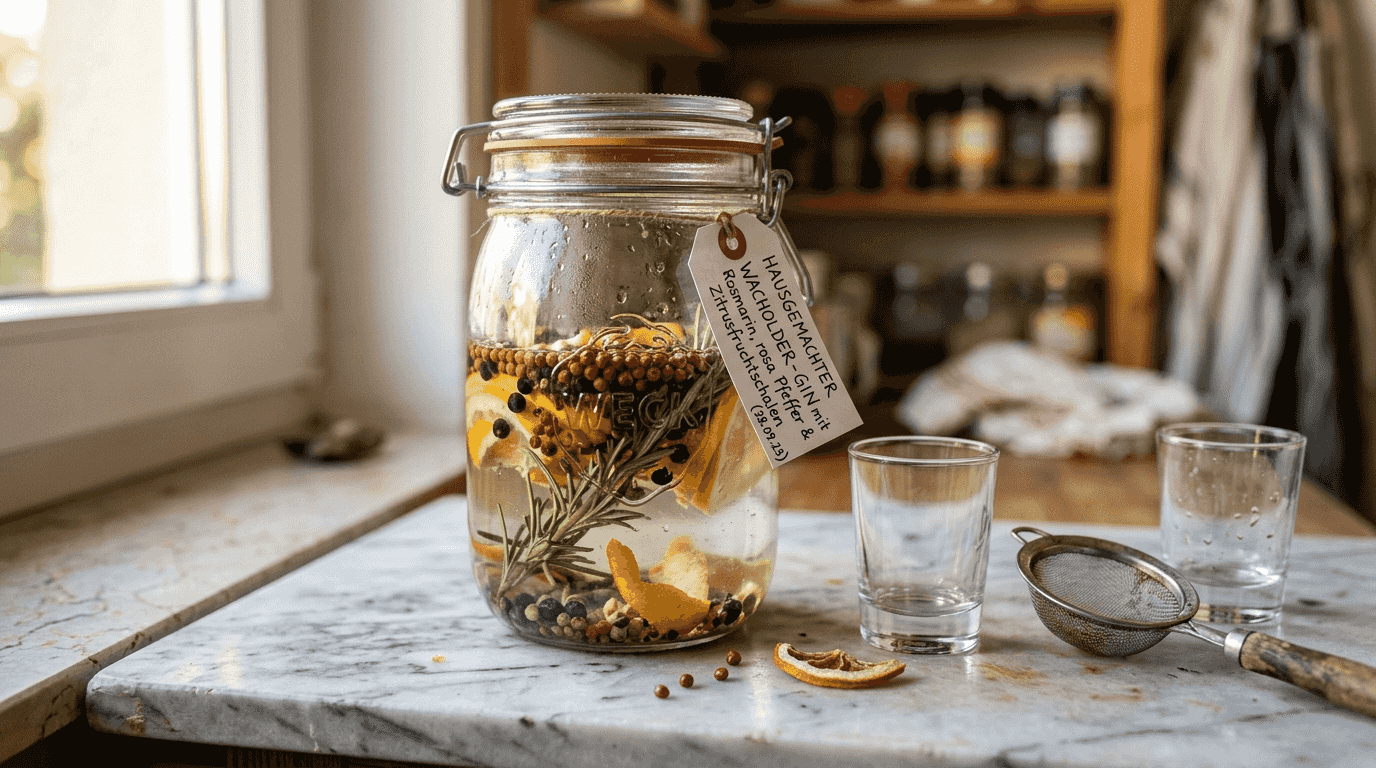
Methods such as gently crushing rosemary sprigs significantly increase the release of active ingredients without creating negative off-flavors. Breaking down cell walls makes essential oils more quickly accessible. However, this technique should be used carefully, as overly aggressive treatment can release chlorophyll-containing bitter substances.
| Botanical | Infusion Time | Flavor Profile | Special Notes |
|---|---|---|---|
| Rose Petals | 24-48 hours | Floral, slightly sweet | Color develops early |
| Rosemary | 48-72 hours | Resinous, spicy | Lightly crush before infusion |
| Citrus Peels | 12-24 hours | Fresh, citrusy | Use only outer peel |
| Rhubarb | 72-96 hours | Tart, fruity | Freezing enhances color |
| Ginger | 24-36 hours | Spicy, pungent | Slice thinly for even extraction |
The quality and neutrality of the base gin have a great influence on the final aroma. A gin that is too complex or dominant can overpower the subtle notes of the infusion, while a gin that is too neutral may not provide enough structure. The aromatic diversity from botanicals is best showcased when the base gin has a clear juniper note without dominating other flavors.
Pro tip: Taste the infusion daily from the second day. Filter a small amount and taste it at room temperature. This way, you develop a feel for the optimal extraction point and can stop the process exactly when the aroma profile is perfectly balanced. Document your results with timestamps and ratios for reproducible results.
Temperature also plays a role: Room temperature is ideal for most infusions, while cold slows down the process and heat accelerates it but also increases the risk of unwanted extraction. For perfect gin infusions, you should choose a constant, cool place without direct sunlight.
Choosing Botanicals and Base Gin: The Perfect Duo for Aromatic Harmonies
Choosing the right base gin is just as important as selecting the botanicals. Mid-range London Dry Gins like Beefeater and Tanqueray are optimally suited as base gins, as they offer a clear juniper base that complements many botanicals without dominating them. These gins have a balanced profile that allows for creative infusions.
| Gin Base Type | Characteristics | Best Use | Examples |
|---|---|---|---|
| London Dry | Clear juniper note, dry | Versatile for most infusions | Beefeater, Tanqueray |
| Small-Batch Artisanal | Complex botanicals, often regional | Subtle infusions that complement the base | Italian Craft Gins |
| Neutral Grain Spirit | Minimal inherent flavor | Intense botanical dominance desired | Vodka-based alternatives |
| New Western Style | Less juniper, other botanicals dominant | Experimental combinations | Hendrick’s, Monkey 47 |
London Dry Gins provide a reliable foundation for both beginners and experienced infusers. Their standardized production ensures consistency, which is important for repeated infusion attempts. For more demanding projects, Botanica Gin varieties can offer interesting starting points, as they already bring complex aroma profiles.
The choice of botanicals between fresh and dried significantly influences color and aroma. Fresh botanicals deliver lively, bright notes and often more intense freshness, while dried ingredients create more concentrated aromas and deeper hues. Rose petals should be food-grade and chemical-free to ensure taste and safety, as pesticide residues can ruin the final product.
Important considerations when selecting botanicals:
- Seasonality: Use fresh ingredients in season for maximum aroma intensity
- Origin: Organically grown botanicals avoid chemical residues
- Condition: Wilted or damaged plant parts can create off-flavors
- Combination: Do not combine more than three to four main botanicals for clarity
Pro tip: Avoid overly complex gins with more than ten botanicals as a base for your infusion. These gins already have so many layers of aroma that additional infusions can dilute the profile or make it inharmonious. Instead, choose a Premium Gin with clear, focused botanicals.
Freezing certain botanicals like rhubarb before infusion promotes both flavor and color. Freezing bursts cell walls, which accelerates and intensifies extraction. This technique works particularly well with water-rich fruits and vegetables. After thawing, these ingredients can be added directly to the gin, with the released juices interacting immediately with the alcohol.
For authentic Italian flavors, you can draw inspiration from traditional gin infusions with rose petals, which have a long tradition in Mediterranean culture. Combining local herbs like basil, thyme, or sage with classic gin botanicals creates unique regional profiles.
Legal and Safety Guidelines for Home Gin Infusion
Distilling gin at home is subject to strict legal regulations in most countries. Home production of spirits without a license is illegal in many jurisdictions, as this has tax and safety implications. Infusion, on the other hand, is legally less problematic, as it does not involve distillation and merely flavors already taxed alcohol.
Nevertheless, in some countries, infusion is considered part of spirit production and may be regulated, especially if the final product is sold or served publicly. For private use, infusion is permitted in most European countries, as long as the base alcohol used was legally acquired and no commercial use takes place. Inform yourself about local laws before producing larger quantities.
Extensive safety measures are necessary for distillation and infusion, especially ventilation and electric heating. Although infusion is significantly less dangerous than distillation, there are still important safety aspects to consider. Alcohol vapors are flammable, so open flames must be avoided near infusion vessels.
Important safety rules for gin infusion:
- Ensure good ventilation in the work area, especially when decanting larger quantities
- Use only food-grade glass containers with tight seals
- Avoid metallic containers, as they can react with acids
- Store infusions out of reach of children and pets
- Never work unattended if heat sources are involved
- Label contents and date to avoid confusion
Fire safety is another critical aspect. Keep a fire extinguisher nearby when working with larger quantities of alcohol. Spilled alcohol should be wiped up immediately, as it is highly flammable. Using electric heating sources instead of gas burners significantly reduces the risk of fire.
For those interested in the traditional production of gin, studying artisanal methods offers valuable insights without having to distill themselves. Understanding professional processes improves one's own infusion techniques and sharpens awareness of quality characteristics.
Do's and Don'ts for safe infusion:
- DO: Use clean, sterilized containers
- DON'T: Use plastic containers for prolonged infusions
- DO: Check and swirl infusions daily
- DON'T: Store infusions in direct sunlight
- DO: Wash botanicals thoroughly before use
- DON'T: Use unknown or non-food-grade plants
Discover Our Italian Artisanal Gins
Now that you understand the art of gin infusion, choosing the right base gin is the next crucial step. Mezzanotte offers a curated selection of Italian artisanal gins that are perfect as a foundation for your own creative infusions. These handcrafted spirits already bring complex aroma profiles that can be further refined through targeted infusions.

Our product expertise facilitates the search for the ideal base for individual gin creations. Every gin in our range has been selected with quality, aromatic depth, and artisanal tradition in mind. For adventurous mixologists, we also offer high-quality Italian artisanal vodka, which can serve as a neutral base for intense botanical infusions. Discover the diversity of Italian distillation art and elevate your infusion projects to a new level.
Frequently Asked Questions About Gin Infusion
What exactly is gin infusion?
Gin infusion is a maceration process where botanicals such as herbs, flowers, or fruits are steeped in gin to extract their flavors. Unlike distillation, no heating or evaporation takes place; instead, it is a purely physical extraction of essential oils into the alcohol. This method allows home mixologists to create individual flavor profiles without needing complex distillation equipment.
Which gin is best suited as a base for infusions?
Mid-range London Dry Gins like Beefeater or Tanqueray are ideal as they offer a clear juniper base without excessive complexity. These gins leave room for the infusion botanicals without overpowering them. Avoid overly complex New Western Style Gins with more than ten botanicals, as these can dilute the infusion profile. High-quality grain spirits are also suitable for neutral starting points.
How long should gin be infused?
The optimal infusion time is between 48 and 72 hours for most botanicals. Delicate ingredients like citrus peels only need 12 to 24 hours, while more robust botanicals like rhubarb can be infused for up to 96 hours. Taste daily from the second day to find the perfect extraction point. Infusing for too long leads to bitter, astringent notes.
Is it legal to make infused gin at home?
Infusing already taxed, legally acquired gin is permitted for private use in most European countries. However, distilling spirits without a license is illegal. Once you wish to sell or commercially use infused gin, stricter regulations and licensing requirements apply. Inform yourself about local laws before producing or distributing larger quantities.
What is the difference between fresh and dried botanicals?
Fresh botanicals provide vibrant, bright flavor notes and intense freshness but require shorter infusion times. Dried botanicals create more concentrated aromas, deeper hues, and have a longer shelf life. Fresh ingredients contain more water, which can slightly dilute the alcohol concentration, while dried botanicals avoid this issue. The choice depends on the desired flavor profile and availability.
What safety measures are important for gin infusion?
Only use food-grade glass containers and work in well-ventilated areas. Keep infusions away from open flames and direct sunlight. Wash all botanicals thoroughly and use only food-grade, pesticide-free ingredients. Label all containers with content and date. For larger quantities, a fire extinguisher should be readily available, as alcohol is highly flammable.
Recommendation
- Traditional Gin Production: Craft and Character – Mezzanotte | Distilleria & Spirits
- Botanicals in Gin Shape Aromatic Diversity 2026 – Mezzanotte | Distilleria & Spirits
- Types of Gin: 4 Types and 57% Alcohol for Intense Enjoyment – Mezzanotte | Distilleria & Spirits
- What Does Premium Gin Mean? Quality Meets Culture – Mezzanotte | Distilleria & Spirits