

Discover the historical origins, production methods, and regulations that ensure authenticity in Italian artisanal spirits. Complete Guide 2026 for enthusiasts.
History of Italian Spirits: Artisanal Tradition 2026
Mar 13, 2026

Many believe that Italian spirits are merely imitations of foreign recipes, but the truth is surprising. Italy boasts a centuries-old distillation tradition, with unique methods that transform local botanicals into distinctive spirits. Juniper berries from the Apennines, alpine herbs, and techniques passed down for generations create aromatic profiles impossible to replicate elsewhere. This article explores the historical roots, production methods, and regulations that protect the authenticity of Italian artisanal spirits, offering you the tools to recognize and appreciate true quality.
Table of Contents
- Key Points on the History of Italian Spirits
- Origins and Evolution of Italian Spirits
- Production Methods and Aromatic Profiles of Italian Gin
- Italian Regulations and Quality Certifications in Artisanal Spirits
- Current Challenges and Trends in the Production of Italian Artisanal Spirits
- Discover Mezzanotte Spirits' Artisanal Spirits
- FAQ on the History and Production of Italian Spirits
Key Points on the History of Italian Spirits
| Point | Details |
|---|---|
| Historical Origins | Italian distillation dates back to the Middle Ages, with strong monastic influence and the use of alpine botanicals |
| Distinctive Methods | Compound and distilled techniques create unique aromatic profiles thanks to rigorous botanical selection |
| DOP and IGP Certifications | These marks guarantee geographical origin and traditional production methods to protect authenticity |
| Modern Challenges | Balancing artisanal tradition with production efficiency while maintaining consistent raw material quality |
Origins and Evolution of Italian Spirits
Distillation in Italy has deep roots dating back to the 13th century, when Benedictine monks began experimenting with rudimentary stills to create medicinal elixirs. These early spirits used local medicinal herbs, laying the foundation for what would become a distinctive artisanal tradition. During the Renaissance, the practice spread to noble courts and artisan workshops, transforming from a pharmaceutical activity into a true gastronomic art.
Italian juniper, particularly from the Apennines, played a crucial role in the development of national gin. High-quality berries from these mountains impart unique resinous and balsamic notes, clearly distinguishing Italian gins from their British or Dutch counterparts. This territorial specificity has allowed Italian distillers to create their own identity, far from simple imitations.
The main geographical production areas are concentrated in three key zones:
- Piedmont and Aosta Valley for alpine botanicals such as gentian, yarrow, and mountain juniper
- Tuscany for the use of Florentine iris, rosemary, and myrtle berries
- Veneto and Friuli for traditions related to flavored grappas and herbal spirits
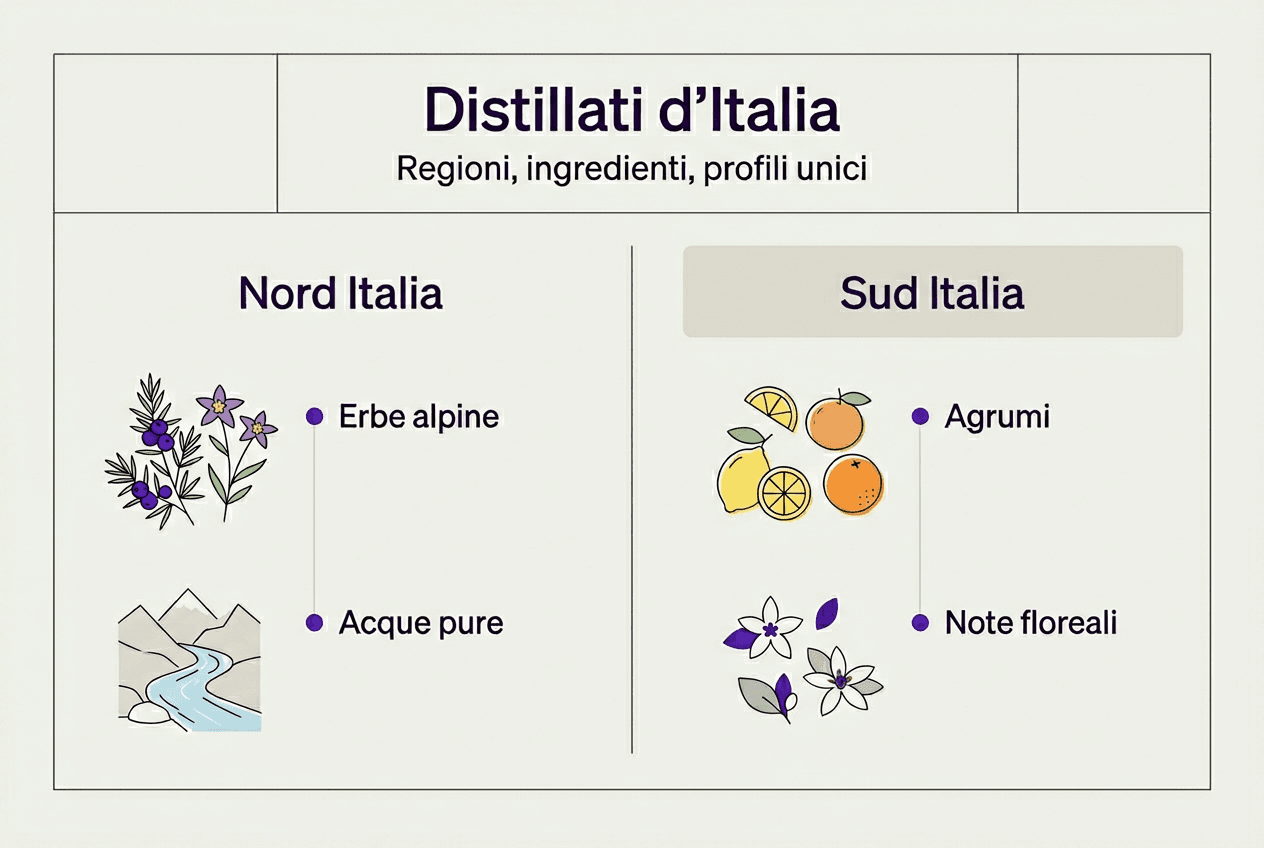
Each region has developed distinctive characteristics based on local terroir. The Alps provide intense and fresh aromatic herbs, while the Mediterranean coastal areas offer citrus fruits and more delicate botanicals. This geographical diversity is reflected in the sensory profiles, creating a rich aromatic palette impossible to standardize.
Cultural elements have profoundly influenced the character of Italian spirits. The tradition of the after-dinner digestivo, rooted in gastronomic culture, has pushed distillers to create bitter and complex liqueurs. The concept of the Italian “amaro,” with its herbaceous and bitter notes balanced by natural sweetness, represents a unique cultural expression. This philosophy also extends to artisanal gins and vodkas, where balance and complexity prevail over simple alcoholic strength.
The history of Italian gin demonstrates how tradition and innovation can coexist. While basic methods remain faithful to historical techniques, modern distillers experiment with unusual botanicals and barrel aging, creating products that respect the past while looking to the future.
Production Methods and Aromatic Profiles of Italian Gin
The production of Italian gin is mainly divided into two technical approaches that determine the depth and complexity of the final product. The compound method involves infusing botanicals in neutral alcohol without redistillation, while the distilled method requires a second distillation after maceration of the herbs. These techniques have profound historical and organoleptic implications that every enthusiast should understand.
| Method | Process | Aromatic Profile | Complexity | | — | — | — | | Compound Gin | Direct infusion without redistillation | More raw and intense notes, less integrated | Medium, more immediate | | Distilled Gin | Maceration followed by distillation | Round, balanced and sophisticated aromas | High, layered | | London Dry | Distillation with botanicals in vapor basket | Clean, dry, dominant juniper | High, focused | | New Western | Distillation with non-traditional botanicals | Creative, juniper in background | Very high, experimental |
Compound gin represents the oldest and most direct method. Botanicals are macerated in neutral alcohol for days or weeks, allowing essential oils to dissolve naturally. This approach preserves more raw and vegetal notes, with an immediate character that some appreciate for its frankness. However, it lacks the roundness and integration that only distillation can offer.
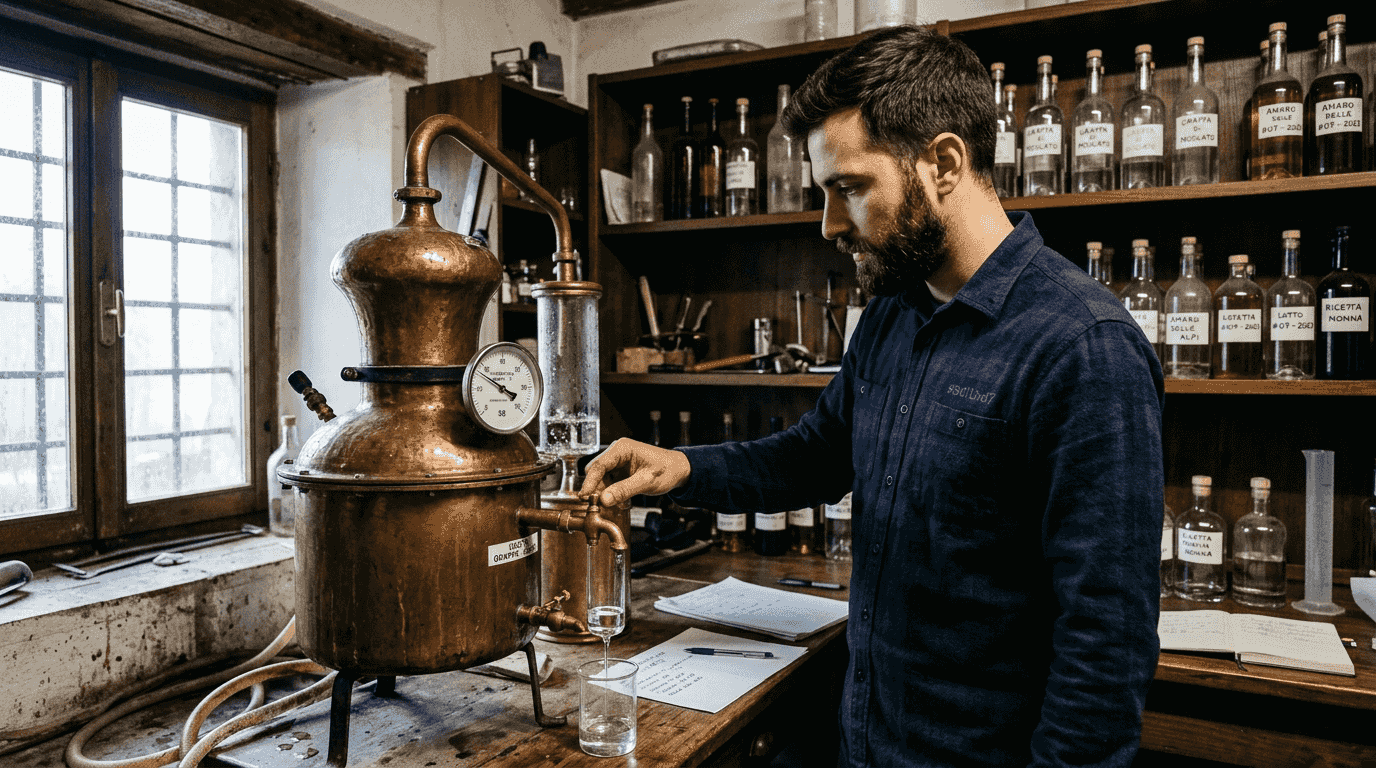
Distilled gin requires superior technical skills and more sophisticated equipment. After maceration, the liquid is redistilled in a still, separating heads and tails to retain only the aromatic heart. This process eliminates unpleasant notes, concentrates desirable aromas, and creates a silky texture impossible to achieve with simple infusion. The best Italian gin production methods use discontinuous copper stills that promote beneficial chemical reactions.
Botanical selection is the true secret of Italian artisanal spirits. While juniper remains the legally mandatory base, complementary botanicals define the product's identity:
- Italian citrus fruits such as Calabrian bergamot, Sorrento lemon, and late-harvest Ciaculli mandarin
- Alpine herbs such as gentian, yarrow, and artemisia
- Mediterranean spices such as coriander, cardamom, and myrtle berries
- Flowers such as Florentine iris, lavender, and Roman chamomile
Aromatic balancing requires years of experience and countless trials. A balanced gin presents recognizable but not dominant juniper, with complementary botanicals emerging in sequence during tasting. The top notes should be fresh and inviting, the body rich and complex, and the finish persistent but clean.
Pro Tip: When choosing an Italian artisanal gin, carefully read the botanical list. An excessive number of ingredients often indicates aromatic confusion rather than complexity. The best products use 8-12 precisely selected botanicals, where each element plays a specific role in the final profile.
Distillation temperature heavily influences the result. Slow distillation at low temperatures preserves delicate and floral notes, while higher temperatures extract more robust and spicy components. Italian artisanal distillers prefer slow processes that can last 8-12 hours, prioritizing quality over quantity.
Italian Regulations and Quality Certifications in Artisanal Spirits
The Italian regulatory framework for spirits combines European regulations with specific national laws that protect tradition and quality. The regulations impose strict rules for ingredients, processes, and geographical origin, creating a system of guarantees that protects consumers and honest producers. Understanding these mechanisms allows you to distinguish authentic products from industrial imitations.
DOP (Protected Designation of Origin) and IGP (Protected Geographical Indication) certifications represent the highest recognitions of authenticity. A DOP guarantees that the entire production process takes place in a delimited geographical area, using local raw materials and documented traditional methods. The IGP allows greater flexibility, requiring that at least one significant production phase takes place in the specified territory.
| Certification | Territorial Requirements | Raw Materials | Production Methods | Controls |
|---|---|---|---|---|
| DOP | Complete production in the area | 100% local | Binding traditional | Strict annual |
| IGP | At least one key phase | Predominantly local | Traditional with variations | Documented periodic |
| Organic | Any | Certified organic | Without synthetic additives | Certifying body |
| Artisanal | Small scale | Superior quality | Manual processing | Self-declaration |
The benefits of certifications go beyond a simple label. A DOP or IGP spirit offers complete traceability, from the cultivation of botanicals to bottling. This system protects the consumer from fraud and adulteration, ensuring that what you read on the label exactly matches the content of the bottle. For producers, these certifications justify premium prices and open up foreign markets where Italian authenticity is highly valued.
Italian regulations establish precise technical parameters for each spirit category:
- Gin: minimum 37.5% ABV, juniper as a recognizable predominant aroma
- Vodka: minimum 37.5% ABV, neutral character with minimal organoleptic traces
- Liqueurs: variable minimum sugar content by category, minimum 15% ABV
- Grappas: obtained exclusively from Italian pomace, distillation in Italy is mandatory
The role of certifications in protecting craftsmanship is crucial in a market flooded with industrial products disguised as artisanal. A true artisanal spirit uses small-capacity discontinuous stills, manual processing, and extended production times. Organic certifications add an extra layer of guarantee, ensuring that botanicals and base alcohol come from agriculture without pesticides or synthetic fertilizers.
Pro Tip: To recognize an authentic certified spirit, look for the DOP or IGP logo on the front label and check the producer's identification code. You can verify its validity on the website of the Ministry of Agricultural Policies. Be wary of products that use vague terms like "Italian style" or "inspired by tradition" without official certifications; these are often foreign industrial productions.
Italian spirit regulations also require transparent labeling with a complete list of ingredients, precise alcohol content, and indication of origin. This information allows for informed choices based on personal preferences and ethical values.
Current Challenges and Trends in the Production of Italian Artisanal Spirits
The Italian artisanal spirits sector faces complex challenges that test the resilience of small producers. The selection and consistency of raw materials represent the first significant obstacle. Wild botanicals vary in aromatic potency according to season, altitude, and climatic conditions. A particularly dry year can produce more concentrated juniper, requiring adjustments in recipes to maintain constant balance.
The quality of raw materials is decisive in avoiding variations in the final product. Artisanal distillers must establish direct relationships with local foragers and growers, often paying premium prices for certified botanicals. This approach guarantees traceability but increases costs and logistical complexity, especially for seasonal ingredients available only a few months a year.
The debate between traditional techniques and automation divides the distilling community. Automation promises efficiency and consistency, with computerized systems controlling temperatures, times, and cuts with millimeter precision. However, many artisans argue that human intervention during distillation allows for intuitive adjustments impossible to program, capturing nuances that machines ignore.
Current trends in the Italian artisanal spirits market show interesting directions:
- Gin aged in Italian wine, whisky, or vermouth barrels to add complexity and woody notes
- Vodkas flavored with hyper-local ingredients such as white truffle, saffron from L'Aquila, or Calabrian licorice
- Lower-proof spirits to allow prolonged tasting without fatigue
- Sustainable packaging with reusable bottles and recycled paper labels
- Collaborations with famous bartenders to create limited editions for specific cocktails
Environmental sustainability is becoming a priority. Consumers, especially millennials and Generation Z, demand transparency regarding the ecological impact of production. Artisanal distilleries respond by implementing heat recovery systems, composting spent botanicals, and sourcing energy from renewable sources. These practices, in addition to reducing the carbon footprint, create powerful brand narratives that resonate with contemporary values.
For enthusiasts who want to identify authentic artisanal productions, certain indicators are revealing. Look for distilleries that transparently publish production methods, show photos of their stills, and specifically name botanical suppliers. The presence of seasonal limited editions indicates the use of fresh ingredients rather than standardized industrial flavors. Distillery visits open to the public demonstrate confidence in the process and a willingness to educate consumers.
Pro Tip: Best practices for maintaining quality and unique character include small production batches (maximum 500 bottles), post-distillation resting of at least 2-4 weeks to allow for aromatic marriage, and manual bottling with individual quality control. Beware of "artisanal distilleries" that produce thousands of bottles monthly; they probably buy neutral industrial distillate and only add flavors.
The trends in artisanal spirit production also indicate a growing interest in radical transparency. Some distilleries publish detailed production costs, explaining why an artisanal bottle costs 35-50 euros compared to 15-20 euros for industrial products. This consumer education creates informed communities that appreciate real value beyond price.
Discover Mezzanotte Spirits' Artisanal Spirits
After exploring the rich history and technical aspects of Italian spirits, it's time to experience this tradition through products that embody authenticity and innovation. Mezzanotte Spirits represents the excellence of Italian artisanal distillation, combining selected local botanicals with production methods that respect tradition while embracing contemporary creativity.

Each Italian craft gin in the Mezzanotte collection originates from a deep cultural narrative, inspired by myths, legends, and iconographies that transform tasting into an immersive experience. Our Italian craft vodkas use selected grains and multiple distillations to achieve crystalline purity while maintaining a distinctive character. Discover who we are and how our passion for craftsmanship translates into international recognition and a continuously growing community of enthusiasts.
FAQ on the history and production of Italian spirits
What are the main differences between Italian gin and international gin?
Italian gins use local botanicals such as Apennine juniper, Mediterranean citrus, and alpine herbs, creating more herbaceous and complex profiles compared to the British London Dry style. Italian tradition prioritizes aromatic balance over juniper dominance, with an approach closer to the New Western style that celebrates botanical diversity.
How do DOP and IGP certifications affect the quality of spirits?
DOP and IGP certifications guarantee complete traceability, the use of territorial raw materials, and adherence to documented traditional production methods. These standards ensure authenticity and protect against industrial imitations, justifying premium prices through verifiable quality and rigorous periodic checks by independent bodies.
How can I distinguish an authentic craft spirit from an industrial one?
Look for indicators such as numbered limited production batches, a detailed list of specific rather than generic botanicals, the presence of natural sediments, and transparency regarding production methods. Authentic craft distilleries display photos of their stills, name ingredient suppliers, and offer on-site visits, demonstrating confidence in their process.
Why are local raw materials so important in Italian spirits?
Italian botanicals grow in unique terroirs that impart aromatic characteristics impossible to replicate elsewhere. Apennine juniper has distinctive resinous notes, Mediterranean citrus offers more intense essential oils, and alpine herbs present higher aromatic concentrations due to altitude and climate. This territorial connection creates authentic sensory identities that define Italian excellence.
What are the most interesting trends in Italian craft distillation for 2026?
Aging in Italian wine barrels is creating gins with unprecedented complexity, while flavored vodkas with hyper-local ingredients such as truffle and saffron are conquering international markets. Environmental sustainability is becoming a priority with eco-friendly packaging and zero-emission production, responding to a growing demand from consumers who are attentive to ecological impact without compromising artisanal quality.
Recommendation
- Italian distilling tradition: pomace and mastery 2026 – Mezzanotte | Distillery & Spirits
- Spirits Distillation Guide 2026: Avoid 40% Common Errors – Mezzanotte | Distillery & Spirits
- Italian spirits tasting method: practical guide 2026 – Mezzanotte | Distillery & Spirits
- The art of premium Italian spirits in 2026 – Mezzanotte | Distillery & Spirits