

Discover the Italian liqueur tradition: from its origins in monasteries to modern recipes, a journey through the history, methods, and culture of liqueurs.
Italian Liqueur Tradition: History, Methods, and Culture
Apr 28, 2026

TL;DR:
- Italian liqueurs have medieval origins in monasteries, linked to herbal and therapeutic practices.
- Artisanal production is based on techniques such as maceration, infusion, and distillation using local raw materials.
- Each region has its own traditional liqueurs with cultural rituals and quality certifications.
When thinking of Italian liqueurs, the mind often conjures up a bottle on a bar counter, an evening with friends, something pleasant but ordinary. The truth is quite different. Behind every sip lies a heritage of centuries of herbal science, community rituals, recipes preserved in convents, and knowledge passed down through generations. This article takes you from the monastic origins of the Italian liqueur tradition to today's conscious tasting, exploring production methods, great regional classics, and the cultural value that still makes these spirits unsurpassed in the world.
Table of Contents
- The Origins of the Italian Liqueur Tradition
- Production Methods and Secrets: Infusion, Maceration, and Distillation
- The Great Classics of Liqueur Heritage: Regions, Products, Rituals
- Tradition and Innovation Today: Quality, Craftsmanship, and Certifications
- Why the Italian Liqueur Tradition is Still Unique (and why knowing how to drink isn't enough)
- Discover and Savor Italian Excellence: Selection of Artisanal Spirits
- Frequently Asked Questions
Key Points
| Point | Details |
|---|---|
| Authentic monastic roots | The Italian liqueur tradition originated in medieval monasteries and later evolved in each region. |
| Artisanal techniques and secrets | The mastery of infusion, maceration, and distillation distinguishes the best Italian liqueurs from industrial ones. |
| Iconic products and local rituals | Every regional Italian liqueur tells a profound story of rituals and indigenous ingredients. |
| Value of certified quality | Certifications and manual processing are synonymous with authenticity and superior taste. |
| Conscious tasting and respect for the territory | Tasting an Italian spirit means discovering the culture, nature, and emotions of the territory. |
The Origins of the Italian Liqueur Tradition
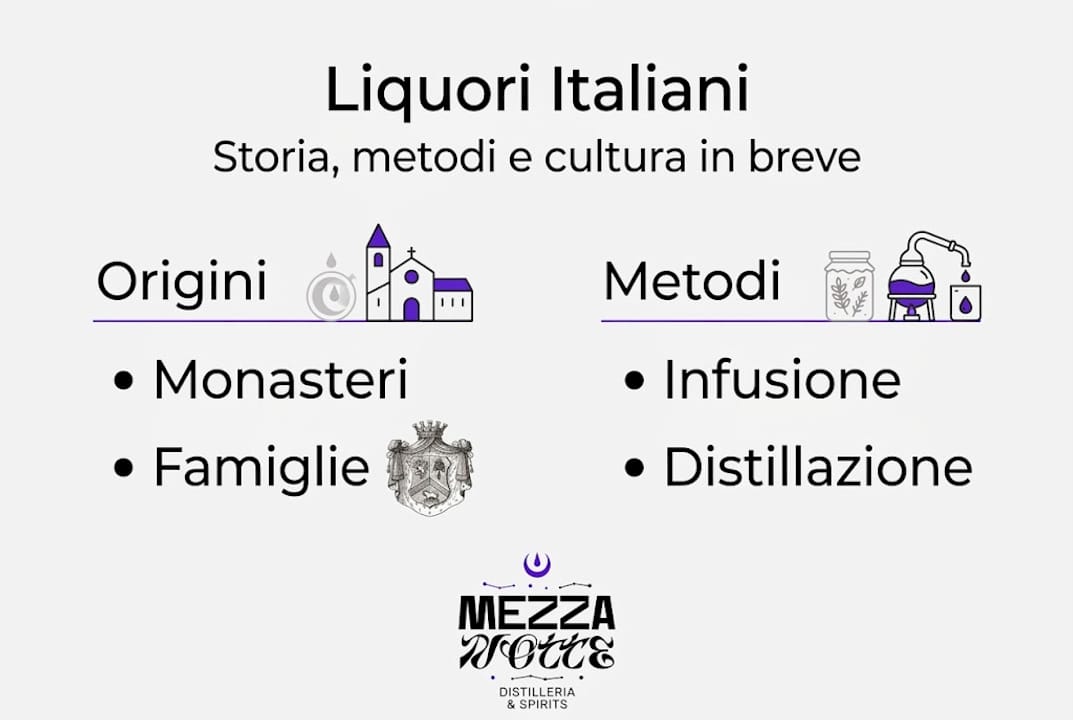
The history of Italian liqueurs does not begin in a modern distillery or a large factory. It begins in medieval monasteries, among clay stills, dried wild herbs, and Latin manuscripts. Monks did not produce spirits for pleasure, but out of necessity: they sought remedies for fevers, digestive disorders, and seasonal ailments. Their preparations were the result of refined herbal science, combining local plants with infusion techniques imported from the Arab world.
As this historical source documents, the Italian liqueur tradition is a heritage rooted in medieval monasteries, where alchemist and herbalist monks distilled and infused herbs, spices, fruits, and pomace for medicinal and digestive purposes, later evolving into regional artisanal products linked to the territory. This transformation was not rapid: it required centuries of experimentation, adaptation, and oral transmission of knowledge.
“The true richness of Italian liqueurs is not in the bottle, but in the history that each ingredient holds.”
With the passing centuries and the progressive rise of trade, these monastic preparations left the cloisters and reached taverns, markets, and families. Each Italian region developed its own variations, adapting recipes to available resources: citrus fruits in the South, walnuts and bitter roots in the Center, pomace and alpine fruits in the North. Thus, the great families of liqueurs that we still know today were born.
To better understand the entire history of Italian spirits, it is useful to immediately distinguish some fundamental categories, linked both to raw materials and production methods. This distinction is the basis of the terminology of spirits that every enthusiast should know.
The main historical families of the Italian tradition include:
- Amari (bitters): infusions of bitter herbs such as gentian, rhubarb, and cinchona, with centuries of therapeutic history. To delve deeper into the tradition of Italian amari reveals a world of fascinating regional nuances and stories.
- Fruit liqueurs: limoncello, nocino, mirto, fragolino, preparations linked to seasonal agricultural cycles.
- Grappa: the distillate par excellence, obtained from the pomace of wine production.
- Alpine herbal liqueurs: from Italian Chartreuse to the mountain varieties of every valley.
- Typical flavored liqueurs: preparations like genepi, anise, and various regional digestives. A complete guide to typical flavored liqueurs reveals how deeply rooted these local traditions are.
What today seems like a simple aperitif or digestive carries the weight of a history at least a thousand years long. This is not an exaggeration: it is living material culture.
Production Methods and Secrets: Infusion, Maceration, and Distillation
Having discovered the historical origins, it is time to delve into the heart of Italian laboratories and distilleries. The quality of a liqueur or spirit decisively depends on the chosen production method, the quality of the raw materials, and the time dedicated to each phase of the process.
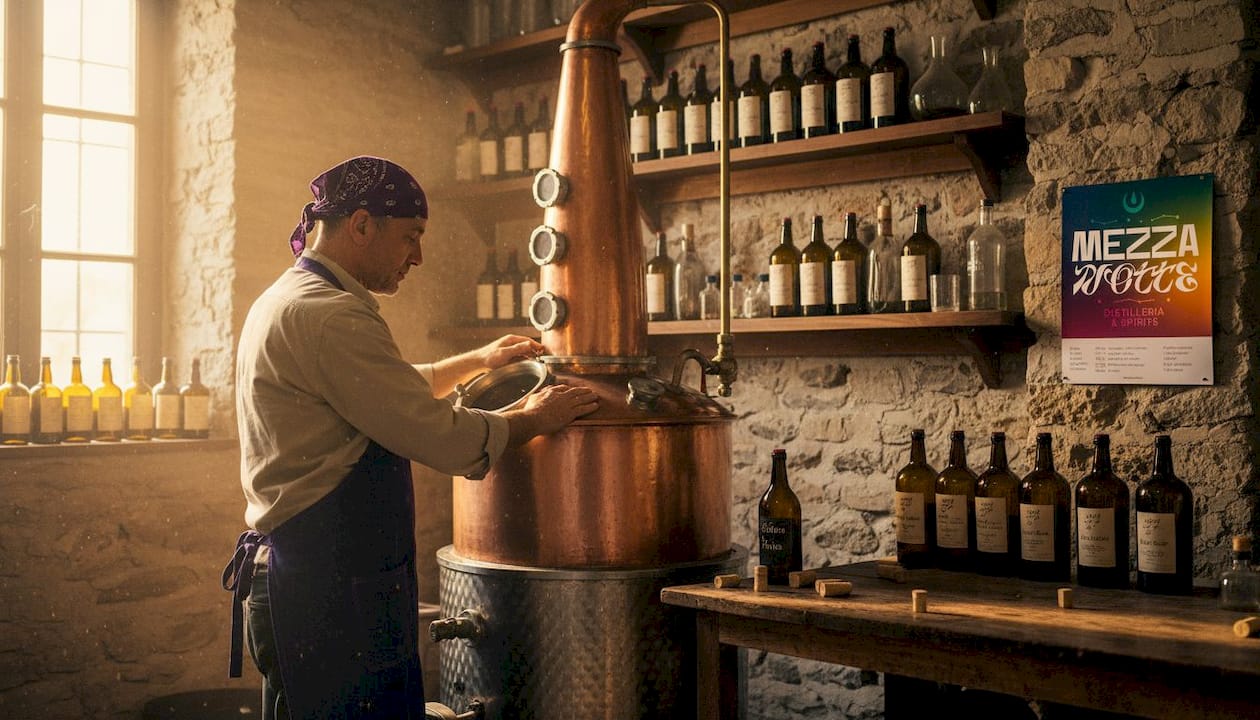
The fundamental processing techniques include maceration and infusion of natural ingredients such as herbs, roots, citrus peels, fruits, and nuts in pure alcohol to extract aromas, followed by filtration, addition of sugar syrup, and resting to harmonize flavors. For spirits like grappa, however, discontinuous or continuous distillation of fermented pomace is used in steam or bain-marie stills, precisely separating the fractions called heads, hearts, and tails.
Here are the main production phases of a quality artisanal liqueur:
- Selection of raw materials: fresh or dried herbs, local fruits, certified roots. The quality of the raw material determines the character of the final product.
- Maceration or infusion: ingredients are steeped in neutral alcohol for periods ranging from a few days to several months. The slower the extraction, the more complex the aromatic profile.
- Filtration: elimination of solid parts to obtain a clear and stable liquid over time.
- Sugar adjustment: addition of syrup to balance bitterness and alcoholic strength. In pure spirits, this step is absent.
- Resting and aging: many quality products rest in bottles or barrels for weeks, allowing the aromas to integrate.
| Method | Typical products | Average time | Result |
|---|---|---|---|
| Cold infusion | Limoncello, nocino | 30 to 90 days | Fresh and lively aromas |
| Hot maceration | Amari, bitters | 15 to 60 days | Intense and deep notes |
| Discontinuous distillation | Single-varietal grappa | Weeks of work | Complexity and purity |
| Continuous distillation | Industrial grappa | Rapid process | Homogeneous product |
The difference between an artisanal and an industrial product is not just a matter of marketing. As confirmed by the industry quality benchmarks, artisanal producers prefer discontinuous copper stills, very fresh pomace, and no additives. Reference names like Nonino with its single-varietal grappas and Capovilla with its 100% pure fruit embody this standard. The mastery in Italian distillation is the result of decades of continuous refinement.
Pro Tip: To recognize a perfectly crafted spirit, observe its visual clarity, smell without rush before tasting, and look for consistency between nose and palate. Quality products have no chemical harshness or artificial aftertastes. A good spirit always tells the story of its raw material. If you want to know how to choose artisanal spirits knowingly, the label and technical data sheet are your best allies.
The Great Classics of Liqueur Heritage: Regions, Products, Rituals
Having understood the production secrets, let's discover the protagonists that truly illustrate Italy's territorial richness. Each region has its distinctive spirit, its moment of the day, and its consumption ritual. These are not mere habits: they are true cultural codes handed down for centuries.
The most representative great regional classics include limoncello, made from the maceration of lemon peels in Campania, amaretto based on bitter almonds, grappa from the pomace of Northern Italy, nocino from green walnuts harvested in Emilia-Romagna strictly on June 24th, mirto from the berries of Sardinia, and a vast family of amari made from herbal infusions such as gentian, rhubarb, and cinchona. Each region has developed unique variations linked to its natural resources and history.
| Liqueur | Region of origin | Raw material | Typical ritual |
|---|---|---|---|
| Limoncello | Campania | IGP lemon peels | After-meal, served chilled |
| Nocino | Emilia-Romagna | Green walnuts, St. John's Eve | Winter digestive |
| Mirto | Sardinia | Myrtle berries | After dinner, with cheese |
| Grappa | Veneto and Friuli | Wine pomace | Coffee "corrector" |
| Amaretto | Lombardy | Bitter almonds | In desserts, in cocktails |
| Amaro | All of Italy | Local herbs and roots | Digestive at room temperature |
Behind every product lies a precise ritual. Nocino, for example, is traditionally prepared on the night between June 23rd and 24th, St. John's Eve, when green walnuts are at the ideal ripeness for maceration. This is not superstition: it is the perfect synthesis of the agricultural calendar and popular knowledge.
Among the products of the tradition of Italian amari, an extraordinary variety of aromatic profiles can be found. Some are sweet and balsamic, others dry and earthy, still others irresistibly spicy. The interesting thing is that many of these regional amari have never reached national distribution, remaining the exclusive heritage of small local communities.
Consumption rituals are as important as the recipe itself. In Sardinia, mirto is never drunk alone: it is a gesture of sharing, a sign of welcome. In Veneto, the "resentìn" of coffee with grappa is a morning habit that almost has the value of a daily ceremony. These customs define how a product lives in society, far beyond the simple pleasure of taste.
Tradition and Innovation Today: Quality, Craftsmanship, and Certifications
After getting acquainted with the great regional symbols, let's analyze how tradition evolves and remains vital in the contemporary landscape. The greatest danger for Italian liqueurs is not foreign competition: it is the loss of authenticity from within.
European certifications play a fundamental role. Grappa is protected by EC Regulation 110/2008 and can only be produced from Italian pomace. A symbolic fact: the historic Nardini Distillery, founded in 1779, is considered the first modern grappa distillery in Italy. Capovilla's artisanal production, one of the most respected names in the sector, reaches 40,000 bottles annually, made from as many as 60 different types of fruit, maintaining absolute quality standards.
Here's how to practically evaluate a quality product:
- Read the label carefully: raw materials, production method, geographical origin, and alcohol content are key indicators.
- Look for PDO or PGI certifications: these guarantee that the product complies with rigorous regulations linked to the territory.
- Visit distilleries: Veneto and Friuli for grappa, Campania for artisanal limoncello. A direct visit allows you to understand the production philosophy of those working in the field.
- Taste at the correct temperature: correct tasting methods involve temperatures between 9 and 20 degrees Celsius, with tulip-shaped glasses to concentrate the aromas.
- Read the producer's story: small artisans rarely sell enormous quantities. A numbered label is already a positive sign.
Cultural Note: PDO and PGI designations for Italian spirits not only concern the chemical quality of the product, but also protect the traditional knowledge linked to that production. Eliminating a PDO would often mean losing a centuries-old technique forever.
As the guidelines for conscious tasting indicate, it is essential for enthusiasts to prioritize PDO or PGI products, frequent distilleries, and always taste at correct temperatures in tulip-shaped glasses. The unique cultural stories, such as the Nocino ritual on St. John's Eve or the sacred value of mirto in Sardinia, add a level of meaning that no industrial product can replicate.
Pro Tip: When purchasing an artisanal liqueur or spirit, always ask the producer or specialized retailer for the complete technical data sheet. An authentic artisan knows every detail of their process and has nothing to hide. Transparency is the first certification of quality. The art of tasting is refined over time, but it always starts with this curiosity.
Why the Italian Liqueur Tradition is Still Unique (and why knowing how to drink isn't enough)
After this deep dive into methods and products, a lesson emerges that goes beyond taste. Italian liqueur tradition is unique not because it produces excellent spirits: many countries do. It is unique because every product carries with it a story that is as valuable as the liquid in the bottle.
We firmly believe that the greatest risk of modernity is not the standardization of tastes, but the loss of the human dimension of ritual. When a nocino is produced industrially, the gesture of nocturnal harvesting, the precise counting of walnuts, the patient wait of months are lost. A similar liqueur is obtained, but something impossible to measure is lost.
True Italian uniqueness stems from respect for local raw materials and the rituals that surround them. It is not folklore: it is collective intelligence accumulated over time. Those who consciously choose artisanal spirits are not just buying a better product. They are choosing to keep a culture alive.
The contemporary trend tends to reward what is fast, scalable, and Instagrammable. But the best Italian liqueur traditions teach the opposite: time is an ingredient, not a cost. And the stories that survive are those that can renew themselves without ever losing their soul.
Discover and savor Italian excellence: selection of artisanal spirits
If this journey into Italian liqueur tradition has piqued your curiosity, the next step is to find products that truly embody this heritage. On mezzanotte.shop you will find a curated selection of Italian artisanal spirits, each with its own story and a unique aromatic profile.

Whether you are looking for Italian artisanal gins with a strong botanical identity or an Italian artisanal vodka made with selected raw materials, you will find products that speak of territory, technique, and authentic passion. Each bottle in the catalog is accompanied by the producer's story and tasting notes, so you can choose with the same awareness you have developed by reading this article. We are not trying to sell you a bottle: we want you to experience an experience.
Frequently asked questions
What is the difference between liqueur and distillate in Italy?
A liqueur is obtained by infusing natural ingredients in alcohol with subsequent sugar addition, while a distillate, such as grappa, is born from the distillation of fermented pomace without sugaring. The two worlds follow completely different production logics.
Why is grappa a symbol of Italian liqueur culture?
Grappa is protected by EU Regulation 110/2008 and can only be produced from Italian pomace, making it a product inextricably linked to the national territory and its millennial winemaking tradition.
What are the criteria for recognizing a high-quality Italian liqueur?
The main indicators are the presence of certified local raw materials, artisanal processing with discontinuous copper stills, absence of chemical additives, and, when available, a DOP or IGP certification that guarantees compliance with the production specifications.
What are the most typical regional liqueurs and their rituals?
Among the most representative are Limoncello from Campania, Nocino from Emilia linked to St. John's night, and Mirto from Sardinia, each associated with specific moments of social life and sharing rituals that amplify their cultural value.
Recommendation
- History of Italian Distillates: Artisanal Tradition 2026 – Mezzanotte | Distillery & Spirits
- Italian Bitter Liqueurs: History and Tradition of Italian Bitters – Mezzanotte | Distillery & Spirits
- Complete Guide to Italian Spirits Terminology – Mezzanotte | Distillery & Spirits
- Italian Alcoholic Drinks: Unique Distillates and Stories to Savor – Mezzanotte | Distillery & Spirits