

Discover how pomace, artisanal techniques, and mastery define the Italian distilling tradition. Learn what makes grappa unique and how to enjoy it in 2026.
Italian Distilling Tradition: Pomace and Mastery 2026
Mar 12, 2026

Few know that Italian distillation originated from making use of what others discarded: the grape pomace left after winemaking. This centuries-old tradition transforms scraps into grappa, a unique distillate that captures the soul of Italy in every drop. You will discover what raw materials, artisanal techniques, and mastery define this culture, and how an agricultural legacy became liquid art that now captivates collectors and enthusiasts worldwide.
Table of Contents
- Key points about the Italian distilling tradition
- Origin and raw material in Italian distillation
- Traditional distillation techniques and their role in quality
- Aging and finishing that enrich grappa
- The art of the master distiller and the Italian legal framework
- Discover artisanal Italian spirits at Mezzanotte
- Frequently asked questions about the Italian distilling tradition
Key points about the Italian distilling tradition
| Point | Details |
|---|---|
| Unique raw material | The exclusive use of pomace is the heart of Italian grappa and differentiates it from other distillates. |
| Artisanal technique | Discontinuous steam distillation preserves complex aromas and ensures superior purity. |
| Distiller's mastery | The master's art and knowledge define the aromatic balance and quality of the final distillate. |
| Selective aging | Oak barrels and noble woods impart color, smoothness, and unique flavor profiles to grappa. |
| Legal protection | Italian regulations require grappa to be distilled in Italy with local raw materials, preserving authenticity. |
Origin and raw material in Italian distillation
Pomace is the solid residue left after pressing grapes for wine: skins, seeds, stems, and pulp. This agricultural byproduct, far from being a worthless waste, represents the core of the Italian distilling tradition and the base of grappa. Its quality determines the final aromatic profile of the distillate, turning each grape variety into a different sensory experience.
Grappa is legally defined as a distillate obtained exclusively from Italian pomace. This regulatory protection ensures that only raw materials grown and processed on Italian soil are used, respecting centuries of tradition. The most valued grape varieties include Moscato, Malvasia, and Gewürztraminer, each contributing distinct floral, spicy, or fruity notes. The geographical origin of the pomace strongly influences the character of the distillate, connecting each bottle to specific terroirs.
Historically, grappa emerged from the peasant culture of northern Italy, where winemaking families used residues to create value and avoid waste. This spirit of sustainable utilization transformed a secondary product into an iconic beverage. The name "grappa" derives from the Lombard term "graspa," which refers to the bunch or vine shoot, reflecting the deep connection between viticulture and distillation.
The characteristics of this tradition reflect a balance between respect for the ingredient and refined technique. Fresh pomace retains volatile alcohols and aromas from the original must, allowing the distiller to extract the purest essence. Some producers use fermented pomace, others prefer unfermented, generating diverse textures and profiles. This versatility makes grappa a canvas where the master distiller paints with flavors.
- Pomace contains between 5% and 15% residual alcohol after wine pressing.
- Aromatic varieties like Moscato produce floral and delicate grappas.
- Red grapes contribute structure and tannins that are perceived in the distillate.
- The freshness of the pomace is critical: it must be distilled within 24 hours of pressing.
Traditional distillation techniques and their role in quality
Discontinuous steam distillation represents the quintessential artisanal method for producing high-quality grappa. This process is carried out in traditional stills, called alambiccos, where the pomace is slowly heated with steam. The heat releases alcohols and aromatic compounds, which rise, condense, and are collected in separate fractions. This manual control allows the distiller to supervise each phase and adjust parameters in real time.
The separation into three fractions defines the purity of the final distillate. The "teste" (heads) contain undesirable volatile alcohols such as methanol and acetaldehyde, which are discarded. The "cuore" (heart) concentrates the noble aromas and the ideal alcoholic balance, becoming the final grappa. The "code" (tails) include heavy and oily compounds that are also removed. Careful control of these fractions ensures a clean, aromatic, and defect-free distillate.
The discontinuous still, or pot still, preserves greater aromatic complexity compared to continuous distillation columns. Although columns are more efficient and faster, they produce more neutral and less distinctive distillates. Artisanal methods respect the time needed to extract subtle nuances from the pomace, resulting in grappas with unique personalities. Each batch reflects the distiller's decisions and the particularities of the raw material.
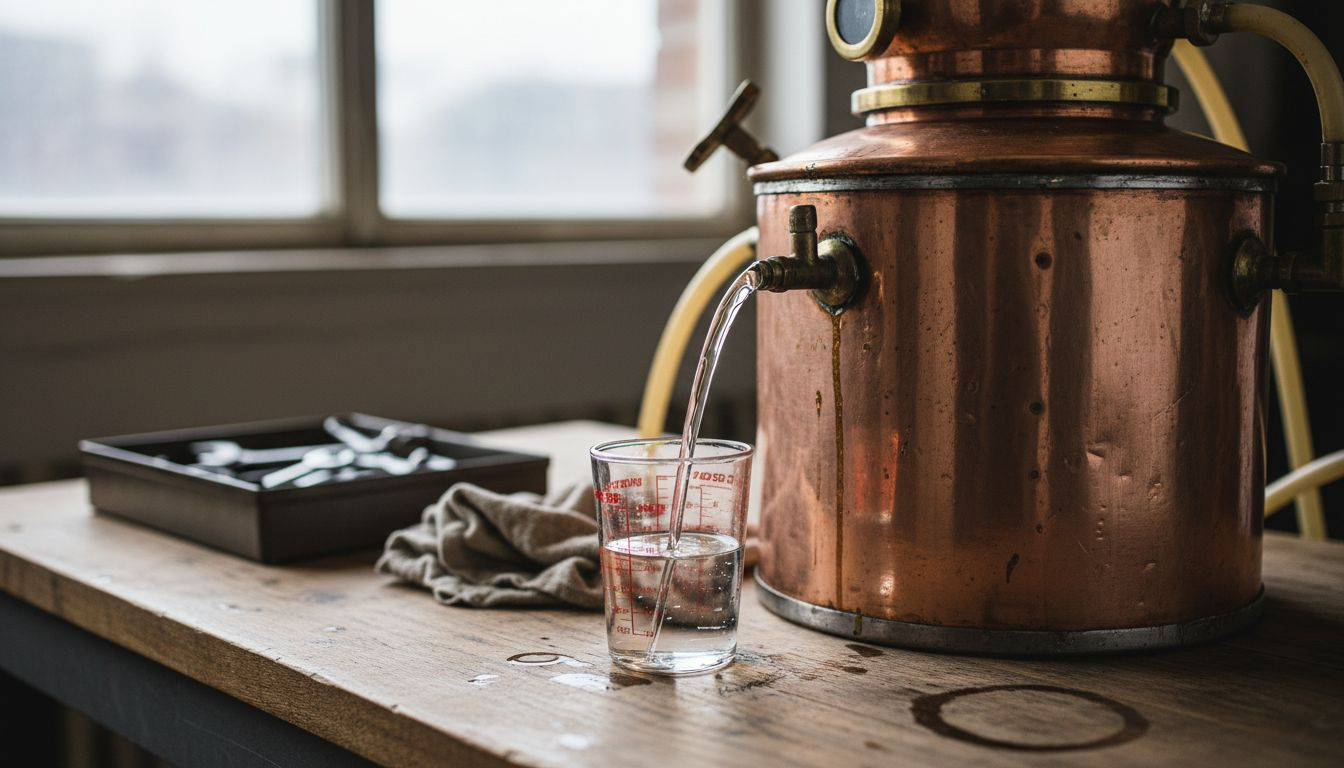
Regional differences in distillation techniques reflect Italy's agricultural diversity. In Piedmont, distillers prefer copper stills that favor smoothness. In Veneto, stills with small columns are used for greater refinement. Friuli Venezia Giulia stands out for innovations that combine tradition with modern technology. These regional variations enrich the landscape of Italian grappa, offering styles for all tastes.
Professional tip: When tasting Italian spirits, observe the transparency and brilliance of the liquid. A well-distilled grappa should be crystalline, without turbidity or particles. The aroma should be clean and defined, without pungent solvent notes that indicate poor fraction separation.
Comparison of distillation methods
| Method | Advantages | Disadvantages | Aromatic profile |
|---|---|---|---|
| Discontinuous still | Greater aromatic complexity, precise manual control | Lower yield, slow process | Rich, structured, with pomace nuances |
| Continuous column | High efficiency, consistent production | Less character, more neutral profile | Clean, light, less expressive |
| Bain-marie | Gentle heating, extreme delicacy | Prolonged time, smaller capacity | Very delicate, floral, subtly fruity |
- Load fresh pomace into the still immediately after pressing.
- Heat slowly with indirect or direct steam until evaporation temperature is reached.
- Discard the first fractions (heads) until clean and balanced aromas are detected.
- Collect the heart when the distillate reaches 70 to 86 degrees alcohol.
- Stop collection when heavy or oily notes appear in the tails.
- Dilute the distillate with demineralized water until it reaches commercial strength (between 37.5% and 60%).
Aging and finishing that enrich grappa
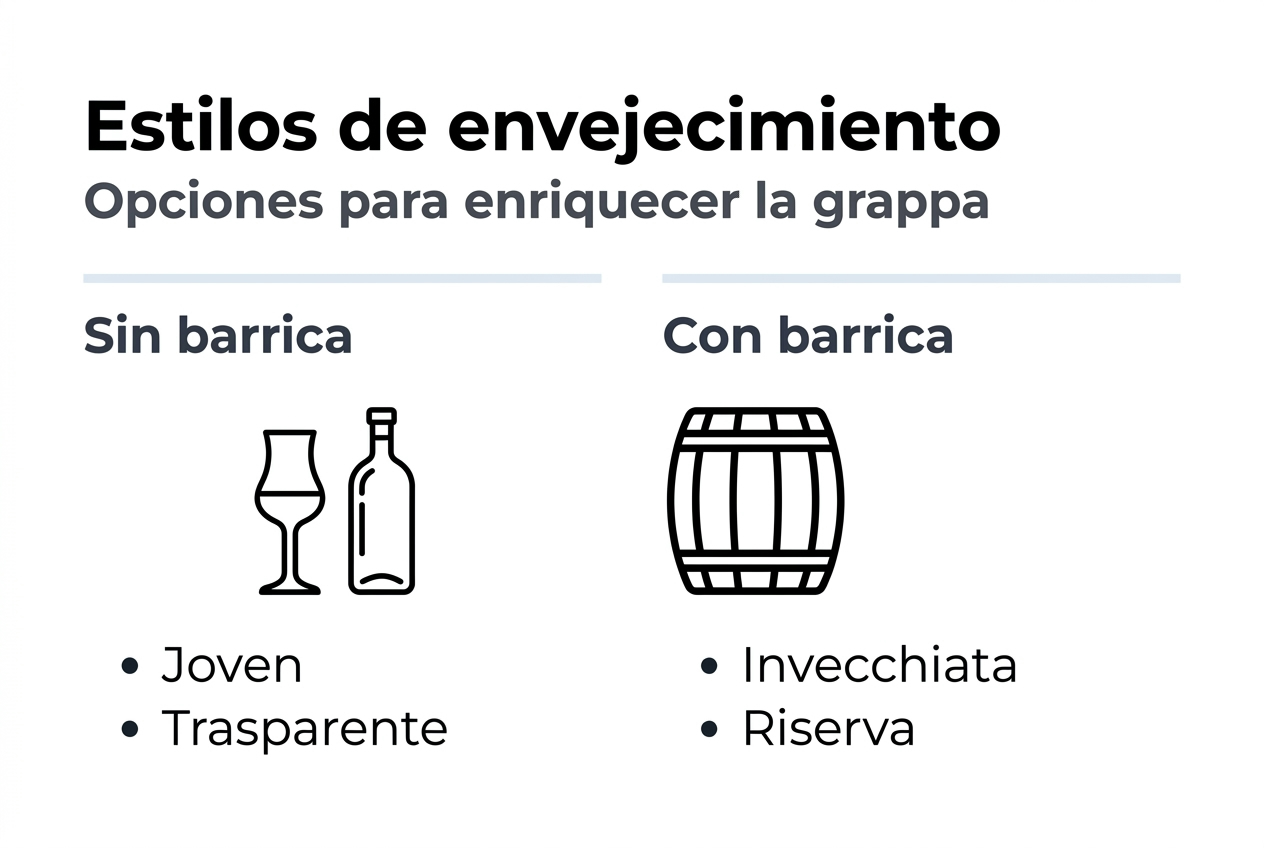
Grappa can be enjoyed young, bottled directly after distillation, or aged in wooden barrels that transform its sensory profile. Young grappa exhibits freshness, purity, and direct aromas of the original grape, ideal for appreciating the raw material without interference. Aged grappa acquires an amber color, smoothness on the palate, and aromatic complexity thanks to interaction with wood over months or years.
Oak, cherry, ash, or acacia barrels create diverse aromatic tones. Oak contributes vanilla, sweet spices, and tannins that structure the palate. Cherry adds delicate fruity and floral notes. Ash offers subtle elegance and refinement. Acacia imparts exceptional sweetness and smoothness. Each wood acts as a brush that paints additional layers of flavor onto the canvas of the base distillate.
The minimum barrel aging time is usually 12 months for grappa to be considered "barricata" or "invecchiata." Longer periods, from 18 to 36 months or more, produce "riserva" grappas with extremely complex and refined profiles. During this rest, the beverage breathes through the pores of the wood, slowly oxidizing and developing roundness. Natural evaporation concentrates aromas and softens the alcohol, making grappa more accessible and elegant.
Wood selection influences the result according to regional tradition and the master distiller's vision. Producers in the north prefer French oak for its fine grain and balanced contribution. In the northeast, acacia is appreciated for maintaining the fruity freshness of the pomace. Some distillers experiment with American oak barrels, which impart more intense notes of coconut and vanilla. This diversity allows collectors and enthusiasts to explore infinite variations within the same base distillate.
Professional tip: To fully appreciate an aged grappa, serve it in a tulip glass at room temperature (18 to 20°C). The warmth of the hand on the glass releases complex aromas of wood and spices. Let the distillate rest for a few minutes before tasting, allowing volatile compounds to fully express themselves.
- Young grappa: transparent, aromatic, vibrant, ideal for cocktails or as a direct digestif.
- Oak-aged grappa: golden color, notes of vanilla, honey, and warm spices.
- Cherry-aged grappa: pinkish tones, aromas of stone fruit and white flowers.
- Riserva grappa: deep amber, extreme complexity, silky texture, and long finish.
The aging styles reflect the producer's personality as much as the raw material. Some distillers use new barrels for maximum wood impact, while others use second or third-use barrels for subtlety. The combination of different barrels, called "finishing," allows for the creation of unique profiles through blends of grappas aged in distinct woods. This technique adds an additional dimension of creativity to the art of distilling.
The art of the master distiller and the Italian legal framework
The master distiller is the artist who transforms pomace into a liquid masterpiece. Their art and knowledge determine the exact moment of cutting between fractions, the distillation temperature, the extraction speed, and the aging decision. Each choice impacts the aromatic balance, mouthfeel, and persistence of the distillate. An experienced distiller can identify imperceptible nuances to others, adjusting parameters with millimeter precision.
Experience makes the difference between a common distillate and a masterpiece that captures the soul of the grape and the territory. Decades of practice allow the master distiller to anticipate how each batch of pomace will react, adapting their technique to climatic variations, harvest time, and ripeness. This artisanal sensitivity cannot be replicated with automation, making each bottle a testament to human skill and passion for the craft.
Home distillation in Italy is regulated and requires specific authorization from tax authorities. These regulations protect quality, ensure sanitary control, and maintain tradition within professional standards. Only licensed producers can legally distill, avoiding risks of methanol and other dangerous compounds that can form in poorly executed distillations. The regulation also preserves the reputation of Italian grappa in international markets.
Legally, grappa must be distilled in Italy with local raw materials, ensuring authenticity and complete traceability from the vineyard to the bottle. This geographical protection, similar to appellations of origin, prevents distillates from other countries from using the name "grappa" without meeting specific requirements. The European Union recognizes this protected denomination, reinforcing the cultural and commercial value of the Italian product.
Tradition is protected to maintain authenticity and avoid imitations that dilute the identity of this emblematic distillate. Producer associations, such as the National Grappa Institute, promote good practices, educate the public, and certify products that meet excellence standards. This collective commitment ensures that future generations can enjoy authentic grappa, made with the same respect and mastery as centuries ago.
- The master distiller must know each grape variety and its behavior in the still.
- Distillation temperature is adjusted according to the humidity and freshness of the pomace.
- Fraction cutting requires a trained nose and years of experience.
- The decision to age or bottle young reflects the distiller's artistic vision.
"Grappa is not just a distillate, it is the liquid expression of the territory, the grape, and the hand of the master who knows how to listen to what the pomace wants to tell."
Contemporary Italian distillers combine respect for tradition with technical innovation. Modern equipment allows for precise temperature and pressure control, while artisanal philosophy guides every creative decision. This synthesis between past and present keeps tradition alive without stagnation, allowing grappa to evolve and conquer new palates. When buying quality spirits, you are looking for this authenticity that only human mastery can offer.
Discover artisanal Italian spirits at Mezzanotte
Now that you know the depth of the Italian distilling tradition, it's time to experience it firsthand. Mezzanotte Spirits offers artisanal distillates that capture the authentic Italian legacy in every bottle, combining ancient techniques with contemporary creativity. Each product is born from the vision of master distillers committed to excellence and the cultural narrative that makes Italian spirits unique.

Our artisanal Italian gins and Italian vodkas incorporate selected ingredients and processes that respect the distilling tradition you have just discovered. The master distiller ensures that each batch has a unique personality, defined aromas, and exceptional quality, just as with classic grappa. Online shopping allows you to access these premium spirits with a guarantee of authenticity and unmistakable Italian flavor, bringing tradition directly to your home. Explore our collection and find the distillate that best reflects your passion for Italian culture and liquid art.
Frequently asked questions about the Italian distilling tradition
What is pomace and why is it used to make grappa?
Pomace is the solid residue of grapes (skins, seeds, stems) left after pressing the must for wine. It is used because it retains aromatic alcohols and grape essences, allowing for the creation of a distillate with a unique character that utilizes winemaking byproducts sustainably and traditionally.
How does the master distiller influence the flavor of grappa?
The master distiller controls fraction cutting, temperature, distillation speed, and aging decisions, directly affecting the aromatic balance and texture. Their expertise allows them to identify subtle nuances and adjust parameters to maximize quality, transforming raw material into a liquid masterpiece.
How long is grappa aged in barrels?
Barrel-aged grappa requires a minimum of 12 months in wood to be considered aged. Periods of 18 to 36 months or more produce “riserva” grappas with extreme complexity, superior smoothness, and aromatic profiles that integrate notes of wood, spices, and the original essence of the pomace.
Is it legal to make grappa at home in Italy?
Not without specific authorization. Home distillation in Italy is regulated and requires a license from tax authorities to ensure safety, quality, and regulatory compliance. Only authorized producers can legally distill, protecting grappa's reputation and avoiding health risks.
What differentiates Italian grappa from other spirits?
Grappa is made exclusively from Italian pomace, while other spirits use cereals, sugarcane, or whole fruits. The direct steam distillation technique and respect for the viticultural raw material give it a unique character, connecting each bottle with the territory and centuries-old Italian agricultural tradition.
Recommendation
- The art of premium Italian spirits in 2026 – Mezzanotte | Distilleria & Spirits
- Mastering the use of vodka in Italian mixology in 2026 – Mezzanotte | Distilleria & Spirits
- Spirits Distillation Guide 2026: Avoid 40% Common Mistakes – Mezzanotte | Distilleria & Spirits
- What differentiates Italian gin: tradition and unique flavor 2026 – Mezzanotte | Distilleria & Spirits