

Discover the history, technical process, and art of artisanal distillation. Complete 2026 guide to understanding the craftsmanship of authentic spirits.
What is artisanal distillation? 2026 guide
Mar 12, 2026

Craft distillation captivates with its historical and sensory dimensions, extending far beyond simple technique. Contrary to the common misconception that reduces it to a chemical process, it embodies a craftsmanship passed down from generation to generation, combining tradition and passion to create unique spirits. This guide explores the process, history, and importance of artisanal skill in crafting exceptional distillates.
Table of Contents
- History and Context of Craft Distillation
- The Technical Process of Craft Distillation Explained
- The Art and Tradition Behind Craft Distillation
- Quality, Traceability, and Modernity in Craft Distillation
- Discover Mezzanotte Craft Spirits
- FAQ on Craft Distillation
Key Takeaways
| Point | Details |
|---|---|
| Living Tradition | Craft distillation preserves local recipes and ancestral savoir-faire passed down orally. |
| Scientific Principle | The process leverages the difference in boiling temperatures between alcohol and water to separate components. |
| Meticulous Control | Separating heads, hearts, and tails requires precise mastery of temperatures and timing. |
| Distiller's Touch | Human expertise directly influences the aromatic profile and quality of the final spirit. |
| Modern Traceability | Detailed batch recording ensures authenticity and regulatory compliance. |
History and Context of Craft Distillation
Craft distillation has deep roots in European medicinal history. For centuries, pharmacists and apothecaries produced alcohols intended to treat various ailments. This therapeutic dimension profoundly shaped the cultural perception of spirits.
The law of 1803 profoundly transformed the landscape by officially separating the professions of pharmacist and distiller. This legislative break diminished the medicinal aspect of alcohol, while allowing for the emergence of specialized production. Absinthe perfectly illustrates this persistent link between remedy and spirit, oscillating between therapeutic potion and recreational drink.
Key historical moments include:
- Medieval pharmacists creating alcoholic elixirs and tinctures for their healing properties
- Legal separation between medicine and alcohol production in the early 19th century
- Transmission of knowledge by local druggists during prohibition periods
- Development of family distilleries perpetuating regional traditions
- Contemporary resurgence valuing authenticity and distillation and medicinal knowledge
Oral tradition remains essential in craft distilleries. Recipes, temperature tricks, and cutting secrets are passed down from master to apprentice, creating an unbroken human chain. This generational transmission preserves not only formulas but also a philosophy of work and respect for the finished product.
Pro tip: Visit a craft distillery to observe the difference between theoretical knowledge and practical skill. The experienced distiller intuitively adjusts their process according to humidity, raw material, and even the season.
The Technical Process of Craft Distillation Explained
The scientific principle is based on a fundamental difference: ethanol boils at 78.37°C, while water reaches 100°C. This disparity allows for the selective vaporization of alcohol, which is then condensed to obtain a concentrated distillate. This simple physical basis conceals considerable practical complexity.
The chronological steps of the process include:
- Fermentation of the plant raw material to produce a basic alcoholic liquid
- Gradual heating in the still until the critical vaporization temperature is reached
- Separation of the heads containing methanol and toxic compounds, systematically eliminated
- Collection of the heart, the noble fraction offering the desired aromas and purity
- Setting aside the tails with secondary aromas, sometimes partially reintegrated depending on the style
- Optional multiple passes to further refine and increase alcoholic concentration
The copper still plays a crucial catalytic role. This metal reacts with undesirable sulfur compounds, naturally eliminating them from the distillate. Copper also promotes better thermal conductivity, allowing for precise temperature control. Artisans prefer this traditional material despite its higher cost.
Craft distillation involves meticulous control of fractions and temperatures. Every degree matters: overheating incorporates bitter compounds, while insufficient temperature reduces yield. The distiller constantly monitors thermometers and flow rates, adjusting the flame or cooling.
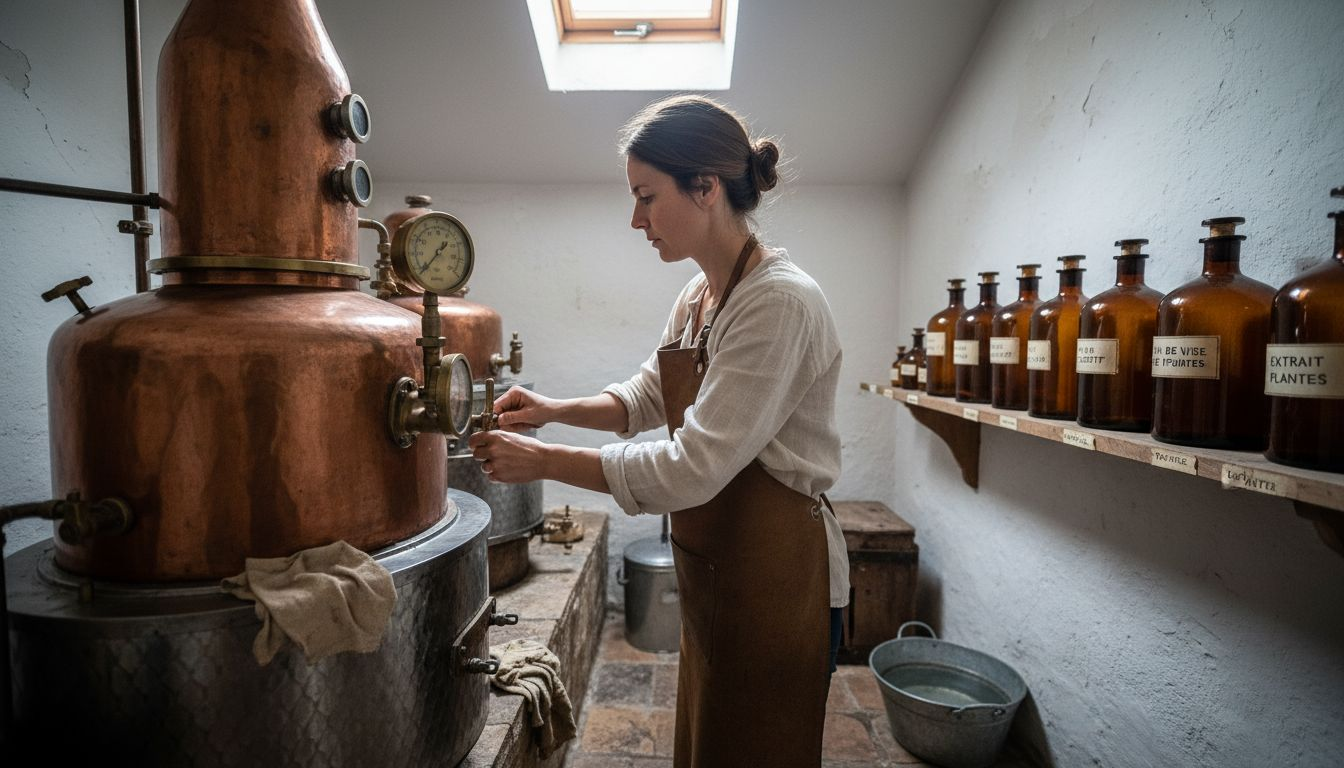
Pro tip: The quality of the distillate depends more on the precise timing of the cuts than on the total duration. An experienced distiller prefers to sacrifice volume to ensure the purity of the heart, explaining why steps of the craft distillation process produce less but better.
Double or triple distillation progressively increases alcoholic purity. Each pass eliminates more impurities but also risks impoverishing the aromatic profile. The artisan finds the optimal balance depending on the desired spirit.
The Art and Tradition Behind Craft Distillation
The artisanal dimension transcends mere technical application. Each distiller develops their signature through subtle choices: still shape, heating speed, exact timing of cuts. These decisions create the unique identity of the final spirit.
Craft stills are distinguished by their human scale and custom design. Unlike standardized industrial columns, each craft still has its peculiarities: gooseneck height, condenser angle, cucurbit volume. These variations directly influence the aromatic profile.
The distiller's touch influences every step and the final sensory profile. This human dimension transforms a chemical process into an artistic practice. The master distiller regularly tastes, smells the vapors, observes the clarity of the liquid. Their senses become measuring instruments as precise as thermometers.
Characteristics of artisanal craftsmanship include:
- Intuitive adjustment according to natural variations in agricultural raw materials
- Constant monitoring allowing for rapid interventions in case of deviation
- Decisions based on accumulated experience rather than rigid protocols
- Adaptation of heating times according to atmospheric conditions of the day
- Oral transmission of tips and tricks impossible to codify in manuals
Generational transmission preserves centuries-old recipes while allowing for innovation. Young distillers learn the fundamentals from their elders, then experiment with new botanical combinations or maceration techniques. This dynamic continuity keeps tradition alive.
Pro tip: An authentic craft spirit often presents slight variations between batches, reflecting manual work and natural materials. This "imperfection" paradoxically guarantees quality and the importance of the artisanal touch.
“The craft distiller does not mechanically reproduce a formula. They dialogue with their raw material, adjusting their touch according to what it reveals to them with each distillation.”
The balance between tradition and modernity characterizes contemporary craft distilleries. They use centuries-old stills while scrupulously respecting current health standards. Computerized traceability coexists with handwritten ledgers passed down for generations.
Quality, Traceability, and Modernity in Craft Distillation
Contemporary demands impose unprecedented documentary rigor. Traceability ensures quality by precisely recording ingredients, batches, and processes. Every bottle can be traced back to its original raw materials, creating total transparency.
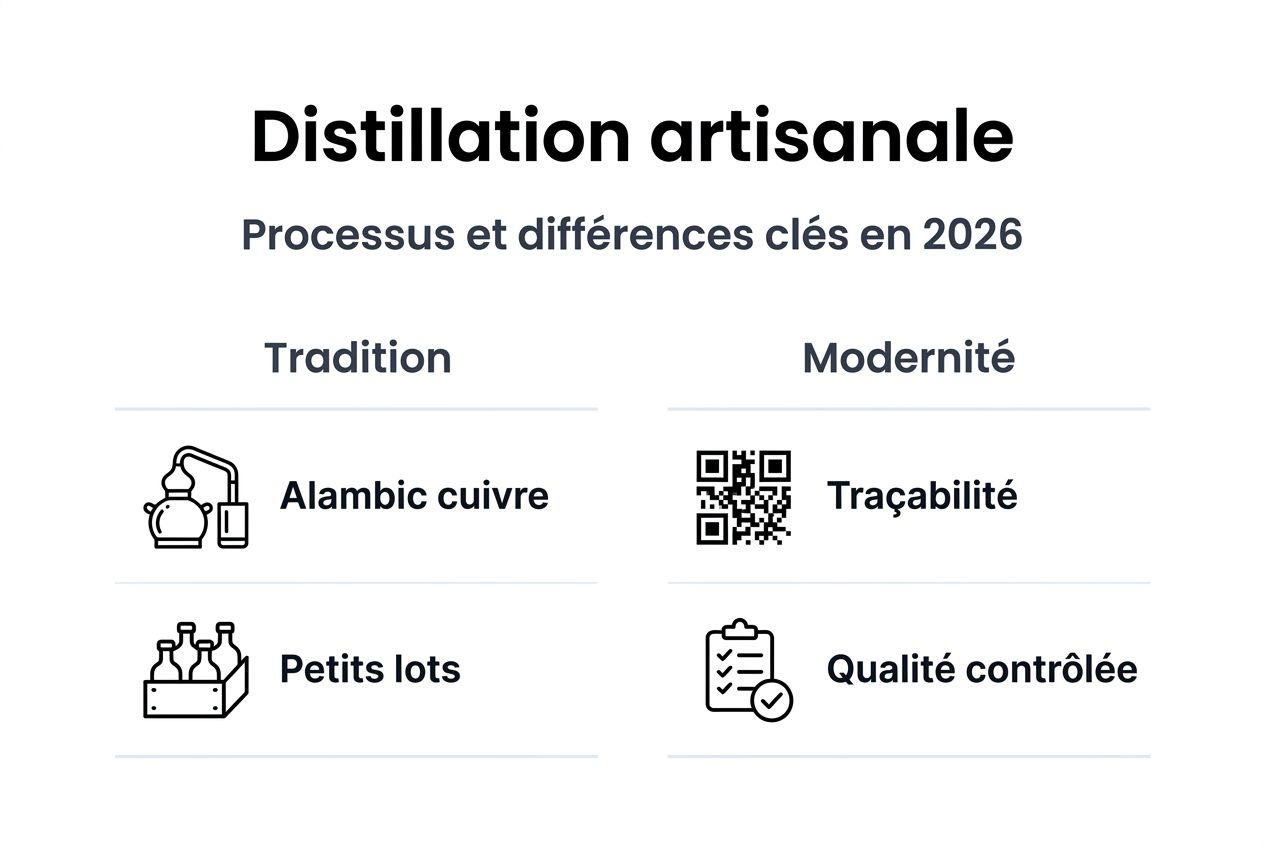
Craft quality control combines scientific analysis and sensory evaluation. Distillers measure alcohol content, test for residual methanol, and check clarity. Simultaneously, they systematically taste to detect aromatic defects or taste imbalances.
The 2026 regulations strictly govern production while recognizing artisanal specificities. Distilleries must obtain licenses and authorizations, keep detailed records, and adhere to hygiene standards. These constraints protect consumers and serious producers from dubious practices.
| Criterion | Craft Distillation | Industrial Distillation |
|---|---|---|
| Production Volume | 100 to 5000 liters/year | 50000 liters/year and more |
| Equipment | Custom copper stills | Standardized continuous columns |
| Process Control | Manual and sensory | Automated and computerized |
| Distillation Time | 8 to 12 hours per batch | Continuous production 24/7 |
| Unit Cost | High, justified by quality | Reduced by economies of scale |
| Variations Between Batches | Slight, reflection of craftsmanship | Maximum standardization |
Consumers seek authenticity and verifiable provenance. This demand favors craft distillation and modernity that document their botanical sources, spring water, and traditional methods. Transparency becomes a major commercial argument.
Craft quality practices include:
- Rigorous selection of raw materials from identified local producers
- Systematic organoleptic tests at each critical stage of the process
- Retention of sample batches for future reference
- Continuous training in new analysis and control techniques
- Voluntary adherence to standards higher than legal minimums
Adapting to modern expectations stimulates respectful innovation. Craft distillers explore forgotten local botanicals, test alternative fermentations, and develop non-alcoholic spirits using their techniques. This creativity maintains cultural relevance.
Organic certification is gaining ground in the craft sector. It imposes additional constraints but reassures consumers concerned about responsible agriculture. Certified distillers value this commitment as a natural extension of their quality philosophy.
Discover Mezzanotte Craft Spirits
After exploring the foundations of craft distillation, practical experience truly enriches understanding. Mezzanotte embodies this tradition with a refined collection of Italian craft gin and Italian craft vodka, each reflecting the passion of artisanal skill.

Each Mezzanotte spirit tells a unique story, blending carefully selected botanicals and mastered distillation techniques. The gins reveal distinct aromatic profiles inspired by Italian culture, while the vodkas offer crystalline purity obtained through successive distillations. These internationally awarded products testify to contemporary artisanal excellence, where tradition meets creativity.
Discovering these spirits allows for a concrete appreciation of the nuances created by artisanal know-how. Each tasting becomes a sensory lesson on the impact of human touch, the quality of raw materials, and the precision of the process.
FAQ on Craft Distillation
What is the main difference between craft and industrial distillation?
Craft distillation prioritizes small batches, copper stills, and manual control, creating natural variations between productions. Industrial distillation maximizes volume and standardization via automated continuous columns operating without interruption. The time dedicated and human intervention differ radically.
How to recognize a truly craft spirit?
Look for explicit mentions of small-batch distillation, the distiller's name, and the precise origin of ingredients. Authentic craft spirits often indicate batch number, production method, and sometimes even distillation date. The distinction between craft gin and vodka also lies in the transparency of labeling.
Why is copper used in craft stills?
Copper naturally eliminates undesirable sulfur compounds through chemical reaction during distillation. It also offers excellent thermal conductivity, allowing for precise temperature control. This dual function explains its preference despite its higher cost compared to stainless steel.
Does the artisanal touch really influence the final taste?
Absolutely. The exact timing of the cuts between heads, hearts, and tails profoundly alters the aromatic profile. A distiller can choose to include slightly more tails to enrich the texture, or extend the collection of the heart to maximize purity. These subtle decisions create the unique signature of each artisan.
How to begin tasting craft distillates?
Start with unaged spirits like craft gin or vodka to appreciate the purity of the distillation. Taste at room temperature in a tulip glass, first neat then with a few drops of water to reveal aromas. Compare several craft producers to develop your palate and identify the nuances created by different approaches to the craft.
Recommendation
- Distillation Guide Spirits 2026: Avoid 40% Common Errors – Mezzanotte | Distillery & Spirits
- What is artisanal distillery: craft spirits 2026 – Mezzanotte | Distillery & Spirits
- Artisanal Distilleries: Quality Through Tradition – Mezzanotte | Distillery & Spirits
- How to Customize an Italian Cocktail in 2026 – Mezzanotte | Distillery & Spirits