

Discover how to choose authentic Italian spirits in 2026 with quality criteria, artisan tradition, and practical recommendations for a successful purchase.
Authentic Italian Spirits Buyer's Guide 2026
Mar 13, 2026

Choosing authentic Italian spirits can be overwhelming when faced with a wide variety of products of varying quality and origin. This guide will teach you how to recognize the essential characteristics that distinguish a genuine spirit, from its artisanal process to the selection criteria that guarantee a satisfactory purchase. We will cover history, distillation techniques, and practical recommendations so that in 2026 you can confidently choose the perfect Italian spirit for your collection or to enjoy in sophisticated cocktails.
Table of Contents
- Key Points of the Italian Spirits Buying Guide
- Understanding the Tradition and Diversity of Italian Spirits
- Artisanal Processes that Define Quality and Flavor
- How to Prepare Your Purchase: Criteria for Choosing the Ideal Italian Spirit
- Verification and Use: How to Enjoy and Confirm the Quality of Your Italian Spirit
- Discover Our Selection of Artisanal Italian Spirits at Mezzanotte
- Frequently Asked Questions About Buying Italian Spirits
Key Points of the Italian Spirits Buying Guide
| Point | Details |
|---|---|
| Regional Tradition | Each region of Italy contributes unique methods and specific grape varieties that define the character of the spirit |
| Artisanal Distillation | Manual and controlled processes ensure purity, genuine aromas, and fidelity to the product's origin |
| Selection Criteria | Evaluate origin, aging, producer reputation, and presentation for a successful purchase |
| Quality Verification | Observe clarity, color, and aromas to confirm authenticity after purchase |
| Use in Mixology | Italian spirits elevate sophisticated cocktails and offer unique cultural experiences |
Understanding the Tradition and Diversity of Italian Spirits
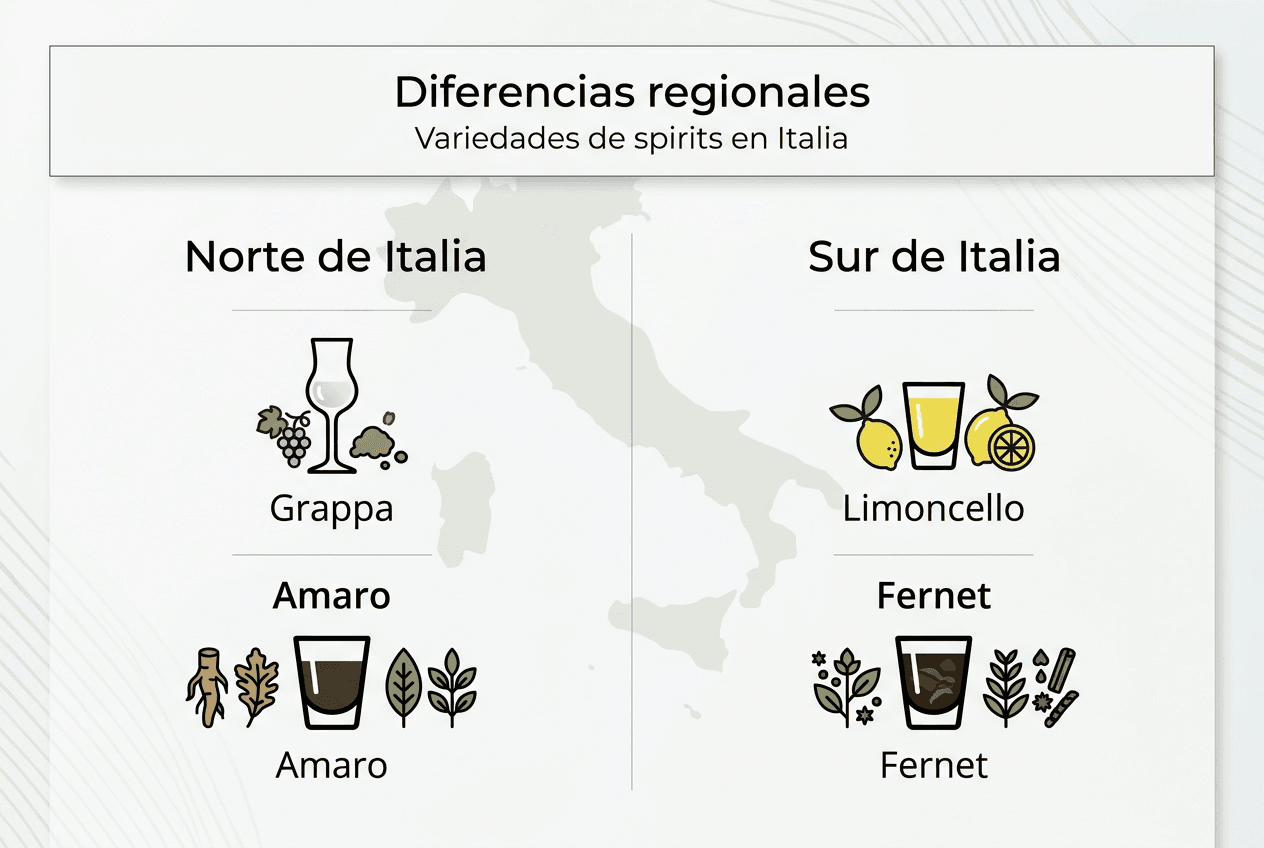
The Italian distilling tradition is based on a philosophy of total utilization where nothing is wasted. This mentality transformed grape pomace, a byproduct of winemaking, into the base for grappa, one of the country's most emblematic spirits. Each Italian region developed its own style and techniques, creating a diversity that reflects the cultural and geographical richness of the peninsula.
Grappa production is rooted in regional traditions with distinct grape varieties that provide unique aromatic profiles. Piedmont is renowned for grappas made with Nebbiolo and Barbera pomace, which offer intense and structured notes. Trentino stands out for its focus on aromatic varieties like Moscato and Gewürztraminer, producing floral and delicate spirits. Veneto and Friuli Venezia Giulia contribute grappas with fruity character thanks to grapes like Prosecco and Tocai, while Alto Adige combines Alpine techniques with local varieties to create refined products.
Regional differences are not limited to raw materials. Distillation methods vary significantly:
- Piedmont uses traditional discontinuous stills that preserve complex aromas
- Trentino combines modern techniques with respect for family tradition
- Veneto emphasizes slow distillation to capture the fruity essence
- Friuli Venezia Giulia applies double distillation to achieve exceptional purity
- Alto Adige integrates Alpine influences with rigorous temperature control
This regional diversity is not accidental. It reflects centuries of evolution where each area perfected its techniques according to climate, available grapes, and local preferences. The identity of each Italian spirit is deeply linked to its territory of origin, making each bottle an authentic expression of its birthplace. Understanding these differences allows you to choose spirits that align with your aromatic preferences and appreciate the cultural richness behind each product.
Artisanal Processes that Define Quality and Flavor
The artisanal process makes the difference between an exceptional spirit and an ordinary one. The 2026 spirits distillation guide explains that each stage requires meticulous attention to preserve the integrity of the final product. The Capovilla method prioritizes fresh fruits and spontaneous fermentations, setting a standard of excellence in Italian distillation.
The fundamental steps in artisanal distillation include:
- Rigorous selection of raw materials, choosing only fruits or pomace at optimal ripeness
- Controlled fermentation that allows the natural development of autochthonous yeasts
- Distillation in discontinuous copper stills that meticulously separate heads, hearts, and tails
- Constant sensory control where the master distiller evaluates aromas and flavors in real time
- Optional aging in selected barrels that add complexity without masking the original character
Aging radically transforms the spirit's profile. Young or Giovane grappa maintains the purity and freshness of freshly distilled pomace, with intense aromas and a direct character. Affinata or Vecchia rests for six to twelve months in wood, acquiring golden tones and soft vanilla notes. Riserva or Stravecchia ages for more than eighteen months, developing a deep amber color and exceptional complexity with spicy and toasted nuances.
Professional tip: When evaluating an artisanal spirit, look for transparency on the label regarding the type of still used and the aging time. Serious producers specify these details because they reflect their commitment to quality.
Sensory control represents the soul of the artisanal process. Unlike automated industrial production, the artisanal distiller uses their senses to make critical decisions during distillation. They evaluate the exact moment to separate fractions, adjust temperature according to vapor behavior, and determine when the heart has reached its optimal point. This human intervention ensures that each batch maintains aromatic purity and fidelity to the raw material's origin.
The difference between artisanal and industrial distillation is evident in the final result. Artisanal spirits present complex aromatic profiles with multiple layers that evolve on the palate, while industrial products tend to offer more uniform and predictable flavors. This complexity justifies the premium price of artisanal spirits and explains why connoisseurs actively seek out these products.
How to Prepare Your Purchase: Criteria for Choosing the Ideal Italian Spirit
Preparing your purchase requires evaluating several factors that will determine your satisfaction with the product. The steps for buying spirits include prior research, comparing options, and verifying authenticity. Meticulous attention to selection ensures purity and authenticity in every bottle.
Essential criteria for your selection include:
- Verifiable geographical origin with a denomination of origin or protected geographical indication
- Transparent production process where the producer details their artisanal methods
- Distiller's reputation backed by international awards or expert recognition
- Product presentation that reflects care in design and informative labeling
- Price consistent with artisanal quality, avoiding suspiciously cheap offers
Regional variety directly influences your choice according to personal preferences. If you seek intense aromas and structure, opt for Piedmontese grappas made with Nebbiolo. For floral and delicate profiles, Trentino grappas with Moscato are ideal. Lovers of fruity notes will find satisfaction in Venetian spirits, while those who prefer complexity and refinement should explore products from Friuli or Alto Adige.
| Type of Spirit | Characteristics | Ideal for |
|---|---|---|
| Grappa Giovane | Transparent, fresh aromas, direct character | Pure tasting, appetizers |
| Grappa Affinata | Golden tone, soft notes, balance | Sophisticated cocktails, desserts |
| Grappa Riserva | Deep amber, spicy complexity | Contemplative tasting, pairings |
| Artisanal Gin | Italian botanicals, unique aromatic profile | Creative mixology, premium gin and tonics |
| Artisanal Vodka | Exceptional purity, refined smoothness | Elegant cocktails, premium shots |
Professional tip: Check reviews from other buyers before deciding, especially for online purchases. Comments on aroma, flavor, and presentation will give you valuable information that complements the official product description.
Online shopping offers significant advantages in 2026. You access extensive catalogs with exclusive products that you won't find in local physical stores. Specialized platforms provide detailed descriptions, technical sheets, and pairing or cocktail use recommendations. Verify that the seller offers secure packaging to protect bottles during shipping and clear return policies for damaged products.
Proper storage preserves the quality of your investment. Store bottles upright, away from direct sunlight and heat sources. The ideal temperature ranges between 15 and 20 degrees Celsius. Once opened, consume the bottle within a reasonable period, usually six to twelve months, to enjoy aromas and flavors at their best.
Verification and Use: How to Enjoy and Confirm the Quality of Your Italian Spirit
Verifying the quality after receiving your purchase ensures that the product meets expectations. The art in premium spirits enhances flavors and culture in every glass. Verification combines visual observation, aromatic evaluation, and conscious tasting to confirm authenticity.
The steps for organoleptic verification are:
- Examine the liquid's clarity against the light, looking for crystal transparency without suspended particles
- Observe the color, which should correspond to the type of aging declared on the label
- Gently swirl the glass and evaluate the legs, which should descend slowly, indicating adequate body
- Bring your nose close to the glass without inserting it and perceive primary aromas without aggressive alcohol
- Take a small sip and distribute it throughout your mouth to capture the evolution of flavors
Professional tasting requires specific technique. Serve the spirit at room temperature in a tulip-shaped glass that concentrates aromas. Let the liquid rest for a few minutes to oxygenate. When tasting, allow the spirit to cover your tongue completely before swallowing. Quality spirits present a smooth entry, complex development in the mouth, and a persistent finish without excessive burning.
Professional tip: Taste Italian spirits before and after meals to appreciate different facets. On an empty stomach, you will perceive aromas more intensely, while after eating, the palate will be more receptive to subtle nuances.
Traditional Italian cocktails highlight the qualities of these spirits:
- Negroni Sbagliato with grappa instead of gin for an intense aromatic twist
- Artisanal Spritz using Italian bitter and quality Prosecco
- Martini with Italian vodka that provides exceptional smoothness
- Grappa Sour with fresh lemon and natural syrup for perfect balance
The use of vodka in mixology allows for sophisticated combinations that respect the character of the base spirit. The key is not to mask the quality of the spirit with an excess of ingredients. The best cocktails allow the spirit to shine while complements enhance its natural characteristics.
Proper service enhances the experience. Serve young grappas chilled between 8 and 10 degrees to refresh the palate. Aged grappas are best enjoyed at room temperature or slightly cool to appreciate their complexity. Artisanal gin and vodka work excellently both in pure tasting and in elaborate cocktails, adapting to different moments and occasions.
Store opened bottles with an airtight stopper to minimize oxidation. Although spirits do not expire, prolonged exposure to air can diminish delicate aromas. If you plan to keep an opened bottle for several months, consider transferring the contents to a smaller container that reduces the air space in contact with the liquid.
Discover Our Selection of Artisanal Italian Spirits at Mezzanotte
Now that you know the criteria for choosing authentic spirits, it's time to explore specific options. Mezzanotte offers a carefully selected collection of Italian spirits that meet the highest standards of artisanal quality. Each product in our catalog has a unique cultural narrative and distinctive design that reflects a passion for traditional distillation.

Our selection of artisanal Italian gin includes spirits made with autochthonous botanicals that capture the Mediterranean essence in every sip. For those seeking exceptional purity, our collection of artisanal Italian vodka presents products that combine traditional techniques with contemporary innovation. All our spirits come from renowned producers who prioritize quality over quantity, guaranteeing memorable experiences for discerning palates. Shopping is simple and secure, with assistance available to help you choose the perfect spirit according to your preferences.
Frequently Asked Questions About Buying Italian Spirits
What is the difference between young and aged grappa?
Young or Giovane grappa does not undergo wood aging, maintaining crystalline transparency and fresh aromas from the original pomace. Aged grappa rests in oak barrels, acquiring a golden or amber color and developing notes of vanilla, spices, and dried fruits that complement the base character. Aging softens the profile and adds complexity, making it ideal for contemplative tasting.
How to identify a truly artisanal Italian spirit?
Look for detailed information about the production process on the label or the producer's website. Artisanal spirits specify the type of still used, usually discontinuous copper stills, and mention manual control during distillation. Transparency about the origin of raw materials and traditional methods indicates a commitment to artisanal quality.
What are the benefits of choosing spirits from renowned producers like Capovilla?
Recognized producers guarantee consistency in quality and respect for traditional techniques perfected over decades. Capovilla and similar distillers prioritize exceptional raw materials and natural fermentations, resulting in spirits with complex aromatic profiles and verifiable purity. Their reputation is backed by international awards and expert recognition, reducing the risk of disappointment in your purchase.
How to properly store Italian spirits at home?
Store bottles upright, away from direct sunlight and heat sources, maintaining a temperature between 15 and 20 degrees Celsius. Once opened, seal tightly after each use to minimize oxidation. Consume within six to twelve months after opening to enjoy optimal aromas and flavors, although spirits do not formally expire.
What cocktails are recommended for beginners with these spirits?
Start with an artisanal Spritz that combines Italian bitter, prosecco, and soda, offering an accessible balance. The Negroni Sbagliato with grappa adds complexity without being overwhelming. For Italian vodka, try a Moscow Mule with quality ginger beer that enhances the spirit's smoothness. These cocktails allow you to appreciate the characteristics of the spirit without requiring advanced mixology techniques.
Recommendation
- Steps to buy quality spirits online 2026 – Mezzanotte | Distillery & Spirits
- Exclusive Spirits Buying Guide: 87% Prefer Authentic Storytelling – Mezzanotte | Distillery & Spirits
- Spirits Distillation Guide 2026: Avoid 40% Common Mistakes – Mezzanotte | Distillery & Spirits
- Italian Distilling Tradition: Vinaccia and Mastery 2026 – Mezzanotte | Distillery & Spirits