

Discover how botanicals create the aromas of craft gin. 60 polyphenols remain active after distillation. Complete guide for informed enthusiasts.
Role of botanicals in gin: 60 polyphenols remain active
Mar 2, 2026

Juniper does not provide a simple flavor, but a complexity of aromatic compounds creating resinous, piney, and citrus notes. Botanicals determine each craft gin's profile. Their extraction by maceration or vapor influences the final aromatic intensity. Understanding these mechanisms enriches your tasting experience and helps you choose gins adapted to your taste preferences.
Table of Contents
- Key Takeaways
- Introduction to Botanicals in Gin
- Function of Key Botanicals in Gin
- Methods of Botanical Aroma Extraction
- Botanical Synergies and Aromatic Balance
- Sustainability and Valorization of Botanical Residues
- Common Misconceptions about Botanicals in Gin
- How to Choose a Gin Based on its Botanicals
- Discover Our Selection of Unique Craft Gins
- FAQ on the Role of Botanicals in Gin
Key Takeaways
| Point | Details |
|---|---|
| Botanicals define gin's aromatic profiles | Each plant contributes specific chemical compounds, creating complexity and a distinctive signature |
| Extraction method influences the intensity and subtlety of aromas | Maceration and vapor infusion produce different sensory results depending on the compounds extracted |
| Botanical synergies create complex aromatic balances | Shared compounds like alpha-pinene generate harmonious interactions between plants |
| Over 60 polyphenols remain active after distillation | These bioactive compounds in residues open up sustainable applications in the circular economy |
| Choosing a gin based on its botanicals allows for a more informed tasting | Interpreting ingredient lists helps anticipate taste profiles and cocktail pairings |
Introduction to Botanicals in Gin
Botanicals refer to all plants, spices, roots, barks, and citrus fruits used to flavor gin. Historically, distillation in the Netherlands in the 17th century already incorporated complex blends of botanicals to mask alcoholic impurities and create medicinal profiles. Today, the main aromatic components of craft gin reflect this tradition enriched with modern innovations.
European legislation requires that juniper (Juniperus communis) aromatically dominate every gin. Without this berry, the spirit cannot legally be called gin. This fundamental rule structures all botanical creation around juniper as the central pillar.
Distillers use four main plant families. Spices (coriander, cardamom, pepper) bring warmth and depth. Citrus fruits (lemon, orange, grapefruit) offer vibrancy and freshness. Roots (angelica, iris, licorice) fix aromas and create roundness. Herbs and flowers (lavender, rosemary, chamomile) add floral and herbaceous nuances.
This botanical diversity allows Italian distillers to create distinctive signatures. The complete guide to Italian gin details how Mediterranean terroirs influence these botanical choices. Each producer selects between 5 and 20 botanicals according to their target aromatic profile.
Pro tip: To understand a gin, first identify the three secondary botanicals after juniper on the label. These plants reveal the distiller's aromatic intent and guide you towards citrus, spicy, or floral profiles depending on your personal taste preferences.
Function of Key Botanicals in Gin
Juniper constitutes the regulatory soul of gin. Juniper contains several chemical compounds that create resinous, piney, and citrus notes, including alpha-pinene and limonene. These volatile molecules are released during distillation, forming the aromatic base on which all other botanicals rely. The origin of juniper berries in Europe directly influences their chemical profile according to soils and climates.
Coriander holds a privileged place in almost all craft gins. Its seeds release spicy and citrus notes that perfectly complement juniper. Linalool, the main compound of coriander, brings a floral sweetness balancing the resinousness of juniper.
Citrus zests radically transform a gin. Lemon, bitter orange, grapefruit, and bergamot contain essential oils rich in limonene. These volatile molecules create freshness and vivacity on the palate. Italian distillers often favor Mediterranean citrus fruits for their intense and sunny profiles.
Angelica plays a crucial fixing role. Its root contains lactones and heavy terpenes that slow down the evaporation of volatile compounds. This plant also brings a subtle bitterness and a velvety texture. Without angelica, a gin's aromas quickly dissipate after opening.
- Juniper provides the legal and sensory basic aromatic structure
- Coriander harmonizes spices and citrus notes around juniper
- Citrus fruits inject luminosity and immediate refreshment
- Angelica fixes aromas and creates depth on the palate
- Cardamom, pepper, and other spices personalize each recipe
Methods of Botanical Aroma Extraction
Two techniques dominate botanical extraction in craft gin. Maceration extracts heavy compounds, while vapor infusion enhances more delicate aromas, strongly influencing the final aromatic profile. Understanding these aromatic extraction methods in distillation allows anticipating a gin's character.
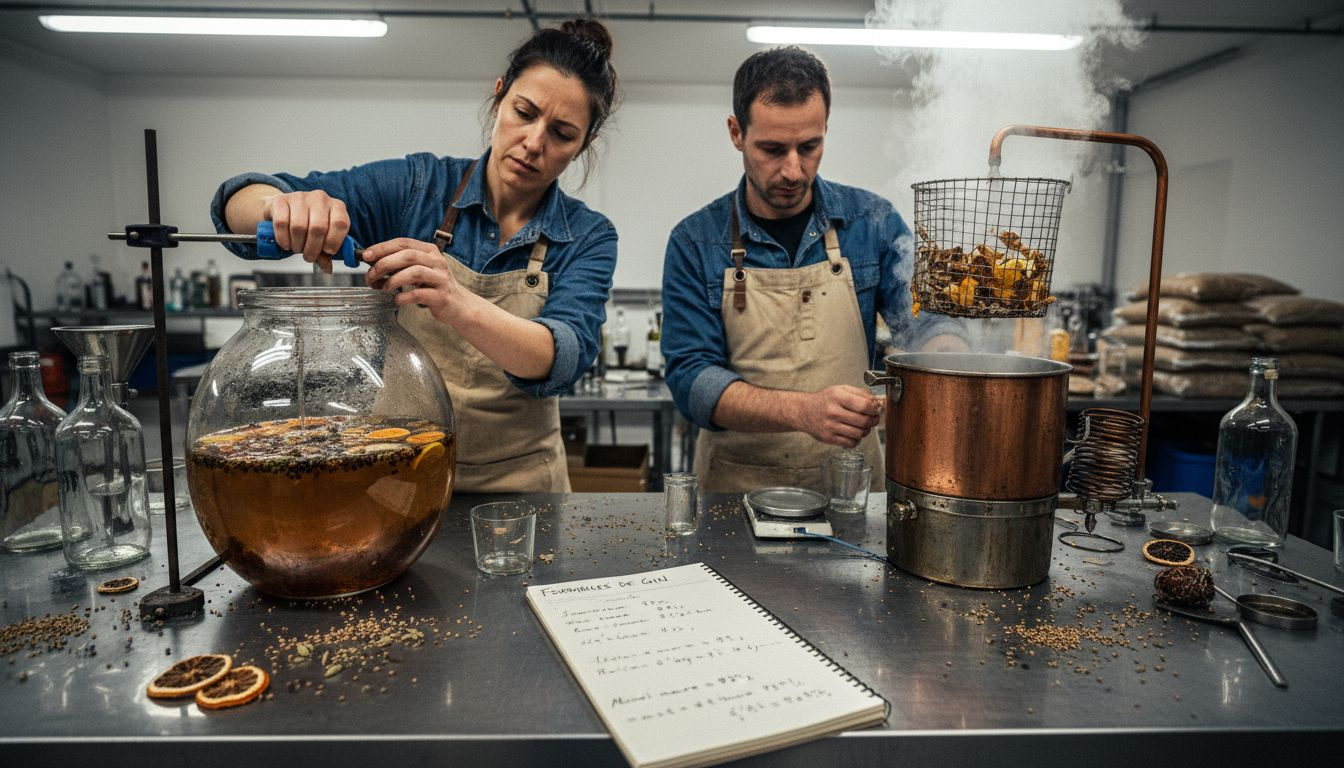
Maceration soaks botanicals directly in neutral alcohol before distillation. This technique extracts essential oils, resins, and soluble compounds. Contact time varies from a few hours to several days depending on the desired potency. The aromas obtained are rich, deep, and sometimes slightly bitter.
Vapor infusion suspends botanicals in a basket above boiling alcohol. Steam passes through the plants and captures only light volatile compounds. This method produces finer, more delicate, and floral notes. Citrus fruits react particularly well to this approach, avoiding excessive bitterness from macerated zests.
| Method | Compounds extracted | Aromatic profile | Optimal use |
|---|---|---|---|
| Maceration | Heavy oils, resins, tannins | Powerful, deep, structured | Juniper, roots, robust spices |
| Vapor infusion | Light volatile compounds | Delicate, floral, fresh | Citrus, flowers, fine herbs |
Italian and French craft distillers often combine both methods. They macerate juniper and spices for structure, then vapor infuse citrus fruits for freshness. This hybrid approach maximizes complexity and aromatic balance. The comparison between maceration and vapor infusion reveals how each technical choice sculpts the final result.
- Maceration intensifies the power and depth of aromas
- Vapor infusion preserves the subtlety and lightness of fragile compounds
- Hybrid approaches optimize each botanical according to its properties
- Contact time determines the final aromatic concentration
Pro tip: Look for mentions of the extraction method on labels. A gin indicating "vapor infused botanicals" favors delicacy and subtlety. This information guides your taste expectations even before opening the bottle.
Botanical Synergies and Aromatic Balance
Botanicals do not work in isolation but create complex chemical interactions. Shared chemical compounds such as alpha-pinene create synergies between botanicals like juniper and coriander, influencing the overall sensory perception. These synergies transform a simple addition of aromas into a multiplication of complexity.
Limonene appears in juniper, citrus fruits, and certain spices. This common molecule creates an aromatic bridge between these botanicals, unifying the taste profile. When you taste a gin, your palate perceives this harmony as a coherent signature rather than a juxtaposition of ingredients.
Coriander and juniper share several terpenes. This molecular affinity explains why these two botanicals are consistently found together. Linalool from coriander softens the piney notes of juniper, creating roundness and accessibility on the palate.
Angelica acts as a balance modulator. Its lactones slow down the evaporation of volatile compounds, allowing aromas to express themselves gradually. This plant prevents excessive dominance of a single note, maintaining a dynamic balance throughout the tasting. Examples of balanced botanical gins concretely illustrate these principles.
- Shared terpenes create aromatic bridges between different botanicals
- Limonene unifies juniper, citrus, and spices into a coherent signature
- Fixatives like angelica orchestrate the gradual release of aromas
- Perceived balance results from molecular interactions, not simple dosages
- A harmonious gin reveals each botanical without any dominating excessively
This understanding of botanical synergies and chemical compounds transforms your approach to tasting. You anticipate the interactions between plants and appreciate the technical mastery behind each craft recipe.
Sustainability and Valorization of Botanical Residues
Gin distillation generates between 2 and 4 kilograms of wet botanical residues per liter produced. These wastes represent a growing environmental challenge for craft distilleries. However, 79 polyphenols are identified before distillation and 60 are still present in the residues, suggesting their bioactive potential and sustainable applications.
These polyphenols retain antioxidant and antimicrobial properties after distillation. Phenolic compounds from juniper, coriander, and citrus fruits remain active despite alcoholic extraction. This molecular richness opens up innovative prospects in natural cosmetics, food supplements, and organic agriculture.
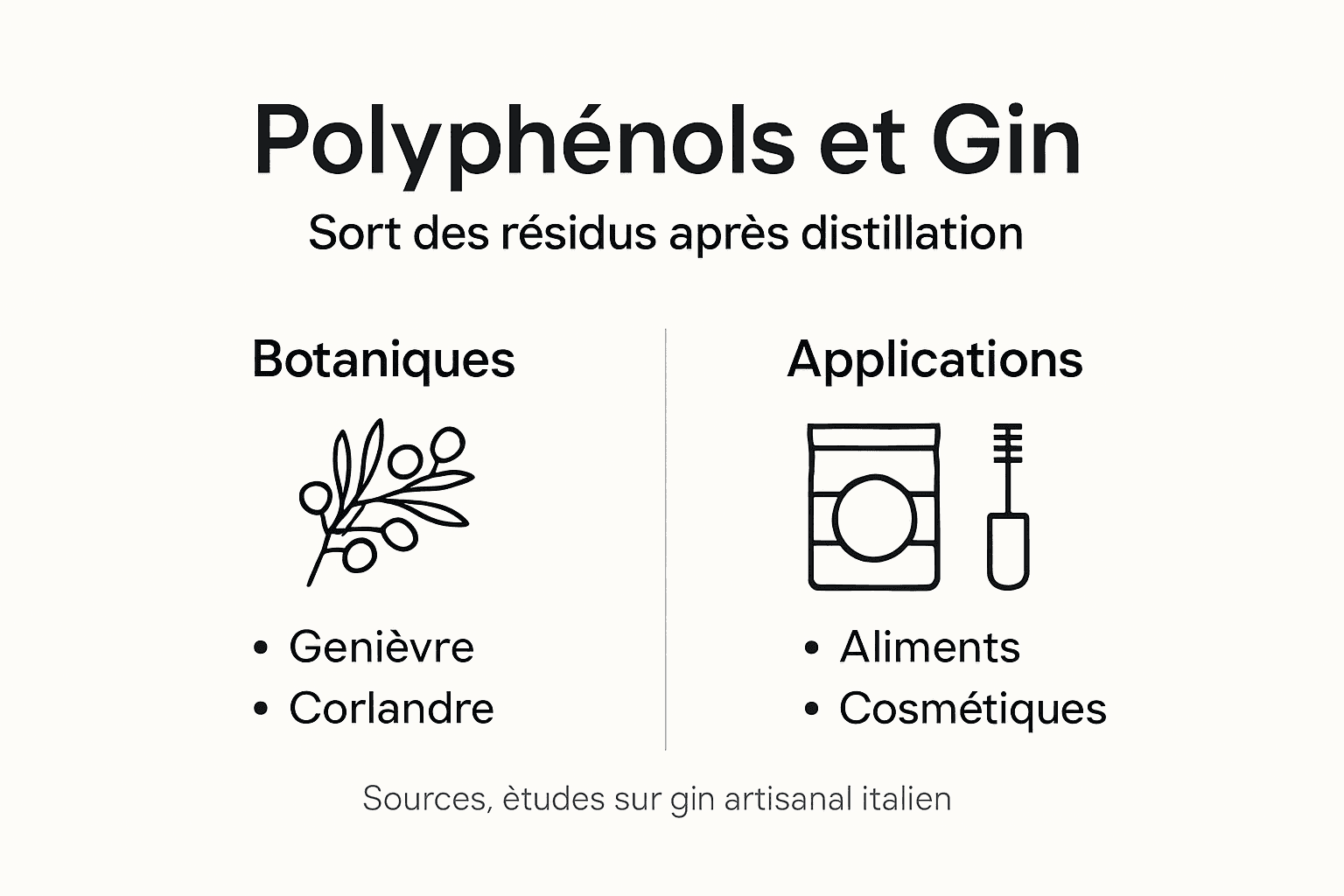
Several pioneering Italian distilleries valorize these residues. Some produce post-distillation botanical infusions sold as aromatic herbal teas. Others create enriched composts for aromatic gardens, closing the plant cycle. Dried citrus residues become garnishes for cocktails or ingredients for craft pastries.
| Residue type | Quantity per liter of gin | Residual polyphenols | Possible applications |
|---|---|---|---|
| Juniper berries | 800-1200g | Quercetin, catechins | Herbal teas, cosmetic extracts |
| Citrus zests | 300-500g | Hesperidin, naringin | Food flavorings |
| Spices and roots | 200-400g | Ferulic acid, curcumin | Supplements, natural colorants | Herbs and flowers | 100-200g | Luteolin, apigenin | Cosmetics, textile dyes |
The polyphenol profile of gin botanicals reveals untapped potential. Craft distilleries are gradually transforming these wastes into complementary revenue, strengthening their circular economic model.
Pro tip: If you visit a craft distillery, ask how they valorize their botanical residues. This question reveals their sustainable commitment and can guide you towards interesting by-products like gin botanical soaps or aromatic salts for cooking.
Common Misconceptions about Botanicals in Gin
Many enthusiasts believe that juniper provides a unique and simple flavor. Juniper is not limited to a simple flavor, but includes several complex compounds contributing to its aromatic richness. This berry contains over 80 different volatile compounds creating resinous, citrus, earthy, and spicy notes simultaneously.
Another common misconception is that only juniper matters in a gin. In reality, secondary botanicals determine 60 to 70% of the final aromatic profile. Coriander, citrus, and angelica shape a gin's character as much as juniper itself. The origins of juniper certainly influence the base, but the complete botanical orchestra creates the taste symphony.
Some consumers think that all gins are produced identically. Extraction methods radically transform the final result. A macerated gin offers power and structure, while a vapor-infused gin favors delicacy and subtlety. The chemical complexity of botanicals interacts differently depending on the chosen technique.
- Juniper is not monotonous but multidimensional with 80+ aromatic compounds
- Secondary botanicals largely shape the final taste profile
- The extraction method profoundly alters the expression of aromas
- A complex gin results from molecular synergies, not simply numerous ingredients
- The quality of botanicals is as important as their quantity or diversity
Understanding these nuances frees you from limiting prejudices. You explore gins with analytical curiosity rather than with rigid expectations based on widespread myths.
How to Choose a Gin Based on its Botanicals
Reading the list of botanicals on a label immediately reveals the expected aromatic profile. The first three ingredients after juniper indicate the main taste orientation. Coriander and citrus signal a classic balanced profile. Pink pepper and cardamom suggest a contemporary spicy direction.
Identify your personal aromatic preference before buying. Do you like fresh and lively notes? Look for gins listing lemon, grapefruit, or cucumber among the primary botanicals. Do you prefer warmth and depth? Favor those mentioning cardamom, cinnamon, or ginger at the top.
Adapt your selection to the intended use. A citrus-rich gin excels in a classic Gin & Tonic, its freshness fully expressing itself with tonic water. A gin with complex spices shines in a Negroni, its structure holding up against vermouth and Campari. The gin tasting guide delves deeper into these pairings.
- Examine the first three botanicals after juniper on the label
- Identify the dominant family: citrus, spices, flowers, or herbs
- Check if the extraction method is mentioned to anticipate intensity
- Start with classic balanced profiles before exploring bold gins
- Always taste neat first to grasp the true botanical personality
- Note your preferences to progressively refine your future choices
Beginners should favor gins listing 6 to 10 botanicals. This range offers complexity without sensory confusion. Advanced enthusiasts can explore recipes with 15+ botanicals to discover sophisticated aromatic symphonies.
Discover our selection of unique artisanal gins
Transform your botanical understanding into a concrete taste experience. Our collection of Italian artisanal gins with unique botanicals brings together passionate distillers mastering the art of aromatic balance. Each bottle tells a distinctive plant story, from Mediterranean juniper berries to Sicilian citrus.

Our gins reflect the botanical synergies described in this article. Distillers select each plant for its specific contribution to the final profile. You will find harmony between juniper and coriander, the vivacity of steam-infused zest, and the depth of macerated roots. Discovering the aromatic components of artisanal gin prepares you to fully appreciate these sophisticated creations. Explore our range and choose according to your newly refined botanical preferences.
FAQ on the role of botanicals in gin
What are the main botanicals used in Italian artisanal gin?
Juniper is obligatorily dominant, followed by coriander, Mediterranean citrus like lemon and bergamot, angelica, cardamom, and sometimes local herbs like rosemary or basil. Italian distillers favor regional botanicals for distinctive territorial signatures.
How does the extraction method influence the final taste of gin?
Maceration extracts heavy compounds, creating power and depth, while vapor infusion captures delicate aromas, producing finesse and lightness. Hybrid approaches combine both to maximize complexity and aromatic balance according to each botanical.
Can one taste residual polyphenols in a gin?
Not directly, because distillation separates alcohol and volatile compounds from non-volatile polyphenols. The latter remain in the post-distillation residues with bioactive potential, but do not appear in the final bottled product.
Do all gins necessarily contain juniper?
Yes, European regulations require juniper to be aromatically dominant for a spirit to legally bear the name gin. Without this predominant organoleptic characteristic, the product must be classified otherwise.
How to recognize a botanically balanced gin?
No single note excessively dominates during a neat tasting. You perceive juniper clearly but harmoniously accompanied by secondary botanicals. The aroma evolves gradually in the mouth, revealing successive layers without abrupt breaks between notes.
Recommendation
- Origin of gin ingredients: 70% of berries come from Europe – Mezzanotte | Distilleria & Spirits
- The Complete Guide to Botanica Gin: Learn All About Botanica Gin 2026 – Mezzanotte | Distilleria & Spirits
- Gin Tasting Guide 2026: Mastering the Art of Tasting – Mezzanotte | Distilleria & Spirits
- 7 Botanical Gins to Try in 2026 for a Unique Taste – Mezzanotte | Distilleria & Spirits