

Learn to prepare authentic classic Italian cocktails with exact 1:1:1 proportions, traditional techniques, and premium artisanal spirits.
Prepare a classic cocktail: 1:1:1 ratio for Negroni
Mar 4, 2026

Preparing an authentic classic Italian cocktail seems simple until you realize the taste doesn't match the original. 30% of enthusiasts report difficulties in accurately replicating authentic classic cocktails. This guide details the precise steps, indispensable equipment, and traditional techniques to achieve professional results that respect Italian mixology culture.
Table of Contents
- Introduction to Classic Italian Cocktails
- Prerequisites for Preparing Classic Cocktails
- Steps for Preparing the Classic Cocktail
- Mixing, Stirring, and Serving Techniques
- Common Mistakes and How to Correct Them
- Expected Results and How to Evaluate Them
- Discover Artisan Italian Spirits to Enhance Your Cocktails
- Frequently Asked Questions about Preparing Classic Italian Cocktails
Key Points
| Point | Details |
|---|---|
| Indigenous ingredients and exact proportions | Using artisan Italian spirits with 1:1:1 measurements ensures authenticity and traditional aromatic balance. |
| Specific equipment for precision | Jigger, mixing glass, and strainer are essential for controlling dilution and maintaining professional quality. |
| Preparation time limit | Not exceeding 5 minutes ensures optimal freshness and prevents the loss of characteristic volatile aromas. |
| Controlled mixing techniques | Applying gentle movements for 20 to 30 seconds prevents excessive dilution and preserves ideal texture. |
| Presentation respecting tradition | Chilled glass and traditional garnish enhance the complete sensory experience of the authentic Italian cocktail. |
Introduction to Classic Italian Cocktails
Italian mixology represents centuries of gastronomic tradition and cultural refinement. Emblematic Italian cocktails like Negroni and Americano have a rich cultural history that transcends the simple mixing of liquids. Each preparation reflects territoriality, ritual, and respect for superior quality ingredients.
Italian artisanal distillation provides unique aromatic profiles that are impossible to replicate with generic industrial products. Knowing the history of Italian bitter allows one to appreciate every nuance and understand why exact proportions are sacred in this tradition. Tools and techniques passed down through generations define the authenticity of the final result.
These essential cultural elements include:
- Absolute respect for historical proportions established in centuries-old recipes
- Exclusive use of artisanal spirits with a distinctive aromatic identity
- Application of mixing techniques that preserve the integrity of original flavors
- Visual presentation that honors refined traditional Italian aesthetics
- A leisurely preparation ritual that values quality over speed
Exploring the practical guide to Italian flavors and aromas complements this fundamental knowledge to deeply appreciate each cocktail.
Prerequisites for Preparing Classic Cocktails
Before you begin, you need to gather authentic ingredients and specific tools that ensure professional precision. The quality of each element directly impacts the final result and fidelity to the traditional Italian aromatic profile.
Basic utensils like a jigger, bar spoon, and strainer are indispensable for precision and quality. Without exact measurement, proportions deviate, and the characteristic balance is completely lost. Controlled temperature makes the difference between a mediocre and an exceptional cocktail.
Essential ingredients for authenticity:
- Artisan Italian gin with a defined and traditional botanical profile
- Italian-produced red vermouth respecting historical methods
- Authentic Italian bitter with balanced and aromatic bitterness
- Large ice cubes from filtered water for minimal dilution
- Fresh citrus for garnish according to specific cocktail tradition
| Equipment | Function | Importance |
|---|---|---|
| Jigger | Exact measurement | Ensures precise 1:1:1 proportions |
| Mixing glass | Gentle integration | Preserves delicate clarity and texture |
| Bar spoon | Controlled mixing | Prevents unwanted excessive aeration |
| Strainer | Filtering ice | Prevents additional dilution when serving |
| Chilled glasses | Maintaining temperature | Prevents rapid warming of the cocktail |
Pro tip: Organize all ingredients and tools at your workstation before starting. This pre-preparation eliminates rushes, reduces errors, and ensures a smooth, professional workflow.
The guide to artisan Italian spirits will help you select products with authentic storytelling and superior quality. Investing in artisan Italian spirits completely transforms the sensory experience of the final cocktail.
Steps for Preparing the Classic Cocktail
The correct sequence determines the total success of your authentic Negroni. Each step has a specific purpose and precise timing that you cannot omit without obvious consequences.
Ideal preparation should not exceed 5 minutes to preserve freshness and flavor. Exceeding this limit compromises aromatic vivacity and allows unwanted oxidation of delicate ingredients.
-
Chill your glass for at least 5 minutes before preparing the cocktail. It is essential to chill the glass for at least 5 minutes before serving to prevent early dilution. A warm glass melts the ice instantly and ruins the carefully calculated balance.
-
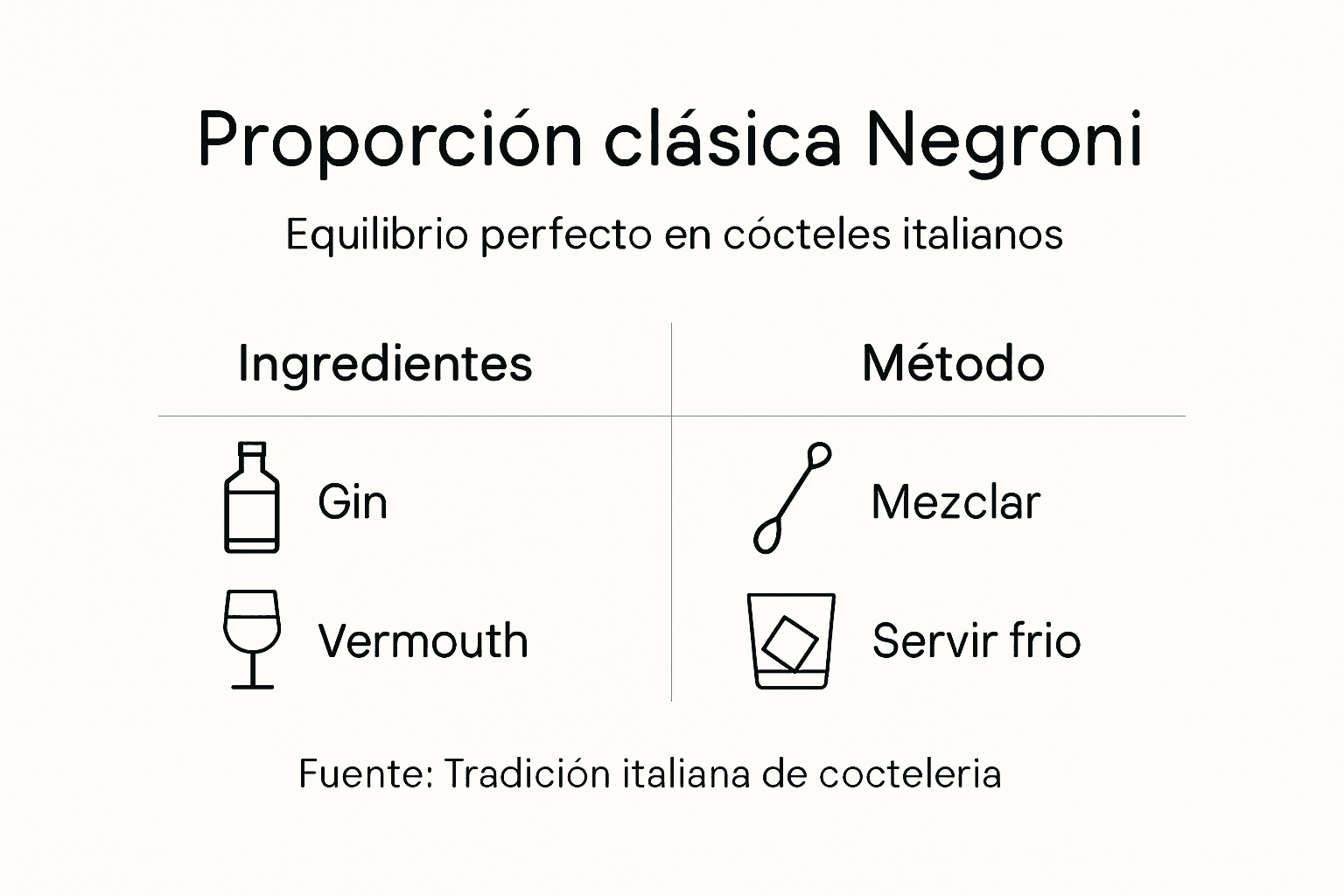
Precisely measure 30 ml of artisan Italian gin using your jigger with absolute accuracy. The classic Negroni has equal 1:1:1 parts of gin, red vermouth, and Campari, respecting the historical proportion that defines its unique aromatic identity.
-
Add 30 ml of Italian red vermouth to the mixing glass with a gentle and controlled movement. Continue with 30 ml of Italian bitter, maintaining the established logical sequence.
-
Add large ice cubes until three-quarters of the mixing glass is filled without compacting. Stir with a bar spoon for 20 to 30 seconds using uniform and deliberate circular movements.
-
Let the mixture rest for 30 to 60 seconds to stabilize temperatures and harmonize flavors completely. This seemingly minor step integrates the aromas extraordinarily.
-
Strain the contents into your pre-chilled glass using a fine strainer to retain ice fragments. Garnish with a fresh orange slice, respecting the established traditional Italian presentation.
Pro tip: Prepare and measure all ingredients in advance in small individual containers. This professional technique speeds up the process during execution and eliminates common measurement errors under pressure.
Follow the step-by-step guide with artisanal gin to explore advanced variations while maintaining cultural authenticity. Consulting the original Negroni recipe confirms your historical fidelity, while the ideal time to prepare cocktails and the importance of chilling the glass validate best professional practices.
Mixing, Stirring, and Serving Techniques
Mastering the difference between shaking and stirring defines your level of sophistication in Italian mixology. The difference between shaking and stirring directly impacts the texture and flavor of the final cocktail in ways impossible to correct later.
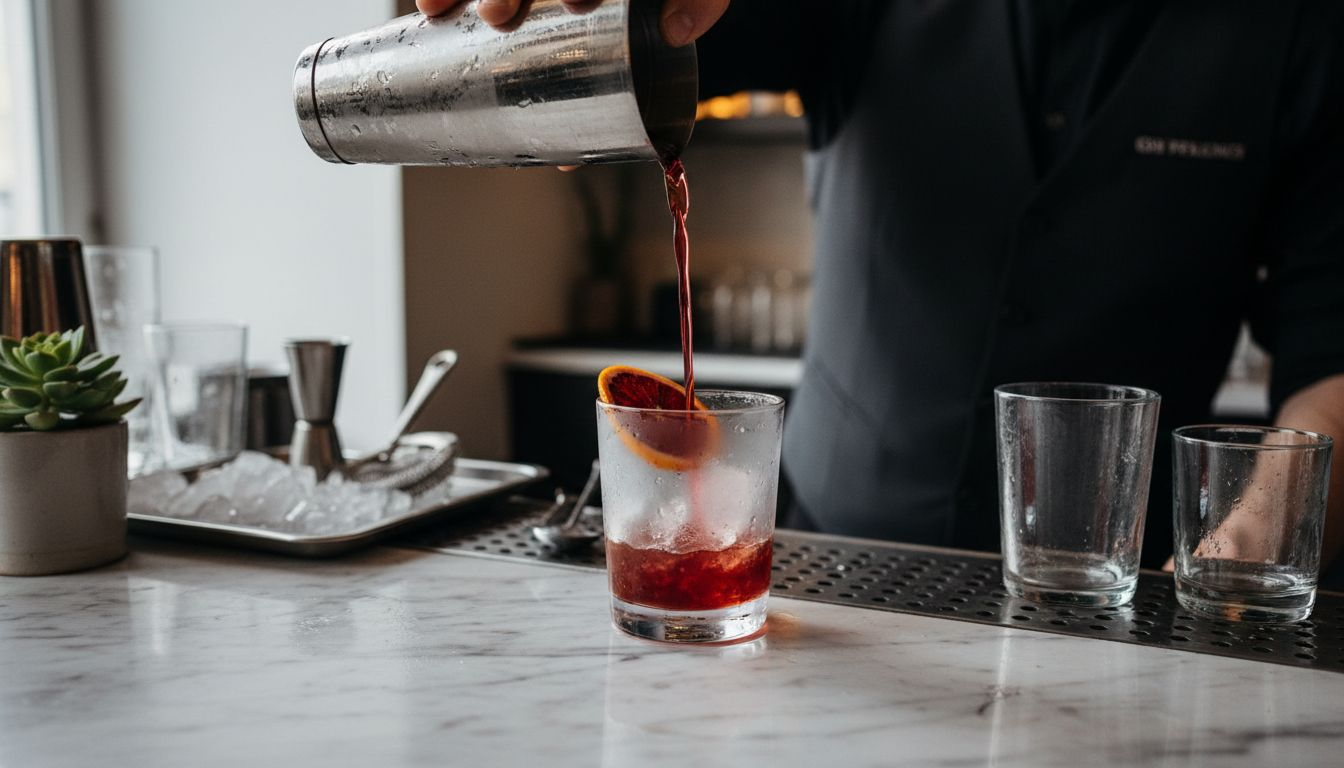
Shaking with a shaker integrates dense or disparate ingredients, creating an emulsion and light aeration. Gentle stirring with a spoon preserves the crystal clarity and silky texture characteristic of traditional stirred cocktails. The Negroni categorically belongs to the latter category and requires delicate movements.
| Method | Tool | Time | Dilution | Ideal for |
|---|---|---|---|---|
| Stirring | Mixing glass + spoon | 20-30 sec | Minimal controlled | Negroni, Americano, Manhattan |
| Shaking | Boston shaker | 15-20 sec | Medium to high | Margarita, Daiquiri, Whiskey Sour |
Ice plays a crucial role in controlling dilution and final temperature. Large cubes melt slowly, preserving intact aromatic concentration for longer. Crushed ice melts quickly and is appropriate only for frozen cocktails served immediately.
Frequent technical errors that ruin your preparation:
- Shaking cocktails that should be gently stirred creates an unaesthetic cloudiness
- Stirring for less than 20 seconds does not integrate temperatures uniformly
- Exceeding 30 seconds results in excessive dilution that weakens flavors
- Using small ice accelerates melting and unbalances established proportions
- Omitting the strainer allows ice fragments that continue to dilute the cocktail
Pro tip: Use a mixing glass exclusively for stirred cocktails and a shaker only for shaken ones. Respecting this basic principle ensures appropriate texture and clarity according to the historical tradition of each classic preparation.
Final service requires a perfectly chilled glass and specific traditional garnish. Discover the types of garnish for Italian cocktails that respect cultural aesthetics and complement the aromatic profile without artificially dominating it.
Common Mistakes and How to Correct Them
Even experienced enthusiasts make mistakes that compromise the authenticity and quality of the final cocktail. Identifying these errors before committing them saves frustration and waste of costly premium ingredients.
Critical errors and their immediate solutions:
- Over-dilution from prolonged mixing: Strictly limit to a maximum of 20 or 30 seconds. Use a timer if you need to develop precise timing sensitivity.
- Inaccurate ingredient measurement: Always use a professional jigger or digital scale. Visual estimations generate unacceptable variations in each preparation.
- Omitting glass chilling: Freeze glasses for at least 5 minutes beforehand. 40% omit this crucial step, compromising ideal temperature from the first sip.
- Not respecting the logical sequence: Follow the established order religiously. Each step prepares conditions for the next in an interdependent way.
- Using generic industrial alcohols: Invest in authentic artisanal Italian spirits. The aromatic difference completely justifies the modest additional cost.
30% of preparers shake excessively, destroying the characteristic clarity of the traditional Negroni. This common error results from impatience or lack of knowledge about the precise timing required for optimal integration.
Pro tip: Perform a discreet taste test before serving to a large group. Adjust measurements subtly if you detect an imbalance, noting modifications to replicate exactly in future successful preparations.
Avoiding generic alcohols in cocktails dramatically elevates aromatic complexity and depth of flavor. Artisanal spirits provide nuances impossible to achieve with mass-produced products lacking distinctive identity.
Expected Results and How to Evaluate Them
Correctly evaluating your finished cocktail requires specific criteria based on established Italian cultural standards. Authenticity is measured in precise sensory dimensions and impeccable traditional visual presentation.
Evaluation criteria for an authentic Negroni:
- Total preparation time less than 5 minutes, preserving optimal aromatic freshness
- Perfectly balanced flavor reflecting exact 1:1:1 proportions without dominance of any ingredient
- Consistent cold temperature without perceptible watery dilution on the palate during tasting
- Crystal clarity without cloudiness or suspended particles visible against the light
- Complex aroma with herbal notes from gin, bitterness from bitter, and subtle sweetness from vermouth
- Deep ruby red color characteristic without dull or faded tones
The visual presentation confirms respect for refined Italian cultural tradition. A chilled glass without excessive condensation, a uniformly cut fresh orange slice, and the absence of fingerprints on the glass demonstrate professional attention to detail.
Comparing your result with authentic historical descriptions and classic photographs validates cultural fidelity. Traditional Italian recipes prioritize harmonious balance over disruptive innovation or whimsical personalization without solid historical foundation.
Evaluating presentation and traditional garnish ensures complete aesthetic coherence with established cultural standards passed down through generations. Each visual element communicates respect for authentic and refined Italian mixology heritage.
Discover Artisan Italian Spirits to Enhance Your Cocktails
Mastering technique is just the beginning of your journey towards excellence in authentic Italian mixology. Ingredients define the ceiling of achievable quality, and artisanal spirits make differences impossible to compensate with technical skill.

At Mezzanotte, we offer artisanal Italian spirits specifically selected for classic cocktails with guaranteed cultural authenticity. Each product tells a unique story while respecting centuries-old traditions of refined distillation. Our guide to artisanal Italian spirits helps you choose wisely based on your desired aromatic profile.
Explore our artisanal Italian gin with indigenous botanicals that radically transform the complexity of your Negroni. Consult the guide to choose exclusive spirits and discover how authentic storytelling enriches every sip of your perfect artisanal creation.
Frequently Asked Questions about Preparing Classic Italian Cocktails
Why is it important to measure ingredients exactly?
The 1:1:1 ratio defines the aromatic identity of the Negroni, and any deviation alters the established historical balance. Measuring with a jigger ensures professional consistency in each preparation and allows for replicating successful results exactly.
What is the difference between shaking and stirring a cocktail?
Shaking integrates dense ingredients, creating an airy and light texture with greater dilution. Stirring gently preserves the crystal-clear clarity characteristic of stirred cocktails like the traditional Italian Negroni.
Can a Negroni be prepared without chilling the glass?
Technically yes, but it seriously compromises the full sensory experience of the cocktail. A warm glass melts ice quickly, causing excessive dilution and an inadequate temperature from the first disappointing sip.
Which spirits are best for classic Italian cocktails?
Artisanal Italian spirits with a traditional botanical profile and historical production methods guarantee aromatic authenticity. Avoid generic industrial products that lack the characteristic complexity and depth required.
How long should preparation take to maintain freshness?
Less than 5 total minutes from start to final service optimally preserves volatile aromas. Exceeding this limit allows for oxidation of delicate ingredients and loss of the distinctive aromatic vibrancy of a freshly prepared cocktail.
Recommendation
- Gin Tonic Recipe 2026: 50ml Gin for Perfect Balance – Mezzanotte | Distillery & Spirits
- Cocktails with Vodka: 3 Recipes for 70% of Mixologists 2026 – Mezzanotte | Distillery & Spirits
- 6 best gin-based cocktails to discover absolutely – Mezzanotte | Distillery & Spirits
- Step by step cocktail with artisanal gin: easy guide – Mezzanotte | Distillery & Spirits