

Discover the 5 objective criteria that define a premium Italian gin: local botanicals, artisanal distillation, storytelling, design, and sensory profile.
Italian Premium Gin 2026: 73% value local botanicals
Mar 4, 2026

Italian Premium Gin 2026: 73% Value Local Botanicals
The Italian craft spirits market is undergoing a silent revolution. Demanding connoisseurs are no longer satisfied with just a high-end label. 73% of European consumers value local ingredients as a guarantee of quality, radically transforming purchasing criteria. This search for authenticity redefines the definition of premium gin, where each botanical tells a story and each bottle bears the imprint of the terroir. Understanding these criteria becomes essential for navigating the world of Italian craft spirits intelligently.
Table of Contents
- Key Takeaways
- Introduction to the Concept of Premium Gin
- Botanical Composition and Local Sourcing
- Artisanal vs. Industrial Distillation Process
- Cultural Storytelling as an Added Value Criterion
- Design and Packaging: A Reflection of Quality
- Specific Sensory Criteria for Premium Gin
- Demystifying Misconceptions about Premium Gin
- Practical Application: How to Choose Your Premium Gin at Mezzanotte.shop
- Discover the Best Italian Premium Gins on Mezzanotte.shop
- Frequently Asked Questions about Premium Gin Criteria
Key Takeaways
| Point | Details |
|---|---|
| Certified local botanicals | Ingredient traceability guarantees authenticity and superior aromatic complexity |
| Low-temperature artisanal distillation | Preserves delicate compounds and creates an unparalleled nuanced taste profile |
| Authentic cultural storytelling | 40% of buyers prioritize history and terroir over price alone |
| Sustainable design and packaging | 54% of purchasing decisions are influenced by aesthetics and eco-responsible materials |
| Verifiable sensory criteria | Aromatic complexity, round texture, and long finish distinguish true premium |
Introduction to the Concept of Premium Gin
The term premium doesn't simply mean a high price. A premium gin is distinguished by a rigorous combination of measurable factors. The quality of ingredients forms the foundation, but the distillation method, cultural heritage, and sensory experience create the perceptible difference. Standard gins often use generic botanicals and fast industrial processes.
The premium gin concept rests on three fundamental pillars. First, the meticulous selection of traceable and often local botanicals. Second, artisanal distillation that respects long times and low temperatures. Finally, an authentic cultural narrative that connects the product to its region of origin. This trilogy creates an experience that transcends the simple act of consumption.
Italian connoisseurs play a driving role in this qualitative evolution. Their educated palates and attachment to local traditions make them particularly sensitive to nuances. 40% of consumers evaluate premium gin by its history and authenticity rather than by cost, revealing market maturity. This holistic approach values the artisan behind the bottle.
The distinction of premium gin is also observed in transparency. True producers detail their sources, methods, and botanical choices. This openness contrasts with the opacity of industrial brands that hide their shortcuts behind expensive marketing campaigns. The informed consumer seeks this transparency as a guarantee of trust.
Objective criteria include:
- Number and diversity of botanicals used
- Geographical origin and certification of ingredients
- Type of distillation and number of passes
- Presence of a coherent and verifiable storytelling
- Quality of finishes and ecological packaging
Botanical Composition and Local Sourcing
The botanical palette defines the soul of gin. A premium gin typically includes between 8 and 15 carefully selected botanicals, compared to 4 to 6 for a standard gin. This diversity allows for aromatic layering where each note finds its place without dominating the whole. Botanicals and polyphenols interact to create taste profiles impossible to replicate industrially.
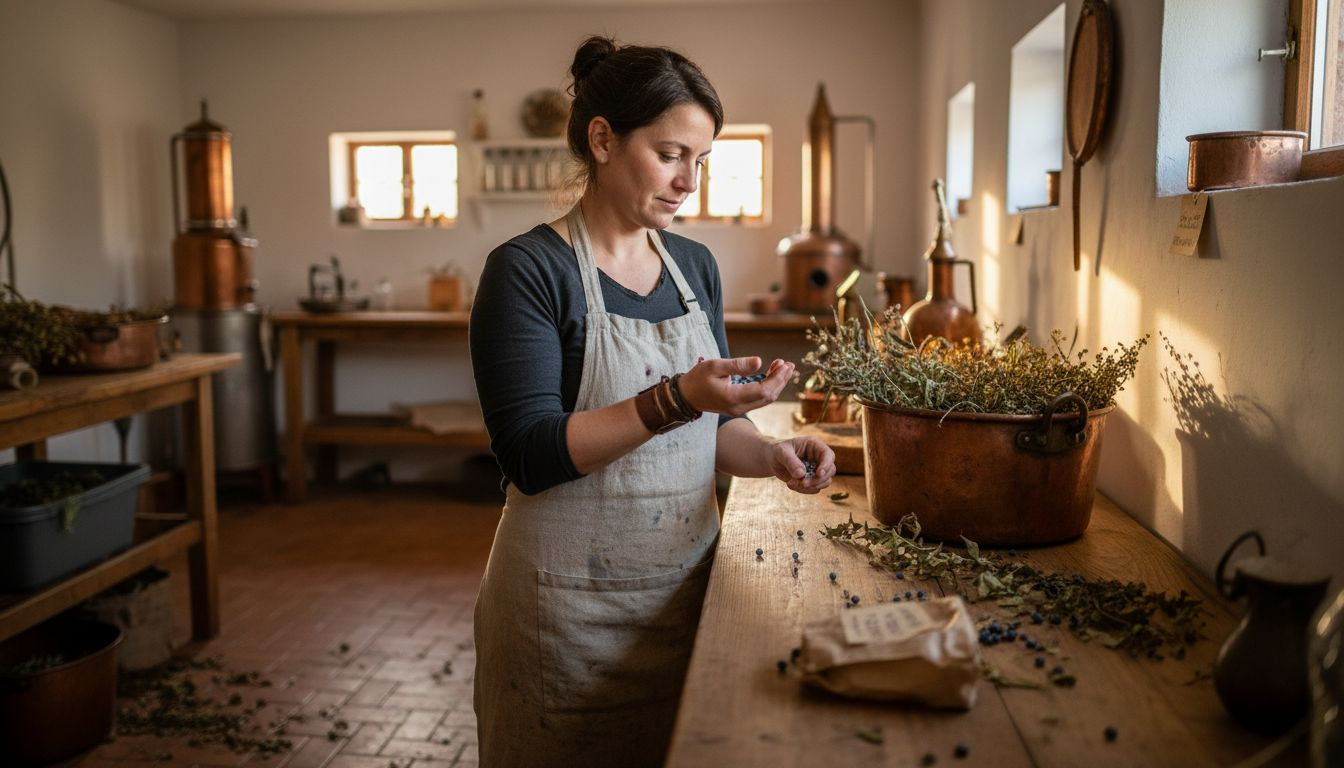
Traceability becomes a non-negotiable criterion for purists. Knowing the precise origin of juniper berries, citrus fruits, and aromatic herbs guarantees the quality and authenticity of the final product. Premium Italian distilleries favor artisanal gin botanicals grown in their region, creating a unique territorial signature. This local approach also reduces the carbon footprint.
Ingredient provenance directly influences aromatic complexity. Tuscan juniper berries differ significantly from those in the Balkans due to their higher alpha-pinene concentration. Sicilian citrus fruits provide a vibrant acidity that Spanish lemons do not replicate. These micro-terroir nuances create gins deeply rooted in their geography.
| Botanical type | Local origin | Imported origin |
|---|---|---|
| Juniper berries | Tuscany, high alpha-pinene concentration | Balkans, more neutral profile |
| Citrus fruits | Sicily, vibrant acidity and complex essential oils | Spain, standardized aromas |
| Aromatic herbs | Regional wild harvesting, maximum freshness | Intensive cultivation, attenuated aromas |
| Spices | Artisanal selection, custom roasting | Industrial batches, forced homogeneity |
Pro Tip: Always check for provenance certifications on the label. Protected geographical indications or organic labels attest to a verifiable commitment to quality. Be wary of vague mentions like "selected botanicals" without specifying origin.
Transparent producers publish the complete list of their botanicals with their exact origin. This honesty allows the consumer to understand the aromatic choices and recognize the consistency between the terroir and the taste profile. A Tuscan gin using mostly local botanicals tells a geographical story that is legible on the palate.
Artisanal vs. Industrial Distillation Process
The distillation method radically separates premium from ordinary. Low-temperature artisanal distillation preserves delicate aromas, creating a superior taste profile impossible to achieve with fast industrial processes. Traditional copper stills allow precise heat control, essential for extracting delicate volatile compounds without denaturing them.
Industrial distilleries heat quickly to maximize volumes. This urgency literally burns subtle notes, leaving a flat, one-dimensional aromatic profile. In contrast, Italian micro-distilleries use cycles of 6 to 8 hours at controlled temperatures. This patience is rewarded with a roundness on the palate and a layered aromatic complexity.
Artisanal distillation methods often include multiple passes. The first extracts the basic aromas, the second refines and purifies, creating a silky texture. Experienced distillers eliminate the heads and tails of distillation, retaining only the pure aromatic heart. This technical rigor costs in yield but gains exponentially in quality.
Concrete examples of Italian micro-distilleries:
- Distilleria Marzadro uses discontinuous stills for its limited series
- Gin del Professore distills in small batches of maximum 50 liters
- Cold maceration processes before distillation for certain sensitive botanicals
- Permanent manual control of temperature and flow rate
Pro Tip: Prefer gins that explicitly mention "small batch" or "batch distillation" on the label. These indications guarantee individual attention to each production. Numbered series also attest to an authentic artisanal approach rather than continuous industrial production.
The taste difference is immediately apparent on the nose. An artisanally distilled gin reveals successive aromatic layers that evolve in the glass. Fresh top notes give way to floral hearts, then to spicy bases. This complex olfactory architecture contrasts with the linearity of industrial products.
Cultural Storytelling as an Added Value Criterion
The story told by a premium gin enhances the experience far beyond taste. Authentic narratives rooted in Italian terroirs create a powerful emotional connection. A gin inspired by Venetian myths or Sicilian traditions transports the consumer into a coherent cultural universe. This narrative dimension economically justifies a premium positioning.
Storytelling and premium gins should never be artificial. Connoisseurs quickly detect fabricated narratives for marketing purposes. Authenticity relies on verifiable links between the product and its history. A family distillery passed down through three generations has a narrative legitimacy that a brand created yesterday cannot invent.
Local traditions directly influence botanical choices and methods. An alpine gin will naturally use hand-picked mountain herbs. This consistency between territory, history, and composition creates a recognizable signature. Italian consumers, deeply attached to their regional roots, particularly value this territorial authenticity.
Examples of successful storytelling:
- Gins inspired by Greek mythology with Mediterranean botanicals
- References to 17th-century Italian apothecaries' traditions
- Collaborations with local artists for label design
- Spirits celebrating regional cultural heroes or popular legends
- Packaging reproducing local historical architectural motifs
The deconstruction of myths reveals their impact on perception. A brand that tells the story of a passionate master distiller creates more emotional value than a simple list of ingredients. This narration transforms the act of purchase into participation in a cultural adventure. The consumer becomes an ambassador for a story they wish to share.
Visual iconography reinforces the narrative. Labels featuring Italian Art Nouveau motifs or illustrations inspired by the Renaissance create aesthetic coherence. This attention to graphic detail reflects the overall care given to the product. Coherent storytelling runs through all touchpoints with the brand.
Design and Packaging: A Reflection of Quality
Packaging instantly communicates quality positioning even before the first sip. 54% of premium consumers are influenced by design and packaging in their purchasing decision, confirming the importance of this visual dimension. A carefully designed bottle signals the attention paid to every detail of production. This coherence reassures about the quality of the content.
Sustainable materials are becoming a standard expected by conscious consumers. Recycled thick glass, FSC-certified paper labels, and natural cork stoppers are gradually replacing plastic options. This ecological evolution aligns with the values of premium enthusiasts who seek responsible consumption. Sustainable design and packaging add an ethical dimension to the experience.
| Criterion | Standard packaging | Premium artisanal packaging |
|---|---|---|
| Materials | Thin glass, plastic | Thick recycled glass, natural cork |
| Label | Standard glued paper | Certified textured paper, screen printing |
| Design | Generic, global trends | Unique, local cultural references |
| Sustainability | Not a priority | Recyclable materials, vegetable inks |
Typography and graphic choices reveal artisanal care. Hand-screen-printed labels or engraved batch numbers testify to a non-industrial approach. These subtle details create a perception of rarity and exclusivity. The feel of textured paper or the weight of the bottle contributes to the overall sensory experience.
Aesthetic criteria impacting the decision:
- Visual coherence between label, stopper, and bottle
- Originality of design without falling into gratuitous extravagance
- Legibility of essential information on provenance and composition
- Quality of printing and meticulous finishes without defects
- Ability of the bottle to become a decorative object after consumption
Packaging visually tells the product's story. A bottle inspired by Venetian architecture with reliefs evoking canals creates immediate immersion. This visual narration complements the verbal storytelling. Consumers sometimes collect these bottles as works of art, extending their relationship with the brand.
Specific Sensory Criteria for Premium Gin
Tasting immediately reveals the real quality beyond marketing. Aromatic complexity is the first reliable indicator. A premium gin reveals several successive layers on the nose rather than a single dominant note. This olfactory stratification testifies to the quality of the botanicals and the mastery of distillation. Aromas evolve in the glass over several minutes.
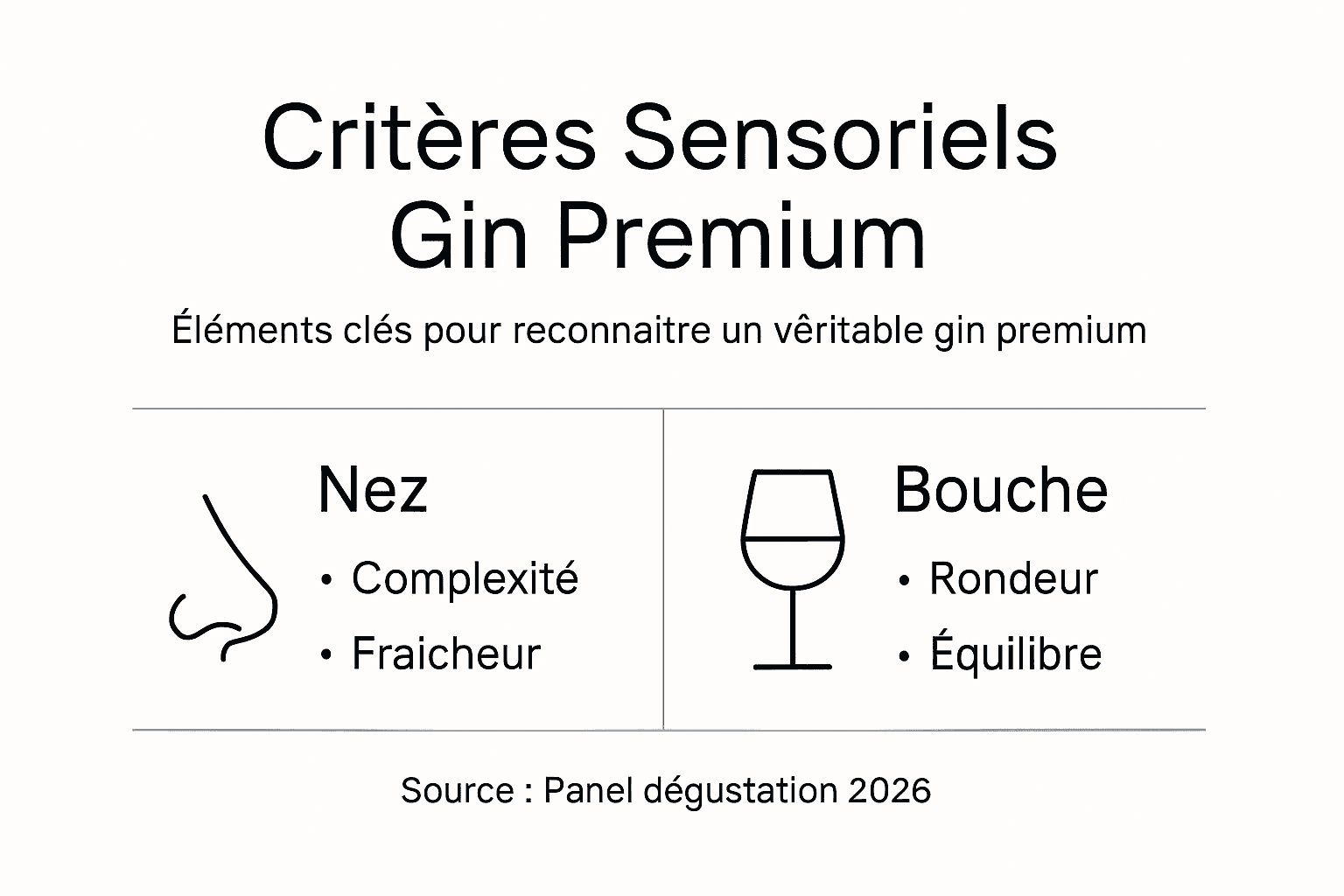
The texture in the mouth radically differentiates premium from standard. A round, almost velvety sensation envelops the palate without alcoholic harshness. This softness results from careful distillation and the absence of industrial shortcuts. High-quality premium gins glide across the palate with an elegance that contrasts with the roughness of ordinary products.
The length of the finish is the ultimate test. An exceptional gin lingers on the palate for 30 seconds or more after swallowing, revealing new notes at every moment. This prolonged aromatic persistence signals the richness of complex volatile compounds. Standard gins disappear quickly, leaving a flat impression.
Tips for identifying these criteria during a tasting:
- Pour the gin neat at room temperature into a tulip glass to concentrate the aromas
- Observe the olfactory evolution for 2-3 minutes before tasting
- Take a small sip and let the liquid cover the entire tongue
- Note the balance between juniper, citrus, and secondary botanicals
- Wait 30 seconds after swallowing to assess aromatic persistence
The aromatic balance reveals the distiller's mastery. No single botanical should brutally dominate the whole. Juniper remains present but allows complementary notes to express themselves. This delicate harmony requires precise formulation that cannot be achieved by chance. The best premium gins achieve a coherence where each element supports the others.
Debunking common myths about premium gin
Several myths persist around premium gin and deserve clarification. Understanding these common misconceptions prevents disappointing purchases and refines personal judgment.
-
High price automatically guarantees premium quality. False. Some brands artificially inflate their prices through massive marketing campaigns without improving the product. Always evaluate objective criteria such as the origin of the botanicals and the distillation method before relying on price alone.
-
All artisanal gins are automatically premium. Incorrect. Artisanal refers to small-scale production methods, not necessarily superior quality. A gin can be artisanal with mediocre ingredients or approximate distillation. Premium demands excellence at all levels.
-
Design does not influence the real taste of the product. Partially true but misleading. While packaging does not chemically alter the liquid, it powerfully shapes expectations and taste perception. Studies show that the brain perceives the same gin differently depending on its presentation. Design is an integral part of the premium experience.
-
Modern industrial distillation equals artisanal quality. Absolutely false. Industrial processes optimize volume and profitability to the detriment of aromatic nuances. High temperatures and rapid cycles destroy fragile compounds that artisanal distillation carefully preserves.
-
The more botanicals, the better the gin. Not necessarily. Quality outweighs quantity. Fifteen mediocre botanicals create an aromatic cacophony, while eight exceptional, well-balanced botanicals produce a gustatory symphony. Mastery of formulation matters more than the raw number of ingredients.
Practical application: how to choose your premium gin at Mezzanotte.shop
Applying the previous criteria concretely transforms your purchases. Mezzanotte.shop facilitates this informed selection through an organization designed for demanding enthusiasts. Start by analyzing the producer's transparency regarding the origin of the ingredients. Detailed product sheets immediately reveal the distillery's seriousness.
Always prioritize mentions of artisanal distillation and small batches. This information clearly appears on the product descriptions of the Italian artisanal gin selection. Numbered limited editions guarantee individual attention impossible in industrial production. Also check for organic certifications or regional quality labels.
Evaluate the authenticity of the storytelling by looking for consistency. A verifiable story rooted in a specific terroir with documented cultural references outweighs a vague marketing narrative. The best gins tell the story of their region of origin through their botanicals. The 2026 distillation guide explains how these technical choices influence the final profile.
Design and packaging deserve as much attention as the content. Look for durable materials and meticulous finishes that demonstrate the producer's respect for their work. A well-designed bottle with complete and legible information demonstrates transparency. The botanicals in the gin should be precisely listed on the label.
Navigation criteria on Mezzanotte.shop:
- Filter by geographical origin to discover Italian terroirs
- Consult detailed descriptions of the botanicals used
- Check indications on the distillation method
- Read the cultural narratives associated with each gin
- Compare the finishes and packaging materials
Pro tip: Start by ordering a gin representative of each major Italian region to educate your palate to territorial differences. This comparative exploration reveals how terroir directly influences aromatic profiles. Note your impressions to gradually refine your personal preferences.
The platform allows you to cross-reference objective criteria with your subjective tastes. If you prefer floral notes, lean towards gins using Mediterranean botanicals. For more spicy profiles, look for distillates incorporating roasted local spices. This methodical approach guarantees satisfying purchases aligned with your precise expectations.
Discover the best Italian premium gins on Mezzanotte.shop
You now master the objective criteria that define a true Italian premium gin. Mezzanotte.shop brings together a rigorous selection of Italian artisanal gins that meet these high standards. Each distillate presented has a distinctive aromatic identity rooted in its terroir of origin.

Our platform simplifies your search with detailed fact sheets that reveal the origin of the botanicals, the distillation methods, and authentic cultural storytelling. The 2026 distillation guide helps you avoid common mistakes and immediately recognize quality markers. Explore the botanicals of artisanal gin to understand how each ingredient contributes to the final profile. Transform your knowledge into an exceptional tasting experience.
Frequently asked questions about the criteria for a premium gin
What is the precise difference between artisanal gin and premium gin?
Artisanal gin refers solely to small-scale, often manual, production methods. Premium gin combines this artisanal approach with traceable, high-quality ingredients, controlled distillation, and authentic cultural storytelling. A gin can be artisanal without reaching a premium level if the ingredients or method remain average.
How do you recognize good storytelling in a gin?
Authentic storytelling has verifiable links between the narrative, the terroir, and the botanical composition. Look for precise cultural references, a coherent history with the production region, and ingredient choices that illustrate the narrative. Beware of generic or unverifiable stories created solely for marketing.
Does design really influence perceived taste?
Yes, scientifically proven. The brain conditions taste expectations according to visual presentation, actually modifying the perception of aromas. Careful packaging psychologically prepares for a premium experience, making the taster more receptive to subtle nuances. This psychosensory influence is an integral part of the overall experience.
What are the signs of successful artisanal distillation?
Look for a round mouthfeel without alcoholic harshness, an aromatic complexity that evolves in the glass, and a long, persistent finish. Mentions of small batches, low-temperature distillation, and multiple passes on the label confirm an artisanal approach. The presence of serial numbers also attests to limited and controlled production.
How many botanicals make an ideal number for a premium gin?
There is no magic number, but generally between 8 and 15 well-balanced botanicals. Quality and harmony outweigh raw quantity. A gin with 10 exceptional, perfectly proportioned botanicals surpasses a gin with 20 mediocre, poorly balanced ingredients. Prioritize aromatic coherence over accumulation.
Do organic certifications automatically guarantee a premium gin?
No, but they are a positive indicator of ingredient quality. Organic certification attests to respectful agricultural practices but does not guarantee distillation mastery or aromatic balance. Combine this criterion with evaluation of the production method and sensory profile for a complete judgment.
Recommendation
- Gin Collection 2026: Complete Guide for 90% More Precision – Mezzanotte | Distilleria & Spirits
- Italian Gin Guide: Discover the Secrets of 2026 – Mezzanotte | Distilleria & Spirits
- Tips for tasting gin: 57% more sensory experience – Mezzanotte | Distilleria & Spirits
- Gin-Trends 2026: 72% prefer sustainable premium products – Mezzanotte | Distilleria & Spirits