

Why collect gin, types of artisanal gin, the value of design and narrative, investment and risks in Central Europe.
Why Collect Gin: Culture, Design, and Identity
Feb 24, 2026

Discovering a craft gin can mean finding a piece that transforms your collection in Central Europe. For those who value exclusive products with an authentic cultural narrative and curated design, craft gin stands out for its meticulous production and superior quality botanicals. Far from prejudices about its exclusivity, the manual process and detailed selection elevate the experience. This article will help you identify the elements that define the authenticity and value of each bottle, from its origin to its visual storytelling.
Index
- Craft gin: definitions and prejudices
- What truly defines craft gin
- The most common prejudices
- The reality of craft production
- Collectible gin types and unique narratives
- The great collectible styles
- Why each type deserves a place in your collection
- Building a balanced collection
- Design features and cultural storytelling
- Design as a visual language
- Cultural storytelling and emotional connections
- Visual identity as a mark of authenticity
- How to evaluate design and narrative
- Value, investment, and risks in collecting
- What determines collectible value
- Real market risks
- Conservation: the invisible factor of value
- Smart investment strategy
- Difference between passion and investment
- Common mistakes and alternatives in Central Europe
- The five most costly mistakes
- The over-accumulation syndrome
- Smart alternatives for Central European collectors
Key Conclusions
| Point | Details |
|---|---|
| Craft vs. Industrial Production | Craft gin is produced in small batches with detailed quality control, unlike industrial gin which uses automated processes. |
| Unique Aromatic Profiles | Craft gins offer complex and diverse profiles, while industrial gins tend to be homogeneous and repetitive. |
| Narrative and Design | Each bottle of craft gin tells a story, where the design also reflects the brand's identity and philosophy. |
| Common Collecting Mistakes | Novice collectors often make mistakes due to lack of research and over-accumulation, impacting the value and satisfaction of their collection. |
Craft gin: definitions and prejudices
Craft gin is not just a more expensive or exclusive drink. It is a product made with completely different methods than industrial gin, from the careful selection of ingredients to the final distillation.
The fundamental difference lies in the craft production process. While large distilleries produce thousands of liters with automated procedures, craft producers work in small quantities, hand-selecting each botanical and controlling every stage of distillation.
Below is a table summarizing how craft gin and industrial gin differ in key aspects:
| Aspect | Craft Gin | Industrial Gin |
|---|---|---|
| Production | Small batches and manual | Automated processes |
| Ingredient selection | Hand-selected | Mass selection |
| Quality control | Individual and detailed | General controls |
| Aromatic profile | Complex and unique | Homogeneous and repetitive |
| Annual volume | Very limited | Thousands of liters |
What truly defines craft gin
Craft gin is characterized by several key elements:
- Superior quality botanicals: Use of fresh juniper berries, citrus, and specifically selected spices
- Controlled distillation: Processes carried out in small or traditional stills
- Limited production: Reduced volumes that prioritize quality over quantity
- Flavor complexity: Careful methods from ingredient selection to distillation generate unique and versatile aromatic profiles
The most common prejudices
There are several myths about craft gin that need clarification.
Prejudice 1: "It's less pure". False. Craft production allows for greater quality control than mass industrial processes.
Prejudice 2: "It's always very expensive". Partially false. The price reflects quality and effort, but there are affordable options with excellent value for money.
Prejudice 3: "It's only for connoisseurs". Incorrect. The versatility of craft gins in mixology allows them to be enjoyed in multiple ways: neat, in cocktails, or with tonic.
The reality of craft production
The chemistry behind craft gin explains its unique characteristics. Each botanical contributes specific aromatic molecules that are extracted through careful distillation. This control allows for balancing flavors in a way impossible in industrial production.
Furthermore, craft gin connects with current cultural movements: conscious consumption, support for local producers, and appreciation of authentic traditions. It is not just a drink; it is a statement about your values as a consumer.
Craft gins demystify prejudices when you understand that genuine quality and accessibility can coexist in authentic bottles.
Professional tip: Try craft gins neat or with classic tonic before experimenting in complex cocktails. This way, you will discover the true aromatic profiles without interference and determine if it is a valuable piece for your collection.
Collectible gin types and unique narratives
Collecting gin goes beyond accumulating bottles. Each type of gin tells a different story: its geographical origin, its distillation method, and the cultural evolution it represents in the world of spirits.
Collectors in Central Europe understand that bottles are vehicles for narrative. A London Dry is not the same as an Old Tom, and that difference is precisely what makes building a coherent and meaningful collection interesting.
The great collectible styles
There are several types of gin that define the collectible universe:
The following table compares five collectible gin styles, highlighting their profile and appeal to collectors:
| Gin Style | Flavor profile | Featured story | Collection value |
|---|---|---|---|
| London Dry | Dry and classic | 19th century British tradition | Essential reference |
| Plymouth | Smooth and balanced | Designation of origin | Geographical rarity |
| Old Tom | Sweet and aromatic | Pre-industrial roots | Historical connection |
| New Western Dry | Experimental | Contemporary avant-garde | Innovation and variety |
| Genever | Earthy and malty | Dutch origin, ancestral | Original authenticity |
- London Dry: The most traditional and globally recognized, with a dry flavor and classic botanicals such as dominant juniper
- Plymouth: Protected by denomination of origin, produced only in Plymouth, UK, with a smoother profile
- Old Tom: The modern ancestor of gin, sweeter and more aromatic than its contemporary cousins
- New Western Dry: The experimental avant-garde, where innovative botanicals create unique aromatic profiles
- Genever: The Dutch root of gin, with its own identity and ancestral distillation methods
Why each type deserves a place in your collection
Each style represents an era, a territory, a different distillation philosophy. London Dry evokes 19th-century British tradition. New Western Dry celebrates contemporary creativity and the rejection of conventions.
The historical classification of gins reflects cultural evolutions that shape regional preferences and craft techniques. Collecting according to these types allows you to tell authentic stories through your bottles.
Narrative is the heart of the collection. An Old Tom is not just a drink: it is a bridge to the history of gin before standardization. A New Western Dry is a statement about where innovation is now.
Building a balanced collection
A coherent collection combines various styles:
- Start with a classic London Dry as a reference base
- Add a historical style like Plymouth or Old Tom for temporal perspective
- Include experimental New Western for a contemporary vision
- Select based on narratives that personally resonate with you
Collecting gin is preserving stories of distillation, terroir, and human creativity in each bottle.
Professional tip: Document the narrative behind each gin in your collection: origin, distinctive botanicals, and why you chose it. This contextualization transforms bottles into a coherent and meaningful story about the evolution of the spirit.
Design features and cultural storytelling
The design of a gin bottle is not accidental. Every line, every color, every label deliberately tells the story of the brand and its distillation philosophy.

For a collector in Central Europe, this visual dimension is as important as the content. A beautiful bottle without a narrative is just a decorative object. A bottle with curated design and a deep story becomes a treasure that communicates identity and values.
Design as a visual language
The bottle is the first physical contact with the brand. Its shape, material, and aesthetics create an immediate impression that predisposes the collector.
Key elements of collectible design include:
- Distinctive shape: Bottles with unique silhouettes that are instantly recognizable on a shelf
- Careful labeling: Typography, illustrations, and materials that reflect inner quality
- Deliberate color palette: Colors that evoke geographical origin or brand philosophy
- Craft details: Seals, special stoppers, or numbering that emphasize exclusivity
Cultural storytelling and emotional connections
Storytelling transforms a bottle into a carrier of meaning. You don't just buy gin; you buy the narrative that accompanies each sip.
The emblematic design of collectible pieces communicates brand identity and links personal aspirations with cultural context. A bottle inspired by classical mythology, pop art, or regional heritage creates an emotional connection that goes beyond the drink.
Each craft gin tells where it is distilled, who creates it, and why those specific botanicals matter. That story is the soul of the collection.
Visual identity as a mark of authenticity
Experienced collectors recognize that authentic design reflects internal values. A craft gin with careless design generates distrust. A gin with meticulous design suggests rigorous quality control at every stage.
Visual coherence between the promised narrative and the product experience is what distinguishes genuine collections from random accumulations.
The true collector understands that visual beauty and cultural narrative transform bottles into liquid art.
How to evaluate design and narrative
When building your collection, consider:
- Does the bottle visually reflect what the narrative promises?
- Is the design consistent with the region or philosophy of the gin?
- Do the visual details suggest craftsmanship and care?
- Does the story personally engage you?
Professional tip: Research the purpose behind each design element before acquiring. A bottle with a superficial narrative quickly gets boring; one with a deep story will reveal new layers every time you look at it.
Value, investment, and risks in collecting
Collecting gin is not just a passion: it is a financial decision that requires strategy. Bottles can appreciate, remain stable, or lose value depending on smart decisions and market factors beyond your control.
For a serious collector in Central Europe, understanding the dynamics of value is as important as recognizing a good gin. The difference between collecting for pleasure and collecting as an investment lies in knowledge and discipline.
What determines collectible value
Not all gin bottles are investments. Value is built on specific factors:
- Rarity: Limited editions or discontinued production generate demand
- Unique design: Iconic bottles with recognizable aesthetics maintain lasting appeal
- Authentic narrative: Deep cultural history that transcends passing fads
- Documented provenance: Verifiable origin and clear chain of custody
- Conservation condition: Condition of the bottle, label, and integrity of the content
Real market risks
The global gin market is growing, but risks include fluctuations in demand and authenticity of bottles. Europe is experiencing expansion in premium gin, but there is also a risk of saturation.
Some gins that seemed valuable five years ago are now commodities. The overproduction of new artisanal brands significantly reduces the value of editions you thought were exclusive.
Counterfeiting is a silent risk. Popular premium gins attract sophisticated counterfeiters. A fake bottle completely destroys the value, no matter how much you paid.
Conservation: the invisible factor of value
The value of premium collections depends on rarity, design, and careful conservation. A mistreated bottle, with a damaged label or exposure to light, loses between 30% and 60% of its value.
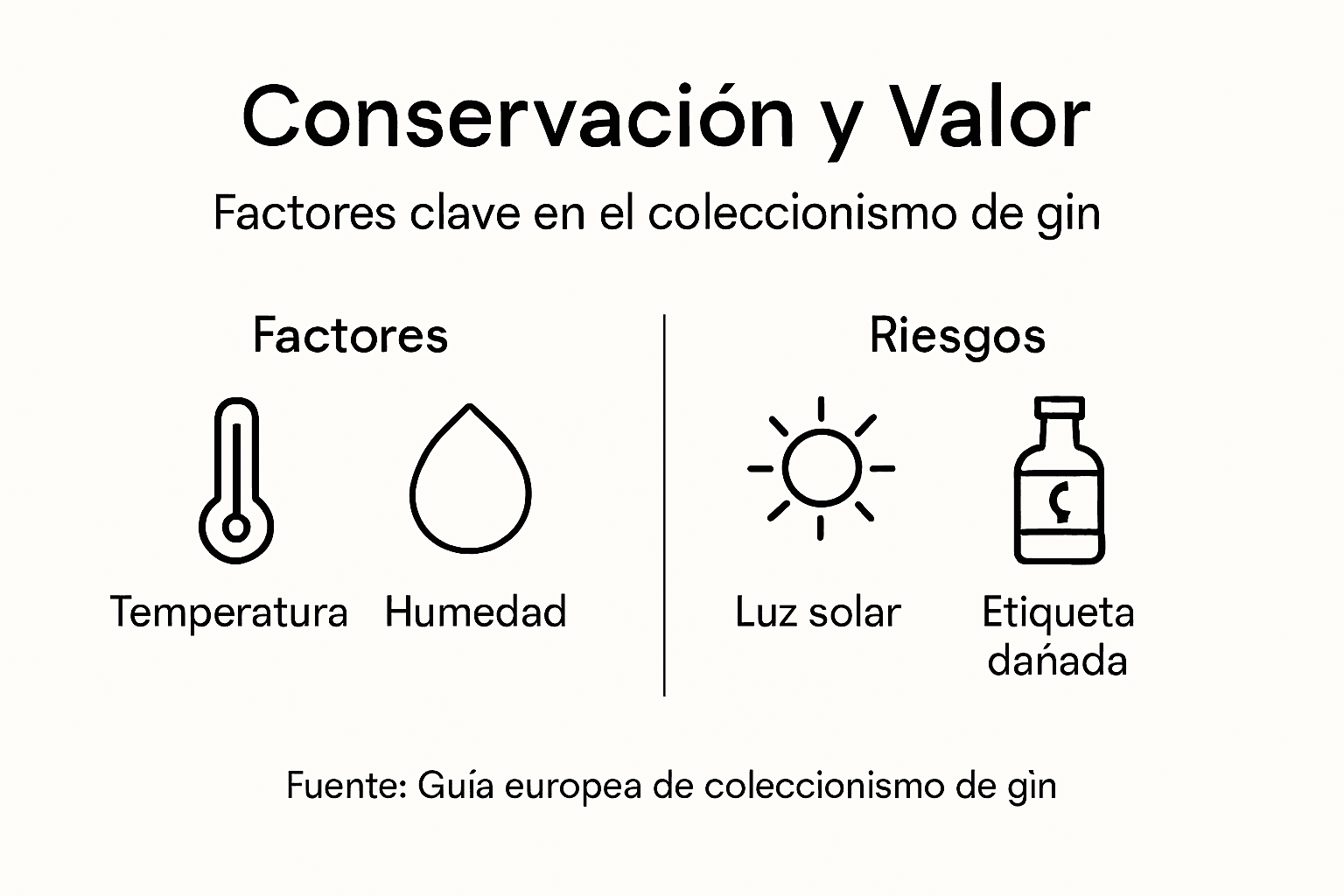
Temperature, humidity, and light are silent enemies. Bottles in damp cellars or exposed to sunlight develop problems: label deterioration, evaporation, color changes.
Smart investment strategy
If you collect with financial goals in mind, consider:
- Diversify across styles and brands to reduce concentrated risk
- Meticulously document provenance and condition
- Prioritize gins with lasting cultural narratives over passing fads
- Maintain optimal storage conditions: temperature 15-20°C, humidity 50-70%
- Follow market trends without getting carried away by temporary hype
Investing in collectible gin is smart only when you balance passion with analytical coolness.
Difference between passion and investment
Collecting because you love gin is sustainable and rewarding. Buying only because you expect revaluation is risky speculation.
Successful collectors understand both dimensions: they enjoy each bottle while documenting its value. This maintains a balanced perspective in the face of market fluctuations.
Pro tip: Before acquiring any gin as an investment, research historical prices in specialized secondary markets. If a bottle was cheap three years ago and is still cheap, it probably won't appreciate in value. Truly collectible pieces show consistent appreciation over time.
Common mistakes and alternatives in Central Europe
Novice collectors make predictable patterns that compromise both the value and satisfaction of their collections. Recognizing these mistakes before investing time and money is the best investment you can make.
Central Europe presents a unique context: a less saturated market than the UK or Italy, but less access to specialized information. This multiplies the risks of impulsive decisions.
The five most costly mistakes
Novice collectors make mistakes due to lack of prior research and purchases without authenticity evaluation. The most common mistakes include:
- Impulsive purchase: Acquiring without verifying authenticity, provenance, or condition
- Lack of a coherent plan: Accumulating bottles without a unifying theme or strategy
- Negligence in conservation: Storing without controlling temperature, humidity, or light
- Following fleeting trends: Investing in "trending" gins that lose relevance in months
- Purchase without documentation: Not keeping receipts, certificates, or photographs of initial condition
The over-accumulation syndrome
Central Europe particularly suffers from this problem. The availability of new artisanal brands creates the temptation to collect "everything that looks interesting" without selective criteria.
A collection of 200 disorganized bottles is worth less than a collection of 30 bottles curated with intention. Volume without coherence dilutes financial value and personal satisfaction.
Smart alternatives for Central European collectors
Strategic planning and continuous education result in collections with greater value. Implement these practices from the start:
- Establish a clear focus: Decide if you collect by style (London Dry, Old Tom), region (Italy, France, Germany), or narrative (pop culture, mythology)
- Research before buying: Verify authenticity, historical price in secondary markets, and actual condition
- Meticulously document: Photograph, save receipts, record initial condition in a database
- Seek professional advice: Connect with experienced collectors, not just sellers
- Diversify without overloading: 5-10 well-chosen bottles outweigh 50 mediocre ones
Regional alternative: local networks
Central Europe has an advantage: smaller but more cohesive collector communities. Join specialized groups in your country. Local information on provenance is invaluable.
Avoid buying exclusively online without physical verification. Counterfeit bottles circulate mainly on massive, uncontrolled platforms.
Successful collectors learn slowly with intention. Impulsive ones accumulate expensive regrets.
Pro tip: Before your first major purchase, visit experienced collectors and observe how they store and document. An afternoon of learning will save you years of costly mistakes and decisions you'll later regret.
Discover the Craft Gin that Transforms Your Collection and Culture
If you are looking for a gin collection that speaks of design, identity, and authentic narratives, at Italian Artisan Gin | Unique Botanicals – Mezzanotte Spirits you will find that connection between liquid art and culture. Each bottle represents more than a distillate: it is a bridge to Italian traditions, myths, and impeccable craftsmanship reflected in its unique design and flavor.

Don't let your passion for gin remain a mere accumulation. Explore Italian Craft Spirits | Gin, Vodka, Bitters – Mezzanotte Spirits for options that combine quality with deep stories that will inspire your collections with meaning and value. Visit https://mezzanotte.shop now and take the next step towards a shopping experience that enriches your enjoyment and elevates your collection to an unrepeatable cultural and aesthetic level.
Frequently Asked Questions
What makes craft gin different from industrial gin?
Craft gin differs from industrial gin due to its production process, which includes manual selection of ingredients, small-batch distillation, and more meticulous quality control. As a result, its aromatic profile is more complex and unique.
Why is bottle design important when collecting gin?
Bottle design is relevant because it communicates the brand's identity and the narrative behind the gin. Careful design can reflect the quality of the product, and an attractive bottle becomes a treasure for collectors.
What types of gin are most valued by collectors?
The most valued types of gin include London Dry, Plymouth, Old Tom, New Western Dry, and Genever. Each has its own flavor profile and a unique cultural history that adds value to the collection.
What are the common mistakes made by new gin collectors?
The most common mistakes include impulsive purchasing without verifying authenticity, lack of a coherent plan, neglecting bottle conservation, and following fleeting trends without considering long-term value.
Recommendation
- Gin Cocktails: A Complete Guide, Recipes, and Creative Ideas – Mezzanotte | Distilleria & Spirits
- Gin Cocktails: A Complete Guide to Making Classics and Contemporary Cr – Mezzanotte | Distilleria & Spirits
- The Complete Guide to Gin Shops: Discover the Best Gins of 2026 – Mezzanotte | Distilleria & Spirits
- The Complete Guide to Craft Gin: Discover All the Secrets 2026 – Mezzanotte | Distilleria & Spirits