

Vodka vs. Gin: Discover Origins, Ingredients, and Cocktail Uses. An Analysis of Aromas, Craft Distillation, and European Trends.
The difference between vodka and gin: a comparison of aromas and histories
Feb 23, 2026

Every collector recognizes that distinguishing between vodka and gin goes far beyond a simple matter of taste. These two spirits, rooted in centuries-old traditions across Russia, Poland, Italy, and England, offer opposing sensory universes: vodka stands out for its neutral purity, while gin captivates with an aromatic bouquet dominated by juniper and unique botanicals. Discovering their differences means enriching every tasting experience with awareness and new pairing possibilities.
Table of Contents
- Origin and characteristics of vodka and gin
- Main ingredients and distillation process
- Aromatic profile and artisanal variations
- Use in cocktails and recommended pairings
- How to choose between quality vodka and gin
Main Summary
| Point | Details |
|---|---|
| Diverse Origins | Vodka originates from Slavic territories, while gin has its roots in southern Italy, evolving in the Netherlands and then in England. |
| Distinctive Characteristics | Vodka has a neutral and pure profile, while gin is rich in complex aromas thanks to botanicals. |
| Production Processes | Vodka is obtained through multiple distillation and filtration, while gin uses agricultural maceration and various distillation techniques. |
| Role in Cocktails | Vodka serves as a neutral base, while gin is the aromatic protagonist in blends requiring complexity. |
Origin and characteristics of vodka and gin
Vodka and gin represent two completely different spirits, with fascinating histories that reflect the European cultures that created them. Although both are colorless, high-proof spirits, their origins and aromatic characteristics make them opposites in sensory profile.
Historical origins
Vodka was born in Slavic territories, originating in Russia and Poland, where its name "vodka" derives directly from the Slavic term "voda" (water) with the diminutive suffix "-ka". For centuries, it was the preferred drink of Eastern Europe, traditionally distilled from grains or potatoes.
Gin has a completely different origin. The origins of gin date back to the Middle Ages in southern Italy, where it was used as a medicinal remedy with distilled alcohol infused with juniper berries. In the 17th century, the Netherlands modified it for therapeutic purposes, creating the modern version which subsequently exploded in popularity in northern England.
While vodka originated as a popular Slavic drink, gin began as a flavored medicine and became a European status symbol.
Distinctive characteristics
Vodka is distinguished by its purity and almost neutral taste. Its main characteristic is the pronounced absence of aroma, a result of repeated distillations and careful filtration. This clean profile makes it versatile in cocktails, as it does not compete with other ingredients.
Gin presents a completely opposite aromatic profile. It is obtained from the distillation of fermented grains with the addition of multiple botanicals, where juniper berries dominate the taste and olfactory profile. Its aromatic character is rich, complex, and defined, with balsamic and citrus notes that vary depending on the botanical selection.
Differences in production
The two spirits follow distinct production paths:
- Vodka: multiple distillation, extensive filtration, minimal aromatic yield, absence of botanicals
- Gin: controlled botanical infusion, single or double distillation, complex and defined aromatic profile
Sensory profile comparison
Vodka offers a neutral base that allows mixologists to build flavors on a blank canvas. Gin, on the other hand, imposes its aromatic personality in every cocktail, dominating with its notes of juniper and secondary botanicals.
For collectors like you, understanding this fundamental distinction means recognizing two different universes. It's not about choosing the best, but rather appreciating how two spirits can interpret a cocktail in radically different ways.
Professional tip: When building a collection, remember that vodka shines in cocktails where you want to highlight other flavors (Vodka Tonic, Cosmopolitan), while gin deserves the main stage (Negroni, Martini).
Main ingredients and distillation process
Vodka and gin start from very similar bases but diverge completely on their journey to the final product. Understanding these processes is fundamental to appreciating the organoleptic differences you will taste in every sip.
Vodka ingredients
Vodka is made from simple raw materials: grains like wheat, rye, and barley, or potatoes. The choice of raw material influences the initial aromatic profile, although this will be almost completely eliminated during the process. Grains offer a cleaner base, while potatoes can impart a characteristic lightness.
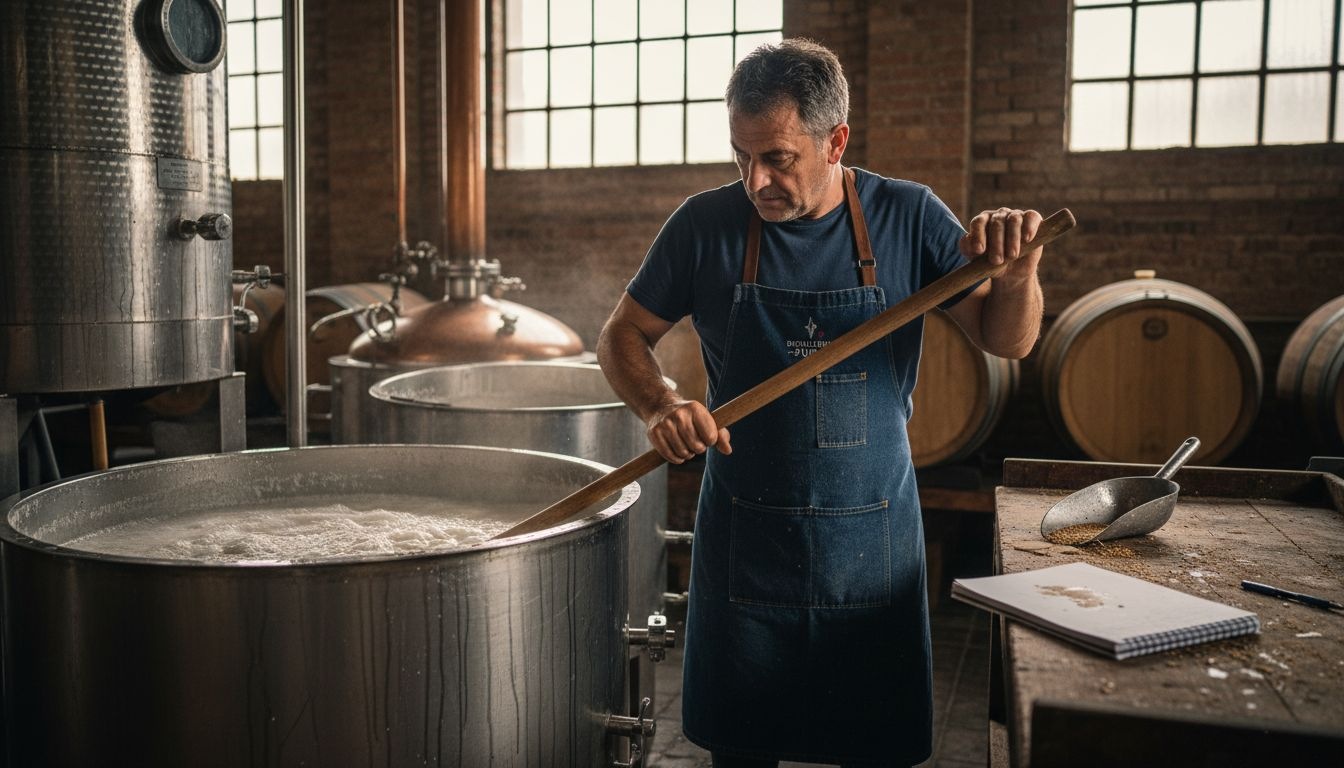
The first step involves the fermentation of sugars extracted from starch. This biological process converts sugars into alcohol, creating the alcoholic base that will then be refined.
Gin ingredients
Gin also starts from a neutral grain spirit, but this is where the paths drastically diverge. Botanicals completely transform the aromatic profile: juniper berries, coriander, citrus peel, licorice root, and dozens of other spices and plants.
Juniper berries are not optional: by law, they must represent the predominant flavor. Around this central element, each artisanal distillery builds its own botanical identity.
Vodka distillation process
Vodka follows a path of multiple distillation aimed at achieving the highest level of purity. Distillers repeat the process several times, obtaining alcohol up to 96% purity.
Next comes filtration, often with activated charcoal, which removes impurities and aromatic traces. This step is crucial: it creates that neutral, clean taste that characterizes vodka.
The final stage adds distilled water to reach the commercial proof (generally 40% abv).
Gin distillation process
Gin uses two main methods: the traditional alembic still or rectification columns. The choice determines how botanicals integrate into the spirit.
Botanicals are added in different stages:
- Pre-distillation maceration: plants steep in the spirit before distillation
- Infusion during distillation: alcohol-laden vapor captures the aromas
- Post-distillation addition: some botanicals are added afterward to preserve their freshness
Gin is an art of composition, while vodka is an art of elimination.
Every artisanal distillery, like Mezzanotte, follows its own protocols to extract the maximum from selected botanicals. The result is a completely unique and recognizable aromatic profile.
Synthetic comparison
| Aspect | Vodka | Gin |
|---|---|---|
| Raw material | Grains or potatoes | Neutral grain spirit |
| Aromatic elements | None | Botanicals (mainly juniper) |
| Distillation | Multiple, purity-oriented | Single or double, aroma-oriented |
| Filtration | Extensive (activated charcoal) | Minimal |
| Final profile | Neutral, pure | Complex, aromatic |
Professional tip: When tasting a premium vodka, look for subtle notes of the raw material (grain sweetness or potato softness). With gin, focus on the balance of botanicals to understand if juniper dominates harmoniously or if other elements shine.
Aromatic profile and artisanal variations
Here lies the real difference between vodka and gin: while vodka aims for aromatic anonymity, gin celebrates complexity. For a collector like you, this is the section that transforms appreciation from superficial to profound.
Vodka aromatic profile
Vodka is designed to be a neutral vessel. Its gustatory philosophy is absence: no intrusive aromas, no dominant notes, just linear purity.
Some premium vodkas, however, slightly betray their origin. A potato vodka can develop slight creamy notes, while a rye vodka can reveal delicate spicy nuances. These aromatic traces always remain subtle: they are not dominant characteristics, but details that the attentive palate perceives only after repeated tastings.
Gin aromatic profile
Gin is the absolute opposite. Here the aromatic profile is rich, layered, and intentionally complex. Botanicals create a multi-sensory experience that completely changes from brand to brand.
Juniper remains the protagonist, but around it revolves an aromatic ecosystem:
- Coriander: adds spicy and slightly peppery notes
- Citrus: imparts brilliant citric freshness
- Roots and barks: provide earthy and woody depth
- Aromatic herbs: create floral, bitter, or slightly mentholated notes
Artisanal variations in gin
Artisanal distillers transform gin into a work of art. Many experiment with local or unusual ingredients, creating unique and recognizable profiles that distinguish each house from the competition.
An Italian artisanal gin might incorporate:
- Rare Mediterranean botanicals
- Alpine plant extracts
- Selected exotic spices
- Wild herbs from the territory
This approach means that two different gins can offer completely divergent taste experiences. It's not marketing: it's conscious distillation.
In artisanal gin, the botanical recipe is the distiller's signature. Each bottle tells a story of precise choices.
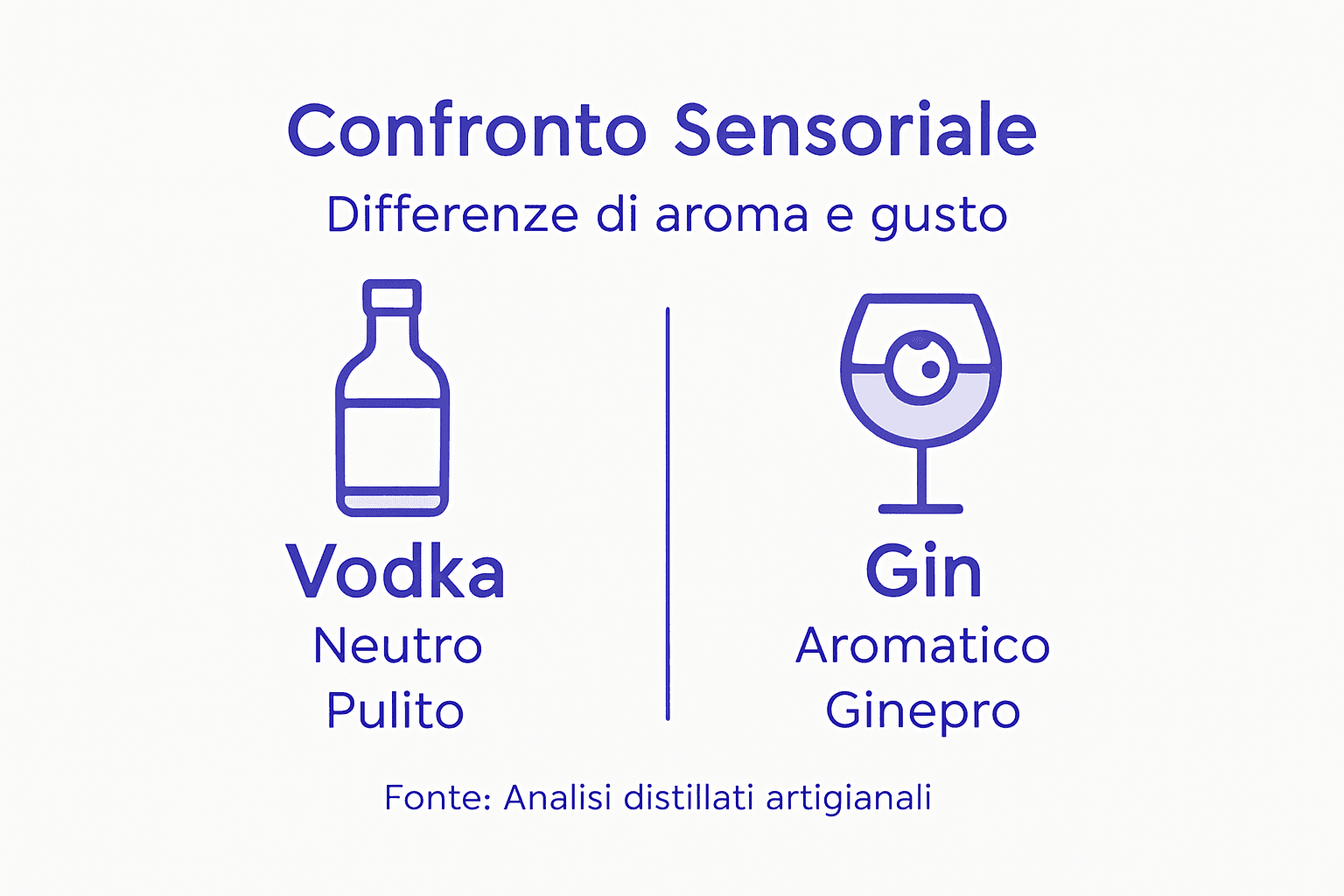
Sensory comparison
| Characteristic | Vodka | Gin |
|---|---|---|
| Dominant aroma | Absent or minimal | Juniper + botanicals |
| Depth | Linear | Layered |
| Variability between brands | Minimal | Maximal |
| Secondary notes | Almost imperceptible | Very evident |
| Gustatory versatility | High (neutral) | High (characterized) |
What collectors look for
For those building a collection of artisanal spirits, gin offers infinite discoveries. Each new bottle represents a different geography, an alternative aromatic philosophy, an unprecedented experience.
Vodka remains important in the collection for its structural role in cocktails, but it doesn't offer the variety that fascinates true enthusiasts. With gin, however, every purchase is an aromatic adventure.
Professional tip: When tasting a new artisanal gin, first isolate the juniper with your sense of smell, then identify two secondary botanical notes. This exercise trains the palate to recognize the unique aromatic signature of each distillery.
Use in cocktails and recommended pairings
The true mastery of a mixologist emerges in knowing how to choose the right spirit for the right cocktail. Vodka and gin are not interchangeable: each has a precise role in the world of mixology.
Vodka in cocktails
Vodka is the invisible background. Its aromatic neutrality makes it ideal when you want other ingredients to shine in the foreground. It doesn't compete, it supports.
Classic vodka-based cocktails leverage this characteristic:
- Moscow Mule: lime and ginger completely dominate
- Cosmopolitan: cranberry juice and Cointreau take the main aromatic role
- Bloody Mary: tomato, chili, and spices take center stage
In these cocktails, vodka remains neutral, allowing the mixologist to build the flavor profile on a blank canvas. It's a strategic choice, not a coincidence.
Here's an overview of the main differences in the use of vodka and gin in international cocktails:
| Famous Cocktail | Base Spirit | Role of the Spirit | Highlighted Aromatic Profile |
|---|---|---|---|
| Moscow Mule | Vodka | Neutral support | Lime and ginger |
| Cosmopolitan | Vodka | Subtle background | Cranberry and citrus |
| Bloody Mary | Vodka | Invisible base | Tomato and spices |
| Gin Tonic | Gin | Aromatic protagonist | Juniper and citrus |
| Martini | Gin | Dominant and structuring | Juniper and dry vermouth |
| Negroni | Gin | Central to the blend | Juniper, bitter, red vermouth |
Gin in cocktails
Gin is the undisputed protagonist. Its aromatic presence cannot be ignored: juniper and botanicals assert themselves in the glass, enhancing and interacting with the other components.
Classic gin cocktails demonstrate this:
- Gin Tonic: tonic amplifies the juniper, creating a complete aromatic experience
- Martini: gin is almost everything, with only a touch of dry vermouth
- Negroni: gin harmoniously blends with bitter and red vermouth
Every gin pairing is a botanical dialogue. Tonic amplifies the juniper, citrus enhances its notes, and bitters create layered complexity.
In a cocktail, vodka is the invisible waiter. Gin is the chef in the kitchen.
Recommended Pairings for Vodka
- With acids: lime, lemon, grapefruit to add structure
- With spices: pepper, chili, ginger to add warmth
- With sweetness: syrups, fruit juices to balance
- With bitters: Kahlúa, Luxardo to create depth
Recommended Pairings for Gin
- Tonic water: the natural, synergistic, and timeless pairing
- Vermouth: dry for a Martini, red for a Negroni
- Italian bitters: Campari, Fernet-Branca for layered complexity
- Fresh citrus: lime, orange to emphasize botanical notes
For collectors experimenting with cocktails and Italian flavors, craft gin offers endless possibilities. Each new gin allows for reinventing classics with different botanical profiles.
Tasting Strategy
When preparing a cocktail, the choice of the base spirit determines the entire sensory journey. Choose vodka if you want secondary flavors to take center stage. Choose gin if you want a rich and self-referential aromatic experience.
Professional tip: In your spirits collection, always keep at least two different gins with opposing botanical profiles (one fresh-citrusy, one spicy-earthy). This will allow you to explore how the same cocktail changes radically with different bases.
How to Choose Between Quality Vodka and Gin
Quality is not a minor detail for discerning collectors: it's the difference between a memorable bottle and a forgettable one. Knowing how to recognize signs of excellence is crucial for building a collection that reflects your taste and aspirations.
How to Evaluate Quality Vodka
Excellent vodka starts with the purity of the distillate. This means repeated distillations and sophisticated filtration methods that completely eliminate impurities.
Key aspects to observe when choosing:
- Smoothness on the palate: premium vodka has a soft feel, without excessive burning
- Absence of unpleasant aftertaste: the sip should finish clean, without lingering unpleasantness
- Visual clarity: no opacity or visible particles in the glass
- Filtration method: look for vodka filtered with activated carbon or other special materials
The alcohol content must comply with legal standards (generally 40% abv), but a premium vodka will also have balance and smoothness even at this strength.
How to Evaluate Quality Gin
For gin, the evaluation is more multifaceted. The botanical profile is the distiller's signature, but it must always speak the language of balance.
Essential criteria:
- Perceptible juniper: it must clearly dominate without overpowering other aromas
- Aromatic complexity: you should perceive at least 3-4 distinct botanical notes
- Clean taste: no flaws or abnormal flavors
- Absence of artificial additives: craft gin is pure distillation, not chemical synthesis
- Transparent distillation technique: the distiller should explain how they extract the botanicals
A quality gin reveals its botanicals gradually: the first sip shows the juniper, the second reveals the citrus, the third uncovers the spices.
Here are some key questions to ask yourself to recognize the quality of a vodka or gin:
| Evaluation Question | Quality Vodka | Quality Gin |
|---|---|---|
| Purity and clarity | Multiple distillation, filtered | No opacity or particles |
| Palate sensation | Smooth and without burning | Balance and no chemical aftertaste |
| Aromatic identity | Almost absent, subtle nuances | Clearly evident juniper, distinct botanicals |
| Production transparency | Declared method and filtration | Explicit botanicals and origin |
Quality is not proclaimed: it is recognized with the first sip. If you have to ask if it's good, it probably isn't.
Universal Quality Signals
- Transparent label: clearly indicated ingredients and origin
- Well-designed bottle: attractive but understated design, not just marketing packaging
- Fair price: quality has a cost, but it's not always the highest price
- Proven reputation: international awards, expert recognition
- Limited availability: craft distillers do not produce industrial quantities
Vodka vs. Gin: Which to Choose for Your Collection
If you love versatility and minimalist elegance, invest in quality vodka from a few selected producers. If you love discovery and aromatic complexity, craft gin offers infinite variety.
For serious collectors, the ideal is to maintain both. A premium vodka for structural classics (Martini, Negroni), and a selection of gins with different botanical profiles for continuous exploration.
Professional tip: When buying a new bottle, always read the distiller's story and production method. A true artisan explains their choices, making each bottle a conscious adventure, not a random one.
Discover the Art of Distillation Between Vodka and Gin with Mezzanotte
If you have enjoyed the in-depth comparison between vodka and gin, exploring their aromas, histories, and production techniques, now is the perfect time to discover an artisanal collection that pays homage to these peculiarities with an Italian and original touch. Understanding the purity of vodka or the botanical complexity of gin is just the first step to becoming a true connoisseur and collector of high-quality spirits.

Enter the exclusive world of Mezzanotte Artisan Vodka and enjoy distilled purity that tells traditions with a unique design. Or explore all the gin and spirits offerings at Mezzanotte Spirits for an engaging and authentic sensory experience. Don't wait any longer: expand your collection with distinctive products that combine art, culture, and passion. Visit https://mezzanotte.shop now and turn every tasting into an unforgettable adventure.
Frequently Asked Questions
What is the main difference between vodka and gin?
The main difference between vodka and gin lies in their aromatic profile and production: vodka is characterized by a neutral and clean taste, while gin has complex aromas derived from botanicals, particularly juniper berries.
What ingredients are used in vodka production?
Vodka can be produced from grains like wheat and rye, or from potatoes, depending on the producer. These ingredients have very little influence on the final taste, as vodka is distilled to achieve a very pure profile.
How is gin distilled and what botanicals are used?
Gin is produced from a neutral grain spirit, to which botanicals such as juniper berries, coriander, citrus, and other spices are added. The botanicals can be added during different stages of distillation to develop the aromatic profile.
How can I use vodka and gin in cocktails?
Vodka is ideal for cocktails where other flavors are meant to shine, such as in a Cosmopolitan or a Bloody Mary. Gin, with its distinctive aromatic profile, is perfect for cocktails like the Negroni and Martini, where the complexity of the gin can truly stand out.
Recommendation
- Italian Gin Guide: Discover the Secrets of 2026 – Mezzanotte | Distilleria & Spirits
- The Complete Guide to Gin Italy: Explore Flavors and Tradition 2026 – Mezzanotte | Distilleria & Spirits
- Best Gin Pairings: A Complete Guide to Bringing Out Botanicals and Fla – Mezzanotte | Distilleria & Spirits
- Discover vodka: history, varieties, and tasting | Distilleria Mezzanotte – Mezzanotte | Distilleria & Spirits