

Discover why Italian craft spirits in 2026 represent excellence: local botanicals, narrative design, unique production processes, and regional culture in every bottle.
Why choose craft spirits in 2026: unique quality
Mar 17, 2026

Italy is experiencing a silent revolution in the world of spirits, where small craft distilleries are redefining the very concept of quality. While industrial production focuses on volume and standardization, micro-distilleries combine art and science to create unique products that tell stories of territory, passion, and innovation. This guide will take you on a journey to discover what makes craft spirits so special, from the production process to selected botanicals, and the design that transforms each bottle into a collectible work of art.
Table of Contents
- The Rebirth of Craft Spirits in Italy and Worldwide
- Process and Complexity in Craft Spirits Production
- Botanicals and Narrative Design: The Added Value of Craft Spirits
- The Italian Landscape in 2026: Guida Spirito Autoctono and Spirits Tourism
- Discover Mezzanotte's Unique Craft Spirits
- Frequently Asked Questions About Craft Spirits
Key Points
| Point | Details |
|---|---|
| Art and Science | Craft distilleries combine creativity and technical precision for exceptional results |
| Local Botanicals | The use of local ingredients defines unique and authentic aromatic profiles |
| Narrative Design | Careful packaging enhances product identity and attracts collectors |
| Guida Spirito Autoctono | Over 900 reviewed labels highlight the richness of the Italian scene |
| Experiential Tourism | Distillery visits and thematic itineraries enhance the culture of spirits |
The Rebirth of Craft Spirits in Italy and Worldwide
The phenomenon of craft distilleries has experienced extraordinary expansion in the last fifteen years. Between 2010 and 2020, the number of micro-distilleries grew exponentially, especially in the United States and the United Kingdom, where the craft movement found fertile ground. These markets pioneered the way, demonstrating that consumers are willing to pay a premium for products that offer authenticity, superior quality, and a story to tell.
Craft gin has driven this growth, becoming the symbol of the craft revolution in the spirits sector. Its versatility in botanical selection and its ability to express the character of the territory have made it the ideal product for small, innovative distilleries. In parallel, craft vodka has also carved out a niche among discerning consumers, attracted by multiple distillation processes and superior quality ingredients.
In Italy, this phenomenon took hold a decade later than in Anglo-Saxon markets, but with surprising force. Emerging new realities combine the Italian tradition of distillation with modern techniques and a particular sensitivity for design and storytelling. Regions like Piedmont, Lombardy, and Tuscany are becoming hubs of innovation in the sector.
The parallel with craft beer is evident, but spirits present higher technical complexities. While brewing primarily requires fermentation, distillation adds a level of sophistication that demands specialized skills in chemistry and physics. This barrier to entry ensures that only truly dedicated producers can emerge.
Differentiation is key to success in the craft market. Consumers seek products that stand out for unique characteristics:
- Distinct aromatic profiles impossible to replicate on an industrial scale
- Total transparency on ingredients, production process, and origin
- Emotional connection through authentic storytelling and curated design
- Limited editions and experiments that reward collectors
Pro Tip: When choosing a craft spirit, look for information about the production process and the botanicals used. Distilleries that openly share these details demonstrate confidence in their quality and offer a richer experience.
To delve deeper into modern production techniques, consult our guide to spirits distillation 2026, where you'll find practical tips to avoid common mistakes and better understand what makes a spirit excellent.
Process and Complexity in Craft Spirits Production
Producing craft spirits requires in-depth knowledge of chemistry, physics, and food technology that goes far beyond what is needed for brewing. While beer is primarily obtained through fermentation and filtration, spirits require distillation, a process that separates and concentrates alcohol through precise control of temperature and pressure.
Craft distillation stands apart from industrial distillation due to its meticulous attention to detail and flexibility in the process. Large distilleries aim for efficiency and standardization, using continuous stills that produce enormous volumes with consistent characteristics. Micro-distilleries, however, prefer discontinuous stills that allow total control over each batch.
The craft distillation process consists of five fundamental phases:
- Base fermentation: creation of the alcoholic mash using selected cereals, fruits, or other ingredients, often with house-cultivated yeasts for unique aromatic profiles
- First distillation: separation of alcohol from the fermented base, obtaining a raw, high-proof distillate that still contains many impurities
- Selection of cuts: elimination of heads and tails, retaining only the heart of the distillation where noble aromas and quality alcohol are concentrated
- Second distillation with botanicals: for gin and botanical products, infusion or maceration of vegetable ingredients that define the final character
- Dilution and resting: addition of pure water to achieve the desired alcohol content and a resting period to harmonize flavors
Each phase requires critical decisions that influence the final result. Distillation temperature, for example, determines which aromatic compounds are extracted. Too high temperatures can burn delicate botanicals, while too low temperatures do not extract enough essential oils. The craft distiller must perfectly understand their still and be able to interpret sensory signals during the process.
Science supports creativity by providing the tools to experiment in a controlled manner. A distiller can test unprecedented combinations of botanicals, knowing exactly how temperature, maceration time, and extraction method will affect the result. This combination of technical knowledge and artistic intuition is what distinguishes great craft spirits.
Pro Tip: Common errors in home distillation include imprecise cuts that leave unpleasant notes in the final product and uncontrolled temperatures that compromise aromas. If you visit a craft distillery, ask to see the still and understand how the master distiller manages these critical aspects.
To better understand advanced techniques and mistakes to avoid, our complete guide to distillation offers practical insights based on the experience of the best Italian producers.
Botanicals and Narrative Design: The Added Value of Craft Spirits
Botanicals are the soul of craft spirits, especially in gin where they define the very identity of the product. While industrial productions rely on standardized recipes with globally sourced ingredients, Italian craft distilleries value local botanicals that express the character of the territory. This choice is not just philosophical, but creates aromatic profiles impossible to replicate elsewhere.
Stone Gin represents an excellent example of this approach. By using Tuscan and Umbrian juniper, along with Mediterranean botanicals such as myrtle, rosemary, and Sicilian citrus, it creates an aromatic profile that tells the story of Italy in every sip. The choice of local ingredients ensures superior freshness and supports local economies, creating a virtuous cycle of quality.
| Botanical | Traditional Origin | Italian Alternative | Distinctive Characteristics |
|---|---|---|---|
| Juniper | Eastern Europe | Tuscany and Umbria | Sweeter and more resinous notes |
| Citrus | Spain | Sicily and Calabria | More intense essential oils |
| Coriander | India | Puglia | More delicate and floral profile |
| Angelica | Germany | Piedmont | Earthy aromas with musky notes |
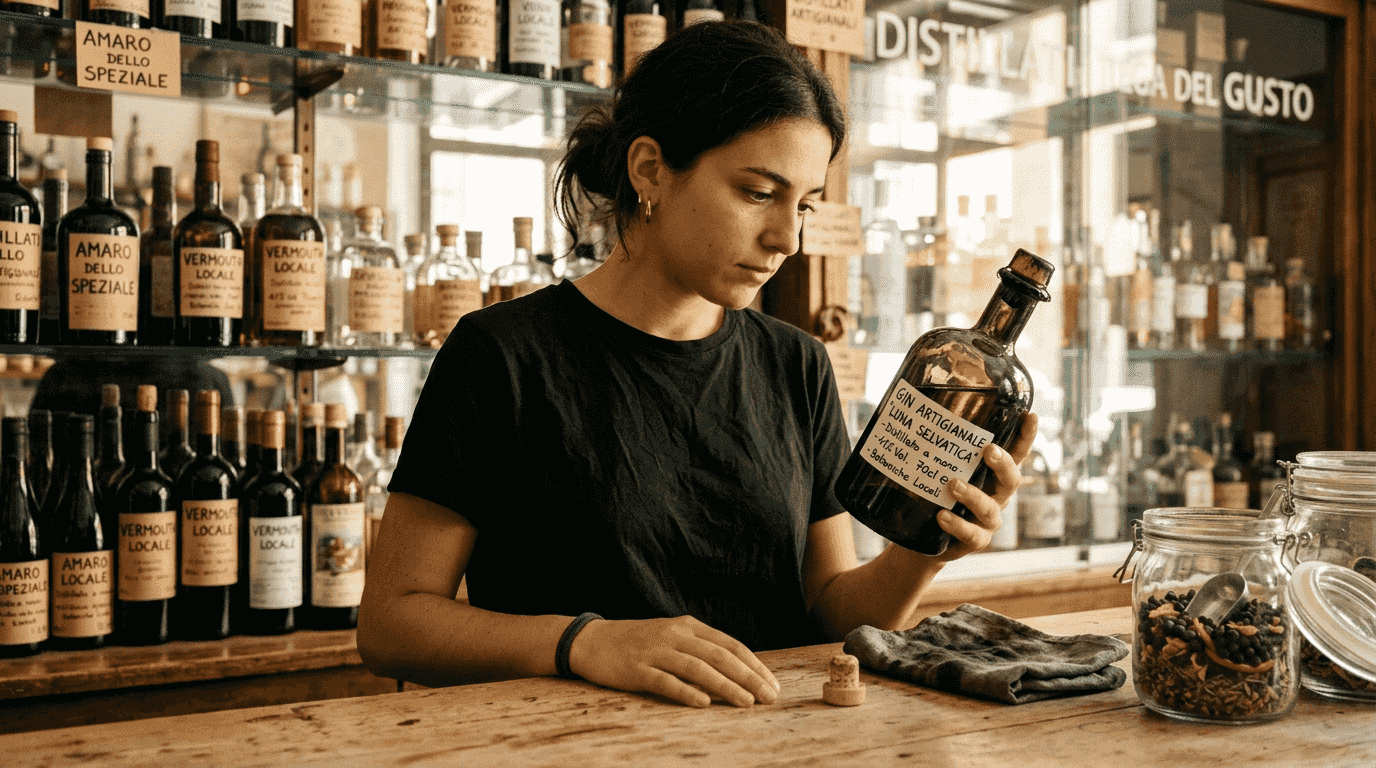
Bottle design has become a fundamental distinguishing element in the craft spirits market. It's not just about aesthetics, but about creating a complete sensory experience that begins even before opening the bottle. Stone Gin has developed a sculptural design that evokes natural stone, transforming each bottle into a work of art that collectors desire to display.
Recent studies by Politecnico di Milano demonstrate that curated packaging and storytelling increase brand recognition by 25% and purchase intent by 30%. These data explain why craft distilleries invest so much in design: it's not a whim, but an effective commercial strategy that creates perceived value and justifies premium prices.
The narrative around the product further amplifies this value. Each bottle tells a story that can concern:
- The region of origin and the local traditions that inspired the recipe
- The master distiller's personal journey and creative vision
- The selected botanicals and the reasons for specific aromatic choices
- The production philosophy and commitment to quality and sustainability
This storytelling transforms the purchase from a simple commercial transaction into participation in a cultural project. The consumer doesn't just buy a gin but becomes part of a community that shares values and appreciates artisanal excellence. For collectors, this aspect is as crucial as the quality of the spirit itself.
To explore how botanicals influence the final aromatic profile, read our in-depth analysis of the aromatic components of craft gin. If you want to understand what distinguishes a premium gin from a standard one, consult our guide to the definition of premium gin with objective criteria for evaluating quality.
The Italian Landscape in 2026: Guida Spirito Autoctono and Spirits Tourism
The Guida Spirito Autoctono 2026 offers the most comprehensive snapshot of the Italian craft spirits sector. With over 900 labels reviewed, 200 producers, and 251 selected venues, it represents an indispensable tool for consumers and professionals who want to navigate an increasingly rich and complex market.
The guide's data reveals interesting trends in the geographical distribution of production. Piedmont leads the ranking for Ampolle d'Oro, the highest recognition awarded to excellent products, while Lombardy excels in gin production with 28 reviewed labels. This concentration in Northern Italy reflects both the historical tradition of distillation and the presence of a dynamic entrepreneurial fabric.
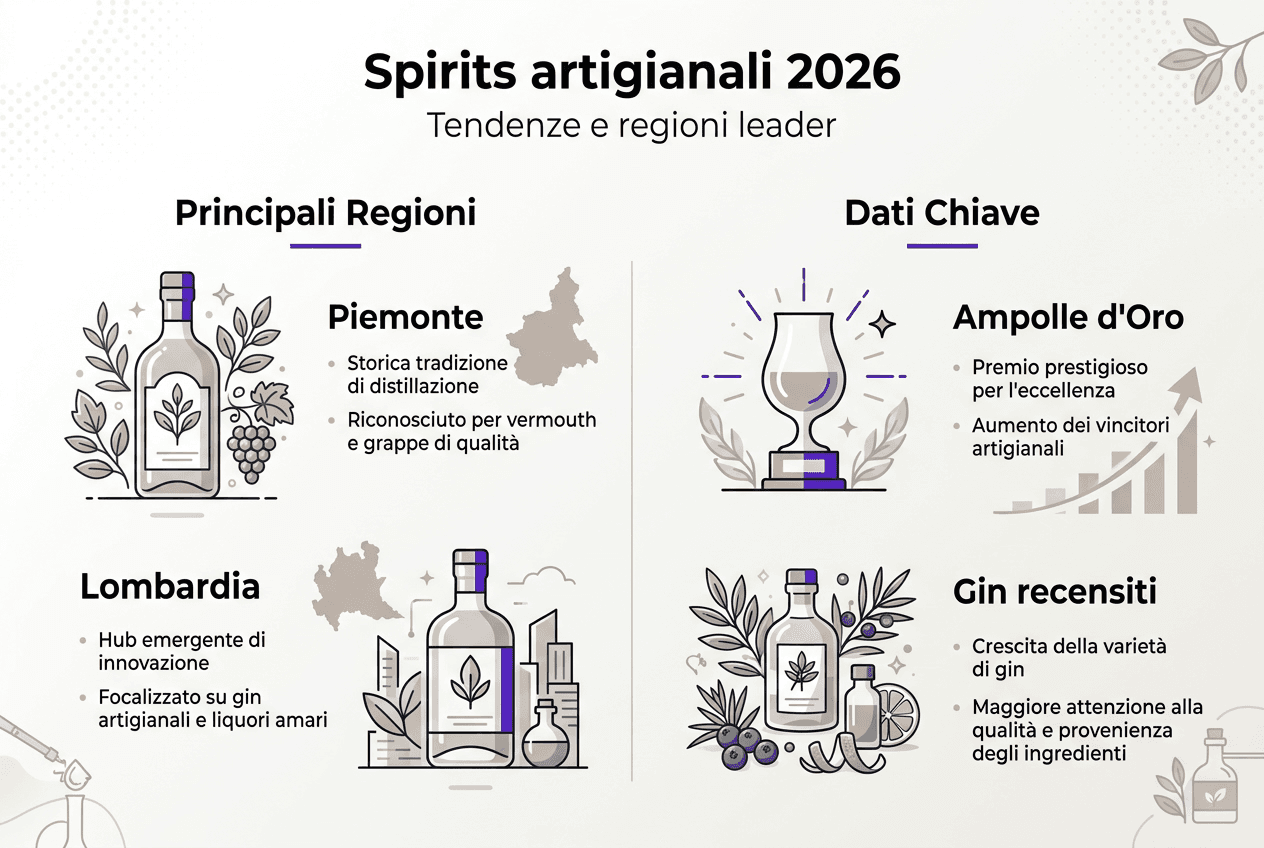
| Region | Ampolle d’Oro | Gins Reviewed | Active Distilleries | Distinctive Notes |
|---|---|---|---|---|
| Piedmont | 15 | 22 | 18 | Leader for grappa and amari |
| Lombardy | 12 | 28 | 21 | Specialized in botanical gins |
| Tuscany | 10 | 19 | 16 | Focus on local botanicals |
| Veneto | 8 | 15 | 14 | Innovative grappa tradition |
Spirits tourism is emerging as a significant cultural and economic phenomenon. More and more distilleries are opening their doors to visitors, offering guided tours that explain the production process, comparative tastings, and practical workshops. These experiential itineraries allow consumers to develop a deep understanding of the product and create emotional connections with brands.
The types of venues recognized by the Guida Spirito Autoctono 2026 include:
- Specialized cocktail bars with curated spirits menus and trained bartenders
- Wine shops with sections dedicated to Italian craft spirits
- Gourmet restaurants that pair spirits with gastronomic experiences
- Visitable distilleries with tasting areas and direct sales
- Wine bars that have expanded their offerings to include premium spirits
These venues do not merely sell products; they educate customers through guided tastings and stories that highlight the culture of spirits. They represent fundamental points of contact between producers and final consumers, creating communities of enthusiasts who share knowledge and experiences.
Pro Tip: When planning a distillery visit, book in advance and ask if they offer personalized experiences. Many craft establishments organize private sessions where you can actively participate in the distillation process or create your own personalized gin recipe with available botanicals.
The Italian method of spirits consumption favors slow and conscious tasting over the fast consumption typical of other markets. This culture of responsible and refined drinking is also influencing international markets, where Italian spirits are increasingly appreciated for quality and style. For a complete overview of how to choose authentic spirits, consult our guide to buying Italian spirits 2026.
Discover Mezzanotte's Unique Craft Spirits
If this guide has piqued your curiosity about the world of craft spirits, it's time to turn knowledge into direct experience. Mezzanotte offers a curated selection of craft gins and craft vodkas that embody the principles of quality, innovation, and narrative design that we have explored.
Each product in the Mezzanotte collection has been selected for its ability to tell a unique story through distinctive botanicals and excellent production processes. From limited editions celebrating myths and legends to collaborations with emerging craft distilleries, you will find spirits that go beyond simple consumption to become memorable experiences.
The platform allows you to explore detailed aromatic profiles, discover the story behind each bottle, and receive suggestions for tastings and pairings. For collectors, each product represents an opportunity to enrich their collection with distinctive pieces that combine liquid excellence and refined design. Visit the online collections and let yourself be guided by the passion for quality Italian craftsmanship.
Frequently Asked Questions about Craft Spirits
What makes craft spirits different from industrial products?
Craft spirits are distinguished by small-batch production with manual control of each stage, the use of selected ingredients often of local origin, and attention to detail impossible on an industrial scale. The main difference lies in the philosophy: while industry aims for standardization and efficiency, craftsmanship prioritizes quality, experimentation, and expression of the territory.
What are the criteria for recognizing a craft gin or vodka?
An authentic craft gin transparently declares the botanicals used and the distillation method, often in numbered batches or limited editions. Look for information about the producer, the origin of the ingredients, and the production process. The higher price compared to industrial products reflects higher production costs and ingredient quality. Be wary of products that use the term "craft" merely as a marketing ploy without substance.
How does bottle design influence the purchase choice?
Bottle design communicates brand values and creates the first impression of the product. Studies show that refined packaging increases the perception of quality and the willingness to pay a premium. For collectors, design is as crucial as the content, transforming the bottle into an art object to display. A distinctive design also facilitates brand recognition and builds loyalty over time.
Which Italian regions are leaders in the craft spirits sector?
Piedmont and Lombardy lead the Italian market in terms of number of producers and quality awards, with a focus on traditional amari and botanical gins, respectively. Tuscany and Veneto follow with productions that enhance local ingredients and process innovation. Southern regions such as Sicily and Calabria are also emerging thanks to unique Mediterranean botanicals that create distinctive aromatic profiles.
What is the "Spirito Autoctono" guide and how can it help consumers?
Spirito Autoctono is the reference guide for Italian craft spirits, reviewing over 900 labels and awarding accolades based on quality, innovation, and value for money. It helps consumers navigate the market by identifying excellent producers and products worthy of attention. It also includes a selection of venues where spirits can be tasted in curated settings, facilitating the discovery of new labels and education on conscious consumption.
Recommendation
- Spirits Distillation Guide 2026: Avoid 40% Common Mistakes – Mezzanotte | Distillery & Spirits
- Guide to buying authentic Italian spirits 2026 – Mezzanotte | Distillery & Spirits
- How to choose the best Italian amari in 2026 – Mezzanotte | Distillery & Spirits
- The art in premium Italian distillates in 2026 – Mezzanotte | Distillery & Spirits