

Discover what a bitter truly is, its fascinating history, artisanal production, and how a few drops will transform your cocktails in 2026.
What is a bitter: complete cocktail guide 2026
Mar 17, 2026

Many believe that bitters are merely bitter extracts intended to add a touch of raw bitterness to cocktails. This reductive view misses their true nature: complex aromatic concentrates, true architects of taste balance. In this guide, you will discover what bitters truly are, their fascinating history from their medicinal origins, the artisanal processes that shape them, and especially how a few drops radically transform your creations. Get ready to see your cocktails from a whole new perspective.
Table of Contents
- What is a bitter: definition and main characteristics
- History and evolution of bitters in mixology
- How bitters are made: processes and ingredients
- The use of bitters in cocktails: balance, complexity and classic recipes
- Discover our artisanal selection of Italian spirits
- What are the frequently asked questions about bitters?
Key points to remember
| Point | Details |
|---|---|
| Precise definition | Bitters are concentrated alcoholic preparations infused with bitter botanicals, used in small quantities. |
| Role in mixology | They balance sweetness, add aromatic depth, and create a gustatory complexity impossible to replicate otherwise. |
| Historical origins | Created as medicinal tonics in the 19th century, they have become indispensable in modern cocktail culture. |
| Artisanal manufacturing | Three main techniques shape bitters: maceration, infusion, and distillation with high-proof neutral alcohol. |
| Important distinction | Unlike amaros or bitter aperitifs like Campari, bitters are used in tiny doses to modify rather than dominate. |
What is a bitter: definition and main characteristics
Bitters are primarily defined by their taste and use, not solely by their ingredients or production methods. They are concentrated alcoholic preparations infused with botanicals that bring complexity and balance to cocktails. Their alcoholic base, generally between 20 and 60% ABV, simultaneously serves as a solvent to extract aromatic compounds and a natural preservative. This high concentration explains why a few drops are enough to completely transform a drink.
The fundamental characteristic of bitters lies in their minimalist dosage. Unlike classic liqueurs that you pour in measurable quantities, bitters are added literally drop by drop. This parsimony is not a bartender's whim: it reflects their exceptional aromatic power. Three to five drops can enhance an Old Fashioned without ever dominating it. Exceed this measure, and the balance shifts towards an overwhelming bitterness.
The distinction between bitters and other amari deserves your attention. Types of bitter liqueurs like Campari or Aperol are consumed in generous doses, often lengthened or as a main ingredient. Bitters, on the other hand, remain discreet modifiers. Think of the difference between a soloist and an orchestra conductor: the amaro takes center stage, the bitter harmonizes the whole from behind the scenes.
Typical components reveal a fascinating botanical palette:
- Bitter roots such as gentian, angelica, or calamus
- Dried citrus peels bringing freshness and zest
- Warm spices such as cinnamon, cardamom, or cloves
- Aromatic herbs including wormwood, hyssop, or mint
- Dried flowers for subtle floral notes
Their taste profile leans towards bitterness with a touch of astringency, but rarely towards sweetness. This sobriety in sugar clearly differentiates them from digestive liqueurs. Their color varies from deep brown to ruby red, depending on the infused botanicals. Some artisanal bitters even exhibit green or golden hues, testifying to the diversity of possible recipes.
“Bitters are defined by their taste, not by their ingredients or production methods, and are typically aperitifs with an alcoholic base.”
This definition highlights an essential truth: the bitter category transcends rigid boundaries. A producer might use distillation while another prefers maceration, but if the result provides this balancing bitterness in minimal doses, it is a bitter. This flexibility explains why the artisanal revival has produced so many creative variations in recent years.
History and evolution of bitters in mixology
The history of bitters begins in 19th-century apothecary shops, far from the elegant bars we know today. These pioneers sought to extract the therapeutic virtues of bitter plants known for aiding digestion and stimulating appetite. Alcohol served as an ideal vehicle to concentrate these active ingredients, creating medicinal tonics sold in pharmacies rather than taverns. Secretly guarded formulas promised to relieve stomach aches, fatigue, and even melancholy.
The transition to the world of cocktails occurred gradually throughout the 19th century. American bartenders, always seeking innovation, discovered that these bitter elixirs transformed their alcoholic creations. The first documented cocktail mentioning bitters dates back to the 1800s, establishing an inseparable link between mixology and these botanical preparations. This adoption marked a turning point: from remedy to gastronomic ingredient.
Classic cocktails demonstrate this successful integration:
- The Old Fashioned, born in the 1880s, relies on the balance between whiskey, sugar, and Angostura bitters
- The Manhattan, appearing around 1870, marries sweet vermouth and bitters to soften rye whiskey
- The Champagne Cocktail uses a sugar cube soaked in bitters to enhance the bubbles
- The Pink Gin, a favorite of the British navy, combined gin and Angostura bitters against seasickness
The 20th century saw a marked decline in bitters, particularly during American Prohibition and post-war. The industrial standardization of cocktails, the emergence of flavored spirits, and the loss of artisanal know-how reduced the available palette to a few commercial brands. For decades, Angostura and Peychaud's dominated a market that had become tiny. Bartenders themselves considered bitters to be dusty relics.
The spectacular revival of the last two decades can be explained by several converging factors. The artisanal mixology revolution brought attention back to classic techniques and quality ingredients. Consumers, tired of standardization, now seek authenticity and traceability. This thirst for complex taste experiences created fertile ground for artisanal bitters producers.
“The resurgence of bitters is driven by cocktail culture and the pursuit of authentic flavors.”
Today, in 2026, hundreds of small producers offer innovative bitters with daring aromatic profiles. Chocolate, chili, lavender, truffle: the combinations push traditional boundaries. This diversity reflects a profound cultural change where drinking becomes a sensory exploration rather than simple consumption. The history of bitters perfectly illustrates how a utilitarian product can become a symbol of refinement and craftsmanship.
How bitters are made: processes and ingredients
The production of bitters relies on three fundamental techniques that extract aromatic compounds from botanicals. Maceration involves soaking ingredients in alcohol for several weeks, allowing for a slow and complete extraction. Infusion uses gentle heat to speed up the process, ideal for delicate botanicals. Distillation, more technical, separates and concentrates volatile aromas in a still. Each production process offers distinct advantages depending on the desired results.
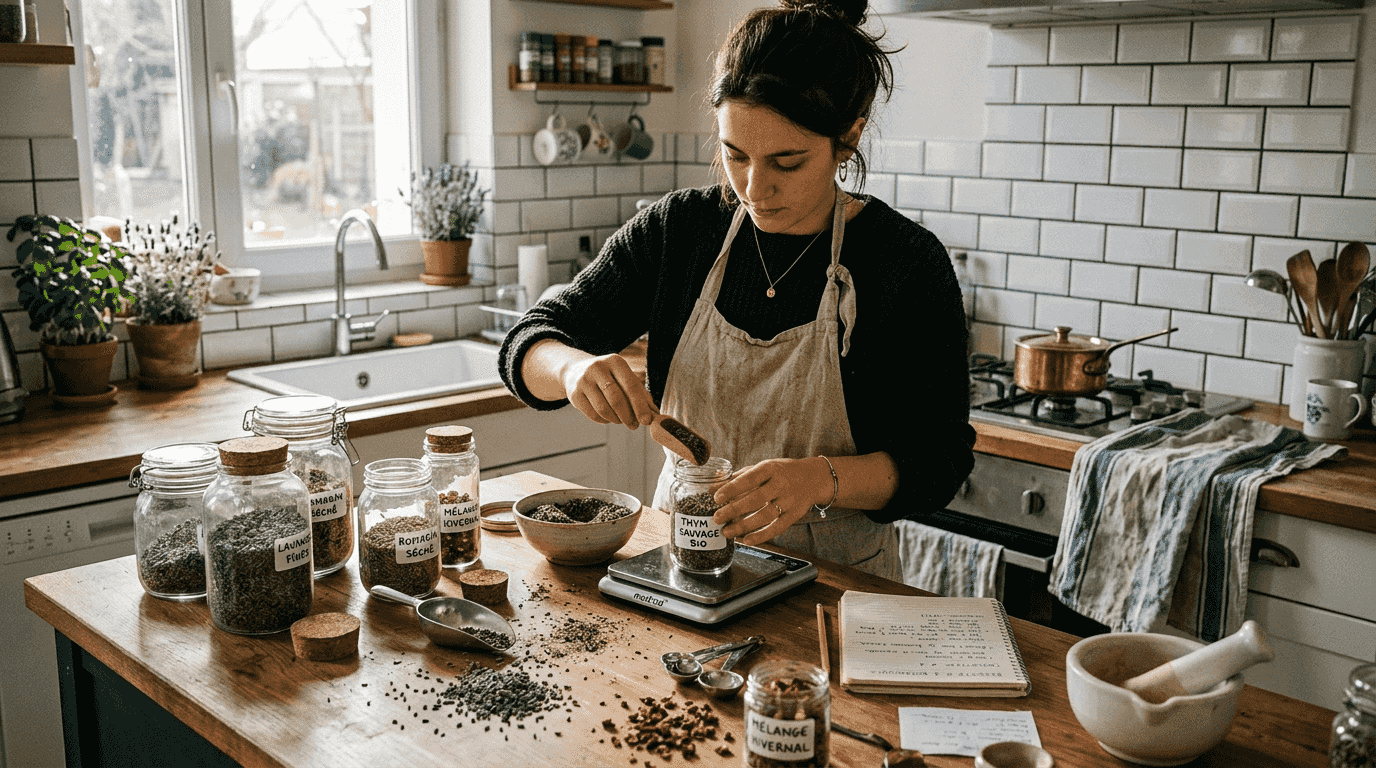
The choice of alcohol is the most critical decision. High-proof neutral alcohol, typically between 40 and 60% ABV, maximizes the extraction of water-soluble and fat-soluble compounds. Vodka or grain alcohol work perfectly because their neutrality allows the botanicals to shine. Some artisans use rum or whiskey as a base to add an extra aromatic layer, creating more complex profiles from the outset.
Botanical ingredients fall into several functional categories:
- Bitter roots: gentian, angelica, licorice, calamus
- Barks: bitter orange, lemon, grapefruit, cinchona
- Spices: cinnamon, cardamom, coriander, pepper
- Herbs: wormwood, hyssop, mint, thyme
- Flowers: chamomile, lavender, hibiscus
- Additives: coffee, cocoa, vanilla, chili
The following table compares the three main processes:
| Process | Duration | Advantages | Disadvantages |
|---|---|---|---|
| Maceration | 2 to 6 weeks | Complete extraction, simplicity, minimal cost | Long time, risk of oxidation |
| Infusion | 24 to 72 hours | Speed, precise control, vibrant aromas | Requires monitoring, some compounds lost |
| Distillation | 4 to 8 hours | Aromatic purity, high concentration | Expensive equipment, technical expertise required |
The artisanal manufacturing sequence begins with the meticulous selection of botanicals. Each ingredient must be precisely weighed because the proportions determine the final balance. Producers often create several separate macerations, one per botanical family, to individually control extraction times. Hard roots require several weeks, while fresh citrus fruits release their oils in just a few days.
After extraction, filtration removes solid particles while preserving essential oils. Some artisans use multiple filtration steps, moving from coarse filters to fine membranes. This progressive clarification avoids losing valuable aromatic compounds that could remain trapped in overly aggressive filtration. The resulting liquid exhibits variable clarity depending on the desired style.
The final blending requires a trained palate and the patience of a goldsmith. The producer mixes the different macerations, adjusting the proportions until the desired balance is achieved. This step is reminiscent of a perfumer composing a fragrance: top, heart, and base notes must harmonize. Some recipes include an aging phase in barrels to round off the edges and marry the flavors.
Pro tip: If you're attempting artisanal distillation at home, invest in pharmaceutical-grade alcohol rather than cheap vodka. The purity of your base directly determines the finesse of your bitters. Alcohol containing impurities or residual aromas will create a cloudy and unbalanced final product, spoiling weeks of meticulous work.
The use of bitters in cocktails: balance, complexity and classic recipes
Bitters play a balancing act in your cocktails, comparable to seasoning in cooking. Their primary function is to cut the excessive sweetness of sugar or liqueurs, creating a pleasant tension between opposing flavors. This ability to modulate sweet intensity without adding acidity makes them irreplaceable. An overly syrupy Whisky Sour regains its elegance with three drops of aromatic bitters, transforming an imbalance into harmony.
The sensory impact goes far beyond simple bitterness. Bitters enrich the cocktail's nose by releasing complex volatile compounds that rise to your nostrils with each sip. This olfactory dimension prepares your palate and amplifies the perception of other ingredients. On the palate, they create a slightly astringent texture that cleanses the taste buds, allowing each sip to remain fresh. The finish also extends, leaving a persistent aromatic finish rather than an abrupt disappearance.
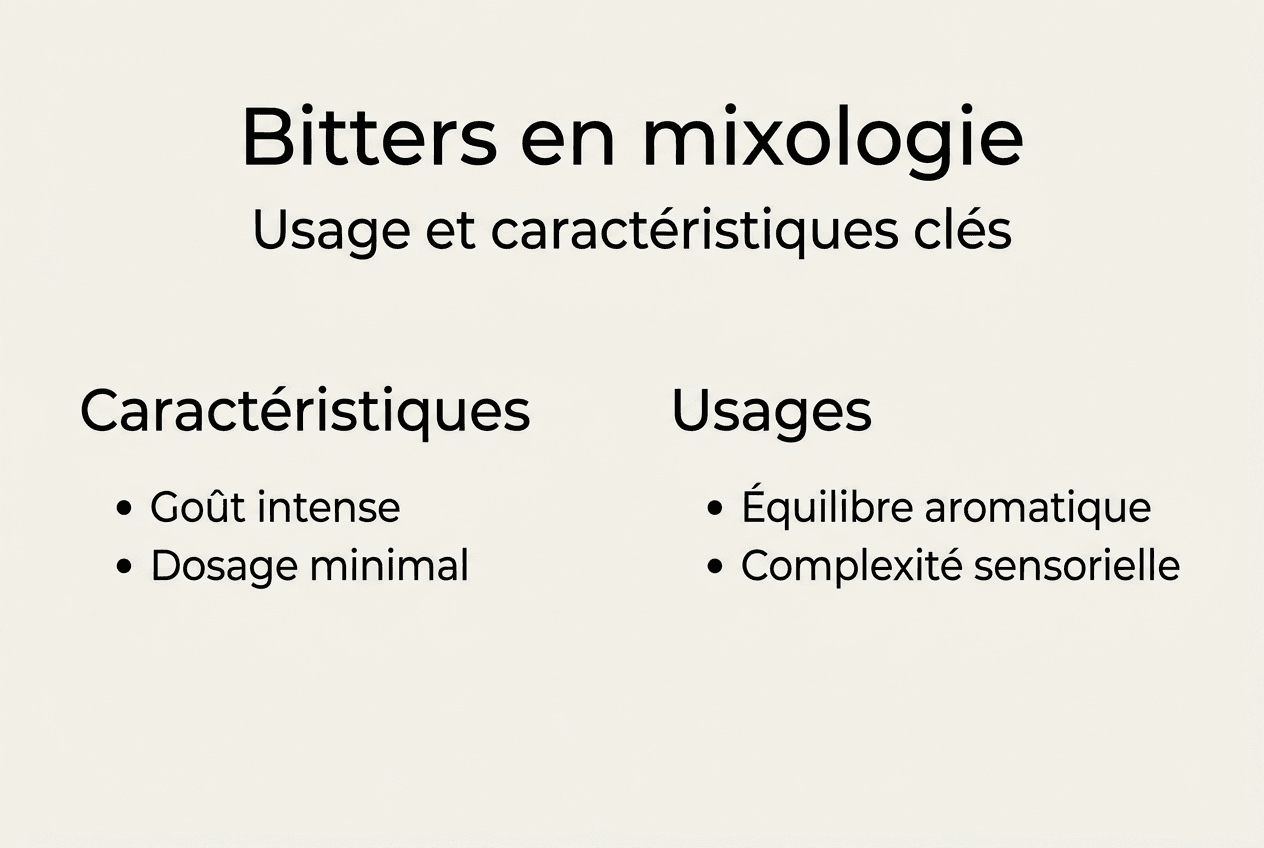
The role of balance and complexity of bitters manifests differently depending on their profile. Classic aromatic bitters like Angostura bring notes of warm spices and barks that integrate discreetly. Citrus bitters enhance freshness and vibrancy without adding juice. Chocolate or coffee bitters create a gourmet depth that works beautifully with aged spirits.
Classic cocktails demonstrate this versatility:
- Old Fashioned: two dashes of Angostura balance the sugar and reveal the woody notes of bourbon
- Manhattan: Angostura or orange bitters soften the sweet vermouth and unify the whole
- Champagne Cocktail: a sugar cube soaked in bitters transforms bubbles into a complex experience
- Sazerac: Peychaud's bitters literally define this iconic New Orleans cocktail
The following table compares the roles of different amari:
| Type of amaro | Typical dosage | Main role | Serving time |
|---|---|---|---|
| Classic bitters | 2 to 5 drops | Balancing, aromatic complexity | Integrated into the cocktail |
| Amaro | 30 to 60 ml | Main ingredient or major modifier | Neat, lengthened or in a cocktail |
| Bitter aperitif | 45 to 90 ml | Cocktail base, lengthened drink | Before meal, often with soda |
The fundamental difference lies in the intended use. Bitters subtly modify without ever dominating, while amaros and bitter aperitifs build the central taste profile. This distinction explains why replacing bitters with an amaro in an Old Fashioned would produce a completely different, almost unrecognizable, result. The importance of bitters in cocktails lies precisely in this capacity for invisible improvement.
Essential uses in modern mixology also include the creation of sophisticated non-alcoholic cocktails. Bitters, although containing alcohol, are used in such tiny quantities that they remain acceptable to many. Their aromatic complexity compensates for the absence of spirits, transforming a simple juice into a multi-layered drink. This application is experiencing remarkable growth with the trend towards moderate consumption.
Pro tip: Always start with a single dash of bitters, taste, then add gradually. Overdosing on bitters creates an unpleasant medicinal bitterness that is impossible to correct. It is better to build balance drop by drop than to spoil an entire cocktail. Also, keep your bitters at room temperature and away from light to preserve their aromatic intensity for several years. Exploring the types of cocktail bitters will expand your creative palette and refine your understanding of taste balance.
Discover our artisanal selection of Italian spirits
Your exploration of bitters has revealed the importance of botanicals and craftsmanship in creating complex flavors. This philosophy also inspires our exclusive collection of artisanal Italian gin and artisanal Italian vodka, where each bottle tells a unique story inspired by myths, anime, and pop culture. Our distillers share the same meticulous approach as master bitters makers: rigorous selection of ingredients, traditional processes, and a passion for excellence.

Each spirit in our range offers a distinctive aromatic profile that harmonizes beautifully with artisanal bitters. Imagine a Mediterranean gin with notes of wild juniper and citrus enhanced by a few drops of floral bitters, or a pure vodka revealing its silky texture thanks to spicy bitters. The Mezzanotte shop invites you to discover these pairings and create your own signature cocktails.
Pro tip: Always match your bitters to the aromatic profile of your base spirit. A botanical gin thrives with floral or herbaceous bitters, while a neutral vodka becomes the perfect canvas for bold bitters like chocolate or chili.
Frequently Asked Questions about Bitters
What is the difference between bitters and amaro?
Bitters are used in minimal doses, just a few drops, to balance and add complexity to a cocktail without becoming the main ingredient. Amaro is consumed in substantial quantities, often neat or diluted, as a drink in itself. The aromatic concentration of bitters is also much higher, making direct consumption impossible. Think of bitters as a seasoning and amaro as a dish.
Can you make your own bitters at home?
Absolutely, homemade bitters are accessible with a high-proof neutral alcohol and selected botanicals. You'll need patience as maceration generally takes two to six weeks depending on the chosen ingredients. Start with simple recipes using three or four botanicals before exploring complex combinations. The minimal investment and the satisfaction of creating your own aromatic profiles are well worth the effort.
Why do a few drops of bitters change a cocktail so much?
The exceptional concentration of aromatic compounds in bitters explains their disproportionate impact. These few drops contain dozens of volatile molecules that interact with all other ingredients, creating new taste harmonies. Bitterness itself activates specific receptors on your tongue that modify your overall perception of the cocktail. It's a multiplier effect rather than an additive one.
What types of cocktails use bitters the most?
Classic spirit-forward cocktails like the Old Fashioned, Manhattan, and Sazerac are among the biggest consumers of bitters. Champagne or prosecco-based cocktails also benefit beautifully from their aromatic complexity. Today in 2026, even modern creations and sophisticated mocktails systematically incorporate bitters to add depth and character.
What is the best way to store bitters?
Store your bitters at room temperature in a dark place, away from direct light and temperature variations. The high alcohol content makes them naturally stable, and they can be stored for several years without alteration. Always seal the cap tightly after use to prevent evaporation and oxidation of volatile compounds. Avoid refrigerating them as cold can cloud the liquid and diminish the aromas.
Recommendation
- what bitter means: essential guide for cocktails 2026 – Mezzanotte | Distillery & Spirits
- 6 types of bitter liqueurs for enthusiasts to discover – Mezzanotte | Distillery & Spirits
- Discover the types of bitter liqueurs for mixology in 2026 – Mezzanotte | Distillery & Spirits
- The Ultimate Guide to Amaro Bitter: Discover All the Secrets 2026 – Mezzanotte | Distillery & Spirits