

Discover innovative mixing techniques for gin cocktails 2026. Learn mixing ratios, advanced methods, and sustainable trends for unique drinks.
Mixed Techniques for Gin: Creative Cocktails 2026
Mar 15, 2026

Many believe that mixing gin cocktails is a simple matter of combining gin and tonic. However, the reality is far more complex and exciting. Various mixing techniques significantly influence the taste experience and make it possible to create unique aromas. This article provides both basic and advanced methods for gin lovers and bartenders who want to expand their skills. You will learn practical ways to experiment with different mixing ratios and conjure up innovative cocktails.
Table of Contents
- Fundamentals of Gin Mixing Techniques
- Advanced Techniques and Variations
- Trending Mixing Techniques and Flavors 2026
- Practical Guide: Mixing Gin Cocktails Yourself
- Discover Italian Artisan Gin at Mezzanotte
- Frequently Asked Questions about Gin Mixing Techniques
Key Takeaways
| Point | Details |
|---|---|
| Mixing Ratios Crucial | The balance between gin, sweetness, and acidity significantly determines the flavor profile. |
| Diverse Techniques | Shaking, stirring, muddling, and layering offer different aroma experiences. |
| Practical Knowledge Matters | Correct tools and methods significantly enhance quality. |
| Sustainability Trend 2026 | 72% prefer sustainable premium products when choosing gin. |
Fundamentals of Gin Mixing Techniques
Mixing techniques refer to the various methods bartenders use to combine spirits, juices, and other ingredients to create harmonious cocktails. The choice of technique influences not only the texture but also the temperature and the development of aromas in the finished drink. For gin cocktails, three main techniques are particularly relevant: shaking, stirring, and direct mixing in the glass.
When shaking, ingredients are vigorously shaken with ice, resulting in intensive mixing and cooling. This method is especially suitable for cocktails with fruit juices or eggs, as it creates a foamy texture. Stirring, on the other hand, preserves the clarity of the drink and is preferred for spirit-forward cocktails like a Martini. Direct mixing in the glass, known as “building,” is the simplest method and is used for long drinks such as Gin Tonic.
The 2:1:1 mixing ratio of gin, lemon juice, and simple syrup is considered a classic starting point for a Gin Sour. However, many experts prefer a milder ratio of 2:¾:¾ to reduce sweetness and emphasize the gin's botanical notes more strongly. The balance between sweetness and acidity is crucial: too much sugar can mask delicate flavors, while too much acidity can overwhelm the palate.
Different types of gin require adapted mixing techniques. A London Dry Gin with dominant juniper notes can handle stronger mixers, while a floral gin needs more subtle combinations. The choice of technique should always consider the aroma profile of the gin used.
Overview of Important Mixing Techniques:
- Shaking: Intensive mixing with air incorporation for a creamy texture
- Stirring: Gentle mixing without air bubbles for clear cocktails
- Muddling: Crushing herbs or fruits to release aromas
- Building: Layering directly in the glass
Pro Tip: Always use fresh ice in sufficient quantity. Too little ice melts quickly and dilutes the cocktail before it is properly chilled. Professional bartenders use at least three-quarters of the shaker's volume for ice.
The choice of the right glassware further enhances the taste experience. A classic coupé glass concentrates the aromas, while a highball glass retains carbonation longer. These details make the difference between a good and an exceptional Gin Cocktail.
| Technique | Best Use | Texture | Temperature |
|---|---|---|---|
| Shaking | Fruity cocktails | Foamy | Very cold |
| Stirring | Spirit-forward | Silky | Cold |
| Building | Long drinks | Sparkling | Cool |
| Muddling | Herb cocktails | Textured | Variable |
Advanced Techniques and Variations
Innovative mixing techniques open up entirely new taste worlds for gin enthusiasts. Muddling, the crushing of fresh ingredients, releases essential oils and aromas that perfectly combine with the botanical notes of gin. Basil, mint, or cucumber are gently muddled in the shaker or glass without becoming bitter. The art lies in applying just enough pressure to break the cells, but keeping the plant fibers intact.
Layering refers to the technique of layering different liquids so that they do not mix. This requires knowledge of specific densities and a steady hand. A layered cocktail offers a visual spectacle and allows the drinker to experience different taste levels sequentially. For gin cocktails, this works particularly well with liqueurs of different densities.
Infusion, the steeping of flavors in gin, has become a popular method. Botanicals, fruits, or spices are placed in gin for several hours to days. This technique allows complete control over intensity and aroma combinations. A quick infusion with fat-soluble flavors like butter or olive oil, followed by freezing and filtering, creates unexpected taste profiles.
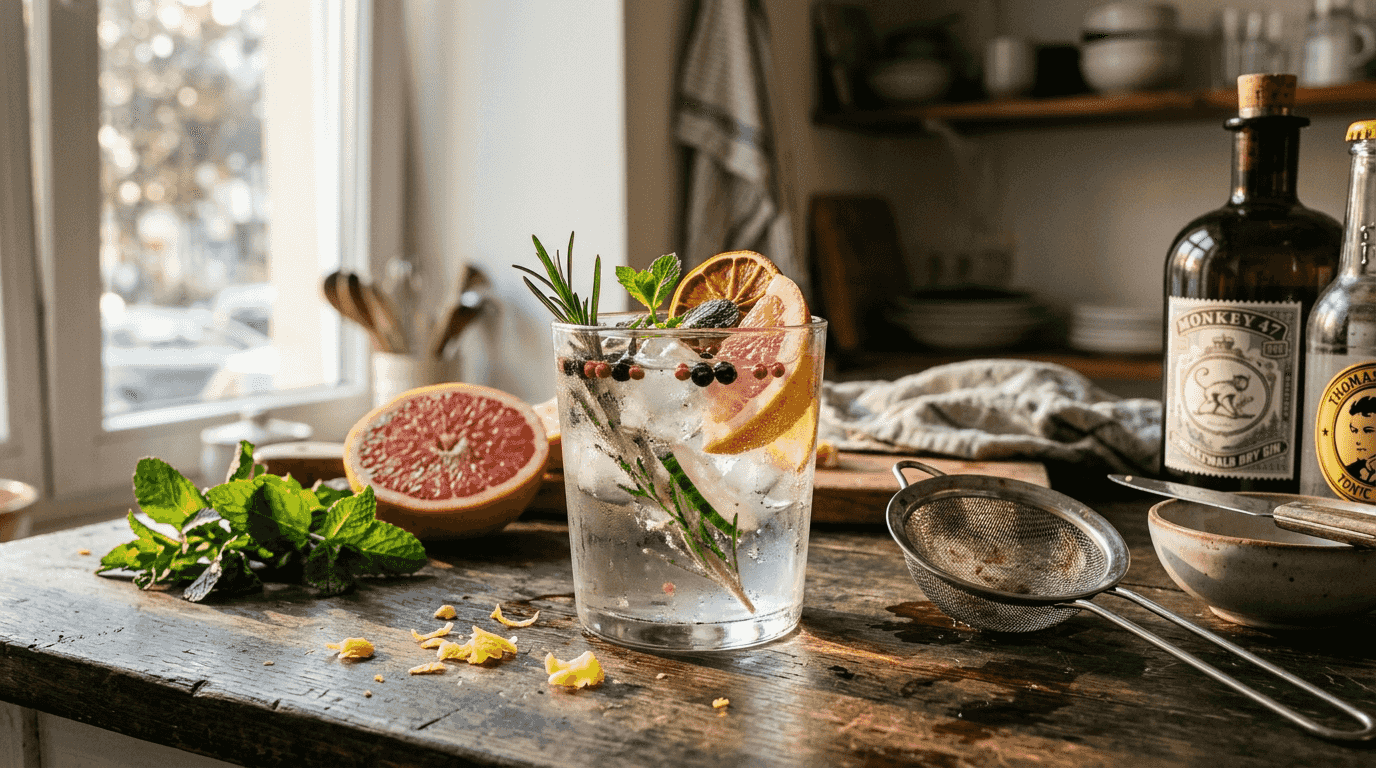
The classic 2:1:1 ratio serves as a basis for countless variations. Adjusting to 2:¾:¾ creates a drier, gin-focused cocktail that highlights the quality of the distillate. Experiment with different acidity sources: lime adds more sharpness, grapefruit more bitterness, and yuzu adds an exotic note.
Innovative Techniques for Creative Gin Cocktails:
- Fat Washing: Infusing gin with butter or bacon for umami notes
- Sous-vide Infusion: Precise temperature control for even flavors
- Carbonation: Infusing gin cocktails with carbon dioxide for sparkling freshness
- Smoke Infusion: Capturing smoke under a glass cloche for smoky depth
- Clarification: Milk washing for crystal clear, velvety cocktails
Pro Tip: When working with herbs, the rule is “clap, don’t slap.” Clap mint leaves between your palms to release oils without tearing the leaves. This prevents bitter chlorophyll notes in the finished cocktail.
The best gin cocktails are created through bold experimentation with these techniques. A Negroni can gain a nutty complexity through fat washing the gin with brown butter. An Aviation benefits from a short infusion with lavender blossoms, enhancing its floral notes.
| Classic Variation | Modern Interpretation | Technique | Mixing Ratio |
|---|---|---|---|
| Gin Sour | Clarified Gin Sour | Milk Washing | 2:¾:¾:¼ |
| Gin Tonic | Smoked Gin Tonic | Smoke Infusion | 1:3 |
| Martini | Fat-washed Martini | Fat Washing | 5:1 |
| Negroni | Sous-vide Negroni | Sous-vide | 1:1:1 |
The pairing guide for gin cocktails shows how different techniques harmonize with food. A clarified cocktail pairs excellently with light appetizers, while a smoked gin drink accompanies hearty meat dishes.
Trending Mixing Techniques and Flavors 2026
The sustainability movement is significantly shaping the gin world in 2026. 72% of consumers prefer sustainable premium products, which directly affects mixing techniques. Bartenders are increasingly using zero-waste methods, where every part of an ingredient is utilized. Citrus peels are processed into oleo-saccharum, a concentrated syrup made from essential oils and sugar, which provides intense flavors without waste.
New botanicals significantly expand the aroma spectrum. Japanese yuzu, Australian finger limes, and Nordic herbs like meadowsweet bring unexpected nuances to gin cocktails. These ingredients require adapted mixing techniques: yuzu is often processed into foam, finger lime pearls burst in the mouth for textural contrast, and meadowsweet best develops through cold infusion.
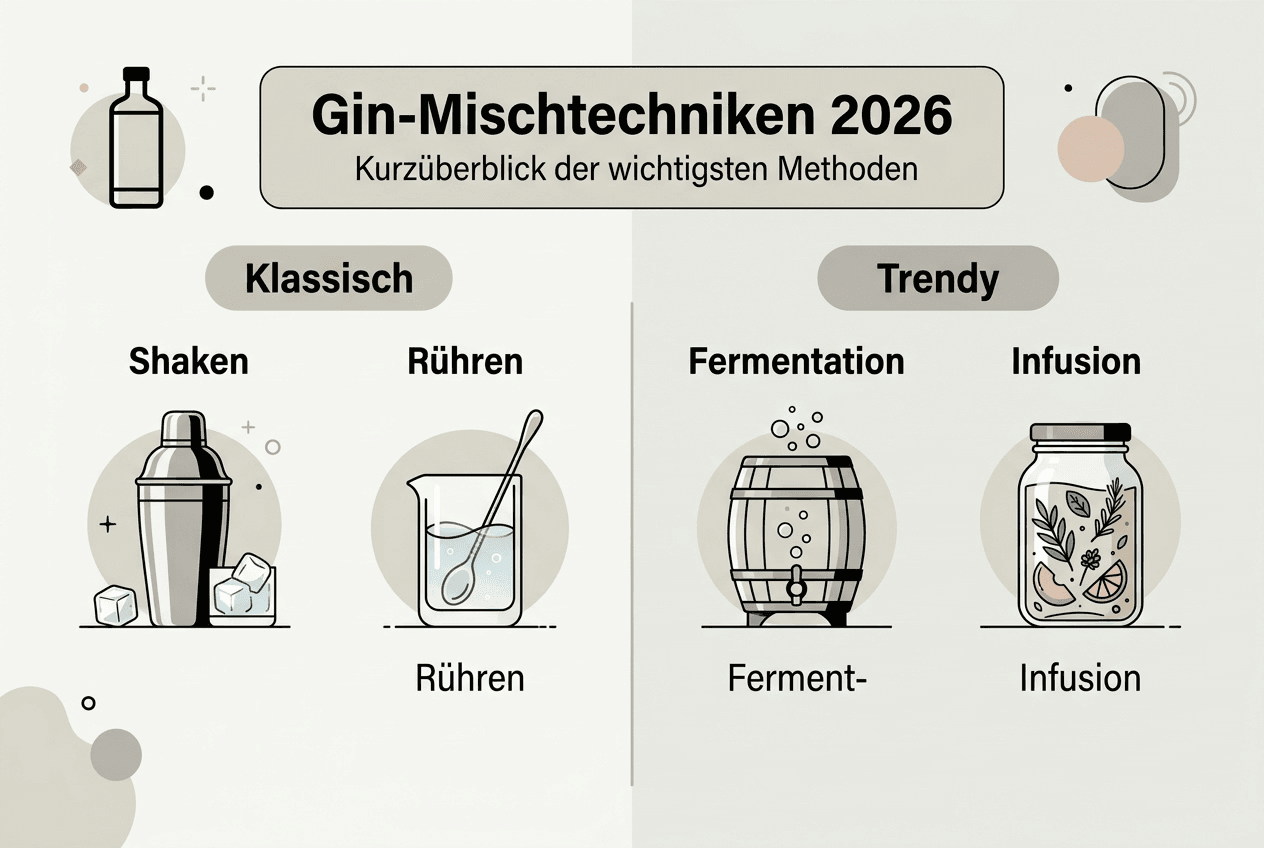
Fermentation has established itself as a mixing technique. Fermented juices like kombucha or fermented tea syrup add complexity and probiotic properties. These living ingredients interact dynamically with gin and create evolving flavor profiles. A gin kombucha cocktail offers acidity, sweetness, and a slight funkiness that revolutionizes traditional recipes.
Regional botanicals are gaining importance as consumers appreciate authenticity and origin stories. Italian botanicals such as lemon verbena from Liguria or bergamot from Calabria give gin cocktails a distinctive Mediterranean note. These ingredients are often used fresh and require gentle mixing techniques to preserve their delicate aromas.
Trending Flavor Combinations 2026:
- Gin with shiso and cucumber for Japanese-inspired freshness
- Rosemary-grapefruit gin with smoked salt for Mediterranean spice
- Elderflower gin with fermented honey for Nordic elegance
- Black pepper gin with yuzu for sharp citrus notes
- Lavender gin with olive oil infusion for Provençal sophistication
The use of hydrosols, the aromatic waters from distillation, is gaining popularity. Rose water, orange blossom water, or homemade herbal hydrosols add subtle aromas without increasing alcohol content or sweetness. A splash of rose water in a Gin Fizz enhances the floral notes without dominating the cocktail.
| Approach | Sustainable Method | Conventional Method | Benefit |
|---|---|---|---|
| Sweetening | Oleo-saccharum | Simple syrup | Zero waste, more intense flavors |
| Acidity | Fermented juices | Fresh citrus fruits | Complexity, longer shelf life |
| Flavoring | Hydrosols | Commercial syrups | Natural, no additives |
| Garnish | Dehydrated peels | Fresh fruits | Reduced waste, shelf life |
These sustainable trends combine ecological awareness with culinary innovation. Bartenders are developing mixing techniques that both protect the environment and create exceptional taste experiences.
Practical Guide: Mixing Gin Cocktails Yourself
The successful preparation of a gin cocktail begins with proper preparation. Have all ingredients, tools, and glasses ready before you start. Chill your glasses in the freezer or with ice water to maintain the temperature of the finished cocktail longer. Fresh ice is essential: use large, clear ice cubes for drinks on the rocks and smaller ones for shaker cocktails.
Step-by-step to perfect gin cocktails:
- Choose a gin whose aroma profile matches the desired flavor
- Measure all ingredients precisely with a jigger
- First add non-alcoholic ingredients to the shaker
- Add the gin and fill with ice
- Shake vigorously for 10 to 15 seconds or stir for 30 seconds
- Strain the cocktail through a bar strainer into the pre-chilled glass
- Garnish immediately before serving
The selection of ingredients largely determines the quality of the end product. Use freshly squeezed juices instead of bottled ones, as they contain more vitamins and livelier flavors. For sweetening, various options are available: simple syrup for neutral sweetness, honey syrup for floral notes, or agave syrup for a milder, less intrusive sweetness.
Experimenting with ratios between 2:1:1 and 2:¾:¾ allows for individual taste adjustments. Start with the classic ratio and gradually reduce sweetness until you find your personal preference. Note down successful combinations to reproduce them later.
Essential Bar Tools:
- Boston shaker or Cobbler shaker for shaken cocktails
- Bar spoon with a long handle for stirring
- Jigger with various measurements for precise measuring
- Hawthorne strainer and fine strainer for straining
- Muddler made of wood or stainless steel
- Zester and peeler for garnishes
Pro Tip: Temperature is crucial for the taste experience. A cocktail that is too warm tastes alcoholic and unbalanced, while an optimally chilled drink is harmonious and refreshing. Always shake until the shaker is frosted on the outside, which signals the correct temperature.
Common mistakes are easily avoided. Excessive shaking leads to dilution, while too short shaking results in a warm, unbalanced drink. When muddling herbs, the rule is: press gently instead of aggressively crushing. Too much force releases bitter chlorophyll notes that ruin the cocktail.
The ten best gin cocktails 2026 offer inspiration for various difficulty levels. Start with simpler recipes like a Gin Tonic or Tom Collins before venturing into more complex creations like a Ramos Gin Fizz. Each of these cocktails teaches different techniques and systematically builds your repertoire.
For a complete guide to various gin cocktails and their variations, consult specialized resources. These offer detailed recipes, timing notes, and troubleshooting tips for common problems. With practice, you will develop an intuitive feel for balance and timing.
Discover Italian Artisan Gin at Mezzanotte
Having learned the art of gin mixing techniques, it's time to discover exceptional spirits that will elevate your cocktails to a new level. At Mezzanotte, you'll find a curated selection of Italian artisan gins, which impress with unique botanicals and traditional craftsmanship. Each gin tells its own story and brings characteristic aromas that are perfectly suited for the mixing techniques presented.

The carefully selected distillates combine Italian tradition with innovative flavour profiles. From classic juniper-dominated gins to floral varieties with Mediterranean herbs, the collection offers something for every taste. You will also find Italian artisan vodkas, which are excellent for experimental cocktail creations.
Visit the Mezzanotte Shop and discover spirits that will transform your cocktail creations. Each bottle represents the highest quality and craftsmanship, perfectly tailored to discerning gin lovers and professional bartenders.
Frequently asked questions about gin mixing techniques
Which mixing technique is best for beginners?
Building, i.e. mixing directly in the glass, is the most beginner-friendly method. A classic Gin & Tonic only requires pouring gin and tonic water over ice, followed by a garnish. This technique forgives small mistakes and still delivers excellent results. Once you feel confident, you can move on to shaking.
How does the mixing ratio affect the taste?
The ratio between gin, acidity and sweetness fundamentally determines the balance of the cocktail. A higher gin content emphasizes the botanical notes, while more acidity brings freshness and sweetness mutes the sharpness. The classic 2:1:1 ratio offers a balanced start, but many prefer 2:¾:¾ for a drier, spirit-focused drink.
Which ingredients pair well with gin for creative cocktails?
Gin harmonizes excellently with citrus fruits such as grapefruit, yuzu and bergamot. Herbs like basil, rosemary and thyme enhance the botanical notes, while cucumber and ginger create refreshing contrasts. Experiment with floral elements like elderflower or lavender for more complex profiles. The best cocktails arise from bold combinations.
How do I best store mixed gin cocktails?
Freshly prepared cocktails should be served immediately, as ice melts and flavors fade. For batch cocktails without ice, you can store the mixture chilled for up to 24 hours. Add ice and fresh garnishes just before serving. Cocktails with eggs or dairy products last a maximum of 4 hours in the refrigerator.
Do sustainable gin products taste different?
Sustainable gins do not fundamentally differ in taste, but often in the intensity and purity of the aromas. Many sustainable distilleries use organic botanicals that have been grown without pesticides and therefore deliver clearer, more authentic notes. The production methods focus on quality rather than quantity, which often leads to more complex aroma profiles.
What role does ice quality play in mixing?
Ice quality significantly influences temperature, dilution and presentation. Clear, hard ice melts more slowly and dilutes the cocktail less. Cloudy ice contains air pockets and impurities that melt faster and can introduce undesirable flavors. For optimal results, use filtered water and large ice cubes for drinks on the rocks.
Recommendation
- 8 Gin Cocktails to Try in 2026 for Unique Evenings – Mezzanotte | Distillery & Spirits
- Gin Trends 2026: 72% Prefer Sustainable Premium Products – Mezzanotte | Distillery & Spirits
- 10 Gin-Based Cocktails to Try in 2026 – Mezzanotte | Distillery & Spirits
- Botanicals in gin define aroma diversity 2026 – Mezzanotte | Distillery & Spirits