

Explore the fascinating evolution of gin in Italy, from its monastic origins to innovative post-distillation maceration techniques using unique Alpine botanicals.
Discover the history of gin in Italy: innovations 2026
Mar 15, 2026

Gin immediately brings to mind London, its historic distilleries, and British tradition. However, Italy has a rich and little-known history in gin production, marked by bold innovations and unique botanicals. This singular evolution has been transforming the landscape of European spirits since the beginning of the 21st century. Italian distillers combine ancestral know-how with modern techniques to create aromatic profiles impossible to replicate elsewhere. Discover how this tradition has developed and why it deserves the attention of demanding enthusiasts and collectors.
Table of Contents
- Origins and evolution of gin in Italy
- Innovative production techniques in Italy
- Unique characteristics of Italian gin and comparison with other European gins
- Collecting and appreciating Italian gin today
- Discover our exclusive selection of Italian craft gin
- Frequently Asked Questions about Italian Gin
Key Takeaways
| Point | Details |
|---|---|
| Little-known Italian tradition | Italy has been developing a distinct gin production for decades, combining local heritage and innovation |
| Post-distillation maceration | This specific technique allows for the integration of complex flavors and natural colors impossible with distillation alone |
| Unique local botanicals | Alpine blueberries, maritime pines, and Timorasso vine leaves create aromatic profiles not found in other traditions |
| International recognition | Italian gins are accumulating awards and distinctions for their originality and exceptional quality |
| Regional diversity | Each Italian region brings its botanical and technical specificities, enriching the available palette |
Origins and evolution of gin in Italy
The dominant perception associates gin with the British crown and London bars. This view overlooks a fascinating reality: Italy has cultivated its own distillation tradition for several centuries. The first traces of production date back to alpine monasteries where monks and apothecaries experimented with medicinal plants and neutral alcohols. These ancestral practices laid the foundations for a know-how passed down from generation to generation.
The progressive evolution of Italian gin accelerated at the turn of the 21st century. Distillers rediscovered traditional recipes and adapted them to contemporary tastes. This artisanal renaissance transformed local production into an internationally recognized creative movement. The mountainous regions of the north, with their alpine botanicals, developed different profiles from the Mediterranean coastal areas. This geographical diversity considerably enriches the heritage of Italian gin.
Regional development creates distinct identities. Piedmont favors aromatic herbs and wild berries. Tuscany incorporates Mediterranean citrus fruits and flowers. The Alps bring high-altitude junipers and mountain plants with powerful resinous notes. Each terroir directly influences the final character of the spirit. Distillers exploit these particularities to create expressions impossible to reproduce elsewhere.
The origin of ingredients becomes a major quality argument. Producers favor botanicals grown locally or wild-harvested in preserved areas. This approach guarantees freshness and authenticity while reducing the environmental footprint. The Italian gin guide details these regional specificities and their impacts on the final aromatic profiles.
The artisanal revival truly began in the 2000s. Young distillers trained in modern techniques revisited forgotten family recipes. This fusion of tradition and innovation produced award-winning spirits in international competitions. Volumes remain limited, favoring quality over quantity. This artisanal philosophy appeals to collectors and enthusiasts seeking authenticity and originality.
Key historical characteristics include:
- Monastic heritage of medicinal distillation transformed into spirit production
- Progressive adaptation to local botanicals available according to seasons and regions
- Artisanal renaissance driven by a new generation respectful of traditions
- Growing international recognition since the early 2010s
Innovative production techniques in Italy
Classic distillation dominates global gin production. The standard process heats neutral alcohol with botanicals in a still, capturing condensed aromatic vapors. Post-distillation maceration represents a radically different approach adopted by many Italian producers. This technique infuses botanicals directly into already distilled gin, allowing the extraction of compounds impossible to volatilize by heat alone.
Post-distillation maceration profoundly transforms the final product. Alpine blueberries release anthocyanin pigments, creating natural purple hues. Maritime pine needles bring fresh resinous notes without excessive bitterness. Timorasso vine leaves, a rare Piedmontese grape variety, impart subtle tannins and a unique herbaceous complexity. These ingredients would lose essential characteristics under the heat of a traditional still.
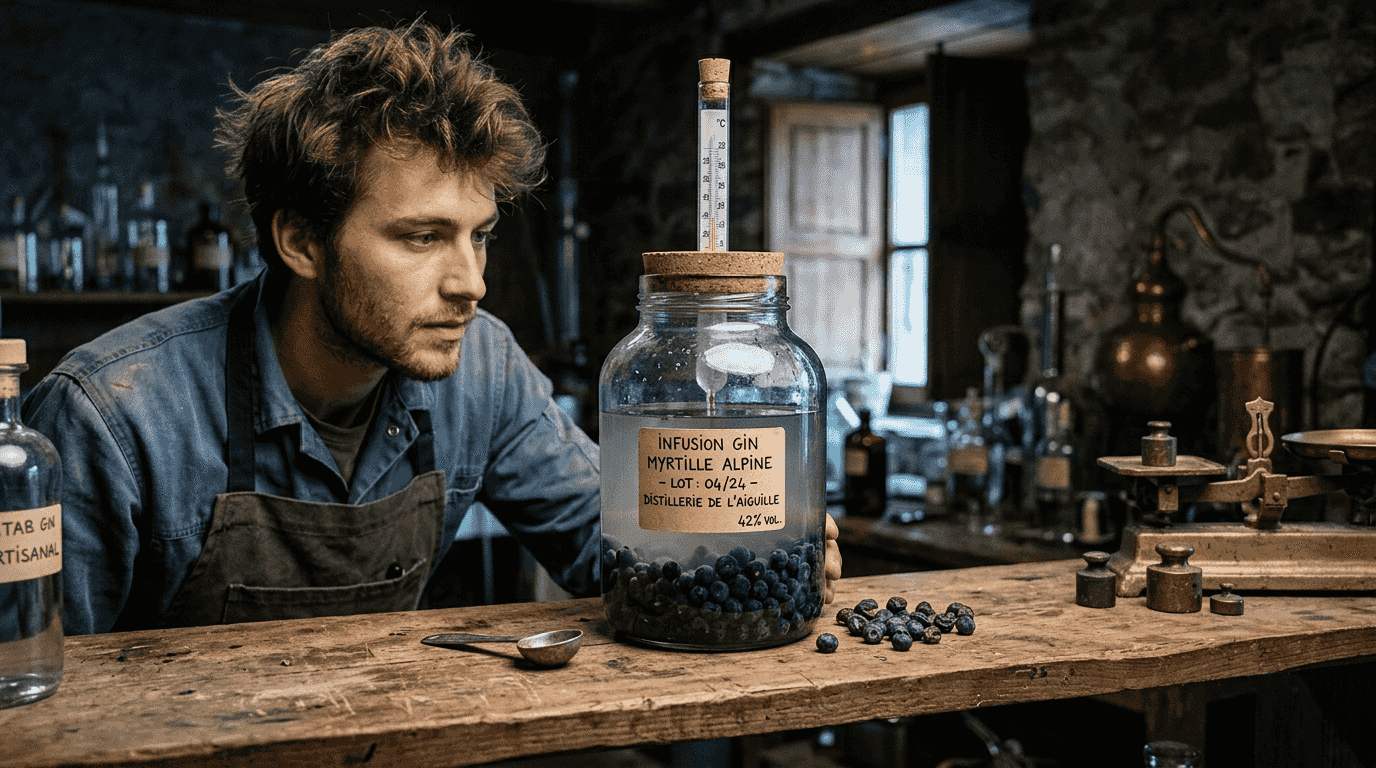
The impact on color, aroma, and flavor far exceeds that of classic distillation. Maceration preserves fragile molecules destroyed by high temperatures. Essential oils integrate differently, creating a richer texture in the mouth. Aromatic profiles gain in complexity with notes evolving in the glass over minutes. This approach also allows precise adjustments after distillation, refining the final balance with impossible precision otherwise.
The local terroir directly influences the selection of plants. Distillers scour mountains and forests, identifying wild botanicals during optimal harvesting periods. This intimate connection with the natural environment distinguishes Italian production from standardized industrial approaches. Each batch reflects the climatic conditions of the year, creating subtle variations appreciated by connoisseurs. The types of Italian craft gin explore this fascinating diversity.
Pro tip: opt for Italian gins using maceration to discover an aromatic palette impossible with distillation alone. Serve them neat at room temperature to fully appreciate their complexity. Add ice gradually to observe the evolution of aromas as the temperature drops. This tasting reveals depth and subtlety masked in overly elaborate cocktails.
Major technical innovations include:
- Cold maceration preserving fragile volatile aromatic compounds
- Use of fresh-picked versus dried botanicals for maximum intensity
- Sequential infusions allowing precise control of each aromatic element
- Experimentation with short aging in barrels that contained Italian wines
The Italian gin cocktail pairing guide delves into how these techniques influence optimal taste associations.
Unique characteristics of Italian gin and comparison with other European gins
Typical Italian botanicals create aromatic signatures that are unmistakable. While British tradition relies on coriander, angelica, and classic citrus, Italian producers incorporate fresh basil, wild rosemary, elderflower, and high-altitude juniper berries. These Mediterranean and alpine ingredients convey a sunny and herbaceous character absent from Nordic profiles. The difference begins as soon as the bottle is opened, the nose revealing a distinctive floral and vegetable complexity.
The Italian aromatic profile favors a balance between freshness and depth. Red mountain fruits, wild strawberries, and wild raspberries provide natural sweetness without added sugar. Mountain herbs, wild thyme, and génépi create a sophisticated herbaceous background. Flowers, chamomile, and lavender soften the whole without making it bland. This harmony reflects the exceptional biodiversity of the Italian territory and the know-how of distillers mastering the extraction of each component.
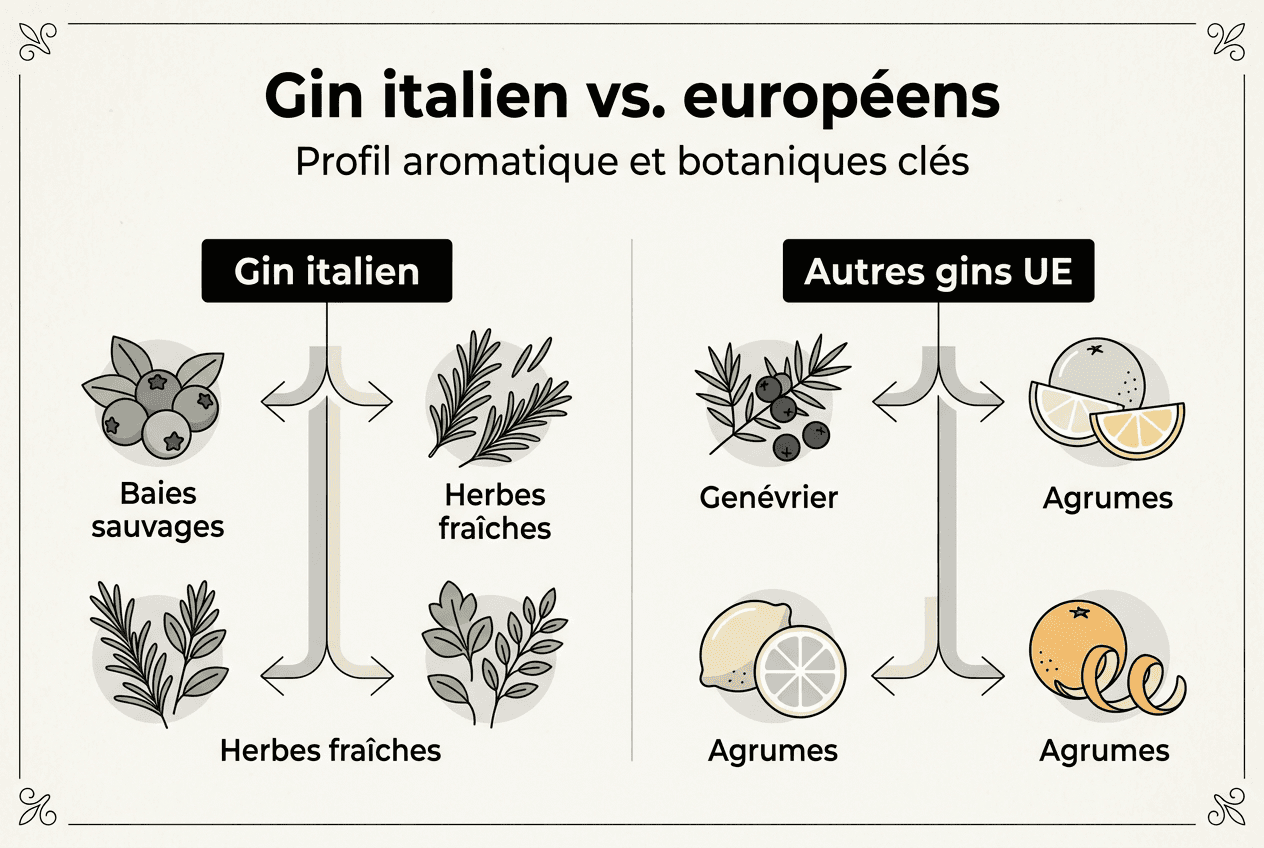
Italian gin stands out for its holistic approach, valuing terroir and seasonality. Specific techniques, notably maceration and multiple infusions, allow for nuances impossible with standard single distillation. This artisanal philosophy contrasts with industrial production, which prioritizes reproducibility over expression of place.
| Characteristic | Italian Gin | English Gin | Dutch Gin | Spanish Gin |
|---|---|---|---|---|
| Dominant botanicals | Mediterranean herbs, alpine berries, local citrus | Juniper, coriander, angelica, imported citrus | Intense juniper, malt, oriental spices | Juniper, Mediterranean citrus, aromatic herbs |
| Main technique | Post-distillation maceration, sequential infusions | Classic vapor distillation | Pot still distillation, double or triple | Vapor distillation, short maceration |
| Taste profile | Floral, fruity, herbaceous, balanced | Dry, juniper-forward, spicy, classic | Malty, rich, dominant juniper | Dry, pronounced citrus, mineral |
| Texture | Round, oily, complex | Clean, dry, sharp | Dense, malty, persistent | Light, lively, refreshing |
The distinctive advantages of Italian gin attract collectors and enthusiasts:
- Regional diversity offering an exceptionally wide aromatic palette
- Authenticity guaranteed by the use of traceable local botanicals
- Constant technical innovation pushing the limits of traditional distillation
- Limited production ensuring exclusivity and consistent quality
- Rich storytelling connecting each bottle to a specific territory and culture
The differences in Italian gin are particularly appreciated in comparative tasting. Serve four European gins side by side to identify national signatures. The Italian character immediately emerges with its floral complexity and natural balance. The types of Italian gin vary considerably depending on regions and producers, warranting in-depth exploration.
Collecting and appreciating Italian gin today
Selecting a unique Italian gin requires attention to several determining criteria. Prioritize limited artisanal productions rather than mass-distributed industrial brands. Check the origin of botanicals, ideally grown or harvested locally by the distiller themselves. Examine the label to identify the techniques used; post-distillation maceration generally signals a qualitative approach. Look for international awards indicating recognition by peers and experts. Numbered or vintage editions offer traceability appreciated by serious collectors.
Optimal storage preserves aromatic qualities for years. Store bottles vertically in a cool, dark place with stable temperature. Avoid sudden temperature variations that degrade fragile aromatic compounds. Once opened, a bottle maintains optimal quality for six to twelve months if sealed airtight. For valuable collections, consider a climate-controlled cellar maintaining a constant 15 to 18 degrees Celsius. Protect from direct sunlight, which can discolor spirits and alter taste profiles. The gin collection guide details advanced strategies for long-term preservation.
Methodical tasting fully reveals the complexity of Italian gin:
- Pour 30 to 40 ml into a tulip glass, concentrating aromas towards the nose
- Observe the color and clarity, noting natural hues resulting from maceration
- Gently sniff without swirling, identifying dominant and secondary notes
- Take a small sip, allowing the liquid to cover the entire tongue
- Chew lightly to release aromas in the mouth, noting evolution
- Swallow slowly, analyzing length and persistence in the finish
- Wait thirty seconds before another sip, allowing the palate to reset
Pro tip: integrate Italian gin into simple cocktails that reveal its versatility without masking its character. A Gin and Tonic with a neutral premium tonic water and fresh citrus zest is sufficient. Avoid overly sweet or spicy mixes that overpower aromatic subtleties. The Negroni, a classic Italian cocktail, enhances local gins by balancing bitterness and sweetness. Experiment with ratios to find the perfect harmony with the specific profile of your bottle.
The cultural and historical importance enriches the collection dimension. Each bottle tells a story of terroir, family know-how, and artisanal passion. Italian gins are attracting increasing interest among collectors for their unique profiles and artisanal production. Documenting provenance, vintage, and production context adds patrimonial value transcending the purely gustatory aspect. Some distillers offer visits allowing one to meet the creators and understand the philosophy behind each creation.
The origin of gin ingredients directly influences authenticity and traceability. Transparent producers share botanical maps, harvest periods, and extraction methods. This transparency guarantees quality and allows for informed appreciation. Savvy collectors prioritize distilleries documenting the entire production chain, from plant to bottle.
Discover our exclusive selection of Italian craft gin
You have just explored the richness and complexity of Italian gin, its innovative techniques, and its unique cultural heritage. Why not extend this discovery by directly tasting these exceptional spirits?

Mezzanotte offers a carefully selected range of Italian craft gin representing the best of contemporary production. Each bottle embodies an artisanal philosophy prioritizing authentic local botanicals and revisited traditional know-how. Our catalog features internationally awarded distillers, guaranteeing exceptional quality and aromatic profiles not found elsewhere. Also explore our collection of Italian craft vodka to complete your cellar with excellent Italian spirits. Order online and receive these unique creations celebrating the art of Italian distillation directly at your home.
Frequently Asked Questions about Italian Gin
What is the main difference between Italian gin and British gin?
Italian gin favors Mediterranean and alpine botanicals like basil, rosemary, and mountain berries, creating floral and herbaceous profiles. British gin relies on dominant juniper, coriander, and angelica for a dry and classic character. Italian techniques include post-distillation maceration, absent from British tradition, allowing for the extraction of aromatic compounds impossible with vapor distillation alone. This approach results in a richer texture and increased complexity.
What botanicals are typical in Italian gin?
Italian botanicals include alpine blueberries, maritime pine, Timorasso vine leaves, fresh basil, wild rosemary, elderflower, chamomile, lavender, wild thyme, and génépi. Local citrus fruits such as Sicilian lemons and Calabrian bergamot bring Mediterranean freshness. High-altitude juniper berries offer distinct resinous notes compared to northern varieties. This palette reflects the exceptional biodiversity of the Italian territory and varies according to production regions.
How should artisanal Italian gin be stored?
Store bottles vertically in a cool, dark place with stable temperature, ideally between 15 and 18 degrees Celsius. Avoid direct sunlight exposure and sudden temperature changes that degrade aromatic compounds. An unopened bottle can be stored indefinitely without alteration. Once opened, consume within six to twelve months for optimal quality. Seal tightly after each serving to limit oxidation. The guide on Italian gin delves deeper into storage techniques for collectors.
Can Italian gin be used in cocktails?
Absolutely, Italian gin excels in simple cocktails, revealing its unique character. The Gin Tonic, with premium tonic water and fresh citrus zest, makes an ideal base. The Negroni, a classic Italian cocktail, elevates local gins by balancing bitterness and sweetness. Avoid overly complex mixtures that mask aromatic subtleties. Prioritize a maximum of two to three ingredients to allow the gin's profile to shine. Adjust ratios according to the specific intensity of your bottle for perfect harmony.
Where can authentic Italian gin be found?
Look for specialized artisanal spirits shops offering curated selections from recognized Italian producers. Verify provenance and authenticity via labels detailing botanicals and techniques used. Specialized e-commerce platforms like Mezzanotte offer expert catalogs with comprehensive descriptions and authenticity guarantees. Prioritize distilleries that document their entire production process, from botanicals to bottling. Participate in trade shows and tastings to discover producers directly and ask questions about their philosophy and methods.
Recommendation
- Italian Gin Guide: Discover the Secrets of 2026 – Mezzanotte | Distilleria & Spirits
- The Complete Guide to Gin Italy: Explore Flavors and Tradition 2026 – Mezzanotte | Distilleria & Spirits
- Gin de Collection 2026 : Guide Complet pour 90% Plus de Précision – Mezzanotte | Distilleria & Spirits
- Types de gin italiens 2026 : guide complet pour amateurs – Mezzanotte | Distilleria & Spirits