

Do you want to discover all the secrets of London Dry Gin? From its origins to 2026 trends, this guide reveals its history, production, tasting and advice from the best experts
The Complete Guide to London Dry Gin: Discover All the Secrets 2026
Jan 4, 2026

Are you ready to discover the spirit that revolutionized the world of mixology? Whether you love experimenting with new flavors or want to become a true expert, this 2026-updated guide to London Dry Gin is the definitive resource for you.
London Dry Gin isn't just a drink, but a journey through history, rules, aromas, and innovation. I'll reveal curiosities, secrets, and details that will make every sip a unique experience.
Together, we'll explore the origins, characteristics, botanicals, production, tasting, top brands, and future trends. Ready to get started? Read on and turn your passion into true knowledge.
What is London Dry Gin: Definition and History
Have you ever wondered how London Dry Gin came into being and why it's still so beloved around the world? If so, you're about to embark on a fascinating journey combining history, revolution, and innovation. Get ready to see your gin and tonic in a whole new light.
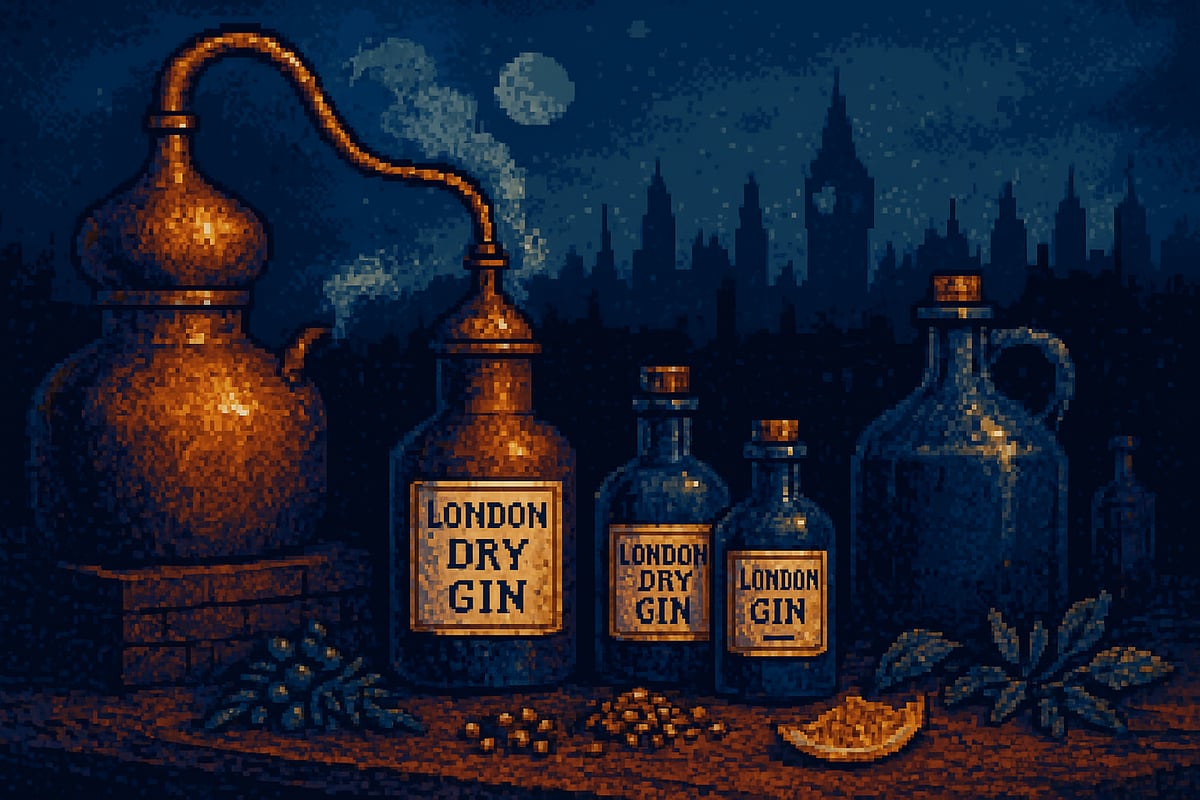
Origins of gin and the birth of the “London Dry” style
The origins of London Dry Gin date back to the Netherlands in the 17th century, where genever was used as a medicinal remedy. The English, fascinated by this spirit during the wars against the Dutch, popularized it in London, transforming it into a true national icon.
With the Industrial Revolution, gin production changed dramatically. Thus, the "London Dry" category was born, which does not indicate a place but a specific production style. The term "London" identifies a rigorous method: the gin must be distilled together with its botanicals, without adding flavorings or sugars after distillation. This standard became synonymous with quality, purity, and transparency.
In the 19th century, gin consumption in the United Kingdom skyrocketed, thanks in part to historic pioneers like Beefeater and Gordon's. Gin went from being a medicinal product to a staple in cocktails, conquering the London bar scene. Curious to delve deeper into this evolution? You can read Gin's History and Curiosities to discover surprising details and anecdotes.
The regulations, now also enshrined in EU Regulation 2019/787, have established the parameters for what can legally be called London Dry Gin. This has protected both consumers and reputable producers, maintaining high quality standards.
Characteristics that distinguish London Dry Gin
But what really makes London Dry Gin special compared to other gins? The answer lies in the strict rules of its production and the choice of botanicals. "Classic" gin can be flavored even after distillation, while dry gin eliminates added sugars and flavorings, but only London Dry Gin follows such strict rules.
Here is a comparison table:
| Type of Gin | Post-distillation aromas | Added sugars | Method |
|---|---|---|---|
| Gin | Yes | Yes | Free |
| Dry Gin | No | Max 0.1 g/l | Free |
| London Dry Gin | No | Max 0.1 g/l | Distillation with botanicals |
The heart of London Dry gin is juniper, complemented by coriander, angelica, citrus, and various spices. No flavorings can be added after distillation, and the alcohol content must be at least 37.5%. Today, approximately 70% of gins sold worldwide carry the "London Dry" label, a sign of its popularity and reliability.
When choosing a bottle, always look for the specific label: only then will you be sure to taste an authentic, pure gin that is faithful to tradition.
How London Dry Gin Is Made: Process and Botanicals
The production of London Dry Gin is a fascinating journey through select ingredients, ancient techniques, and modern innovation. Have you ever wondered how this spirit's unique character is created? Get ready to discover all the secrets, step by step.

Raw materials and selection of botanicals
It all starts with a foundation: neutral alcohol. For London Dry Gin, we use only agricultural alcohol with a purity exceeding 96% ABV. This guarantees a clean distillate, ready to absorb the aromas of the botanicals.
But what are the essential botanicals? Juniper dominates, followed by coriander, angelica root, citrus peel, roots, and spices. Each distillery chooses its own blend, creating a unique profile. In recent years, innovative botanicals such as cocoa beans, kaffir lime, and rare flowers have emerged, bringing freshness and originality to London dry gin.
Want a detailed overview of the most commonly used botanicals? Check out this guide to botanicals used in gin .
Here is a table of the most common botanicals:
| Botany | Percentage of usage |
|---|---|
| Juniper | 100% |
| Coriander | 90% |
| Angelica | 80% |
| Citrus fruits | 75% |
| Various spices | 60% |
The quality of the raw materials is fundamental: a good London Dry gin is immediately recognizable by its freshness and the complexity of its aromas.
Distillation techniques and production rules
Let's move on to the heart of production: distillation. For London Dry Gin, tradition dictates the use of copper stills, but today many distilleries are experimenting with modern techniques like the Rotavapor. Before distillation, the botanicals are left to macerate in the alcohol to extract every aromatic nuance.
The process consists of three fundamental phases: maceration, distillation itself, and distillate collection. At the end, a pure and clear distillate is obtained, ready to be brought to the desired strength by adding water.
The rules are strict: no flavorings or sugars can be added after distillation, with a maximum of 0.1 g/l of residual sugars. This guarantees the purity and unmistakable style of London Dry Gin.
Did you know that, on average, each recipe includes between 6 and 10 botanicals? Some English and Italian distilleries, such as those using Rotavapor, are revolutionizing the industry with new techniques to enhance delicate aromas.
Compliance with standards and attention to detail make the difference between any gin and a truly quality London Dry gin.
The role of artisanal distillation in Italy
In recent years, Italian microdistilleries have experienced incredible growth. From 2020 to 2026, the number of artisanal London dry gin producers increased by over 50%. This phenomenon is driven by a love of the local area, the search for local botanicals, and a sustainable production philosophy.
What makes artisanal production in Italy special? Small-batch production, obsessive attention to quality, and a willingness to experiment with traditional ingredients. Some producers, for example, use Sicilian citrus fruits, Alpine herbs, or Mediterranean spices to give their London Dry Gin a unique touch.
Here are some trends from recent years:
- Italian gin exports expected to grow by 30% between 2022 and 2026.
- Greater attention to environmental sustainability
- Collaborations between bartenders and distilleries for exclusive recipes
If you want to become a true expert, don't overlook the Italian artisanal scene, currently among the most vibrant and innovative in Europe. Each bottle embodies a story, a terroir, and a passion that can be felt in every sip of London Dry Gin.
Flavor Profile and Tasting: How to Recognize a London Dry Gin
Have you ever smelled a glass of London Dry Gin and wondered what makes this spirit so special? Understanding its appearance, its distinctive aromas, and how to truly recognize it will help you savor it like a true expert.

Sensory profile: aromas, taste and structure
This London Dry Gin stands out for its unique aromatic profile, dominated by the freshness of juniper. As soon as you pour it into the glass, balsamic notes invade the nose, followed by citrusy notes of lemon and orange zest, spicy hints of coriander, and an earthy base of angelica root.
This combination creates a balance between freshness and dryness that makes London Dry Gin perfect for both enjoying neat and mixing. On the palate, you'll experience a clean structure, with a dry attack, a long finish, and a clean sensation that leaves room for the botanical aromas.
Want to understand how it differs from other styles? Here's a comparison table:
| Gin Style | Juniper Dominance | Sweeteners | Post-distillation aromas | Dryness |
|---|---|---|---|---|
| London Dry Gin | Very high | No | No | Yes |
| Dry Gin | High | Possible | Possible | Medium |
| Old Tom Gin | Average | Yes | Possible | Low |
According to recent research, Italians prefer gins with citrus and spicy profiles, while juniper remains the core flavor. If you'd like to learn more about the preferences of Italian enthusiasts, you can read this study on gin consumption habits in Italy .
During a guided tasting, try pouring a famous London dry gin like Beefeater or Tanqueray into a balloon glass. Sniff slowly: the first impression will be juniper, followed by citrus, and finally light spice. On the palate, the sensation is clear, with a dryness that invites another sip.
Tips for tasting and serving London Dry Gin
Tasting London Dry Gin is an experience that engages all the senses. Start with the temperature: gin should be served between 8 and 12°C to enhance its aromas and structure. Use a balloon or tulip glass, which allows the aromas to be concentrated towards the nose.
Here are some professional techniques for a perfect tasting:
- Pour a small amount and swirl the glass to release the aromas.
- Smell from a distance, then bring your nose closer to capture all the nuances.
- Taste in small sips, letting the gin expand in your mouth.
The ideal pairings? London Dry Gin pairs well with neutral or slightly citrusy tonics, dry vermouths, and garnishes like lemon zest, lime, or juniper berries. Don't forget to experiment with food pairings: try it with fish carpaccio, oysters, fresh cheeses, or fusion dishes.
Watch out for the most common mistakes:
- Serving gin too cold limits the aromas.
- Using the wrong or too small glasses.
- Add intrusive garnishes that cover the botanical profile.
Remember, the key to recognizing a true London Dry Gin is to listen to your senses and let your curiosity guide you. Only then will you discover all the nuances that make this spirit a timeless classic.
The Best London Dry Gins of 2026: Historic Brands and New Arrivals
Which names have shaped the history of London Dry Gin, and which are revolutionizing the scene in 2026? If you've ever wondered which bottle to choose from among the great classics, Italian artisanal excellences, or European innovations, you're in the right place. You'll discover how to navigate iconic labels, new trends, and practical tips to find your ideal London Dry Gin.

The great international classics
When talking about London dry gin, it's impossible not to start with the great international classics that have defined this style. Brands like Tanqueray , Beefeater , Bombay Sapphire , and Gordon's are recognized worldwide for their consistent quality and for being the basis of countless iconic cocktails.
Here is a table summarizing some of the main characteristics of these gins:
| Brand | Aromatic Profile | Graduation | Iconic Cocktail |
|---|---|---|---|
| Tanqueray | Juniper, spices, citrus fruits | 43.1% | Gin Tonic, Martini |
| Beefeater | Juniper, citrus, herbs | 40% | Negroni, Tom Collins |
| Bombay Sapphire | Juniper, exotic spices | 40% | Sapphire Martini |
| Gordon's | Juniper, lemon, coriander | 37.5% | Gin Fizz, Gin Tonic |
What makes these London dry gins so special? In addition to the traditional recipe and impeccable distillation, these brands have managed to maintain a unique balance between fresh aromas and dryness, perfect for both mixing and enjoying on its own.
In recent years, London Dry Gin has continued to dominate global sales, with international awards and accolades cementing its reputation. If you want to experience the true essence of gin, starting with one of these classics is always a safe bet.
Italian artisan excellence and the new European scene
In recent years, the London dry gin scene has seen an incredible growth in Italian microdistilleries, which are bringing innovation, quality, and creativity to the highest levels. Brands like Mezzanotte , Gin Primo , PiùCinque , and Gin Agricolo have won international awards thanks to their use of native botanicals and cutting-edge distillation techniques.
Italian distilleries are focusing on small batches, local produce, and sustainability. Furthermore, many labels emphasize artistic packaging and storytelling, making each bottle a small masterpiece. Meanwhile, the emerging European scene is offering gins with exotic botanicals, innovative distillations, and a strong focus on artisanal quality.
Did you know that gin consumption in Italy has grown 25% over the last five years? You can delve deeper into this data and discover how London Dry Gin is winning over the Italian public by reading this analysis on the growth of gin consumption in Italy .
Italian artisanal gins differ from foreign craft gins in their use of local botanicals, such as Sicilian blood orange, Sardinian myrtle, and Alpine herbs, which create unique aromatic profiles. 2026 trends see a growth in gins with eco-sustainable packaging and increasingly innovative recipes.
How to choose the perfect London Dry Gin for you
Faced with a shelf full of bottles, how do you decide which London Dry Gin is right for you? Here are some practical criteria to guide you:
- Personal taste: Do you prefer a dry, citrusy, or spicy gin? Experiment with different styles to see what appeals to you.
- Use: Do you want to use it for cocktails such as Gin and Tonic, Martini or Negroni, or to enjoy it neat?
- Price: There are excellent London dry gins among both historic and artisanal brands, for all price ranges.
- Label and technical sheet: Always read the ingredients and alcohol content, and verify the origin of the botanicals.
- Pairings: Some gins are perfect for mixing, others are best enjoyed neat or with food pairings.
In 2025-2026, purchasing preferences in Italy will increasingly favor artisanal gins, with particular attention to provenance and the stories behind each label. Remember: the best London dry gin is the one that gives you the experience you seek, whether in a classic cocktail or a special tasting.
Pairings and Cocktails: London Dry Gin in Modern Mixology
Have you ever been surprised by the possibilities London Dry Gin offers when it comes to cocktails and pairings? This spirit, besides being the star of historic drinks, continues to reinvent itself every year, winning over bartenders and curious palates around the world. If you really want to discover how to get the most out of London Dry Gin, this section is designed just for you: from classic recipes to modern pairings, including the latest mixology trends.
The great classics: Gin and Tonic, Martini, Negroni
London dry gin is the backbone of some of the most iconic cocktails of all time. Think of the gin and tonic: simple, refreshing, with endless customization options. The secret? Choose a quality London dry gin, premium tonic, plenty of ice, and a lime wedge or lemon twist. It seems simple, but even here there are mistakes to avoid, like using low-quality ice or using the wrong proportions.
Moving on to the Martini, London Dry Gin expresses itself in all its elegance. The classic recipe calls for chilled gin and dry vermouth, mixed together, and served in a glass with an olive or lemon zest. Want a modern twist? Try adding a dash of orange bitters or playing with citrus botanicals.
The Negroni, on the other hand, is the king of the Italian aperitif. Its balanced structure is born from the combination of London Dry Gin, bitters, and red vermouth. If you want to try it at home, you can find the Negroni with Mezzanotte Gin recipe to discover how to achieve a result worthy of a true bartender.
Here is a summary table of classic cocktails:
| Cocktail | Main ingredients | Garnish | Popular variant |
|---|---|---|---|
| Gin and Tonic | London dry gin, tonic | Lime or lemon | With cucumber, pink pepper |
| Martini | London dry gin, dry vermouth | Olive or lemon | Dirty Martini, Lemon Twist |
| Negroni | London dry gin, bitters, vermouth | Orange | Wrong Negroni, Boulevardier |
Don't underestimate the importance of choosing London Dry Gin to enhance the botanicals and balance the flavors. Recent data shows that gin and tonic remains among the most popular drinks in Italy, followed by Negronis and Martinis. Which do you prefer?
Mistakes to avoid? Avoid using overly sweet tonics, excessive gin, or unsuitable glasses. Simplicity, with the right London Dry gin, is often the key to success.
New trends and food pairings
The world of London Dry Gin never stops. In recent years, bartenders have been experimenting with exotic botanicals, creative infusions, and low-alcohol versions. 2026 trends will see gin paired with gourmet dishes: seafood appetizers, sashimi, fresh cheeses, and citrus desserts are perfect for enhancing the notes of London Dry Gin.
Have you ever tried a signature cocktail with gin, green tea infusion, and yuzu? Or a pairing of London dry gin and fresh oysters? If you want to experiment at home, start by choosing a gin that highlights your favorite botanicals, add a neutral tonic, and finish with an unusual garnish like Sichuan peppercorns or burnt rosemary.
Here are some pairing ideas:
- Appetizers: salmon tartare, sea bass carpaccio
- First courses: citrus risotto, pasta with aromatic herbs
- Second courses: lemon chicken, grilled fish
- Desserts: Lime cheesecake, gin sorbet
The boom in gin bars and specialized cocktail bars in Europe demonstrates how central London Dry Gin is to the mixology scene. According to industry data, the growth of these establishments in Italy is projected to increase by 30% between 2024 and 2026.
Don't be afraid to be daring: the secret is to experiment, taste, and let your instincts guide you. London Dry Gin is the perfect blank canvas for your creativity in the kitchen and at the bar.
Trends, Innovation and the Future of London Dry Gin
The world of London Dry Gin is undergoing an unprecedented transformation. Have you ever wondered what the new frontiers of this spirit will be in the coming years? Get ready to discover what's brewing between innovation, sustainability, and the increasingly central role of Italy. The future of London Dry Gin is already here, and there's no shortage of surprises.
Market evolution and new frontiers
In recent years, the London Dry Gin market has seen dramatic growth in the premium and artisanal segment. From 2024 to 2026, distilleries have focused entirely on quality and uniqueness, winning over not only enthusiasts but also those experiencing this spirit for the first time.
Technological innovations are changing the way London Dry Gin is produced. Techniques like vacuum distillation allow for the extraction of delicate aromas, while the use of rare and local botanicals offers previously unseen flavor profiles. More and more producers are adopting sustainable packaging and green practices, reducing environmental impact and offering gin lovers a conscious choice.
Here's a quick overview of the key trends:
| Trend | Short description |
|---|---|
| Premium | Superior quality, small batches |
| Craft | Craftsmanship, local botanicals |
| Non-alcoholic | Alcohol-free gin for new targets |
| Sustainable | Recyclable packaging, green energy |
| Experiential | Immersive tastings, masterclasses |
But it doesn't end there. London dry gin consumption is also shifting toward non-alcoholic and flavored versions, designed for those who want to sip a sophisticated cocktail without sacrificing taste. Specialized gin bars and immersive experiences, such as distillery tours, are becoming increasingly popular.
Production rules are evolving to respond to these innovations. If you'd like to delve deeper into the new regulations shaping the future of London Dry Gin, check out EU Regulation 2019/787 on London Gin . Here, you'll find everything you need to know to distinguish a true London Dry Gin and understand how the scene will change in the coming years.
Italy's role in the international landscape
Italy is currently a key player in the world of London Dry Gin. This is not only due to the creativity of its distillers, but also its ability to win awards in international competitions and to foster unique collaborations between bartenders and producers.
In recent years, Italian gin exports have exploded, increasing 187% over the last decade. This extraordinary achievement is well illustrated by this report on Italian spirits exports , which demonstrates how Italian-made London Dry Gin is now appreciated worldwide.
Italian microdistilleries focus on small batches, native botanicals, and a narrative that ties each bottle to its territory. Bartenders and producers work together to create signature cocktails that highlight the unique characteristics of Italian London Dry Gin.
And what's next? Experts predict further growth in the premium segment, with an ever-increasing focus on sustainability, innovation, and experimentation with new botanicals. If you want to stay ahead, prepare to discover new labels, surprising flavors, and an increasingly vibrant scene.
London Dry Gin will continue to be a key player in international mixology, with Italy poised to lead the way in future trends.
We've seen together how fascinating the world of London Dry Gin can be, with its history, unique botanicals, and artisanal innovation. If you're curious to discover what makes an Italian gin made with passion and attention to detail special, why not take a look at our selection? Maybe you'll find just the spirit you're looking for for your evenings out or to experiment with new cocktails with friends. Come on, get inspired: Discover our Gins