

Discover how to choose a quality artisanal spirit using practical criteria, sensory evaluation, and supply chain verification. A comprehensive guide for enthusiasts and collectors.
Guide to choosing a quality artisanal spirit
Apr 1, 2026

You're in front of a shelf or scrolling through an online shop, surrounded by dozens of bottles, each with an attractive label and a promised story. The risk is real: choosing only based on design or price, without understanding what's truly inside. The craft spirits market has grown enormously in recent years, bringing with it extraordinary products but also a lot of confusion. This guide offers you a practical and reliable path to evaluate, compare, and choose an authentic quality craft spirit, whether you want to taste it or add it to your collection.
Table of Contents
- What makes a craft spirit unique
- How to prepare for selection: criteria and equipment
- The stages of evaluation: sight, smell, taste
- How to verify quality and uniqueness: comparison and research
- Our point of view: beyond the label, experience matters
- Discover the selection of quality craft spirits
- Frequently asked questions
Key Points
| Point | Details |
|---|---|
| Evaluate the supply chain | Traceability and sustainability are reliable indicators of a high-end craft spirit. |
| Careful preparation | Choose precise tools and criteria for a conscious and satisfying tasting experience. |
| Taste unhurriedly | Follow the sensory stages and appreciate aromas and flavors, avoiding ice and low temperatures. |
| Compare and research | Awards, industry guides, and production details are fundamental for recognizing quality and authenticity. |
| Live the experience | Beyond the brand, let the story and personal sensations guide your discovery. |
What makes a craft spirit unique
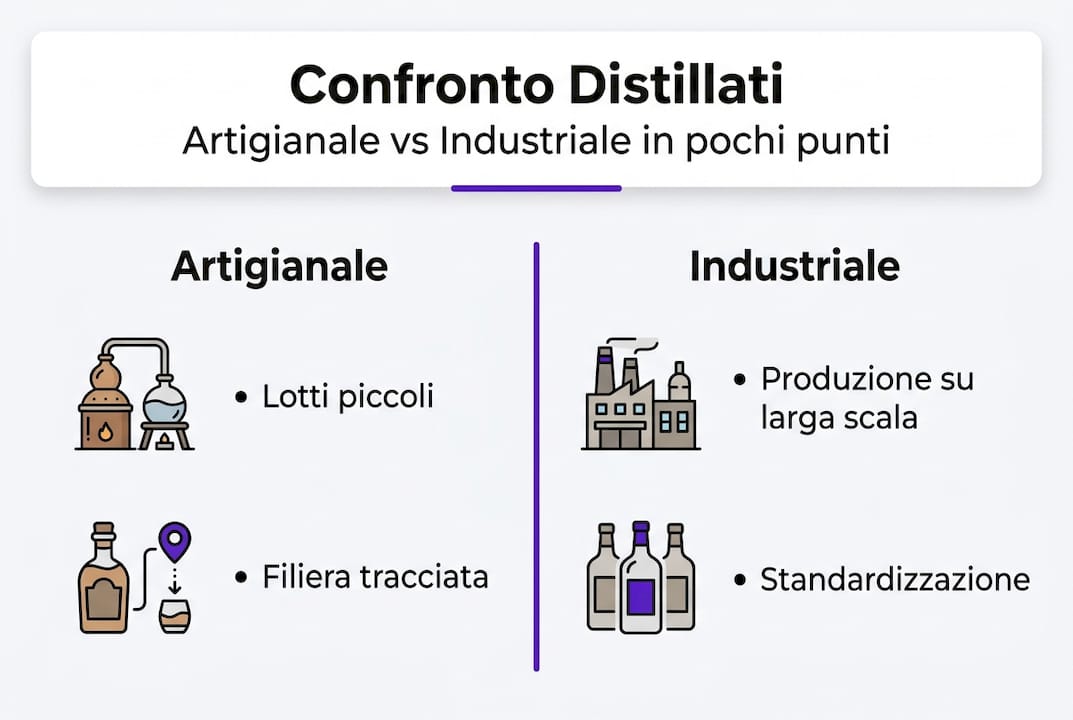
Having clarified the value of choice, let's discover what truly distinguishes a craft product. The word "craft" is often misused, but it has a precise meaning in the world of spirits. A craft spirit originates from a short supply chain, with selected and often local raw materials, produced in small batches. This approach ensures quality control that large-scale industrial production cannot replicate.
The differences from industrial products are substantial. In large distilleries, standardization is the priority: every bottle must be identical to the previous one. In craft realities, however, each batch tells a slightly different story, influenced by the season, the raw material, and the master distiller. This is not a flaw; it is added value.
A traced and sustainable supply chain represents key elements in modern craft distillation. Knowing where the botanicals of a gin or the grains of a vodka come from is not only an ethical matter but also a matter of quality. Distilleries that communicate transparency about the origin of ingredients demonstrate a real commitment to the product.
Here's a quick comparison between craft and industrial spirits:
| Characteristic | Craft | Industrial |
|---|---|---|
| Batch size | Small batch | Mass production |
| Raw materials | Selected, often local | Standardized |
| Traceability | High | Limited |
| Aromatic personality | Unique per batch | Uniform |
| Sustainability | Often certified | Variable |
The main elements that give value to a craft spirit include:
- Quality raw materials: carefully selected grains, botanicals, fruits, or herbs
- Small batch production: limited batches that ensure manual attention
- Sustainability: responsible use of resources and a short supply chain
- Traceability: possibility to trace the origin of each ingredient
- Aromatic identity: unique profile reflecting territory and craftsmanship
To learn more, you can explore the craft distillation techniques that determine the final character of each bottle. If you want to understand why more and more enthusiasts are choosing these products, read the reasons to choose unique spirits. An expert selection of spirits confirms that the difference is perceptible from the first sip.
How to prepare for selection: criteria and equipment
Now that you understand what makes a craft spirit special, it's time to prepare for selection by following precise criteria. Choosing well is not a matter of luck, but of method. Even before opening a bottle, there are concrete signs that help you orient yourself.
The objective criteria to consider are:
- Detailed label: a serious producer indicates botanicals, distillation method, batch number, and precise alcohol content
- Producer transparency: updated website, narrated history, real contacts
- Industry recognition: awards in international competitions such as the San Francisco World Spirits Competition or the London Spirits Competition
- History and reputation: distilleries with years of experience or young realities with a solid and consistent project
- Community and reviews: what enthusiasts say, not just distributors
Tasting equipment also matters. You can have the best spirit in the world, but if you serve it in the wrong glass, you lose half the experience. The choice of glass and serving temperature profoundly influence the sensory experience.
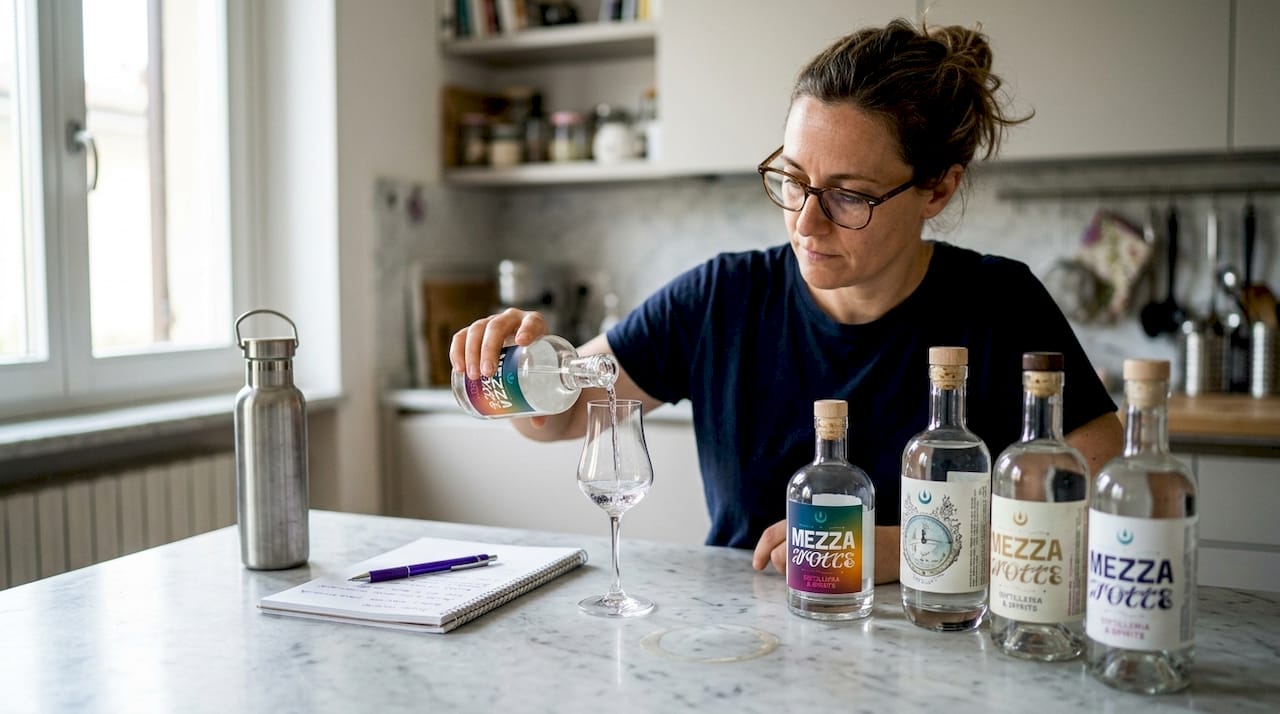
Here are the essential tools for an informed tasting:
| Tool | Function |
|---|---|
| Tulip glass | Concentrates aromas towards the nose |
| Kitchen thermometer | Checks serving temperature |
| Tasting notebook | Records impressions and comparisons |
| Still natural water | Cleanses the palate between sips |
Pro Tip: Serve the spirit at room temperature, between 18 and 22 degrees Celsius. Cold temperatures block volatile aromas and flatten the olfactory profile. Reserve ice for cocktails, not pure tastings.
To refine your method, consult the spirit evaluation criteria and discover the history of Italian craft spirits that shaped current techniques.
The stages of evaluation: sight, smell, taste
Ready with the criteria and tools, let's move on to the true moment of discovery: step-by-step sensory evaluation. Each spirit tells its story through three sensory channels. Learning to read them completely changes the way you experience each bottle.
- Sight: pour the spirit into the glass and observe it against the light. Look for clarity, absence of suspended particles, and, in the case of aged spirits, the color tone that indicates the time in the barrel
- Smell: slowly bring your nose close, do not immerse it in the glass. Take three short inhalations. The first impression is often the most honest. Then swirl the glass and smell again: secondary notes emerge
- Taste: take a small sip and let it spread over your entire tongue. Evaluate the balance between sweet, bitter, acidic, and salty. Note the finish, i.e., how long the flavor lingers after swallowing
“A quality spirit doesn't end when you swallow it: it continues to tell its story for seconds, sometimes minutes.”
The tulip glass and non-chilled service best release the aromas, allowing for a more complete and honest evaluation of the product.
Pro Tip: If you perceive a pungent solvent smell or a metallic aftertaste, these are signs of distillation defects. A good craft spirit should never burn aggressively: the alcoholic warmth should be present but integrated.
To delve deeper into each stage, follow the practical tasting guide and learn to recognize common mistakes to avoid during evaluation.
How to verify quality and uniqueness: comparison and research
After sensorially evaluating the spirit, the final step involves verifying its real quality through targeted comparisons and research. Sensory evaluation is subjective, but objective tools exist to confirm your impressions.
Official recognitions are a solid starting point. Competitions like Gin of the Year, World Gin Awards, or Spirits Business evaluate products blind, eliminating brand bias. A gold medal in these contexts is a concrete sign of quality recognized by international experts.
Here's how to systematically compare two bottles:
| Parameter | Bottle A | Bottle B |
|---|---|---|
| Brand and origin | Italian distillery, Tuscany | Italian distillery, Sicily |
| Type | Botanical gin | Mediterranean gin |
| Awards won | 2 international medals | 1 special mention |
| Supply chain traceability | QR code with batch details | Only generic website |
| Price per bottle | 45 euros | 38 euros |
Signs of authenticity and sustainability to look for include:
- Batch number visible on the label
- QR code linking to the product sheet with production details
- Producer's website updated with information on raw materials
- Environmental certifications or mentions of sustainable practices
As confirmed by the most innovative companies in the sector, small batch, craft supply chain, and sustainability are the new standards of recognition for those who want to distinguish truly craft products from those that merely appear to be so.
To navigate among the best products, consult the guide to awarded spirits and discover how to collect craft spirits consciously. If you want to understand what "premium spirit" truly means, read what a premium spirit means.
Our point of view: beyond the label, experience matters
Having clarified how to verify authenticity and uniqueness, we propose a reflection that goes beyond technique. After years spent selecting and telling the stories of craft spirits, we are convinced of one thing: the real value of a bottle is not in its price or the number of awards on its label. It is in the story it allows you to experience.
Too many enthusiasts stop at the most well-known brand or the most photographed bottle on social media. But the most memorable spirits we've encountered often come from small, perhaps unknown realities, working with traditional methods and local ingredients. Those bottles don't shout, they whisper. And those who know how to listen recognize them immediately.
Real quality is only discovered by dedicating time to experience and personal research. There is no shortcut. You can read a thousand reviews, but until you sit down, pour, smell, and taste carefully, you are only collecting other people's opinions.
Our advice is this: adopt a slow approach. Choose one bottle at a time, study it, compare it, pair it. Discover how to pair spirits in cocktails to understand how a product's character changes in different contexts. Value small independent distilleries: they are the ones keeping the true Italian craft culture alive.
Discover the selection of quality craft spirits
With this vision in mind, you can explore a selection of spirits that embody authenticity, quality, and history. On Mezzanotte you will find carefully selected products, each with its own aromatic identity and a precise narrative behind every bottle.
From the selection of craft gins to quality craft vodka, every product in the catalog meets the criteria you've learned in this guide: traced supply chain, small batch production, industry recognition. You're not buying a bottle; you're choosing an experience. Explore the catalog, read the producers' stories, and order directly online with the assurance of knowing exactly what you're bringing home.
Frequently asked questions
What are the main signs of quality in a craft spirit?
A detailed label, small batch production, a traceable supply chain, and industry awards are key indicators of quality that a serious producer never hides.
What is the best glass for tasting a craft spirit?
The tulip glass is the most recommended because its shape concentrates the aromas towards the nose, allowing for a richer and more precise aromatic perception.
How do you recognize a truly sustainable spirit?
Verify that the producer uses local raw materials, communicates a short and transparent supply chain via label or website, and indicates the batch number on each bottle.
How to avoid encountering poor quality craft spirits?
Consult specialized industry guides and analyze awards, expert reviews, and the distillery's history before purchasing any bottle.
Recommendation
- Guide to Craft Distillation: Techniques, Cuts, and Aromas – Mezzanotte | Distillery & Spirits
- Criteria for evaluating a spirit: complete guide 2026 – Mezzanotte | Distillery & Spirits
- Spirits Distillation Guide 2026: Avoid 40% Common Mistakes – Mezzanotte | Distillery & Spirits
- Instructions for collecting spirits: practical guide 2026 – Mezzanotte | Distillery & Spirits
- Types of Italian Spritz: expert guide to choosing yours