

Discover how to choose the best Italian bitter liqueurs: a practical guide with iconic examples, a comparative table, and gourmet pairing tips for enthusiasts.
A Guide to Italian Bitter Liqueurs: Stories and Pairings
May 1, 2026

TL;DR:
- A quality bitter is recognized by selected botanicals, maceration process, and aromatic balance.
- Artisanal bitters offer complexity, persistence, and unique territorial stories compared to industrial versions.
- Choosing the right bitter allows you to personalize cocktails and food pairings, enhancing every ingredient.
Guide to Italian Bitter Liqueurs: Stories and Pairings
Choosing a quality Italian bitter liqueur is never easy. Dozens of labels crowd the shelves of wine shops and online stores, each with its own history, aromatic geography, and character. For those who aren't satisfied with the first Negroni they come across but want to understand what's truly inside that bottle, what makes it different, authentic, unforgettable, the path can be labyrinthine. This article is a practical guide: it offers selection criteria, iconic examples, direct comparisons, and pairing tips to navigate the world of Italian bitters with a critical eye and a curious palate.
Table of Contents
- How to recognize and select a quality bitter liqueur
- Iconic examples: 5 Italian bitter liqueurs to try
- Comparative table: characteristics and pairings of bitters
- Choosing the right bitter: practical tips and gourmet pairings
- Our point of view: why artisanal bitter transforms the experience
- Try the Mezzanotte experience: from authentic artisanal spirit to your tastings
- Frequently asked questions about Italian bitter liqueurs
Key Points
| Point | Details |
|---|---|
| Key characteristics | Quality bitter liqueurs are recognized by balance, selected botanicals, and aromatic persistence. |
| Iconic choices | Campari, Aperol, Redentore, and Leonardelli offer unique experiences blending tradition and craftsmanship. |
| Creative pairings | Try craft bitters for a gourmet twist on classic cocktails or innovative tasting experiences. |
| Approach to selection | Consider history, aromatic profile, and intended use to find the ideal bitter. |
How to recognize and select a quality bitter liqueur
The first step in choosing a worthy Italian bitter is understanding what sets it apart from others. Not all bitters are created equal, and the difference isn't just in price or packaging.
A quality bitter is recognized by three fundamental elements:
- Selected botanicals: gentian, cinchona, rhubarb root, cardamom, citrus peels. A few generic ingredients are not enough: the quality and origin of the botanicals make all the difference between a memorable bitter and an anonymous one.
- Maceration process: traditional methods involve long macerations in grain or pomace alcohol, cold or hot, to extract the maximum essential oils. A rushed process compromises aromatic depth.
- Sweet-bitter balance: an excellent bitter is neither cloyingly sweet nor aggressively astringent. The bitterness should open with fresh notes, then evolve into spicy nuances, and finish with a long, pleasant persistence.
Industrial bitters vs. craft bitters: the distinction is essential. Large industrial brands guarantee consistency and recognizability, but often sacrifice aromatic complexity. Artisanal bitters, on the other hand, focus on proprietary recipes, small productions, rare botanicals, and a strong narrative identity. Knowing the characteristics of artisanal bitter allows you to understand what you are truly buying.
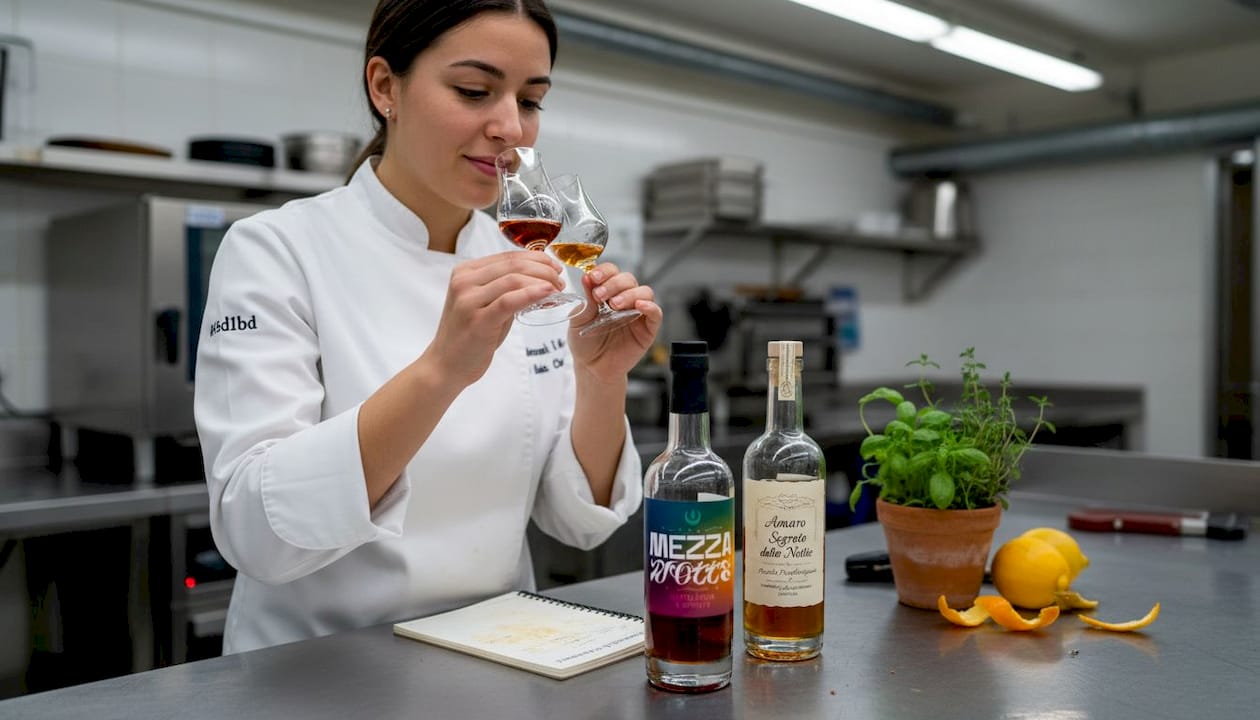
When to choose a bitter for mixology? If your goal is to build a Negroni or an Americano, look for a bitter with good acidity, distinct citrus notes, and a dry finish: it will stand up well to ice dilution and integrate with gin or vermouth without overpowering them. For pure tasting, however, aim for a bitter with greater herbaceous complexity, balsamic notes, and long persistence.
Reading the label is not trivial. Observe: the alcohol content (cocktail bitters often range between 20 and 30 degrees, meditation bitters can be higher), the list of main botanicals (if present, it's already a sign of transparency), and the indicated production method. If the producer says nothing about how it's made, that's already a red flag.
As the complete guide to bitters indicates, the craft spirits market has grown significantly in recent years, with consumers increasingly attentive to the traceability and authenticity of ingredients.
Pro Tip: When tasting a bitter for the first time, evaluate its aromatic persistence: it should last at least 30-60 seconds in the mouth, with nuances changing over time. If it fades quickly, it lacks depth. Craft bitters like Redentore or Leonardelli elevate gourmet twists precisely thanks to this persistence and the perfect sweet-bitter balance.
With clear criteria, let's now explore specific examples of representative Italian bitters.
Iconic examples: 5 Italian bitter liqueurs to try
After examining the criteria and characteristics, let's now discover some concrete examples that embody tradition and innovation in the most appreciated types of Italian bitters.
-
Campari: born in Milan in 1860, it is the global benchmark for Italian bitter. Its profile is dominated by citrus notes, cinchona, and an intense bitterness balanced by sweetness. Unmistakable carmine red color, 25-degree alcohol content. Ideal for Negroni, Americano, and Spritz. Its history is inseparable from that of Italian aperitivo culture, with a legend stating the original recipe comprised over 60 botanicals, still a secret today.
-
Aperol: from Padua, born in 1919, it is the milder and more accessible sibling. Low alcohol content (11 degrees), notes of bitter orange, rhubarb, and gentian in a sweet key. Perfect for Spritz, less suitable for dry preparations. In recent years, it has also conquered international markets, becoming a symbol of the Italian summer aperitivo.
-
Redentore: an excellent example of Venetian artisanal bitter. Botanicals such as iris, rose petals, and angelica root make it complex and floral, with surprising persistence. It lends itself both to Negroni and creative twists with artisanal tonic. Its storytelling is linked to the lagoon tradition and the distilling culture of the Northeast.
-
Leonardelli: produced in Trentino, this artisanal bitter focuses on alpine herbs such as arnica, dwarf mountain pine, and mountain gentian. The result is an herbaceous, balsamic bitter, with a complexity best appreciated in pure tasting or paired with structured cocktails. Its limited production makes it a cult object for collectors.
-
Bràulio: Valtellinese bitter, since 1875, made with herbs hand-picked in the Alps at over 1500 meters. Notes of juniper, fir, Roman wormwood, and gentian blend into a smoky, mountainous profile. Excellent neat, but extraordinary in a revisited Old Fashioned with a touch of smokiness.
As emerges from research on the history of Italian bitter, versatile bitters in mixology like Negroni, Spritz, and Americano find their most interesting evolution in craft bitters.
Pro Tip: Try Bràulio in a Negroni instead of classic Campari: you'll get an alpine and smoky version of the cocktail, with an aromatic depth that will amaze even the most experienced palates.
Comparative table: characteristics and pairings of bitters
After the description, a comparative table helps to quickly visualize the differences between the bitters presented.
| Bitter | Alcohol content | Aromatic profile | Ideal use | Suggested cocktail |
|---|---|---|---|---|
| Campari | 25° | Citrus, cinchona, sweet-bitter | Classic mixology | Negroni, Americano |
| Aperol | 11° | Sweet orange, rhubarb | Spritz and light aperitifs | Aperol Spritz |
| Redentore | 28° | Floral, iris, angelica | Gourmet cocktails and tasting | Negroni twist, Tonic |
| Leonardelli | 30° | Alpine, gentian, balsamic | Pure tasting, structured cocktails | Bitter tonic, neat |
| Bràulio | 21° | Mountainous, juniper, smoky | Tasting and reinterpretations | Alpine Old Fashioned |
How to choose among these? Here are some guidelines:
- If you want a bitter for classic cocktails that are easy to reproduce at home, Campari remains the most solid and versatile choice.
- If you are looking for something original to gift or add to your collection, Redentore and Leonardelli offer an aromatic identity difficult to find elsewhere.
- For those who love mountainous notes and a more austere character, Bràulio is practically irreplaceable.
- If you are a beginner or prefer lighter cocktails, Aperol is the ideal gateway to the world of Italian bitters.
Regarding the tradition of Italian amari, it's interesting to note how each craft producer tells a story of territory and local knowledge through their recipe. As industry analyses highlight, each craft bitter tells a unique story with balance and authorial botanicals, making each bottle a cultural as well as gustatory document.
Aromatic persistence is perhaps the most relevant parameter for those who want to use bitter in elaborate gastronomic preparations. A bitter that fades in a few seconds will not stand up to a pairing with aged cheeses or dark chocolate. A structured one like Leonardelli or Redentore, on the other hand, dialogues with more intense flavors without losing its identity.
Choosing the right bitter: practical tips and gourmet pairings
The differences are clear, now let's move on to practical tips for enhancing each bitter choice and creating memorable tasting experiences.
For Negroni: Campari remains the reference, but try replacing it with Redentore for a floral Negroni, or with Bràulio for an alpine and smoky version. The secret is to maintain the classic proportions (1:1:1) and only play with the bitter to clearly perceive the difference.
For Spritz: Aperol is the undisputed classic, but a Spritz with Campari offers a sharper, more adult bitterness. For a gourmet twist, try Redentore with organic prosecco and artisanal tonic water: the result is surprising.
For Americano: here, craft bitters add aromatic persistence and allow for gourmet twists that an industrial bitter could not guarantee. Campari with red vermouth and soda is the classic, but Leonardelli with white vermouth and sparkling water creates a white Americano with great personality.
Food pairings: bitter is not just for cocktails. Here are some combinations to experiment with:
- Structured bitter (Leonardelli, Bràulio) + aged cheeses: 36-month aged Grana Padano or Pecorino di Fossa create a wonderful contrast with the herbaceous bitterness.
- Citrus bitter (Campari, Redentore) + 70% dark chocolate: the bitterness multiplies pleasantly, with orange notes emerging clearly.
- Floral bitter (Redentore) + fish finger food: salmon tartare or citrus-marinated prawns pair very well with a floral Negroni.
| Bitter | Ideal cocktail | Food pairing |
|---|---|---|
| Campari | Classic Negroni | Olives and mixed cured meats |
| Aperol | Aperol Spritz | Bruschetta, light appetizers |
| Redentore | Floral Negroni | Marinated fish, tartare |
| Leonardelli | Bitter tonic | Aged cheeses |
| Bràulio | Alpine Old Fashioned | Dark chocolate, truffle |
A common mistake is to use inferior quality bitter, thinking it will disappear in the cocktail. The reality is the opposite: the simpler the preparation, the more the bitter stands out. In an Americano with only three ingredients, the bitter is the absolute protagonist. Choosing it well means crafting a cocktail of another level. To learn more about how to creatively pair Italian spirits, the variety available today is richer than ever.
Our point of view: why artisanal bitter transforms the experience
There's something mixology manuals rarely mention: an artisanal bitter isn't just an ingredient; it's a story. Each bottle of Leonardelli or Redentore carries with it the memory of a territory, the choice of a rare botanical, the decision not to compromise on production. This isn't marketing rhetoric; it's the difference you clearly perceive on the palate.
We believe that the evolution of Italian bitter towards the craft dimension is not a passing fad. It's a return to something essential: taste as identity, as belonging, as culture. The traditions and innovations in Italian bitters demonstrate that the boundaries between meditation amaro and cocktail bitter are blurring, opening up space for hybrid and unprecedented experiences.
Our recommendation is simple: step outside the classics. Not because they are wrong, but because there's an aromatic world waiting to be discovered. An alpine bitter in a Negroni can forever change how you view this cocktail.
Try the Mezzanotte experience: from authentic artisanal spirit to your tastings
If this journey through Italian bitters has opened new horizons for you, know that at Mezzanotte you can bring this same quality directly to your home. Our selection comes from an authentic search for spirits with history, personality, and excellent botanicals.

Explore Mezzanotte artisanal gin for creative pairings with your favorite bitters, or discover Mezzanotte artisanal vodka for contemporary twists. Every product in our catalog is designed for those who want to experience a cocktail as a cultural, not just gustatory, experience. Curious to know how we work? Read our Mezzanotte artisanal method and discover why every bottle tells a unique story.
Frequently asked questions about Italian bitter liqueurs
What is the difference between bitter and amaro?
Bitter is designed for mixology with a drier, more citrusy profile, while amaro is more suitable as an after-dinner drink with herbaceous and sweet notes. As the in-depth analysis on the difference between the two categories clarifies, these are products with distinct production philosophies.
Which cocktails are bitters mainly used in?
In iconic Italian cocktails like Negroni, Americano, and Spritz, bitter is a fundamental element. Versatile bitters in mixology also find their place in more creative and contemporary preparations.
What makes a craft bitter special compared to an industrial one?
Craft bitters are made with selected botanicals, traditional methods, and a pursuit of unique aromatic balance. Craft bitters like Redentore or Leonardelli offer aromatic persistence and balance that industrial products rarely achieve.
How can I best taste a bitter liqueur?
First, taste it neat to capture all the aromas, then experiment in cocktails to enhance different nuances. Starting with a pure tasting allows you to understand the authentic character of each bitter before mixing it.
Recommendation
- Discover the types of Italian bitters for unique cocktails – Mezzanotte | Distillery & Spirits
- Italian Bitter Liqueurs: A Guide to Traditions and Innovations 2026 – Mezzanotte | Distillery & Spirits
- Italian Bitter Liqueurs: History and Tradition of Italian Bitters – Mezzanotte | Distillery & Spirits
- How to pair Italian spirits for unique cocktails – Mezzanotte | Distillery & Spirits