

Discover how to avoid 40% of errors in craft distillation with this comprehensive guide: equipment, processes, safety, and techniques for superior spirits in 2026.
Spirits Distillation Guide 2026: Avoid 40% Common Mistakes
Mar 1, 2026

Artisanal distillation increasingly fascinates enthusiasts, but over 40% of common errors arise from incorrect use of charge and temperature. Many beginners face frustrations and avoidable costs. This practical guide walks you step-by-step through equipment, processes, controls, and safety to transform your hobby into superior quality spirits.
Table of Contents
- Key points of the guide
- Prerequisites: Equipment and materials needed
- Step 1: Fermentation and controlled heating
- Step 2: Distillation and collection of fractions
- Common errors and solutions
- Safety during distillation
- Alternative methods and tradeoffs
- Expected times and results
- Frequently asked questions about artisanal distillation
Key Points of the Guide
| Point | Details |
|---|---|
| Adequate equipment | Choosing copper or stainless steel stills with a capacity of 5-20 liters ensures safety and effectiveness |
| Temperature and charge control | Maintaining 78-90°C and filling a maximum of 70% prevents losses and improves distillate quality |
| Fraction separation | Recognizing heads, hearts, and tails during distillation ensures optimal purity and aromatic profile |
| Operational safety | Ventilation, pressure control, and absence of open flames prevent serious accidents |
| Realistic times and yields | A complete cycle requires 6-10 hours with an alcohol yield of 7-12% of the fermented volume |
Prerequisites: Equipment and Materials Needed
Before starting any distillation, you must have the correct equipment. The choice of still determines the final quality of your distillate. There are two main types: pot still and distillation column.
The traditional pot still is perfect for spirits with a rich and complex aromatic profile. The distillation column offers greater purity and higher alcohol strengths. For hobbyists, a capacity between 5 and 20 liters represents the ideal compromise between practicality and production.
Materials and Characteristics
| Material | Advantages | Disadvantages |
|---|---|---|
| Copper | Better aromatic profile, favorable chemical reaction, exceptional durability | Higher cost, requires periodic maintenance |
| Stainless steel | Easy to clean, corrosion resistant, low cost | Less aromatic complexity compared to copper |
In addition to the still, these tools are essential:
- Digital thermometer with 0.1°C precision for constant monitoring
- Pressure gauge for pressure control in the distillation system
- Borosilicate glass containers for collecting separate fractions
- Alcohol hydrometer to measure alcohol content
- Funnel with filter for clean transfers
The workspace must be adequately ventilated. An open window or an extraction system ensures safety throughout the entire process. The guide to artisanal spirits distillation delves into regional regulations to be aware of.
Pro Tip: Invest in a copper still for your first experience. Copper catalyzes reactions that eliminate unwanted sulfur compounds, enriching spirits with cleaner and more refined natural aromas. The initial expense pays off with superior quality.
Careful preparation of the equipment reflects the Mezzanotte artisanal method which aims for excellence at every stage. Consulting specialized resources on choosing distillation equipment helps avoid incorrect purchases.
Step 1: Fermentation and Controlled Heating
The quality of the final distillate depends on the initial fermentation. This biological process transforms sugars into ethyl alcohol and aromatic compounds. Optimal fermentation requires 5-10 days at a constant room temperature between 18°C and 25°C.
Monitoring pH is crucial. Values between 3.5 and 4.0 create the ideal environment for yeasts and prevent bacterial contamination. Use test strips or a digital pH meter for daily checks. Residual sugars at the end of fermentation should be minimal, indicating complete conversion.
Starting Distillation
- Transfer the fermented wash into the still, filling a maximum of 70% of the total capacity
- Hermetically seal all connections, checking for leaks
- Gradually turn on the heat source, bringing the temperature to 78°C
- When the first drops appear, slightly reduce the heat to maintain 80-85°C
- Collect the first fractions (heads) separately in the first 5-10 minutes
- Identify the heart when the aroma becomes clean and pleasant
- Stop collecting when the temperature exceeds 90°C and the aroma worsens (tails)
Temperature control is the most critical aspect. Ethyl alcohol evaporates at 78.37°C, while water boils at 100°C. Maintaining the optimal range effectively separates desired fractions from undesired ones.
The detailed fermentation guide explains how to improve fermentation through strategic yeast and nutrient choices. Fundamental artisanal controls ensure consistent results.
Pro Tip: Install digital temperature sensors connected to an app to constantly monitor the process even remotely. You will receive immediate notifications if the temperature goes out of the ideal range, preventing disasters and ensuring total control.
Step 2: Distillation and Collection of Fractions
During the actual distillation, the management of fractions determines purity and quality. The distillation column requires constant temperature monitoring at different points: boiler, column, and condenser.
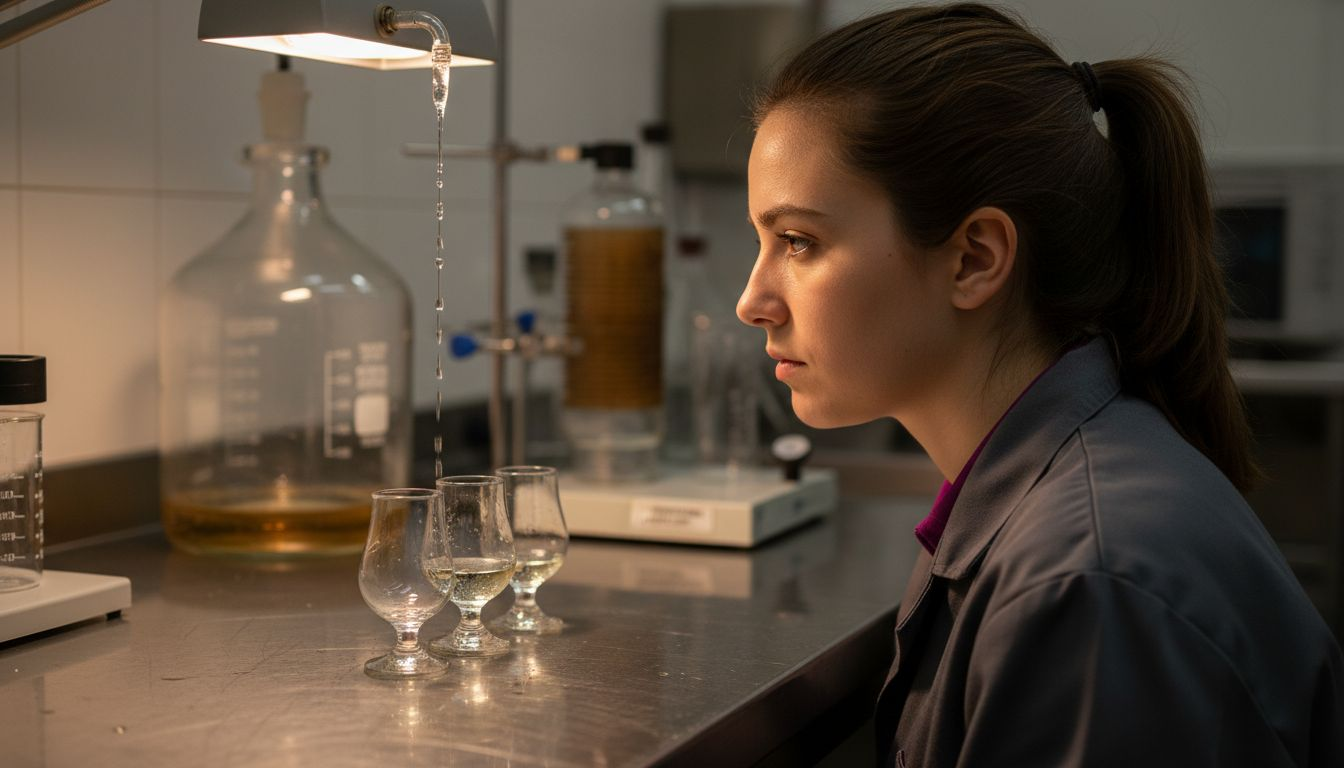
Carefully observe the distillate flow. A rate of 2-4 drops per second indicates perfect temperature. Too fast means overheating, too slow reduces efficiency. These visual cues guide you to immediate adjustments.
Identification of Fractions
The heads contain methanol, acetone, and light alcohols. They are recognized by their pungent and unpleasant solvent-like odor. They represent about 5% of the total volume and should always be discarded for safety.
The heart is the valuable fraction. It has a clean, pleasant, and characteristic aroma of the fermented material. It constitutes 60-70% of the total distillate and is kept for aging or consumption. The aromatic profile of spirits depends on the quality of this fraction.
The tails emerge when the temperature rises above 90°C. They contain fusel oils, heavy alcohols, and compounds that cloud the distillate. The aroma becomes oily and less pleasant. They can be re-distilled in subsequent batches.
| Fraction | Temperature | Volume Percentage | Characteristics | Use |
|---|---|---|---|---|
| Heads | 78-82°C | 5% | Pungent odor, methanol | Always discard |
| Hearts | 82-90°C | 60-70% | Clean aroma, pure ethyl alcohol | Keep for consumption |
| Tails | 90-96°C | 25-30% | Oily odor, heavy alcohols | Redistill or discard |
To improve purity, some distillers perform a second distillation using only the heart of the first. This increases the alcohol content and removes residual impurities. Details on fraction collection and distillation collection techniques further refine the results.
Common Errors and Solutions
Errors in home distillation are frequent but predictable. Knowing them allows you to avoid them completely. Excessive temperature is the most common error. Exceeding 95°C produces mixed vapors that compromise fraction separation.
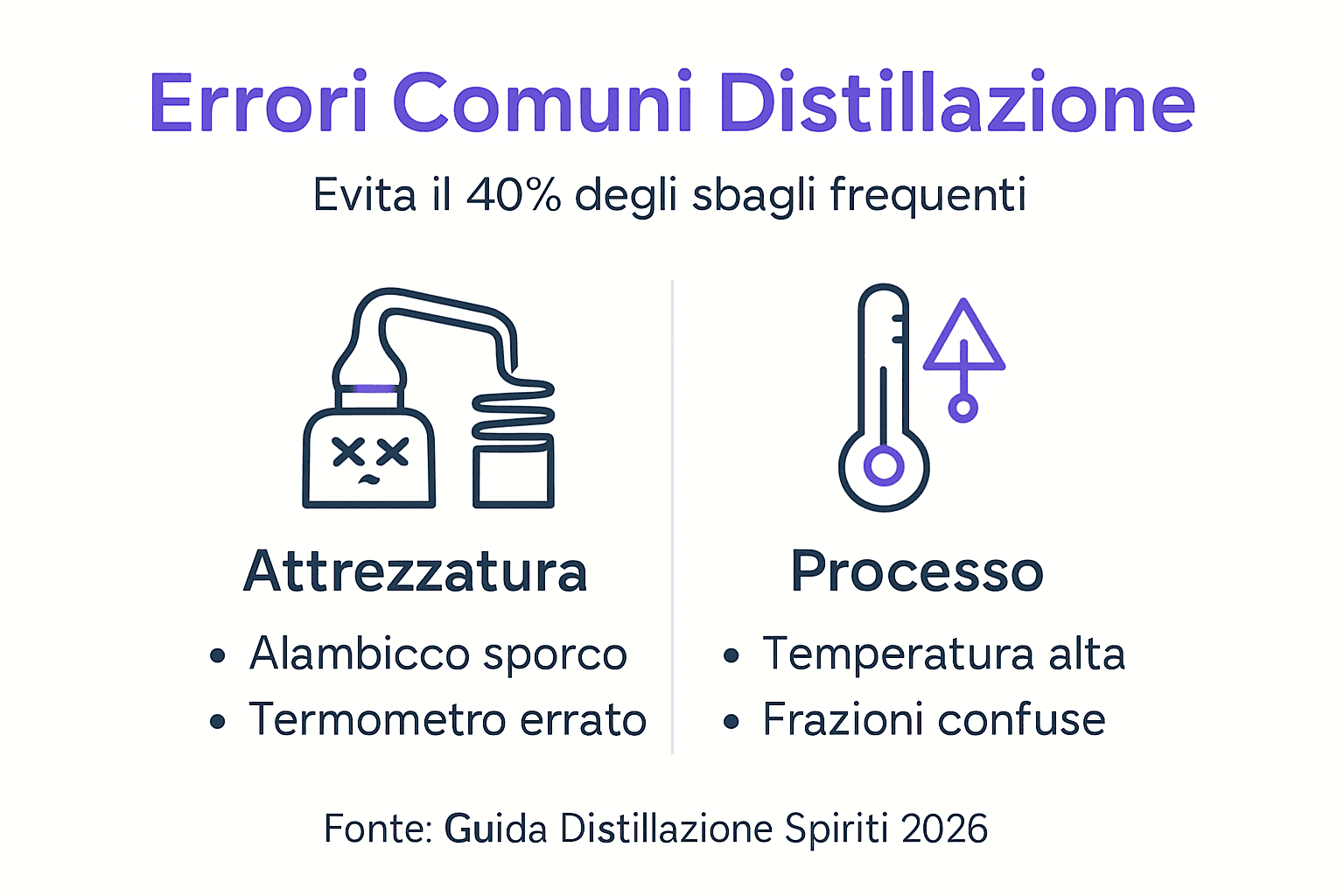
Always maintain gradual and controlled heating. If the temperature rises too quickly, immediately reduce the heat source. An increase of 1-2°C every 10 minutes ensures optimal control.
Frequent Problems
- Overfilling the still: Filling beyond 70% causes foaming and carryover of undistilled liquid into the vapors. Overfilling beyond 90% increases the risk of loss by up to 15%, compromising the final quality
- Insufficient cleaning: Organic residues from the previous distillation contaminate the new batch with unpleasant flavors and persistent off-flavors
- Inadequate cooling: An inefficient condenser produces uncondensed vapors that escape the system, reducing total yield
- Indiscriminate collection: Mixing heads, hearts, and tails creates a distillate with dangerous impurities and a poor aromatic profile
Recent statistics show that over 60% of hobbyists make at least one of these mistakes in their first three distillations. Lack of equipment cleaning and imprecise temperature control are the main causes of failure.
Pro Tip: Always clean the still immediately after each use. Use a solution of hot water and citric acid to remove organic deposits. Rinse thoroughly and dry completely before storing. This routine prevents contamination and extends the life of the equipment.
Solutions to distillation errors and methods for preventing common errors are thoroughly documented. External resources such as errors and remedies of Italian distillers offer additional perspectives.
Safety During Distillation
Distillation produces flammable vapors that require maximum attention. Safety is not optional. Pressure control in the system prevents catastrophic explosions. Always install a correctly calibrated pressure relief valve.
Avoid open flames near the still. Alcohol vapors are extremely flammable and invisible. Use electric or induction cooktops instead of gas. If using gas, check for leaks before each session.
Essential Safety Measures
- Ensure continuous ventilation by opening windows or using exhaust fans
- Wear protective goggles to prevent splashes of boiling liquid
- Keep a class B fire extinguisher (flammable liquids) immediately accessible
- Never leave the still unattended during the entire process
- Use thermal gloves when handling hot components or containers
- Regularly check gaskets to prevent vapor leaks
Methanol present in the heads is toxic. Ingesting even small quantities causes blindness or death. Always completely discard this fraction without exception. Do not attempt to recover or redistill it.
Home distillation carries real risks beyond simple flammability. Concentrated vapors in enclosed spaces cause acute poisoning. Serious accidents are documented every year among hobbyists who underestimate basic precautions.
Always comply with local regulations. In Italy, home distillation for personal use has specific rules that vary by region. Inquire with the competent offices before starting.
Alternative Methods and Tradeoffs
In addition to traditional distillation, there are alternative methods with different characteristics. Low-pressure distillation operates under partial vacuum, lowering the boiling point. This preserves volatile aromatic compounds sensitive to heat.
The main advantage is superior aromatic quality for certain types of spirits. The disadvantage is the high cost of specialized equipment and operational complexity. Professional systems start from 5,000 euros, out of reach for most hobbyists.
Membrane distillation uses semi-permeable membranes to separate alcohol and water without heating. It completely eliminates fire risks and maximizes the preservation of delicate aromas. However, the technology is still experimental and expensive, with limited availability on the consumer market.
Method Comparison
| Method | Initial Cost | Aromatic Quality | Operational Complexity | Suitable for Hobbyists |
|---|---|---|---|---|
| Traditional distillation | €500-2000 | Good | Medium | Yes |
| Low-pressure distillation | €5000+ | Excellent | High | No |
| Membrane distillation | €10000+ | Very Good | Very High | No |
To start, traditional distillation offers the best compromise between cost, results, and learning curve. Gain experience with classic methods before considering advanced technologies.
Some hobbyists experiment with solar stills for low-temperature distillations. Free solar energy reduces operating costs, but times are drastically extended and yield decreases. It only works in favorable climatic conditions.
Expected Times and Results
Realistically, a complete distillation cycle requires between 6 and 10 hours, excluding the initial fermentation time. The speed depends on the still's capacity and the power of the heat source.
For a 10-liter still with 7 liters of charge, expect about 8 total hours. The first 2 hours are for reaching operating temperature. The next 5-6 hours are dedicated to controlled collection. The last hour includes cooling and cleaning.
Typical alcohol yield varies between 7% and 12% of the initial fermented volume. From 10 liters of 8% ABV wash, you get about 800-1000 ml of 40% ABV distillate after dilution. Losses include heads, tails, and process inefficiencies.
Quality Parameters
- Alcohol strength: 75-85% ABV before final dilution
- Purity: absence of turbidity when diluted with water
- Aroma: clean without chemical or unpleasant notes
- Taste: smooth on the palate without excessive burn
Invest time in the design and storytelling of your final product. Quality artisanal spirits deserve careful presentation. Personalized labels and distinctive bottles transform the hobby into a recognizable passion.
Distillation times and results improve with experience. Each batch teaches nuances that progressively refine the technique.
Discover Our Artisan Spirits 2026
Now that you know the secrets of artisan distillation, discover how master distillers transform this art into exceptional products. Mezzanotte represents Italian excellence in artisan spirits with unique storytelling.

Our Mezzanotte artisan distillation guide delves into advanced techniques. Explore our unique artisan gin with selected botanicals and internationally awarded aromatic profiles. The Italian artisan vodka demonstrates how purity and character coexist perfectly. Each bottle tells a story that combines tradition and innovation.
Frequently Asked Questions about Artisan Distillation
How to avoid accidents with a home still?
Always maintain adequate ventilation and check the pressure regularly. Use electric cookers instead of open flames and never leave the still unattended. Install a correctly calibrated pressure relief valve.
What is the ideal still capacity for beginners?
A 5-10 liter still is the optimal choice for beginners. It offers manageable quantities for learning without excessive investment. The reduced capacity facilitates temperature control and fraction management.
How long does a complete distillation take?
From preparation to final cleaning, allow 8-10 hours for a complete cycle. This excludes the 5-10 days needed for initial fermentation. Patience is essential for quality results.
How to recognize if the distillate is of good quality?
An excellent distillate is perfectly transparent when diluted with water. The aroma is clean, without chemical or unpleasant notes. On the palate, it is smooth with well-integrated alcohol, not burning.
What checks should be done during fermentation?
Monitor pH (3.5-4.0) and temperature (18-25°C) daily. Observe bubble activity, which indicates active fermentation. Taste periodically to check for sugar reduction and alcohol development.
Can I redistill tails to recover alcohol?
Yes, tails can be added to the next batch of fermented wash and redistilled. Many distillers recover up to 30% additional alcohol with this practice. Never mix them directly with the hearts.
Recommendation
- Distilled Spirits Guide: Mastering Italian Distillates – Mezzanotte | Distillery & Spirits
- Top 6 Vodka Cocktails in 2026 for Mixology Enthusiasts – Mezzanotte | Distillery & Spirits
- Exclusive Distillate Purchase Guide: 87% Prefer Storytelling – Mezzanotte | Distillery & Spirits
- Aromatic Components of Gin: The Soul of Artisan Spirits – Mezzanotte | Distillery & Spirits
- Best espresso blends
- Coffee extraction process – Key to full flavor – Authorized Jura distributor and service Wrocław