

Discover the perfect Gin and Tonic recipe with 50ml gin and 100ml tonic. Professional techniques, aromatic garnishes, and tips for superior Italian artisanal cocktails.
Gin and Tonic Recipe 2026: 50ml Gin for Perfect Balance
Mar 3, 2026

How many times have you ordered a Gin & Tonic and found yourself with a diluted, flat, or muddled-tasting drink? The problem isn't the cocktail itself, but the imprecise preparation. A craft Gin & Tonic requires quality ingredients, precise proportions, and correct techniques. In this guide, you'll discover how to prepare a perfect Gin & Tonic at home, enhancing the botanicals of Italian gin with a professional method that elevates every sip.
Table of Contents
- Prerequisites: What You Need to Prepare a Craft Gin & Tonic
- Balanced Classic Recipe with Selected Doses and Ingredients
- Preparation Techniques: Detailed Steps to Preserve Effervescence
- Garnishes and Aromatic Customization to Enhance Craft Gin
- Common Mistakes and Practical Solutions in Gin & Tonic Preparation
- Expected Results and How to Evaluate the Cocktail's Success
- Discover the Best Resources for Your Craft Gin
- Frequently Asked Questions About the Gin & Tonic Recipe
Key Points
| Point | Details |
|---|---|
| Ideal Proportion | Balancing 50 ml of gin with 100 ml of tonic water creates the perfect balance between aroma and freshness. |
| Strategic Ice | Large, compact cubes slow down dilution, keeping the drink colder for longer. |
| Pouring Technique | Pouring tonic slowly along the edge of the glass preserves bubbles and effervescence. |
| Aromatic Garnishes | Lime, juniper berries, and rosemary enhance botanical notes without overpowering the gin. |
| Immediate Consumption | Preparing and serving immediately ensures freshness, lively bubbles, and a full aromatic profile. |
Prerequisites: What You Need to Prepare a Craft Gin & Tonic
Before you start preparing, you need to have the right tools and ingredients. The quality of your Gin & Tonic depends on precise choices that make the difference between a mediocre drink and a memorable experience.
Here's what you need:
- High-quality Italian craft gin: The star of the cocktail must have a distinctive and balanced botanical profile. Choose a craft gin that respects Italian tradition to enhance Mediterranean aromas.
- Premium tonic water: A balanced tonic enhances the gin's botanicals without masking them. Avoid tonic waters that are too sweet or aggressive, as they unbalance the cocktail.
- Large, compact ice: Small cubes melt quickly and water down the drink. Large ice maintains optimal temperature without compromising taste.
- Balloon or highball glass: A capacious glass allows for the right proportion of ingredients and preserves the tonic's effervescence.
- Bar jigger: Precise measurements are essential. A professional jigger helps you adhere to proportions without error.
Quality Italian craft gin, balanced premium tonic water, large compact ice, a capacious glass, and a jigger are essential for achieving a professional result. If you want to delve deeper into the aromatic characteristics of gin, consult our tips for tasting craft gin and discover our easy guide for cocktails with craft gin.
Balanced Classic Recipe with Selected Doses and Ingredients
Now that you have everything ready, let's move on to the actual recipe. Proportions are the secret to a memorable Gin & Tonic.
Ingredients for 1 person:
- 50 ml of Italian craft gin: This amount ensures a strong aromatic profile without being too alcoholic. The recommended proportion is 50 ml of gin and 100 ml of tonic water, balancing aroma and freshness.
- 100 ml of premium tonic water: The 1:2 ratio is the professional standard recognized by the IBA for high-quality cocktails.
- Plenty of ice: Fill the glass to maintain the ideal temperature and slow down dilution.
- Aromatic garnishes: Choose lime for fresh and citrus notes, juniper berries to respect the gin's botanical character, rosemary for a Mediterranean touch.
The choice of garnishes depends on the profile of your Italian gin. If your gin has floral notes, opt for lemon peels. For more balsamic gins, rosemary is perfect.
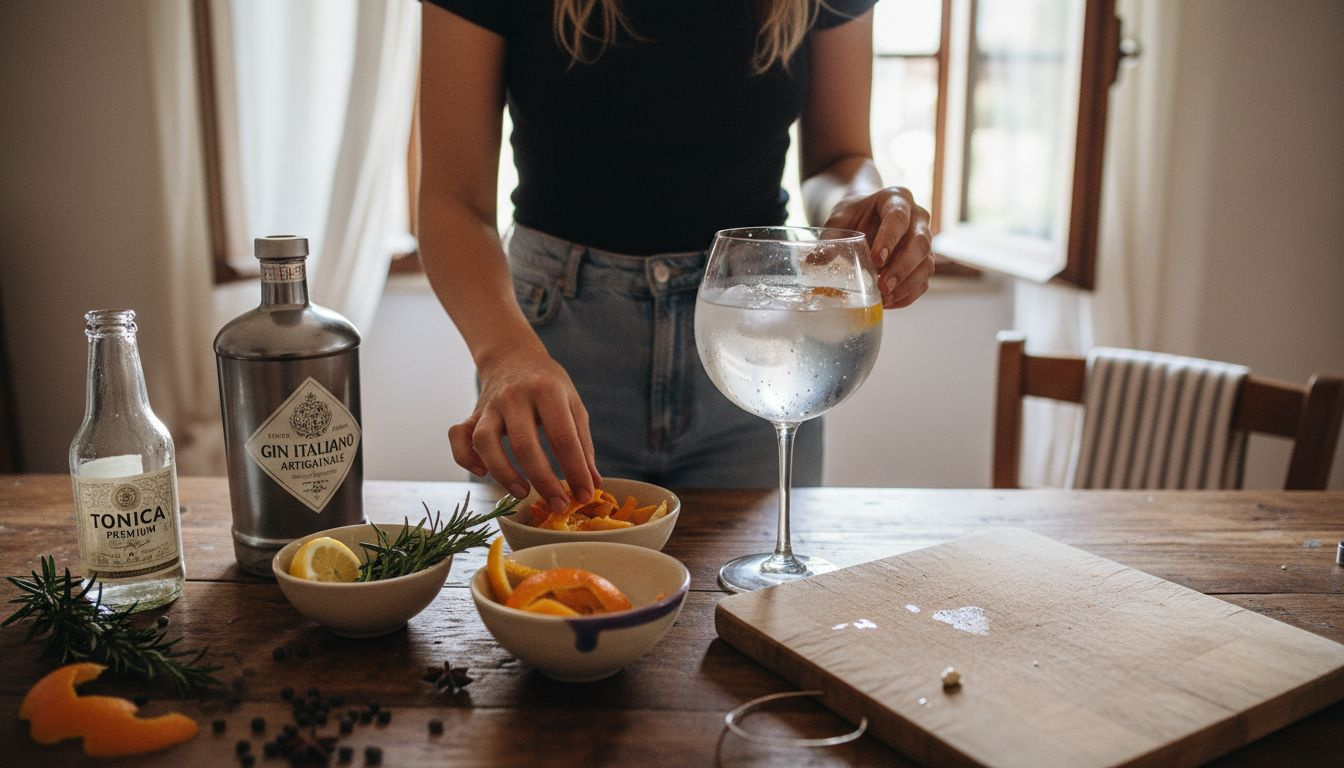
Pro Tip: Prepare the Gin & Tonic just before serving it. Bubbles and freshness are quickly lost, compromising the sensory experience.
If you want to explore variations and advanced techniques, follow our step-by-step guide for cocktails with gin. For more information on official proportions, visit the IBA recipe.
Preparation Techniques: Detailed Steps to Preserve Effervescence
Correct preparation is as crucial as the ingredients. Following the right steps makes the difference between an exceptional drink and a mediocre one.
- Chill the glass: Fill the glass with ice before pouring the ingredients. This lowers the glass's temperature and prevents premature melting of the ice in the drink.
- Pour the gin: Measure exactly 50 ml of gin and pour it directly into the cold glass. Precision is essential to maintain balance.
- Add the tonic slowly: Pour the tonic over the gin gently along the rim of the glass to maintain effervescence. An abrupt pour will immediately cause the bubbles to dissipate.
- Stir gently: Use a bar spoon and stir for 3-5 seconds with light circular motions. Stirring too vigorously eliminates carbonation.
- Add garnishes: Place the aromatic garnishes only after mixing. This preserves essential oils and aromas without interfering with the balance.
Pro Tip: Express citrus peels over the cocktail before adding them. This releases essential oils that intensify the drink's aroma and taste.
To master advanced mixology techniques, consult our essential guide to the gin & tonic and the step-by-step cocktail preparation. Delve deeper into professional techniques with the complete guide from Fornelli d’Italia and tips from Enoteca Telaro.
Garnishes and Aromatic Customization to Enhance Craft Gin
Garnishes are not just decorative. They have the power to completely transform the aromatic experience of your Gin & Tonic, enhancing the gin's botanicals or creating interesting contrasts.
Here are the most effective options:
- Fresh citrus: Lime and lemon add acidity and fresh notes that balance the tonic's sweetness. Use expressed peels to release essential oils.
- Juniper berries: Respect the gin's original botanical character, strengthening resinous and balsamic notes.
- Rosemary: Perfect for Mediterranean gins, it adds an herbaceous and aromatic touch that evokes the Italian scrubland.
- Aromatic spices: Star anise and cardamom introduce warm and enveloping notes, ideal for seasonal winter customizations.
- Pink peppercorns: Add a visual touch and a slightly spicy note that surprises the palate.
Choose garnishes based on your gin's botanical profile. If the gin has floral notes, avoid overly aggressive spices. For more complex and structured gins, dare to try unexpected combinations.
Pro Tip: Do not overload the cocktail with too many garnishes. Two or three elements are enough to enhance the gin without confusing the flavors.
To better understand how to pair garnishes and botanicals, read our guide on the aromatic components of craft gin and discover the 6 types of cocktail garnishes you need to know.
Common Mistakes and Practical Solutions in Gin & Tonic Preparation
Even the simplest cocktails hide pitfalls. Here are the most frequent mistakes and how to avoid them to always achieve an impeccable result.
- Small or low-quality ice: Poor quality ice melts quickly and dilutes the cocktail in a few minutes. Solution: use large cubes or ice spheres that maintain the temperature without watering down.
- Pouring tonic too quickly: Pouring with haste immediately loses the bubbles, leaving you with a flat drink. Solution: pour slowly along the rim of the tilted glass.
- Excess gin: Trying to make the drink stronger unbalances the aromatic profile. Solution: adhere to the 50:100 ml proportion to maintain harmony between ingredients.
- Stirring vigorously: Shaking or stirring too much eliminates carbonation. Solution: use a bar spoon and gentle circular motions for a maximum of 5 seconds.
- Preparing the cocktail too far in advance: Bubbles and volatile aromas dissipate quickly. Solution: prepare the Gin & Tonic only when you are ready to serve it.
These avoidable errors compromise both the taste and presentation of the cocktail. Paying attention to every detail makes the difference between an amateur and a professional drink.
To perfect your technique, consult our gin & tonic guide 2026 and the tutorials in the craft gin cocktail guide.
Expected Results and How to Evaluate the Cocktail's Success
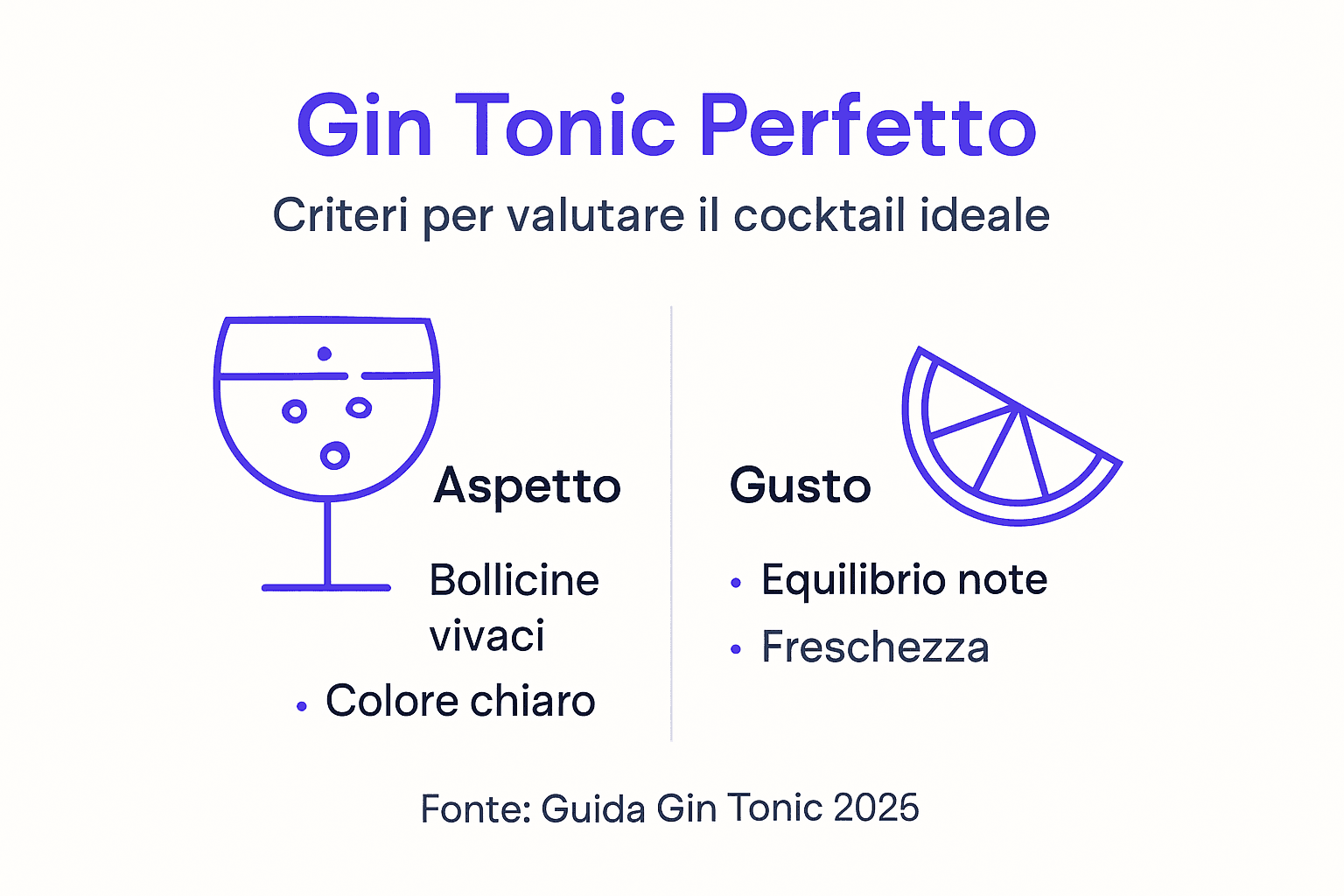
How do you know if you've prepared a perfect Gin & Tonic? There are objective criteria to evaluate the quality of your cocktail.
| Parameter | Optimal Value |
|---|---|
| Gin:tonic ratio | 50 ml:100 ml (1:2) |
| Alcohol content | 16-18% |
| Caloric intake | 170-180 Kcal per drink |
| Temperature | 2-4°C constant |
| Bubble duration | Lively until the last sip |
A well-prepared Gin & Tonic exhibits these signs:
- Taste balance: The gin is recognizable but not aggressive; the tonic balances without overpowering the botanicals.
- Consistent temperature: The ice keeps the drink cold without visibly diluting the liquid.
- Persistent bubbles: The effervescence remains fresh and constant throughout the tasting.
- Distinct aromas: The gin's botanical notes clearly emerge, enhanced by the chosen garnishes.
- Inviting appearance: The cocktail has a clean presentation with crystal-clear ice and fresh garnishes.
If you notice excessive dilution, flat taste, or absent bubbles, review your preparation technique. Practice makes perfect.
To develop your palate and recognize aromatic profiles, read our tips for tasting gin and delve deeper with the complete guide to the gin & tonic.
Discover the Best Resources for Your Craft Gin
Preparing a perfect Gin & Tonic is just the beginning of your journey into the world of craft spirits. To truly master the art of the cocktail, you need to understand the botanicals that characterize each gin and choose superior quality products.

Delve into the aromatic components of craft gin to recognize and enhance every botanical note. Discover our exclusive selection of Italian craft gin that celebrates Italian distillation tradition with unique profiles inspired by myths, culture, and design. Follow our step-by-step guide for cocktails with craft gin to create refined drinks that impress even the most demanding palates. Every gin tells a story and transforms your Gin & Tonic into an unforgettable experience.
Frequently Asked Questions About the Gin & Tonic Recipe
How long in advance can I prepare a Gin & Tonic?
You should consume the Gin & Tonic immediately after preparation to preserve its bubbles and freshness. Preparing it even 10 minutes beforehand will compromise its effervescence and flatten its aromatic profile. The cocktail quickly loses its vibrancy.
Which garnishes are best suited for an Italian craft gin?
Lime, juniper berries, rosemary, and lemon peels enhance the Mediterranean character of Italian gins. These garnishes respect the botanical notes without overpowering them. For more complex gins, star anise adds a spicy and enveloping aromatic dimension.
Can I use any type of tonic water?
No. Prefer premium tonic waters that are balanced between sweetness and bitterness, enhancing the gin's botanicals. Tonics that are too sweet mask delicate flavors, while those that are too bitter create imbalances. The quality of the tonic affects the final result as much as the gin itself.
How can I prevent the Gin & Tonic from getting watered down too quickly?
Use large, compact ice that melts slowly, maintaining optimal temperature. Pour the tonic gently along the rim of the glass and stir with light movements. These techniques preserve the cocktail's integrity while minimizing dilution.
Recommendation
- Gin and Tonic Drink: An Essential Guide for 2026 – Mezzanotte | Distilleria & Spirits
- Step by step cocktail con gin artigianale: guida facile – Mezzanotte | Distilleria & Spirits
- The Complete Guide to the Gin and Tonic Cocktail: 2026 Tips – Mezzanotte | Distilleria & Spirits
- The Ultimate Gin and Tonic Guide for 2026 – Mezzanotte | Distilleria & Spirits