

Discover the secrets of Mediterranean gin: local botanicals, artisanal distillation, and unique terroir. A complete guide for connoisseurs of exceptional spirits.
What is Mediterranean gin? The complete guide 2026
Mar 14, 2026

Mediterranean gin is far more than just a category of spirits. It embodies a distillation philosophy that draws on the aromatic richness of the Mediterranean basin, using local botanicals such as rosemary, basil, and citrus to create unique flavor profiles. Unlike classic gins dominated by juniper, Mediterranean gins offer an herbaceous and fresh complexity that reflects the terroir of their region of origin. This guide explores the ingredients, artisanal methods, and cultural traditions that define these exceptional spirits, meeting the expectations of craft gin enthusiasts looking for authenticity and character.
Table of Contents
- Mediterranean Botanicals: The Heart of Mediterranean Gin
- Artisanal Distillation and Its Role in Aromatic Quality
- Diversity and Terroir: The Mediterranean Reflection in Every Bottle
- Enhancing Mediterranean Gin: Tasting Tips and Ideal Occasions
- Discover Our Selection of Artisanal Mediterranean Gin
- What are the main differences between a Mediterranean gin and a classic gin?
Key Points
| Point | Details |
|---|---|
| Mediterranean Botanicals | Rosemary, basil, thyme, and citrus create a unique aromatic profile distinct from classic gins |
| Artisanal Distillation | Traditional methods preserve the freshness and complexity of Mediterranean plants |
| Terroir Influence | Geographical and cultural origin directly shapes the flavor profile of each bottle |
| Key Examples | Gin Mare, Gin Fico Mediterraneo, and Marconi 42 illustrate the aromatic diversity of the region |
| Cultural Value | The authenticity and history behind each production enhance the tasting experience |
Mediterranean Botanicals: The Heart of Mediterranean Gin
Botanicals are the soul of Mediterranean gin. These aromatic plants native to the Mediterranean basin radically transform the spirit's flavor profile, creating a sensory experience impossible to replicate with classic ingredients. The Mediterranean aromatic profile is distinguished by its herbaceous freshness and floral complexity.
Rosemary brings resinous and camphor notes that evoke the Provençal hills. Basil offers a subtle anised sweetness that balances the bitterness of juniper. Thyme introduces earthy and slightly peppery nuances. Mediterranean citrus fruits, particularly Sicilian lemon and bitter orange, add a tangy vibrancy that refreshes the palate. Lavender, used sparingly, adds a delicate floral dimension without dominating the whole.
Gin Fico Mediterraneo perfectly illustrates this botanical approach. It combines basil, sage, and rosemary with Mediterranean figs to create a gin with fresh and complex aromas. This selection of local ingredients is not insignificant: each botanical is chosen for its ability to express the Mediterranean character while maintaining overall aromatic harmony.
Seasonality plays a crucial role in the final quality. Distillers favor locally harvested botanicals at the optimal moment of their aromatic maturity. This approach ensures maximum concentration of essential oils and aromatic compounds. Herbs harvested in summer, for example, offer more intense profiles than those picked out of season.
Pro tip: To balance local typicality and aromatic harmony, master distillers perform successive maceration tests. They adjust the proportions of each botanical until a balance is achieved where no single ingredient dominates, allowing each note to fully express itself.
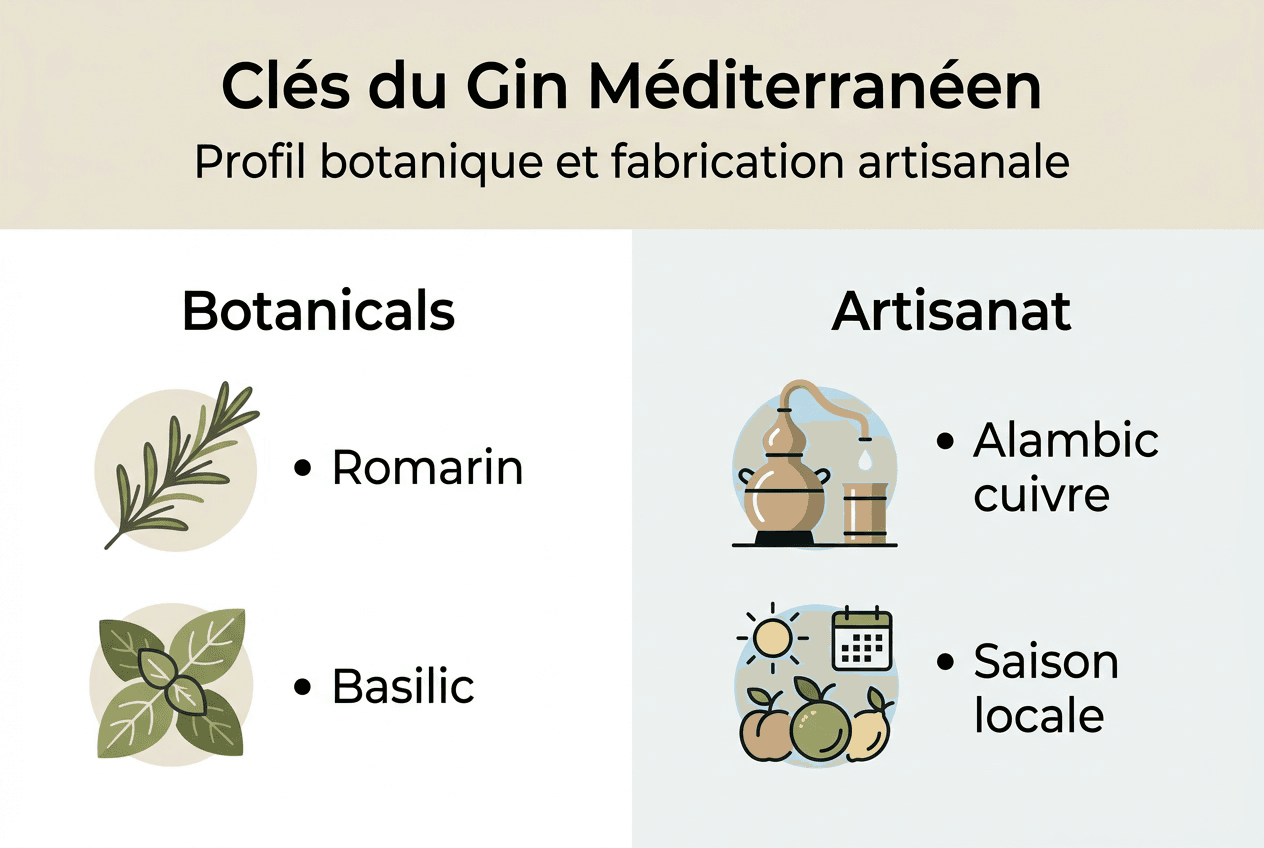
Mediterranean botanicals also transform the texture of gin. The essential oils from fresh herbs create a rounder, velvety mouthfeel compared to classic gins. This textural richness amplifies aromatic persistence, extending the tasting experience long after swallowing. The role of botanicals therefore goes beyond simple aromatic dimension to influence the entire structure of the spirit.
Key Mediterranean botanicals include:
- Rosemary: resinous and camphor notes characteristic of Mediterranean scrubland
- Basil: anised sweetness that softens the bitterness of juniper
- Thyme: earthy and peppery nuances adding depth
- Local citrus: tangy vibrancy with intense essential oils
- Lavender: delicate floral dimension without excessive dominance
- Sage: herbaceous freshness with a slight menthol note
- Figs: sweet roundness and unique velvety texture
Artisanal Distillation and Its Role in Aromatic Quality
Artisanal distillation is the cornerstone of the quality of Mediterranean gins. Unlike industrial productions, traditional methods preserve the aromatic integrity of delicate botanicals. The distillation process directly influences the gin's ability to express the subtle nuances of Mediterranean herbs.
Copper stills play a fundamental role in this aromatic preservation. Copper reacts with undesirable sulfur compounds, naturally eliminating them during distillation. This chemical interaction ensures a purer spirit and allows herbaceous aromas to express themselves without interference. Small stills, favored by artisanal distilleries, offer better thermal control and a gentler extraction of aromatic compounds.
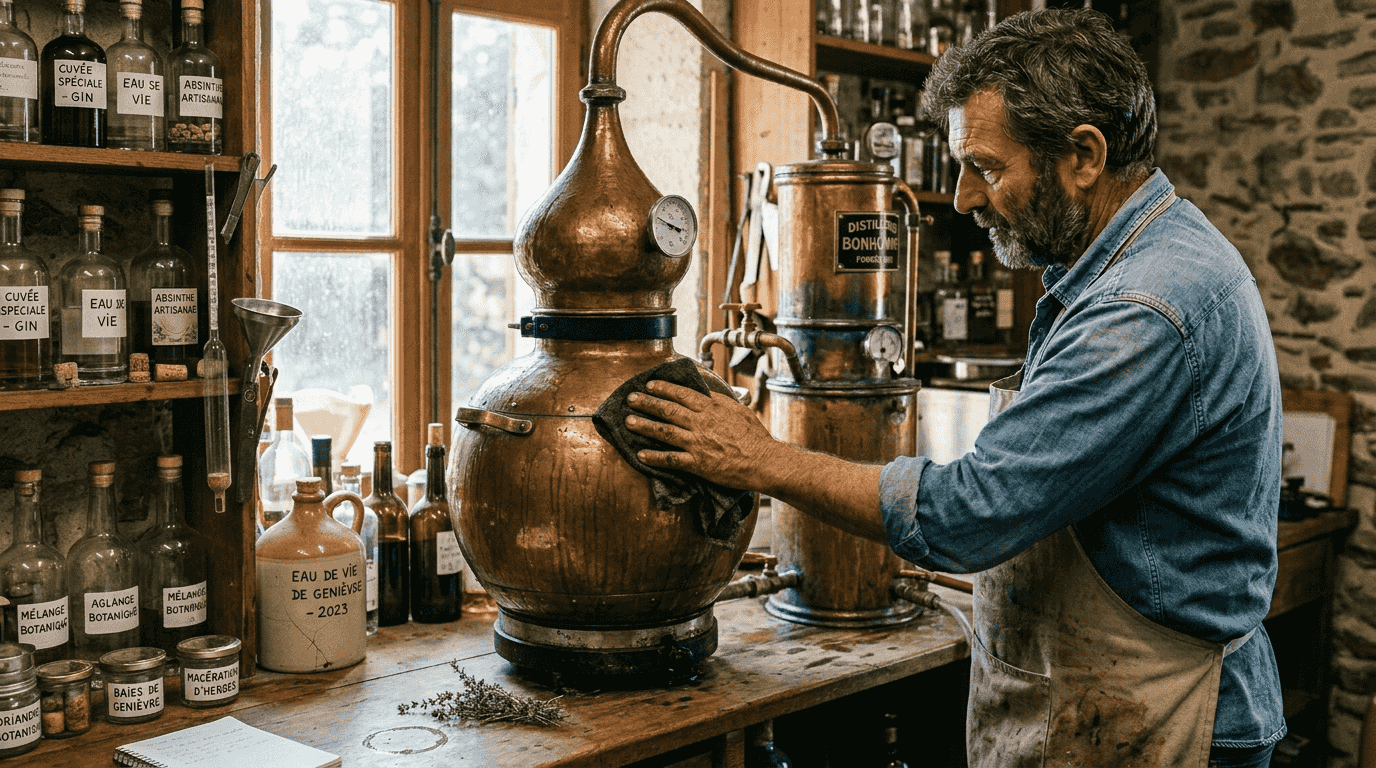
Cold maceration represents a distinctive technique for quality Mediterranean gins. Roseline gin uses a 48-hour maceration before distillation, allowing the botanicals to gradually release their essential oils. This gentle approach preserves fragile volatile compounds that would be destroyed by excessive heat.
The artisanal process generally follows these key steps:
- Selection and preparation of fresh botanicals according to their optimal aromatic maturity
- Cold maceration for 24 to 72 hours to extract delicate essential oils
- Slow distillation in a copper still at a controlled temperature between 78 and 85 degrees Celsius
- Precise separation of heads, hearts, and tails to isolate only noble aromatic fractions
- Gradual reduction with spring water to reach the final alcohol content without thermal shock
- Rest in an inert tank allowing the harmonization of aromas before bottling
Thermal control is the most critical element. Too high a temperature destroys the delicate aromatic compounds of fresh herbs. Insufficient temperature prevents complete extraction of essential oils. Experienced distillers constantly adjust the heat to maintain the optimal balance point.
Pro tip: Distillation time directly influences the final profile. Quick distillation favors vibrant, citrusy top notes. Prolonged distillation extracts more herbaceous and resinous base notes. The best Mediterranean gins find the perfect balance between these two approaches.
The volume of artisanal production also allows for attention to detail impossible on a large scale. Each batch can be adjusted according to the natural variations of the botanicals. This flexibility ensures consistent quality despite seasonal fluctuations in ingredients. The origin of the ingredients thus becomes traceable and verifiable for each bottle produced.
The separation of fractions during distillation requires particular expertise. The heads contain undesirable volatile alcohols. The tails contain heavy compounds that would weigh down the gin. Only the heart of the distillation, representing about 60% of the total volume, is retained to ensure purity and aromatic finesse.
Diversity and Terroir: The Mediterranean Reflection in Every Bottle
The Mediterranean terroir deeply influences the taste characteristics of gins produced in this region. Each geographical area brings its distinctive aromatic signature, creating remarkable diversity within the category of Mediterranean gins. This variety reflects the cultural and botanical richness of the Mediterranean basin.
Sicily offers gins marked by intense citrus fruits and wild herbs from volcanic hills. Provence favors lavender and garrigue herbs for floral and resinous profiles. Northern Italy explores innovative combinations integrating alpine botanicals with classic Mediterranean notes. These regional differences create an exceptionally rich aromatic palette.
| Gin | Region | Key Botanicals | Distinctive Method |
|---|---|---|---|
| Gin Mare | Catalonia | Olive, thyme, rosemary, basil | Separate distillation of each botanical |
| Marconi 42 | Sicily | Sicilian lemon, bitter orange | Extended maceration of citrus fruits |
| Gin Fico | Central Italy | Fig, basil, sage | 48h cold maceration |
Italian biodiversity plays a major role in this diversity. Italy has over 150 artisanal distilleries producing gins with specific local botanicals. This profusion of regional ingredients allows distillers to explore aromatic combinations impossible elsewhere.
Mediterranean juniper itself presents distinct characteristics. Berries harvested in coastal areas develop more resinous and saline notes compared to alpine varieties. This subtle difference influences the basic character of the gin even before the addition of other botanicals. Savvy distillers select their juniper according to the desired final aromatic profile.
Cultural history also enriches the identity of these gins. The rediscovery of gin in Italy dates back only to the 2010s, creating a modern approach free from traditional constraints. This creative freedom allows Italian distillers to innovate while respecting fundamental artisanal principles. The result is a generation of gins that honor the terroir without being prisoners of rigid conventions.
Regional traditions influence production methods:
- Sicily: intensive use of local citrus fruits with prolonged maceration to extract essential oils from the zests
- Provence: distillation of fresh lavender at the time of flowering to capture maximum aromatic intensity
- Liguria: incorporation of Genoese basil and coastal herbs for maritime and herbaceous profiles
- Tuscany: integration of cypress and Tuscan juniper for distinctive woody and resinous notes
The Mediterranean climate amplifies the aromatic concentration of botanicals. Hot, dry summers stimulate the production of essential oils in plants. Mild winters allow continuous growth without excessive thermal stress. This climatic combination produces exceptionally aromatic herbs and citrus fruits, impossible to cultivate at other latitudes.
Italian gin types reflect this geographical and cultural diversity. Each region develops its distinctive style, creating an aromatic mosaic that celebrates the richness of Mediterranean heritage. This variety offers enthusiasts an infinite field of exploration, where each bottle tells the story of its original terroir.
Enhancing Mediterranean Gin: Tasting Tips and Ideal Occasions
Tasting a Mediterranean gin requires a specific approach to fully appreciate its complex aromatic nuances. Unlike classic gins, the herbaceous and floral profiles demand particular attention to pairings and serving temperature. Knowledgeable enthusiasts adapt their approach to reveal the full richness of these exceptional spirits.
Serving temperature significantly influences aromatic expression. A Mediterranean gin served too cold masks its subtle herbaceous notes. A temperature between 8 and 12 degrees Celsius allows the aromas to fully bloom. This moderate coolness preserves vitality without dulling the taste buds.
Culinary pairings enhance Mediterranean botanicals. Dishes based on fresh herbs create natural harmonies with the rosemary and basil of the gin. Seafood, especially oysters and shrimp, pairs perfectly with saline and citrus notes. Fresh goat cheeses offer a creamy contrast that softens the bitterness of juniper while amplifying herbaceous aromas.
Classic cocktails adapt wonderfully to Mediterranean gins. A Gin and Tonic becomes a complex aromatic experience when an artisanal herbal tonic is used. The Negroni gains depth with the resinous notes of rosemary. The Martini reveals an unexpected floral dimension thanks to lavender and basil. These artisanal variations transform familiar recipes into sophisticated creations.
Consumers of artisanal products seek authentic experiences and rich cultural narratives. This approach values the story behind each bottle as much as the taste quality. Sharing the origin of the botanicals and production methods significantly enriches the tasting experience.
Ideal occasions to enjoy Mediterranean gin include:
- Summer aperitifs on the terrace where herbaceous freshness harmonizes with the Mediterranean atmosphere
- Gourmet dinners highlighting regional cuisine and local products
- Parties among connoisseurs allowing comparative tastings of different terroirs
- Relaxing moments at the end of the day to appreciate aromatic complexity without rushing
- Special celebrations where authenticity and artisanal quality are valued
Garnishes for cocktails amplify the sensory experience. A sprig of fresh rosemary releases its essential oils upon contact with alcohol. A slice of Sicilian lemon brings a lively acidity that awakens the palate. Crushed juniper berries intensify the characteristic resinous notes. These final touches transform a simple drink into a multi-sensory experience.
The pairing guide offers detailed suggestions for enhancing each gin according to its specific characteristics. The goal is to create harmonies where the gin and its accompaniments mutually enhance each other without dominating.
Glassware also influences aromatic perception. A balloon glass allows aromas to concentrate before reaching the nose. A highball glass promotes gradual dilution and aromatic evolution. The choice depends on the desired tasting style: contemplative and analytical or relaxed and social.
Discover Our Selection of Artisanal Mediterranean Gin
Having explored the secrets of Mediterranean gin, you are now ready to discover exceptional examples that embody this artisanal philosophy. Our selection of artisanal gin brings together distillates that celebrate Mediterranean biodiversity and the excellence of traditional distillation.

Each bottle tells a unique story, woven between local tradition and aromatic innovation. Our partner distillers share our passion for authenticity and uncompromising quality. Their creations reflect years of artisanal mastery and an intimate knowledge of Mediterranean botanicals. Our range also includes artisan vodkas for pure spirits enthusiasts who appreciate the finesse of Italian distillation. Explore these Mediterranean treasures and let each tasting transport you to the fascinating world of exceptional spirits.
What are the main differences between a Mediterranean gin and a classic gin?
What are the main differences between a Mediterranean gin and a classic gin?
Mediterranean gin stands out for its use of local botanicals such as rosemary, basil, and Mediterranean citrus fruits, creating a distinct herbaceous and floral profile. Classic gins prioritize juniper as the dominant note with more neutral botanicals. Mediterranean artisan distillation also preserves the freshness of fresh herbs, offering an aromatic complexity impossible to replicate with industrial methods.
How to choose a Mediterranean gin that suits your taste?
First, identify your botanical preferences: do you prefer lively citrus notes, resinous herbs, or delicate floral profiles? Then consider the geographical origin, as each Mediterranean region offers a distinctive style. Sicilian gins favor intense citrus, while Provençal gins highlight lavender and garrigue herbs. Consult our guide to Italian gin types to refine your selection according to your aromatic expectations.
Which cocktails best showcase Mediterranean gin?
The Gin Tonic becomes exceptional with an herbal tonic that amplifies the Mediterranean botanical notes. The Negroni gains depth thanks to the resinous aromas of rosemary and thyme. The Martini reveals an unexpected floral dimension with lavender and basil. Adapt mixers to enhance freshness: prioritize artisan tonics, herbaceous vermouths, and fresh herb garnishes. Discover our cocktail pairing guide for specific recipes that highlight each aromatic profile.
What is the best way to store Mediterranean gin?
Store your Mediterranean gin upright in a cool, dark place, away from direct light, which degrades delicate aromatic compounds. Once opened, consume it within 12 to 18 months to fully enjoy the freshness of the botanicals. Avoid significant temperature variations that alter the aromatic balance. A temperate cupboard is perfectly suitable, thus avoiding refrigeration which would mask subtle nuances during serving.
Recommendation
- Italian Gin Types 2026: A Comprehensive Guide for Discerning Enthusiasts – Mezzanotte | Distilleria & Spirits
- Collector's Gin 2026: A Comprehensive Guide for 90% More Precision – Mezzanotte | Distilleria & Spirits
- What is Gin Culture: A Comprehensive Guide 2026 – Mezzanotte | Distilleria & Spirits
- How to Taste a Legendary Gin: Expert Guide 2026 – Mezzanotte | Distilleria & Spirits