

Want to launch your own gin business but don't know where to start? Discover costs, processes, benefits, and practical advice in the complete 2026 guide!
The Complete Guide to Gin for Third Parties: Everything You Need to Know (2026)
Jan 15, 2026

Have you noticed how craft gin is gaining popularity among spirits enthusiasts? Interest in contract gin is growing rapidly, offering anyone the opportunity to create their own label without having to open a distillery.
This guide will walk you through everything you need to know to launch a successful project in 2026. You'll discover the opportunities, but also the challenges, that come with this entrepreneurial choice.
From the definition of contract gin to the production process, from costs to legal aspects, all the way to customization and practical advice: here you'll find all the answers. Want to transform your idea into a unique spirit? Read on and let us guide you through the world of contract gin.
What is Third Party Gin and Why Choose It?
Have you ever thought about making your own gin without owning a distillery? Outsourcing gin offers just that opportunity. Essentially, it involves outsourcing the production of your spirit to a specialized company, which provides its equipment, know-how, and experience to craft the product according to your specifications. The main difference compared to in-house production is precisely the outsourcing: instead of investing in facilities, staff, and licenses, you can focus on branding, recipe, and sales. Many businesses, from startups to bars, to companies and individuals, are choosing outsourcing gin to test new ideas or expand their offerings. The sector is experiencing strong growth, and as you can also read in the guide to Outsourcing Gin Production , the demand for flexible and customized solutions will continue to grow until 2026.
Definition and Meaning
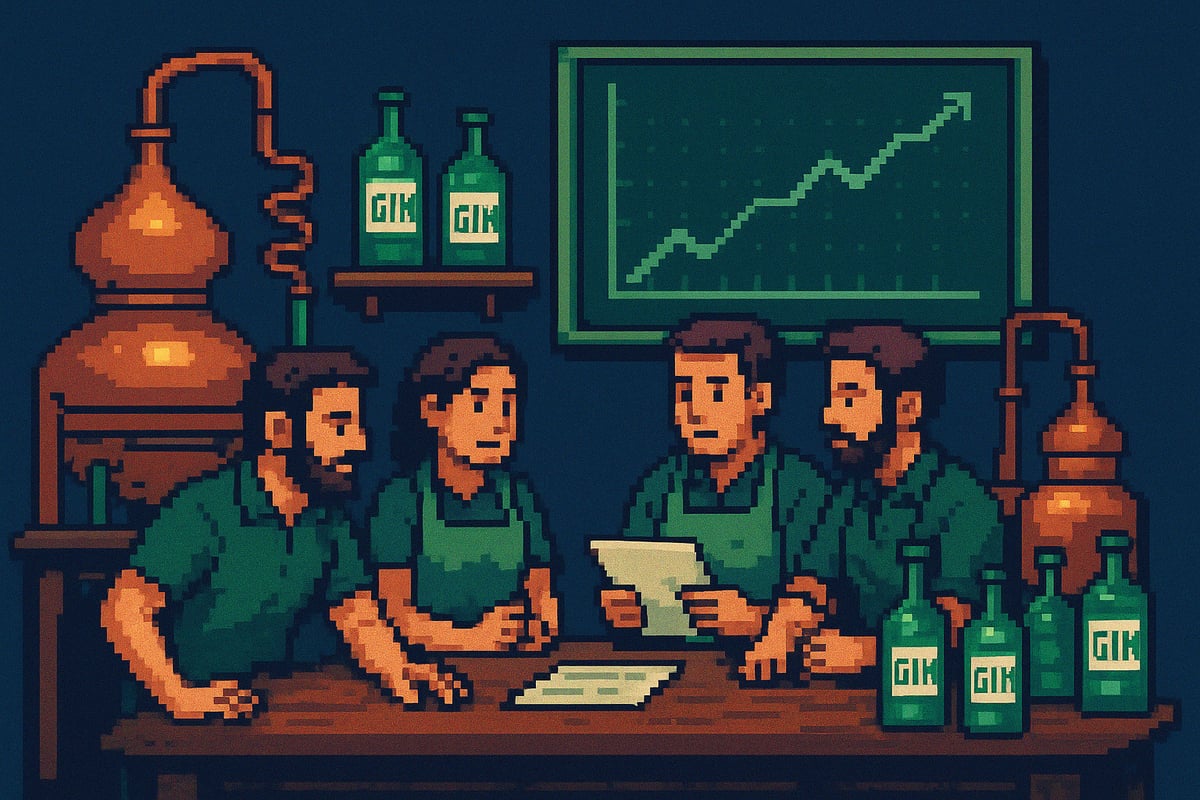
Contract gin is a service that allows you to create a custom gin, relying on artisanal or industrial distilleries to produce it for you. Unlike in-house production, you don't have to worry about all the technical or bureaucratic aspects. The distilleries handle every aspect, from distillation to bottling, while you focus on the recipe and brand. This model is perfect for those who want to enter the world of spirits without making large investments. Startups, cocktail bars, companies looking for an exclusive gift, or private enthusiasts are the main customers of this service. Contract gin follows market trends, responding to the growing demand for artisanal and personalized products, as demonstrated by data from recent years.
Advantages of Third Party Manufacturing
Choosing to produce gin on a contract basis offers numerous advantages, especially if you want to limit risks and maintain maximum flexibility. You don't need to purchase expensive equipment or hire specialized staff: you can start with small batches and test the market without constraints. Distilleries offer technical expertise, proven recipes, and cutting-edge technology. This allows you to focus on what really matters: customizing your product and building your brand. Producing gin on a contract basis allows you to experiment, modify the recipe based on feedback, and adapt the project to current needs, reducing the time and cost of entering the industry.
Types of Gin You Can Make
With contract gin, you can choose from a wide variety of products. Key options include London Dry Gin, Distilled Gin, and flavored gins, each with unique characteristics in terms of process and aromatic profile. You can customize the recipe by selecting unique botanicals, such as citrus fruits, spices, or local herbs, to create a truly original spirit. Some examples of exclusive contract gins include creations with rare botanicals, regional versions inspired by local areas, and eco-friendly packaging. Contract gin also follows the most innovative trends: think gins with unusual flavors, sustainable projects, and limited editions dedicated to special events.
| Typology | Characteristics | Personalization |
|---|---|---|
| London Dry | Classic, dry | Botanicals of your choice |
| Distilled Gin | Distilled with aromas | Custom profile |
| Flavored Gin | Post-distillation infusions | Local ingredients |
When is it convenient to choose a third-party account?
Contract gin is the ideal choice in many situations. If you're a startup looking to test the market with an exclusive product, this formula allows you to get started without a large investment. Companies looking to create corporate gifts or expand their product range also find contract gin the perfect solution. It's advantageous when you're launching a limited edition for events or collaborations, or if you want to differentiate yourself with a personalized, artisanal product. Data confirms the steady growth of artisanal gin in Italy and Europe, a sign that more and more businesses are choosing contract gin to innovate and stand out in the spirits market.
The Third-Party Gin Production Process: Step by Step
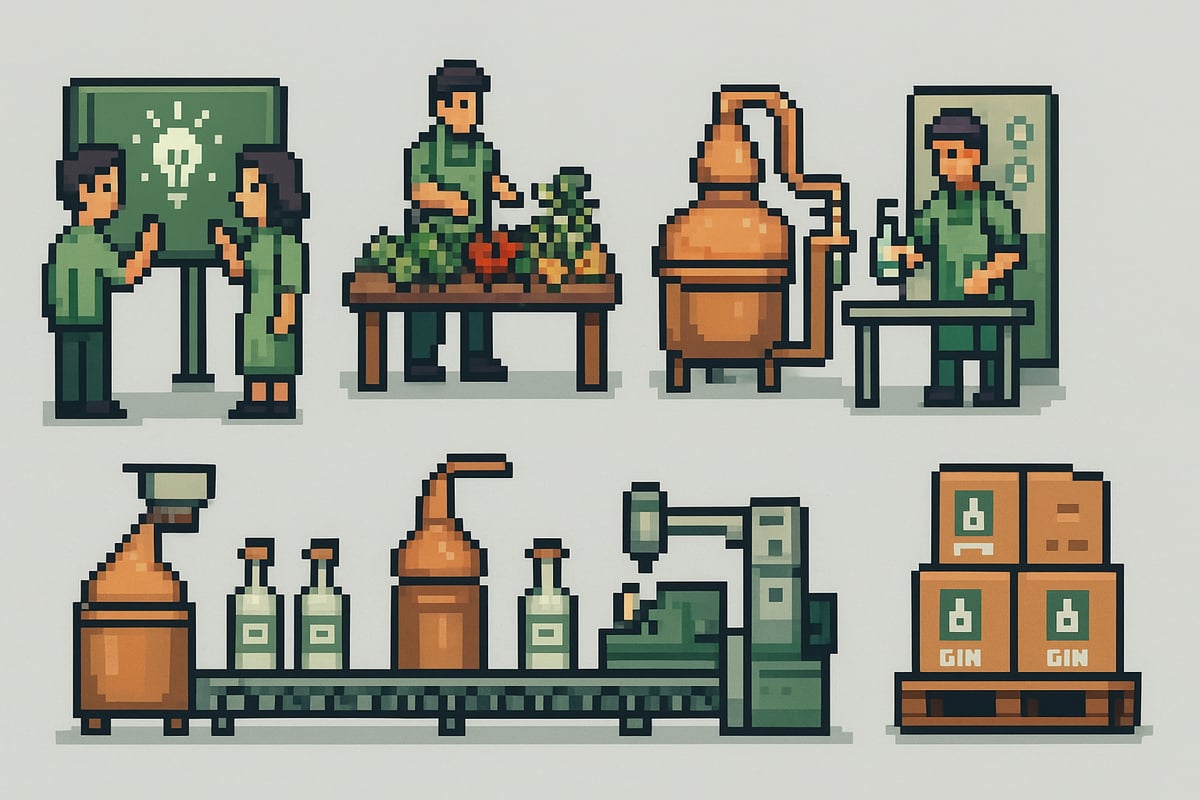
Curious to discover how a true third-party gin is made? The process is fascinating and engaging, allowing you to follow every step, from the initial idea to the final bottle. Here's the step-by-step process of turning a dream into an authentic spirit.
1. Project Briefing and Analysis
It all starts with a detailed briefing. Here, you and the distillery discuss your goals, ideas, and the target market you want to target with your contract gin. This step is crucial for defining the style, positioning, and expectations for the final product.
The distillery will guide you with targeted questions, such as:
- Who is the target audience (young people, enthusiasts, HoReCa)?
- What kind of experience do you want to offer with your third-party gin?
- Do you have specific botanicals or aromas in mind?
- What is your budget and desired quantity?
A clear comparison at this stage allows you to avoid errors and build a solid foundation for the success of your third-party gin.
2. Recipe Research and Development
Once the guidelines have been defined, the recipe research and development process begins. During this phase, the distillery selects the best botanicals and begins crafting the aromatic profile that will make your custom gin unique.
Laboratory tests are conducted to find the perfect combination, always respecting ingredient traceability and certification (such as HACCP). On average, between 15 and 25 grams of botanicals are used per liter, but it all depends on your idea and the result you're aiming for.
You will be asked to taste and give feedback, so you can perfect every detail of your custom gin.
3. Prototyping and Tasting
Once the recipe is finalized, the first prototypes are produced. Typically, two or four different versions of the custom gin are made, each with slight aromatic variations.
At this stage, tasting is crucial. You and the distillery will organize tasting sessions, comparing the different versions. Your feedback will be invaluable in identifying which prototype best meets your expectations and those of your target audience.
This involvement makes the third-party gin truly yours, tailor-made for your idea.
4. Artisan Production
Once the recipe is approved, the actual production begins. The distillery chooses the most suitable technique (London Dry, Distilled, Compound), the production times, and monitors every step to ensure quality.
Artisanal gin production for third parties requires attention to detail and constant monitoring. To learn more about all the production phases and how exclusive batches are created, you can read the detailed overview of artisanal gin production .
Quality control is key, as is the management of small production losses, to ensure excellent third-party gin.
5. Bottling, Labeling and Packaging
The third-party gin, finally ready, is bottled in a variety of formats (such as the classic Antica Farmacia 700 or 500 ml). The choice of cap, capsule, and label is completely customizable, so you can create a product that truly reflects your brand.
The distillery will help you evaluate:
- Costs of bottles and closures
- Delivery times for custom packaging
- Minimum orders required to start production
Every detail counts to make your third-party gin recognizable and memorable.
6. Packaging, Shipping and Logistics
The final step involves shipping preparation. The third-party gin is packaged in protective boxes, placed on pallets, and prepared for delivery or collection at the distillery.
Shipping costs vary based on volume and distance, averaging around €100 per pallet. Logistics are optimized to ensure your contracted gin arrives intact and ready for distribution.
Thanks to this structured process, you can focus on what really matters: promoting your third-party gin and conquering the market.
How Much Does It Cost to Produce Gin for a Third Party? A Detailed Cost Analysis
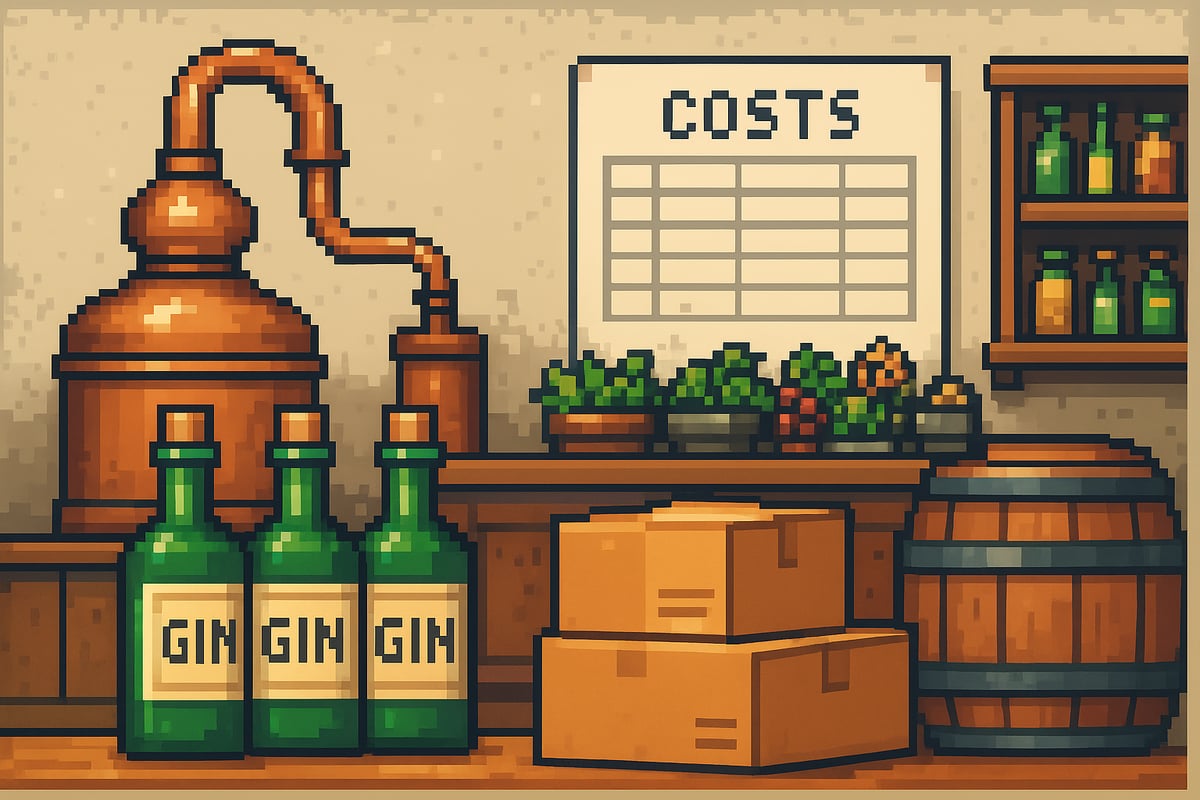
Have you ever wondered how much it really costs to produce gin for a third party? Understanding the cost components is essential for planning your project and having a clear vision of the necessary budget. Let's analyze each cost element together, from ingredients to logistics, with practical examples and tips for optimizing your investment.
Liquid and Raw Material Costs
The basis of every third-party gin is neutral alcohol, generally of agricultural origin, whose price ranges between €1 and €1.50 per liter for every 10% ABV, plus government excise duties. Botanicals vary: juniper and coriander are among the cheapest, while ingredients like saffron can cost thousands of euros per kilo.
For those who want to delve deeper into selecting and customizing botanicals, this guide on customizing gin botanicals offers helpful tips. Here's a practical estimate:
| Raw material | Average cost per liter |
|---|---|
| Basic alcohol | €1.20 |
| Juniper (20g/l) | €0.30 |
| Extra botanicals | €0.40 |
| Excise duties | €2.50 |
This way you can evaluate how much each ingredient affects your third-party gin.
Recipe Development and Prototyping Costs
Creating a custom gin for a third party requires creating an original recipe and producing prototypes for tastings. The recipe development cost is often charged as an initial flat fee, ranging from €350 to €700 for fine-tuning and 2-4 samples. Some distilleries offer starter packs that include development and tasting, making it easy to get started even with small batches.
This initial investment is crucial: it allows you to test and refine the flavor profile before moving on to actual production. This way, the contracted gin is already tailored to your needs and target market.
Bottling and Packaging Costs
Bottling is one of the most visible costs for a third-party gin. Bottle prices range from €0.50 to €2 each, depending on shape and quality. Cork or synthetic closures average €0.20, while capsules range from €0.05 to €0.10. Custom labels can cost from €0.30 to €1 depending on the print run, materials, and finishes.
Packaging isn't just about aesthetics: choosing a distinctive bottle or unique label can increase the perceived value of your third-party gin, also influencing the final selling price.
Manufacturing and Labor Costs
Contract gin production can take place in artisanal or industrial distilleries. In small batches, manual labor is more important: every step, from weighing the botanicals to bottling, requires artisanal attention. Industrial distilleries, on the other hand, optimize processes for large volumes, reducing unit costs.
Minimum production quantities often range from 42 liters (about 60 bottles) to 150 bottles per batch. The smaller the batch, the higher the labor cost will be in the price of your contracted gin.
Packaging and Shipping Costs
After production, the contracted gin is packaged in custom boxes, protected with shock-absorbent materials, and shipped on pallets. Average costs for complete packaging start at €1.50 per bottle, while shipping a pallet (approximately 120 bottles) can range from €100 and up, depending on the destination.
Some tips for optimization: plan larger orders to reduce unit shipping costs, consider direct pickup from the distillery if you're nearby, and choose recyclable packaging materials to combine savings and sustainability in your third-party gin.
Examples of Quotes and Return on Investment
But how much does a bottle of third-party gin, ready for the market, really cost? Here's a simulation:
| Cost item | Unit cost (€) |
|---|---|
| Raw materials + excise duties | 3.50 |
| Recipe development | 1.00 |
| Bottling | 1.50 |
| Packaging | 1.20 |
| Logistics | 0.80 |
| Total | 8.00 |
Considering margins and VAT, the recommended retail price starts at €10-15 per bottle. The average payback period is 3-6 months for small batches, especially if the contracted gin immediately finds a passionate following or is included in corporate events and gifting.
Legal, Regulatory, and Certification Aspects of Third-Party Gin
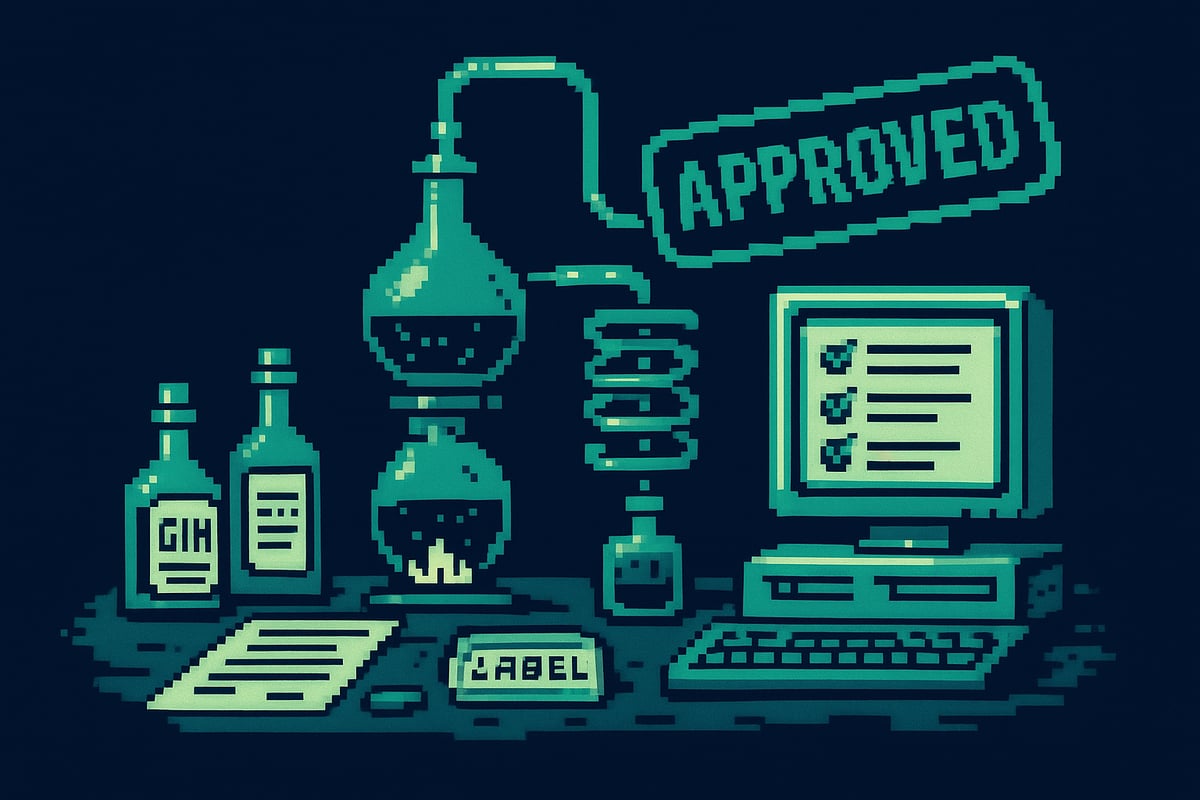
When starting a contract gin project, the legal and regulatory aspects should never be underestimated. A good recipe isn't enough: without the right licenses, certifications, and compliance, your gin may never reach the market. Let's take a look at what it really takes to produce and sell contract gin in Italy.
Required Licenses and Authorizations
To produce gin for third parties, specific permits are required. The distillery that actually produces the gin must hold the UTF license, mandatory for producing spirits, and comply with all excise regulations. Without these permits, production cannot be considered legal.
Those who work with third-party gin, such as bars, businesses, or individuals, can rely on distilleries that already comply with regulations, avoiding the complexity of obtaining their own licenses. A concrete example is the Zona B Artisan Distillery , which offers third-party gin production services in compliance with all applicable regulations.
Here is a reference table on the main licenses:
| License | Who owns it? | What is it for? |
|---|---|---|
| UTF License | Distillery | Alcohol production and storage |
| Excise duty authorization | Distillery | Payment of alcohol taxes |
| Commercial license | End customer (opt.) | Direct sales to the public |
Food Safety and Certifications
Food safety is a priority in contract gin production. Distilleries must follow the HACCP protocol, which guarantees the traceability of all raw materials and the safety of the finished product. This process involves constant monitoring of ingredients, processing, and storage.
Additionally, many distilleries choose to certify their supply chain, adopting additional standards to ensure quality and transparency. Here are some best practices:
- Use only certified suppliers for botanicals and alcohol
- Keep a detailed record of each batch produced
- Perform periodic analyses to verify the absence of contaminants
If you choose a reputable distillery, you can be sure that your third-party gin meets all safety standards.
Labeling and Regulatory Compliance
The labeling of third-party gin is governed by strict regulations: each bottle must include ingredients, allergens, production batch, alcohol content, and manufacturer information. Expert advice helps avoid errors that could hinder sales.
An important aspect concerns the name "gin": according to EU gin regulations , only products that comply with legal specifications can use this name. Be careful not to confuse gin with flavored spirits that do not meet European standards.
Common mistakes to avoid:
- Omitting the correct allergen wording
- Do not indicate the batch or the alcohol content
- Using names that are misleading to the consumer
Ownership of the Recipe and Customer Rights
When creating a gin for a third party, it's crucial to clarify ownership of the recipe. Typically, the formula developed remains the property of the client, who can decide whether to produce it at other distilleries in the future.
The best distilleries guarantee maximum confidentiality throughout the production process, protecting the originality of your idea. Before starting, always ask for a written contract that specifies:
- Intellectual property of the recipe
- Restrictions on use by the distillery
- Possibility to transfer production
This way, your third-party gin will be truly unique and also protected from a legal standpoint.
Personalization and Branding Strategies to Stand Out in the Market
Want your custom gin to truly stand out? The key is customization, from the flavor profile to the bottle, all the way to the brand narrative. In this section, discover how to turn every detail into a selling point that speaks volumes and captures the market.
Choice of Botanicals and Aromatic Profile
The true soul of a third-party gin comes from the choice of botanicals. Have you ever considered using local or DOP ingredients to make your product unique? Today, you can explore juniper, citrus fruits, rare herbs, and exotic spices, or focus on innovative botanicals like alpine flowers or plants typical of your region.
Here are some emerging trends:
- Local botanicals to enhance the territory
- DOP and IGP ingredients for a strong identity
- Innovative flavors such as yuzu, Sichuan pepper, fig leaves
The beauty is that, with third-party gin production, you can actively participate in the selection of botanicals together with the master distiller, thus creating an inimitable aromatic profile.
Bottle and Label Design
Have you ever noticed how packaging influences the perception of a product? When it comes to third-party gin, the bottle and label are your first calling card. You can choose between classic shapes or modern designs, colored or transparent glass, labels made from recycled paper or special materials.
The customization possibilities are endless:
- Original bottle shapes
- Colors and textures in line with the brand
- Capsules, caps and custom details
Distilleries often work with designers to help you create a coordinated and professional image that reflects the values of your third-party gin and immediately attracts attention on the shelves.
Marketing and Positioning Strategies
Have you already thought about how to promote your gin for third parties? A good marketing strategy starts with analyzing your target audience: do you want to target connoisseurs, trendy venues, private events, or e-commerce sites? Each channel has its own rules.
Here are some winning moves:
- Engaging storytelling that tells your story and that of gin
- Presence on social media and digital platforms
- Tastings, events, and collaborations with bartenders
An example? Many successful brands have launched their own gins, starting with small batches tested at exclusive events, and then expanding thanks to word of mouth and positive reviews.
Sustainability and Added Values
Today, those who choose a third-party gin aren't just looking for taste, but also value. Recyclable packaging and eco-friendly materials are increasingly in demand, as is low-impact production. Choosing suppliers who adopt sustainable practices, such as renewable energy and supply chain traceability, adds value to your project.
To learn more about these topics and find out how to make your third-party gin truly green, you can read this page dedicated to sustainability in spirits production .
Finally, promoting the local area and collaborating with small local producers makes your product not only unique but also ethical. The result? A third-party gin that makes a difference.
If this guide has inspired you to explore the world of artisanal gin, you're in good company! I know, maybe you're already dreaming up your own custom bottle or looking for ideas to make your next project unique. From enthusiast to future creator, getting to know the varieties, aromas, and stories that only a true artisanal gin can tell truly makes all the difference. Why not get curious and start exploring the best gin has to offer right now? Check it out here:
Discover our Gins