

Discover how to identify, evaluate, and preserve a genuine Italian collector's gin. Expert Guide 2026 with precise sensory criteria and artisanal techniques.
Collection Gin 2026: The Complete Guide for 90% More Accuracy
Mar 3, 2026

Collection gin transcends the simplistic idea of a rare bottle. It embodies a true cultural and sensory journey where each artisanal Italian distillate tells a unique story woven with local botanicals, ancestral techniques, and authentic narration. This guide reveals how to identify, evaluate, and appreciate these extraordinary gins that transform each tasting into a memorable experience.
Table of Contents
- Introduction to gin: definition and legal framework
- The specificities of Italian artisanal gin
- What defines a collection gin?
- Manufacturing process and aromatic impact
- Sensory and technical criteria for evaluating a collection gin
- Preservation and enhancement of a collection gin
- Myths and misconceptions about collection gin
- Discover our exclusive selection of Italian artisanal gins
- Frequently asked questions about collection gin
Key takeaways
| Point | Details |
|---|---|
| Precise legal definition | Gin must have a minimum alcohol content of 37.5% and be primarily flavored with juniper |
| Italian artisanal identity | Use of unique regional botanicals and powerful cultural storytelling |
| Essential distinctive criteria | Limited batches, rare ingredients, artistic packaging, strong narrative |
| Manufacturing techniques | Delicate vapor distillation and fine flavoring create aromatic complexity |
| Strict preservation | Stable temperature 15-20°C, absence of light, upright bottle protect quality |
Introduction to gin: definition and legal framework
Having summarized the upcoming lessons, let's start with the official and historical definition of gin to build a solid understanding. Understanding the legal framework helps distinguish true artisanal gins from ordinary flavored spirits.
Gin is a spirit primarily flavored with juniper berries, with a minimum alcoholic strength of 37.5% in Europe, produced by macerating or distilling botanicals in a neutral agricultural-origin alcohol. This official definition of gin sets a strict standard that guarantees authenticity and quality. European regulations clearly distinguish distilled gin from flavored gin, where the difference lies in the timing of botanical addition.
Distilled gin extracts botanical essences during distillation, creating a harmonious integration of aromas. Conversely, flavored gin adds botanicals after distillation, often producing a less complex profile. This technical distinction profoundly influences the final quality and classification of a collection gin.
The historical origin of gin dates back to the 17th century in the Netherlands, where it was initially used as a medicinal remedy. The traditional production of gin was then refined in England, developing the current regulatory bases. Today, these European standards strictly regulate production to protect product integrity.
Pro tip: Always check the label to confirm the alcoholic strength and the mention "distilled gin" rather than just "gin," thus guaranteeing an authentic and traditional manufacturing process.
Key regulatory characteristics include:
- Mandatory minimum alcoholic strength of 37.5% by volume
- Clearly identifiable aromatic predominance of juniper
- Base alcohol exclusively of agricultural origin
- Controlled and documented distillation or maceration process
The specificities of Italian artisanal gin
With a clear understanding of gin in general, let's now focus on the distinctive particularities of Italian artisanal gins that form the basis of many collection gins. Italy boasts an exceptional botanical tradition that profoundly enriches the character of its distillates.
Italian gin is distinguished by the use of local botanicals such as Amalfi Coast citrus and a long artisanal tradition valuing originality and cultural identity rooted in Italian flora. These local Italian botanicals in gin create flavor profiles impossible to replicate elsewhere. Each region brings its unique aromatic signature thanks to its specific terroir.
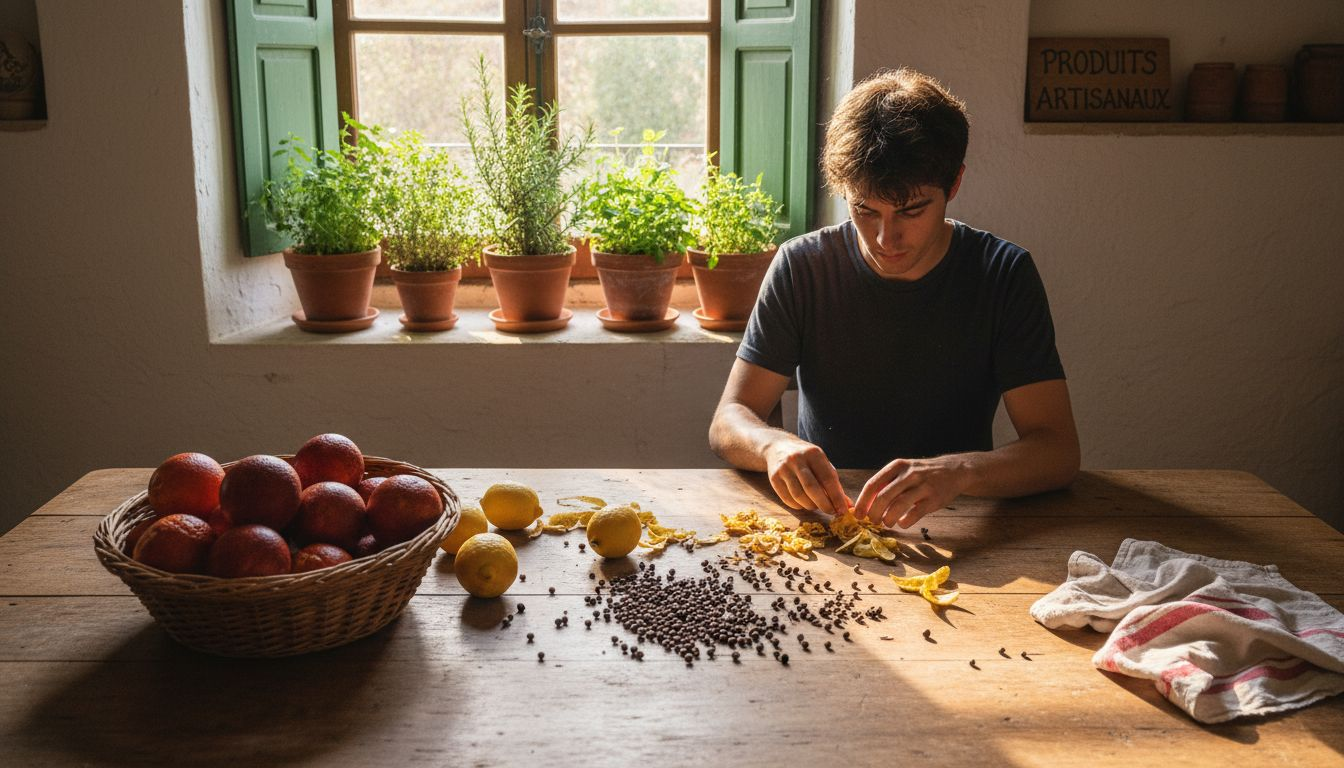
Producers of Italian artisanal gin master techniques passed down through generations. They prioritize small-batch distillation to meticulously control each phase of aromatic extraction. This artisanal approach guarantees consistent quality and a faithful expression of the selected botanicals.
Italian producers often integrate cultural or mythological narratives into design and communication, thus strengthening consumer attachment and creating a strong narrative identity essential for a collection gin. This narrative dimension transforms each bottle into a work of art telling a captivating story. Storytelling becomes an integral part of the overall sensory experience.
Pro tip: Look for Italian artisanal gins that explicitly mention their regional botanicals on the label, as this transparency demonstrates an authentic territorial anchoring and a qualitative approach.
Distinctive characteristics include:
- Rigorous selection of endemic Mediterranean aromatic plants
- Traditional distillation techniques adapted to local specificities
- Systematic integration of narrative elements from Italian culture
- Careful packaging reflecting regional aesthetics and identity
What defines a collection gin?
Building on the profile of Italian artisanal gin, we now explore what truly defines a collection gin with concrete criteria and measurable sensory factors. These distinctions allow immediate recognition of an exceptional distillate.
Collection gin is characterized by limited production, careful packaging, a unique story, as well as the meticulous selection of rare or unexpected ingredients to create a singular and memorable tasting experience. Rarity alone is not enough; it must be accompanied by technical and narrative excellence. Each element contributes to the overall exclusivity of the product.
Production batches remain voluntarily restricted, often fewer than a few thousand numbered bottles. This limitation ensures optimal quality control and creates a true rarity sought after by collectors. Individual numbering authenticates each bottle as a unique piece in an exclusive series.
The use of rare ingredients radically distinguishes these gins. Think of Iranian saffron, Japanese yuzu flowers, or Corsican wild myrtle berries. These exceptional components bring aromatic notes impossible to find in standard productions.
| Criterion | Standard Gin | Collection Gin |
|---|---|---|
| Production volume | Tens of thousands | Fewer than 5000 bottles |
| Botanicals | 5 to 8 classic | 10 to 20 including rare ones |
| Packaging | Simple functional | Artistic numbered |
| Narrative | Basic commercial | Deep cultural |
| Average price | 25 to 40 euros | 60 to 150 euros |
Key sensory criteria include the fine balance between juniper predominance, the complexity of botanical notes, a lasting finish, and a mouthfeel revealing careful distillation and potential aging. These objective taste markers allow for scientific quality evaluation. Aromatic persistence measures the intensity and duration of flavors after swallowing.
The types of Italian artisanal gin vary by region and techniques, offering remarkable diversity to collectors. To deepen your understanding, explore the sensory criteria of gin that refine your appreciation skills. This knowledge transforms each tasting into a structured sensory analysis.
Essential distinguishing elements:
- Production in strictly limited series with individual numbering
- Selection of exceptional ingredients from traceable sources
- Artistic packaging design reflecting cultural identity
- Authentic storytelling rooted in tradition or myth
- Complex flavor profile with a persistent finish exceeding 30 seconds
Manufacturing process and aromatic impact
Having defined what a collection gin is, let's delve into the artisanal production processes that shape its unique aromatic profile. Distillation techniques directly influence the fineness and complexity of the final flavors.
Vapor distillation with a suspended basket, allowing delicate essential oils to be extracted from botanicals such as fresh flowers, is a prized technique in the artisanal production of collection gin to ensure aromatic finesse and complexity. These gin distillation methods preserve the integrity of fragile volatile compounds. The suspended basket prevents direct contact between botanicals and the heat source, thus reducing the risk of bitterness.
The suspended basket method involves placing botanicals in a perforated chamber through which alcohol vapors pass. These aroma-laden vapors then condense to form the final distillate. This gentle extraction preserves the most subtle and delicate notes.
Some producers use rare flavoring techniques such as saffron infusion or prolonged maceration of fresh flowers. These approaches create flavor profiles impossible to achieve through classic distillation. Cold infusion particularly well preserves volatile aromas sensitive to heat.
Aging in oak barrels, although not systematic, adds an additional dimension. The tannins in the wood bring vanilla and spicy notes that complicate the profile. This optional step radically transforms the character of the gin, giving it a unique depth.
Pro tip: A collection gin that has undergone barrel aging generally develops a light amber color and subtle woody notes, signs of controlled maturation that enriches without dominating the initial botanical profile.
Artisanal distillation techniques vary considerably among houses, each developing its unique signature. The direct impact of these technical choices on the finesse and singularity of the taste cannot be underestimated.
Key processes include:
- Vapor distillation with a suspended basket for delicate extraction
- Precise temperature control throughout all phases
- Cold infusion of fragile botanicals sensitive to heat
- Selective barrel aging for certain special cuvées
- Meticulous final blending of different aromatic fractions
Sensory and technical criteria for evaluating a collection gin
Having understood production, let's now equip ourselves to sensorially and technically evaluate a collection gin with confidence. A structured method allows for objectifying taste impressions and rigorously comparing different distillates.
Key sensory criteria include the fine balance between juniper predominance, the complexity of botanical notes, a lasting finish, and a mouthfeel revealing careful distillation and potential aging. This sensory evaluation of collection gin requires attention and regular practice. Each criterion provides precise information about overall quality.
The balanced dominance of juniper is the first marker. Juniper must remain identifiable without overpowering other botanicals. A collection gin reveals this signature note while allowing the harmonious expression of other aromatic components.
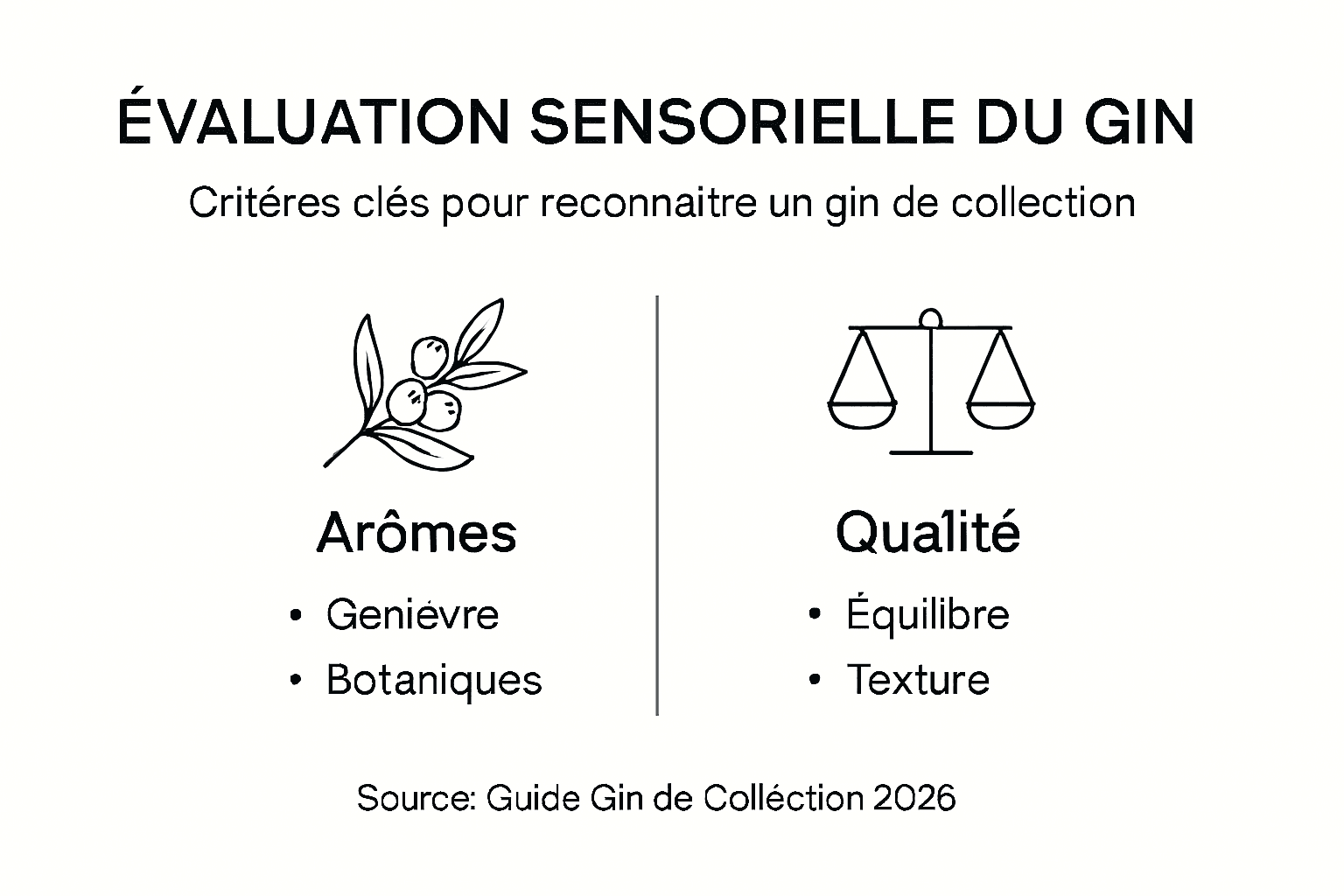
Botanical complexity is measured by the number of distinct notes perceptible. An excellent collection gin successively reveals different aromatic layers during tasting. This evolution indicates meticulous extraction and mastered blending.
The persistent finish, ideally exceeding 30 seconds, indicates a high aromatic concentration. Flavors must evolve gradually without disappearing abruptly. This length on the palate signifies superior distillation quality.
To rigorously evaluate a collection gin, follow this structured method:
- Visually examine the clarity and brilliance of the liquid under natural light
- Inhale from a distance, then gradually bring the glass closer to identify aromatic layers
- Take a tiny first sip to prepare the palate without saturating the receptors
- Taste a normal amount, circulating the liquid throughout the mouth
- Evaluate the texture, alcoholic warmth, and overall balance of flavors
- Note the duration and evolution of the finish after swallowing
- Wait 30 seconds, then breathe through your mouth to capture retro-nasal aromas
The gin tasting guide deepens these techniques to refine your sensory expertise. The refined texture particularly reveals the quality of distillation and eventual maturation.
Preservation and enhancement of a collection gin
Once capable of identifying and evaluating a collection gin, it becomes crucial to know how to properly preserve and enhance it to protect your investment. Storage conditions directly influence the preservation of organoleptic qualities.
The preservation of a collection gin must follow strict rules, including a stable temperature around 15-20°C, the absence of direct light, and keeping the bottle upright to prevent cork deterioration and preserve aromas long-term. These gin preservation tips guarantee optimal quality for years. Failure to comply with these conditions irrevocably alters subtle aromas.
A stable temperature between 15 and 20°C prevents thermal variations that cause expansion and contraction of the liquid. These movements gradually degrade volatile aromatic compounds. A cellar or climate-controlled cabinet provides the ideal environment.
Exposure to direct light, particularly UV, breaks down delicate aromatic molecules. Store your bottles in the dark or use display cases with UV filters. This precaution preserves the original color and taste properties.
Storing it vertically protects the cork from prolonged contact with alcohol. Alcohol gradually dissolves cork or synthetic stoppers, creating off-flavors. This position also prevents leaks.
Protecting the packaging and label maintains its collection value. Handle bottles with care, avoid friction that wears out labels. Store boxes and certificates of authenticity in a dry place.
To aesthetically enhance your collection:
- Arrange bottles on shelves indirectly lit by cool LEDs
- Create thematic groupings by origin or aromatic style
- Incorporate narrative elements recalling the history of each distillate
- Maintain a detailed inventory with tasting notes and acquisition dates
Gin storage tips also include the importance of sealing tightly after each serving. Progressive oxidation alters aromas once the bottle is opened.
Myths and Misconceptions about Collector's Gin
To conclude the educational section, let's demystify the common misconceptions that often confuse collectors and enthusiasts to ensure informed decisions. These misunderstandings frequently lead to inappropriate purchases or an underestimation of true treasures.
First major myth: all collector's gins are barrel-aged. In reality, many exceptional collector's gins undergo no aging. Their quality relies on botanical selection and distillation technique. Aging is a creative option, not a mandatory criterion.
Contrary to popular belief, not all flavored gins are of inferior quality: a collector's gin can include very fine natural flavoring techniques, such as saffron infusion or other rare spices, which create unique taste profiles. This natural gin flavoring can achieve remarkable sophistication. The distinction between distilled and flavored gin does not automatically determine the final quality.
Second myth: local origin alone guarantees quality. While territorial roots provide authenticity, only the combination of local origin and artisanal expertise ensures excellence. A producer without know-how will not create a collector's gin, even with the best botanicals.
Third myth: rarity necessarily implies an exorbitant price. Many Italian collector's gins remain accessible between 60 and 100 euros. The price reflects the complexity of production and the quality of ingredients more than simple artificial rarity.
Fourth myth: age determines value. Unlike whiskies, age matters little for gin. The value of a collector's gin is defined by its authentic narrative, the quality of its distillation, and the originality of its aromatic profile.
Misconceptions to reject:
- Barrel aging is essential for all collector's gins
- Flavored gins are systematically inferior to distilled ones
- Geographical origin alone is enough to guarantee exceptional quality
- Extreme rarity always justifies prohibitive prices
- A bottle's age automatically increases its gustatory value
Discover our exclusive selection of Italian artisan gins
After learning how to identify and appreciate a collector's gin, here are selected products and expert resources to start or enrich your collection. Our platform brings together the excellence of Italian artisanal distillation with rigorous curation.
Our collection of Italian artisan gins perfectly embodies the criteria detailed in this guide. Each selected distillate tells an authentic cultural story woven with unique Mediterranean botanicals. You will discover aromatic profiles impossible to find elsewhere, created by passionate master distillers.

Our collector's gins meet the most demanding standards: limited numbered batches, traceable rare ingredients, careful artistic packaging. The storytelling accompanying each bottle enriches the sensory experience by connecting the taster to the producer's narrative world. This cultural dimension transforms each tasting into an initiatory journey.
To maximize your enjoyment and refine your expertise, consult our gin tasting tips written by experts. These practical guides accompany you in the methodical exploration of complex aromatic profiles. You will quickly develop a fine sensitivity to subtle botanical nuances.
Frequently Asked Questions about Collector's Gin
How to choose my first Italian collector's gin?
Start by identifying your aromatic preferences: Mediterranean citrus, alpine herbs, or oriental spices. Opt for a producer who is transparent about their botanicals and distillation process. Consult detailed tasting notes and look for international awards attesting to quality. A first purchase between 60 and 80 euros generally offers excellent value for money to discover the world of collector's gins.
How long can I keep an opened bottle?
A properly resealed bottle of collector's gin can be stored for 12 to 18 months after opening without major alteration. Aromas begin to fade gradually beyond this period due to slow oxidation. To extend the duration, transfer the remaining gin into a smaller bottle to reduce air space. Always store upright in a cool, dark place.
Do collector's gins increase in value over time?
Only certain ultra-limited editions from renowned producers significantly increase in value. The majority of collector's gins are consumed rather than invested. Unlike aged spirits, gin does not evolve positively in a sealed bottle. Buy primarily for the pleasure of tasting and the cultural experience rather than for speculative reasons.
What is the difference between a premium gin and a collector's gin?
A premium gin simply denotes a higher price range with quality ingredients. A collector's gin combines objective rarity (limited batches), deep cultural storytelling, artistic packaging, and a truly unique aromatic profile. The distinction lies in the overall creative intention and verifiable exclusivity, not just in the quality of ingredients or the displayed price.
How to authenticate a collector's gin?
Check the individual numbering engraved or printed on the bottle or label. Consult the producer's website to confirm the existence of this specific edition. Examine the quality of the packaging: a collector's gin always features a refined design with noble materials. Be wary of abnormally low prices for reputedly rare editions. Prefer official distributors referenced by the producer.
Recommendation
- Gin tasting guide 2026: mastering the art of tasting – Mezzanotte | Distillery & Spirits
- Role of botanicals in gin: 60 active polyphenols – Mezzanotte | Distillery & Spirits
- The Complete Guide to Gin Shops: Discover the Best Gins of 2026 – Mezzanotte | Distillery & Spirits
- Spirits Distillation Guide 2026: Avoid 40% Common Mistakes – Mezzanotte | Distillery & Spirits