

Discover Italian artisanal amari with monastic roots, native botanicals, and refined design. A complete guide to tradition, awards, and conscious consumption.
Italian artisanal amari: 30% growth since 2023
Mar 4, 2026

Many believe that all amari are industrial and similar, but artisanal Italian amari come from a deeply rooted historical tradition. These liqueurs combine history, territory, manual production, and unique cultural storytelling. This guide will help you consciously choose Italian amari that offer a complete sensory and cultural experience, distinguishing artisanal excellence from mass production.
Table of Contents
- Monastic Origins and Herbal Tradition
- Territorial Biodiversity and Indigenous Ingredients
- Artisanal Production Techniques and Innovation
- Artisanal Excellence and International Awards
- Cultural Storytelling, Design, and Product Enhancement
- Traditional and Innovative Consumption of Amaro
- Comparison Between Artisanal and Industrial Amari
- Discover Mezzanotte Artisanal Amari: Experience and Tradition
- Frequently Asked Questions About Italian Artisanal Amari
Key Points
| Point | Details |
|---|---|
| Monastic Origins | Herbal recipes handed down for centuries dating back to the early Middle Ages |
| Territorial Biodiversity | Each region offers unique and seasonal indigenous botanicals |
| Artisanal Production | Traditional methods without chemical additives with design innovations |
| International Recognition | Worldwide awards confirm superior Italian quality |
| Varied Consumption | From traditional digestif to innovative modern cocktails |
Monastic Origins and Herbal Tradition
Italian amari originate from monastic traditions of the early Middle Ages, with original herbal recipes representing an invaluable cultural heritage. Monasteries leveraged advanced botanical knowledge to create medicinal remedies and curative infusions. These preparations initially served therapeutic purposes, alleviating digestive issues and other common ailments.
Over time, recipes evolved from strictly medicinal use to complex liqueurs for tasting and pleasure. Monks perfected formulas, passing down secrets from generation to generation. The tradition of Italian amari still preserves original techniques and ingredients from those times.
Monasteries played a fundamental role in preserving and disseminating this knowledge:
- They maintained botanical gardens with rare and selected medicinal herbs
- They documented extraction and maceration methods in handwritten codes
- They experimented with botanical combinations to balance curative properties and taste
- They transmitted knowledge through direct apprenticeship and daily practice
This historical legacy profoundly influences the current culture of amaro consumption. The reverence for monastic origins gives authenticity and depth to every artisanal bottle. Understanding these roots allows you to appreciate not only the taste but also the cultural significance of every sip.
Territorial Biodiversity and Indigenous Ingredients
Each Italian region offers typical indigenous botanicals that characterize local amari. The peninsula boasts exceptional biodiversity, from Alpine to Mediterranean climates. This geographical variety translates into distinct and irreplicable aromatic profiles.
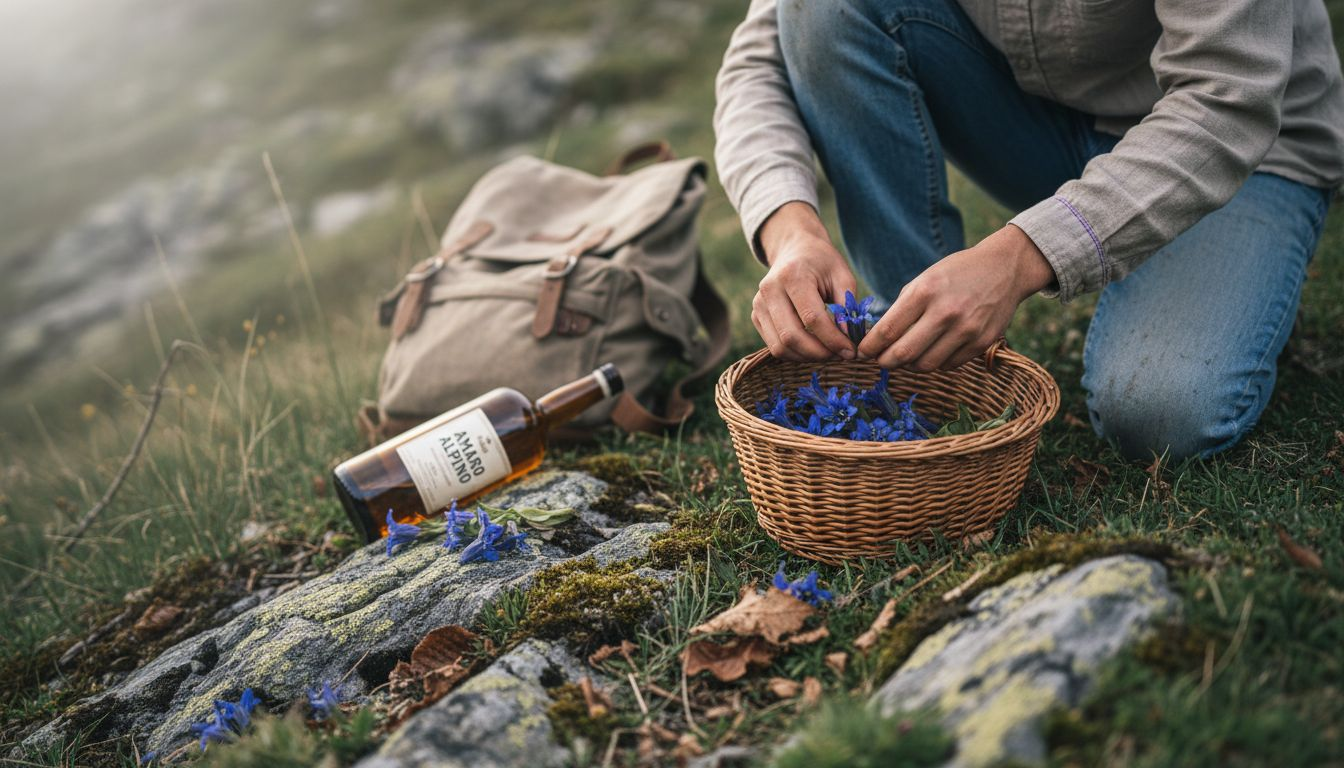
Key herbs include Alpine gentian, Tuscan chamomile, wild Sicilian fennel, and Calabrian bitter orange peel. Manual harvesting respects seasonal cycles, ensuring maximum quality and aromatic potency. Artisanal producers know the territories and harvest the indigenous botanicals of Italian amari at optimal ripening times.
Biodiversity profoundly influences the taste notes and identity of each amaro. A Piedmontese amaro will have different characteristics from a Campanian one precisely due to territorial botanical differences. This diversity represents a heritage to be celebrated and preserved.
| Region | Key Botanicals | Harvest Period |
|---|---|---|
| Piedmont | Gentian, yarrow, wormwood | Summer (June-August) |
| Tuscany | Chamomile, fennel, laurel | Spring-Summer (April-July) |
| Calabria | Bitter orange, bergamot, licorice | Winter-Spring (December-April) |
| Sicily | Wild fennel, myrtle, orange blossom | Summer (May-August) |
Seasonality ensures ingredients are at the peak of their organoleptic properties. Artisanal producers often grow their own botanicals or collaborate with experienced local gatherers. This close connection to the territory creates authentic amari that tell the story of the Italian landscape.
Artisanal Production Techniques and Innovation
Artisanal production guaranteed by manual maceration without additives clearly distinguishes authentic amari from industrial products. The process begins with the careful selection of fresh or dried botanicals according to ancient traditions. Maceration takes place in high-proof alcohol for weeks or months, extracting essential oils and active ingredients naturally.
Industrial amari often use synthetic flavors, artificial colors, and accelerated chemical extraction processes. These shortcuts reduce costs but compromise aromatic complexity and authenticity. The difference is immediately perceived on the palate: artisanal amari offer layers of flavor impossible to replicate artificially.
| Characteristic | Artisanal | Industrial |
|---|---|---|
| Ingredients | Selected natural botanicals | Artificial flavors and colors |
| Process | Slow manual maceration | Accelerated chemical extraction |
| Production Time | Weeks or months | Days |
| Aromatic Complexity | Very high, layered | Limited, flat |
Innovation in artisanal amari primarily focuses on creative packaging and visual storytelling. Artistic bottles, illustrated labels, and curated design enhance the consumption experience, transforming it into a multi-sensory ritual. This aesthetic approach attracts consumers looking for distinctive products with a strong personality.
Pro Tip: To recognize an authentic artisanal amaro, carefully read the label. Look for detailed lists of botanical ingredients without E-codes or chemical additives. The presence of natural sediment at the bottom of the bottle is a sign of quality, not a defect. Be wary of overly bright or uniform colors that suggest artificial dyes.
Design and storytelling create added emotional value that goes beyond the product itself. A well-designed bottle becomes a collectible item and a conversation piece. This attention to detail reflects the artisanal care also present in the liquid.
Artisanal Excellence and International Awards
Amaro Camatti and Jefferson Amaro Importante, awarded worldwide, recognize Italian excellence in the most prestigious international competitions. These accolades, such as World’s Best Bitter and best liqueur in the world, confirm the superior quality of Italian artisanal amari. Expert juries evaluate aromatic balance, complexity, and fidelity to tradition.
International awards have a significant impact on producers' reputation and commercial value. Global recognition attracts the attention of collectors, sommeliers, and enthusiasts worldwide. This success encourages other artisans to maintain high-quality standards and innovate while respecting tradition.
Concrete examples of award-winning Italian amari demonstrate how artisanal dedication is rewarded:
- Amaro Camatti won the title of World’s Best Bitter for the complexity of its 30 botanicals
- Jefferson Amaro Importante was recognized as the best liqueur in the world in international competitions
- Numerous regional amari have won gold medals in European and American competitions
- These successes enhance the entire category of Italian artisanal amari
Choosing award-winning amari guarantees a superior experience supported by objective validation. International competitions apply rigorous criteria and blind tasting to ensure impartial judgments. These recognitions represent a seal of quality that guides consumers towards excellence.
National pride in these successes reinforces the identity of amari as a symbol of Italian craftsmanship. Each award celebrates centuries of tradition and contemporary commitment to excellence.
Cultural Storytelling, Design, and Product Enhancement
Creative design and authentic storytelling enhance the emotional connection with consumers and the perceived value of amaro, transforming each bottle into a narrative work. Packaging is not just an aesthetic container but a tangible extension of the product's culture and history. Illustrations, symbols, and chosen materials immediately communicate the brand's identity and values.
Storytelling transforms the bottle into a multi-sensory tale that begins even before pouring the liquid. Reading the label, observing the graphic details, and understanding the story behind the product enriches the tasting experience. This narrative dimension distinguishes artisanal amari in a market saturated with anonymous products.
Symbolic elements in the design and narrative of amari recall monastic and territorial roots:
- Images of indigenous botanicals illustrated with scientific precision
- Iconographic references to regional myths, legends, and popular culture
- Use of colors and patterns that evoke the landscape of origin
- Typography that recalls ancient manuscripts or contemporary aesthetics
Recent trends show increasing aesthetic appreciation in the artisanal amaro industry. Collaborations with artists, designers, and illustrators create collectible limited editions. This fusion of art and craftsmanship attracts a young audience sensitive to aesthetics and authenticity.
Pro Tip: When tasting an artisanal amaro, take time to appreciate the visual narrative before drinking. Observe the label details, read the producer's story, and identify the symbols used. This mental preparation enhances sensory perception, creating a more engaging and memorable tasting experience.
Consistency between external design and internal quality builds consumer trust and loyalty. Meticulous packaging signals the obsessive attention to detail present in every production phase.
Traditional and Innovative Consumption of Amaro
The traditional way of consuming amaro as a digestif after meals remains deeply rooted in Italian culture. Served neat at room temperature or slightly chilled, amaro aids digestion thanks to the properties of its botanicals. This ritual concludes the meal with a moment of pleasure and well-being.
However, from 2023 to 2025, there has been a 30% increase in the use of amari for cocktails in Italy, according to industry data. Creative bartenders experiment with artisanal amari to create innovative drinks that balance bitterness with sweetness and acidity. This evolution brings amari to new contexts of consumption and amaro pairings that attract a younger audience.
New generations appreciate the aromatic complexity of amari in sophisticated mixtures. Cocktails like Negroni, Americano, and Spritz use amari as a main ingredient. The art of modern mixology enhances botanical nuances, creating balanced and surprising drinks.
Main ways to taste amari today:
- Neat digestif served after dinner at room temperature to fully appreciate the aromas
- On the rocks with ice to refresh and slightly dilute the intensity
- Base for classic cocktails like Negroni, Manhattan, or Old Fashioned
- Ingredient in innovative mixtures created by contemporary bartenders
- Gastronomic pairing with aged cheeses, dark chocolate, or desserts
Gastronomic pairings represent a fascinating territory of exploration. Amari with citrus notes pair well with fresh goat cheeses. More toasted and spicy varieties accompany dark chocolate desserts. This versatility demonstrates how amari transcend the category of a simple digestif.
The evolution of consumption habits reflects broader cultural changes towards an appreciation of artisanal and authentic products. Italian amari are perfectly positioned in this trend, offering history, quality, and versatility.
Comparison Between Artisanal and Industrial Amari
The aromatic profile of artisanal amari is much more complex and layered than industrial equivalents. Slowly macerated natural botanicals release hundreds of aromatic compounds that interact, creating nuances impossible to replicate. On the palate, you perceive initial notes, a central development, and a persistent finish with continuous evolutions.
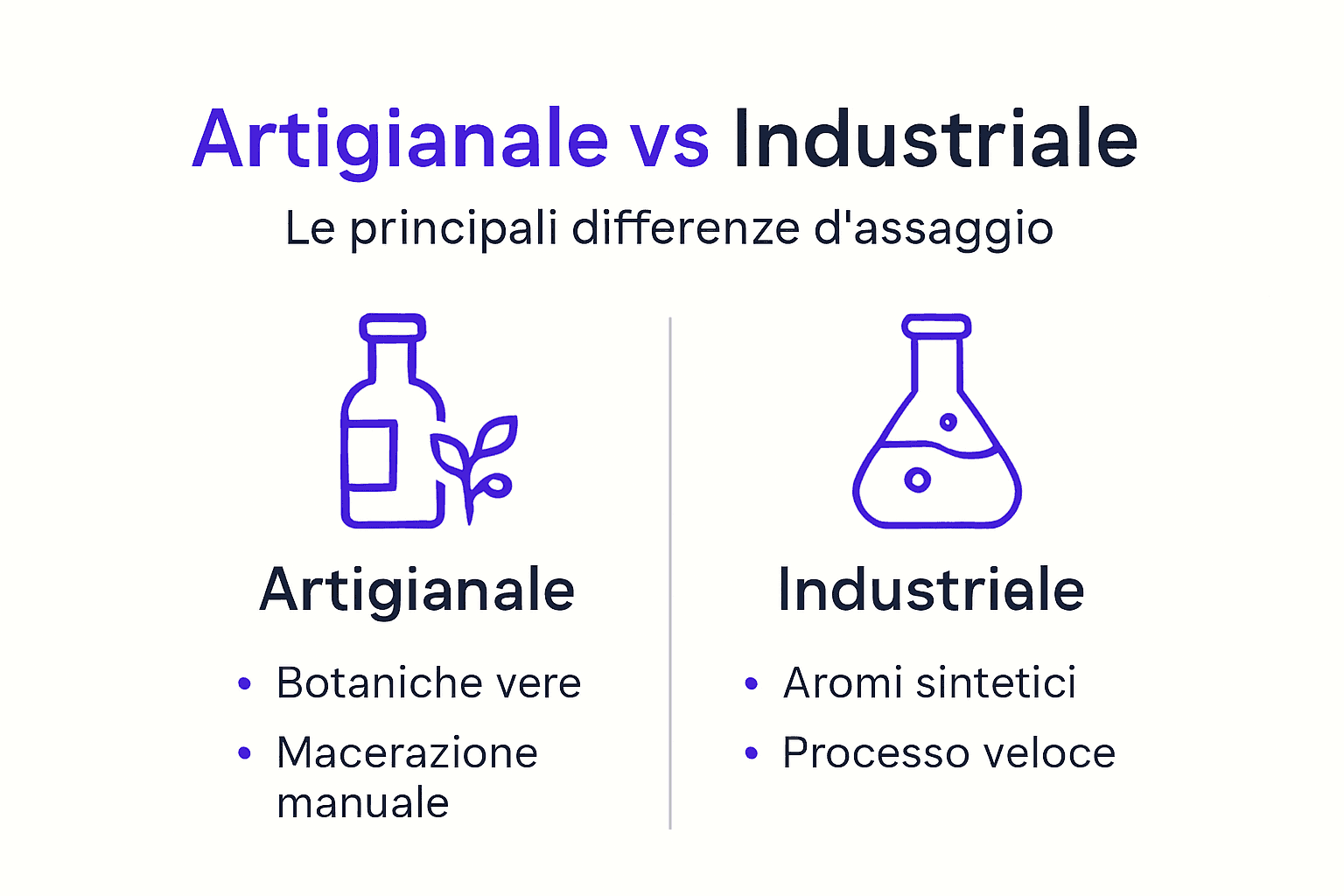
The absence of chemical additives in artisanal products guarantees a pure and authentic experience. Industrial amari frequently contain colorants to standardize appearance and preservatives to extend shelf life. These artificial ingredients alter the natural taste and reduce sensory complexity.
| Aspect | Artisanal | Industrial |
|---|---|---|
| Aromatic Complexity | Layered, evolves over time | Flat, static |
| Ingredients | Selected natural botanicals | Synthetic flavors, E additives |
| Packaging | Curated design, storytelling | Standardized, anonymous |
| Price | Higher, justified by quality | Lower, mass production |
| Territorial Link | Strong, traceable | Absent or generic |
Packaging and storytelling are much more refined in artisanal amari compared to industrial ones, which use standardized designs. Each artisanal bottle tells a unique story through artistic labels, precious materials, and attention to detail. This aesthetic care reflects the production philosophy and creates an emotional connection.
The higher perceived value of artisanal amari derives from authenticity and a verifiable territorial link. Knowing exactly where and how botanicals are harvested creates transparency and trust. Conscious consumers recognize that the higher price reflects real quality, not empty marketing.
Key differences to consider when choosing:
- Origin of botanicals: certified and traceable vs. generic
- Production method: traditional maceration vs. chemical extraction
- Transparency: complete ingredient list vs. vague formulations
- Sensory experience: complex and memorable vs. standardized
Choosing an artisanal amaro means investing in a superior experience that values territory, tradition, and craftsmanship. This conscious choice supports small producers and preserves intangible cultural heritage.
Discover Mezzanotte’s artisanal amari: experience and tradition
Having explored the rich historical and cultural heritage of Italian amari, it's time to turn this knowledge into a tangible experience. Mezzanotte Shop offers an exclusive selection of Italian artisanal amari that embody the values of authenticity and quality described in this comprehensive guide to Italian amari.

Each bottle in our catalog features verifiable historical roots, traceable indigenous ingredients, and curated design that tells authentic stories. Discover the unique narratives behind each product, from ancient myths to contemporary culture. Our selection includes award-winning artisanal amari recognized internationally for their qualitative excellence.
Visit our catalog to buy artisanal Italian amari with confidence, knowing that every choice supports centuries-old traditions and passionate artisans. Transform your tasting experience into a cultural journey through Italy's most authentic flavors.
Frequently Asked Questions about Italian Artisanal Amari
What are the main differences between artisanal and industrial amari?
Artisanal amari use natural botanicals macerated manually without chemical additives, colorings, or synthetic flavors. The process takes weeks or months, ensuring a stratified aromatic complexity. Industrial ones use accelerated chemical extraction with artificial ingredients to reduce time and costs, resulting in flat and standardized flavor profiles.
How to recognize a quality artisanal amaro?
Carefully read the label, looking for detailed lists of botanicals without E-codes or additives. The presence of natural sediment indicates authenticity, not a defect. Verify the territorial origin and the producer's history. Quality amari have carefully curated packaging with authentic storytelling and prices that reflect artisanal production.
Which indigenous botanicals are typical of Italian amari?
Botanicals vary by region: gentian and yarrow in Piedmont, chamomile and wild fennel in Tuscany, bitter orange and bergamot in Calabria, myrtle and orange blossom in Sicily. Each territory offers unique biodiversity that characterizes the local aromatic profile. Seasonal harvesting respects natural cycles, maximizing the potency and quality of the ingredients.
In what ways can I taste amaro beyond the classic digestivo?
In addition to traditional neat consumption after dinner, amari shine in classic cocktails like Negroni, Americano, and Spritz. Serve them on the rocks to refresh their intensity or experiment with innovative concoctions created by bartenders. Pair them with aged cheeses, dark chocolate, or desserts to explore new gastronomic dimensions.
Why are design and storytelling so important in artisanal amari?
Curated packaging and authentic narration transform amaro from a simple drink into a multi-sensory cultural experience. Design and storytelling communicate the brand's values, territorial roots, and the history of the botanicals. This emotional dimension creates a deep connection with the consumer, distinguishing artisanal amari in the market and justifying their superior value through verifiable authenticity.
Recommendation
- Italian Bitter Liqueurs: A Guide to Traditions and Innovations 2026 – Mezzanotte | Distilleria & Spirits
- Amaro Conto Terzi Guide: Everything You Need to Know 2026 – Mezzanotte | Distilleria & Spirits
- 7 Extraordinary Best Italian Artisanal Liqueurs of 2026 – Mezzanotte | Distilleria & Spirits
- Best Amaro Liqueurs: A Guide to Italian Excellence 2026 – Mezzanotte | Distilleria & Spirits