

Discover the fascinating history of Italian amaro, from its Roman origins to modern brands. Learn all about its production, regional varieties, and cultural significance.
History of Italian Amaro: Experiencing Tradition
Mar 17, 2026

Did you know that the roots of Italian Amaro date back to ancient Rome, when herbal infusions were already used to aid digestion? This centuries-old tradition has evolved through monastic recipes of the 19th century to today's iconic brands. Amaro is more than just a digestif; it embodies Italian culinary culture, regional diversity, and artisanal skill. In this article, you'll discover the fascinating development, traditional production methods, and cultural significance of these bittersweet herbal liqueurs, which are now appreciated worldwide.
Table of Contents
- Key Insights into the History of Amaro
- The Roots of Italian Amaro: From Antiquity to the 19th Century
- Tradition and Production: Amaro Averna and Amaro Lucano as Examples
- Regional Variations and Flavor Diversity of Amaro in Italy
- Social Significance and Iconic Slogans of Italian Amaro
- Discover Italian Spirits at Mezzanotte
Key Insights into the History of Amaro
| Point | Details |
|---|---|
| Ancient Origins | Roman herbal infusions laid the groundwork for modern Amaro recipes. |
| Monastic Tradition | Benedictine monks developed recipes like Averna in the 19th century from medicinal herb blends. |
| Regional Diversity | Each Italian region imbues its Amaro with local botanicals and characteristic flavor profiles. |
| Cultural Embedding | Amaro is an integral part of Italian food culture as a post-meal digestif. |
| Iconic Brands | Lucano and Averna shaped Italian everyday culture with well-known advertising slogans. |
The Roots of Italian Amaro: From Antiquity to the 19th Century
The history of Italian Amaro is strongly linked to the medicinal use of herbs since Roman antiquity. The Romans already used herbal infusions to aid digestion and alleviate various ailments. These early mixtures contained bitter roots, aromatic plants, and citrus peels macerated in wine or alcohol. This medicinal tradition continued for centuries and found further development in medieval monasteries.
In the 19th century, the first modern Amaro recipes emerged as monks and apothecaries systematically applied their herbal knowledge. Amaro evolved from monastic medicine and the targeted use of bitter plant substances for healing. The Benedictines and Cistercians refined their recipes over generations, developing closely guarded formulas. These recipes often combined 30 to 40 different botanicals, including gentian, wormwood, cardamom, and cinnamon.
Production was based on a multi-phase process:
- Maceration of roots, herbs, and citrus peels in high-proof alcohol for several weeks
- Filtration of the herbal mixture to remove solid components
- Addition of sugar, caramel, or honey for flavor balance
- Aging in barrels or tanks for several months to years
- Bottling at a precise alcohol content between 16 and 40 percent
Monastic and family transmission shaped the preservation of these recipes over centuries. Many families guarded their formulas like state secrets, passing them only to direct descendants. Initially perceived as a remedy, Amaro transformed into a social digestif over the course of the 19th century. This transformation made it an integral part of Italian food culture, where it aided digestion after opulent meals while also providing enjoyment.
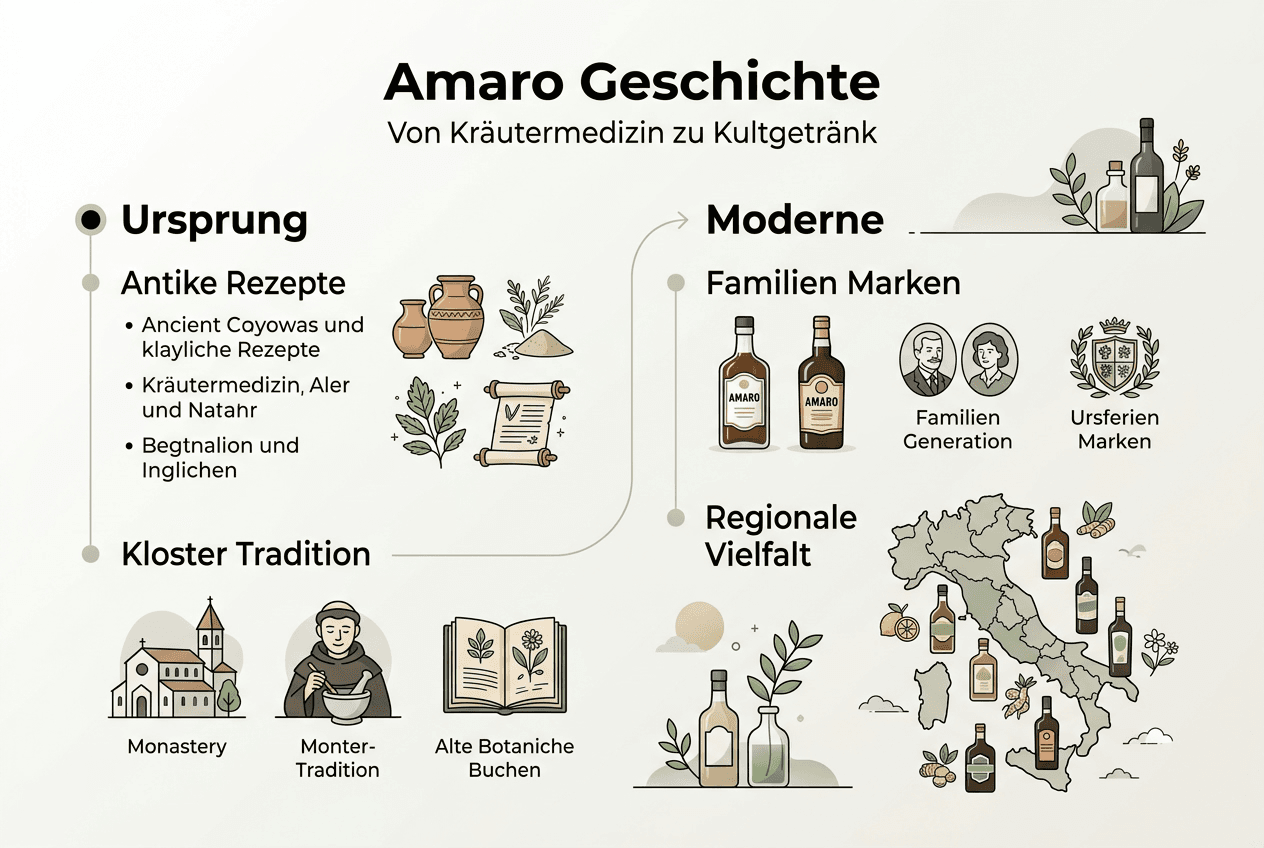
Pro Tip: If you want to try historical Amaro styles, look for brands that have preserved their recipes unchanged for over 100 years. These offer an authentic insight into the original flavor profiles of the 19th century.
Tradition and Production: Amaro Averna and Amaro Lucano as Examples
Amaro Averna originated in the 19th century and was developed by Benedictine monks of the Santo Spirito monastery. In 1854, the monks passed their secret recipe to Salvatore Averna, who turned it into a commercial brand. The formula combines over 30 herbs, roots, and citrus peels into a balanced, moderately bitter profile with distinct notes of orange and vanilla. Averna embodies the Sicilian tradition, where Mediterranean citrus fruits play a central role.
The production of Amaro follows a precise process that requires artisanal skill:
- Selection and preparation of botanicals according to a secret recipe
- Maceration of herbs in high-proof alcohol for 4 to 8 weeks
- Multiple filtrations to clarify the infusion
- Addition of sugar, caramel, and water for flavor balance
- Aging in stainless steel tanks or wooden barrels for several months
- Final quality control and bottling at a controlled temperature
Amaro Lucano has been produced in Basilicata since the early 20th century and impresses with a secret family recipe and a multi-stage production process. Pasquale Vena founded the brand in 1894 and developed a formula that incorporates over 30 herbs from the Southern Italian mountains. Production takes place in several infusion and aging phases, where different groups of herbs are macerated separately and later assembled. This approach allows for more precise control over the final flavor profile.
Lucano was presented at the Milan Expo in 1906 and gained particular attention through official recognition by the Royal House of Savoy in 1900. This royal endorsement catapulted the brand into national prominence and established it as a symbol of quality and tradition. The brand rapidly expanded beyond Italy, becoming one of the first Italian Amari with an international presence.
Tasting is usually done as a digestif after dinner:
- Serve neat at room temperature or slightly chilled
- On the rocks, garnished with an orange slice or lemon zest
- Use in classic cocktails like Negroni or Americano
- Mix with tonic water for a refreshing variation
Pro Tip: Store your Amaro upright in a cool, dark place at 15 to 18 degrees Celsius. This temperature optimally preserves the complex aromas and prevents the herbal notes from weakening. Serve it at 12 to 14 degrees to experience the full aromatic development without the bitterness becoming too dominant.
Regional Variations and Flavor Diversity of Amaro in Italy
Different regions of Italy shape the taste of their Amaro with characteristic herbs and botanicals that are locally available. This geographical diversity is reflected in distinctly distinguishable flavor profiles, from sweet-citrusy Sicilian varieties to herbaceous-alpine versions from the north. The diversity of Amaro styles in Italy reflects regional botanical differences and production traditions.
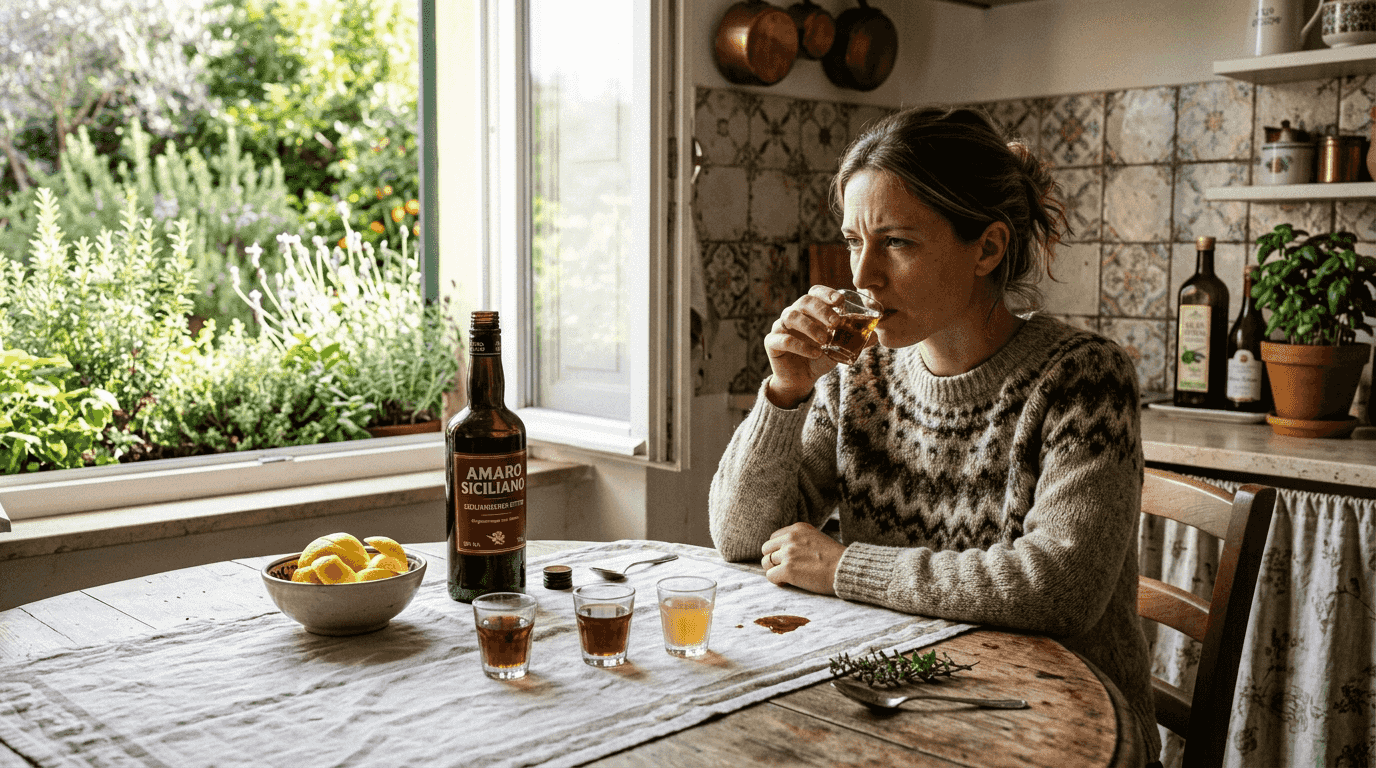
Sicilian Amari emphasize citrus notes like blood orange, bergamot, and lemon, combined with Mediterranean herbs like thyme and rosemary. These styles are often sweeter and more approachable, with an alcohol content between 16 and 29 percent. Alpine varieties from Piedmont and South Tyrol rely on gentian root, wormwood, and alpine herbs, which create a distinctly more bitter, complex character. These Amari often reach 30 to 40 percent alcohol and show intense bitterness.
Piedmontese Amari balance sweet and herbaceous through the combination of caramel, vanilla, and bitter roots. Brands from this region often use local herbs like Genepi and Rapontika, which grow in the Piedmontese Alps. Tuscany produces Amari with a balanced blend of herbs, spices, and citrus, while Campanian versions often incorporate walnut shells and local mountain herbs.
| Region | Typical Ingredients | Flavor Profile | Alcohol Content |
|---|---|---|---|
| Sicily | Blood orange, bergamot, thyme | Sweet, citrusy, Mediterranean | 16-29% |
| Piedmont | Gentian, wormwood, Genepi | Herbaceous, complex, spicy | 30-40% |
| South Tyrol | Alpine herbs, spruce, mountain pine | Intensely bitter, resinous | 28-35% |
| Tuscany | Artichoke, sage, fennel | Balanced, herbaceous | 20-30% |
| Campania | Walnut, mountain herbs, anise | Nutty, aromatic, mildly bitter | 18-28% |
The regional Amaro variations offer you a wide range of taste experiences. If you want to use Amaro in cocktails, more herbaceous alpine varieties are particularly suitable for classic drinks like Negroni or Manhattan. For pure enjoyment after dinner, choose sweeter Sicilian or Campanian styles that are gentler on the palate.
Pro Tip: Create your own Amaro tasting by trying three different regional styles side-by-side. Start with a mild Sicilian Amaro, move on to a balanced Tuscan style, and finish with an intense alpine Amaro. This progression will show you the full spectrum of Italian herbal liqueur artistry and help you identify your personal favorite.
Social Significance and Iconic Slogans of Italian Amaro
Amaro symbolizes Italian pleasure culture and social gatherings in a unique way. After dinner, families and friends gather to enjoy an Amaro together and round off the meal in a relaxed atmosphere. This ritual, known as "ammazzacaffè" (coffee killer), often follows an espresso and marks the transition from formal dining to casual conversation. The cultural significance of Amaro extends far beyond its function as a digestif.
Well-known slogans became part of Italian everyday life and shaped entire generations. Amaro Lucano was officially recognized by the House of Savoy in 1900 and profoundly influenced Italian culture with the slogan "Cosa vuoi di più dalla vita? Un Lucano!" This slogan became a catchphrase and symbolized the philosophy that simple pleasures enrich life. Other brands developed similarly catchy messages that positioned Amaro as an indispensable part of the Italian lifestyle.
"Cosa vuoi di più dalla vita? Un Lucano!" – The legendary slogan that made Amaro Lucano a cultural icon and embodies the Italian philosophy of simple enjoyment.
Amaro Lucano served as an early example of successful marketing and international distribution of Italian spirits. The brand skillfully leveraged royal recognition and presence at international exhibitions to establish itself as a premium product. As early as the 1920s, Lucano exported to North and South America, where Italian immigrants boosted demand for authentic products from their homeland.
The digestif ritual with Amaro is deeply ingrained in Italian food culture and social habits. In restaurants and trattorias, waiters routinely offer Amaro after dessert, often accompanied by a personal recommendation based on the menu served. This ritual strengthens the social bond between host and guest and extends the shared experience.
Its social significance is evident in various contexts:
- Family dinners traditionally end with a shared Amaro at the table
- Bars and cafes prominently display their Amaro selection as a sign of quality
- Gifts for special occasions often include high-quality Amaro bottles
- Regional festivals and markets celebrate local Amaro producers
- Younger generations are rediscovering Amaro through creative cocktail creations
This deep cultural embedding makes Amaro more than just a drink. It represents Italian identity, artisanal tradition, and the art of enjoying life to the fullest. Modern bartenders worldwide use Italian Amaro to add complexity and depth to their drinks, underscoring the global importance of this traditional spirit.
Discover Italian Spirits at Mezzanotte
After this journey through the fascinating world of Italian Amaro, you might want to explore other high-quality Italian spirits. Mezzanotte offers a curated selection of Italian artisanal gin and Italian artisanal vodka, produced with the same care and tradition as classic Amari. Each spirit tells its own story and incorporates selected botanicals from various Italian regions.
Mezzanotte's products embody craftsmanship and combine traditional distillation techniques with modern design. If you appreciate the complex herbal profiles of Amaro, you will love the botanical diversity of these gins and vodkas. Mezzanotte also supports conscious consumption through proper disposal of spirits packaging, so you can sustainably live out your passion for Italian spirits.
Frequently Asked Questions
What is Amaro and what is it used for?
Amaro is an Italian herbal liqueur with a characteristic bittersweet flavor profile, made from a variety of botanicals such as roots, herbs, citrus peels, and spices. It is traditionally drunk as a digestif after a meal to aid digestion and enjoyably conclude the dining experience. You can enjoy it neat at room temperature, on the rocks with citrus, or in classic cocktails like Negroni and Americano. The alcohol content varies between 16 and 40 percent, depending on the regional tradition and recipe.
What are the regional differences in Italian Amaro?
Italian regions shape their Amaro with locally available botanicals, leading to distinctly different flavor profiles. Sicily emphasizes Mediterranean citrus notes like blood orange and bergamot, while alpine regions use gentian, wormwood, and alpine herbs for a more bitter character. Piedmontese Amari balance sweet and bitter with caramel and roots, while Tuscan versions often incorporate artichoke and sage. This diversity allows you to find an Amaro that perfectly matches your taste and intended use.
How is Amaro traditionally produced?
Traditional Amaro production begins with the maceration of herbs, roots, and citrus peels in high-proof alcohol for several weeks. After infusion, the mixture is filtered multiple times to remove solid particles and obtain a clear liquid. Sugar, caramel, or honey are then added to balance the bitterness and achieve the desired flavor profile. The final mixture matures in tanks or barrels for several months before being bottled at its final alcohol content.
Which well-known Italian Amaro brands should you know?
Averna and Lucano are among the most famous and traditional Italian Amaro brands with over 100 years of history. Averna originates from Sicily and was developed by Benedictine monks in 1854, while Lucano has been produced in Basilicata since 1894 following a secret family recipe. Lucano is particularly known for its iconic slogan “Cosa vuoi di più dalla vita? Un Lucano!” and its early international presence. Other significant brands include Ramazzotti, Montenegro, Nonino, and Fernet-Branca, each offering unique regional characteristics and flavor profiles.
Recommendation
- Italian Bitters 2026: 40+ Herbs for Enjoyment – Mezzanotte | Distilleria & Spirits
- Italian Bitter Liqueurs: History and Tradition of Italian Bitters – Mezzanotte | Distilleria & Spirits
- Italian Bitter Liqueurs: A Guide to Traditions and Innovations 2026 – Mezzanotte | Distilleria & Spirits
- Discover the Best Italian Bitter Liqueurs: An Unmissable 2026 Selectio – Mezzanotte | Distilleria & Spirits