

Master professional techniques and discover the secrets of craft spirits to create exceptional cocktails in 2026.
Artisan Cocktail Guide: Master Recipes and Techniques 2026
Mar 18, 2026

Crafting a perfect artisan cocktail requires much more than simply mixing spirits and juices. Every passionate enthusiast knows that the difference between an ordinary cocktail and a memorable creation lies in mastering techniques, choosing exceptional ingredients, and understanding the stories behind each distillate. This guide will take you step-by-step to transform your approach to mixology, revealing professional secrets and the inspiring stories of the most renowned artisan spirits.
Table of Contents
- What you need to get started
- Artisan cocktail preparation techniques
- Balance and flavors: the art of mixology
- History and inspirations behind artisan spirits
- Discover our selection of artisan spirits
- Frequently asked questions about artisan cocktails
Key points
| Point | Details |
|---|---|
| Essential techniques | Master shaking, stirring, and muddling for professional results every time |
| Premium ingredients | Artisan spirits and fresh produce guarantee the desired aromatic complexity |
| Advanced methods | Clarification and fat-washing transform your creations into exceptional cocktails |
| Inspiring stories | Knowing the origin of distillates enhances your understanding and appreciation |
| Flavor balance | Harmony between sour, sweet, bitter, and umami defines a successful cocktail |
What you need to get started
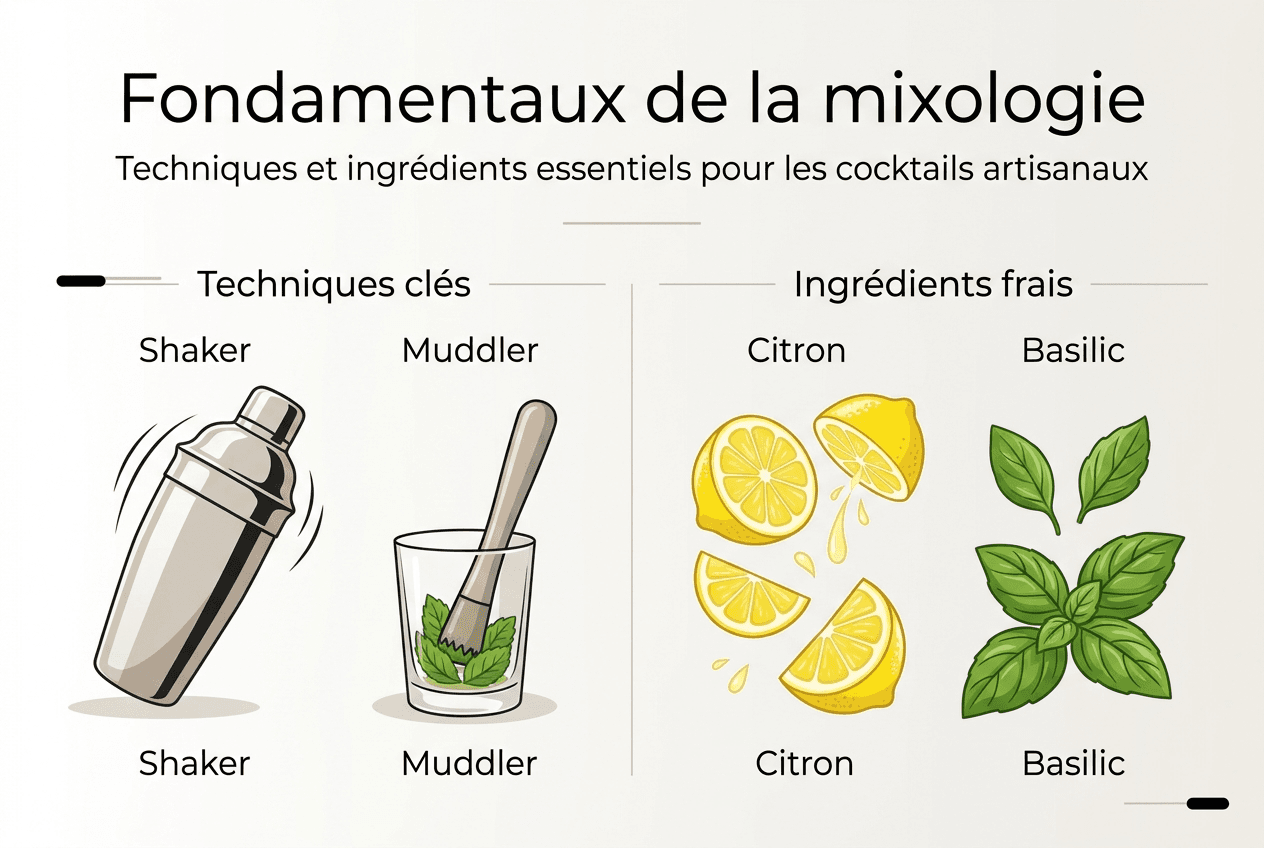
Before you start creating artisan cocktails, gathering the right equipment and selecting quality ingredients is the first step towards success. Basic equipment includes a Boston or cobbler shaker, a long stirring spoon, a sturdy muddler, a fine strainer, and a jigger for precise measurement. These professional tools ensure complete control over every step of preparation.
Artisan cocktails emphasize fresh ingredients and carefully selected spirits. Always choose freshly squeezed juices over commercial versions. Fresh citrus fruits bring incomparable vibrancy, while aromatic herbs like basil, mint, or rosemary add complex olfactory dimensions. Homemade syrups, prepared with cane sugar and natural ingredients, far surpass industrial versions loaded with preservatives.
Essential equipment and ingredients
| Category | Essential elements |
|---|---|
| Basic equipment | Shaker, stirring spoon, muddler, fine strainer, jigger |
| Spirits | Artisan gin, premium vodka, Italian bitter, quality liqueurs |
| Fresh ingredients | Freshly squeezed citrus juices, aromatic herbs, seasonal fruits |
| Homemade preparations | Flavored syrups, infusions, personalized bitters |
Knowledge of mixology fundamentals is a major asset. Understanding how the role of botanicals in gin influences polyphenols and aromas helps you choose the right spirit for each creation. A juniper-rich gin is suitable for classic cocktails, while a floral profile enhances light summer recipes.
Italian artisan spirits offer a distinctive aromatic palette thanks to their traditional distillation methods and local botanicals. Look for producers who prioritize quality over quantity, with small-batch distillations and full traceability of ingredients. This approach guarantees authentic flavors and a complexity that industrial productions cannot replicate.
Also, prepare an organized workspace with all your tools within reach. A clean countertop, a good source of ice, and appropriate glasses for each type of cocktail facilitate the creative process. Professional organization transforms preparation into a pleasant ritual rather than a stressful task.
Artisan cocktail preparation techniques
Mastery of preparation techniques separates amateurs from true cocktail artisans. Each method has a specific purpose and directly influences the texture, temperature, and final balance of your creation. Understanding when and how to apply each technique instantly elevates the quality of your cocktails.
Essential classic techniques
-
Shaking: Use this method for all cocktails containing juices, eggs, cream, or thick syrups. Shaking emulsifies ingredients, creates an airy texture, and quickly chills the mixture. Shake vigorously for 10 to 15 seconds with solid ice, never crushed.
-
Stirring: Reserve the spoon-mixing method for cocktails composed solely of spirits, like the Martini or Negroni. This technique preserves clarity and a silky texture while gradually chilling. Stir for 30 seconds with smooth, regular movements.
-
Muddling: Gently crush herbs, fruits, or spices at the bottom of the glass to release their essential oils without creating bitterness. Press firmly but gently, making only a few rotations.
-
Building: Build directly in the glass for simple cocktails like the Gin & Tonic. Add ingredients in the appropriate order, usually spirit, ice, then lengthener.
Advanced techniques include clarification, artisan infusions, and fat-washing for spectacular results. Milk or gelatin clarification transforms a cloudy cocktail into a crystalline creation while softening rough edges. This method requires patience and precision but produces visually stunning results.
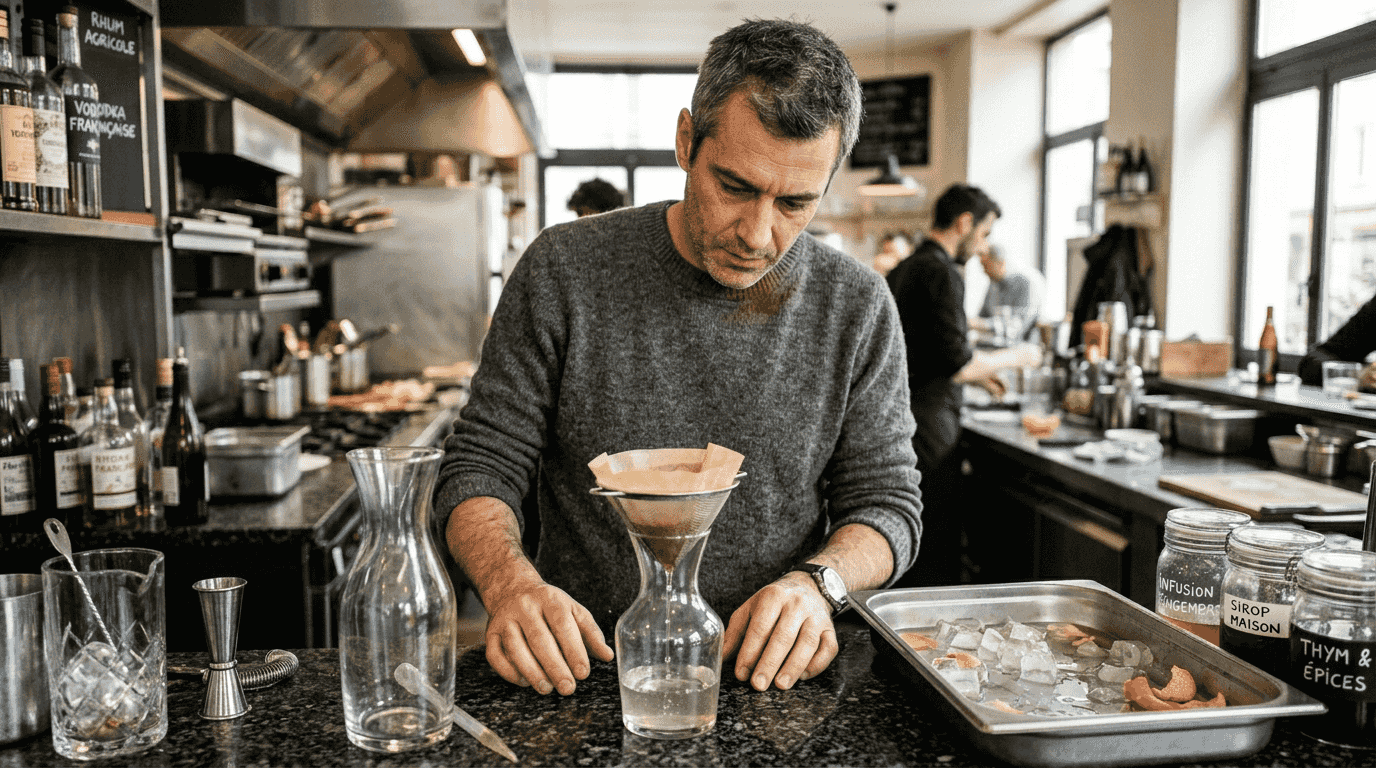
Fat-washing adds a silky dimension and deep flavors impossible to achieve otherwise. Infuse your spirit with butter, olive oil, or bacon, then freeze to separate the solidified fats. This technique brings richness and complexity to contemporary cocktails.
Understanding the difference between gin and vodka in terms of aromas and artisan production guides your technical choices. An aromatic gin supports gentle methods like stirring, while a neutral vodka thrives in more dynamic preparations with juices and syrups.
Pro tip: Avoid over-shaking, which excessively dilutes your cocktail and weakens flavors. As soon as the shaker feels icy to the touch, your cocktail is ready. Prolonged shaking only adds water without improving texture.
Temperature and timing play crucial, often overlooked roles. Always chill your glasses in the freezer before serving to maintain the ideal temperature longer. Use quality, dense, pure ice that melts slowly without altering the taste. Cloudy or porous ice dilutes quickly and compromises the balance of your creation.
Each technique requires practice to develop the right touch. Start by mastering classic methods before exploring advanced approaches. Constant repetition refines your sensitivity to textures and temperatures, transforming preparation into an instinctive gesture.
Balance and flavors: the art of mixology
Creating a harmonious cocktail relies on understanding and orchestrating the four fundamental flavors: sour, sweet, bitter, and umami. Each element plays a precise role in building a memorable taste experience. Acidity brings freshness and vibrancy, cutting through the richness of spirits and awakening the palate. Citrus fruits are the primary source, but vinegar or verjus offer interesting alternatives.
Sweetness balances acidity and softens the natural bitterness of some spirits. Syrups, liqueurs, and ripe fruits provide this essential component. Be careful not to mask the complex flavors of your artisan distillates with an excessive sugary layer. Bitterness adds depth and sophistication, preventing the cocktail from becoming one-dimensional. Bitters, vermouths, and certain Italian amari bring this crucial dimension.
Prioritize fresh, seasonal ingredients and a balance of flavors to create authentic gourmet cocktails. Seasonal products guarantee peak aromas and incomparable freshness. In summer, favor berries and Mediterranean herbs. Autumn calls for warm spices and stone fruits. Winter lends itself to citrus and comforting flavors.
Principles of flavor balance
- Acidity: Brings freshness and structure, cuts through the richness of fatty spirits
- Sweetness: Balances acidity and bitterness, rounds out the cocktail's edges
- Bitterness: Adds complexity and depth, prevents gustatory monotony
- Umami: Subtle savory dimension that enriches some contemporary creations
- Salinity: A finishing touch that amplifies all other flavors in minute quantities
The systematic approach to testing and adjusting proportions begins with a balanced basic recipe. The classic 2:1:1 formula (two parts spirit, one part acidic element, one part sweet element) serves as a reliable starting point. Taste at each step and adjust gradually until you find the perfect harmony for your palate.
The pairing guide for enhancing Italian artisan gin reveals how to combine botanicals and complementary ingredients. A floral-noted gin harmonizes with elderflower or violet syrups. Spicy profiles call for vibrant citrus and Mediterranean herbs like thyme or rosemary.
The perfect balance of a gourmet cocktail arises from an intuitive understanding of how each flavor interacts with the others, creating a gustatory symphony where no single element dominates but all contribute to the final harmony.
Never forget that balance is subjective and personal. Some prefer drier, bitter cocktails, while others seek rounder, fruitier profiles. Develop your own sensitivity by tasting regularly and noting your observations. This practice refines your palate and allows you to create recipes that reflect your unique vision of mixology.
Temperature also influences flavor perception. A cocktail that is too cold numbs the taste buds and masks subtle nuances. Too warm, the alcohol dominates and burns the palate. Aim for an icy but not frozen temperature, allowing the aromas to fully express themselves from the first sip.
History and inspirations behind artisan spirits
Understanding the historical narratives and distinctive characteristics of prestigious distillates deeply enriches your appreciation and inspires your creations. Each spirit carries centuries of know-how, innovations, and traditions that shape its unique aromatic identity.
Chartreuse dates back to 1605 with 130 secret plants jealously guarded by the Carthusian monks. This emblematic liqueur, available in green and yellow versions, possesses an unparalleled aromatic complexity thanks to its monastic production process preserved for four centuries. Its high proof and intense botanical palette make it a choice ingredient for sophisticated cocktails seeking depth and character.
Saint-Germain represents a more recent but equally fascinating creation. This elderflower liqueur captures the essence of spring with its delicate floral and fruity notes. Hand-picked for only a few weeks each year, the flowers bring incomparable freshness to contemporary cocktails. Its sweet and aromatic profile pairs particularly well with juniper-based spirits.
Iconic spirits and their stories
- Chartreuse: Produced since 1605 by monks, 130 secret plants, aged in oak barrels
- Saint-Germain: Modern elderflower liqueur, limited artisan spring harvest
- Artisan gin: 16th-century heritage, small-batch distillation with local botanicals
- Italian Amaro: Centuries-old family tradition, secret recipes passed down through generations
- Artisan vodka: Multiple distillations for crystalline purity, selected spring water
Gin has a heritage dating back to the 16th century with the use of juniper berries for their medicinal properties. Modern artisan methods respect this tradition while innovating with local botanicals and refined distillation techniques. Each artisan distillery develops its unique aromatic signature, reflecting the terroir and the creative vision of the master distiller.
Exploring the complete guide to collection gins and their authenticity reveals how limited productions and special editions tell particular stories. These exceptional spirits often incorporate rare botanicals or innovative aging methods that distinguish them from standard productions.
The link between history and flavors guides the design of unique cocktails. Knowing the origin of a distillate helps you choose complementary ingredients that respect and enhance its character. A Mediterranean gin with notes of citrus and rosemary calls for associations with sunny flavors. A traditional Italian bitter finds its balance with vermouths and bitter citrus fruits.
These stories transform each cocktail into a narrative experience. Sharing the history of the spirit used with your guests adds a cultural and emotional dimension to the tasting. Artisan mixology is not limited to assembling ingredients; it celebrates living traditions and know-how passed down through generations.
Discover our selection of artisan spirits
Now that you've mastered the techniques and understand the importance of quality ingredients, it's time to explore exceptional artisan spirits that will transform your creations. Our collection of Italian artisan gin brings together award-winning distillates, crafted in small batches with botanicals selected for their aromatic intensity.

Each bottle tells a unique story, inspired by Italian culture, ancient myths, and a contemporary approach to traditional distillation. Our artisan vodkas offer crystalline purity and exceptional smoothness, perfect for cocktails seeking a high-quality neutral base. These premium spirits guarantee the aromatic complexity and authenticity you're looking for in your artisan creations. Explore our online store to discover distillates that will elevate your mixology art.
Frequently Asked Questions About Craft Cocktails
What are the basic techniques to start making craft cocktails?
Begin by mastering shaking for mixtures with juices and syrups, and stirring for cocktails made solely of spirits. Muddling allows you to extract the aromas from fresh herbs without creating bitterness. These three techniques cover the majority of classic recipes and form a solid foundation.
How to choose a quality craft spirit?
Prioritize distilleries that practice small-batch distillation with full ingredient traceability. Look for mentions of specific botanicals, traditional methods, and international awards. An authentic craft spirit clearly displays its manufacturing process and origin.
Which fresh ingredients should be favored according to the season?
In summer, use berries, basil, and citrus for light and refreshing cocktails. Autumn calls for apples, pears, and warm spices like cinnamon. Winter is suited for blood oranges, ginger, and robust Mediterranean herbs. Spring celebrates edible flowers and the first aromatic herbs.
Can non-alcoholic cocktails be made using the same principles?
Absolutely, the principles of flavor balance apply identically to non-alcoholic creations. Replace spirits with complex infusions, concentrated juices, or quality non-alcoholic alternatives. Maintain the acid, sweet, and bitter balance to create sophisticated and satisfying mocktails.
Which gin-based craft cocktails to discover for inspiration?
Explore the best gin-based cocktails to discover revisited classic recipes and innovative contemporary creations. The Negroni, Martini, and Gin Basil Smash are excellent starting points. Then experiment with personal variations by adjusting botanicals and garnishes according to your preferences.
Recommendation
- How to customize an Italian cocktail in 2026 – Mezzanotte | Distilleria & Spirits
- Gin tasting guide 2026: master the art of tasting – Mezzanotte | Distilleria & Spirits
- What is artisanal distillation? 2026 guide – Mezzanotte | Distilleria & Spirits
- Collector's Gin 2026: Complete Guide for 90% More Precision – Mezzanotte | Distilleria & Spirits