

Discover the key differences between vodka and gin: distillation processes, flavor profiles, botanicals, and uses in mixology to make informed choices.
Vodka vs. Gin: A Lover's Guide
Mar 21, 2026

Have you ever wondered why some clear spirits have complex flavors while others are practically neutral? Many confuse vodka with gin simply because both are clear and distilled, but their differences go far beyond appearance. Understanding these distinctions allows you to appreciate the artisanal tradition, production methods, and unique storytelling behind each bottle. This article will guide you through the essential characteristics that separate vodka from gin, from their distillation processes to their applications in mixology, so you can choose wisely and enjoy every sip more deeply.
Table of Contents
- Key Points
- Origin and Distillation Process of Vodka and Gin
- Flavor Profile and Botanicals in Gin vs. Neutrality in Vodka
- Uses in Mixology and Pairing: When to Choose Vodka or Gin
- Artisanal Quality and Storytelling: The Value Behind the Bottle
- Discover Italian Craft Vodka and Gin at Mezzanotte
- Frequently Asked Questions about Differences Between Vodka and Gin
Key Points
| Point | Details |
|---|---|
| Origin and Distillation | Vodka seeks purity and neutrality through multiple distillations, while gin is crafted to highlight botanicals, with juniper as a mandatory ingredient. |
| Flavor Profile | Gin is an aromatic canvas where botanicals define notes of juniper, citrus, roots, and flowers, while vodka maintains a neutral profile. |
| Mixology Applications | In mixology, gin enhances botanical drinks, and vodka lends itself to clean mixes or direct consumption without flavor interference. |
| Buying Tips | For vodka, look for at least three distillations, and for gin, ensure juniper is among the ingredients. |
Origin and Distillation Process of Vodka and Gin
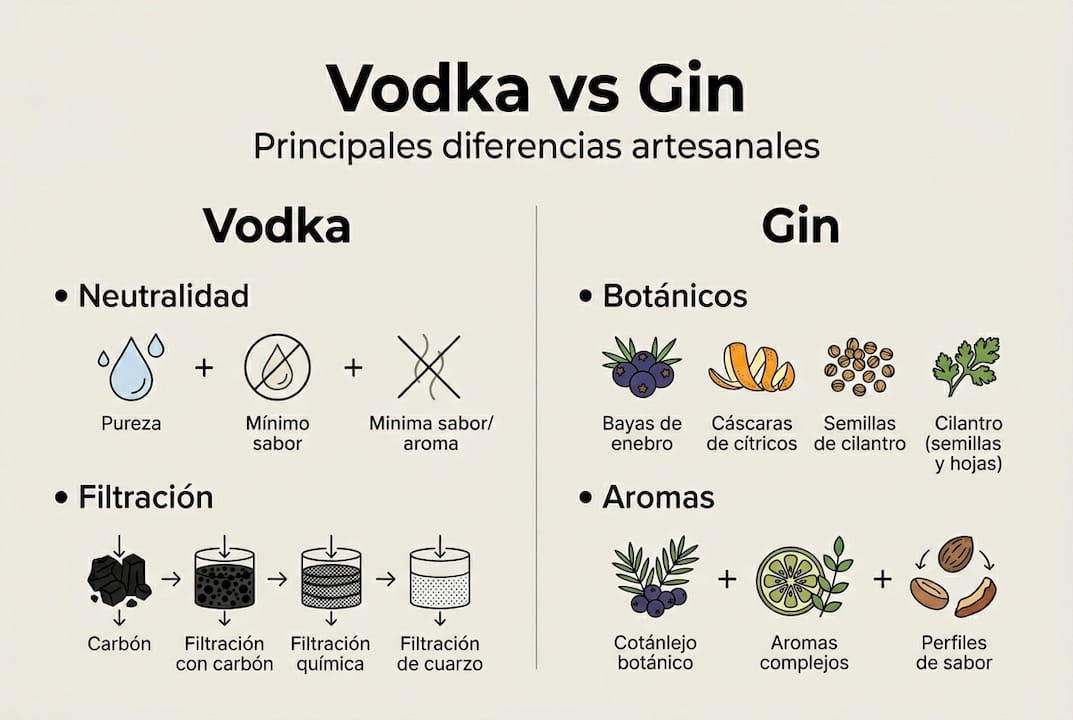
The history of vodka dates back to Eastern Europe, where the pursuit of absolute purity defined its identity. This spirit undergoes multiple distillation cycles, often three or more, to remove impurities and create a neutral profile. Raw materials vary from wheat and rye to potatoes, but the goal is always the same: to obtain a clean alcohol that allows the quality of the process to be appreciated without flavor interference.
Gin, on the other hand, originated in Holland and was perfected in England during the 17th century. Its production incorporates botanicals during distillation, with juniper being the mandatory ingredient that legally defines this category. While vodka seeks to eliminate character, gin deliberately builds it through the infusion of herbs, spices, citrus, and flowers. This philosophical contrast marks the fundamental difference between the two spirits.
Italian artisanal production has elevated both categories to new heights. Master distillers carefully select each ingredient, controlling temperatures and distillation times with millimeter precision. For vodka, this means achieving smoothness without losing regional character. For gin, it involves balancing botanicals to create unique profiles that tell stories of territory and tradition.
Traditional methods include copper stills that allow greater control over the process. In vodka, post-distillation filtration can use activated charcoal or specific materials to polish the final result. In gin, botanical maceration can occur before or during distillation, and some producers use vapor to extract more delicate aromas without bitterness.
Professional tip: When choosing vodka, look for those with at least three distillations. Vodkas with fewer cycles tend to retain harshness that affects the experience. For gin, check that juniper appears on the ingredient list, as some aromatic products do not meet the technical definition of authentic gin.
The differences in production are directly reflected in the glass. While exploring the aromas and stories of vodka and gin reveals opposing sensory worlds, both share an artisanal commitment to excellence. The choice between one and the other depends on what you seek: silent purity or a botanical symphony.
Flavor Profile and Botanicals in Gin vs. Neutrality in Vodka
Gin is an aromatic canvas where botanicals paint complex flavors. Juniper provides resinous and slightly spicy notes that form the backbone of any authentic gin. From there, each distiller adds their personal signature: citrus like lemon or orange for freshness, roots like angelica for structure, spices like cardamom for warmth, and flowers like lavender for elegance.
The Italian tradition offers unique botanicals that differentiate its gins in the global market. Mediterranean herbs, Sicilian citrus, and alpine flowers create profiles impossible to replicate in other regions. This connection to the territory transforms each bottle into a geographical expression, a liquid map of local aromas.
Vodka, in contrast, pursues neutrality as its supreme virtue. Italian craft vodka offers purity with subtle nuances that reveal the quality of the raw materials without shouting their presence. An exceptional vodka should be smooth on the palate, without burning the throat, with just a whisper of cereal sweetness or potato creaminess.
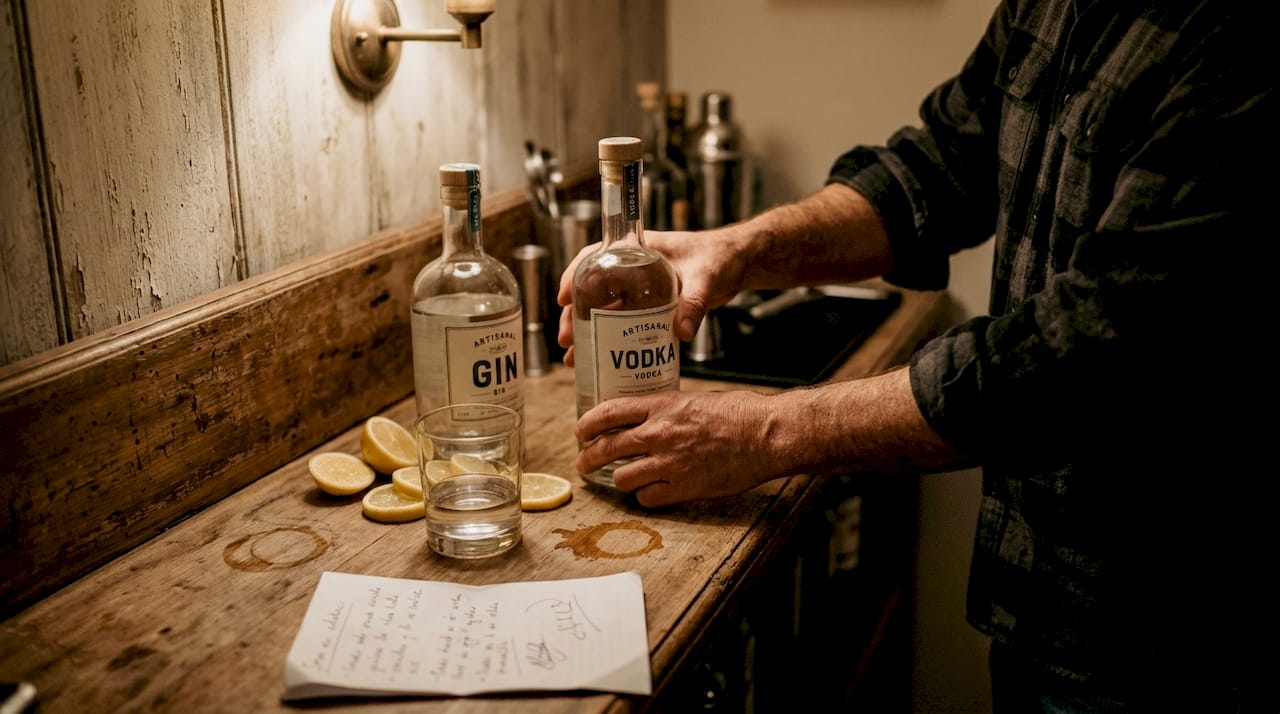
| Botanical | Flavor Effect | Typical Presence |
|---|---|---|
| Juniper | Resinous, piney, structural base | Mandatory in gin |
| Coriander | Citrus, spicy, complements juniper | Common in classic gin |
| Angelica | Earthy, structure, rounds flavors | Root in traditional gin |
| Citrus | Freshness, brightness, high notes | Mediterranean gin |
| Cardamom | Warmth, spice, complexity | Modern gin |
| None | Purity, neutrality, smoothness | Vodka by definition |
The sensory experience differs radically between the two spirits. When tasting gin, your nose immediately catches the aromatic explosion before the liquid touches your lips. On the palate, layers of flavor unfold progressively: first juniper, then citrus, finally spices in the aftertaste. Each gin tells a different story according to its botanical recipe.
With vodka, the experience is more about texture than explicit flavor. A premium vodka glides smoothly, almost like silky water, leaving only a warm sensation without alcoholic harshness. The nuances are subtle: a sweet touch of wheat, a creamy rye, a mineral cleanness. The absence of dominant flavor is precisely its greatest achievement.
To appreciate these differences, using botanicals for unique flavor in gin requires understanding balance. Too much juniper overpowers, too little loses identity. The best gins achieve harmony where no botanical completely dominates but all contribute to the whole.
Professional tip: To properly taste craft gin, try it neat at room temperature first to capture all the aromas. Then add ice and observe how the cold modifies the perception of botanicals. With vodka, cold temperature is essential, as it highlights its smoothness and minimizes any residual harshness.
Personal preferences guide the choice. If you enjoy exploring layers of flavor and complex aromas, gin offers endless variations. If you prefer a neutral canvas that doesn't compete with other ingredients or seek absolute purity, vodka is your ally. Both represent valid philosophies of distilled excellence.
Uses in Mixology and Pairing: When to Choose Vodka or Gin
Vodka's versatility in mixology comes precisely from its neutrality. It doesn't interfere with other flavors, allowing juices, liqueurs, and modifiers to shine without competition. This characteristic makes it an ideal base for cocktails where the balance of multiple ingredients is crucial.
- Moscow Mule: vodka, ginger beer, and lime create a fresh, spicy perfect for warm climates
- Bloody Mary: vodka supports the complexity of tomato, spices, and vegetables without adding its own flavor
- Cosmopolitan: combines vodka with triple sec, cranberry, and lime for citrus elegance
- Vodka Martini: the most minimalist version where the quality of the vodka is directly appreciated
- Espresso Martini: vodka balances the coffee without adding notes that clash with the bitterness
Gin, by its aromatic nature, drives complex drinks where its botanicals interact with other ingredients. The gin and tonic is the perfect example: the quinine in the tonic amplifies the gin's botanicals, creating a drink greater than the sum of its parts. The Negroni uses juniper to contrast with the bitterness of Campari and the sweetness of vermouth.
For classic martinis, the choice between vodka and gin completely defines the character of the drink. A gin Martini offers herbal complexity and pronounced character, ideal for palates that appreciate defined flavors. With vodka, the Martini becomes smoother and more elegant, allowing the vermouth and any garnish to stand out.
Regarding gastronomic pairing, vodka works exceptionally well with caviar, smoked foods, and fatty dishes. Its neutrality cleanses the palate between bites without competing with delicate flavors. Serve cold vodka with smoked salmon, blinis, or even sushi for refined experiences.
Gin pairs brilliantly with seafood, fresh salads, and goat cheeses. Citrus botanicals complement white fish, while herbaceous notes resonate with green vegetables. A gin and tonic with a slice of cucumber and basil alongside fresh oysters is a sublime combination.
Common mistakes when choosing between vodka and gin include:
- Using cheap vodka in simple cocktails where its quality is directly noticeable
- Mixing gin with very sweet juices that completely mask its botanicals
- Serving vodka at room temperature, losing its characteristic smoothness
- Choosing gin with botanicals that clash with the cocktail ingredients
- Ignoring the quality of the mixer, especially in gin and tonics where the tonic is the protagonist
For using vodka in Italian mixology, consider cocktails that celebrate Mediterranean ingredients: vodka with limoncello, vodka with Aperol, or vodka infused with Italian herbs. These combinations respect tradition while exploring new territories.
The practical rule is simple: choose vodka when you want other ingredients to shine or seek refreshing purity. Opt for gin when you want aromatic complexity and layers of flavor that evolve in the glass. Both have their perfect moment depending on the occasion and your mood.
Artisanal Quality and Storytelling: The Value Behind the Bottle
Each bottle of craft spirit tells a story that transcends the liquid it contains. The choice of raw materials, the distillation method, even the label design, communicate values and tradition that emotionally connect with the informed consumer. This storytelling transforms a transactional purchase into a cultural experience.
Italian artisanal production of vodka and gin is distinguished by its respect for traditional methods combined with creative innovation. Small family distilleries preserve recipes passed down through generations while experimenting with unique local botanicals. This tension between tradition and innovation generates products that honor the past while looking to the future.
Spirits inspired by myths, anime, and pop culture add another narrative dimension. They are not simply drinks; they are portals to imaginary worlds that resonate with collectors and enthusiasts. The careful design of each bottle reflects this ambition: each visual element tells part of the story, inviting discovery beyond the first sip.
“The tradition and choice of botanicals tell unique stories that enrich the craft gin experience, transforming each glass into a sensory journey that connects territory, culture, and distilling mastery in an unforgettable liquid narrative.”
The international awards that many Italian craft spirits have won objectively validate their exceptional quality. But beyond medals and accolades, what truly matters is the personal connection each drinker establishes with the beverage. Knowing the story behind your favorite gin or vodka deepens enjoyment and justifies the investment in premium products.
The exclusivity of limited editions and small batches attracts collectors seeking unique experiences. These products are not found on every shelf; they require active searching and market knowledge. Owning a bottle from a limited series is participating in a community of connoisseurs who value rarity and craftsmanship.
The modern consumer of premium spirits seeks authenticity. They want to know who distills their gin, where the botanicals come from, what makes that particular vodka special. Brands that transparently communicate their process and philosophy build lasting loyalty. They don't just sell alcohol; they sell identity and belonging.
Exploring the aromas and stories of vodka and gin is discovering that each spirit is a cultural document. Polish vodka tells different stories than Russian or Italian. London gin differs radically from Mediterranean. These geographical and cultural differences enrich the global landscape of spirits.
Informed appreciation transforms consumption into an educational experience. Each tasting becomes an opportunity to refine the palate, identify nuances, compare styles. This continuous learning process is what distinguishes the casual enthusiast from the true spirit lover who constantly seeks to expand their knowledge and collection.
Discover Italian Craft Vodka and Gin at Mezzanotte
Now that you understand the fundamental differences between vodka and gin, it's time to experience these distinctions with authentic products that embody Italian artisanal excellence. Mezzanotte offers a curated selection of spirits that combine centuries-old tradition with unique cultural narratives, each bottle designed to offer a memorable sensory experience.

Our collection of Italian craft vodka features spirits of exceptional purity, made with selected raw materials and multiple distillations that guarantee absolute smoothness. Each vodka tells its own story, inspired by myths and pop culture, transforming every sip into an adventure.
For those seeking aromatic complexity, our line of Italian craft gin offers unique botanical profiles that capture the essence of the Mediterranean. From classic juniper-dominated gins to modern expressions with innovative botanicals, you will find the perfect balance for your preferences.
Visit Mezzanotte to explore the complete catalog, discover the stories behind each spirit, and access internationally awarded products that will elevate your experience with premium spirits. Artisanal quality and captivating storytelling await you in every bottle.
Frequently Asked Questions about Differences Between Vodka and Gin
What is the main difference between vodka and gin?
The fundamental difference lies in the botanicals: gin must contain juniper and other botanicals that give it a complex aromatic flavour, while vodka seeks absolute neutrality through multiple distillations. This philosophical distinction defines everything else: flavour, aroma, uses, and sensory experience.
Can vodka be substituted for gin in cocktails?
Technically, yes, but the result changes radically. Substituting gin for vodka in a Negroni or gin and tonic eliminates the botanical complexity that defines these cocktails. Conversely, using gin where the recipe calls for vodka adds herbal flavours that may not harmonise with other ingredients. Respect the original recipe for optimal results.
Which spirit is stronger, vodka or gin?
Both typically have similar alcohol content, usually between 37.5% and 47% ABV, so neither is inherently stronger. The perception of strength can vary: vodka may seem smoother due to its neutrality, while the botanicals in gin can make the alcohol feel more present. The specific alcohol content depends on each brand and product.
Which is better for beginners, vodka or gin?
Vodka is usually more accessible for beginners due to its neutrality and versatility in simple mixes. However, a quality gin with a balanced botanical profile can also be an excellent introduction if served in a well-prepared gin and tonic. The choice depends on whether you prefer to explore complex flavours from the start or begin with something more neutral.
How does artisanal quality affect the price of vodka and gin?
Artisanal production involves small batches, premium ingredients, careful distillation, and longer production time, factors that increase costs. Additionally, storytelling, bottle design, and exclusivity add perceived value. To learn more about these differences, explore the aromas and stories of vodka and gin that explain how craftsmanship justifies the investment in premium spirits.
Can gin botanicals cause allergies?
Some botanicals, such as nuts, citrus fruits, or specific herbs, can cause allergic reactions in sensitive individuals. If you have known allergies, check the list of botanicals on the label before consuming gin. Vodka, being neutral and without botanical additions, generally presents fewer allergic risks, although you should always check the distillation base if you have allergies to specific grains.
Recommendation
- Difference between vodka and gin: aromas and stories compared – Mezzanotte | Distillery & Spirits
- Cocktails with vodka: 3 recipes for 70% of mixologists 2026 – Mezzanotte | Distillery & Spirits
- Difference between gin and vodka: aromas and artisanal production – Mezzanotte | Distillery & Spirits
- Tips for correctly tasting artisanal gin – Mezzanotte | Distillery & Spirits