

Discover what truly defines London dry gin: strict process, natural botanicals, dry profile. Complete guide to choosing an authentic craft gin.
Understanding London Dry Gin: The Complete 2026 Guide
Mar 5, 2026

London dry gin fascinates with its global renown, yet its name often causes confusion. Contrary to popular belief, this premium gin is not necessarily produced in London. Instead, it is a distillation style defined by strict and rigorous manufacturing standards. This guide will help you master the characteristics, history, production methods, and uses of this spirit, prized by craft gin enthusiasts in France.
Table of Contents
- Introduction to London Dry Gin
- History and Cultural Origin of London Dry Gin
- Production Process and Typical Botanicals
- Comparison with Other Gin Styles
- Misconceptions and Myths about London Dry Gin
- Usage and Appreciation of London Dry Gin Among Enthusiasts
- Conclusion and Recommendations for Choosing Your London Dry Gin
- Explore Excellence with Mezzanotte's Craft Gins
- Frequently Asked Questions about London Dry Gin
Key Takeaways
| Point | Details |
|---|---|
| Strict Definition | London dry gin is defined by a specific distillation process, re-distilled in the presence of natural botanicals without added flavorings or colorings after distillation, with a minimum alcohol content of 70% vol at still output. |
| Non-Geographical Origin | The name London dry gin does not specify a geographical origin and can be produced worldwide, provided it meets very strict production criteria. |
| Dry Aromatic Profile | The aromatic profile is dominated by juniper with an allowed sugar content of less than 0.1 g/L, ensuring a dry and authentic character. |
| Distinction of Styles | It differs from distilled gin and compound gin by its formal prohibition of post-distillation addition of flavorings or colorings and its requirement for re-distillation in the presence of botanicals. |
Introduction to London Dry Gin
When you explore the world of premium gin, understanding what defines London dry gin becomes essential for making informed choices. London dry gin is defined by a specific distillation process: it must be re-distilled in the presence of natural botanicals without adding flavorings or colorings after distillation. This strict regulation guarantees a pure and authentic aromatic profile. The spirit must reach a minimum alcohol content of 70% vol at the still's output, and the allowed sugar content cannot exceed 0.1 g/L.
Contrary to a persistent misconception, the term London dry does not refer to the production location but to a precise, internationally recognized style. Distillers worldwide can produce this gin provided they adhere to the established standards. This distinction is fundamental to avoid any confusion when making your purchases.
London dry gin production standards mandate the use of natural botanicals only, with no artificial additions after distillation. Here are the main requirements:
- Mandatory re-distillation in the presence of botanicals in the base alcohol
- Ethyl alcohol of agricultural origin exclusively
- Formal prohibition of adding flavorings, colorings, or sweeteners after distillation
- Sugar content limited to a maximum of 0.1 gram per liter
- Minimum alcohol content of 70% vol at still output
The main botanicals traditionally used include juniper berry, which dominates the aromatic profile, coriander for spicy notes, citrus peels like lemon and orange for freshness, and angelica for complexity. To delve deeper into the specifics of this style, consult our complete guide to London gin, which details the aromatic nuances.
History and Cultural Origin of London Dry Gin
To grasp the richness of London dry gin, one must go back to its historical roots, deeply embedded in European culture. Gin historically originated from Dutch genever, popularized in England in the 17th century under the abbreviated name gin. This cultural origin remains central to the history of London dry gin, shaping its identity and current reputation.
In the 17th century, English soldiers discovered Dutch genever during military campaigns in the Netherlands. This juniper-flavored spirit quickly appealed to the British public. The evolution towards London dry gin was established in the 19th century, a period during which London distillers perfected a strict production method. This method emphasized aromatic purity and rigorous re-distillation in the presence of natural botanicals.
The term London dry therefore reflects a style and not a specific geographical location. The name London dry gin does not specify a geographical origin: it can be produced anywhere in the world, provided it meets very strict production criteria. This reality often surprises novice enthusiasts who automatically associate the name with the British capital.
The cultural and historical English importance in the birth of the style remains undeniable. In the 19th century, London became the nerve center for innovation in gin distillation. London distilleries developed refined techniques that set modern standards. However, today, craft distilleries in France, Spain, Italy, and even America produce excellent London dry gins that adhere to strict standards.
To better understand how quality ingredients influence the final profile, discover the origin of gin ingredients, which highlights the importance of European botanicals. The myth versus reality of London's production origin deserves clarification:
- The London dry style originated in London in the 19th century with innovative techniques
- Today, any country can produce this gin by adhering to regulatory criteria
- The appellation protects a know-how and a method, not a geography
- European craft distilleries now rival historic British houses
Production Process and Typical Botanicals
The production of London dry gin relies on rigorous artisanal craftsmanship that distinguishes this spirit from other gin categories. London dry gin must be re-distilled with at least 70% vol of agricultural-origin ethyl alcohol and a precise selection of natural botanicals, without additives or colorings after distillation. This requirement ensures a high-quality neutral base that allows the botanical aromas to fully express themselves.

The process begins with the preparation of a high-proof base alcohol, usually derived from cereals or sugar beets. This neutral alcohol then undergoes re-distillation in the presence of carefully selected botanicals. Unlike less rigorous methods, no artificial flavors can be added after this distillation step. This constraint requires distillers to perfectly master the dosing and timing of botanical infusion.
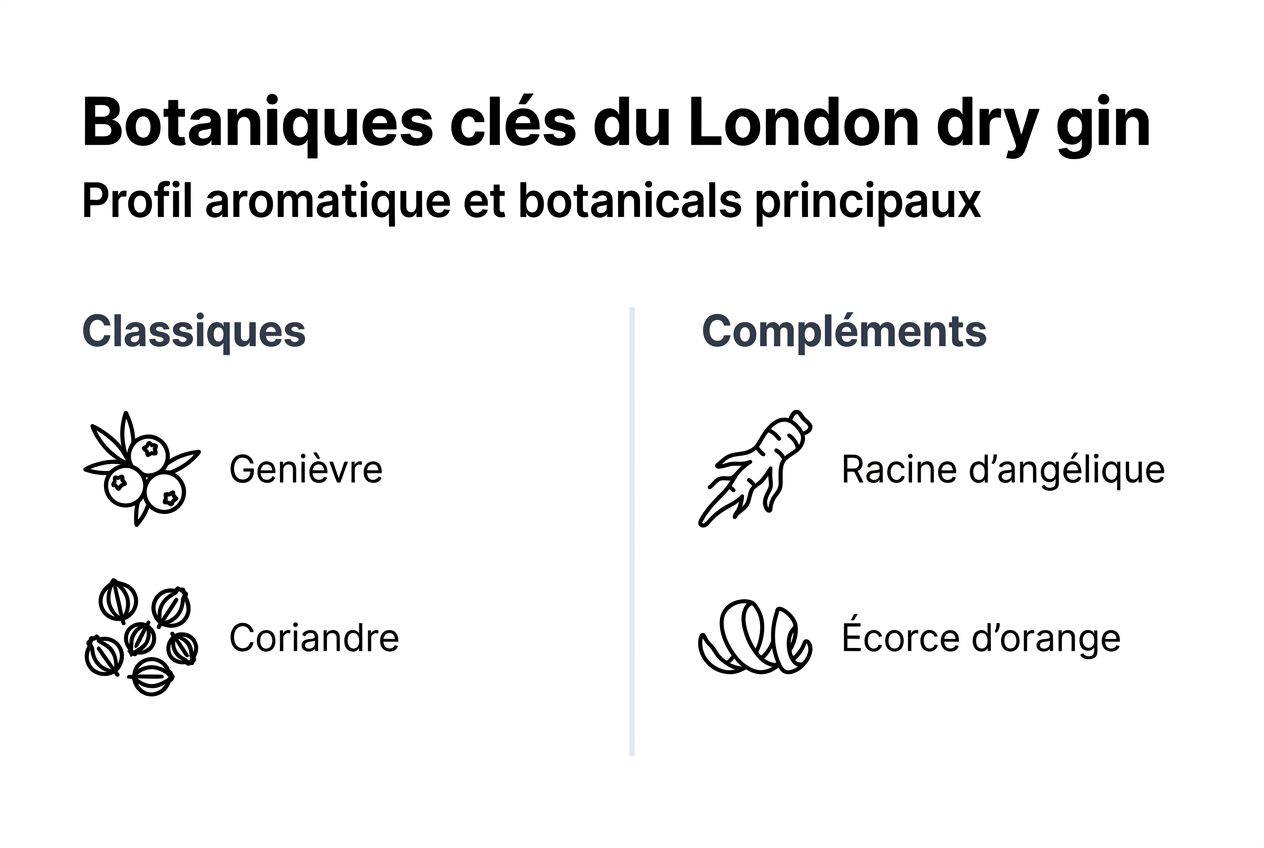
The main botanicals that define the aromatic profile of London dry gin include:
- Juniper berry: mandatory dominant ingredient that brings the characteristic resinous and herbaceous notes
- Coriander: seeds that add spicy and citrusy nuances
- Citrus peel: lemon, orange, or grapefruit zest for freshness and vivacity
- Angelica: root that provides depth and earthy complexity
- Orris root: root that stabilizes and binds the aromas together
The regulatory rigor governing production ensures a dry, balanced, and authentic aromatic profile. Craft distillers leverage this creative constraint to develop unique aromatic signatures while respecting tradition. The timing and temperature of distillation profoundly influence the extraction of aromatic compounds from the botanicals.
Pro tip: the importance of dosing and timing of botanical addition during distillation cannot be underestimated. Some delicate botanicals like citrus must be added towards the end of distillation to preserve their volatile aromas, while juniper berries and roots require longer infusion to release their complex aromatic compounds. This technical mastery differentiates exceptional craft productions.
To delve deeper into how each plant contributes to the final profile, explore the role of botanicals in gin, which analyzes the impact of polyphenols and aromatic compounds. Enthusiasts of London dry gin production appreciate this transparency of traditional methods.
Comparison with Other Gin Styles
Understanding the distinctions between different gin categories allows you to refine your choices and avoid common confusions when shopping. There are three main families of gin in Europe: London dry gin, distilled gin with possible addition of post-distillation flavorings, and compound gin without re-distillation. Each category adheres to specific production standards that directly influence the final aromatic profile.
London dry gin is distinguished by its formal prohibition of adding flavorings or colorings after distillation, with a sugar content limited to a maximum of 0.1 g/L. This rigor guarantees a dry and authentic profile. Distilled gin, on the other hand, allows the addition of natural or artificial flavorings after distillation, thus offering more aromatic diversity and creative freedom to distillers. Compound gin represents the least noble category, as it does not undergo re-distillation and is simply flavored by infusion or direct maceration in the base alcohol.
| Style | Mandatory Re-distillation | Post-distillation Additions | Max Sugar Content | Typical Profile |
|---|---|---|---|---|
| London Dry Gin | Yes, with botanicals | Forbidden | 0.1 g/L | Dry, juniper-dominated, pure |
| Distilled Gin | Yes, free method | Flavorings allowed | Variable | More diverse, flexible |
| Compound Gin | No | Flavorings allowed | Variable | Sweeter, less refined |
The advantages and limitations of each category deserve consideration based on your preferences:
- London dry gin: maximum aromatic purity, dry profile ideal for classic cocktails, strict constraints limiting modern creativity
- Distilled gin: creative freedom allowing innovative profiles, adaptability to trends, less guarantee of traditional methods
- Compound gin: economical and quick production, often sweeter profiles, generally lower quality for connoisseurs
For enthusiasts seeking authenticity and tradition, London dry gin remains the preferred choice. Its rigorous production method guarantees a pure expression of botanicals. If you want to explore bolder and more contemporary aromatic profiles, distilled gin offers a wider palette. Compound gin is mainly suitable for tight budgets or mixtures where the complexity of the spirit is not a priority.
Discover our complete gin collection guide 2026 to delve deeper into the authenticity criteria that differentiate exceptional craft productions. Understanding these differences between gin styles transforms your purchasing and tasting experience.
Misconceptions and Myths about London Dry Gin
Debunking the false ideas surrounding London dry gin allows you to refine your understanding and appreciate the rigor of this exceptional spirit. Several myths persist despite available information, creating confusion and disappointment when making purchases.
First major myth: London dry gin must only be made in London. The reality is radically different. London dry gin is not necessarily produced in London, and the name refers to a style, not a geographical location. Craft distilleries in France, Spain, Italy, and America produce excellent London dry gins while scrupulously adhering to strict established standards. Geographical origin matters less than adherence to the manufacturing process.
Second common myth: London dry gin can contain added flavorings after distillation to enrich its profile. This belief is completely false. Regulations formally prohibit any addition of flavorings, colorings, or sweeteners after the distillation phase. This constraint precisely defines what separates London dry gin from other less rigorous categories like distilled gin.
Third widespread myth: all dry gins are automatically London dry gins. The reality is more nuanced. Other gin styles may present a dry profile without necessarily meeting the strict standards of London dry. A gin can be dry while belonging to the distilled gin category or even be a modern gin with post-distillation additions.
Pro tip: how to check the label to guarantee a true London dry gin. Look for the exact mention "London dry gin" on the label, check for the absence of colorings or added flavorings in the ingredient list, and favor distilleries that openly communicate about their production method. Quality craft productions often display their certifications and international awards.
Here are the essential points of vigilance:
- Check for the explicit mention "London dry gin" on the official label
- Confirm the absence of additives or colorings in the composition
- Seek information about the distillation method and botanicals used
- Favor transparent distilleries regarding their artisanal know-how
The importance of knowing the regulations protects you from disappointment when purchasing. Many brands play on ambiguity by using terms like "London style" or "inspired by London" without adhering to strict standards. Only the precise mention "London dry gin" guarantees adherence to the traditional process. To deepen these distinctions, consult our complete London dry gin guide and the London dry gin demystification which clarifies official standards.
Usage and Appreciation of London Dry Gin Among Enthusiasts
London dry gin integrates perfectly into modern spirits consumption while honoring its traditional roots. Enlightened enthusiasts choose it for its aromatic purity and dry character, which enhance classic cocktails and contemplative tastings.
The emblematic use of London dry gin is evident in timeless cocktails such as the gin and tonic and the martini. These simple preparations highlight the spirit's botanical complexity without masking it. The dry profile of London dry gin pairs perfectly with the bitterness of tonic or the neutrality of dry vermouth, creating a harmonious balance. Professional bartenders consistently favor this style for classic recipes where authenticity is paramount.
Connoisseurs particularly appreciate the clean and dry botanical profiles that characterize London dry gin. Unlike modern gins sometimes overloaded with floral or fruity aromas, London dry respects the traditional hierarchy with juniper at the forefront of the profile. This aromatic sobriety appeals to discerning palates seeking finesse rather than exuberance.
The European artisanal quality of London dry gin is regularly recognized by prestigious international competitions and specialized awards. Distilleries that scrupulously adhere to traditional standards frequently receive gold medals and distinctions that attest to their excellence. This objective recognition guides connoisseurs in their choices.
Here are some flavor pairings that maximize the tasting experience:
- Gin and tonic with premium low-sugar tonics and fresh citrus zest to enhance botanical notes
- Dry Martini with a dominant gin ratio and an olive or lemon zest for pure elegance
- Neat at room temperature to analyze aromatic complexity
- Balanced Negroni where the gin's dry character counterbalances the sweetness of red vermouth
The cultural value attached to London dry gin for enthusiasts and collectors goes beyond simple gustatory pleasure. This style represents the heritage of centuries-old artisanal know-how, a rigor in production that is rare in the modern spirits industry. Collecting artisanal London dry gins becomes a way to preserve and celebrate this tradition.
To discover recipes that highlight this exceptional spirit, explore our classic gin-based cocktails which offer six essential preparations.
Conclusion and recommendations for choosing your London dry gin
Choosing a quality artisanal London dry gin requires an understanding of the essential criteria that separate exceptional productions from ordinary products. The knowledge gained in this guide now allows you to identify true London dry gins and avoid disappointment.
The importance of checking the distillation method and the origin of the botanicals cannot be overlooked. Transparent distilleries that openly communicate about their artisanal process deserve your trust. Look for detailed information on the type of still used, the distillation time, and the origin of the aromatic plants. Quality botanicals, ideally organic and harvested at optimal ripeness, guarantee a rich and authentic aromatic profile.
Prioritizing gins that scrupulously adhere to the strict regulations of London dry constitutes the first selection filter. The explicit mention "London dry gin" on the official label remains indispensable. Beware of ambiguous formulations such as "London style" or "inspired by London dry" which often suggest a disregard for traditional standards.
Considering artisanal recognition through international awards, specialized critics, and prestigious competitions offers an objective guarantee of quality. Gold medals awarded by expert juries attest to the technical and aromatic excellence of the spirit. These distinctions reflect a rigorous evaluation according to professional criteria.
Knowing how to identify an aromatic profile dominated by juniper and a dry character remains essential. During tasting, juniper should be prominent in the top note, accompanied by a balanced botanical complexity. The absence of artificial sweetness confirms compliance with the regulatory limit of 0.1 g/L of sugar.
Here are five practical tips for choosing and enjoying a London dry gin:
- Check for the exact mention "London dry gin" on the label and confirm the absence of additives in the composition to guarantee the authenticity of the traditional style.
- Look for transparent information about the distillery, its artisanal method, and the origin of its botanicals to assess the quality of the craftsmanship.
- Favor productions that have received international awards or distinctions from specialized competitions as objective proof of excellence.
- Taste the gin neat at room temperature before mixing it to analyze the aromatic complexity and confirm the dominance of juniper.
- Consult connoisseur reviews and specialized guides to discover lesser-known artisanal distilleries that rigorously adhere to traditions.
To refine your tasting skills and develop your palate, consult our premium gin tasting guide which teaches you professional aromatic analysis techniques.
Explore excellence with Mezzanotte's artisanal gins
You now have all the keys to identify and appreciate a true artisanal quality London dry gin. Mezzanotte invites you to discover a rigorous selection of Italian artisanal gins that embody the excellence of traditional distillation. Each spirit in our artisanal gin collection at Mezzanotte tells a unique story, carried by ancestral know-how and a distinctive aromatic identity.

Our premium distillates comply with the strictest production standards while boldly innovating in botanical expression. Whether you are looking for a classic London dry gin or artisanal creations inspired by Italian culture, our catalog meets the expectations of the most demanding palates. Each bottle reflects the attention paid to the quality of ingredients and the precision of distillation.
To deepen your passion and master the art of tasting, explore our tips for tasting artisanal gin which reveal professional sensory analysis techniques. If you want to understand the technical subtleties of spirits manufacturing, our spirits distillation guide 2026 helps you avoid common mistakes and enriches your knowledge.
Transform your knowledge into concrete experience by discovering exceptional gins that celebrate European craftsmanship and creative innovation. Visit Mezzanotte today to start your journey into the fascinating world of Italian artisanal distillates.
Frequently asked questions about London dry gin
What are the conditions for a gin to truly be a London dry gin?
A gin must meet three essential conditions to qualify for the London dry gin appellation. Firstly, it must be redistilled in the presence of natural botanicals only, with an agricultural ethyl alcohol of at least 70% ABV. Secondly, no flavors, colorings, or sweeteners can be added after distillation. Thirdly, the sugar content cannot exceed 0.1 grams per liter. These strict standards guarantee the characteristic dry and authentic profile of the style.
Can London dry gin be found produced outside the United Kingdom?
Absolutely, London dry gin can be produced anywhere in the world without geographical restriction. The name designates a style of production and not a protected geographical origin. Artisanal distilleries from France, Spain, Italy, America, and even Asia produce excellent London dry gins by scrupulously adhering to the established regulatory standards. Only adherence to the strict manufacturing process matters to obtain this appellation.
Is London dry gin always the best choice for a gin and tonic cocktail?
London dry gin is the classic and reliable choice for a successful gin and tonic due to its dry profile which pairs perfectly with the bitterness of tonic. Its clean botanical character, dominated by juniper, creates a harmonious balance without masking flavors. However, some enthusiasts prefer more modern gins with floral or fruity profiles for creative variations. The choice ultimately depends on your personal preferences and the style of gin and tonic desired.
What are the main botanicals that differentiate London dry gin?
Juniper berries constitute the mandatory and dominant botanical that defines London dry gin with its characteristic resinous notes. Coriander brings essential spicy and citrus nuances to the aromatic balance. Citrus peels such as lemon and orange provide freshness and vibrancy. Angelica and iris add depth and earthy complexity while harmoniously binding the different aromas. This traditional combination creates the recognizable dry and balanced profile.
How to distinguish a London dry gin from a distilled gin in stores?
First, check the official label which must explicitly state "London dry gin" and not just "gin" or "distilled gin". Then examine the ingredient list to confirm the complete absence of added flavors, colorings, or sweeteners. A true London dry gin generally showcases its traditional distillation method and highlights the purity of its process. Beware of vague formulations such as "London style" which suggest a disregard for strict standards.
Recommendation
- The Complete Guide to London Dry Gin: Discover All the Secrets 2026 – Mezzanotte | Distilleria & Spirits
- The Complete Guide to London Dry Gin: Discover All the Secrets 2026 – Mezzanotte | Distilleria & Spirits
- The Complete Guide to London Gin: Discover Everything About the Taste – Mezzanotte | Distilleria & Spirits
- The Complete Guide to Dry Gin: Discover Everything in 2026 – Mezzanotte | Distilleria & Spirits