

Learn why bitters are indispensable for perfect cocktails. Discover dosage, balance, and myths – for harmonious drinks with depth.
Why Bitters are Important in Cocktails – Perfect Balance
Mar 8, 2026

Many cocktail lovers avoid bitters, even though they drastically improve flavor balance. Bitterness is not just a taste, but a central element for the complexity and harmony of your drinks. In this article, you'll learn why bitters are indispensable and how to use them skillfully to create unforgettable cocktails.
Table of Contents
- Key Insights at a Glance
- Introduction: Bitterness in Cocktails – Not Just Taste, but an Experience
- Chemical Principles of Bitterness and its Perception
- Bitters and Flavor Balance in Cocktails
- Typical Bitter Liqueurs and their Characteristic Flavors
- Myths and Misconceptions about Bitters in Cocktails
- Practical Application: Using and Dosing Bitter Liqueurs Effectively
- Discover Unique Bitter Liqueurs at mezzanotte.shop
- Frequently Asked Questions
Key Insights at a Glance
| Point | Details |
|---|---|
| Flavor Diversity | Bitters increase complexity and balance sweetness and acidity in cocktails. |
| Sensory Perception | Over 25 bitter receptors influence our perception differently. |
| Typical Liqueurs | Campari and Aperol offer different bitter profiles for various cocktails. |
| Dosage | 2 to 5 ml of bitter liqueur per cocktail creates optimal balance. |
| Misconceptions | Many myths about bitterness hinder its conscious and creative use. |
Introduction: Bitterness in Cocktails – Not Just Taste, but an Experience
Bitterness acts as an essential flavor carrier in cocktails, providing depth and character. Historically, bitters have been established in liqueurs for centuries and have significantly shaped cocktail culture. Modern cocktails benefit from complex and nuanced bitter profiles that go far beyond simple flavor notes.
Bitter liqueurs not only add depth but also significantly enhance enjoyment. They are indispensable in many classic recipes such as the Negroni or Aperol Spritz, defining their characteristic taste. New, innovative cocktail creations also consciously use bitters to create unexpected taste experiences.
Why are they so important? Bitters prevent cocktails from tasting one-dimensional or too sweet. They create a balance that highlights all other flavors and gives the drink structure. Without bitterness, many drinks lack the necessary complexity that distinguishes them from simple mixed drinks.
Some reasons for using bitters:
- They increase sensory complexity and depth
- They harmonize sweet and sour components
- They stimulate appetite and prepare the palate
- They give the cocktail character and personality
- They enable creative flavor play and taste experiments
Chemical Principles of Bitterness and its Perception
Human perception of bitterness is based on over 25 different receptors, each reacting to various bitter compounds. This diversity explains why bitterness can be so complex and nuanced. Each bitter compound activates a different combination of receptors, leading to completely different taste experiences.
The alcohol content in a cocktail significantly enhances bitter perception. Alcohol opens up the taste buds, making them more receptive to bitter compounds. This is why a cocktail with 40 percent alcohol often tastes more bitter than the same drink with a lower alcohol content.
Different bitter compounds in liqueurs create complex sensory profiles. Herbs like gentian, wormwood, or rhubarb each contribute their own bitter notes. This variety allows mixologists to create specifically different flavors.
How perception modulates bitterness:
- Temperature influences intensity: Cold drinks taste less bitter
- Sweetness and acidity can mask or enhance bitterness
- Aromatic components direct attention to other taste aspects
- The order of ingredients when mixing changes the taste experience
- Personal habits and genetic factors play a significant role
Pro Tip: Pay attention to the alcohol content of your base spirit to control bitterness effectively. A gin with 37.5 percent alcohol will make bitters seem softer than one with 47 percent. Experiment with different alcohol strengths to find the perfect balance for your taste.
Bitters and Flavor Balance in Cocktails
Bitterness harmonizes sweetness and acidity in a drink, preventing one component from dominating. This balance is the heart of every successful cocktail. Without bitterness, many drinks taste flat or unpleasantly sweet.
The recommended mixing ratio often follows the rule: 2 parts base spirit, 1 part sweetener, 1 part bitter. This proportion creates a harmonious foundation that you can adjust to your taste. Of course, there are exceptions, but as a starting point, this formula works wonderfully.
Bitterness also serves as an appetite stimulant in aperitifs. Drinks like Aperol Spritz or Campari Soda prepare the palate for a meal. The bitters stimulate digestion and create a desire for more.
| Bitter Liqueur | Alcohol Content | Bitter Profile | Typical Dosage |
|---|---|---|---|
| Campari | 25% | Intense, herbal | 3-5 ml |
| Aperol | 11% | Mild, fruity | 4-6 ml |
| Fernet | 39% | Very intense, minty | 2-3 ml |
| Cynar | 16.5% | Artichoke, earthy | 3-4 ml |
Some important points for flavor balance:
- Too much bitterness overpowers other flavors and makes the drink undrinkable
- Too little bitterness makes the cocktail taste flat and one-dimensional
- The right balance depends heavily on personal taste
- Regional preferences significantly influence the preferred bitter intensity
Pro Tip: Dose bitterness carefully and in small increments. First add 2 ml, taste, and increase if necessary. Too much bitter liqueur cannot be reversed, but too little can always be corrected.
Typical Bitter Liqueurs and their Characteristic Flavors
Campari contains over 30 different bitter compounds, combined with an intense herbal note. This complexity makes it one of the most versatile bitter liqueurs. Orange peel, rhubarb, and cinchona bark define its unmistakable profile. Campari is the base for classics like the Negroni and the Americano.
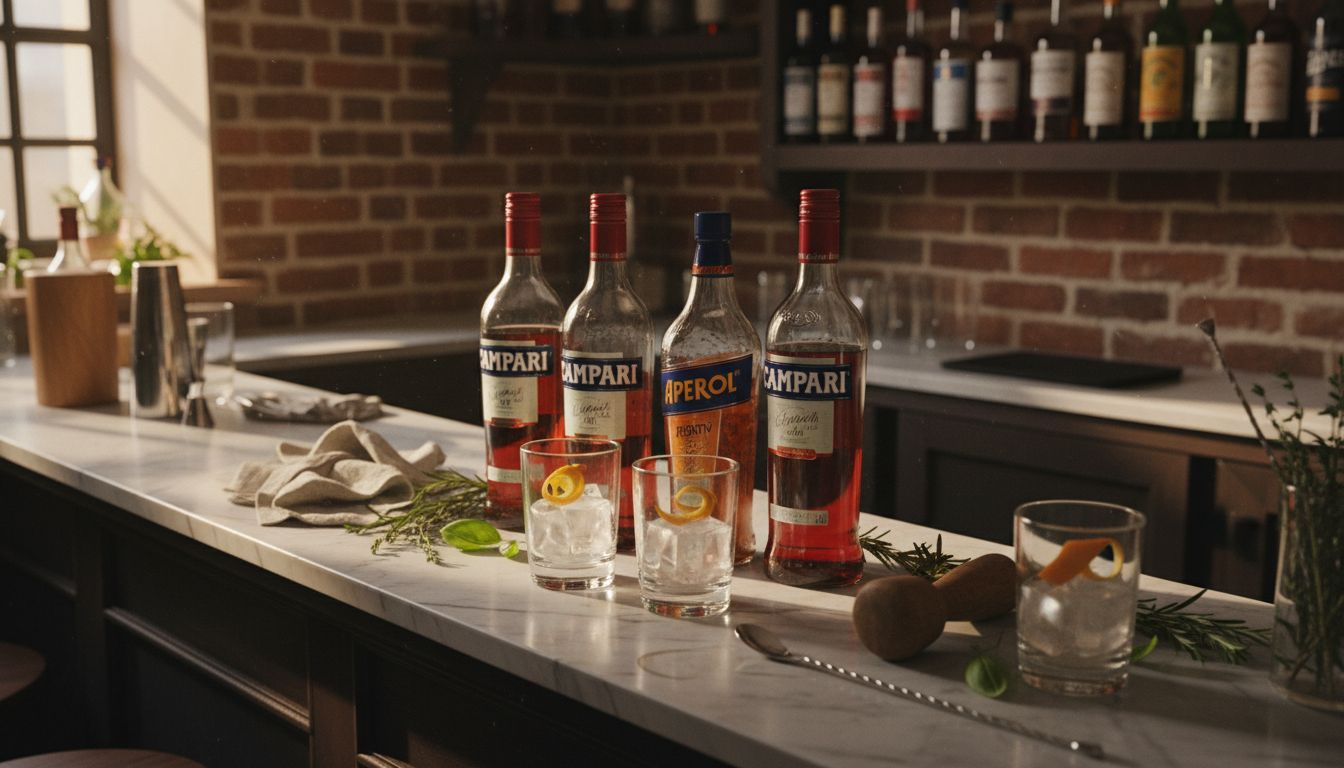
Aperol tastes milder, sweeter, and fruitier with pronounced orange flavors. It's perfect for lighter summer cocktails and aperitifs. At only 11 percent alcohol, it is significantly more accessible than Campari and also appeals to people who shy away from intense bitterness. Italian bitters offer a fascinating variety of flavor profiles.
Modern craft bitters bring innovative flavors and high potential for variation. Small distilleries experiment with unusual botanicals like hops, cocoa, or exotic spices. These new bitters significantly expand the spectrum of mixology and enable completely new creations.
| Bitter Liqueur | Alcohol | Main Flavors | Bitter Intensity | Use |
|---|---|---|---|---|
| Campari | 25% | Herbal, Orange, Rhubarb | High | Negroni, Boulevardier |
| Aperol | 11% | Orange, Rhubarb, Vanilla | Medium | Spritz, Aperitifs |
| Fernet Branca | 39% | Mint, Saffron, Aloe | Very High | Digestif, Shots |
| Cynar | 16.5% | Artichoke, Herbs | Medium-High | Cynar Spritz |
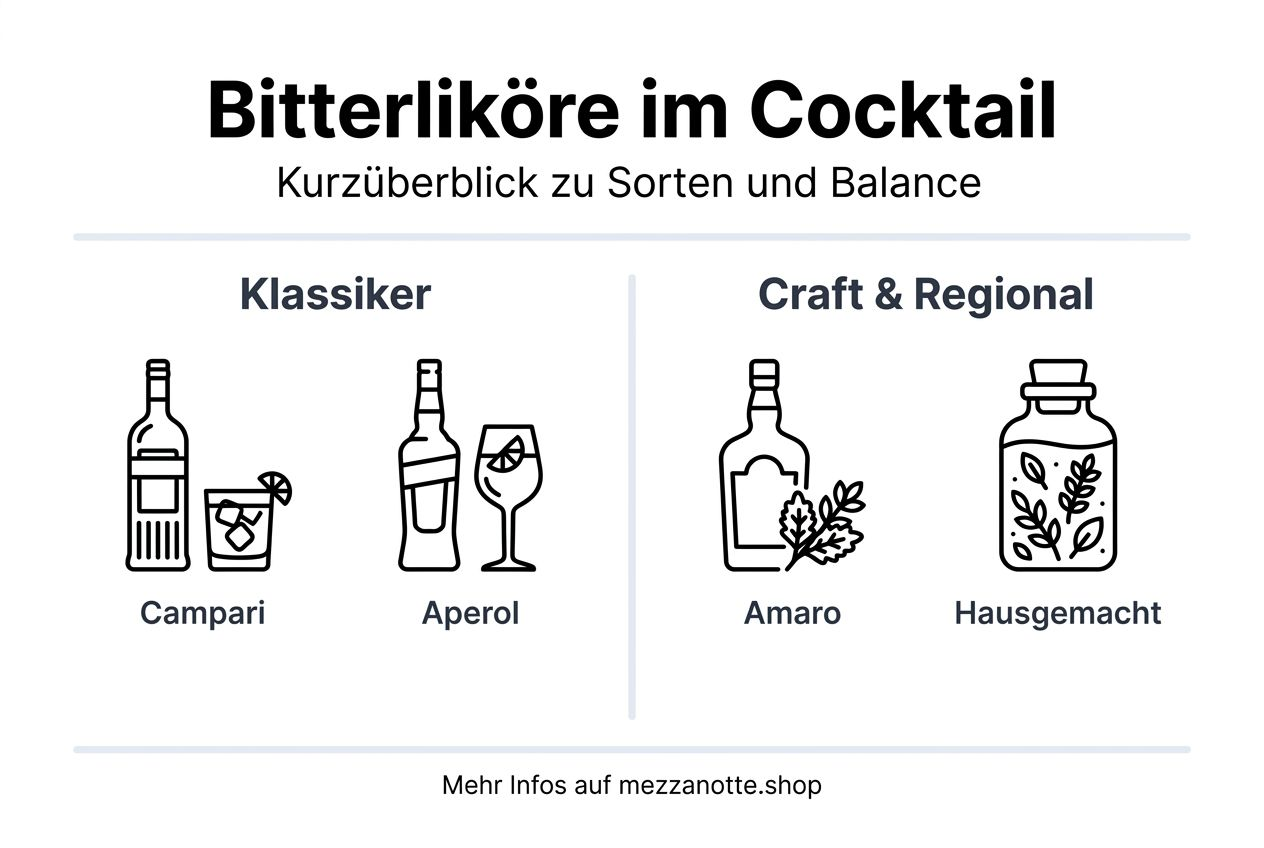
Regional differences significantly shape production methods. Italian Amari follow centuries-old traditions and recipes. Every region of Italy has its own specialties, from Milan to Venice to Sicily.
Artisan production ensures the highest quality. Many bitters with over 30 botanicals are created in small batches with carefully selected ingredients. This attention to detail makes the difference between industrial and artisanal products.
Myths and Misconceptions about Bitters in Cocktails
Not all bitter substances taste unpleasant or dominant. Many people automatically associate bitterness with unpalatable taste, but this is not true. Well-dosed bitter substances give cocktails elegance and sophistication without being obtrusive.
The individual perception of bitterness varies greatly genetically. Some people are supertasters with particularly sensitive bitter receptors, while others hardly taste bitter substances. This genetic diversity explains why tastes differ so much. What is too bitter for one person, another perceives as perfectly balanced.
Bitterness enhances flavor complexity rather than overpowering other aromas. A common misconception is that bitters ruin the drink. In reality, they highlight other flavor components and create a harmonious overall picture. Without bitterness, many cocktails lack the necessary depth.
The myth that too much bitter liqueur always ruins a drink is only partially true. While extreme overdosing is indeed problematic, some cocktails can tolerate more bitterness than others. It depends on the overall composition and the desired flavor profile.
Key misconceptions at a glance:
- Bitter does not automatically mean bad or unpalatable
- Bitterness is not a mistake, but a conscious design element
- Every bitter liqueur tastes different; not all are equally intense
- Bitterness can balance sweet drinks and have a refreshing effect
- The right dosage makes all the difference
The diversity of botanicals shows how different bitter profiles can be. Instead of monotony, high-quality bitter liqueurs offer a wide range of flavor nuances.
Practical Application: Using and Dosing Bitter Liqueurs Effectively
The recommended dosage is usually between 2 and 5 ml per cocktail. This amount is sufficient to influence taste and balance without dominating. Beginners should start with the lower limit and gradually increase.
Tips for combining with sweetness and acidity:
- Start with the base spirit and build from there
- Add sweet components like syrup or liqueur
- Balance with citrus juices or other acidic elements
- Add the bitter liqueur last and taste in between
- Adjust the dosage gradually to your taste
Adjust dosage step-by-step: First, mix all other ingredients and taste. Then add 2 ml of bitter liqueur and taste again. Increase by 1 ml increments if necessary until the desired balance is achieved. This method prevents over-dosing and gives you full control.
Examples of aperitif and summer cocktails with bitter liqueur:
- Aperol Spritz: 6 ml Aperol, Prosecco, soda water, orange slice
- Negroni: 3 ml Campari, 3 ml Gin, 3 ml sweet vermouth
- Americano: 3 ml Campari, 3 ml sweet vermouth, soda water
- Cynar Spritz: 4 ml Cynar, Prosecco, soda water, lemon zest
Pro Tip: Test small dosages and evaluate them sensorially. Note down the exact quantities so you can replicate successful recipes. Every palate is different, so trust your own taste instead of rigidly following recipes.
For further inspiration, the comprehensive Amaro guide offers deeper insights into the world of Italian bitter liqueurs. There you will find detailed information on production, history, and possible uses.
Discover Unique Bitter Liqueurs at mezzanotte.shop
Now that you understand the basics of bitterness, it's time to put your knowledge into practice. Mezzanotte offers a carefully curated selection of Italian artisanal gins and vodkas that perfectly harmonize with bitter liqueurs.

Each product in the shop tells its own story and brings unique aroma profiles. From traditional recipes to innovative creations, you will find everything you need for extraordinary cocktails. The craftsmanship and attention to detail make all the difference.
For cocktail enthusiasts who want to take their mixology to the next level, mezzanotte.shop is the ideal destination. Here you will find not only first-class spirits but also inspiration for your next creations. Discover the diversity of Italian distillation art and expand your repertoire.
Frequently Asked Questions
Why are bitters used in cocktails?
Bitters balance sweetness and acidity and significantly increase the complexity of the drink. They prevent cocktails from tasting one-dimensional or too sweet. They also stimulate appetite and prepare the palate for further enjoyment.
How much bitter liqueur should one use in a cocktail?
The recommended amount is usually between 2 and 5 milliliters per drink. Start with smaller amounts and gradually increase until the desired balance is achieved. The optimal dosage depends heavily on personal taste and the specific cocktail.
Can bitterness enhance the taste of other ingredients?
Yes, bitterness highlights sweetness and acidity, making the cocktail appear more complex and harmonious. It creates contrasts that make all flavors stand out more clearly. Well-dosed bitters are like salt in soup: they round off and enhance the overall impression.
Are all bitter liqueurs equally bitter?
No, bitter liqueurs vary greatly in type and intensity of bitterness. Campari tastes significantly more intense than Aperol, while Fernet brings its own distinct, minty note. Each liqueur has its individual profile of botanicals, alcohol content, and production methods.
Recommendation
- Italian Bitters 2026: 40+ Herbs for Enjoyment – Mezzanotte | Distilleria & Spirits
- 6 types of bitter liqueurs for enthusiasts to discover – Mezzanotte | Distilleria & Spirits
- What characterizes artisanal bitter: 30 unique botanicals – Mezzanotte | Distilleria & Spirits
- 6 types of cocktail garnishes you absolutely need to know – Mezzanotte | Distilleria & Spirits