

Discover how to choose from 350 Italian distilleries with our comparative guide to the best artisanal gins of 2026, local botanicals, and expert criteria.
Italian Gin Types 2026: A Complete Guide for Enthusiasts
Mar 8, 2026

The Italian craft gin market boasts over 350 active distilleries, creating an impressive aromatic diversity that can be complex to navigate. Choosing the right Italian gin requires understanding regional botanicals, distillation methods, and the cultural identity of each spirit. This guide explores the essential criteria and presents three iconic gins to transform your search into an informed decision.
Table of Contents
- Criteria for Choosing a Craft Italian Gin
- 1. Malfy Gin – Sicilian Lemon in the Spotlight
- 2. Gin del Professore – Award-Winning Mediterranean Elegance
- 3. Berto Gin – The Originality of Citron in Gin
- Comparison of Prices, Availability, and Design of Italian Gins
- Situational Recommendations: Which Italian Gin to Choose?
- Discover Our Exclusive Selection of Craft Italian Gins
- Frequently Asked Questions
Key Points
| Point | Details |
|---|---|
| Selection Criteria | Local botanicals, artisanal methods, design, and price define the quality of Italian gin |
| Malfy Gin | Fresh Sicilian lemon profile, exported to 70 countries, perfect for summer cocktails |
| Gin del Professore | Over 10 international medals, Mediterranean complexity ideal for neat tasting |
| Berto Gin | Unique citron with a score of 8.7/10, rare and original for summer cocktails |
| Design and History | Strongly influence perceived value and tasting experience |
Criteria for Choosing a Craft Italian Gin
The selection of a craft Italian gin is based on four fundamental pillars that distinguish exceptional productions from standard offerings. These criteria transform an impulsive purchase into a thoughtful investment.
Local botanicals are the first marker of authenticity. Italian distillers use Sicilian lemon, Calabrian citron, Tuscan rosemary, and Mediterranean sage to create aromatic profiles impossible to reproduce elsewhere. Each region contributes its signature ingredients, generating a diversity comparable to wine appellations.
Artisanal methods ensure the preservation of delicate aromas. Pot still distillation used by 75% of producers allows precise temperature control and optimal extraction of botanical essences. This traditional technique, slower than industrial production, produces gins of remarkable finesse.
Design and cultural storytelling amplify the sensory experience. Italian bottles tell mythological stories, celebrate regional craftsmanship, or embody contemporary aesthetics. This narrative dimension transforms tasting into a cultural journey, as you can discover in our complete guide to types of craft Italian gin.
Pro tip: Always check the full list of botanicals on the label. Craft producers proudly display their ingredients, while industrial brands often remain vague.
International recognition and price positioning reflect objective quality. Medals obtained at competitions such as the International Wine and Spirit Competition or the World Gin Awards validate technical excellence. The average price of 35 to 45 euros for 700ml generally corresponds to an authentic artisanal production.
1. Malfy Gin – Sicilian Lemon in the Spotlight
Malfy Gin embodies Mediterranean accessibility with its instantly recognizable lemon profile. Produced in the Piedmont region, this gin combines juniper and sfusato lemons from the Amalfi coast to create a vibrant freshness.
Malfy's international commercial success attests to its universality. Exported to over 70 countries, this gin particularly appeals to Anglo-Saxon and Northern European markets in search of sunny flavors. Its global distribution does not affect its artisanal quality, with each batch respecting traditional production standards.
The sleek bottle design evokes contemporary Italian aesthetics. Transparent glass highlights the slightly golden color of the liquid, while the minimalist label communicates sophistication and modernity. This visual approach attracts a young and urban clientele.
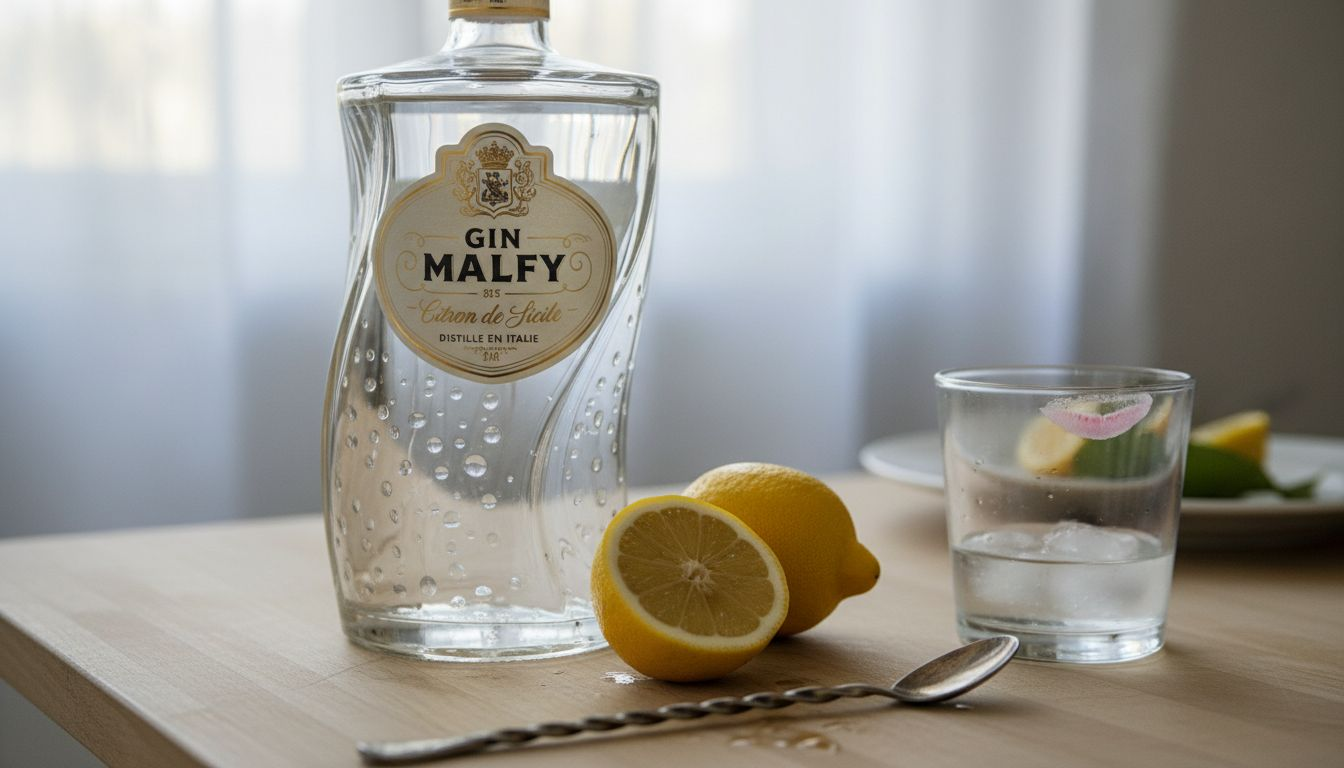
Pro tip: Prepare a Gin & Tonic with Malfy using a Mediterranean tonic and a candied lemon slice. The 1:3 gin/tonic ratio amplifies the lemon notes without overpowering them.
Cocktail uses are Malfy's preferred domain. Its natural freshness shines in summer recipes like Negroni Sbagliato or a revisited Tom Collins. The average price of 32 euros makes it accessible for regular consumption, unlike ultra-premium gins reserved for special occasions.
To deepen your understanding of aromatic profiles, consult our analysis of premium Italian gins that highlight local botanicals.
2. Gin del Professore – Award-Winning Mediterranean Elegance
Gin del Professore represents Italian artisanal excellence with a maximalist approach to botanicals. Created in Turin, the historic birthplace of vermouth and complex spirits, this gin has won numerous international awards thanks to its aromatic sophistication.
The botanical palette includes over 20 carefully balanced Mediterranean ingredients. Juniper, coriander, cardamom, Florentine iris, and lemon peel create an olfactory symphony where no single note dominates. This complexity requires attentive tasting to reveal its multiple facets.
The international awards confirm its technical excellence. Over 10 gold and platinum medals obtained since 2018 attest to its recognition by the most demanding professional juries. These distinctions are not mere marketing trophies but rather proof of consistent quality batch after batch.
The traditional bottle evokes 19th-century Italian apothecaries. Amber glass protects the liquid from light, while the label adorned with floral motifs tells the story of Turinese herbalists. This heritage design appeals to collectors and reinforces the perception of an artisanal product.
Neat tasting is the preferred mode of consumption. Served at room temperature in a tulip glass, Gin del Professore gradually unfolds its floral, spicy, and woody aromas. Adding two drops of mineral water releases even more aromatic complexity.
To master the art of tasting, explore our detailed tips on appreciating craft gin.
3. Berto Gin – The Originality of Citron in Gin
Berto Gin distinguishes itself through the incorporation of Calabrian citron, an ancient citrus fruit rarely used in distillation. This botanical specificity creates a unique aromatic profile in the Italian market, attracting enthusiasts in search of sensory discoveries.
Citron provides a delicate bitterness and a different freshness from classic lemon. Its thick, fragrant peel infuses the gin with essential oils rich in limonene and resinous notes. The result balances citrus vivacity with botanical depth, avoiding one-dimensional simplicity.
Critical acclaim confirms the successful boldness of this formulation. Spirito Italiano, a reference publication for Italian spirits, awarded an exceptional score of 8.7/10, highlighting the gin's originality and balance. This evaluation positions Berto among the most interesting artisanal productions.
Pro tip: Use Berto in a Mediterranean-style Martini with dry Italian vermouth and a citron twist. The 2:1 gin/vermouth ratio respects the botanical character without masking it.
Summer cocktails find an unexpected aromatic ally in Berto. Its complex freshness supports recipes based on fresh herbs like basil or mint, creating layers of Mediterranean flavors. The average price of 38 euros reflects the rarity of citron and limited production.
Rarity in the market reinforces exclusivity. Few distilleries use citron, making Berto difficult to find in standard distribution. This limited availability transforms the purchase into a valuable discovery for connoisseurs, as detailed in our complete guide to types of craft gin.
Comparison of Prices, Availability, and Design of Italian Gins
The commercial landscape of craft Italian gins reveals significant differences in terms of accessibility and positioning. This comparative analysis facilitates purchasing decisions based on your budgetary and aesthetic priorities.
| Gin | Average price 700ml | Availability | Design style | Medals |
|---|---|---|---|---|
| Malfy Gin | €32 | Very wide | Modern minimalist | 3 |
| Gin del Professore | €42 | Selective | Traditional apothecary | 10+ |
| Berto Gin | €38 | Limited | Authentic artisanal | 2 |
The average price of 38 euros for 700ml corresponds to the standard for quality Italian artisanal productions. This price reflects the costs of premium botanicals, small-batch distillation, and careful packaging. Variations of 10 euros between models are explained by the complexity of formulation and international recognition.
Mezzanotte.shop centralizes over 20 specialized references of craft Italian gins, eliminating the usual search difficulty. This expert curation guarantees the authenticity of each bottle and provides detailed descriptions to help you choose knowingly. The platform simplifies access to confidential productions normally reserved for specialized wine merchants.
The storytelling associated with each brand strongly influences perceived value. Gin del Professore tells the heritage of Turinese apothecaries, Berto celebrates the Calabrian terroir, Malfy embodies the Mediterranean dolce vita. These narratives transform consumption into an immersive cultural experience.
Pro tip: Carefully read product descriptions before purchase. Information on the origin of botanicals and production methods reveals artisanal seriousness better than marketing images.
Bottle design is a decisive criterion for gifts and personal collections. An elegant presentation enhances the pleasure of ownership and values the object beyond its content. Enthusiasts often display their empty bottles as decorative objects, testifying to their aesthetic importance.
For a complete overview of authenticity in collections, consult our comprehensive guide to gin collections in 2026.
Situational Recommendations: Which Italian Gin to Choose?
Your consumption context determines the optimal Italian gin. This pragmatic approach eliminates hesitation and maximizes satisfaction according to your specific needs.
-
For refreshing summer cocktails: Malfy Gin dominates thanks to its vibrant lemon profile that resists dilution by ice. Its accessible price allows generous use without financial guilt. Simple recipes like Gin & Tonic or Spritz enhance its natural freshness.
-
For contemplative neat tasting: Gin del Professore reveals its aromatic complexity without mixing. Serve it at room temperature in an appropriate glass to appreciate the evolution of botanical notes. This experience is suitable for quiet evenings when you seek sensory contemplation.
-
To discover original aromas: Berto Gin introduces citron to your taste palette. Its distinctive character educates your palate to rare botanical nuances. Ideal for curious enthusiasts wishing to expand their aromatic reference.
-
To give a memorable gift: Opt for Gin del Professore, whose traditional packaging and international accolades impress. The apothecary bottle immediately communicates quality and refinement. Turinese storytelling enriches conversation upon opening.
-
To build a coherent collection: Acquire all three gins to cover the Italian aromatic spectrum. Malfy represents Mediterranean freshness, Professore traditional complexity, Berto botanical innovation. This trilogy illustrates the artisanal diversity of the peninsula.
Adapt your selection to the occasion to optimize the quality-pleasure ratio. A summer aperitif with friends deserves Malfy, an intimate celebration calls for Professore, an exploratory tasting requires Berto. This situational flexibility transforms your cellar into an appropriate response for every moment.
To deepen your knowledge of the world of Italian gin, explore our complete guide dedicated to gin in Italy.
Discover Our Exclusive Selection of Craft Italian Gins
Choosing the perfect Italian gin becomes simple with Mezzanotte.shop, your reference for craft spirits from the peninsula. Our carefully curated catalog presents over 20 authentic craft Italian gins, each accompanied by detailed descriptions of botanicals, production methods, and aromatic profiles.

We select only distilleries that adhere to traditional artisanal standards and emphasize regional ingredients. Each bottle tells an Italian cultural story, from Mediterranean myth to contemporary aesthetics. If you also appreciate the diversity of spirits, discover our collection of craft Italian vodka to complete your exploration.
Frequently Asked Questions
What types of botanicals are used in Italian gins?
Mediterranean botanicals predominate, including Sicilian lemon, Calabrian citron, Tuscan rosemary, and sage. Each distiller creates their signature blend by combining 8 to 25 ingredients according to their aromatic vision. Artisanal techniques of maceration and separate distillation preserve the integrity of delicate aromas, creating profiles impossible to reproduce industrially.
How to recognize a quality craft Italian gin?
Check the precise origin of botanicals, the pot still distillation method, and the transparency of product information. Craft producers proudly display their ingredients and processes. Look for international awards obtained in recognized competitions as objective validation of technical excellence.
What are the ideal uses for each type of Italian gin?
Malfy Gin excels in fresh and accessible cocktails thanks to its direct lemon profile. Gin del Professore is best enjoyed neat to appreciate its multilayered aromatic complexity. Berto Gin brings originality to sophisticated summer cocktails seeking rare and distinctive botanical notes.
Why is bottle design important for Italian gins?
The design instantly communicates the cultural identity and quality positioning of the spirit. Italian bottles function as art objects, telling regional or mythological stories. This aesthetic dimension amplifies the pleasure of possession and transforms tasting into a complete sensory experience, including the visual aspect.
Recommendation
- 2026 Collector's Gin: The Complete Guide for 90% More Accuracy – Mezzanotte | Distillery & Spirits
- 5 Types of Italian Artisan Gin 2026: Expert Guide – Mezzanotte | Distillery & Spirits
- The Complete Guide to Gin Italy: Explore Flavors and Tradition 2026 – Mezzanotte | Distillery & Spirits
- Italian Gin Guide: Discover the Secrets of 2026 – Mezzanotte | Distillery & Spirits