

Discover what Gin is really about: definition, production with botanicals, different types, and current market trends for craft and premium gins.
What is Gin: Origin, Production, and Trends Explained
Mar 23, 2026

Holding a glass of gin, you might wonder why this spirit tastes so much more complex than expected. Gin is far more than just juniper and neutral alcohol. Behind every sip lies an intricate interplay of botanicals, precise distillation techniques, and centuries-old craftsmanship. The diversity of production methods, from traditional maceration to innovative vapor infusion, shapes flavor profiles ranging from classically dry to fruity and floral. In this article, you will discover what gin truly is, how it is made, its different types, and why the craft gin market is currently experiencing such strong growth.
Table of Contents
- Key Takeaways
- What is Gin? Definition and Legal Foundations
- The Art of Gin Production: From Botanicals to Distillation
- Different Gin Types and Their Flavor Profiles Compared
- Market Development and Trends: Craft and Premium Gin as a Favorite Spirit
- Discover Craft Gin at Mezzanotte Spirits
- Frequently Asked Questions About Gin
Key Takeaways
| Point | Details |
|---|---|
| Base Neutral Alcohol | Gin is based on neutral ethyl alcohol, and juniper determines the dominant aroma according to EU regulations. |
| Juniper as a Hallmark | Juniper berries must dominate, while other botanicals complement the flavor profile. |
| Distillation Shapes Flavor | Maceration or vapor infusion create different aroma profiles that significantly shape the taste. |
| Craft Gin Market Growing | The craft gin market is currently growing strongly, showing increasing interest in premium gins. |
What is Gin? Definition and Legal Foundations
Gin is a spirit based on neutral ethyl alcohol with a dominant juniper aroma, according to EU regulations. The minimum alcohol content is 37.5% ABV, with many premium gins ranging between 40% and 47%. Juniper berries are the mandatory aromatic element that distinguishes gin from other spirits. Without this characteristic flavor, a product cannot be called gin.
The EU regulation precisely governs which ingredients may be used and how the production process must proceed. Neutral alcohol of agricultural origin forms the base, usually derived from grains such as wheat, barley, or rye. This is infused with natural or nature-identical flavoring substances, with juniper remaining dominant in taste. The flavoring is achieved through distillation or maceration, not by simply mixing aromas.
Other botanicals define the flavor diversity and allow distilleries to develop individual signatures. Typical ingredients include coriander seeds, angelica root, citrus peels, cardamom, and orris root. Some craft distilleries experiment with regional plants, flowers, or spices to create unique profiles. This variety makes gin one of the most versatile spirit categories.
The clear distinction from other spirits like vodka or liqueur arises from several factors:
- Vodka must be tasteless and odorless, while gin is aromatic
- Liqueurs contain at least 100 grams of sugar per liter, gin is typically dry
- Genever, the Dutch precursor, contains malt wine and tastes significantly heavier
- Sloe Gin is technically a liqueur, as it is sweetened and can be below 37.5% ABV
These legal frameworks guarantee consumers traceable quality and protect the designation "gin" from misuse. You now understand that gin cannot be produced arbitrarily but follows strict guidelines that preserve tradition and craftsmanship.
The art of gin production: from botanicals to distillation
Gin production begins with high-quality neutral grain alcohol, which serves as a flavorless base. This raw alcohol is distilled to approximately 96% ABV to remove unwanted aromas. The crucial flavoring then takes place through two main methods: maceration or vapor infusion flavors the neutral alcohol with juniper and other botanicals.
In maceration, botanicals are steeped directly in the alcohol for several hours or days. This method extracts intense, oily aromas and creates a full-bodied character. The duration of maceration significantly influences the aroma concentration. Shorter times result in fresher, lighter notes, while longer macerations lead to deeper, more complex profiles. After steeping, the mixture is distilled to separate and concentrate the aromas from the alcohol.
Vapor infusion uses a gentler approach, where botanicals are placed in a basket above the boiling alcohol. The rising vapor passes through the plants, absorbing their essential oils. This technique, often used in Carterhead stills, produces finer, more subtle aromas. It is particularly suitable for delicate botanicals like flowers or citrus peels, which might become bitter with direct contact with alcohol.
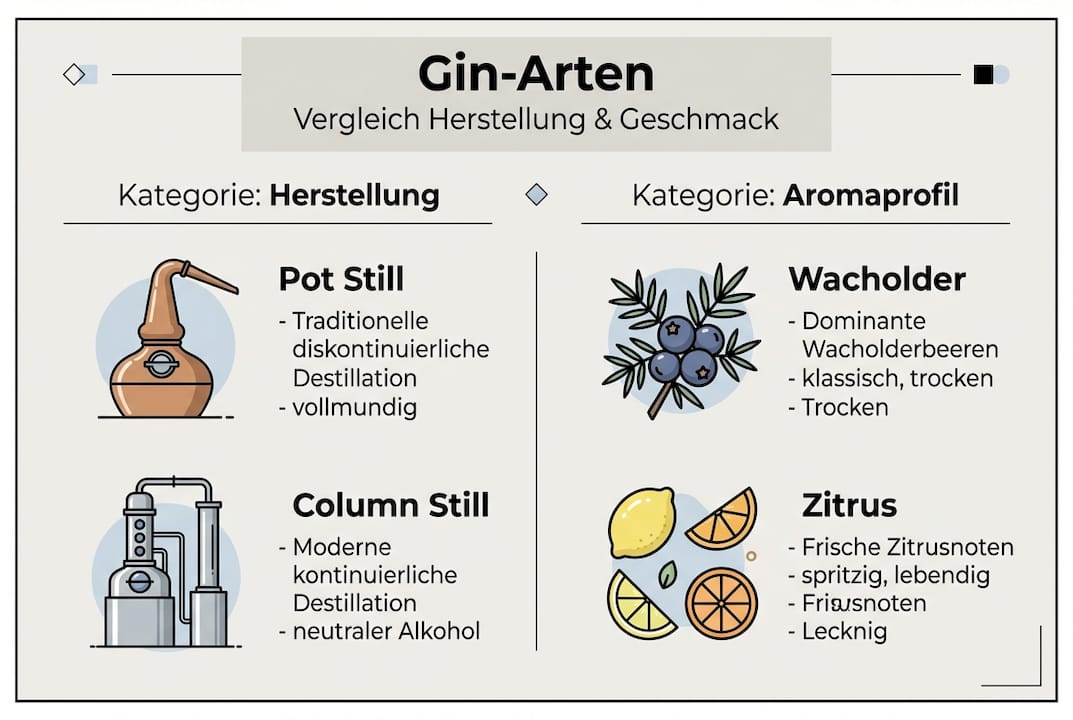
Pot stills, column stills, and special methods like Carterhead or vacuum distillation produce different gin characteristics. Copper pot stills are traditional, onion-shaped alembics that operate discontinuously and promote aromatic diversity. Column stills allow for continuous distillation and higher purity. Vacuum distillation operates at lower temperatures, preserving heat-sensitive aromas better.
The distillation process goes through three phases: foreshots, heart, and feints. Only the heart, also known as the middle cut, is used for the finished gin. The foreshots contain volatile, harsh alcohols like methanol, while the feints contain heavy, oily compounds. Experienced master distillers precisely decide when to switch from foreshots to heart and later to feints. This separation is crucial for purity and taste.
After distillation, the high-proof gin alcohol is diluted with soft water to drinking strength, typically between 38% and 50% ABV. Some distilleries age their gin briefly in barrels to develop additional complexity, although this is not required for classic gin. Barrel-aged gins pick up wood notes, vanilla, and caramel flavors.
| Distillation Method | Aroma Profile | Typical Application |
|---|---|---|
| Maceration in Pot Still | Intense, full-bodied, oily | London Dry, classic gins |
| Vapor Infusion in Carterhead | Fine, subtle, floral | Premium and craft gins |
| Vacuum Distillation | Fresh, vibrant, color-rich | Modern, innovative gins |
| Column Still | Pure, neutral, precise | Industrial gins, base for compound |
Botanicals are the heart of every gin recipe. Juniper remains obligatory, but the accompaniments vary enormously. Coriander seeds bring citrus and spice notes, angelica root grounds with earthy tones, orris root binds aromas and extends the finish. Citrus peels from lemons, oranges, or grapefruits provide freshness. Spices like cardamom, cinnamon, or pepper add warmth and complexity.
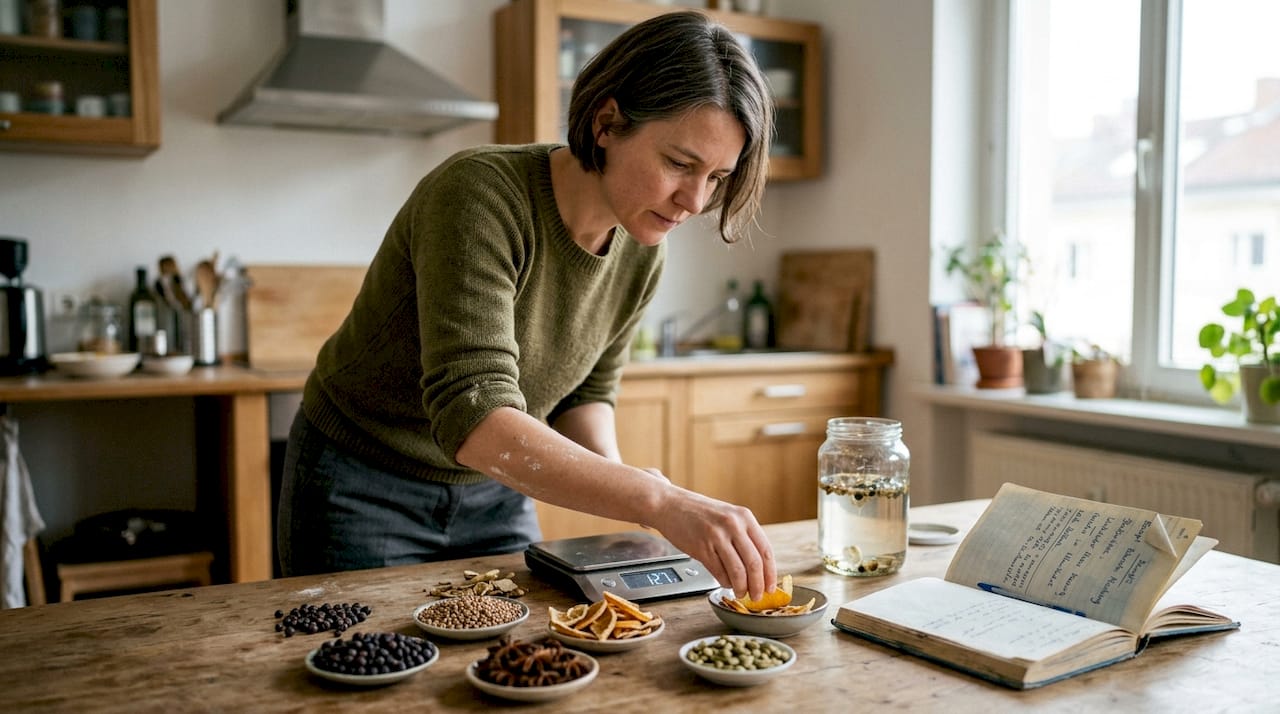
Innovative distilleries integrate botanicals like lavender, rosemary, or saffron to express regional or cultural identity. Some use seaweed, truffles, or even ants to create extraordinary profiles. The selection and balance of botanicals require years of experience and numerous test distillations.
Pro Tip: When choosing a gin, pay attention to the list of botanicals. High-quality manufacturers disclose these transparently and explain which aromas dominate. Experiment with different tonics to highlight the nuances of the botanicals. A classic London Dry harmonizes with a neutral tonic, while a floral gin shines with an aromatic tonic.
The traditional production of gin combines centuries-old knowledge with modern precision. Craft distilleries rely on small batches, personal recipes, and meticulous monitoring of every step. This dedication is reflected in the quality and uniqueness of the final product.
Different gin types and their flavor profiles compared
Gin exists in several clearly defined categories that differ in production, sweetness, and aroma profile. London Dry Gin is the best-known and most stringent category. Despite its name, it can be produced anywhere. It must not contain artificial flavors or colorings after distillation and a maximum of 0.1 grams of sugar per liter. The result is a dry, juniper-forward gin with a clear, precise aroma. Brands like Tanqueray, Beefeater, or Bombay Sapphire represent this style.
Plymouth Gin originates exclusively from the English port city of Plymouth and is geographically protected. It is characterized by a softer, fruitier note, with less dominant juniper than London Dry. Earthy roots and citrus freshness balance harmoniously. Only one distillery, Black Friars Distillery, has been producing authentic Plymouth Gin since 1793.
Old Tom Gin was popular in the 18th century and is currently experiencing a renaissance. It is lightly sweetened, typically with 1 to 2 percent sugar, which gives it a rounder, softer character. Historically, sweetness served to mask inferior alcohol quality. Modern versions use it to support complex botanicals and bridge the gap between gin and genever.
Craft Gin and Flavored Gin represent the innovative side of the category. Craft distilleries experiment with regional botanicals, unusual distillation techniques, and limited editions. Flavored Gins add additional flavors after distillation, often fruits, herbs, or flowers. They may contain more sugar and appeal to consumers who prefer fruitier, more accessible profiles.
| Gin Type | Alcohol Content | Flavor Profile | Special Feature |
|---|---|---|---|
| London Dry | 40-47 % ABV | Dry, juniper-forward, clear | No additives after distillation |
| Plymouth | 41.2 % ABV | Soft, fruity, earthy | Geographically protected |
| Old Tom | 40-44 % ABV | Slightly sweet, round, complex | Historical style with sugar |
| Craft Gin | 38-50 % ABV | Highly variable, often regional | Small batches, innovative botanicals |
| Flavored Gin | 37.5-40 % ABV | Fruity, aromatic, sweeter | Additional flavors after distillation |
Distillation styles significantly influence the flavor profile. Pot-still distillation produces fuller, oilier textures with complex aromas. Column-still distillation yields purer, lighter gins with precise botanical notes. Multi-stage distillations further refine the aromas and remove unwanted compounds. Some distilleries distil individual botanicals separately and then blend them to achieve maximum control over the final profile.
The alcohol content influences not only the intensity but also the texture and finish. Gins with 40 percent are accessible and harmonious, while variants with 47 percent or more are more powerful and aromatic. Higher alcohol carries essential oils better and extends the flavor on the palate. Navy Strength Gins at 57 percent were historically intended for the British Navy, as they remained flammable even when in contact with gunpowder.
Pro Tip: Try the same gin at different drinking strengths. Gradually dilute it with water and observe how aromas open up or change. Some botanicals become more prominent at lower strengths, while others shine at higher alcohol content. This technique helps you find the optimal balance for your taste.
The variety of gin types allows you to choose the right spirit for every occasion and taste preference. Classic cocktails like a Martini or Negroni call for London Dry, while modern creations benefit from the nuances of a Craft Gin. Old Tom is excellent for historical recipes like Tom Collins, and Flavored Gins excel in fruity long drinks.
- London Dry: Martini, Gin & Tonic with neutral tonic, Negroni
- Plymouth: classic Gin & Tonic, Aviation Cocktail
- Old Tom: Tom Collins, Martinez, historical cocktails
- Craft Gin: experimental cocktails, neat with ice
- Flavored Gin: fruity long drinks, Spritz variations
The choice of the right gin type depends on your personal taste and intended use. Explore different categories to fully grasp the breadth of this fascinating spirit.
Market development and trends: craft and premium gin as a favorite spirit
The global gin market has been experiencing impressive growth for years, driven by increasing interest in premium spirits and artisanal quality. Germany benefits from the craft boom with over 30% growth in artisanal brands between 2020 and 2025. This trend shows no signs of slowing down. Consumers are increasingly seeking authentic stories, transparent production, and unique flavor profiles.
The number of gin distilleries in Germany has quadrupled since 2015. Small, independent producers are gaining market share from established brands by offering local botanicals, innovative distillation techniques, and limited editions. This craft movement democratizes the spirits industry and allows consumers to discover products that reflect their personal values and tastes.
Premiumization is a key driver of market growth. Consumers are willing to pay more for high-quality gins that stand out through quality, origin, and craftsmanship. The average price per bottle has risen by approximately 25 percent in the last five years. Simultaneously, awareness of the complexity of production and the importance of botanicals is growing.
Sustainability will become increasingly important for connoisseurs by 2026. Distilleries are focusing on organic ingredients, environmentally friendly packaging, and local sourcing. Some use excess botanicals for other products or compost them. Transparency about origin and production methods becomes a selling point. Gin trends for 2026 show that ecological awareness and premium quality are not mutually exclusive but complementary.
The cocktail culture continues to drive demand for diverse gins. Bars and restaurants are expanding their gin selections to cater to discerning guests. Signature cocktails with special gins are becoming a hallmark. At home, consumers also experiment with different tonics, garnishes, and cocktail recipes, which promotes demand for various gin styles.
Online retail and direct sales enable small distilleries to grow without expensive intermediaries. Consumers appreciate the opportunity to order directly from the producer, learn more about production, and secure limited editions. This direct contact strengthens the bond between brand and customer.
- Over 2,000 gin brands worldwide, and rising
- Craft segment growing twice as fast as the overall market
- Consumers pay an average of 30 to 60 Euros for premium gins
- Sustainability and regionality are top purchasing criteria
- Cocktail renaissance encourages experimentation
Statistical highlight: The global gin market is expected to reach a volume of over 20 billion US dollars by 2032, with an annual growth rate of approximately 7 percent. Europe remains the largest market, but Asia and North America are catching up rapidly.
These developments show that gin is far more than a fleeting trend. The spirit has established itself as a staple in the premium segment and appeals to a broad, engaged target group. For you as a connoisseur, this means a constantly growing selection of high-quality, innovative products that meet your demands for quality, taste, and values.
Discover artisanal gin at Mezzanotte Spirits
If you appreciate the diversity and quality of gin, it's worth taking a look at the exclusive selection of Italian artisanal gins at Mezzanotte Spirits. Here you will find handcrafted spirits that combine traditional distillation methods with innovative botanicals. Each gin tells its own story, inspired by Italian culture, myths, and craftsmanship.

The distillates are characterized by carefully selected botanicals, often sourced from regional origins and reflecting the character of the Italian landscape. From Mediterranean herbs to citrus fruits to unusual spices, the collection offers profiles that appeal to both purists and adventurous connoisseurs. Distilleries place importance on small batches, personal recipes, and the highest quality standards.
In addition to gin, you will also find Italian artisanal vodkas and bitters to enhance your home bar with exceptional spirits. The intuitive online platform allows you to browse conveniently, read detailed product information, and order directly. Perfect for special occasions or as a gift for spirits enthusiasts who value craftsmanship and authenticity.
Frequently asked questions about gin
What distinguishes gin from other spirits?
Gin must contain juniper as the dominant aroma and have at least 37.5% alcohol by volume. Vodka is neutral in taste, while gin is deliberately flavored. Liqueurs contain significantly more sugar and are sweeter. These clear differences in composition and taste make gin unique among spirits.
How do I recognize high-quality gin?
Look for transparent information about botanicals, production method, and origin. High-quality gins exhibit a balanced aroma without dominant sharpness or chemical notes. The finish should be long and pleasant. Awards and ratings can provide guidance, but your personal taste ultimately decides. Tasting tips help you recognize quality.
What botanicals are typical and which are particularly innovative?
Typical botanicals include juniper, coriander, angelica root, citrus peels, and orris root. Innovative distilleries use lavender, saffron, seaweed, truffles, or regional herbs. Some experiment with spices such as Szechuan pepper or tonka bean. This variety allows for countless taste profiles and makes every tasting a journey of discovery.
Why is craftsmanship important for gin?
Artisanal production guarantees attention to every detail, from the selection of botanicals to distillation. Small batches allow for flexibility and quality control. Master distillers can adjust and optimize recipes. This dedication is reflected in the complexity, balance, and uniqueness of the final product. Craft gins often offer taste profiles that industrial production cannot achieve.
How is gin best enjoyed?
Neat with ice or slightly diluted with water reveals the full aroma. Gin and tonic is the classic, with the choice of tonic being crucial. Neutral tonics emphasize the gin, while aromatic ones complement it. Cocktails like Martini, Negroni, or Aviation showcase different facets. Experiment with garnishes such as lemon zest, juniper berries, or herbs to emphasize aromas.
Recommendation
- Traditional Gin Production: Craftsmanship and Character – Mezzanotte | Distilleria & Spirits
- Gin Types: 4 Types and 57% Alcohol for Intense Enjoyment – Mezzanotte | Distilleria & Spirits
- Gin Trends 2026: 72% Prefer Sustainable Premium Products – Mezzanotte | Distilleria & Spirits
- Understanding Gin Infusion: Art and Technique Combined – Mezzanotte | Distilleria & Spirits