

Discover how to systematically collect artisanal spirits: from preparing the environment to selection, storage, and tasting for a valuable collection.
Instructions for Collecting Spirits: A Practical Guide 2026
Mar 24, 2026

Collecting craft spirits is a fascinating adventure that combines passion, culture, and design. Finding unique bottles with authentic stories and distinctive characteristics requires knowledge and method. This guide will take you step-by-step through building a significant collection, from setting up the ideal space to selecting the most precious spirits, and then to their proper storage and tasting. You'll discover how to transform your passion into an engaging experience that celebrates the art of Italian craft distillation.
Table of Contents
- Key Points
- Preparing the Collection: Essential Requirements and Materials
- How to Select and Purchase Unique and Valuable Spirits
- Organizing and Storing the Collection to Preserve its Value
- Verifying and Enjoying the Collection: Tasting and Evaluation
- Discover the Exclusive Collection of Craft Spirits on Mezzanotte
- Frequently Asked Questions about Collecting Spirits
Key Points
| Point | Details |
|---|---|
| Accurate Preparation | A successful collection stems from accurate preparation, conscious choices, and constant care. |
| Stable and Dark Environment | Choose a space away from heat, with a stable temperature between 15 and 20 degrees Celsius, and no direct light exposure. |
| Essential Materials | Incorporate robust shelving, a thermometer, a hygrometer, and removable labels for accurate cataloging and value protection. |
| Provenance and Value | Research the distillery's provenance, the origin of raw materials, and cultural history to select bottles with meaning and lasting value. |
Key Points
| Aspect | Detail |
|---|---|
| Selection | Choose spirits with unique cultural stories and distinctive design |
| Preparation | Set up a controlled environment with suitable materials for storage |
| Acquisition | Purchase from reliable sources following authenticity criteria |
| Storage | Maintain optimal temperature, light, and humidity conditions |
| Verification | Regularly taste and evaluate to appreciate quality and value |
A successful collection is born from a combination of accurate preparation, conscious choices, and constant care. Knowing the correct methods prevents common mistakes and ensures that each bottle maintains its value over time.
Preparing the Collection: Essential Requirements and Materials
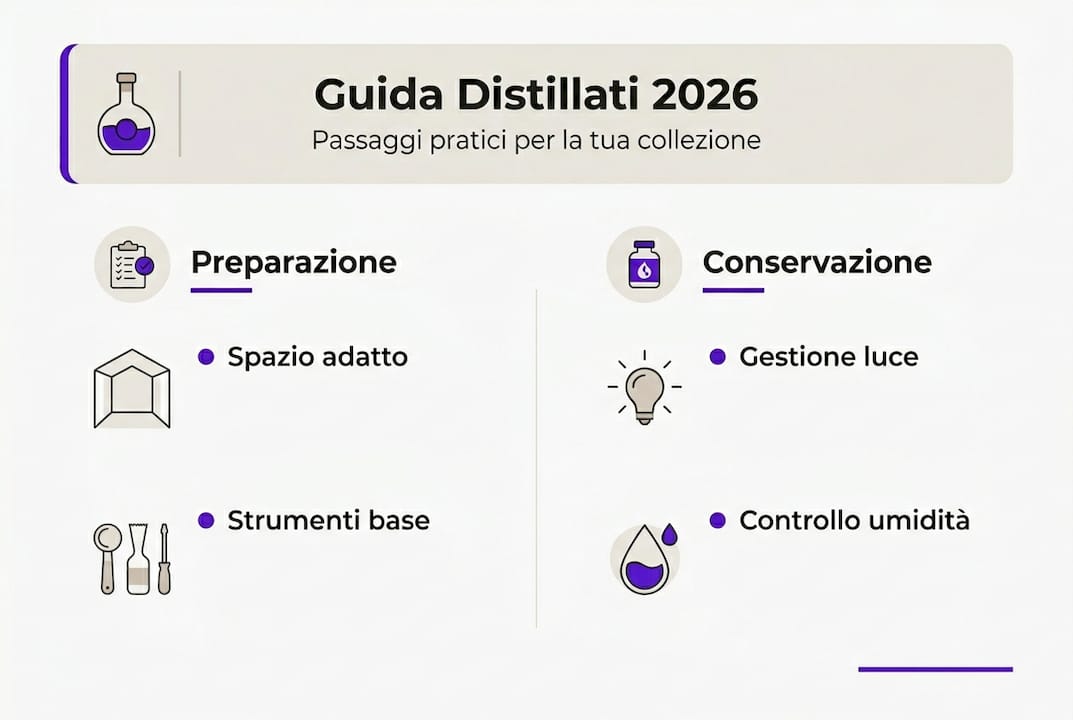
Creating a collection of craft spirits primarily requires an appropriate environment. The choice of space determines the longevity and quality of your collection. Consider a room or area of the house away from direct heat sources, with a stable temperature between 15 and 20 degrees Celsius. Exposure to sunlight damages spirits over time, altering their color and flavor. Opt for a dark space or one with controlled lighting.
Necessary materials include robust shelving, preferably made of wood or treated metal. Bottles must remain in an upright position to prevent the liquid from prolonged contact with the cork. Good storage and preparation are fundamental to maintaining the value and quality of spirits. Invest in a thermometer and a hygrometer to constantly monitor environmental conditions.
Essential materials for the collection:
- Solid shelving with adjustable shelves for different bottle sizes
- Digital thermometer for constant temperature control
- Hygrometer to measure relative humidity of the environment
- Blackout curtains or low-heat LED lights
- Paper or digital log for detailed cataloging
- Removable adhesive labels for temporary notes
- Cotton gloves for handling valuable bottles without leaving fingerprints
Recognizing spirits with historical value requires attention to specific details. Look for bottles with labels that tell the story of the distillery's origin, the artisanal production method, and the cultural history of the product. The design of the bottle itself communicates the brand's identity: unique shapes, elaborate screen prints, or iconographic references to myths and traditions increase collector's value.
| Prerequisite | Description | Importance |
|---|---|---|
| Dedicated space | Controlled area away from heat sources | Essential |
| Initial budget | Minimum 500-1000 euros to start with quality | High |
| Basic knowledge | Understanding of spirit categories | Medium |
| Network of contacts | Relationships with specialized retailers | Useful |
| Patience | Time for research and gradual acquisition | Fundamental |
Pro Tip: Start with a specific niche like Italian craft gins or vodkas with distinctive designs. Specializing allows you to develop in-depth expertise and build a consistent collection with greater value over time.
Spirit storage and care require daily attention. Regularly check humidity levels: values between 50% and 70% prevent label and cork degradation. Too high temperatures accelerate evaporation, while too low temperatures can alter the liquid's structure.
How to Select and Purchase Unique and Valuable Spirits
The selection of spirits for your collection begins with researching provenance. Each bottle tells a story: the origin of the raw materials, the philosophy of the distillery, the traditional or innovative production techniques. Selecting bottles with cultural stories and distinctive design enhances the collecting experience. Deepen your knowledge of producers through virtual tours, online published interviews, and expert reviews.
Steps to identify valuable spirits:
- Research the distillery's history and verify years of activity and awards received
- Analyze the botanical ingredients used and their geographical origin
- Evaluate limited editions: numbered editions increase collector's value
- Examine the bottle design, looking for original and distinctive artistic elements
- Compare prices on different platforms to identify the real market value
- Read reviews from professional tasters to understand the organoleptic profile
Design is a crucial element in selection. Bottles that incorporate references to myths, anime, or pop culture create an immediate emotional connection. Look for elaborate screen prints, unconventional shapes, or packaging that doubles as a decorative object. These elements transform the spirit from a simple beverage into a piece of art.
Criteria for evaluating design:
- Originality of the bottle shape compared to market standards
- Quality of materials used for labels and outer packaging
- Consistency between visual identity and the story told by the brand
- Presence of collectible elements such as numbered seals or certificates of authenticity
- Possibility of displaying the bottle as a decorative item
Purchasing from reliable sources protects your investment. Specialized stores for premium and unique spirits offer guarantees of authenticity and optimal storage conditions before sale. Avoid generic marketplaces where provenance is uncertain. Build relationships with retailers who share your passion: they will notify you of new releases and limited editions before they sell out.
Pro Tip: Attend industry fairs and tasting events organized by craft distilleries. These moments allow you to meet producers directly, understand their vision, and acquire exclusive bottles not available through traditional channels.
Integrating new bottles into the collection requires method. When purchasing a spirit, immediately document the date, price paid, bottle number if limited, and purchase conditions. This traceability increases the collection's value over time. Photograph each new acquisition from different angles, capturing label and seal details.
The history of Italian spirits offers valuable insights to guide your choices. Products that respect centuries-old traditions while maintaining innovation in taste represent safe investments. Look for distilleries that balance artisanal heritage and contemporary experimentation.
Organizing and Storing the Collection to Preserve its Value
Systematic cataloging transforms a collection of bottles into a true collection. Create a digital database or a paper log where you record for each spirit: full name, distillery, production year, bottle number, purchase date, price, alcohol content, and tasting notes. This system allows you to track the evolution of the collection and quickly identify each bottle.
Effective organization methods:
- Ordering by type: gin, vodka, bitters, liqueurs separated by category
- Geographical arrangement: grouping by region or country of origin
- Chronological: sequence based on production or acquisition year
- Alphabetical: order by distillery or product name for quick access
- By value: separation between collector's bottles and tasting bottles
Environmental conditions determine the longevity of your spirits. Proper organization and storage help maintain the quality and value of spirits over time. The ideal temperature ranges between 15 and 18 degrees Celsius with minimal variations. Temperature fluctuations cause expansion and contraction of the liquid, compromising cork integrity and promoting oxidation.
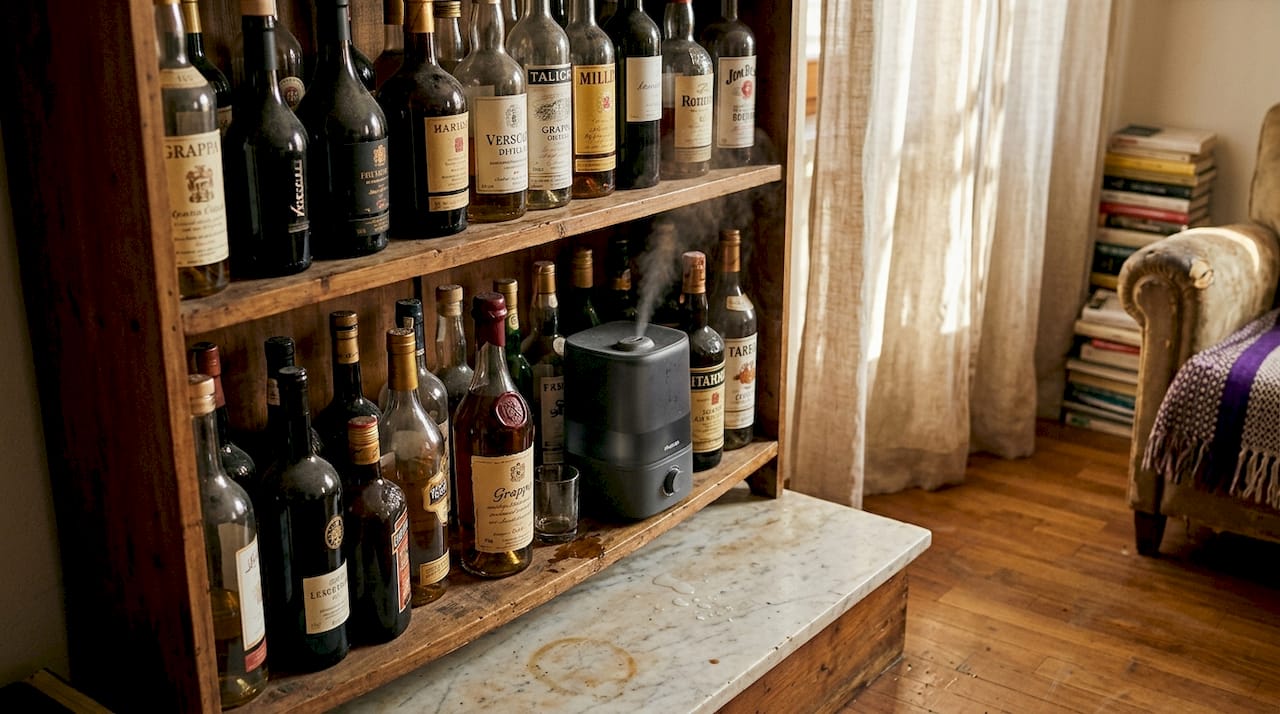
Relative humidity should stabilize between 60% and 65%. Lower levels dry out cork stoppers causing leaks, while excess favors mold on labels. Install a dehumidifier or humidifier according to your environment's needs. Check these parameters weekly to intervene promptly.
| Environmental factor | Optimal range | Risks if not respected |
|---|---|---|
| Temperature | 15-18°C | Oxidation, accelerated evaporation |
| Humidity | 60-65% | Label deterioration, dry corks |
| Light | Total darkness or LED | Color and flavor alteration |
| Vibration | Absent | Disturbed sediments, mechanical stress |
| Ventilation | Moderate | Odor accumulation, condensation |
Common mistakes to avoid:
- Storing bottles horizontally like wine: spirits should always be vertical
- Placing the collection near windows or direct heat sources
- Neglecting bottle cleaning: dust accumulates harmful moisture
- Frequently opening collector's bottles, reducing their value
- Mixing opened spirits with sealed ones in the same space
Pro Tip: Use paraffin film to further seal the corks of your most valuable bottles. This protective layer minimizes evaporation and preserves the integrity of the contents for decades.
Accessibility of the collection facilitates daily management. Organize the most precious bottles on central shelves, at eye level, where they are easily visible but protected from accidental bumps. Opened spirits or those intended for tasting can occupy lower shelves for more frequent access. Always maintain free space between bottles to pick them up without risk of dropping.
Security requires particular attention. Fasten shelves to walls to prevent tipping in case of earthquakes or bumps. Consider an alarm system for environments housing high-value collections. Document the entire collection photographically for insurance purposes.
Verifying and Enjoying the Collection: Tasting and Evaluation
Verifying the authenticity of spirits protects the value of your collection. Carefully examine the guarantee seals: they must be intact, without signs of tampering or attempts to open. Check the consistency between the front and back labels: information on alcohol content, volume, and batch codes must match. Authentic bottles show precise typographical details without printing errors or smudges.
Steps to verify authenticity and integrity:
- Inspect the tax seal for holograms or specific security elements
- Compare the bottle with official images from the manufacturer's website
- Check the liquid level: excessive evaporation indicates inadequate storage
- Check the clarity of the spirit: abnormal cloudiness suggests problems
- Examine the cork for signs of leaks or premature deterioration
- Search for the batch code on the distillery's website when possible
Tasting represents the culmination of the collecting experience. A correct tasting method enhances the experience and helps to fully understand the spirit. Prepare a quiet environment, with appropriate glasses for each type of spirit. Gin and vodka require tumblers or tulip glasses that concentrate aromas.
Professional tasting technique:
- Observe the color against the light to evaluate clarity and hue
- Bring the glass to your nose gradually, gently inhaling to catch olfactory notes
- Identify dominant botanicals and aromas before tasting
- Take a small sip, letting it rest on your tongue to perceive all the nuances
- Evaluate persistence and aftertaste after swallowing
- Note immediate impressions to build sensory memory
Appreciating aromas and flavors requires constant practice. Each craft spirit presents a unique organoleptic profile determined by ingredients, distillation method, and aging. Italian gins often highlight Mediterranean botanicals like juniper, citrus, and local aromatic herbs. Craft vodkas can surprise with crystalline purity or a decisive character given by selected grains.
"The tasting of a craft spirit is a sensory journey that connects the collector with the land, tradition, and the artisan's vision. Each sip tells a story that goes beyond simple taste."
Evaluating the expansion of the collection means periodically analyzing its coherence and completeness. Identify any gaps: are there missing representatives from certain regions or production styles? Look for spirits that complete the narrative of your collection rather than accumulating bottles indiscriminately. Quality always surpasses quantity in prestige collecting.
The spirits tasting method also helps you decide which bottles to open and which to keep sealed. Spirits with high appreciation potential deserve to remain intact. Standard editions or duplicate bottles can be tasted to deepen sensory knowledge.
Experience tasting as a shared adventure. Organize themed evenings with other enthusiasts where each person brings a particular bottle. These moments create precious memories and enrich the understanding of spirits through the comparison of opinions and sensations.
Discover the exclusive collection of artisanal spirits on Mezzanotte
Building a significant collection requires access to authentic and distinctive spirits. Mezzanotte Spirits offers a curated selection of artisanal gin and artisanal vodka that perfectly embody the encounter between Italian tradition and creative innovation. Each bottle in the catalog tells a unique story, with designs that transform the spirit into a collectible work of art.

The platform facilitates the discovery of internationally awarded products, made by artisanal distilleries that respect traditional methods while integrating inspiration from myths, pop culture, and contemporary iconography. Browsing the collections allows you to quickly identify spirits that will enrich your collection with authenticity and distinctive character. Visit the Mezzanotte shop to explore the entire range and find the next gems for your personal collection.
Frequently asked questions about collecting spirits
How to recognize an authentic spirit?
Always check the intact excise seal and compare the label with official images from the manufacturer's website. Check lot codes, precise typographic details, and the absence of printing errors. Purchase exclusively from authorized retailers who guarantee certified provenance.
What is the importance of design when choosing a bottle?
Design communicates the brand's identity and significantly increases collectible value. Bottles with unique shapes, elaborate screen prints, or distinctive cultural references become works of art as well as precious spirits. Careful packaging better protects the content and makes the displayed bottle a valuable decorative element.
How to maintain the quality of the spirit over time?
Store bottles vertically in a dark environment with a stable temperature between 15 and 18 degrees Celsius and humidity of 60-65%. Avoid thermal shocks, direct light, and vibrations. Check environmental conditions weekly and further seal the caps of precious bottles with paraffin film to minimize evaporation.
Is it worth opening a collector's bottle?
Only open duplicate bottles or standard editions for tasting. Rare spirits, numbered limited editions, or those with high appreciation potential should remain sealed to preserve their collectible value. The choice depends on the objective: investment collection or personal sensory experience.
Where to find rare and artisanal spirits?
Turn to specialized premium spirits shops that guarantee authenticity and optimal preservation. Participate in industry fairs and events organized by artisanal distilleries to access exclusive editions. Build relationships with passionate retailers who will inform you of new releases before they run out of stock.
Recommendation
- Spirits Distillation Guide 2026: Avoid 40% Common Mistakes – Mezzanotte | Distillery & Spirits
- Italian Spirits Tasting Method: Practical Guide 2026 – Mezzanotte | Distillery & Spirits
- Complete Guide to the Artisanal Distillation Process 2026 – Mezzanotte | Distillery & Spirits
- What does premium spirit mean: complete guide 2026 – Mezzanotte | Distillery & Spirits