

Discover what Artisan Distilleries truly means: small batches, handcrafted processes, and unique flavor profiles for discerning connoisseurs.
What is artisan distilleries: craft spirits 2026
Mar 10, 2026

Many believe that artisan spirits are just clever marketing without real craftsmanship. The reality is different: Artisan means handmade production in small batches between 5 and 150 liters, delivering unique flavor profiles. Artisan distilleries produce creative, unique products with complex aromas that industrial manufacturers cannot achieve. This article highlights the differences, production methods, and cultural significance of these unique spirits.
Table of Contents
- Definition and Fundamentals of Artisan Distilleries
- Artisan Production Methods in Artisan Distilleries
- Differences from Industrial Distillation
- Cultural Significance and Experiences with Artisan Spirits
- Common Misconceptions about Artisan Distilleries
- Discover Artisan Spirits at Mezzanotte
- What is an Artisan Distillery? Frequently Asked Questions
Key Insights at a Glance
| Point | Details |
|---|---|
| Artisan means handcrafted | Small batches between 5 and 150 liters with careful manual production and individual flavor profiles. |
| Artisan methods preserve aromas | Traditional pot stills and small column stills create complex, unique flavor profiles. |
| Cultural experiences enhance appreciation | Experience distilleries combine production with tastings and regional identity. |
| Higher prices for limited quality | Artisan spirits cost more due to small quantities, manual labor, and superior quality. |
| Misconceptions hinder informed purchases | Typical errors about marketing and production methods prevent true appreciation. |
Definition and Fundamentals of Artisan Distilleries
The term Artisan comes from French and describes handcrafted, non-industrial batches of high quality. These spirits are produced in small quantities, typically between 5 and 150 liters per batch. Each bottle is unique with individual nuances.
Artisan distilleries operate manually and flexibly. They can spontaneously adjust recipes and test new botanicals. This creativity is completely absent in industrial production.
Industrial manufacturers, in contrast, produce thousands of liters per batch. Their facilities are designed for efficiency and standardization. Flavor profiles remain identical for years.
An overview of the characteristics of artisan distilleries:
- Small batch sizes between 5 and 150 liters
- Manual production with traditional techniques
- Variable flavor profiles depending on the batch
- High flexibility in recipe changes
- Focus on quality over quantity
Small batches also allow for tighter quality control. Each distillation process is monitored and documented. Errors are immediately detected and corrected.
Artisan Production Methods in Artisan Distilleries
Artisan distilleries use traditional pot stills and small column stills for gentle aroma preservation. These devices allow for precise temperature control during distillation. The result is fine, complex flavor profiles.
Pot stills operate discontinuously in individual batches. The distiller decides on the heads, hearts, and tails during the process. This manual control creates room for nuances.
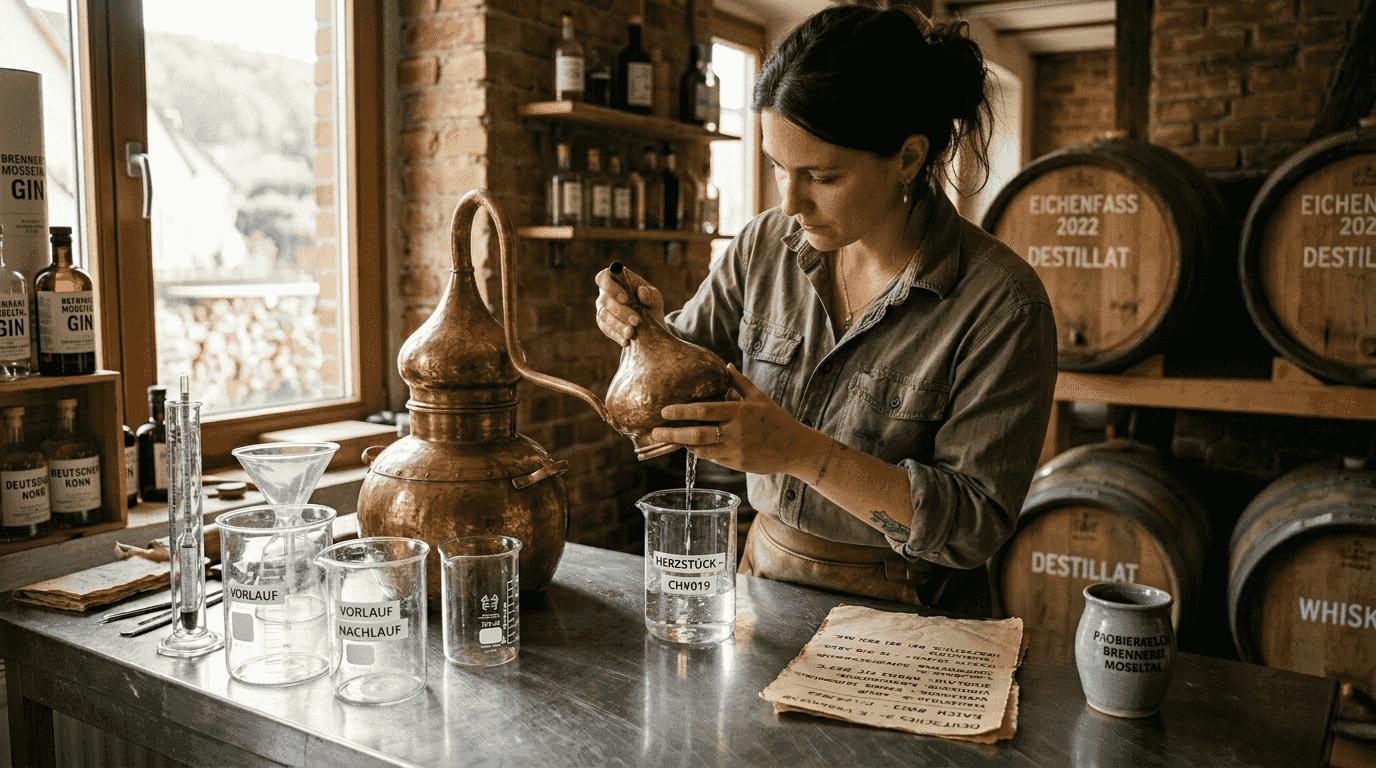
Small column stills offer more flexibility than industrial multi-chamber systems. They allow for experimentation with different botanicals and maceration times. Each batch can develop its own aroma profile.
The most important artisan gin production steps include:
- Macerating botanicals in neutral alcohol
- Slow distillation at controlled temperatures
- Manual separation of heads, hearts, and tails
- Dilution to drinking strength with pure water
- Resting period for aroma harmonization
Manual labor shapes every step. The distiller smells and tastes throughout the entire process. This sensory control distinguishes artisan products from automated mass-produced goods.
Pro-Tip: Small batches allow for experimentation with unusual botanicals such as yuzu, Sichuan pepper, or regional herbs. This innovation leads to unique taste experiences you will never find in industrial products.
Traditional methods also preserve cultural identity. Italian distilled spirits use local ingredients and centuries-old recipes. You can taste this connection to the region in every bottle.
Differences from Industrial Distillation
Industrial distilleries produce in large batches with standardized processes for efficiency and uniformity. Their facilities process thousands of liters simultaneously. Automation almost completely replaces human decisions.
Artisan manufacturers, on the other hand, work in small batches with manual labor and creativity. Each distillation process is individually monitored. Variance is desired, not feared.
The quality differs fundamentally. Industrial products taste identically year after year. Artisan spirits develop character and personality through conscious variation.
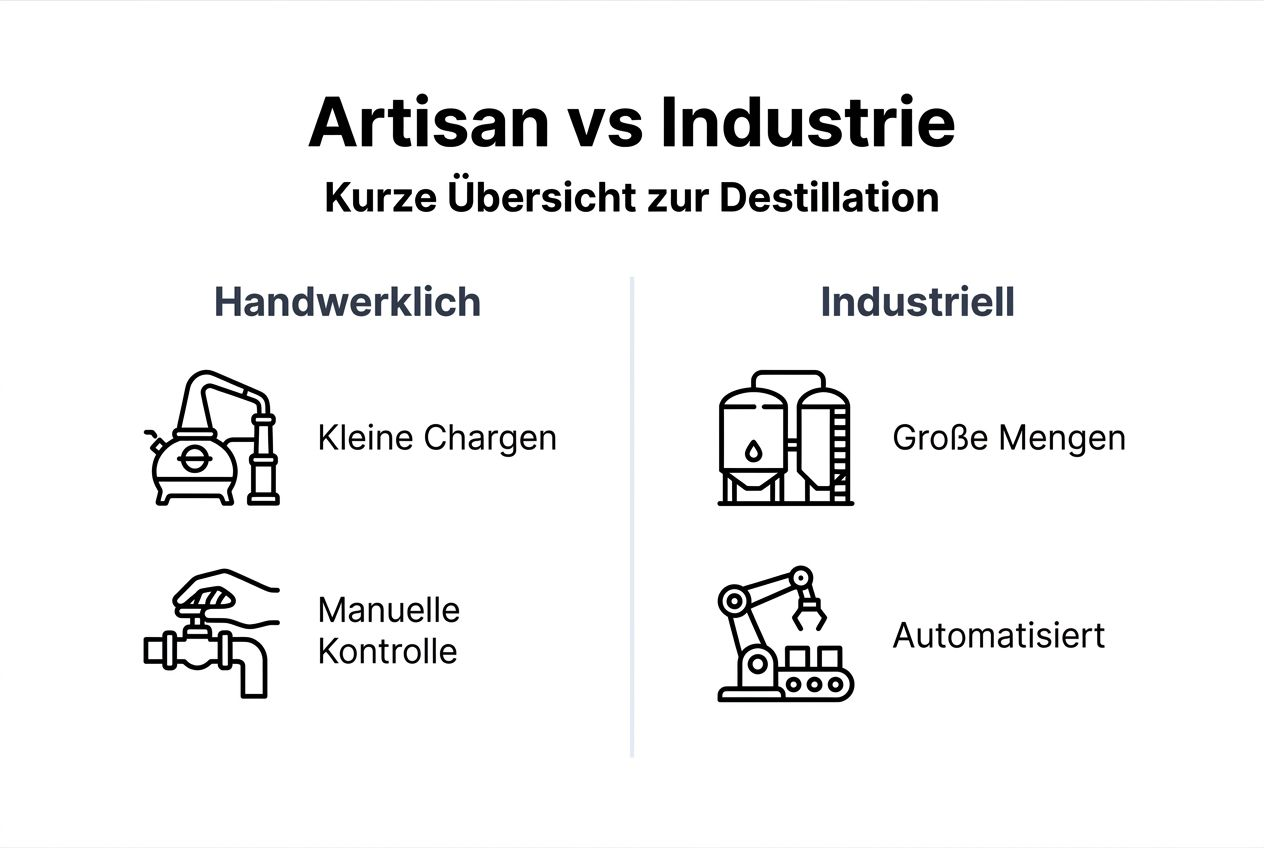
| Feature | Artisan Distillery | Industrial Distillery |
|---|---|---|
| Batch Size | 5-150 Liters | 1,000-10,000+ Liters |
| Production | Manual Production | Fully Automated |
| Flavor Profile | Variable, Unique | Standardized, Consistent |
| Flexibility | High Adaptability | Rigid Processes |
| Production Time | Slow, Careful | Fast, Efficient |
| Aroma Complexity | Layered, Nuanced | Simple, Consistent |
Industrial efficiency drastically reduces costs. Large quantities allow for lower prices per bottle. However, quality and flavor diversity suffer.
Artisan distilleries can react spontaneously. New botanicals are tested immediately. Seasonal ingredients are incorporated into limited editions. This agility is completely absent in industrial manufacturers.
The most important quality differences:
- Aroma depth and complexity through slow distillation
- Natural variations instead of artificial standardization
- Recognizable personal signature of the distiller
- Use of high-quality, often regional raw materials
This difference is reflected in the price. Artisan products cost more due to limited quantities and higher effort. The superior quality justifies this investment for discerning connoisseurs.
Cultural Significance and Experiences with Artisan Spirits
Experience distilleries promote transparency and regional connection through open production facilities with tastings. Visitors see the entire manufacturing process live. This proximity creates trust and appreciation.
Regional identity is brought to life through local ingredients and traditions. Artisan distilleries use native herbs, fruits, and water. Each bottle tells the story of its origin.
These places combine production with education. Workshops and tours convey knowledge about distillation and botanicals. Visitors develop a deeper understanding of artisan quality.
Cultural aspects shape modern artisan spirits:
- Integration of mythology and storytelling in product design
- Connection to local traditions and historical recipes
- Promotion of conscious enjoyment culture instead of mass consumption
- Transparent communication about origin and production
The art in premium distillates combines visual design with taste experience. Bottles become collector's items with cultural value. Every detail tells part of a larger story.
Premium Gin Culture promotes conscious enjoyment instead of quick consumption. Tastings train the palate for fine nuances. Connoisseurs learn to recognize and appreciate quality characteristics.
Experience distilleries create community. Enthusiasts meet for tastings and events. These social spaces strengthen the appreciation for artisan work.
The regional economy benefits directly. Local suppliers provide botanicals and raw materials. Jobs are created in rural areas. Tourism is promoted through attractive destinations.
Common Misconceptions about Artisan Distilleries
Many assume that artisan spirits are just marketing without real quality differences. This assumption ignores the fundamental production differences. Craftsmanship and limited batches create measurable quality advantages.
Reality shows clear differences. Artisan manufacturers use traditional methods with demonstrably better aroma profiles. Smaller batches allow for more precise control and higher quality.
Another misconception is that all spirits are distilled the same way. Industrial facilities optimize for speed and volume. Artisan distilleries prioritize quality and flavor complexity through slower processes.
Typical misconceptions at a glance:
- Artisan is just more expensive marketing for identical products
- Small batches have no quality advantages
- Traditional methods are outdated and inefficient
- Manual labor makes no difference in the final product
- All premium spirits are equally high quality
The fact is that proximity to traditional methods enables special aroma profiles. Pot stills create different flavor structures than industrial facilities. These differences are clearly measurable sensorily.
Pro-Tip: When purchasing, check the origin, batch size, and detailed production processes. True artisan manufacturers communicate transparently about their methods. Vague descriptions suggest industrial production with a marketing facade.
Skepticism is justified because some manufacturers misuse the term. True artisan status is revealed in specific details such as distillation type, batch number, and botanicals used. This information should be easily accessible.
Informed purchasing decisions require knowledge. Understand the production method before investing. The higher prices are justified only by true artisan quality.
Discover Artisan Spirits at Mezzanotte
Now that you understand the fundamentals of artisan spirits, it's time to experience this quality for yourself. Mezzanotte offers an exclusive selection of Italian artisan gins that combine traditional craftsmanship with creative botanicals.

Each bottle in our assortment tells its own story. Our Italian artisan vodkas combine purity with characterful aromas. Artisan distillation meets cultural storytelling.
The combination of pop culture and spirits makes every product an experience. Limited editions with unique designs appeal to collectors and connoisseurs alike. Award-winning quality meets artistic design.
Discover authentic Italian craftsmanship in every drop. Perfect for discerning connoisseurs who value origin and quality.
What is an Artisan Distillery? Frequently Asked Questions
How do I recognize genuine artisan spirits?
Genuine artisan spirits provide transparent information about their origin, batch size, and distillation process. Batch numbers on the bottles confirm limited production. Manufacturers openly communicate about the botanicals used and traditional methods.
Why do artisan spirits cost more than industrial products?
Small batches between 5 and 150 liters require more labor per bottle. Handcrafted production with traditional pot stills is slower than automated processes. High-quality raw materials and intensive quality controls further increase production costs.
Do artisan spirits really taste different from industrial ones?
Yes, the taste differences are clearly measurable and perceptible. Traditional distillation preserves complex aromas and subtle nuances. Industrial standardization eliminates this diversity in favor of consistent profiles. Artisan products offer more complex, deeper taste experiences.
Can artisan distilleries be visited?
Many artisan distilleries offer tours, tastings, and workshops. Experience distilleries make the production process transparent and accessible. These visits deepen the understanding of artisan quality and create a direct connection to the manufacturer.
Are all small distilleries automatically artisan quality?
No, size alone does not guarantee artisan quality. The decisive factors are traditional methods, manual production, and a focus on quality over quantity. Some small distilleries use industrial methods on a smaller scale. Always check the specific production processes.
How do I store artisan spirits correctly?
Store spirits upright in a cool, dark place away from direct sunlight. Avoid temperature fluctuations, ideally between 15 and 20 degrees Celsius. Once opened, consume bottles within 1 to 2 years for optimal aroma preservation.
Recommendation
- Distillation Spirits Guide 2026: Avoid 40% Common Errors – Mezzanotte | Distillery & Spirits
- Distilled Spirits Guide: Mastering Italian Distillates – Mezzanotte | Distillery & Spirits
- Top 5 distillerie.it Alternatives 2026 for Italian Gourmets – Mezzanotte | Distillery & Spirits
- Traditional Gin Production: Craftsmanship and Character – Mezzanotte | Distillery & Spirits