

Discover how vodka's alcohol content influences its taste, aroma, and collectibility. A comprehensive guide from EU regulations to artisanal overproof versions.
Vodka and Alcohol Content: A Complete Guide for Enthusiasts
Apr 14, 2026

TL;DR:
- Alcohol content indicates the amount of ethanol in a vodka, with a European legal minimum of 37.5%.
- The main ranges are low-proof (37.5-39%), standard (40%), and overproof (over 50%) vodka.
- The choice of alcohol content influences aroma, taste, and use, but does not determine the overall quality of the product.
40% is one of the most frequently repeated numbers in the world of spirits, yet very few truly know what it means or why it exists. Vodka is not always 40%: there are artisanal bottles that fall below that threshold, others that exceed it considerably, and each tells something specific about the producer, tradition, and the experience they wish to offer. For an enthusiast or collector, understanding alcohol content is not just a technical matter: it is the key to better reading each bottle, making informed choices, and appreciating the hidden work behind every artisanal distillation.
Table of Contents
- What is alcohol content and what does it mean for vodka
- Types of vodka by alcohol content
- How alcohol content influences taste, aroma, and experience
- Alcohol content and practical use: pairings, cocktails, and collecting
- Our perspective on vodka alcohol content: beyond the numbers, the culture
- Discover artisanal vodkas selected for every palate
- Frequently asked questions about vodka alcohol content
Key Points
| Point | Details |
|---|---|
| EU rules on vodka | Vodka must have at least 37.5% vol to be recognized as such in Europe. |
| Types by alcohol content | Vodkas are distinguished into low, standard, and high-proof, each with different uses and targets. |
| Influence on tasting | Alcohol content changes aroma, intensity, and possibilities for use both neat and in mixed drinks. |
| Collecting and narrative | Bottles with unusual alcohol content often tell stories and are appreciated by collectors. |
What is alcohol content and what does it mean for vodka
Alcohol content, expressed as a percentage by volume (%vol), indicates how much of the liquid is pure ethanol compared to the total. In practice, a 40%vol vodka contains 40 ml of pure alcohol per 100 ml of finished product. It seems simple, but behind this number lie precise production choices, strict regulations, and concrete sensory differences.
For distillation terminology, it's useful to know that alcohol content is measured with calibrated alcoholometers and that temperature affects the reading: this is why official values are always expressed at 20°C.
In Europe, the rules are clear. The minimum alcohol content for vodka in the EU is 37.5%vol, a limit established to distinguish vodka from other spirits and ensure a minimum quality standard. This means that any product sold as vodka in the European market cannot fall below that threshold.
Here are the key points to keep in mind when reading a label:
- %vol indicates the percentage of alcohol by volume, the most important data
- Proof is a unit used in the United States: it corresponds to double the %vol value (80 proof = 40%vol)
- Alcohol content is always measured at 20°C, regardless of serving temperature
- European labels must clearly and precisely display the %vol value
| Country | Minimum legal alcohol content | Common standard |
|---|---|---|
| European Union | 37.5%vol | 40%vol |
| United States | 40%vol (80 proof) | 40%vol |
| Russia | 40%vol | 40%vol |
| Poland | 37.5%vol | 40%vol |
The excellence of Italian vodka often plays precisely with these regulatory margins to offer original products, both in terms of alcohol content and aromatic profile.
Pro Tip: When purchasing vodka from non-EU countries, always check the alcohol content on the label. Some American or Asian bottles may have different alcohol contents than the European standard, which changes both the taste and the recommended usage.
Types of vodka by alcohol content
Now that you understand what alcohol content indicates, let's delve into the practical differences depending on the alcoholic percentage. Not all vodkas are the same, and the alcohol content range in which they fall says a lot about the producer's philosophy.
The main ranges are three:
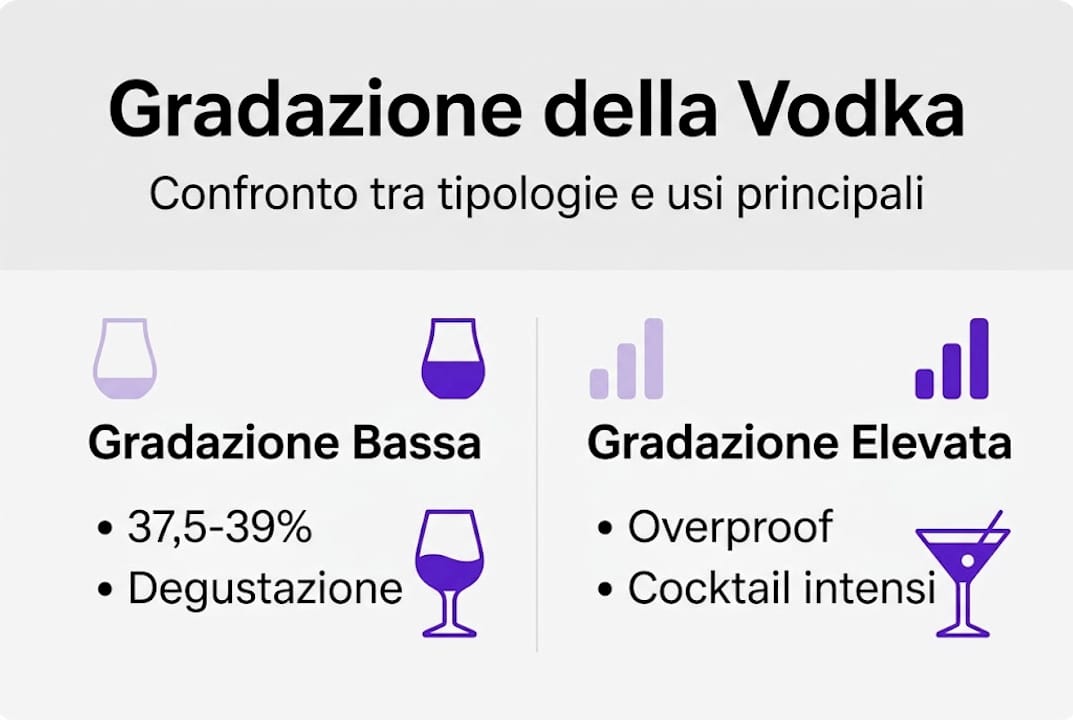
- Low-proof (37.5% up to 39%vol): Rare but present, especially in European artisanal productions that want to enhance delicate notes and soft textures. Ideal for those seeking a more accessible experience.
- Standard-proof (40%vol): The global benchmark. Balances alcoholic presence with aromatic readability. It is the most versatile choice for tasting and mixing.
- Overproof (50%vol and above): Designed for specific uses. According to American regulations, high-proof versions are not intended for neat consumption but for intense cocktails or collecting.
Artisanal producers carefully choose the alcohol content. Some distilleries increase the alcoholic percentage to better preserve aromas during aging or transport. Others do so to respect local traditions: in certain Eastern European countries, vodkas at 50%vol or more are considered the historical norm, not an exception.
| Type | Alcohol content | Primary use | Profile |
|---|---|---|---|
| Low-proof | 37.5% to 39% | Neat tasting | Smooth, delicate |
| Standard | 40% | Versatile | Balanced |
| High-proof | 50% to 60% | Cocktails, collection | Intense, bold |
| Overproof | Over 60% | Collection, mixing | Extreme |
Exploring the types of artisanal vodka available on the market today means discovering a world much more varied than one might think. The stories of unflavored vodka show how apparent simplicity hides remarkable production complexities, while the types of Italian vodka demonstrate how territory also influences alcohol content choices.
Pro Tip: Overproof versions are often produced in limited and numbered editions. For a collector, they represent unique pieces not only for their alcohol content but for the entire narrative they carry with them: from bottle design to distillery history.
How alcohol content influences taste, aroma, and experience
Now that you know the different types of vodka, let's explore how alcohol content affects your tasting experiences and aromatic nuances. This is where many enthusiasts discover something surprising.
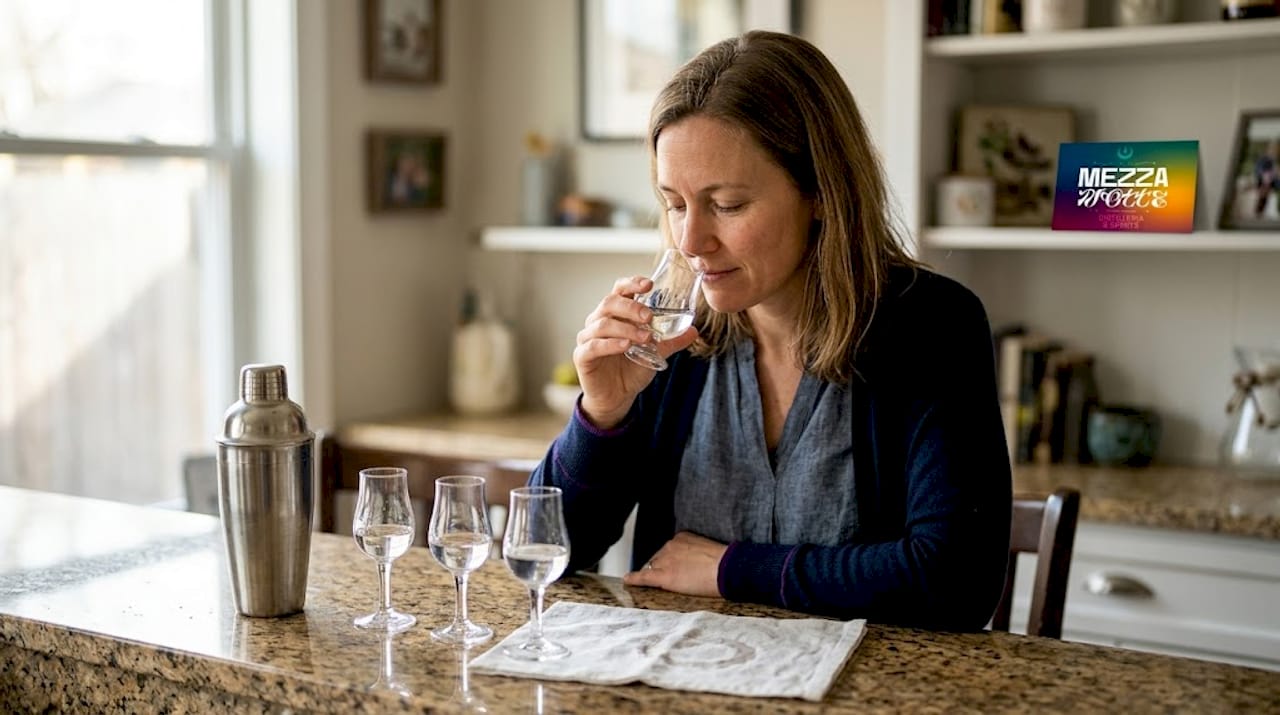
The higher the alcohol content, the more ethanol becomes a protagonist to the nose and palate. A 50%vol vodka releases more intense aromas on first contact, but risks covering subtler notes, those floral or cereal notes that make an artisanal production unique. A 40%vol vodka, on the other hand, allows more room for nuances.
Here's what specifically changes with alcohol content:
- On the nose: Higher alcohol content intensifies the alcoholic perception and can mask secondary aromas.
- In the mouth: The texture changes: overproof vodkas are warmer and more persistent, while standard ones are cleaner.
- On the finish: A high alcohol content lengthens the finish, but not always pleasantly for all palates.
- In mixing: High-proof versions better withstand the addition of ice and strong ingredients.
There's a myth to debunk, and it's worth stating clearly: higher alcohol content does not mean better vodka. As European legal parameters confirm, the minimum of 37.5%vol exists precisely because something excellent can be produced even at that threshold.
"Alcoholic strength is a tool in the distiller's hands, not a trophy. A well-made 38%vol vodka is infinitely better than a mediocre overproof one."
The same applies when looking at US bottles: the American market imposes a minimum of 40%vol, but this does not automatically make vodkas produced overseas superior to European ones with slightly lower alcohol content.
If you want to refine your palate, the Italian spirits tasting method offers a structured approach to evaluate each bottle regardless of alcohol content. Italian artisanal excellences demonstrate every day that quality and alcohol content are independent variables.
Alcohol content and practical use: pairings, cocktails, and collecting
Having understood the sensory nuances, here's how to make the most of alcohol content in everyday practice and collecting. The right choice always depends on the use you intend for it.
- For neat tasting: Choose a vodka between 37.5% and 40%vol. This range allows you to appreciate the aromatic characteristics without the alcohol overpowering everything else.
- For classic cocktails: 40%vol is the universal standard. It works perfectly in recipes like the Moscow Mule or the Cosmopolitan, where the balance of ingredients is fundamental.
- For intense or signature cocktails: A vodka between 45% and 55%vol better withstands strong ingredients such as acidic juices, thick syrups, or bitter liqueurs. The higher alcohol content maintains the drink's structure even with a lot of ice.
- For collecting: Look for limited editions with particular alcohol contents, often accompanied by exclusive packaging and numbering. Overproof variants tend to have smaller runs and greater value over time.
- For food pairings: A standard vodka pairs well with light appetizers, raw fish, and fresh cheeses. Higher proof versions better handle spicy or smoked dishes.
If you want to delve deeper into mixing possibilities, vodka cocktails offer concrete ideas for every occasion. It's also worth comparing the alcohol content of gin to understand how other spirits handle the same variable, or exploring the fundamental differences in the guide on vodka vs gin.
Pro Tip: In signature cocktails or recipes that involve cold infusions, an overproof vodka extracts aromas better from botanical ingredients. The final result is more complex and distinctive, even if it is then diluted with ice or other liquids.
Our perspective on vodka alcohol content: beyond the numbers, the culture
After years spent exploring artisanal spirits, we are convinced of one thing: alcohol content is a number, but vodka is a story. There isn't a single right percentage for everyone. There is the right one for you, in that moment, with that bottle.
A collector looking for an overproof edition is not chasing the quickest buzz. They are looking for an object that tells a story: a distillery that made a courageous choice, a producer who decided not to follow the mass market. That bottle, with its non-standard alcohol content, carries a precise identity.
The artisanal stories that passionate us most are always those where alcohol content is a conscious choice, not a convention. The added value of an artisanal vodka is never solely in its alcoholic strength: it lies in its character, in the consistency between product and narrative, in its ability to surprise those who taste it. This is what we seek, and what we want to share with those who, like you, see each bottle as more than just a simple spirit.
Discover artisanal vodkas selected for every palate
If your curiosity is piqued and you want to experiment with new alcohol contents and tastes, here's where to find inspiration. Our selection of Mezzanotte artisanal vodka gathers bottles chosen for their aromatic identity, distinctive design, and the story they carry with them, from standard versions perfect for tasting to special editions designed for passionate collectors.

Each bottle in the catalog is accompanied by a narrative that goes beyond the simple technical specifications. If you want to broaden your horizons beyond vodka, the Mezzanotte artisanal gin collection offers spirits with equally interesting alcohol contents and botanical profiles to explore and compare.
Frequently asked questions about vodka alcohol content
What is the minimum alcohol content required for vodka in Europe?
By law in the European Union, vodka must have a minimum alcohol content of 37.5%vol. Any product below this threshold cannot be marketed as vodka in the European market.
Why do some artisanal vodkas exceed 50% alcohol content?
Overproof versions are primarily intended for intense cocktails or to attract collectors, as confirmed by regulations on high alcohol content. They offer particular sensory experiences and are often produced in limited runs with exclusive packaging.
Is it true that the best vodka is always 40%vol?
No, quality does not depend on alcohol content. Even lower or higher proof versions can be excellent: as comparisons between standard and overproof show, what matters is the quality of the raw material and the distillation process.
How does the taste of vodka change with varying alcohol content?
A higher alcohol content intensifies aromas and sensations on the palate, but can mask delicate notes. High-proof versions are warmer and more persistent, while standard ones are cleaner and more accessible for daily tasting.
Recommendation
- Unflavored vodka: authentic purity and artisanal stories – Mezzanotte | Distillery & Spirits
- Italian Vodka: A Guide to Artisanal Excellence – Mezzanotte | Distillery & Spirits
- Gin Alcohol Content: A Complete Guide to Types and Rules – Mezzanotte | Distillery & Spirits
- Top 6 Vodka Cocktails in 2026 for Mixology Enthusiasts – Mezzanotte | Distillery & Spirits
- Step-by-step Gin Cocktail Guide: Create Perfect Drinks at Home – GIN NIRO