

Traditional Gin Production Explained: Botanicals, Distillation, Flavor Variety, and Craft Differences. Perfect for Connoisseurs.
Traditional Gin Production: Craftsmanship and Character
Feb 24, 2026

Anyone who has tried a traditional gin from a small distillery in Switzerland or Southern Germany immediately recognizes the difference from industrial products. For gin lovers looking for more than just alcohol, true craftsmanship is at the heart of every bottle – from the selection of high-quality botanicals to controlled distillation in copper pot stills. This article shows why traditional gin production combines true aromatic diversity and cultural depth.
Table of Contents
- What distinguishes traditional gin production
- Selection and Importance of Botanicals
- Artisanal Distillation: Methods and Technique
- Flavor Profiles and Regional Differences
- Avoiding Common Production Mistakes
Key Insights
| Point | Details |
|---|---|
| Traditional Gin Production | Craftsmanship and precision are crucial for quality; the careful selection and harmonization of botanicals are paramount. |
| Flavoring Methods | Maceration and vapor infusion are the two main methods for extracting and perfecting flavors. |
| Juniper as the Base | Juniper is indispensable and defines the character of every gin; the choice of variety significantly influences the final product. |
| Quality Control | Strict quality control and documentation are essential to ensure consistent quality and flavor profiles. |
What distinguishes traditional gin production
Traditional gin production fundamentally differs from industrial mass production. It stands for craftsmanship, precision, and the conscious choice of every single ingredient. A true artisanal gin is created through careful control, not through speed.
The roots of this tradition lie deep in Europe's history. In the 17th century, the Netherlands began flavoring alcohol with juniper berries. From there, the art spread to England and across Europe.
The Role of Botanicals
Juniper is the heart of every true gin. It is not merely an ingredient, but legally prescribed and defines the character. Around this central botanical, individual creations emerge.
Traditionalists rely on a limited palette of high-quality botanicals:
- Juniper (indispensable, aromatic base)
- Coriander (spicy, citrusy)
- Wormwood (bitter, complex)
- Angelica root (earthy notes)
- Orris (floral, elegant)
Each distillery develops its own blend, which survives generations. These secret recipes are guarded like works of art.
The Artisanal Distillation Process
Production begins with neutral agricultural alcohol from grain or molasses. The quality of this base alcohol determines the final result. Traditional distilleries mostly use 94-96% volume pure alcohol.
Next comes the crucial step: flavoring through two established processes.
Maceration means placing the botanicals directly into the raw alcohol. They infuse into it, like tea in hot water. This process takes time, sometimes several days.
Vapor infusion passes alcohol vapors over the botanicals. The aromas vaporize, mix, and are newly created. Some distilleries combine both methods for maximum complexity.
An overview: The two most important flavoring methods in gin and their effects.
| Method | Advantages | Typical Aromas |
|---|---|---|
| Maceration | Intense extraction of robust botanicals | Spicy, earthy, complex |
| Vapor Infusion | Preservation of delicate, fresh notes | Citrus, floral, light |
Controlling temperature and cut times during distillation determines whether you get a great or mediocre gin.
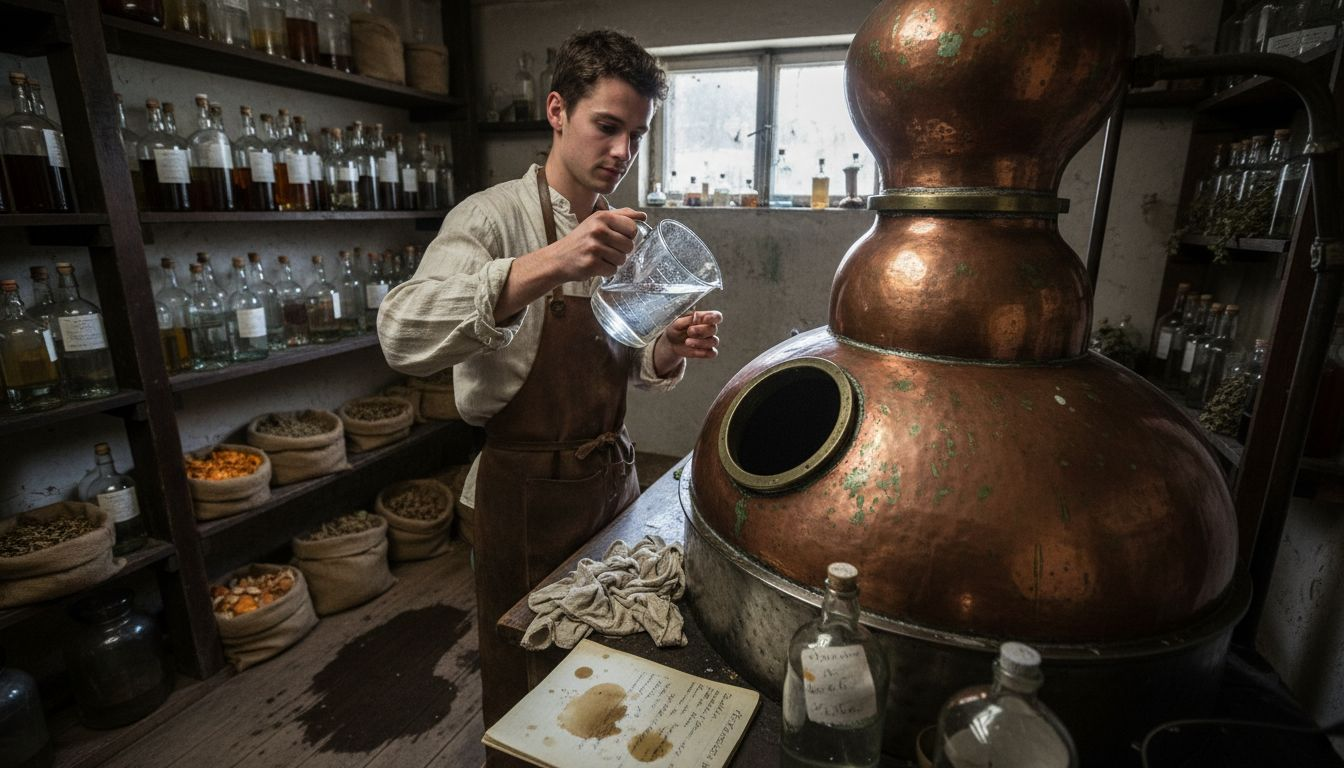
After flavoring, distillation in copper pot stills follows. These copper vessels are not decorative; they work chemically. They filter out impurities and refine the aromas. The master distiller uses their experienced knowledge to only use the middle cut, the best fraction between "heads" and "tails."
Dilution and Resting
After distillation, the gin has approximately 75-85% ABV. An additional step is necessary: the raw gin is diluted to drinking strength, usually 40-47% ABV. High-quality water plays a role here that is often underestimated.
Many traditional distilleries store their gin after bottling to allow the aromas to combine and harmonize. This is not mandatory, but a sign of quality consciousness.
What characterizes true craftsmanship
Traditional gin makers work according to these principles:
- Careful selection of each botanical by quality, not price
- Controlled batch production in manageable quantities
- Personal knowledge of the master distiller about each production
- Repetition of proven methods, no constant change
- Transparency about origin and composition
The opposite is seen in industrial productions: flavoring with essence concentrates instead of real botanicals, automated processes without human craftsmanship, focus on cost savings.
Pro-tip: When buying, look for artisanal gins from smaller distilleries in Central Europe that transparently state their botanical composition and work consistently from batch to batch.
Selection and Importance of Botanicals
Botanicals are the heart of traditional gin production. They distinguish a mediocre gin from an exceptional one. The right selection and combination make the difference between generic and distinctive.
Each distillery pursues its own philosophy. Some use five botanicals, others twenty or more. It's not about quantity, but about harmony and intention.
Juniper: The Foundation
Juniper is not optional, not negotiable. It defines gin legally and tastily. Without juniper, it's not gin, but an flavored alcohol.
There are different types of juniper, each with its own character:
- Juniperus communis (classic, spicy, European)
- Juniperus oxycedrus (more intense, resinous)
- Juniperus recurva (subtler, more floral)
Traditional distillers carefully select which variety fulfills their vision. The origin and drying method significantly influence the aroma.
The right juniper sets the tone for everything else that follows.
Understanding Complementary Flavors
Layers are built around juniper. Coriander brings spice and citrus notes. Angelica root grounds the gin with mineral, spicy facets. Orris adds elegance and floral softness.
Some distilleries complement these classics:
- Citrus peels (orange, lemon, grapefruit)
- Spices (cardamom, nutmeg, clove)
- Botanicals from tradition (chamomile, lavender)
- Regional specialties (gentian, genepi)
Each addition changes the overall impression. A single new botanical can revolutionize or ruin a gin.
Finding the Balance
More is not better. An overloaded gin tastes confusing where elegance should be. Botanica Gins show how specialized aroma composition works.
Traditional distillers think in ratios. They work according to recipes that have been perfected over decades. This consistency makes the difference for loyal fans.
The selection of botanicals must match the distillery's DNA. An Italian gin needs different accents than an English or Scandinavian one.
Quality of Raw Materials
Botanicals are like wine grapes: origin and vintage matter. The best angelica root doesn't come from industrial warehouses, but from trusted suppliers with expertise.
Artisanal distilleries control:
- Country and region of origin of the botanicals
- Harvesting and storage conditions
- Freshness and aroma intensity
- Sustainability and ethical sourcing
A botanical that has been stored for a long time or transported incorrectly loses its aromatic substances. The gin becomes flat and unappealing.
Seasonality and Consistency
Wild-grown botanicals fluctuate seasonally. Good distilleries know this and subtly adjust their recipes. They maintain quality, not consistency, if that means making the gin better.
Others work with dried, stored quantities to be identical batch by batch. Both ways are traditional and legitimate.
Pro-tip: Compare two vintages of the same gin side-by-side – the subtle differences show you how seriously a distillery takes its botanicals.
Artisanal Distillation: Methods and Technique
Distillation is the heart of gin production. It separates desired aromas from undesirable substances. Without precise technique, no characteristic gin can be created.
Traditional distilleries rely on proven methods that have been refined over generations. The right technique determines whether the gin appears elegant or raw.
The Copper Pot Still
Copper pot stills are the symbol of artisanal distillation. These large, bulbous vessels made of copper are not only traditional but also chemically functional. Copper reacts with sulfur compounds and purifies the alcohol during distillation.
The size of the still influences the character of the gin:
- Small stills (under 500 liters): more intense, concentrated aromas
- Medium stills (500-1000 liters): balanced complexity
- Large stills (over 1000 liters): more elegant, subtle profiles
Some distilleries also use modern alternatives such as column distillation or combined systems. These methods offer different flavor profiles, but are less traditional.
The copper pot still combines artisanal tradition with scientific precision.
Maceration and Vapor Infusion
Two main methods characterize flavoring. In maceration, botanicals are placed directly into the neutral alcohol. They infuse it like tea, intensely extracting robust aromas like juniper and spices.
Vapor infusion works differently. Alcohol vapors are passed over the botanicals, absorbing fine, volatile aromas. Floral and citrus notes benefit from this method.
Many distillers combine both techniques in the same batch. They macerate robust botanicals, then redistill them with lighter spices. The result is more complex and balanced.
The Middle Cut: The Gold of Distillation
Each distillation produces three fractions: heads, hearts, and tails. Only the hearts are used for the gin. The rest is waste or repurposed.
The master distiller controls:
- Temperature profile during distillation
- Cut times to separate heads and tails
- Condensation speed for optimal aroma extraction
- Aroma balance through sensory evaluation
This process requires experience, not just technology. A master distiller with 20 years of experience tastes when the cut time is perfect.
Temperature Control and Timing
Precise temperature control determines the flavor profile. Too hot, and volatile aromas evaporate. Too cold, and robust notes do not fully extract.
Traditionalists work without computer-controlled systems. They use thermometers, experience, and intuition. This combination often yields better results than automation alone.
Distillation typically takes 6 to 12 hours, depending on the method and botanicals. Faster processes produce thinner gins.
After Distillation
After distillation, gin has an alcohol content of approximately 75-85%. It is diluted with high-quality water to drinking strength, usually 40-47%. This phase also takes time – good distilleries allow the gin to rest so that the aromas can combine.
Pro-tip: When buying, look for artisanal gins that transparently state their distillation method – copper pot still, maceration details, and resting times are good indicators of quality.
Flavor Profiles and Regional Differences
Not all gin is created equal. Flavor profiles differ dramatically depending on the region of origin, style, and master distiller's philosophy. A London gin tastes completely different from an Italian or Scandinavian one.
The regional differences do not arise by chance. They reflect local traditions, available botanicals, and cultural preferences.
London Dry Gin: The Classic
London Dry Gin is the global standard. It must contain at least 70% juniper and can only be flavored after distillation. The result: a dry, spicy, clearly structured profile.
London Dry Gins typically show:
- Strong juniper character (spicy, resinous)
- Coriander spice and citrus notes
- Dryness without sweetness
- Straightforward, elegant structure
British distillers adhere strictly to these rules. They see London Dry as an art form, not a limitation.
London Dry defines what gin means to millions of people.
New Western Dry: The Rebellion
New Western gin styles often push juniper into the background. Instead, botanicals such as lavender, citrus fruits, spices, or even fruits dominate. The result is fruitier, more floral, sometimes even sweetish.
These gins emerged primarily in the USA and Germany. They are aimed at drinkers who find classic dry gins too tart. They work excellently in cocktails, where their individuality shines.
New Western gins are often more experimental and less rule-bound than their British counterparts.
Regional Profiles: Central and Northern Europe
Germany, Switzerland, and the Scandinavian countries have developed their own gin identities.
German gins often use regional botanicals such as gentian, genepi, or Black Forest fir tips. They tend towards spicy, earthy profiles with local depth.
Scandinavian gins emphasize subtle elegance. They use botanicals such as birch leaves, angelica, and juniper berries from northern forests. The result is lean, elegant, with mineral notes.
Italian gins bring Mediterranean character. Citrus fruits, almonds, and floral-elegant botanicals create warmer, more expressive profiles.
Comparison of the main gin styles and their regional characteristics.
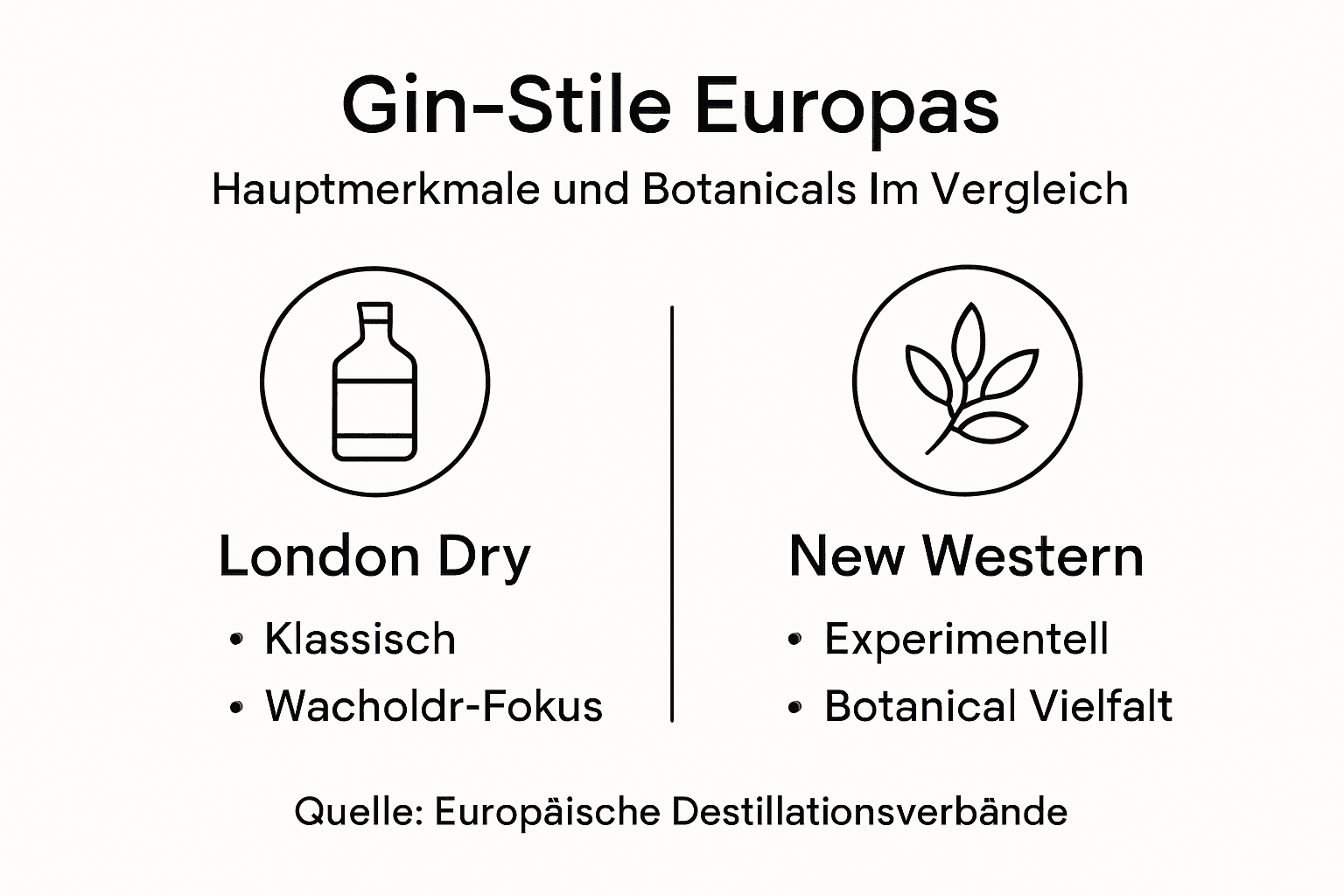
| Style/Region | Key Characteristics | Botanical Focus |
|---|---|---|
| London Dry | Dry, juniper-forward | Juniper, coriander, citrus |
| New Western | Fruity, floral | Lavender, citrus, spices |
| German/Scandinavian | Spicy, elegant | Gentian, Angelica, regional herbs |
| Italian | Mediterranean, aromatic | Citrus, almonds, floral notes |
Understanding Flavor Profiles
When tasting a gin, pay attention to these dimensions:
- Juniper intensity (dominant to subtle)
- Spice character (spicy, warm, earthy)
- Floral-fruity notes (floral, citrusy, fruity)
- Finish (short and dry to long and complex)
No profile is better than another. It depends on what you like and how you want to drink the gin.
Why These Differences Matter
Traditional distilleries consciously preserve their regional styles. They don't constantly experiment. Instead, they refine a concept over decades. This continuity makes a gin timeless rather than trendy.
If you find a craft gin from your region, try it. It represents local tradition and expertise.
Pro Tip: Compare a classic London Dry with a New Western Gin and a regional gin from your area side-by-side – the differences will help you define your personal taste.
Avoiding Common Production Mistakes
Even experienced distillers make mistakes. Most arise from inattention, not ignorance. A single error can ruin an entire batch.
The good news: These mistakes are avoidable if you know what to look for.
Mistake 1: Incorrect Botanical Dosage
Too much juniper makes the gin overwhelming and cloying. Too little results in a thin, characterless product. Balance is crucial.
Imprecisely dosed botanicals lead to an unbalanced taste. A teaspoon more coriander changes the entire profile.
Professional distillers weigh their botanicals to the gram. They keep written records of which quantities yielded which results. This documentation is gold.
Amateurs often estimate. That rarely works twice the same way.
Mistake 2: Distillation Temperature and Timing
Too high temperatures evaporate volatile, delicate aromas. Too low temperatures extract robust botanicals incompletely. The result in both cases is unbalanced.
Cut points are just as critical. The heart of the run begins and ends at exact moments. Missing these means including heads or tails – creating impure, unpleasant aromas.
Good distilleries log:
- Starting temperature and heating rate
- Exact times for heart run start and end
- Condensation rate
- End temperature and cooling process
This data is compared and refined from batch to batch.
A single minute too early or too late makes the difference between excellent and mediocre gin.
Mistake 3: Inferior Raw Materials
Cheap neutral alcohol is not neutral. It contains impurities that carry through the distillation. An inferior gin results.
The same applies to old, improperly stored botanicals. A botanical that has been on the shelf too long loses its aromatic compounds. The gin becomes flat.
Craft distillers test their raw materials before processing. They smell botanicals, check color and texture, taste the alcohol. Inferior materials are rejected, no questions asked.
Mistake 4: Insufficient Resting Times
After distillation, gin needs time for the flavors to meld. Bottling immediately results in a harsh, immature gin.
The gin should rest for at least one to two weeks after dilution. Some distilleries wait for months. This patience pays off.
Mistake 5: Lack of Quality Control
Professional distillers blind taste and critically evaluate every batch. They compare it to standard batches. Deviations are investigated and documented.
Without this control, you discover problems too late, when the gin is already on the market.
Pro Tip: If you try gin from small distilleries, ask about their quality control – competent distillers love to talk about their processes and standards.
Discover Craft Gin with Character and Tradition
The careful selection of botanicals and precise distillation determine the uniqueness of each gin. If you are looking for true craftsmanship that preserves old traditions while delighting with innovative aromas, then you have come to the right place. On Mezzanotte.shop, you will find an exclusive selection of handcrafted gins produced with passion and the highest quality standards.

Immerse yourself in the world of gin craftsmanship and experience gin that impresses with transparent production and characterful botanicals. Benefit from our diverse range that meets the highest demands and discover your next favorite gin now. Visit Mezzanotte.shop and secure top-quality craftmanship from Italian distillation artistry.
Frequently Asked Questions
What are the main components of traditional gin production?
The main components are high-quality botanicals, with juniper playing an indispensable role. Other important botanicals include coriander, wormwood, angelica root, and iris.
How does maceration influence the taste of gin?
Maceration allows for an intensive extraction of the aromas from the botanicals, as the ingredients are steeped in neutral alcohol for an extended period. This results in a complex and robust flavor profile.
What role does the copper pot still play in gin distillation?
The copper pot still purifies the alcohol and removes unwanted impurities. It also helps to better extract the delicate aromas during distillation, leading to a high-quality gin.
Why are the selection and quality of botanicals so important?
The selection and quality of botanicals are crucial as they determine the character and aromas of the gin. High-quality, freshly harvested botanicals ensure a multifaceted and balanced taste, while inferior ingredients can make the gin flat and unappealing.
Recommendation
- The Complete Guide to Craft Gin: Discover All the Secrets 2026 – Mezzanotte | Distilleria & Spirits
- Gin Cocktails: A Complete Guide to Making Classics and Contemporary Cr – Mezzanotte | Distilleria & Spirits
- The Complete Guide to Distilled Gin: Discover Everything in 2026 – Mezzanotte | Distilleria & Spirits
- Making Gin for Third Parties: An Essential Guide 2026 – Mezzanotte | Distilleria & Spirits