

Discover how to choose among Italian bitter types for authentic cocktails. Selection criteria, local botanicals, and pairings for mixology enthusiasts.
Discover Italian bitters for unique cocktails
Mar 22, 2026

Choosing among the many Italian bitters can be a challenge for those seeking artisanal products with authentic stories and distinctive local botanicals. Each bitter tells a regional tradition and offers a unique aromatic profile, but how do you navigate between potable, aromatic, and infinite variations? This article explores the essential criteria for evaluating Italian bitter types, from production techniques to botanicals, from design to versatility in cocktails. You will discover how to balance bitterness and sweetness, which artisanal brands to prioritize, and how to pair the perfect bitter with your mixology style.
Table of Contents
- Key takeaways
- Criteria for Choosing Italian Bitter Types
- The Main Italian Artisanal Bitters
- Comparison of Italian Bitters: Characteristics and Uses
- How to Choose the Perfect Italian Bitter for Your Cocktail
- Discover the Best Italian Artisanal Spirits on Mezzanotte
- FAQs on Italian Bitter Types
Key Points
| Point | Details |
|---|---|
| Main types | Italian bitters are distinguished between potable and aromatic, with different uses for aperitifs or drops in cocktails. |
| Production method | The production method influences the aromatic intensity between traditional maceration and cold infusions. |
| Bitter-sweet balance | The balance between bitter and sweet is crucial to prevent the bitter from dominating or flattening the drink. |
| Short supply chain and local botanicals | The short supply chain and local botanicals ensure authenticity and traceability. |
| Packaging and storytelling | Packaging and storytelling enhance the user experience and make the product a collector's item. |
Criteria for Choosing Italian Bitter Types
When selecting an Italian bitter, the first step is to understand the fundamental distinction between potable and aromatic types. Potable bitters are consumed as aperitifs or neat, while aromatic ones are used in drops to enrich complex cocktails. This difference directly influences the alcohol content, the concentration of botanicals, and the product's taste profile.
The production method determines the quality and aromatic intensity of the bitter. Most artisanal producers use maceration of bitter herbs, spices, and citrus fruits in neutral grain alcohol, with times varying from a few weeks to several months. Some brands experiment with cold infusion to preserve more delicate and volatile notes, resulting in fresh and complex aromatic profiles. The choice between traditional maceration and modern techniques influences the bitter's final character.
The balance between bitter and sweet is a crucial criterion in selection. A bitter that is too bitter risks dominating the cocktail, while an excess of sweetness flattens the aromatic complexity. Enthusiasts should look for products that balance these elements based on the use of bitters in Italian mixology, considering whether the bitter will be the protagonist or a complement in the drink.
The short supply chain of local botanicals ensures authenticity and traceability of ingredients. The best artisanal bitters highlight herbs and roots collected in specific territories, often mountainous or hilly, where they grow spontaneously or are cultivated using sustainable methods. This choice not only supports the local economy but also gives the product a recognizable territorial identity.
Packaging and design matter enormously for the overall experience. Carefully crafted bottles, labels that tell stories, and evocative graphics transform the bitter into a collector's item as well as a cocktail ingredient. For spirits enthusiasts with strong storytelling, the product's aesthetics amplify sensory pleasure and make every use a special moment.
Pro Tip: When evaluating an artisanal bitter, always check the complete list of botanicals and their origin. Transparent producers who declare 100% natural ingredients and extraction methods offer guarantees of superior quality.
Here are the main criteria to consider:
- Type of bitter based on intended use, neat aperitif, or mixology ingredient
- Production method and maceration times to evaluate aromatic complexity
- Balance between bitter and sweet components suitable for your palate and cocktail style
- Origin and quality of botanicals, prioritizing short supply chain and local ingredients
- Bottle design and brand storytelling to enrich the user experience
The Main Italian Artisanal Bitters
The landscape of distinctive Italian artisanal bitters offers exceptional products that combine local tradition and production innovation. Among these, the Bitter del Redentore with botanicals from the Sibillini Mountains stands out, using herbs collected in the Marche mountains following an ancient recipe passed down through generations. The evocative graphics of the bottle recall mountain landscapes and the spirituality of the territory, transforming every sip into a sensory journey.
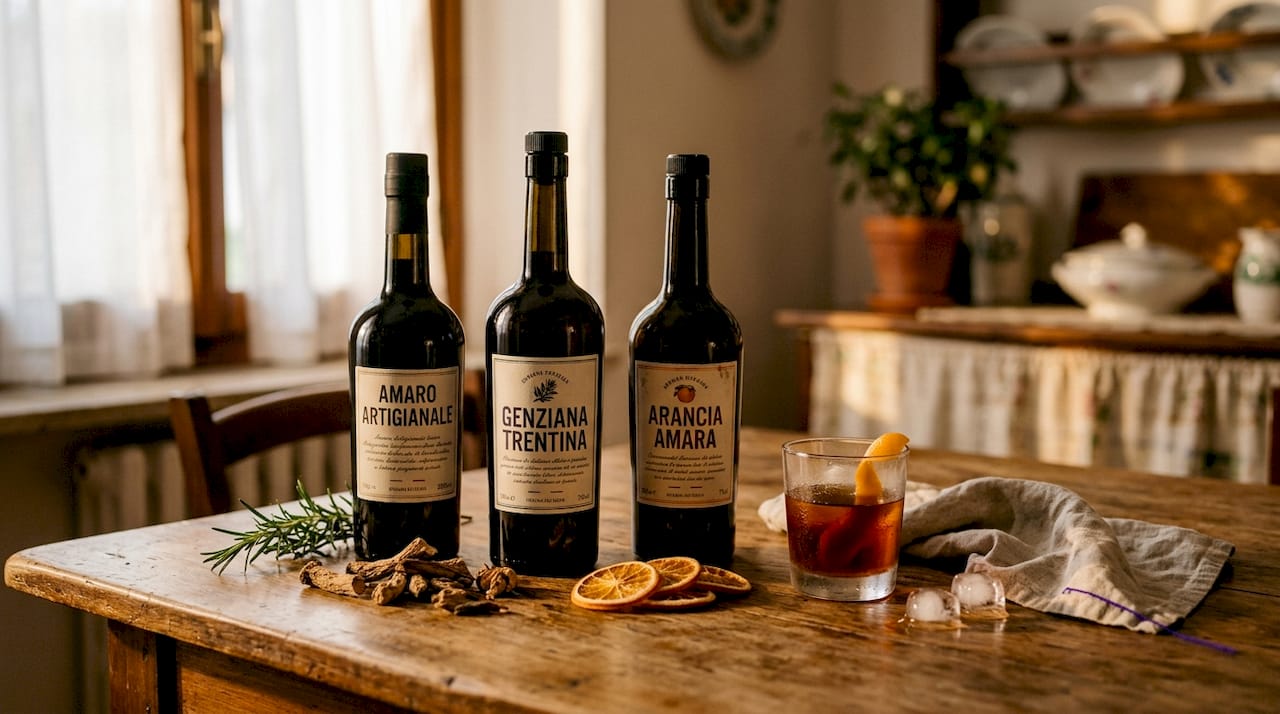
The Nova Bitter celebrates the first Italian bitter of 1860, reinterpreting the Novara tradition with a contemporary approach. Its distinctive blue-green color comes from selected alpine botanicals, while the iconic bottle design pays homage to the history of Piedmontese distillation. This bitter stands out for the balance between bitter notes of gentian and citrusy touches that make it versatile in numerous classic cocktails.
Other notable examples include Kingfisher from Val di Susa, which features alpine herbs hand-picked at high altitudes, and Opificium from Friuli, characterized by a complex aromatic profile with over 20 local botanicals. Menebit offers a sweeter and rounder version, ideal for those new to the world of bitters, while The Adler stands out for its exclusive use of 100% natural ingredients without artificial colorings.
Each artisanal bitter tells a territorial story through its botanicals. The gentian roots from the Alps impart a clean and persistent bitterness, while Mediterranean citrus fruits add freshness and liveliness. Aromatic herbs such as wormwood, artemisia, and rhubarb contribute to creating layered taste profiles that evolve in the glass.
Choosing an Italian artisanal bitter should consider not only the aromatic profile but also the producer's values. Many emerging brands adopt sustainable practices, from ethical harvesting of botanicals to the use of recyclable bottles, responding to the growing environmental awareness of enthusiasts.
Pro Tip: To fully appreciate the nuances of an artisanal bitter, first taste it neat at room temperature, then with ice, and finally in a simple cocktail like bitter soda. This allows you to evaluate the aromatic evolution and choose the ideal pairing.
Here are some Italian artisanal bitters to discover:
- Bitter del Redentore with botanicals from the Sibillini Mountains and evocative packaging of the Marche tradition
- Nova Bitter celebrating Novara's history with distinctive color and selected alpine botanicals
- Kingfisher Val di Susa with hand-picked herbs from high altitudes for an authentic mountain profile
- Opificium Friuli characterized by over 20 local botanicals for layered aromatic complexity
- Menebit with a sweeter and rounder profile ideal for bitter novices
- The Adler with 100% natural ingredients without artificial colorings for absolute purity
Comparison of Italian Bitters: Characteristics and Uses
Understanding the differences between Italian bitters requires a detailed analysis of their technical and organoleptic characteristics. The contrast between dry and sweet amari directly influences the product's versatility in mixology, determining which cocktails best highlight each bitter. The type, alcohol content, and main botanicals create distinctive profiles that adapt to specific uses.
| Bitter | Type | Alcohol Content | Main Botanicals | Sweetness | Color | Ideal Use |
|---|---|---|---|---|---|---|
| Bitter del Redentore | Potable | 25% | Gentian, artemisia, Sibillini citrus | Medium | Ruby red | Negroni, neat aperitifs |
| Nova Bitter | Aromatic | 30% | Alpine botanicals, gentian | Low | Blue-green | Creative cocktails, twists on classics |
| Kingfisher | Potable | 28% | Alpine herbs, rhubarb | Medium-low | Amber | Americano, bitter soda |
| Opificium | Aromatic | 35% | 20+ Friulian botanicals | Low | Intense red | Negroni, Manhattan variations |
| Menebit | Potable | 22% | Citrus, sweet spices | High | Light red | Spritz, sweet aperitifs |
The analysis of each bitter's value in the tradition and innovation of amari reveals how artisanal products position themselves in the market. Bitters with higher alcohol content offer greater aromatic persistence and lend themselves to spirit-forward cocktails like the Negroni or Manhattan variations. Those with lower alcohol content are more accessible for extended aperitifs or neat consumption.
The sweetness profile determines the optimal pairing with other ingredients. Dry bitters with low sweetness enhance the complexity of botanical gins and dry vermouths, creating balanced and sophisticated cocktails. Sweeter bitters pair better with neutral bases like vodka or in fruity cocktails where they balance the acidity of citrus fruits.
The color of the bitter is not just aesthetic but often indicates the type of botanicals used. Intense red hues come from roots like rhubarb and cinchona, while lighter colors suggest a prevalence of citrus and aromatic herbs. Bitters with unusual colors like Nova's blue-green use specific botanicals that impart both color and a unique taste profile.
Pro Tip: Choose cold-infused bitters if you're looking for more delicate and fresh aromas, ideal for summer cocktails and light mixes. Always prioritize the short supply chain to ensure territorial authenticity and support local producers who value regional traditions.
Versatility in mixology is a decisive criterion. White or light bitters lend themselves to sours and fruity cocktails without altering the final color, while intense red bitters visually and tastefully dominate classic drinks like Negroni and Americano. Some high-proof aromatic bitters work best in drops to add complexity without overpowering other ingredients.
Here's how to evaluate bitter for your use:
- Check the alcohol content in relation to the type of cocktail, spirit-forward or elongated
- Consider the sweetness level to balance acidity and bitterness in the final drink
- Evaluate the type of botanicals for harmonious pairings with gin, vermouth, or vodka
- Observe the color to anticipate the visual impact in the served cocktail
- Test the aromatic persistence by tasting the bitter neat before mixing
How to Choose the Perfect Italian Bitter for Your Cocktail
Selecting the ideal bitter requires evaluating the degree of bitterness and sweetness based on the cocktail you intend to prepare. A classic Negroni calls for a full-bodied bitter with pronounced bitterness to balance the sweetness of red vermouth and the strength of gin. Conversely, an Americano or a Spritz benefit from rounder and sweeter bitters that integrate harmoniously with sparkling wine.
The bitter's packaging and story enrich the sensory experience beyond mere taste. When serving a cocktail to guests or preparing it for yourself, a bottle with a refined design and an authentic territorial narrative transforms the moment into something memorable. Spirits enthusiasts with strong storytelling appreciate products that recount local myths, family traditions, or ties to the region of origin.
Adapt the choice of bitter to the occasion and consumption context. For outdoor summer aperitifs, opt for fresh and citrusy bitters that lend themselves to aperitif cocktails elongated with tonic or soda. For winter evenings or after-dinner drinks, choose more intense and spicy bitters that can be enjoyed neat or in spirit-forward cocktails served in lowball glasses.
The versatility of the bitter determines how often you will use it. A high-proof aromatic bitter works in drops for numerous different cocktails, from the Manhattan to the Old Fashioned, ensuring an investment that lasts over time. A more specific potable bitter excels in a few classic cocktails but offers an authentic and tradition-faithful experience.
Pro Tip: Experiment with white bitters for sour and fruity cocktails; they represent an excellent alternative for creative mixology. These lesser-known products offer clean bitterness without dominating the color or aromatic profile of delicate ingredients like fresh juices or floral liqueurs.
The origin of the botanicals guarantees authenticity and superior quality. Bitters that declare the specific origin of the herbs used, such as the Alps mountains or Mediterranean hills, offer traceability and connection to the territory. This transparency often indicates a genuine artisanal approach and attention to production details.
The price generally reflects the quality of the ingredients and the production method. Artisanal bitters with hand-picked botanicals and long maceration times cost more but offer superior aromatic complexity. For those beginning to explore the world of Italian bitters, a mid-range product with good balance represents the ideal compromise between quality and accessibility.
Here are the steps to choose your perfect bitter:
- Identify the cocktails you prepare most often and check which type of bitter enhances them
- Evaluate your personal palate, whether you prefer intense bitterness or more balanced profiles
- Consider packaging and storytelling if aesthetics and narrative enrich your experience
- Verify the origin of botanicals to ensure authenticity and artisanal quality
- Start with a versatile bitter if you're a beginner, then explore more specific and niche products
- Read reviews from other enthusiasts and bartenders to discover unusual and creative pairings
Discover the Best Italian Artisanal Spirits on Mezzanotte
After exploring the criteria for choosing the ideal Italian bitter, it's time to discover where to find artisanal spirits that embody these values of quality and authenticity. Mezzanotte offers a curated selection of Italian spirits that combine artisanal tradition, unique botanicals, and engaging storytelling.

The collection of Italian artisanal gin features products that celebrate local botanicals and innovative distillation techniques. Each gin tells a territorial story through selected ingredients and production processes that respect tradition while embracing contemporary creativity. These spirits are perfectly suited for refined cocktails where Italian bitter becomes the ideal complement.
For those seeking absolute versatility, the selection of Italian craft vodka offers clean and distinctive bases that enhance the characteristics of bitters in creative cocktails. The purity of these vodkas allows the complex aromatic profiles of the bitters to emerge without interference, creating balanced and sophisticated drinks.
Explore the entire range of craft spirits to discover the latest novelties and classics of Italian distillation. Each product is selected for its quality, authenticity, and ability to transform your cocktails into memorable experiences that celebrate Italian drinking culture.
FAQ on Types of Italian Bitters
What is the difference between potable and aromatic bitters?
Potable bitters are consumed neat or as a base for extended aperitifs, with a moderate alcohol content between 20 and 28 degrees and a balanced bitter-sweet profile. Aromatic bitters have a higher alcohol content, up to 35 degrees, and are used in drops to enrich complex cocktails without overpowering them.
How do Italian bitters pair with Negroni?
For an authentic Negroni, choose a full-bodied bitter with pronounced bitterness and notes of gentian, cinchona, and citrus that balance the sweetness of red vermouth. The alcohol content should be at least 25 degrees to ensure aromatic persistence and structure for the final cocktail.
How long does an open Italian bitter last?
A bitter correctly stored in a cool, dark place maintains its characteristics for 12 months after opening. High-proof aromatic bitters last longer due to their high alcohol content, which preserves the botanicals.
Which botanicals characterize the best craft bitters?
Quality craft bitters use gentian for basic bitterness, citrus for freshness, rhubarb for complexity, and local aromatic herbs like artemisia and absinthe. The short supply chain and territorial origin of the botanicals guarantee authenticity and distinctive profiles.
How should Italian bitters be stored correctly?
Store bitters upright away from direct light and heat, ideally between 15 and 20 degrees. Always close the cap tightly after use to prevent oxidation and loss of volatile aromas that would compromise the product's quality.
Can I use Italian bitters in non-traditional cocktails?
Absolutely, Italian bitters offer exceptional versatility in creative mixology. Experiment with white bitters in sours and fruity cocktails, or add drops of aromatic bitters to vodka or tequila-based drinks for unexpected complexity and aromatic depth.
Recommendation
- What characterizes a craft bitter: 30 unique botanicals – Mezzanotte | Distillery & Spirits
- What is Italian bitter: history, taste, and culture – Mezzanotte | Distillery & Spirits
- Italian Bitter Liqueurs: History and Tradition of Italian Bitters – Mezzanotte | Distillery & Spirits
- What is a bitter: complete cocktail guide 2026 – Mezzanotte | Distillery & Spirits