

Discover what bitters really are: aromatic concentrates that transform cocktails. Learn about their composition, types, proper use, and common mistakes in this comprehensive guide for craft cocktail enthusiasts.
What bitter means: essential guide for cocktails 2026
Mar 8, 2026

Do you think bitters are just bitter liqueurs? Discover why this idea is far from the truth. Bitters represent one of the most misunderstood and fascinating elements of artisanal mixology. These aromatic concentrates are not simply bitter ingredients, but sensory modulators that radically transform the cocktail experience. In this guide, you will explore their true nature, chemical composition, available varieties, and how to use them correctly to elevate your creations.
Table of Contents
- Definition and Origin of Bitters
- Composition and Sensory Profile of Bitters
- Sensory Role and Effect in Cocktails
- Types and Diversity of Bitters
- Common Mistakes and Clarifications About Bitters
- Practical Applications and Use in Mixology
- Discover Artisanal Spirits at Mezzanotte
- Frequently Asked Questions About Bitters
Key Takeaways
| Point | Details |
|---|---|
| Concentrated nature | Bitters are concentrated herbal aromatic extracts used in drops, not base liqueurs |
| Balancing function | They enhance aroma and connect sweet and sour flavors without adding significant volume |
| Sensory diversity | Over 50 commercial varieties exist with citrus, herbal, and spicy profiles |
| Risk of overdose | Excess ruins the cocktail's balance and makes it undrinkable |
| Professional elevation | Correct use transforms simple drinks into complex and memorable experiences |
Definition and Origin of Bitters
Bitters represent aromatic concentrates made with herbs, roots, and spices that revolutionized modern mixology. Unlike liqueurs you drink directly, these extracts act as liquid seasonings that modify flavors in minimal doses.
Their history begins in the medicinal field of the 19th century. Pharmacists created digestive tonics by combining alcohol with bitter botanicals such as gentian, quinine, and cinchona bark. These mixtures promised to relieve stomach problems and stimulate appetite.
The transition to mixology occurred when bartenders discovered their sensory potential. The first commercial bitter, Angostura, appeared in 1824 in Venezuela as a remedy for tropical ailments. It soon crossed into the world of alcoholic beverages when mixologists noticed how a few drops transformed basic cocktails.
Key elements that define a bitter include:
- High-proof alcoholic base for extracting plant compounds
- Blend of bitter herbs such as gentian, angelica, or wormwood
- Aromatic spices that add sensory complexity
- Prolonged maceration process to concentrate flavors
- Secret formulation that distinguishes each brand
Today, bitters have evolved from simple remedies to essential ingredients. Contemporary artisanal mixology considers them indispensable tools for building layers of flavor. Knowing their history of Italian bitter helps appreciate their versatility.
This transformation from medicine to mixological art demonstrates how gastronomic innovation redefines original purposes. Bitters maintain their medicinal essence in digestive stimulation, but their true value lies in the sensory magic they provide.
Composition and Sensory Profile of Bitters
The complexity of bitters lies in their meticulously balanced botanical chemistry. The characteristic bitterness comes from natural alkaloids and glycosides present in specific plants. Quinine from the cinchona tree and compounds from gentian root create that bitter profile that activates specific receptors on your tongue.
Concentrated botanical extracts contain bitterness between 0.1% and 5% depending on the formulation. This concentration explains why you only need drops. A typical bitter combines between 10 and 40 different plant ingredients, each contributing unique nuances.
The sensory architecture of a bitter includes three fundamental layers:
- Top notes: volatile aromas you perceive immediately, such as citrus or spices
- Aromatic heart: intermediate flavors that emerge in the mouth, including herbs and flowers
- Bitter base: the persistent foundation that balances sweetness and acidity
These compounds stimulate salivation and prepare the palate to receive other flavors. The physiological response to bitterness activates salivary glands, intensifying the perception of the entire cocktail. That's why a Manhattan without bitters tastes flat, while with them, it becomes three-dimensional.
Artisanal bitters with 30 botanicals offer exceptionally complex profiles. Each ingredient chemically interacts with others, creating flavors that do not exist in the individual components. This phenomenon is called aromatic synergy.
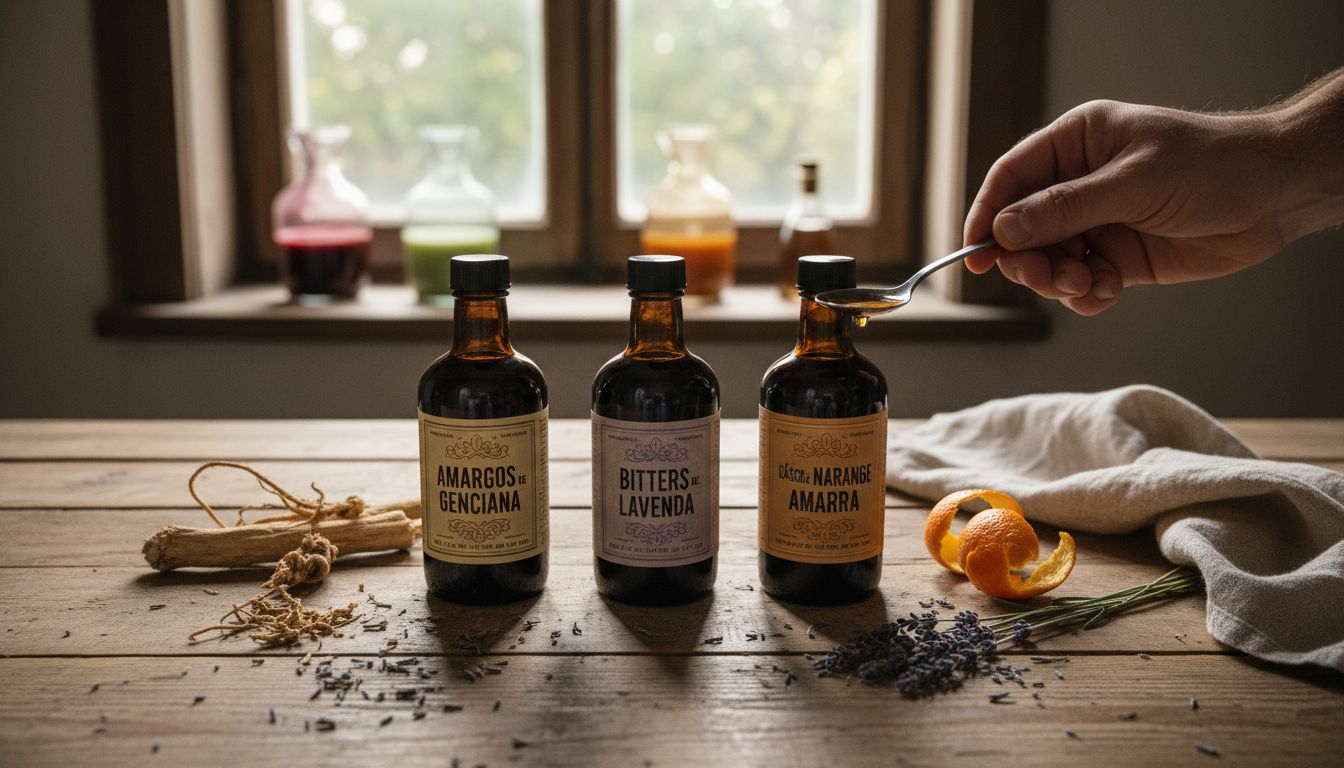
Pro tip: Taste a bitter directly on your tongue to understand its profile. Place a drop on your finger and let it spread across your palate. You'll identify the aromatic layers that you'll later recognize in your cocktails.
Temperature also affects perception. Volatile aromatic compounds are released more intensely in cold drinks, which is why bitters work perfectly in iced cocktails. Cold softens the bitterness while maintaining aromatic complexity.
Sensory Role and Effect in Cocktails
Bitters act as invisible architects of the sensory experience. Studies show that they increase aromatic complexity by up to 30% in mixed drinks. This transformation occurs without adding significant volume, typically less than 5ml per cocktail.
Their primary function is to balance sweet and sour profiles that would otherwise compete aggressively. Imagine an Old Fashioned without bitters: sugar and bourbon clash without a mediator. The drops of Angostura create an aromatic bridge that unifies the elements.
Bitters work through several simultaneous sensory mechanisms:
- Sweetness modulation: they reduce the perception of sugar without eliminating it
- Aromatic amplification: they release volatile compounds that elevate the nasal profile
- Acidity balance: they soften aggressive citrus notes through bitter contrast
- Palate persistence: they extend the cocktail's finish with lasting herbal notes
A surprising fact: the bitterness receptors on your tongue are ten times more sensitive than sweetness receptors. This explains why microscopic amounts generate a massive impact. Your palate detects bitterness in concentrations of parts per million.
The flavor experience transcends simple bitterness. Artisanal Italian amari demonstrate how bitterness combines with residual sweetness, creating extraordinarily sophisticated bittersweet profiles.
Key fact: A cocktail with bitters maintains sensory balance even when diluted with ice. Bitter compounds resist dilution better than sugars or acids, preserving the structural integrity of the drink.
Professional bartenders describe bitters as "the final seasoning" that ties all elements together. Similar to how salt transforms a dish from good to exceptional, bitters elevate cocktails from decent to memorable. This transformative ability justifies their presence in practically every professional bar.
The neuroscience of flavor reveals that bitterness activates brain areas associated with complex pleasure. Unlike the immediate gratification of sweetness, bitterness generates gradual satisfaction that rewards conscious attention. This is why cocktails with bitters invite slow tasting.
Types and Diversity of Bitters
The market offers over 50 commercial varieties covering radically different sensory profiles. From centuries-old classics to contemporary artisanal innovations, today's diversity allows for extreme customization in mixology.
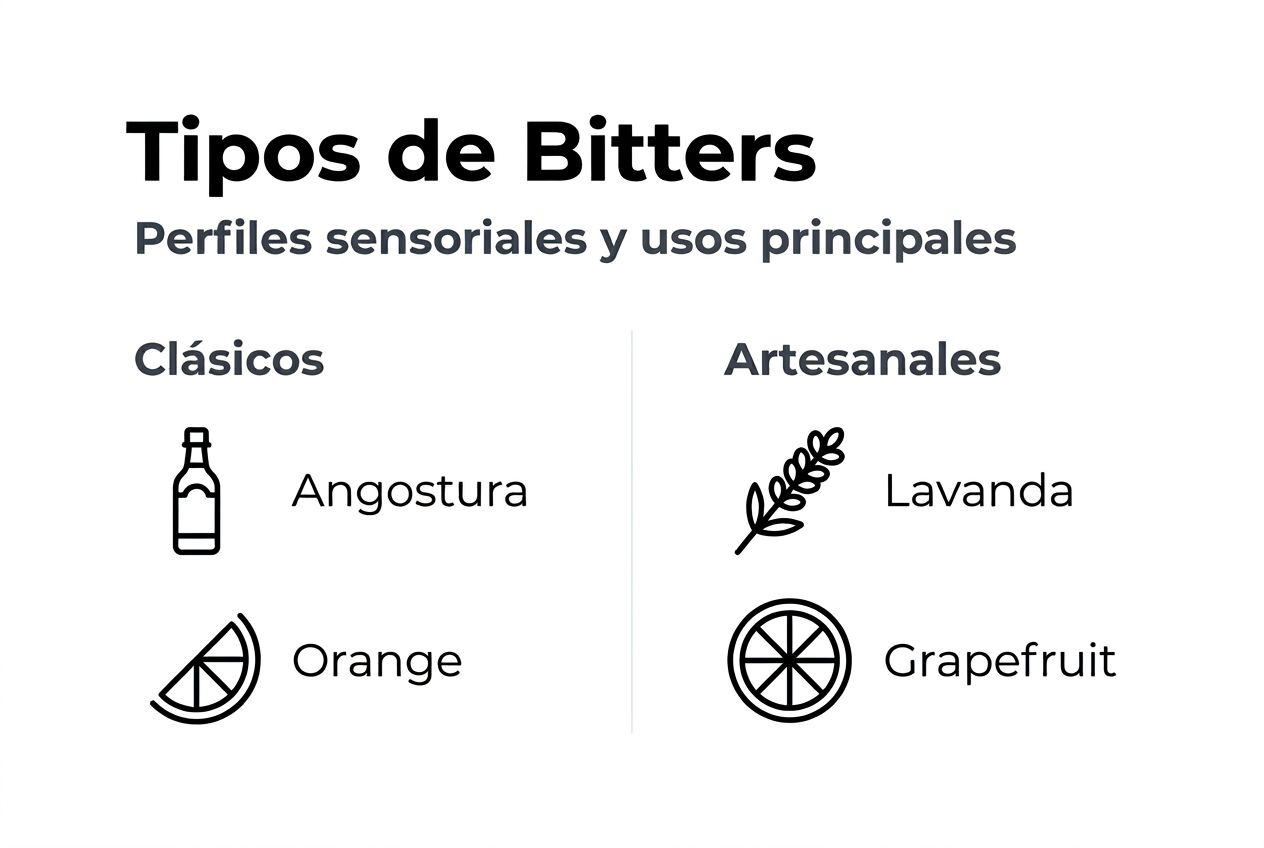
| Type | Aromatic Profile | Typical Use |
|---|---|---|
| Angostura | Warm spices, clove, cinnamon | Old Fashioned, Manhattan |
| Peychaud’s | Anise, cherry, floral | Sazerac, whiskey-based cocktails |
| Orange bitters | Citrus, bitter orange peel | Martini, Negroni |
| Chocolate | Cocoa, vanilla, spices | Rum cocktails, creams |
| Celery | Vegetal, saline, herbal | Bloody Mary, savory cocktails |
Classics maintain popularity due to their proven versatility. Angostura dominates the global market with its secret formula that includes over 40 ingredients. Peychaud’s provides that characteristic reddish hue and unique aniseed profile.
The artisanal revolution dramatically expanded the landscape. Small producers experiment with regional ingredients that reflect local terroir. You'll find lavender bitters from Provence, Indian cardamom, or Mexican chili bitters that connect mixology with specific culinary traditions.
Types of bitter liqueurs include emerging categories:
- Floral: violet, rose, jasmine for elegant cocktails
- Spiced: ginger, cardamom, pepper for warm drinks
- Herbal: basil, thyme, rosemary for botanical creations
- Fruity: cherry, raspberry, fig for balanced sweet profiles
- Smoked: burnt wood, lapsang tea for dark complexity
Innovation drives surprising formulations. Some producers age bitters in bourbon barrels or add umami ingredients like miso. These experimentations challenge traditional boundaries and open up unexplored creative territories.
Pro tip: Build your collection progressively. Start with Angostura and orange bitters as a universal base. Add specialized varieties according to your cocktail preferences. A well-stocked bar keeps 5 to 8 different types.
Artisanal bitters often highlight specific ingredients in their names. "Lavender bitters" or "grapefruit bitters" clearly indicate the dominant profile, facilitating selection based on the needs of each recipe. This transparency contrasts with the secret formulas of historical brands.
Common Mistakes and Clarifications About Bitters
The most frequent confusion involves categorizing bitters as drinkable liqueurs. Bitters are concentrated flavorings, not alcoholic bases for direct consumption. Drinking them neat is unpleasant due to their extreme intensity and concentration of bitterness.
Another persistent myth suggests that more bitters automatically improve any cocktail. The reality is the opposite: excess completely unbalances the mixture, creating overwhelming bitterness that masks other flavors. A Manhattan with 20 drops becomes undrinkable.
Typical mistakes that ruin cocktails include:
- Confusing bitters with amari (drinkable bitter liqueurs)
- Adding bitters at the end without integrating them by stirring
- Using the same amount in all cocktails without adjusting for profile
- Storing bitters in warm places that degrade aromatic compounds
- Ignoring production dates on artisanal bitters with fresh ingredients
Correct dosage requires sensitivity. Bitters are measured in drops, not ounces or milliliters like other ingredients. A typical bottle with a specifically designed dropper releases approximately 0.15ml per drop. This precision matters enormously.
Pro tip: If you accidentally add too much bitter, don't try to correct it by adding more base ingredients. Prepare a new cocktail. Diluting the mistake multiplies all ingredients, creating greater waste.
Some beginner bartenders assume that all aromatic bitters are interchangeable. Angostura and Peychaud's have radically different profiles. Substituting one for the other in classic recipes fundamentally alters the result. A Sazerac specifically requires Peychaud's for its unique aniseed profile.
The expiration date generates debate. High-proof alcoholic bitters last for years without refrigeration. However, fresh aromatics gradually degrade. Taste your bitters annually to verify they maintain aromatic potency.
Practical Applications and Use in Mixology
Mastering bitters begins with understanding basic dosage. Most classic recipes call for 2 to 4 drops per cocktail. This amount balances without dominating, allowing other ingredients to shine while adding background complexity.
Application technique affects results. Follow this process for correct use of bitters:
- Add bitters directly over ice or base mix before stirring
- Fully integrate by vigorous stirring for 10 seconds
- Taste the cocktail before serving to check balance
- Adjust with an additional drop only if necessary
- Mentally record the quantity to replicate successful results
The selection of bitter should complement the profile of the base cocktail. Bourbon-based drinks benefit from spiced aromatic bitters. Gin cocktails prefer orange bitters that amplify citrus botanicals. Dark rum drinks stand out with chocolate or coffee bitters.
Controlled experimentation develops intuition. Prepare the same cocktail with different bitters to compare directly. A Gin & Tonic with orange bitters versus lavender bitters reveals how small changes completely transform experiences.
Pro tip: Create your own homemade bitter "flight." Mix bourbon with water in small glasses, adding different bitters to each. This isolated tasting educates your palate on specific profiles without the complexity of full cocktails.
The characteristics of artisanal bitters allow for innovation. Some bartenders create combinations using two types of bitters simultaneously. An Old Fashioned with Angostura plus chocolate bitters adds exceptional depth.
Temperature influences perception. Bitters in iced cocktails release aromas more gradually than in room-temperature drinks. Hot toddies with aromatic bitters immediately explode fragrances due to the heat.
Document your experiments. Keep a notebook recording exact quantities and results. This practice accelerates learning and allows for progressive recipe refinement. The best bartenders treat each cocktail as a controlled experiment that informs future creations.
Discover Artisanal Spirits at Mezzanotte
Now that you understand the transformative power of bitters, consider the bases that deserve that level of sophistication. Artisanal mixology demands exceptionally high-quality spirits that support the aromatic complexity that bitters provide.
Mezzanotte offers Italian artisanal gin and Italian artisanal vodka made with centuries of tradition and contemporary creativity. Each bottle represents a unique cultural narrative, combining carefully selected botanicals with meticulous distillation.

These internationally awarded spirits provide the perfect foundation for experimenting with bitters. Their complex botanical profiles harmoniously interact with flavorings, creating cocktails that transcend the ordinary. The artisanal care in each distillate ensures that your creations reflect the same commitment to excellence you demonstrate in mastering bitters.
Explore the collection to elevate your craft cocktail experience. Each product tells a story worth savoring, celebrating the intersection of Italian tradition and contemporary innovation.
Frequently Asked Questions About Bitters
How much bitters should I use in a cocktail?
The ideal dosage ranges from 2 to 4 drops per standard cocktail. This amount balances flavors without overpowering other ingredients. Start with 2 drops, taste, and adjust progressively according to your personal preference and the specific cocktail profile.
Do bitters contain alcohol?
Yes, bitters are alcohol-based, typically reaching 35 to 45% ABV. However, their function is to flavor, not to contribute significant alcoholic content. The microscopic quantities used add negligible alcohol to the final cocktail.
Can I use any type of bitters in any cocktail?
Not all bitters work universally. Each variety has a specific aromatic profile that should complement the cocktail's base ingredients. Orange bitters excel in gin-based drinks, while aromatic bitters prefer bourbon or whiskey. Experiment to discover harmonious combinations.
Are bitters always bitter?
Bitterness is just one dimension of their complete profile. Bitters offer aromatic complexity that includes spicy, citrus, floral, and herbal notes. The bitterness balances these elements, but the sensory experience transcends that single flavor.
Why are bitters essential in craft bartending?
Bitters elevate cocktails from simple to exceptional through sophisticated sensory balance. They connect opposing flavors, amplify aromas, and create persistence on the palate. Their absence results in one-dimensional drinks that lack the complexity that defines contemporary professional mixology.
How should I store bitters?
Store bitters in a cool, dark place, away from direct sunlight and heat sources. They do not require refrigeration due to their high alcohol content. Keep bottles tightly sealed to preserve volatile aromatic compounds and ensure maximum longevity.
Recommendation
- What characterizes an artisanal bitter: 30 unique botanicals – Mezzanotte | Distilleria & Spirits
- The Ultimate Guide to Amaro Bitter: Discover All the Secrets 2026 – Mezzanotte | Distilleria & Spirits
- 7 Best Bitter Drinks You Absolutely Must Try in 2026 – Mezzanotte | Distilleria & Spirits
- What is Italian bitter: history, taste, and culture – Mezzanotte | Distilleria & Spirits