

Discover what truly makes a gin premium: natural botanicals, artisanal distillation, and authentic storytelling. Expert guide for Italian gin lovers 2026.
What Defines a Premium Gin: A Guide for Italian Enthusiasts
Mar 7, 2026

More than 45% of consumers mistakenly associate premium only with price. This confusion prevents recognition of authentic Italian craft gins. A true premium gin is defined by selected natural botanicals, traditional distillation processes, and exclusive storytelling. This guide will help you identify genuine characteristics and choose products that offer a unique sensory experience, beyond marketing or price tags.
Index
- Key points to understand what defines a premium gin
- Introduction and historical context of premium gin
- Botanical characteristics and the aromatic profile of premium gin
- Production processes and exclusive distillation techniques
- The role of storytelling, design, and exclusivity in the perception of premium gin
- Common mistakes and misconceptions about what a premium gin is
- Examples and cases of recognized premium gins in Europe
- How to choose and recognize a premium gin in the Italian market
- Discover Italian craft premium gins at Mezzanotte
- Frequently asked questions about what defines a premium gin
Key points to understand what defines a premium gin
| Point | Details |
|---|---|
| Natural botanical ingredients | Premium gin uses a minimum of 10 natural botanicals with an obligatory predominance of juniper for aromatic complexity. |
| Careful artisanal distillation | Process in traditional stills with vapor infusion and multiple redistillation guarantees superior purity. |
| Storytelling and exclusive design | Curated packaging and cultural narrative enrich the emotional experience beyond the liquid. |
| Common perception errors | High price or famous brand does not ensure quality; real botanicals and verifiable process matter. |
| Balanced aromatic profile | Citrus, floral, and spicy notes must complement each other without dominating the characteristic juniper flavor. |
Introduction and historical context of premium gin
From the key points, we now delve into the history and origin that underpin the technical definition of premium gin.
Gin was born as Dutch jenever in the 16th century, a medicinal juniper distillate. During the 17th century, British soldiers brought it to England where it evolved into London Dry Gin. Premium gin became popular in Europe from the 17th century with refined methods that distinguished superior quality.
In the 21st century, the premium concept strongly re-emerges in Italy and Europe. Craft producers are reviving traditional techniques and local botanicals. This artisanal revolution separated common gin, industrially mass-produced, from premium gin made in small batches with meticulous attention to every detail.
The definition and key characteristics of a premium gin include:
- High-purity neutral base alcohol obtained by multiple distillations
- Rigorous selection of fresh, natural botanicals without synthetic additives
- Artisanal process supervised at each stage by master distillers
- Limited production that ensures exhaustive quality control
- Transparency about ingredient origin and techniques used
This historical evolution created recognizable standards. Today, Italian premium gin combines European tradition with local botanical innovation, creating a unique identity in the global craft spirits market.
Botanical characteristics and the aromatic profile of premium gin
Knowing the history, we explore the botanical ingredients that define the premium aroma and flavor.
Juniper is the obligatory soul of any gin. However, premium gin is distinguished by the quantity and quality of additional botanicals. More than 10 natural botanicals with a predominance of juniper form premium gin, providing aromatic complexity impossible to replicate with artificial aromas.
The botanicals and aromatic profile are organized into families that build sensory layers:
- Citrus fruits like bergamot, Sicilian lemon, and grapefruit provide initial vibrant freshness
- Florals including lavender, rose, and elderflower deliver aromatic elegance
- Spices like cardamom, pink pepper, and coriander add depth and warmth
- Roots such as angelica and iris provide structure and earthy persistence
- Mediterranean herbs like thyme, rosemary, and basil connect with Italian territory
The premium aromatic profile shows balance where no botanical dominates except juniper. The nose first reveals bright citrus notes, followed by subtle floral nuances. On the palate, juniper is clear but surrounded by spices and herbs that evolve. The finish remains clean with long aromatic persistence, without chemical bitterness.
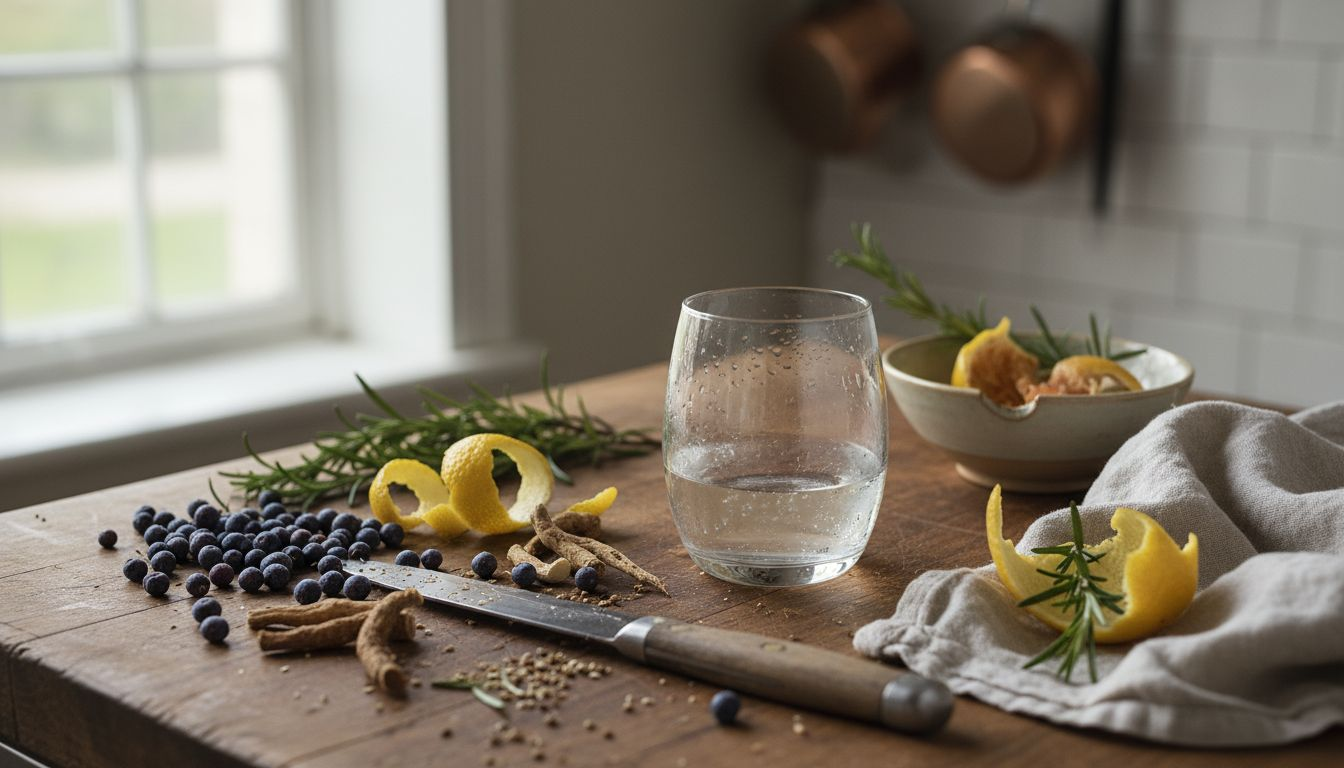
The difference between common and premium gin lies in this botanical architecture. While commercial gin uses extracts or synthetic aromas to speed up production, premium gin macerates fresh botanicals for hours or days. This prolonged contact extracts natural essential oils that create complexity impossible to fake.
Professional tip: When tasting premium gin, place a drop on your wrist and rub gently. The natural oils will release aromas that linger for minutes. Gins with synthetic aromas disappear quickly or smell of pure alcohol.
Production processes and exclusive distillation techniques
After the ingredients, we address the meticulous process that transforms these botanicals into an authentic premium gin.
Distillation in traditional stills with vapor infusion and multiple redistillation guarantees the premium quality that distinguishes craft products from industrial ones.
The artisanal process follows specific steps that require technical mastery:
- Selection of neutral base alcohol with a minimum of 96% ABV, previously distilled 4 to 5 times for absolute purity.
- Maceration of botanicals in alcohol for 12 to 48 hours for initial extraction of essential oils.
- Slow distillation in a traditional copper still at controlled temperature that preserves delicate aromatic compounds.
- Vapor infusion where botanicals suspended in a basket allow aromatic vapors to pass without direct contact with the liquid.
- Separation of cuts where the master distiller discards the head and tail, keeping only the heart with the best profile.
- Optional redistillation of the heart to further refine purity and eliminate undesirable notes.
- Final dilution with spring or purified water until the desired alcohol content between 40% and 47% ABV is reached.
- Resting in steel tanks or bottles for aromatic integration before commercialization.
Traditional copper stills offer a unique chemical advantage. Copper eliminates undesirable sulfur compounds during distillation, resulting in a cleaner, smoother liquid. Premium producers invest in small artisanal stills that allow precise control of temperature and times.
Professional tip: Look for gins that specify the number of distillations and the type of still used. Transparency about the process indicates the producer's confidence in their artisanal method.
The difference between vapor infusion and direct maceration profoundly impacts the result. Vapor infusion captures more delicate and fresh aromas, ideal for citrus and florals. Direct maceration extracts more intense flavors, perfect for spices and roots. The best premium gins combine both techniques for different botanical families.
Explore types of premium spirits and discover the art of premium Italian spirits to understand how these techniques are applied in contemporary artisanal productions.
The role of storytelling, design, and exclusivity in the perception of premium gin
After learning about production and botanicals, we now understand the symbolic and cultural value that influences the choice of premium gin.
Premium gin transcends mere liquid quality. Packaging, brand narrative, and limited editions build a complete experience that emotionally connects with demanding consumers looking for products with a strong cultural identity.
Bottle design immediately communicates values and positioning. Thick, quality glass, labels with artisanal details, distinctive closures, and elegant screen printing signal artisanal care. Each visual element must reflect the philosophy of the spirit within. When a producer invests in exceptional design, it demonstrates a commitment to excellence in all aspects.
Exclusivity through limited editions generates real perceived value:
- Numbered batches with restricted production create a sense of genuine rarity
- Seasonal botanicals available only during specific harvests naturally limit volume
- Collaborations with artists or designers for unique packaging elevate collectible value
- Special series linked to cultural events or anniversaries strengthen the narrative
Authentic storytelling differentiates artisanal products from generic commercial brands. Premium consumers value knowing the origin of botanicals, the inspiration behind the blend, the master distiller's story, and the connection to the territory. Narratives based on myths, pop culture, or local iconography resonate deeply with spirit lovers who seek an experience beyond the liquid.
Professional tip: Research the story behind the gin before buying. If the brand cannot articulate a coherent narrative about its process, ingredients, or inspiration, it probably prioritizes marketing over artisanal substance.
The guide to buying spirits with storytelling delves into how to identify genuine narratives versus empty marketing. Authentic brands transparently share their process, showcase facilities, and connect products with verifiable cultural values.
The premium experience integrates all senses. The weight of the bottle in hand, the sound of uncorking, the aroma when serving, the taste in the glass, and the emotional memory of the narrative merge into a memorable moment. This sensory integration justifies a higher price and builds genuine loyalty beyond a single purchase.
Common mistakes and misconceptions about what a premium gin is
Having understood the real concept, we clarify common misconceptions that can confuse your choice.
Navigating the premium gin market requires separating reality from inflated marketing. More than 45% mistakenly believe that price or brand defines premium gin, ignoring fundamental technical factors that determine authentic quality.
The most frequent errors include:
- Assuming that a high price guarantees superior quality when many brands inflate costs for marketing and distribution without improving the liquid
- Believing that specific geographical origin like England or Scotland ensures premium, ignoring excellent contemporary Italian craft producers
- Confusing flavored gin with synthetic extracts with genuine gin macerated with fresh natural botanicals
- Overvaluing alcohol content, thinking that higher ABV means better quality when aromatic balance matters more
- Being influenced by awards or medals without investigating the credibility of the competitions that granted them
- Ignoring the ingredient list on the label, relying solely on front marketing claims
A gin can be inexpensive and still be premium if a small craft producer sells directly without intermediaries. Conversely, expensive commercial gins invest more in advertising than in quality botanicals. Price reflects the business model, not necessarily liquid excellence.
Premium authenticity lies in transparency about ingredients, verifiable process, and complex aromatic profile, not in an inflated price tag or massive advertising campaign.
Provenance matters less than the method. Italy produces exceptional craft gins that rival traditional British references. Judging quality by country of origin perpetuates outdated stereotypes and ignores the current global craft revolution.
The distinction between natural and synthetic flavoring is critical. Commercial gins frequently use artificial extracts to speed up production and reduce costs. These products lack the aromatic complexity and depth of flavor offered by real maceration with fresh botanicals. Look for terms like "natural botanicals" and "vapor infusion" on labels.
Review the meaning of premium gin to delve into how to evaluate marketing claims versus verifiable technical characteristics that define genuinely artisanal products.
Examples and cases of recognized premium gins in Europe
To illustrate what has been discussed, we show real cases and comparisons that reflect the current premium standard.
Monkey 47 stands out with 47 botanicals and 47% ABV, a multi-distillation process and a complex aromatic profile that sets a quality benchmark in the European ultra-premium segment.
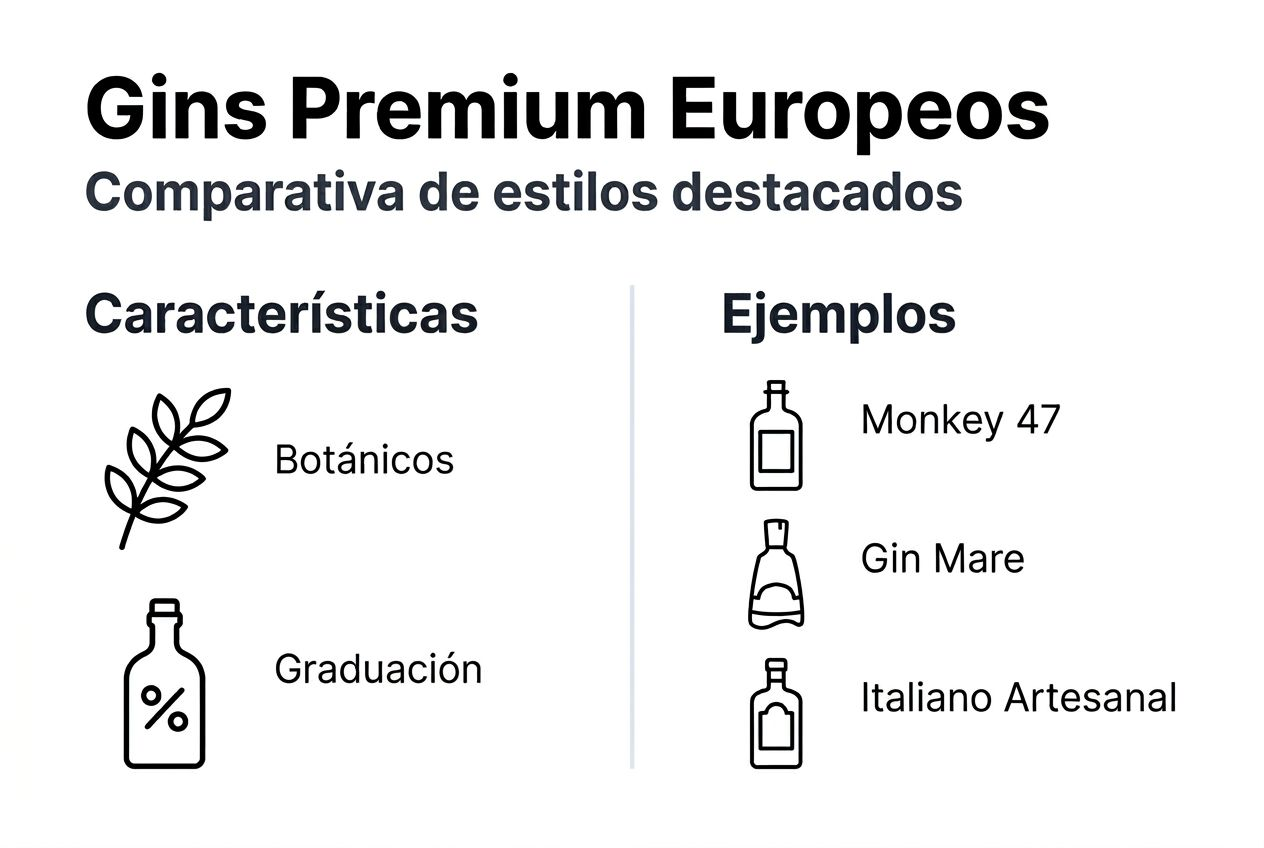
The current trend favors producers who integrate local botanicals with sustainable techniques. Italian craft gins, such as those available in specialized collections, combine distilling tradition with cultural narratives inspired by myths, anime, and pop culture, creating distinctive products that transcend conventional categories.
| Characteristic | Monkey 47 (Germany) | Gin Mare (Spain) | Italian Craft Gins |
|---|---|---|---|
| Number of botanicals | 47 botanicals from the Black Forest | 4 key Mediterranean botanicals | 10 to 20 local Italian botanicals |
| Alcohol content | 47% ABV | 42.7% ABV | 40% to 47% ABV |
| Distinctive process | Triple distillation in traditional still | Individual maceration of each botanical | Vapor infusion and artisanal redistillation |
| Aromatic profile | Complex with fruity and herbal notes | Mediterranean with olive and basil | Balanced with integrated cultural storytelling |
| Brand philosophy | German Black Forest as inspiration | Essence of the Spanish Mediterranean | Myths, pop culture, and Italian territory |
Monkey 47 represents the extreme of botanical complexity, using wild ingredients hand-picked in the German Black Forest. Its artisanal process requires weeks of maceration followed by slow distillation that preserves delicate essential oils. The result shows aromatic layers that continuously evolve in the glass.
Gin Mare popularized the Mediterranean concept using Arbequina olive, thyme, rosemary, and basil as leading botanicals alongside juniper. This regional approach inspired Italian producers to explore native ingredients such as Calabrian bergamot, Amalfi lemon, and alpine herbs.
Contemporary Italian craft gins integrate these lessons, creating products with unique identities. Many incorporate storytelling based on Mediterranean mythology, anime characters, or Italian cultural iconography, differentiating themselves from traditional European references through strong emotional narratives.
Explore recommended premium gins to discover curated selections that exemplify these quality standards in the current Italian context.
How to choose and recognize a premium gin in the Italian market
Finally, we apply everything learned to guide your choice within the competitive Italian market.
Selecting authentic premium gin requires a systematic method that evaluates multiple factors beyond price or brand reputation:
- Examine the label looking for a complete list of natural botanicals with a minimum of 8 to 10 ingredients clearly specified without synthetic additives.
- Verify the distillation method, preferably in a traditional copper pot still with vapor infusion or prolonged natural maceration.
- Research the producer by checking transparency regarding facilities, master distiller, and craft philosophy on their official website or social media.
- Evaluate the aromatic profile by smelling directly from the bottle and looking for complexity with distinguishable layers without aggressive alcoholic dominance.
- Check the alcohol content, ideally between 40% and 47% ABV, which balances aromatic intensity with smoothness on the palate.
- Analyze the packaging, valuing the quality of materials, design consistent with the narrative, and attention to artisanal details versus mass industrial production.
- Look for recognitions or awards from prestigious international competitions that validate quality through professional blind tasting.
- Compare the price with similar products, considering that a range of 35 to 60 euros for 700ml indicates authentic premium without excessive inflation.
The Italian market offers exceptional options that incorporate criteria for choosing Italian premium gin with an emphasis on local botanicals and sustainable production that respects the territory.
Familiarize yourself with types of Italian artisanal gin to understand the differences between London Dry style, Old Tom, Navy Strength, and contemporary variants that Italian producers are developing with their own identity.
Professional tip: Before buying, try the gin in a simple cocktail like a Gin & Tonic with a quality neutral tonic and no excessive garnishes. This minimalist preparation clearly reveals the quality of the distillate without masking defects with other flavors.
Tips for tasting artisanal gin teach professional techniques to appreciate aromatic nuances and evaluate the structural balance that distinguishes exceptional products from mediocre options.
Remember that the best premium gin for you is the one whose aromatic profile resonates with your personal preferences. Some prefer vibrant citrus notes, others seek delicate florals or intense spices. Explore diverse artisanal options and build your own library of references that reflect your unique palate.
Discover Italian artisanal premium gins at Mezzanotte
After learning how to choose premium gin, we invite you to discover our Italian artisanal selection for an authentic experience.
Expanding your understanding of what truly defines a premium gin, it's time to explore products that embody these principles with Italian artisanal excellence.

Our collection of Italian artisanal gin brings together exceptional spirits made with local botanicals, traditional processes, and unique cultural storytelling inspired by myths, anime, and pop culture. Each bottle represents a commitment to superior quality and emotional narrative that transforms the tasting moment into a memorable sensory adventure.
Also discover our selection of Italian artisanal vodka that shares the same artisanal philosophy and meticulous attention to purity and distinctive aromatic profile. Ideal for those who appreciate premium spirits beyond conventional categories.
Every product at Mezzanotte tells a verifiable story, shows transparency about ingredients and processes, and offers an authentic premium experience that honors Italian distilling tradition with an innovative contemporary vision.
Frequently asked questions about what defines a premium gin
What is the difference between premium gin and flavored gin?
Premium gin uses natural botanicals that are macerated and distilled, integrating aromas organically into the liquid. Flavored gin often adds synthetic extracts or essences after distillation, resulting in less complex artificial flavors. Check the label for terms like "natural botanicals" and "vapor infusion" to confirm premium authenticity.
Why does the distillation method matter so much in premium gin?
Distillation in a traditional copper pot still with vapor infusion extracts natural essential oils from botanicals, preserving delicate aromatic complexity. Fast industrial methods use high temperatures that destroy subtle aromatic compounds, producing a flat liquid. Multiple redistillation refines purity by removing impurities that cause bitterness or harshness, creating the characteristic smoothness of authentic premium gin.
How to recognize botanical quality on gin labels?
Look for detailed lists that specify each botanical by its full name without vague terms like "herbs" or "spices." Transparent premium gins indicate the origin of ingredients, for example "Tuscan juniper" or "Calabrian bergamot." A minimum of 8 to 10 botanicals suggests genuine complexity. Be wary of labels that only mention "natural flavors" without specifying which botanicals are actually used.
What is the importance of packaging in the premium gin consumer experience?
Premium packaging immediately communicates brand values and artisanal care. Quality thick glass, labels with artisanal details, and a design consistent with the narrative indicate investment in total excellence, not just the liquid. Exceptional packaging elevates the complete sensory experience and signals that the producer values every aspect, from distillation to final presentation. It is an integral part of storytelling and exclusivity.
What are quick tips for choosing authentic premium gin?
First, check the list of natural botanicals with a minimum of 8 specified ingredients. Second, confirm the artisanal distillation method in a traditional still. Third, research the producer's transparency regarding the process and facilities. Fourth, evaluate the bottle design, looking for quality materials and narrative coherence. Finally, compare the price, considering a range of 35 to 60 euros as an indicator of premium without excessive inflation due to empty marketing.
Recommendation
- Premium Italian Gin 2026: 73% value local botanicals – Mezzanotte | Distilleria & Spirits
- Exclusive Spirits Buying Guide: 87% Prefer Authentic Storytelling – Mezzanotte | Distilleria & Spirits
- Tips for Tasting Craft Gin: 57% More Sensory Experience – Mezzanotte | Distilleria & Spirits
- 6 Types of Premium Spirits You Should Know Today – Mezzanotte | Distilleria & Spirits