

Discover the best Italian bitters of 2026: tradition, innovation, and artisanal quality. A complete guide to the finest delicacies to taste.
Best Amaro Liqueurs: A Guide to Italian Excellence 2026
Feb 18, 2026

When you think of the best Italian amari, what comes to mind? Probably that unique sensation only a good digestif can provide, that perfect balance of bitter and sweet that tells stories of local areas, family traditions, and ancient knowledge. In 2026, the panorama of Italian artisanal amari is richer and more interesting than ever, with products that combine centuries-old tradition with innovative distillation techniques. But what are the best amari to discover and taste this year?
The Tradition of Italian Bitter Liqueurs
Italy boasts a centuries-old tradition of bitters. Each region has developed its own secret recipes, handing down from generation to generation formulas that capture the essence of the land.
Bitter liqueurs originally originated as medicinal products, prepared by monks and apothecaries to treat digestive disorders and various ailments. Over time, these preparations have become true gastronomic delicacies, appreciated throughout the world.
Today, we're witnessing a true renaissance in the art of artisanal distilling. It's no longer just large industrial brands, but small businesses that are reviving forgotten recipes, experimenting with local botanicals, and creating unique products that express a contemporary vision of tradition.
What Makes an Excellent Amaro
What distinguishes the best bitters from mediocre ones? The answer isn't as simple as it seems.
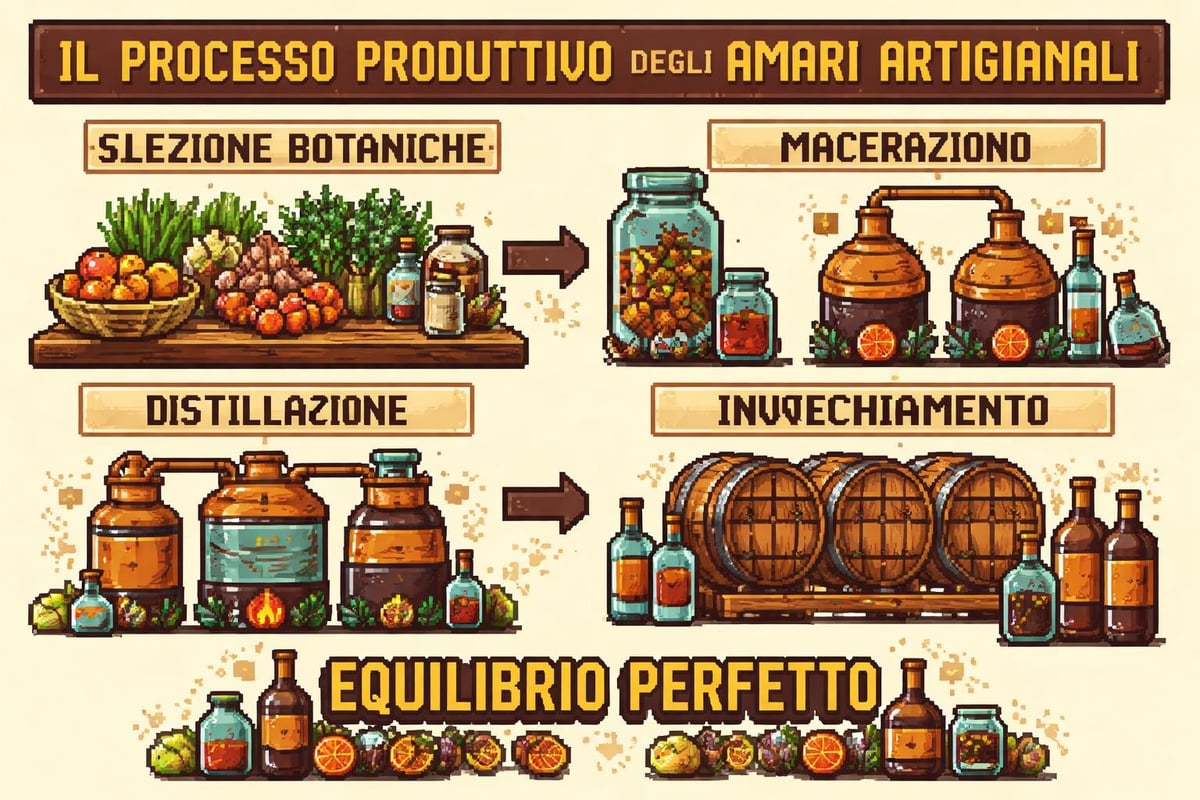
Ingredient quality : The selected botanicals make all the difference. Roots, bark, aromatic herbs, and citrus fruits must be of the highest quality, often hand-picked at the perfect time of year.
Production process : Maceration, infusion, and distillation require time, patience, and technical expertise. Artisanal bitters are distinguished by the obsessive attention to every stage of the process.
Sensory Balance : A great amaro isn't simply bitter. It's a play of contrasts where bitterness interacts with sweetness, herbaceous notes, spices, and citrus aromas.
Overview of the Best Regional Amari
Italy is a mosaic of excellence when it comes to bitters. Each region offers unique interpretations based on local botanicals and cultural traditions.
The Triumph of the South: Calabria and Lucania
In recent years, Calabrian bitters have won prestigious international awards . At the 2021 and 2022 World Liqueur Awards, brands like Rupes Gold and MZero demonstrated that southern Italy is capable of competing at the highest global levels.
Calabria boasts an extraordinary biodiversity: bergamot, licorice, citron, and wild herbs that grow between the Sila mountains and the Ionian coast. This richness is reflected in complex, profound bitters, capable of expressing a rugged yet generous land.
Basilicata is no exception. Amaro Lucano, with its history dating back to 1894, represents a solid tradition that has evolved without losing its identity. The partnership with the world's 50 best bars demonstrates how these products are now recognized globally.
North and Center: Tradition and Innovation
The Marche, Piedmont, and Lombardy regions have different but equally fascinating histories. Rhubarb, in its various interpretations, represents an important strand of the Italian Amaro tradition.
Take Rabarbaro Zucca , created in Milan in 1845. It's a perfect example of how a historic product can endure the centuries while maintaining its relevance. The earthy notes of rhubarb, balanced by a measured sweetness, create an unmistakable flavor profile.
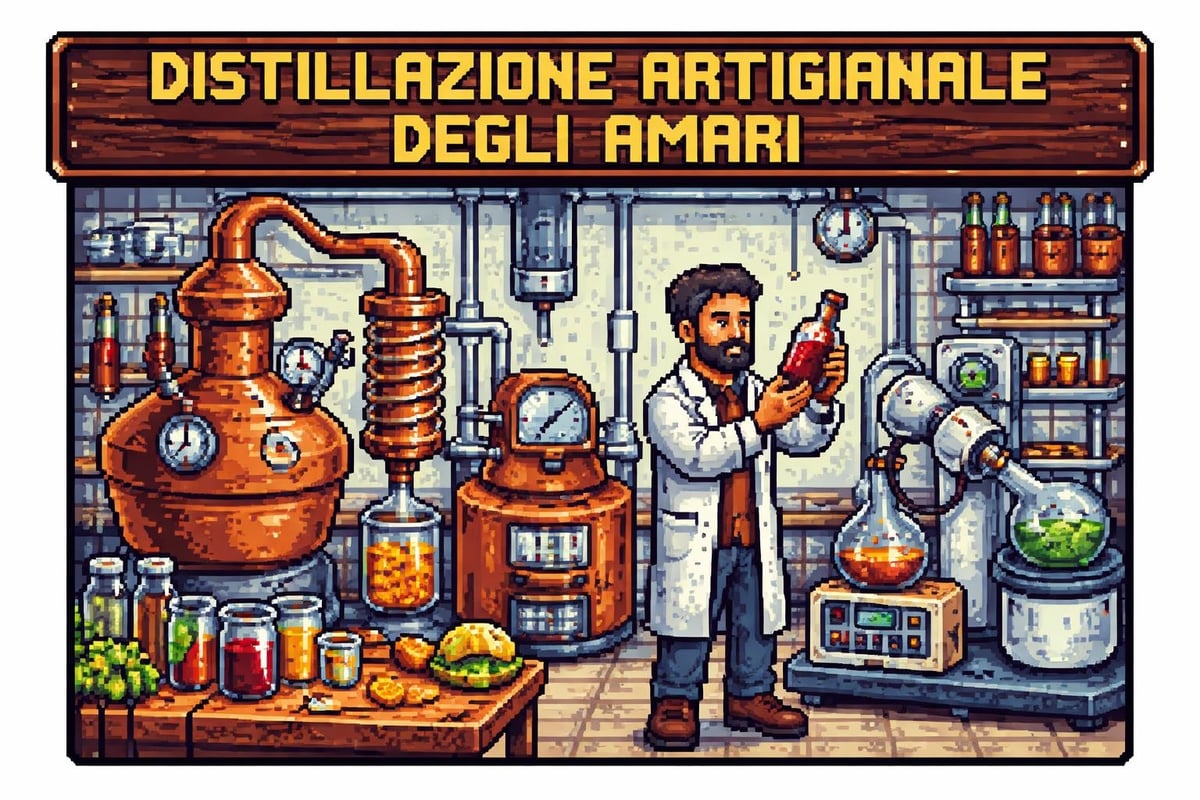
In the Marche region, new distilleries are bringing innovation to the industry. Using modern technologies like the Rotavapor and precision stills, artisanal distillers create bitters that reinterpret traditional recipes with a contemporary sensibility.
| Region | Botanical Characteristics | Typical Style |
|---|---|---|
| Calabria | Bergamot, licorice, cedar | Complex, citrusy |
| Basilicata | Aromatic herbs, roots | Balanced, traditional |
| Piedmont | Rhubarb, gentian | Earthy, dry |
| Marche | China, local herbs | Fresh, innovative |
How to Recognize and Choose the Best Amaro Liqueurs
When you're faced with a shelf full of bottles, how do you navigate them? Here are some practical criteria to guide your choice.
Read the Label Like a Pro
The label tells you much more than you think. The ingredient list, when present, gives you an idea of the product's complexity. A amaro with twenty different botanicals isn't necessarily better than one with five, but it certainly indicates a different approach.
Alcohol content : The best bitters generally have an alcohol content between 28% and 35%. Too low and the flavours could be diluted, too high and the alcohol could cover the aromatic nuances.
Origin and producer : Favor artisanal production, small distilleries that directly control the entire supply chain. Transparency about the origin is always a good sign.
Color : Can range from light straw yellow to dark brown, almost black. The color depends on the botanicals used and any aging. It is not an indicator of quality in itself, but of type.
Tasting: The Senses at the Service of Quality
How to properly taste a bitter to evaluate its quality? Here are the basic steps:
- Observe the color against the light to appreciate its clarity
- Sniff gently without putting your nose in the glass
- Take a small sip, letting the liquid cover your entire tongue.
- Evaluate the aromatic persistence after swallowing
A quality amaro should reveal progressive complexity. From the first notes on the nose, the initial ones on the palate, the development on the palate, and the finish: each phase should bring new nuances, new discoveries.
Trends 2026: What Connoisseurs Are Looking For
The bitters market is evolving rapidly. What are the trends shaping 2026?
Sustainability and Transparency
More conscious consumers are looking for producers who operate with environmental responsibility. Renewable energy, recyclable packaging, short supply chains, and waste reduction: these aspects are no longer optional but essential requirements.
Distilleries that openly communicate their production processes, showing where their botanicals come from and how they're processed, gain the trust of enthusiasts. Transparency is the new luxury.
Innovation while Respecting Tradition
The best amari of 2026 aren't simply re-editions of ancient recipes or rootless experiments. They're products that capture the best of both worlds: traditional formulas revisited with modern distillation techniques.
The use of cutting-edge equipment, such as Müller Brennereianlagen stills or precision Rotavapors, allows us to extract aromas that would otherwise have been lost with traditional methods. This doesn't mean betraying tradition, but rather enhancing it with new tools.
Amaro as a Cocktail Ingredient
No longer just a digestif after a meal, amaro is conquering cocktail bars around the world. The most creative bartenders use it to add complexity and depth to their drinks.
This evolution has also led producers to create bitters specifically designed for mixology: drier, less sugary profiles, designed to balance other ingredients. Learn how to use bitters in drinks to maximize their potential.
International Rankings and Awards
When we talk about the best bitters, it's impossible not to mention the international competitions and rankings that reward excellence every year.
World Liqueur Awards: The Global Stage
The World Liqueur Awards are one of the most prestigious events in the industry. Here, the world's best herbal liqueurs compete in a rigorous competition.
Seeing five Italian labels at the top of the list is no coincidence: it confirms that our country has developed a unique expertise in this sector. The ability to balance complex ingredients, to create harmony from contrasting elements, is an art form that Italians master like few others.
Reviews and Specialized Guides
Alongside official competitions, there are authoritative guides that review and compare the bitters available on the market. These resources are invaluable for navigating the myriad options available.
Reading in-depth reviews helps you understand what to expect from a product, its distinctive features, and the occasions for which it's best suited.Specialized rankings also offer interesting insights, although personal taste remains the final arbiter.
Artisanal Bitter Liqueurs: The Excellence of Small-Scale Production
Why should you choose a craft amaro over an industrial one? The difference lies not only in the production scale, but in the philosophical approach.
Total Control of the Supply Chain
An artisanal microdistillery controls every single step of the process, from the selection of botanicals, often harvested directly from the surrounding area, to maceration, distillation, and bottling.
This level of control allows us to guarantee extremely high quality standards. If a batch of herbs doesn't meet the required criteria, it can be discarded without compromising economies of scale. The priority is product, not volume.
Expression of the Territory
Artisanal bitters tell stories of specific places. Each botanical has a reason to be there: because it grows in that area, because it's part of the local tradition, because it expresses something unique about that microclimate.
When you taste a craft Amaro from the Marche region, for example, you're savoring the herbs that grow between the hills and the Adriatic Sea, crafted using techniques that blend ancient knowledge and contemporary innovation. It's more than just a liqueur; it's a complete sensory experience.
Personalization and Tailor-Made Services
Many craft distilleries also offer custom distillation services. Want to create your own amaro following a family recipe? Want a branded product for your restaurant or bar? Small businesses have the flexibility to accommodate these requests.
This ability to customize is creating a new market: unique bitters, created for special occasions, that bear the signature of those who imagined them.
Types of Amari: A Question of Style
Not all bitters are created equal. There are different families, each with distinctive characteristics that make them suitable for different moments and palates.
Herbaceous Bitters
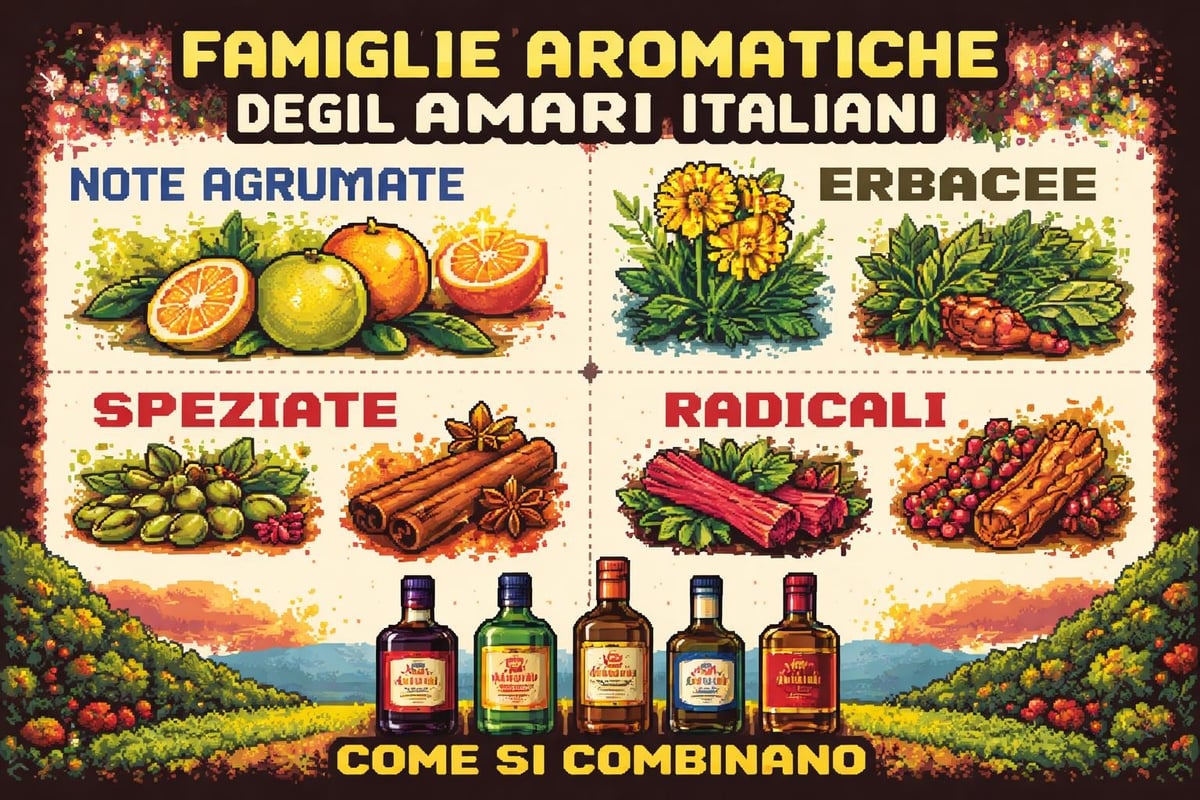
These are bitters dominated by notes of aromatic herbs, roots, and bark. Gentian, cinchona, wormwood, and rhubarb are the main botanicals. The profile is generally dry, with a restrained sweetness that leaves room for true bitterness.
These bitters are perfect as traditional digestifs, served neat at room temperature or slightly chilled. Their complexity emerges best without ice or dilution.
Spicy Bitters
Cardamom, cinnamon, cloves, star anise: spices add warmth and depth. Spicy bitters have a more enveloping character, often with a more pronounced sweet note that balances the bitterness.
They are versatile: excellent as digestifs but also as ingredients in winter cocktails, spicy punches, and hot drinks that warm up cold evenings.
Citrus Bitters
When citrus peels take center stage, the bitterness acquires freshness and vivacity. Bitter orange, bergamot, grapefruit, and chinotto bring citrus notes that lighten the structure.
These bitters are perfect for summer, served over ice and with a splash of soda. They're also excellent diluted with tonic for a different aperitif.
Food Pairings and Service
A great amaro deserves to be enhanced through the right pairings and appropriate serving.
Ideal Temperature and Glass
Contrary to popular belief, not all amaro should be served chilled. In fact, many quality artisanal amaros are best served between 12 and 16 degrees Celsius, temperatures that allow you to appreciate all their aromatic nuances.
The glass? A low tumbler for those who prefer ice, a small tulip glass for more thoughtful tastings that concentrate the aromas toward the nose.
When and How to Enjoy the Best Amaro Liqueurs
Classic moment : After a hearty meal, to aid digestion and end with elegance. The ritual of drinking amaro is part of Italian gastronomic culture.
Alternative aperitif : Amaro is becoming increasingly popular as an aperitif, perhaps diluted with seltzer or tonic, over ice, and a citrus peel. An interesting alternative to conventional spritzers.
Creative ingredient : In the kitchen, a few drops of bitters can transform a dessert, an ice cream, or a meat reduction. Top chefs are experimenting with surprising results.
Pairings with Chocolate and Desserts
Dark chocolate and bitters are natural companions. The bitterness of quality cocoa pairs perfectly with that of botanicals, creating a fascinating interplay of references.
Even desserts based on dried fruit, spiced cakes, and tarts with bitter jams pair beautifully with a glass of artisanal amaro.
Investing in Quality: Price-Value Ratio
How much should you spend on a good amaro? The question is legitimate, but the answer isn't simple.
An artisanal amaro necessarily costs more than an industrial one. Economies of scale don't favor small productions, and the quality of the ingredients, the time spent, and the precision equipment all come at a cost.
However, price isn't always synonymous with quality. There are accessible artisanal products that offer excellent value, just as there are overpriced bottles that focus more on marketing than substance.
| Price Range | What to Expect | Characteristics |
|---|---|---|
| €15-25 | Entry-level artisanal bitters | Good quality, selected botanicals, honest productions |
| €25-40 | Premium artisanal productions | Excellent ingredients, superior complexity, thoughtful packaging |
| €40+ | Limited editions, aging | Rarities, special workmanship, collectibles |
Our advice? Invest in the mid-range for everyday use, saving the more expensive bottles for special occasions or when you want to truly discover the best an amaro can offer.
Conservation and Shelf Life of Bitter Liqueurs
Have you bought a bottle of the finest bitters available? Now you need to store it properly to preserve its qualities.
Position : Always upright, never lying down like wines. The cork should not remain in prolonged contact with the liquid.
Temperature : Stable environment, avoiding sudden temperature changes. A cool cellar is ideal, but a closed cabinet away from heat sources is also fine.
Light : Bitters fear direct light, especially sunlight. Store them in the dark or in dark bottles that filter UV rays.
Shelf life : An unopened bottle can last for years without losing quality. Once opened, it's best to consume it within 12-18 months to fully appreciate it, although it won't necessarily go bad.
The Future of the Best Amaro
Where is the world of artisanal bitters headed? What are the prospects for the coming years?
Internationalization and Export
Italian bitters are conquering ever-expanding international markets. The United States, Japan, and Northern Europe: bartenders and connoisseurs everywhere are seeking authentic, well-crafted Italian products that tell true stories.
This international expansion is bringing new energy to the sector, encouraging manufacturers to constantly improve, innovate, and better communicate the value of their products.
Biodiversity and Rare Botanicals
The search for forgotten or underutilized botanicals is one of the most exciting frontiers. Wild herbs that grow only in certain areas, ancient roots that grandmothers collected to make home remedies.
Recovering these raw materials means preserving biodiversity, supporting local economies, and creating truly unique products that cannot be replicated elsewhere.
Collaborations and Contaminations
We're increasingly seeing collaborations between distilleries and other players in the agri-food supply chain: pastry chefs, chocolatiers, chefs, and roasters. These synergies create innovative products that explore new horizons.
A bitter aged in barrels that once held Verdicchio wine? Another using acacia honey from a specific valley? The possibilities are endless, limited only by the producers' creativity.
Choosing among the finest amari means embarking on a fascinating journey through the unique regions, traditions, and flavors that only Italy can offer. The artisanal quality, attention to ingredients, and passion that drive small distilleries make the difference in every sip. If you want to discover amari that express the Marche region with a contemporary soul, crafted with cutting-edge techniques and select ingredients, explore the Mezzanotte | Distilleria & Spirits collection, where family tradition and innovation meet to create premium spirits that express the excellence of Italian artisanal distillation.