

Discover the world of Italian bitters: from tradition to modern distillation. History, botanicals, artisanal production, and tasting tips.
Italian Bitter Liqueurs: A Guide to Traditions and Innovations 2026
Feb 17, 2026

Have you ever savored that warm feeling that envelops you after a hearty meal, when someone offers you a glass of digestif? Italian amari are much more than simple after-dinner liqueurs: they represent a cultural heritage rooted in centuries of herbal tradition, monastic wisdom, and secrets passed down from generation to generation. In 2026, we are witnessing a true renaissance of these elixirs, with a renewed focus on artisanal quality and local production. Whether you're a passionate enthusiast or simply curious to discover this fascinating world, prepare yourself for a sensory journey through botanicals, stills, and secret recipes.
The History of Amari: From Monastic Pharmacies to Modern Distilleries
Have you ever wondered why so many bitters bear names that recall monasteries or ancient apothecaries? The answer lies in the very origins of these preparations. In the Middle Ages, monks and apothecaries were the true custodians of herbal knowledge, creating infusions and macerates with healing properties. What we now consider tasting beverages were originally intended as true medicines.
The history of Italian bitters is intertwined with the evolution of traditional pharmacology. Medicinal herbs were selected not only for their flavor, but above all for their digestive, tonic, and purifying properties. Gentian, wormwood, cinchona, and rhubarb were among the most prized botanicals for stimulating digestion.
From Medicinal Use to Palate Pleasure
Over the centuries, the balance between therapeutic function and gustatory pleasure gradually shifted toward the latter. In the 19th century, many secret recipes emerged from convents and pharmacies to become commercially produced. Families of distillers began perfecting the recipes, balancing the bitterness of the herbs with sweet, aromatic notes.
Today, in 2026, this tradition continues with an approach that combines respect for historic recipes with technical innovation. Modern artisanal distilleries, using precision equipment such as professional stills and advanced extraction techniques, maximize the organoleptic properties of each botanical.
Botanicals: The Green Heart of Italian Bitter Liqueurs
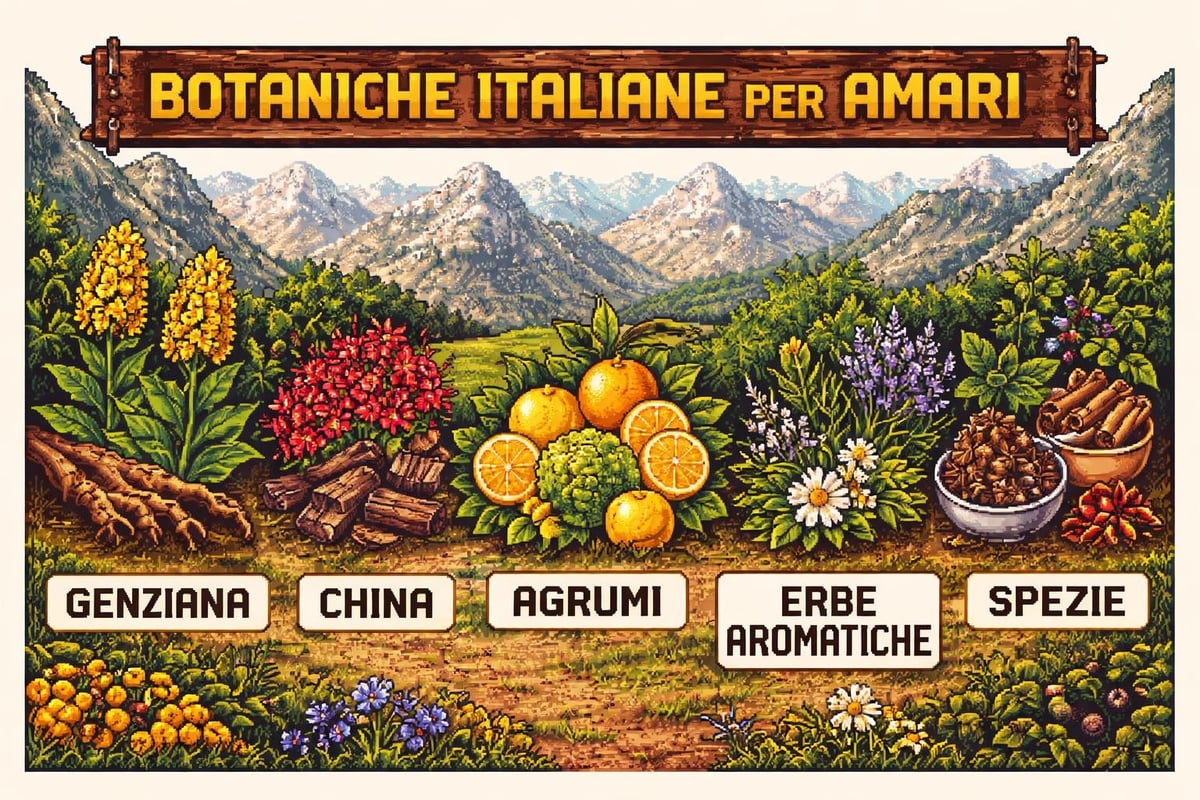
When we talk about Italian amari, we're essentially talking about a concert of herbs, roots, bark, flowers, and spices. But what are the ingredients that give life to these distinctive liqueurs? The complexity of an amaro comes precisely from the skillful combination of botanicals, each with a specific role.
The main botanicals are divided into functional categories:
- Primary bitters : gentian, cinchona, wormwood, rhubarb
- Flavourings : star anise, cardamom, cloves, cinnamon
- Correctives : citrus fruits (orange, lemon, mandarin peel), lemon balm, mint
- Toning : angelica, aromatic calamus, centaury
Gentian deserves a special mention. This Alpine root is probably the most iconic ingredient in Italian bitters, capable of imparting the clean, persistent bitter note that characterizes the finest digestifs. It grows wild in the Italian mountains and is harvested according to strict guidelines that guarantee its sustainability.
The Territory in Botany
Each Italian region has developed its own amari based on locally available herbs. The resurgence of Italian amari in contemporary culture has brought attention to this very territorial dimension. The Marche region, for example, offers an extraordinary biodiversity that allows for the creation of amari with a unique identity, expressing the region through the glass.
It's no coincidence that many artisanal distilleries are rediscovering forgotten botanicals or local varieties of traditional herbs. This local approach fits perfectly with the philosophy of sustainability: using locally sourced ingredients, respecting natural harvesting cycles, and enhancing local biodiversity.
The Production Process: From Botany to Bottle
How are these herbs transformed into a complex and harmoniously flavored amaro? The process of producing Italian amaro is an art that requires technical expertise and sensory sensitivity. Each distillery has its own secrets, but there are some fundamental common steps.
Maceration and Infusion
The first essential step is extracting the aromas and active ingredients from the botanicals. This is achieved through two main techniques:
- Maceration : the botanicals are immersed in alcohol for a period that can vary from a few days to several weeks
- Infusion : herbs are treated with hot alcohol or through alcoholic vapors
- Percolation : the alcoholic liquid slowly passes through the botanicals, extracting their aromas
- Distillation : some botanicals are distilled separately to obtain purer aromatic concentrates
Each botanical has its own optimal extraction time and method. Bitter roots like gentian require long macerations, while delicate flowers and leaves prefer short infusions to avoid releasing overly aggressive herbaceous notes.
The Art of Assembly
After extraction comes the most delicate phase: blending. The master distiller must balance the various extracts to achieve the desired aromatic profile. It's like composing a symphony, where each ingredient is an instrument that must play in harmony with the others.
| Phase | Duration | Objective |
|---|---|---|
| Maceration of bitter botanicals | 15-30 days | Extract bittering agents and active ingredients |
| Aromatic infusions | 3-7 days | Obtaining fresh olfactory notes |
| Concentrate distillation | 4-8 hours | Purify specific aromas |
| Post-assembly rest | 30-90 days | Allow the aromas to blend |
Types of Italian Amari: A Practical Classification
When you enter a specialized wine shop or browse a selection of artisanal amari , you're faced with an incredible variety. How do you navigate it? We can classify Italian amari according to various characteristics that define their style and ideal use.
Classification by bitter intensity:
- Gentle bitters (15-20% ABV): delicate, aperitifs, with predominantly aromatic notes
- Medium bitters (25-30% ABV): balanced, classic digestives, balance between bitter and sweet
- Intense bitters (30-40% ABV): concentrated, very bitter, for expert palates
Another important distinction concerns the time of consumption. Aperitif bitters typically have a lower alcohol content and a less bitter profile, with citrus and floral notes that stimulate the appetite. Digestive bitters, on the other hand, have a more pronounced bitterness and a higher alcohol content, perfect for aiding digestion after meals.
Regional Bitter Liqueurs: A Journey Through Italian Flavor
Traveling across Italy's bitters, we discover profoundly different flavor profiles. Calabria and Sicily, for example, make abundant use of citrus fruits and Mediterranean herbs, creating sunny and fragrant bitters. Alpine regions favor mountain herbs such as gentian and edelweiss. The Marche region, with its privileged geographical position between the sea and the mountains, can draw on an exceptionally diverse botanical heritage.
This territorial diversity makes the world of Italian bitters incredibly rich and interesting to explore. Each bottle tells a story, a place, a specific tradition.
Tasting Amari: How to Appreciate All Their Nuances
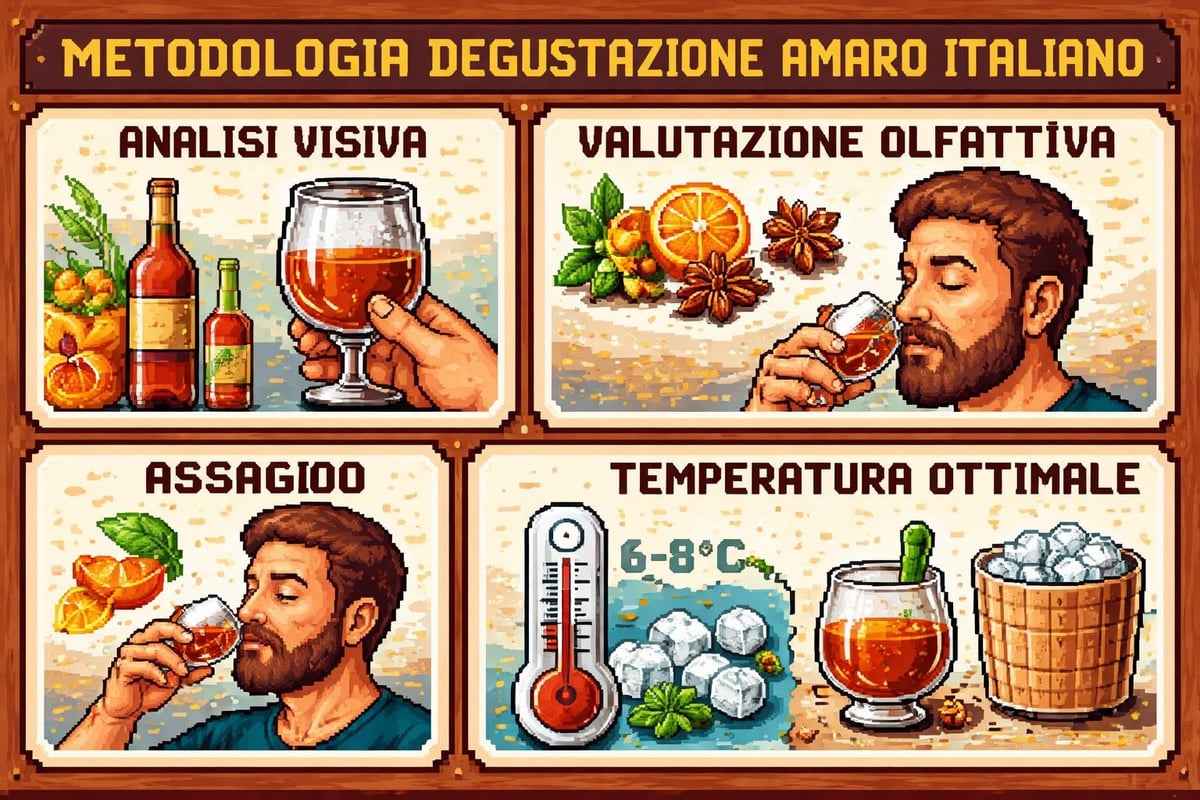
Do you know how to properly taste an amaro? It's not simply a matter of downing a glass after dinner. Tasting Italian amaros follows precise rules that allow you to fully appreciate their aromatic and flavorful complexity.
The Perfect Service
Serving temperature greatly influences the perception of aromas. Gentle bitters and aperitifs are best served chilled (10-12°C), while intense digestifs prefer slightly higher temperatures (14-16°C), allowing their aromas to fully express themselves.
Fundamental tasting parameters:
- Sight : clarity, color, fluidity
- Smell : bitter, aromatic, sweet, balsamic notes
- Taste : attack, development, persistence, balance
- Retroflavour : aromas that arise after swallowing
The ideal glass? A low tulip glass or a small tumbler that allows the aromas to be concentrated without dispersing them. Avoid shot glasses: bitters deserve to be savored slowly, not gulped down quickly.
Surprising Food Pairings
Who said bitters are only for after meals? In 2026, creative mixology and cutting-edge gastronomy are exploring innovative pairings. A delicate citrus bitter can pair beautifully with a dark chocolate dessert, creating a fascinating contrast. More structured bitters pair beautifully with aged and blue cheeses.
Furthermore, bitters are finding an ever-increasing presence in mixology , where they become fundamental ingredients in sophisticated cocktails that balance sweet, bitter, acidic and alcoholic in surprising ways.
Artisanal vs. Industrial Bitters: What's the Difference?
When choosing a bitter, have you ever stopped to consider the difference between artisanal and industrial production? It's not just about the quantity produced, but also about the production philosophy, the quality of the ingredients, and the attention to detail. Let's look at the key distinctions you should know.
Comparison between productions:
| I wait | Artisanal | Industrial |
|---|---|---|
| Botanicals | Selected, often local, traceable | Standardized, global suppliers |
| Process | Long maceration, small batches | Rapid extraction, large volumes |
| Personalization | Seasonal variations, evolutionary recipes | Fixed formula, constant product |
| Price | Superior (20-45€) | Lower (12-25€) |
Artisanal bitters often use fresh or naturally dried botanicals, harvested at the optimal balsamic peak. Artisanal liqueurs and bitters require longer maceration times, allowing for a more complete and delicate extraction of the aromatic elements. The result? More complex, layered flavor profiles, with nuances that evolve in the glass.
Sustainability and Traceability
An increasingly important aspect concerns the sustainability of the production chain. Modern craft distilleries, such as those that operate with renewable energy and recyclable packaging, are also raising quality standards on the environmental front. Complete traceability of ingredients is not only a guarantee of quality, but also a commitment to transparency and environmental responsibility.
When you buy a craft amaro, you're supporting a local production ecosystem, contributing to the preservation of botanical biodiversity and cultural traditions. It's an investment that goes beyond the simple product in the bottle.
2026 Trends: Innovation and Tradition in Italian Amari
What's happening in the world of Italian bitters right now? 2026 marks an interesting turning point, where technological innovation and respect for tradition coexist harmoniously. New generations of distillers are reinterpreting ancient recipes with modern tools, achieving surprising results.
Using technologies like the rotavapor allows for the extraction of delicate aromas at low temperatures, preserving volatile compounds that would otherwise be lost with traditional methods. This doesn't mean abandoning tradition, but rather enriching it with new expressive possibilities. An example? The extraction of fresh citrus notes that preserve the vitality of essential oils.
Customization and Limited Edition
Another strong trend is customization. More and more consumers are seeking unique and personalized products , and Italian amari are also responding to this need. Limited editions celebrate special harvests, collaborations with Michelin-starred chefs, and barrel-aged versions acquire complexity from aging in fine wood.
Emerging Innovations in 2026:
- Low-alcohol bitters for health-conscious markets
- Non-alcoholic versions that maintain botanical complexity
- 100% sustainable packaging with biodegradable labels
- Blockchain for complete supply chain traceability
Attention to sustainability isn't just a passing fad. Consumers in 2026 are informed, aware, and choosing brands that reflect their values. This is why artisanal distilleries investing in renewable energy, local development, and ethical production practices are gaining significant market share.
How to Choose the Right Amaro for Every Occasion
Are you standing in front of a selection of Italian amaros and not sure which one to choose? Every moment deserves its own special amaro, and knowing the key characteristics will help you make informed choices that will enhance your tasting experience.
For an afternoon aperitif, opt for light and refreshing bitters, with moderate alcohol content (18-22% ABV) and citrus or floral profiles. These gentle bitters prepare the palate without weighing you down, whetting your appetite for the meal. Perfect served over ice, with a slice of orange, and soda water.
Digestive and Meditation Bitter Liqueurs
After-dinner sips, however, call for more structured and complex bitters. Look for profiles with gentian, cinchona, or rhubarb after a rich meal. The bitterness actually aids digestion by stimulating the production of digestive enzymes. The alcohol content can rise to 35-40% ABV, with the alcoholic warmth balancing the bitter notes.
Then there's a special category: meditation bitters. These are those best enjoyed slowly, alone or in small company, appreciating every nuance. They have layered complexities that reveal themselves gradually, structures that evolve in the glass, and long, captivating persistences.
Quick guide to choosing:
- Summer aperitif : light, citrusy bitter, served cold with soda
- Digestive after fish : medium bitterness, citrus and Mediterranean notes
- Digestive after red meat : intense bitterness, gentian, bitter roots
- Creative cocktails : versatile bitters with a balance of sweet and bitter
- Pure tasting : complex, artisanal, limited edition bitters
Preservation and Enhancement of Your Collection
Have you started collecting Italian bitters? Excellent choice! But do you know how to store them properly to preserve their quality over time? Thanks to their alcohol content and the preservative properties of bitter botanicals, bitters are relatively stable, but they still require specific care.
Store bottles upright, away from direct sunlight and heat sources. The ideal temperature is around 15-18°C, similar to that of a cellar. Avoid sudden changes in temperature that can alter the product's balance. Once opened, a bottle of amaro retains its characteristics for approximately 12-18 months, thanks to the alcohol acting as a natural preservative.
Create a Tasting Corner
Why not dedicate a space in your home to bitters? A well-organized bar cabinet or dedicated shelf can be both functional and decorative. Organize bottles by type or strength, keeping the ones you use most frequently within easy reach.
Consider investing in quality glassware: shallow tulip glasses for pure tasting, tumblers for serving on ice, and mixing glasses if you enjoy experimenting with cocktails. Tools also matter: a good mixing glass, a strainer, and a jigger for precise dosages make all the difference when making bitters-based drinks.
The Bitters Market in 2026: Numbers and Outlook
The Italian bitters sector is experiencing significant growth. After years of consumption limited primarily to the domestic market and a niche of enthusiasts, in 2026 we are witnessing significant expansion both in Italy and abroad. But what are the numbers that demonstrate this trend?
The export market for Italian bitters has grown 23% in the last three years, with particular interest from the United States, Germany, and Scandinavia. International mixology has discovered the versatility of these products, incorporating them into creative cocktails that delight bartenders and consumers alike. It's not uncommon to find artisanal Italian bitters in cocktail bars in New York, London, or Tokyo.
Within the Italian market, the premium and super-premium segment is growing at rates exceeding 15% annually. Consumers are willing to pay more for artisanal, traceable products with an authentic story to tell. This creates extraordinary opportunities for small distilleries that focus on quality and local tradition.
Growing market segments:
- Regional artisanal bitters (+18% annually)
- Organic and sustainable versions (+22% annually)
- Limited editions and collaborations (+27% annually)
- Ready-to-drink bitters (+31% annually)
It's interesting to note how the audience is diversifying. It's no longer just men over 50, but also millennials and Generation Z who discover bitters through cocktails and then become passionate about tasting them pure. Women now represent 38% of regular consumers, a figure up sharply from 22% five years ago.
Pairing Bitters and Spirits: Creating Complete Experiences
Have you ever thought about organizing a tasting that pairs bitters with other spirits? If you're also passionate about gin, vodka, or other spirits, you can create fascinating tasting experiences that showcase the connections between different product categories. This is the philosophy of those who passionately work in the world of artisanal spirits.
For example, starting with a craft gin that shares some botanicals with a bitter (like juniper and angelica) allows you to appreciate how the same ingredients express themselves differently depending on the production method. Following with a gentle bitter and concluding with a more structured one creates a crescendo of intensity that engages the palate without tiring it.
Creating Synergies Between Categories
Modern distilleries producing diverse spirits have an advantage: they can play with botanicals, creating connections between the products. An amaro that uses local citrus peels can pair perfectly with a gin featuring citrus notes, creating a cohesive experience that explores the same terroir from different perspectives.
This holistic vision of production also allows for resource optimization: the same high-quality botanicals, purchased from the best suppliers or harvested locally, are used in various products, ensuring qualitative consistency and economic sustainability.
Italian amari represent a priceless heritage that unites history, terroir, craftsmanship, and innovation. Whether you're looking for the perfect after-dinner digestif or want to explore new dimensions of flavor, the world of amari offers endless possibilities for discovery. If you want to discover artisanal production excellence that respects tradition while integrating modern techniques, Mezzanotte | Distilleria & Spirits combines 35 years of family tradition with precision technology to create amari and spirits that express the Marche region with a contemporary soul. Discover how a passion for artisanal distillation can transform into authentic and memorable taste experiences.