

Discover the 2026 gin tasting guide to learn how to prepare, taste, and evaluate a craft gin, step-by-step, to fully appreciate all its aromatic nuances.
Gin Tasting Guide 2026: Mastering the Art of Tasting
Feb 24, 2026

Every craft gin enthusiast knows that a truly memorable tasting experience begins even before the first sip. For discerning connoisseurs in Central Europe, the art of preparing the right environment and selecting exceptional gins becomes a ritual that celebrates the cultural and sensory richness of each bottle. Discover how each meticulous step, from choosing the right glasses to adequate lighting, shapes the tasting culture and transforms a simple moment into a true narrative journey.
Table of Contents
- Step 1: Prepare the Tasting Equipment and Space
- Step 2: Select a Craft Gin Suitable for the Experience
- Step 3: Analyze the Gin's Aromas and Color
- Step 4: Taste with a Focus on the Sensory Approach
- Step 5: Evaluate Quality and Share Impressions
Quick Summary
| Key Point | Explanation |
|---|---|
| 1. Prepare the tasting space | Create a clean, well-lit environment to fully appreciate the gin during tasting. |
| 2. Choose the right gin | Select craft gins that match your personal preferences and the desired experience. |
| 3. Analyze aromas and color | Observe the color and smell the aromas to better understand the gin before tasting it. |
| 4. Taste mindfully | Taste the gin neat, focusing on the balance of flavors and the finish. |
| 5. Share your impressions | Discuss the experiences of others to enrich your understanding and discover new nuances. |
Step 1: Prepare the Tasting Equipment and Space
A successful tasting begins long before uncorking the first bottle. The space and equipment you prepare determine the quality of your sensory experience. Take the time to organize your environment with intention.
First, choose your tasting glasses. Tulip glasses or copa gin glasses are your best allies—they concentrate the aromas towards your nose while showcasing the gin's color in the light. Avoid standard glasses or wide coupes that dissipate delicate notes too quickly.
Here's what you'll need:
- Appropriate glasses for each gin (minimum 3-4 glasses if you are tasting several spirits)
- Filtered water at room temperature to cleanse your palate between tastings
- Notebooks or cards to jot down your observations and aromatic impressions
- Soft-lead pencil for easy writing
- Ice cubes or cold water depending on your tasting preference
The physical space deserves as much attention as the equipment. Organizing a gin tasting requires a well-lit, clean, and uncluttered space to fully appreciate the nuances of color and texture. Arrange your bottles at equal distances, with labels visible, so that everyone can follow the sensory journey.
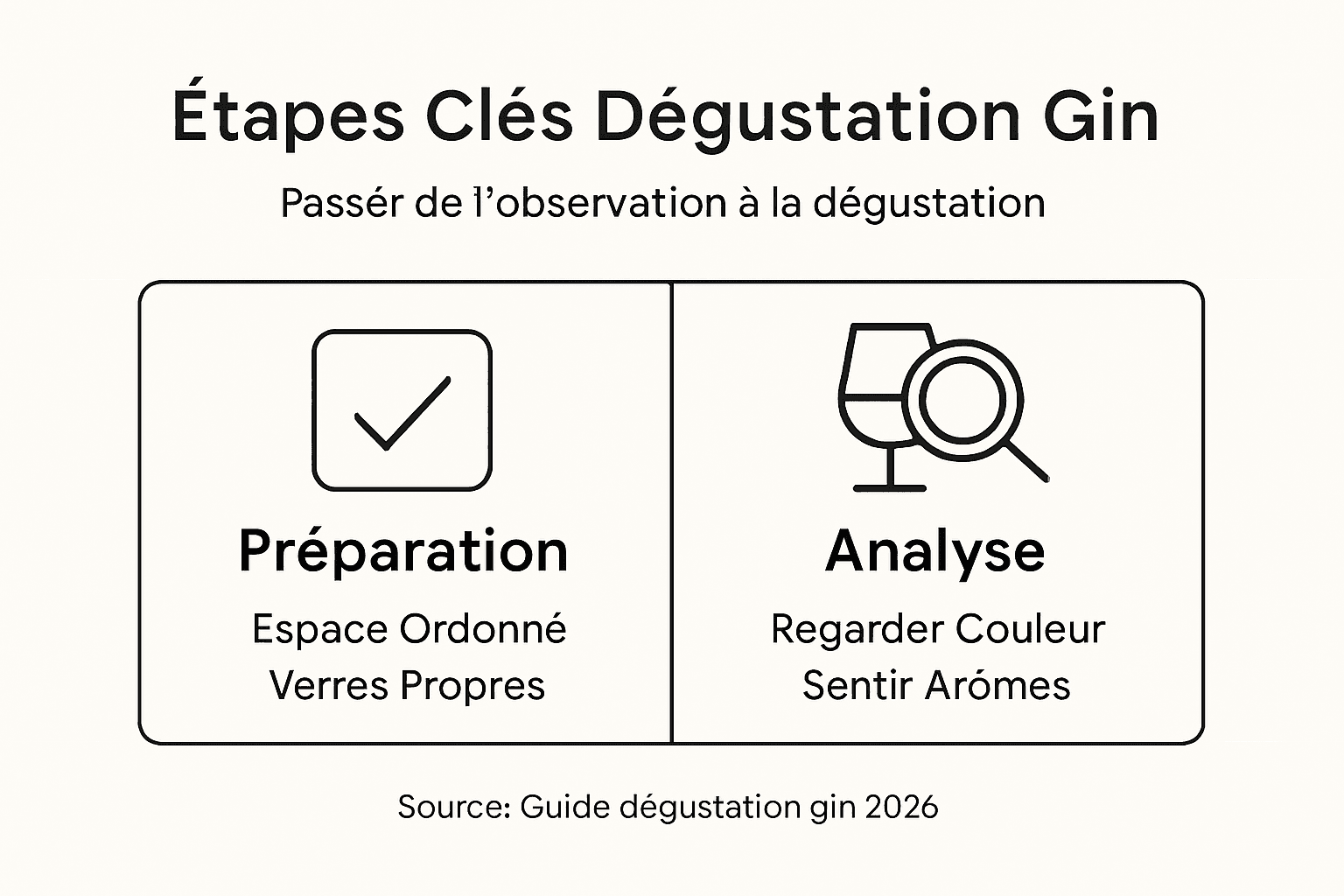
Make sure that natural light dominates the space—it reveals the true colors of the gin, from pale crystal to golden or slightly pinkish hues depending on the craft gin. If you are tasting in the late afternoon, neutral white light complements daylight.
Organize your space in a logical flow: bottles on one side, clean glasses in the center, water and notebooks within reach. This arrangement creates a clear ritual and allows every enthusiast to focus on the sensations.
Preparing your equipment and space is not an administrative task; it is the foundational act of your tasting.
Room temperature plays an often underestimated role. A space that is too warm accelerates the evaporation of volatile aromatic compounds. Maintain around 18-20°C for a calm and detailed tasting.
Separate the areas: one for tasting, one for taking notes, one for conversation. This separation prevents conversations from distracting your sensory concentration.
Pro tip: Prepare your glasses 30 minutes before tasting and let them reach room temperature. A cold glass shocks the taste buds and masks the aromatic subtleties you are looking for.
Step 2: Select a Craft Gin Suitable for the Experience
The choice of gin determines your entire sensory experience. You are not just tasting a spirit, but the history, ingredients, and philosophy of the distiller. Take the time to select with intention.
Start by defining what you are looking for. Do you want to explore complex botanical aromas or do you prefer a more classic and accessible base? Your experience level and taste preferences should guide your selection.
To master tasting, select craft gins that offer a subtle balance between different aromatic notes. Quality gins are crafted with particular attention to natural ingredients and the distillation process. This requirement is reflected in the complexity you will discover with each sip.
Here's how to evaluate a potential gin:
- Origin and history: Knowing the origin of the gin enriches your experience. Craft distilleries tell a story through their botanical choices.
- Botanical list: More than just a number, it's the quality and harmony of the plants that matter. Look for gins with distinctive and recognizable botanicals.
- Distillation method: Maceration, traditional pot still distillation, or modern techniques influence the final aromatic profile.
- Alcohol content: Between 40% and 50% ABV, you will find varied profiles. Higher alcohol gins often offer more structure and complexity.
Consider your tasting group. If you are bringing together novices and experts, opt for two or three gins with distinct profiles rather than a massive collection. A comprehensive guide to craft gin can help you explore the available diversity.
To better choose a gin during a tasting, here is a comparison of criteria to consider:
| Criterion | Impact on Experience | Example of Indication |
|---|---|---|
| Origin | Influences history and identity | Local or foreign distillery |
| Alcohol Content | Modifies intensity and structure | 40% = balanced, 47%+ = full-bodied |
| Number of Botanicals | Offers a varied aromatic palette | 8 plants = classic, 20+ = complex |
| Type of Distillation | Shapes the final aromatic profile | Copper pot still = tradition, column still = purity |
Choosing the right gin is not about price or popularity, but about suitability for your tasting intention.
The season and time of year also influence your choice. A floral and light gin is enjoyed differently depending on whether you are tasting in spring or winter. Adapt your selection to your context.
Pro tip: Start your tasting with a neutral or classic gin to calibrate your palate, then progress towards more complex and unexpected profiles. This progression creates better sensory memory.
Step 3: Analyze the Gin's Aromas and Color
Even before tasting, your eyes and nose tell you the story of the gin. This sensory phase lays the groundwork for your overall understanding. This is where the tasting truly begins.
Start by observing the gin's color in the light. Hold your glass in front of a natural light source to see the true hues. Color reveals a lot about the manufacturing process and the aging of the spirit.
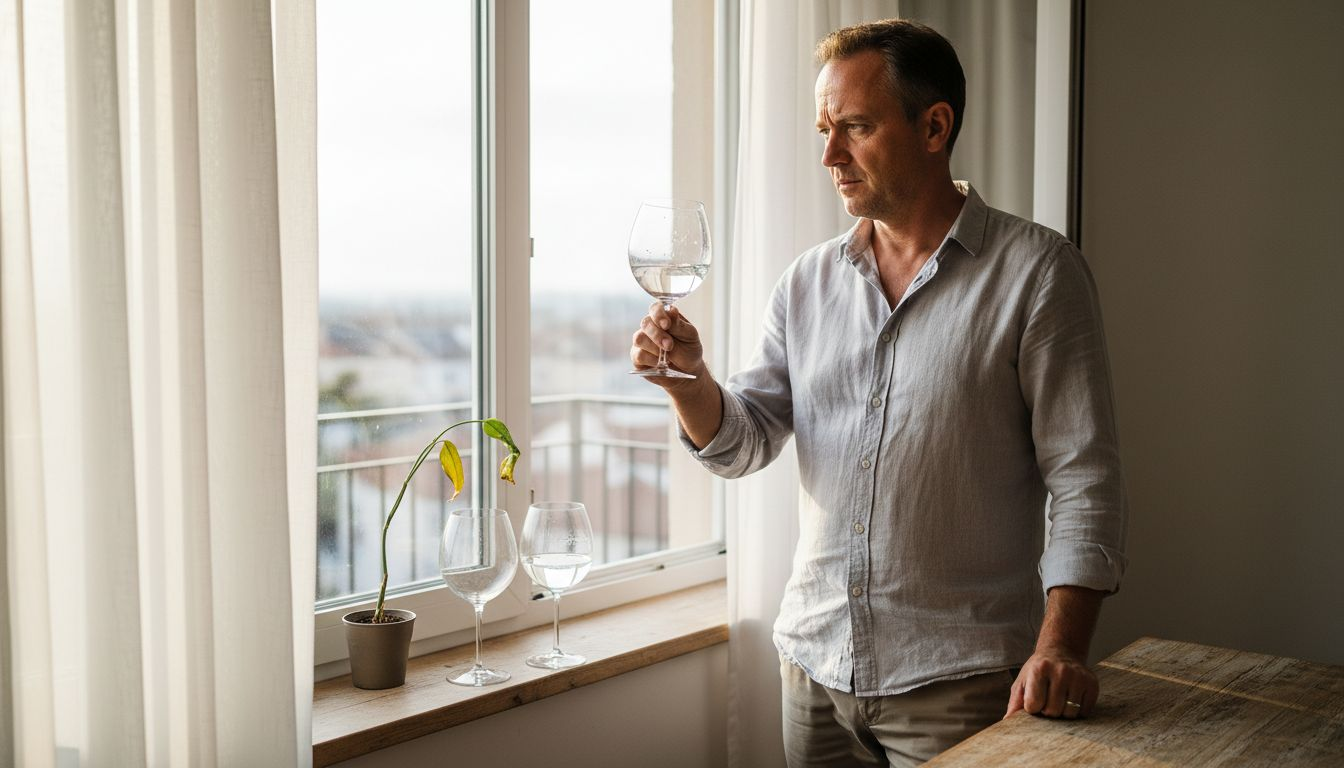
Here's what you can discern by color:
Here is a table summarizing the main differences between craft gin profiles based on the observed color:
| Gin Color | Indication of Elaboration | Typical Aromatic Profile |
|---|---|---|
| Crystal clear | Recent distillation, no barrel aging | Neutral, dominant juniper berries |
| Light golden yellow | Brief wood exposure | Freshness, subtle woody touches |
| Amber or bronze | Extended aging | Strong spicy and woody character |
| Rosé or reddish | Rare botanicals, berries/flowers | Floral/red fruit notes, originality |
- Crystal clear or very pale: White or lightly aged gin, recent distillation, no barrel aging.
- Light golden yellow: Brief exposure to wood or macerated botanicals, balance between freshness and complexity.
- Amber or bronze: Extended barrel aging, developed wood notes, richer and more structured profile.
- Rosy or reddish hues: Specific botanicals like berries or flowers, distinctive craft creation.
Color is a clue, not a certainty. Let it guide your anticipation without confining you to rigid expectations.
Now move on to analyzing the aromas. Gradually bring the glass to your nose without abruptly inhaling the high alcohol content. You are looking for a gentle progression, not a sensory assault.
This progressive approach will allow you to perceive the distinct aromatic layers: the notes of juniper berries, citrus, herbs, and spices that characterize gin. Volatile aromas present themselves in cascades, revealing the lightest first, then the most intense.
Take your time. Take 3 to 4 short, controlled breaths, spaced a few seconds apart. Between each inhalation, move the glass away to allow your sense of smell to rest.
The aromas first perceived are never the most important, but the first ones to catch attention. The real secrets are hidden a few seconds later.
Note your immediate impressions. Spontaneous comparisons with other known smells (fruits, flowers, wood, spices) will help you structure your description. Try to identify at least three different families of aromas.
Temperature plays a crucial role. Gin that is too cold will stifle volatile aromas. At room temperature (18-20°C), each aromatic molecule expresses itself fully. You will better understand the complexity of gin botanicals by respecting this condition.
Pro tip: Cleanse your nose between two gins by lightly sniffing the inside of your elbow or your wrist. This gesture resets your olfactory sensors and prepares your palate for the next tasting.
Step 4: Taste with a Focus on the Sensory Approach
Now comes the moment you've been waiting for. True tasting begins when you let the gin speak to you through all your senses. This step requires patience and presence.
Start by tasting the gin neat at room temperature. Pour about 15 milliliters into your glass and forget the ice for this initial approach. No mixture should alter your initial sensory experience.
Pay attention to the balance between alcohol, botanical sweetness, bitterness, and the finish. Each element plays a crucial role in the overall composition of the spirit. You are looking for harmony between these opposing forces.
Here's how to structure your tasting:
- First sip: Let the gin fill your entire mouth. Don't swallow it immediately. Feel how it unfolds, how the flavors evolve.
- Chewing: Lightly draw air through the gin (a technique called "chewing"). This action releases volatile aromatic compounds and creates a complete multi-sensory experience.
- Swallowing: Swallow slowly and observe how the flavors linger. This is the "finish" that reveals the quality of the gin.
- Aftertaste: After swallowing, keep your palate attentive to residual flavors for 10 to 15 seconds.
The sensory approach involves in-depth olfactory analysis combined with gustatory exploration. By allowing the spirit to unfold in your mouth, you reveal the overall aromatic structure. The botanical, spicy, citrus, and floral aroma families make sense in the context of taste.
Note your immediate sensations. Does the alcohol burn or is it subtle? Are the botanicals soft or aggressive? Identify at least three distinct flavors.
Let your palate rest between sips. Filtered water at room temperature helps cleanse your taste receptors without assaulting them.
True tasting is not a race. It is a patient dialogue between you and the gin.
Concentration changes everything. Move away from distractions. No loud conversations, no phone, no loud music. Your complete attention exponentially enriches your sensory experience.
If you are tasting several gins consecutively, progress from the lightest to the most complex. This progression prevents powerful profiles from masking the subtleties of more delicate gins.
Pro tip: Hold a small sip of gin in your mouth for a few seconds, then re-warm it with your natural breath before swallowing. This gesture warms the spirit and releases the final aromas that only warmth can reveal.
Step 5: Evaluate Quality and Share Impressions
You have tasted, observed, smelled. Now comes the moment to evaluate and transform your sensations into shared language. This is where individual tasting becomes a rich collective experience.
Quality evaluation is based on several fundamental criteria. The consistency between perceived aromas, purity of taste, length on the palate, and overall harmony constitute the pillars of your judgment. Each reveals something different about the gin.
Here's how to structure your evaluation:
- Aromatic consistency: Do the aromas perceived by smell match the gustatory flavors? Is there an internal logic?
- Purity: Is the taste clean and clear or muddled and hazy? Do you identify each note distinctly?
- Finish: Do the flavors linger after swallowing, or do they disappear quickly? A good finish indicates quality.
- Harmony: Do all elements work together, or do some dominate unpleasantly?
Note your personal judgment on your tasting sheets. A simple rating from 1 to 10 is sufficient, accompanied by your three keywords describing the gin.
Now, create space to share your impressions with other tasters. Encourage everyone to express their sensations using precise vocabulary and comparing experiences. This dialogue exponentially enriches your collective understanding.
When talking about your experience, be descriptive, not prescriptive. Instead of saying "this gin is better than the other," say "I found this one more floral, with a more assertive finish."
Listen carefully to others. A perception you hadn't identified might reveal a new dimension of the same gin. Sharing impressions allows for comparing subjective perceptions and identifying specific nuances. This exchange develops everyone's sensory culture.
A gin is neither good nor bad. It is simply suited or unsuited to your preferences and your palate.
Discussion also reveals personal preferences. Some prefer floral gins, others herbaceous profiles. Accept this diversity as a richness, not a mistake.
Conclude your evaluation with an open question: "Would you return to this gin? Why?" This question synthesizes your overall experience and creates a natural conclusion.
Pro tip: Always keep your tasting notebooks. Over time, you will create a personal journal that tracks the evolution of your palate and becomes a valuable reference for your future selections.
Mastering the art of tasting with exceptional craft gins
You aspire to deepen your sensory experience in gin tasting and master every detail of this unique gustatory adventure. The article emphasizes the crucial importance of gin selection, the balance of aromas, and the dedicated tasting space to reveal the full richness of this spirit. The challenge is to find authentic and sophisticated gins, capable of telling a story through their botanicals and distillation method, as recommended by the best tasting practices of 2026.

Discover on Mezzanotte Spirits an exclusive selection of Italian Craft Gin combining aromatic complexity and traditional craftsmanship. Our distillates reflect a passion for purity and innovation, ideal for accompanying you through each step of your sensory tasting. Also explore our complete range of Craft Spirits to enrich your cabinet of curiosities and fully experience the art of tasting.
Don't wait any longer to elevate your tasting to the next level. Browse our collection now and begin your journey into the heart of authentic Italian flavors. Mastering an exceptional tasting experience begins here.
Frequently Asked Questions
How to organize an optimal gin tasting space?
For a successful gin tasting space, choose a well-lit, clean, and uncluttered area. Arrange the bottles at an equal distance, with labels visible, and ensure all equipment is within reach before starting.
Which glasses are recommended for gin tasting?
Use tulip glasses or copa gin glasses to concentrate the aromas towards your nose. For example, plan for a minimum of 3-4 glasses if you are tasting several gins to fully appreciate each aromatic profile.
How to choose a craft gin suitable for my tasting?
Select a gin based on your taste preferences and what you want to explore, whether it's complex botanical aromas or more classic profiles. Also evaluate the origin, ingredient list, and distillation method to refine your choice.
What steps should be followed to analyze the aromas and color of gin?
Start by observing the color of the gin in natural light, which reveals information about its production. Then, bring the glass to your nose with small inhalations to identify the different aromatic layers without being overwhelmed by the alcohol.
How to taste gin sensorially?
Take a small sip at room temperature, let the gin spread in your mouth, then inhale slightly to release the aromas. This method helps you better appreciate the texture and complexity of the flavors.
How to evaluate and share impressions after tasting?
Evaluate the consistency, purity, and finish of the gin you tasted. Then, share your impressions with other participants using descriptive vocabulary, which enriches the experience through an exchange of perceptions.
Recommendation
- Italian Gin Guide: Discover the Secrets of 2026 – Mezzanotte | Distilleria & Spirits
- The Complete Guide to Gin Shops: Discover the Best Gins of 2026 – Mezzanotte | Distilleria & Spirits
- The Complete Guide to Dry Gin: Discover Everything in 2026 – Mezzanotte | Distilleria & Spirits
- The Ultimate Gin and Tonic Guide for 2026 – Mezzanotte | Distilleria & Spirits