

Discover everything about Italian flavored liqueurs: history, ingredients, pairings, and cocktail recipes. A complete guide for connoisseurs and enthusiasts.
Guide to Flavored Liqueurs: Flavors, Histories, and Uses
Mar 29, 2026

Every bottle of flavored liqueur holds a whole world within. It's not just alcohol with some herbs in it, but centuries of tradition, recipes kept in monasteries, and botanicals hand-picked in the Alps or Sicily. Yet many enthusiasts treat them all the same, as if a Calabrian amaro and an alpine floral liqueur were interchangeable. They are not. This guide takes you inside the true culture of Italian flavored liqueurs: what they are, how they are made, how to taste them, and how to best use them, both in a glass and in a cocktail shaker.
Table of Contents
- What Are Flavored Liqueurs
- Ingredients and Flavoring Methods
- The Evolution of Flavored Liqueurs in Italian Tradition
- Artisan Flavored Liqueurs Today: Quality and Trends
- Pairings and Use of Flavored Liqueurs
- Flavored Liqueurs in Cocktails: Recipes to Try
- Discover Mezzanotte's Artisan Spirits
- Frequently Asked Questions About Flavored Liqueurs
Key Points
| Point | Details |
|---|---|
| Liqueurs rich in history | Flavored liqueurs carry centuries of Italian culture and artisanal innovation. |
| Unique ingredients and methods | Botanicals, spices, and flavoring techniques distinguish each product. |
| Versatility in cooking and mixology | These liqueurs are perfect for sipping, pairing, or experimenting in cocktails. |
What Are Flavored Liqueurs
A flavored liqueur is an alcoholic beverage made from an ethyl alcohol or distilled spirit base, enriched with natural or artificial flavors and sweetened with sugar. The history of Italian spirits shows how vast this category is and how deeply rooted it is in the country's culture. But beware: not all flavored liqueurs are alike, and understanding the differences changes everything.
The main categories are:
- Amaros: made from herbs, roots, and peels, with a bitter and digestive profile
- Fruity liqueurs: citrus, berries, cherries, often sweet and lively
- Herbaceous: dominated by alpine or Mediterranean herbs, fresh and balsamic
- Floral: violet, rose, elderflower, delicate and fragrant
- Spiced: cinnamon, cardamom, pepper, with warmth and complexity
The difference between liqueur, spirit, and infusion is fundamental. A spirit comes from the fermentation and distillation of a raw material, with no additions. A liqueur starts with an alcoholic base to which flavors and sugars are added. A flavored infusion, on the other hand, is a maceration of ingredients in alcohol, often without subsequent distillation.
| Type | Base | Added flavors | Sugar |
|---|---|---|---|
| Spirit | Fermented and distilled | No | No |
| Flavored Liqueur | Neutral alcohol or spirit | Yes | Yes |
| Infusion | Neutral alcohol | Yes (maceration) | Optional |
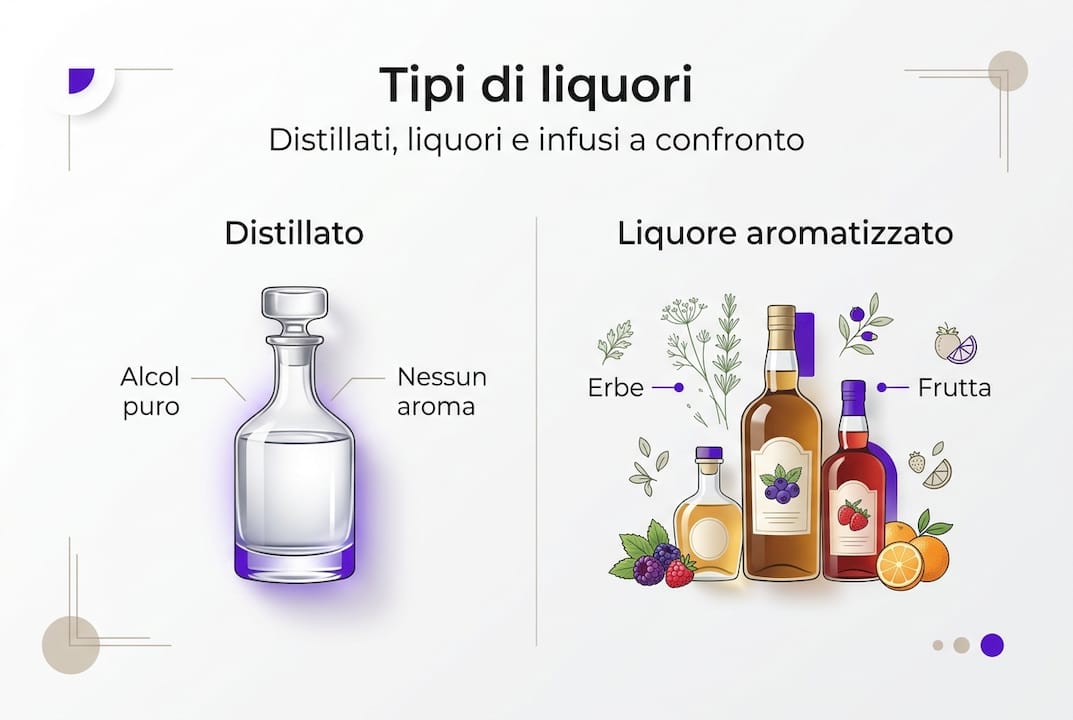
Pro Tip: When reading a label, look for "alcohol content" and "ingredients." A true artisanal liqueur indicates the botanicals used, often with their geographical origin. If the label only says "natural flavors" without specifying, it's likely not artisanal.
Ingredients and Flavoring Methods
The richness of a flavored liqueur depends almost entirely on the quality and variety of the botanicals used. The craftsmanship in Italian liqueurs is measured precisely here: in the selection of local herbs, chosen roots, fresh citrus peels, and flowers harvested at the right season.
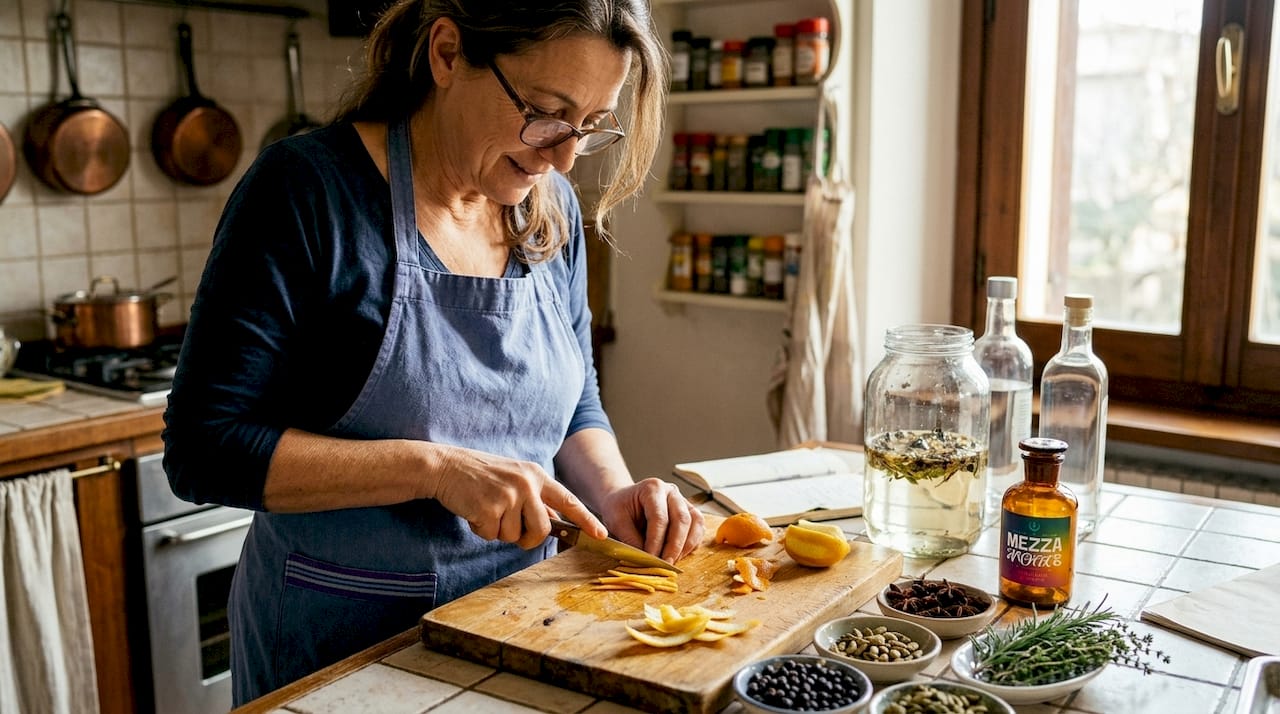
The most common ingredients are divided by aromatic category:
| Category | Typical Ingredients | Resulting Aroma |
|---|---|---|
| Citrus | Lemon, bitter orange, bergamot | Fresh, lively, slightly bitter |
| Herbs | Gentian, absinthe, mint, sage | Bitter, balsamic, herbaceous |
| Spices | Cinnamon, cloves, cardamom | Warm, spicy, enveloping |
| Roots | Licorice, angelica, rhubarb | Earthy, sweet-bitter, deep |
| Flowers | Lavender, elderflower, rose | Delicate, floral, aromatic |
There are three main methods of aroma extraction:
- Maceration: botanicals are steeped in alcohol for days or weeks. This extracts complex and deep aromas.
- Distillation: botanicals are distilled with alcohol, resulting in a cleaner and more precise profile.
- Cold Infusion: a modern technique that preserves delicate and volatile aromas, used for fresh flowers and citrus.
The three most common storage mistakes that destroy aroma:
- Exposing the bottle to direct sunlight, which degrades aromatic compounds
- Storing in warm places or near stoves, accelerating oxidation
- Leaving the bottle open or poorly sealed, dispersing volatile compounds
The difference between artisanal and industrial production is stark. An artisanal producer macerates whole botanicals, manually checks each batch, and often uses short-chain ingredients. Industry operates at scale, with standardized extracts and automated processes. The result in the glass is palpable.
The Evolution of Flavored Liqueurs in Italian Tradition
The history of Italian flavored liqueurs begins in medieval monasteries. Monks used herbs and roots to prepare medicinal remedies, and alcohol was the ideal solvent to extract their active principles. Over time, these recipes left the cells and became beverages of pleasure. The historical role of Italian amaros is inseparable from this pharmaceutical origin.
Regional influences have shaped an extraordinarily varied landscape:
- Northern Italy: alpine liqueurs based on mountain herbs, gentian, mugo pine, yarrow
- Central Italy: infusions of Mediterranean herbs, wild fennel, myrtle
- South and islands: citrus, prickly pears, bitter almonds, carob
Some historical examples that have made the history of Italian liqueurs include Fernet, Cynar, Abruzzese Centerbe, and Sardinian Mirto. Each tells a specific regional story.
“An amaro is not just a digestive drink. It is a botanical archive, a liquid map of the territory.” This vision, shared by many contemporary artisanal producers, explains why the [best Italian amaros](https://mezzanotte.shop/blogs/news/migliori-amari italiani) are experiencing a true renaissance.
Modern evolution has led a new generation of distillers to rediscover forgotten recipes, to enhance rare local botanicals, and to tell stories of the territory through each bottle. Tradition is not a museum: it is a living laboratory. Italian amaros in tradition continue to inspire new producers throughout the country.
Artisan Flavored Liqueurs Today: Quality and Trends
The market for Italian artisanal liqueurs is growing strongly. Excellent artisanal liqueurs are winning international awards and shelves in bars worldwide, with demand growing year after year among quality-conscious consumers.
What makes an artisanal liqueur special today? Three fundamental elements:
- Ingredient transparency: the producer indicates each botanical, often with its origin and harvesting method
- Limited batches: small productions that guarantee quality control over every bottle
- Narrative identity: each product has a story, a territory, a recognizable character
The short supply chain is a real added value. Using herbs grown a few kilometers from the distillery reduces the time between harvesting and processing, preserving the most volatile aromas. It's a choice that can be tasted in the glass.
The most interesting contemporary trends include the use of unusual botanicals such as Sichuan pepper, matcha tea, or hibiscus flowers, combined with innovative extraction techniques. Packaging has become an integral part of the product: illustrated bottles, labels that tell myths or cultural references, collectible designs.
Pro Tip: To recognize an authentic product, look for the producer's name, the production location, and the complete list of botanicals on the label. A serious artisanal liqueur has nothing to hide.
Pairings and Use of Flavored Liqueurs
Serving a flavored liqueur correctly multiplies the pleasure. Pairings with flavored liqueurs follow precise logics, but also leave room for personal experimentation.
Basic rules for pairings:
- Amaros with aged cheeses: the bitter component balances the richness of the cheese
- Citrus liqueurs with dark chocolate desserts: the fresh-bitter contrast enhances both
- Floral liqueurs with fruit desserts: harmony of delicate aromas
- Spiced liqueurs with almond or honey desserts: warmth and sweetness are amplified
Three steps to create a tasting journey at home:
- Choose three different liqueurs by category: an amaro, a citrus, and a floral or spiced
- Prepare small matched food samples: a piece of chocolate, a slice of cheese, a dry biscuit
- Taste in increasing order of intensity: start with the most delicate and finish with the most bitter or spiced
Pro Tip: The ideal time for an amaro is after dinner, at room temperature, in a tulip glass that concentrates the aromas. For a citrus or floral liqueur, also try it as an aperitif lengthened with tonic water.
Flavored Liqueurs in Cocktails: Recipes to Try
Flavored liqueurs are absolute protagonists of modern mixology. The trendiest cocktails based on flavored liqueurs in 2026 enhance botanical complexity without covering it with overly sweet or aggressive ingredients.
Two simple recipes to try right away:
Artisanal Bitter Spritz
- 4 cl of artisanal amaro of choice
- 8 cl of dry prosecco
- 2 cl of sparkling water
- Plenty of ice, orange peel as garnish
Floral Sour
- 4 cl of floral liqueur (elderflower or violet)
- 2 cl of fresh lemon juice
- 1 cl of simple syrup
- Egg white (optional, for foam)
- Shake vigorously, serve in a coupe glass
The ideal garnishes for cocktails make a visual and aromatic difference. Here are the most effective with flavored liqueurs:
- Expressed citrus peel (lemon, orange, grapefruit)
- Sprig of fresh rosemary or thyme
- Edible flowers (violet, lavender, calendula)
- Cucumber slice or mint leaf for herbaceous liqueurs
The secret to balancing flavors in a cocktail is simple: every element must have a role. The liqueur brings complexity, the acid balances the sweet, the garnish adds the final aromatic touch. Experiment, but with intention.
Discover Mezzanotte's Artisan Spirits
If this guide has opened up a world to you, the next step is to find products that truly embody these values. On mezzanotte.shop you'll find a selection of Italian artisan spirits chosen for their botanical identity, the quality of their ingredients, and the strength of the story they carry with them.

Every bottle in the catalog has a precise story: a territory, a rare botanical, a cultural inspiration that goes beyond mere taste. Whether you're looking for a meditation amaro, a cocktail gin, or a liqueur to gift to someone who appreciates beauty, here you'll find products you won't find anywhere else. Explore the catalog, read the stories behind each label, and choose your next favorite.
Frequently Asked Questions About Flavored Liqueurs
What is the difference between flavored liqueur and spirit?
A flavored liqueur is made from an alcoholic base with added flavors and sugars, while a pure spirit is obtained exclusively from distillation without subsequent additions. The presence of sugar is the most immediate distinguishing element.
What are the most commonly used flavors in Italian liqueurs?
The most common are alpine and Mediterranean herbs, southern citrus, roots like gentian and rhubarb, oriental spices, and local flowers. The choice of typical Italian flavors varies greatly from region to region.
How should a flavored liqueur be stored?
It should be kept away from direct light and heat, with the bottle always tightly sealed. Storage tips indicate that a cool cellar or a closed cabinet are ideal solutions to preserve aroma and alcohol over time.
Is it better to serve flavored liqueurs cold or at room temperature?
It depends on the type: amaros are best enjoyed at room temperature, while citrus and floral liqueurs gain freshness if served slightly chilled. The tasting guide suggests experimenting with both temperatures to find your preferred one.
Recommendation
- History of Italian Spirits: Artisanal Tradition 2026 – Mezzanotte | Distillery & Spirits
- Italian Spirits Tasting Method: Practical Guide 2026 – Mezzanotte | Distillery & Spirits
- Instructions for Collecting Spirits: Complete Guide 2026 – Mezzanotte | Distillery & Spirits