

Discover how artisanal distillation works: cuts, fractions, the role of copper, and techniques to create gin and vodka with unique aromas and a precise identity.
Artisanal Distillation Guide: Techniques, Cuts, and Aromas
Mar 28, 2026

Artisanal distillation is much more than just a chemical process. It is an art form that requires knowledge, sensitivity, and a steady hand. While the industry aims for standardization, the artisan strives for uniqueness. The secret lies in a detail that many ignore: ethanol evaporates at 78.37°C, but dozens of other compounds evaporate at different temperatures, and knowing how to manage these differences is what separates a mediocre spirit from an extraordinary one. In this guide, we explore techniques, cuts, and aromas for those who truly want to understand what's in their glass.
Table of Contents
- What is artisanal distillation and why does it fascinate enthusiasts?
- Scientific principles of artisanal distillation
- Cuts and fractions: heads, hearts, and tails in the artisanal process
- Personalization and terroir: the artisan's signature
- From laboratory to glass: tasting and practical application
- Discover the Mezzanotte artisanal spirits range
- Frequently asked questions about artisanal distillation
Key Points
| Point | Details |
|---|---|
| Importance of cuts | Fraction cuts ensure purity, safety, and aromatic richness in spirits. |
| Copper: added value | The use of copper enhances aromatic notes and cleanliness in the artisanal process. |
| Customization | Manual control allows for the creation of distinctive spirits and reflects local terroir. |
| Conscious tasting | Understanding the process helps to better evaluate spirits and make informed choices. |
What is artisanal distillation and why does it fascinate enthusiasts?
Artisanal distillation distinguishes itself from industrial distillation by a fundamental element: human control. In large factories, processes are automated and optimized for yield. In micro-distilleries, every choice is deliberate, every cut is an artistic decision.
The elements that define artisanal distillation are precise and recognizable:
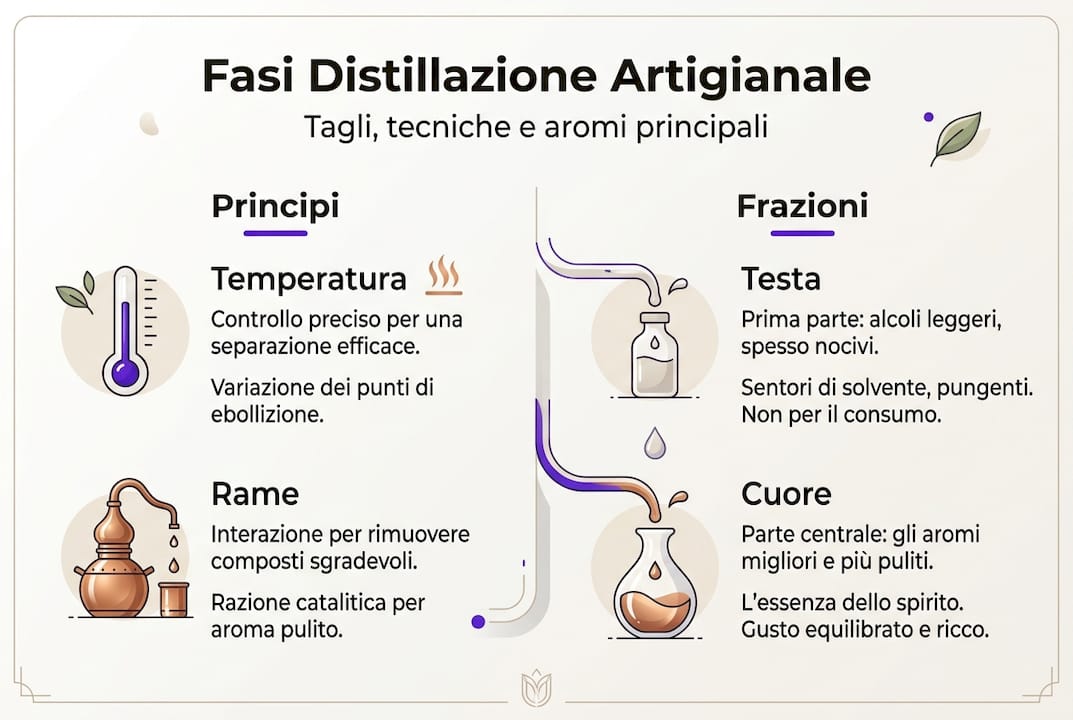
- Copper stills: they are not just aesthetic. Copper catalyzes the removal of sulfated compounds, making the distillate cleaner and more aromatically complex.
- Manual control: the master distiller adjusts temperature, pressure, and timing based on sensory experience, not just data.
- Personalization and terroir: local ingredients, seasonal botanicals, and traditional techniques create a unique profile, impossible to replicate industrially.
- Growing micro-distilleries: the phenomenon of small-scale production of local gins and vodkas is rapidly expanding, with new ventures that enhance the local area.
“Artisanal distillation is not just technique: it's how a place, a season, and a person transform into an aroma.”
If you're interested in understanding how this tradition has evolved over time, the history of Italian spirits offers a valuable context. And if you want to understand why it's worth choosing an artisanal product over an industrial one, the guide on the quality of artisanal spirits is the right starting point.
Scientific principles of artisanal distillation
Understanding the chemistry of distillation doesn't require a doctorate. It requires curiosity and a few key concepts.
The basic principle is simple: different liquids evaporate at different temperatures. When a fermented liquid is heated, the most volatile components rise first. Ethanol, with its boiling point at 78.37°C, evaporates before water (100°C), but after methanol (64.7°C). This is why the initial cuts, the so-called "heads," are discarded.
Copper plays a precise chemical role. It reacts with sulfated compounds present in the vapor, neutralizing them. The result is a cleaner distillate, with more defined floral and fruity aromas. It's not magic: it's intelligently applied chemistry.
| Component | Boiling Point | Effect on distillate |
|---|---|---|
| Methanol | 64.7°C | Toxic, discarded in the heads |
| Ethanol | 78.37°C | Main component of the heart |
| Water | 100°C | Present in the tails |
| Fusel oils | 130°C+ | Heavy aromas, managed in the tails |
To delve deeper into the technical vocabulary of the sector, the guide to distillation terminology is a useful tool for those who want to speak precisely about what they drink.
Pro Tip: During a visit to a micro-distillery, always ask to see the copper still. If it's well used, it will have a dark, uneven patina: a sign that it's really working, not just there for show.
Cuts and fractions: heads, hearts, and tails in the artisanal process
This is where the real game is played. Cuts are the moment when the master distiller expresses their vision. During distillation, three fractions are separated: heads, hearts, and tails. Each has precise chemical and sensory characteristics.
- Heads: the first vapors to condense. They contain methanol, acetaldehyde, and other volatile compounds. They have a pungent, almost chemical odor. They are always discarded, without exception.
- Hearts: this is the essence of the distillate. It contains pure ethanol and the noble aromas that define the character of the product. The master distiller collects it carefully, seeking the exact moment when quality is at its peak.
- Tails: the last vapors. They contain heavy, fusel oils and compounds that impart earthy or animal notes. Some distilleries use a small part to add complexity; others discard them completely.
| Fraction | Main Compounds | Typical Use |
|---|---|---|
| Heads | Methanol, acetaldehyde | Always discarded |
| Hearts | Ethanol, esters, aromas | Collected and bottled |
| Tails | Fusel oils, water | Partially used or discarded |
The differences between gin and vodka in this step are significant. Gin requires a heart rich in botanical aromas, so the cuts are wider and more tolerant of complex notes. Vodka aims for absolute neutrality: the cuts are narrower, the heart purer.
Pro Tip: A good way to assess the quality of a spirit is to smell it at room temperature without ice. If you detect pungent or chemical notes, the head cut was not done well. If you feel excessive warmth and earthy notes, the tail entered the heart too much.
To avoid the most common errors in this process, the guide to distillation errors is a worthwhile read. And if you want to understand how the aromas of artisanal gin are built botanical by botanical, delve into the aromatic components of gin.
Personalization and terroir: the artisan's signature
An artisanal spirit always bears a signature. It's not just the logo on the label: it's the result of precise choices that begin long before the still.
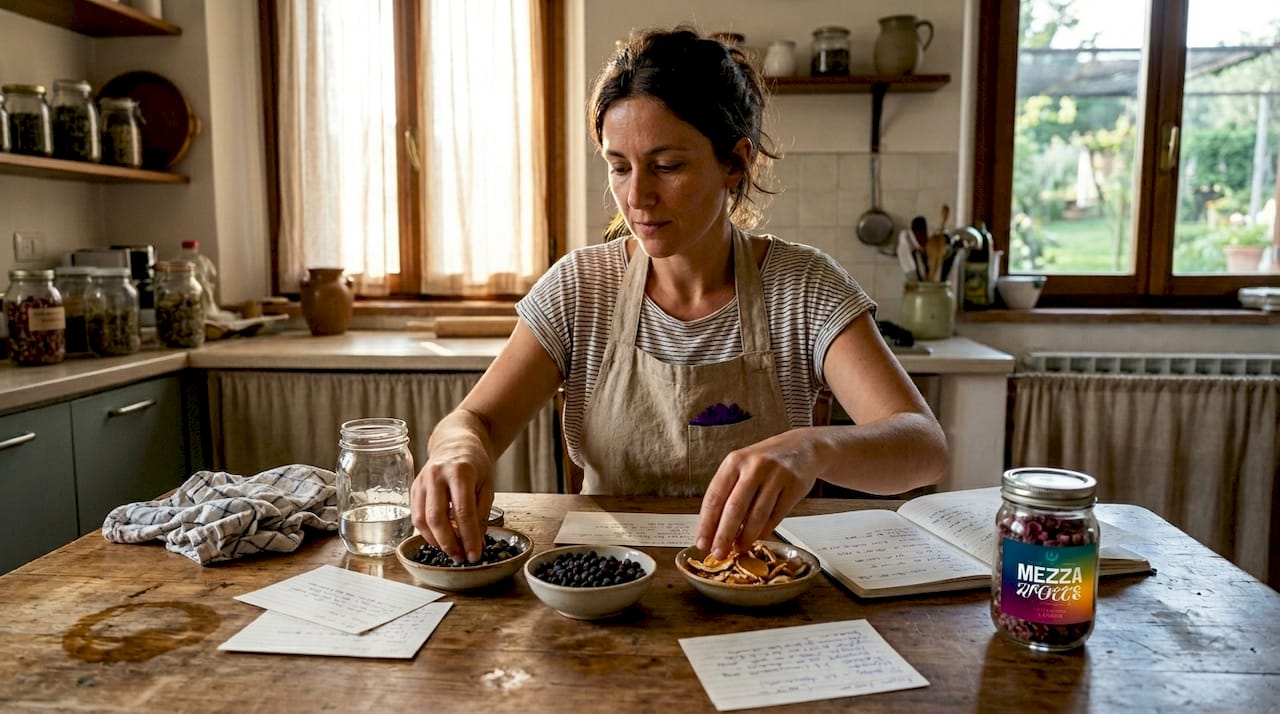
Terroir, a concept borrowed from the wine world, applies perfectly to spirits. The water used for dilution, the botanicals harvested in a specific season, the grain grown in a certain area: everything contributes to the final profile. Cutting techniques vary significantly: a heads-to-hearts cut favors long maturation and more delicate aromas, while a hearts-to-tails cut introduces phenolic notes and a more robust structure.
The elements an artisan controls to personalize their spirit include:
- Selection of botanicals: local or exotic, fresh or dried, macerated or in vapor.
- Distillation temperature: variations of a few degrees perceptibly change the aromatic profile.
- Width of cuts: wider for complexity, narrower for cleanliness and neutrality.
- Maturation: in wood, in steel, or in bottle, each choice adds or subtracts character.
“The terroir of a spirit is not just where the botanicals grow: it's also who harvests them, when, and how they treat them before the still.”
If you want to explore the differences between the various styles of gin produced in Italy, the guide to types of artisanal gin is an excellent reference point. And to understand how gin and vodka differ not only in aromas but also in history, read the differences between vodka and gin.
From laboratory to glass: tasting and practical application
All this knowledge is worth little if it doesn't translate into a concrete experience. Tasting an artisanal spirit with awareness is a skill that is built, not an innate talent.
Here's how to approach a structured tasting:
- Visual: observe the color and viscosity. A well-made crystal-clear gin has an almost metallic clarity. A quality vodka leaves slow tears on the glass.
- Olfactory: slowly bring the glass closer. First at a distance, then closer. Look for the top notes (floral, citrusy), then the heart notes (spicy, herbaceous), and finally the base notes (earthy, woody).
- Gustatory: take a small sip, hold it in your mouth for a few seconds. Evaluate the cleanliness of the attack, the complexity in the middle, and the length of the finish.
- Retronasal: after swallowing, breathe slowly through your nose. The aromas that emerge at this stage reveal the quality of the heart.
The growing number of micro-distilleries for local gins and vodkas are making this experience more accessible, with tours, guided tastings, and products that tell precise stories.
Pro Tip: Add a drop of water to the spirit before tasting it. The water lowers the alcohol content and releases aromas that the alcohol was holding back. This is the same technique used by professionals to evaluate high-end whiskies and gins.
To refine your method, the guide to tasting Italian spirits offers a practical and detailed protocol. And if you want to put your knowledge into practice with concrete recipes, explore cocktails with vodka for immediate inspiration.
Discover the Mezzanotte artisanal spirits range
Every concept explored in this guide, from cuts to botanicals, from terroir to tasting, comes to life in Mezzanotte products. Every bottle is born from deliberate choices: the copper of the still, the moment of the cut, the selection of botanicals. It's not marketing: it's the result of a process you've just learned to read.

If you want to turn theory into direct experience, explore Mezzanotte artisanal gin and discover how each label tells a precise story of aromas and territory. For those who prefer absolute purity, the selection of Mezzanotte artisanal vodka demonstrates what a perfect cut means in the glass. Every product is designed for those who, like you, want to drink with awareness.
Frequently asked questions about artisanal distillation
What is the role of copper in artisanal distillation?
Copper removes sulfated compounds during distillation, improving the aromatic purity and complexity of the final spirit. This is why artisanal stills are almost always constructed from this material.
How are the heads, hearts, and tails distinguished in distillation?
The heads contain harmful compounds like methanol and are always discarded; the heart is the pure essence with ethanol and noble aromas; the tails feature heavy oils and earthy notes. The master distiller decides the cuts based on sensory experience and the desired aromatic profile.
Can I customize the aromas of artisanal spirits?
Yes. Manual control of the process allows for the selection of botanicals, adjustment of cuts, and choice of maturation techniques that uniquely define aromas and character for each production.
Why are micro-distilleries growing?
Expanding micro-distilleries respond to a growing demand for local, unique spirits with a precise story. They offer greater control over the process, enhancement of the local territory, and products impossible to find in large distribution.
Recommendation
- Spirits Distillation Guide 2026: Avoid 40% Common Mistakes – Mezzanotte | Distillery & Spirits
- Instructions for Collecting Spirits: Complete Guide 2026 – Mezzanotte | Distillery & Spirits
- Distillation Terminology: Guide for Enthusiasts 2026 – Mezzanotte | Distillery & Spirits
- Complete Guide to the Artisanal Distillation Process 2026 – Mezzanotte | Distillery & Spirits
- Types of Italian Spritz: Expert Guide to Choosing Yours