

Master artisan gin, vodka, and bitter distillation with this complete guide: fermentation, precise cuts, botanicals, and traditional techniques for exceptional spirits in 2026.
Complete Guide to the Artisan Distillation Process 2026
Mar 18, 2026

Mastering artisanal gin, vodka, and bitter liqueur distillation requires technical precision and respect for tradition at every stage of the process. Many enthusiasts face the challenge of balancing botanicals, executing perfect cuts, and understanding the differences between distillation methods. This guide will take you step-by-step from initial fermentation to final distillate verification, revealing the techniques that transform raw materials into exceptional beverages. You will learn about controlled fermentation, distillation in copper stills, botanical selection, precise heads and tails cuts, and the cultural nuances that make each artisanal bottle unique.
Table of Contents
- Key Points of the Artisanal Distillation Process
- Preparation: Ingredients, Equipment, and Basic Principles
- Process Execution: Fermentation, Distillation, and Essential Cuts
- Verification and Cultural Nuances in Artisanal Distillation
- Explore Our Artisanal Collection of Italian Spirits
- Frequently Asked Questions About the Artisanal Distillation Process
Key Points of the Artisanal Distillation Process
| Point | Details |
|---|---|
| Fermentation and artisanal distillation | The basis of the process combines controlled fermentation (1 to 4 weeks) with traditional still distillation to create high-quality beverages. |
| Copper stills and pot stills | Copper removes unwanted sulfides, while pot stills develop complex flavor profiles that define the character of the spirit. |
| Botanicals and specific maceration | Each drink requires unique techniques: gin uses redistillation with botanicals, vodka seeks neutrality through multiple passes, bitters employ prolonged maceration. |
| Precise cuts for quality | Correctly separating heads, hearts, and tails eliminates harmful volatiles and concentrates the best aromas in the heart of the distillate. |
| Small-batch tradition | Adapted European artisanal production emphasizes terroir, botanical balance, and attention to detail for demanding collectors. |
Preparation: Ingredients, Equipment, and Basic Principles
Before starting any artisanal distillation, you need to understand the fundamentals that separate a mediocre spirit from an exceptional one. The process begins with fermentation of grains, fruits, or sugars to obtain 6 to 12% ABV, creating the alcoholic base that will then be concentrated by distillation. The choice of raw materials determines the final profile: malted barley for traditional gin, wheat or rye for premium vodka, bitter herbs and roots for authentic bitters.
Copper stills represent the heart of the artisanal process. Copper is not just aesthetic; it chemically reacts with sulfur compounds during distillation, removing them and smoothing the final distillate. Copper pot stills produce spirits with body and character, ideal for gin and whiskey, while fractional distillation columns allow for greater purity, perfect for neutral vodka. Italian distilling tradition has perfected these methods over generations.
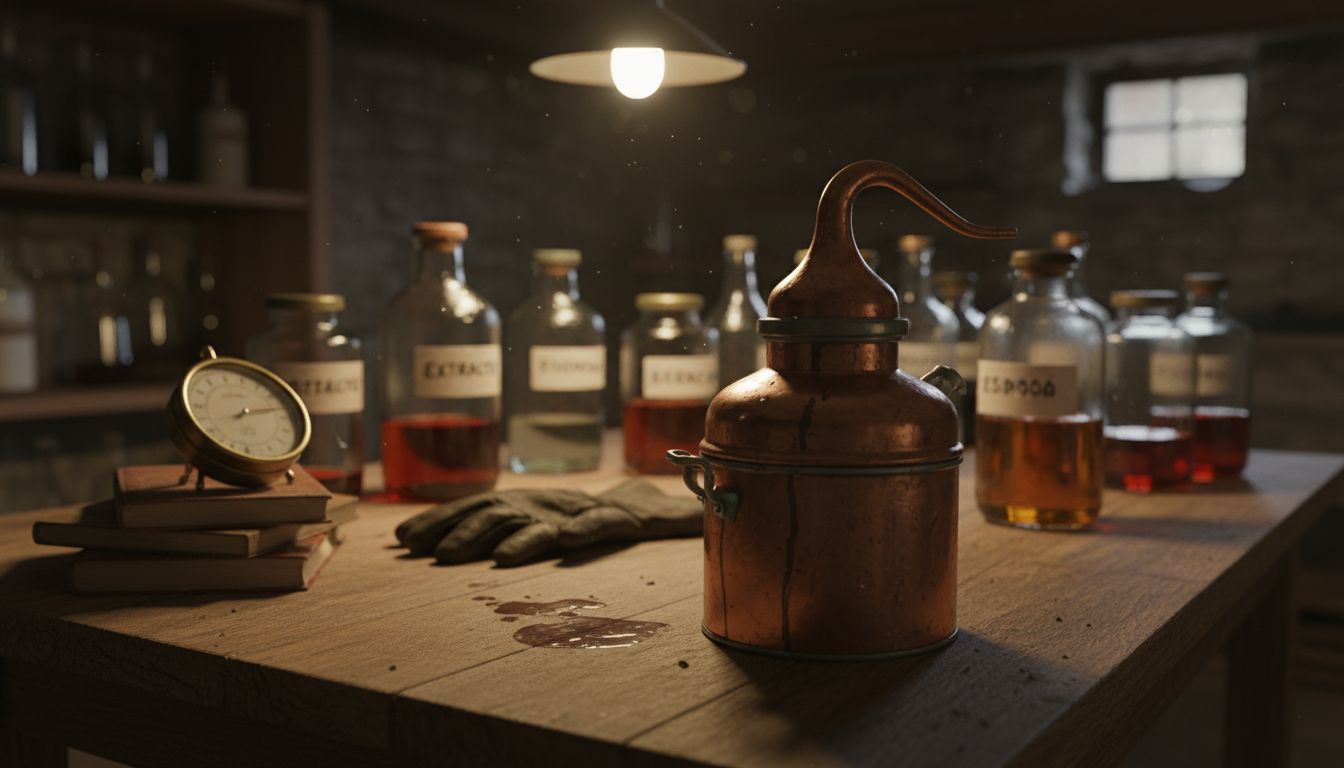
Essential equipment includes stainless steel or glass fermenters, a still with a minimum capacity of 20 liters, precision thermometers, a hydrometer for measuring alcohol, and glass containers for separating fractions. You also need an efficient cooling system, whether a coiled pipe immersed in cold water or a reflux condenser. The initial investment may seem considerable, but the quality of the equipment directly impacts the purity and flavor of the final product.
Basic equipment for artisanal distillation:
- 25 to 50-liter fermenter with airtight seal
- Copper pot still or column still depending on objective
- Digital thermometer with 0.5°C accuracy
- Calibrated hydrometer or alcoholmeter
- Cooling system with temperature control
- Glass containers for collecting fractions
| Still type | Advantages | Ideal application |
|---|---|---|
| Copper pot still | Complex flavor, removes sulfides, tradition | Gin, whisky, brandy |
| Fractional column | High purity, precise control, efficiency | Vodka, neutral spirit |
| Hybrid pot column | Versatility, reflux adjustment, economy | Multiple spirits, experimentation |
Professional tip: Invest in a quality thermometer and learn to read boiling temperatures. Pure ethanol boils at 78.4°C, but your fermented wash contains water and other compounds. Observing how the temperature changes during distillation tells you when the heads, hearts, and tails fractions appear, allowing you to make precise cuts without relying solely on smell.
Basic fermentation requires specific yeasts depending on the target spirit. For gin and vodka, neutral, high-alcohol tolerance yeasts produce clean bases. For bitters, you can ferment a base wine or use commercial neutral alcohol for direct maceration. Control the temperature between 18 and 25°C, keep containers sealed with an airlock to prevent contamination, and allow for complete fermentation before distilling. Incomplete fermentation produces undesirable flavors that no cut will completely eliminate.
Process Execution: Fermentation, Distillation, and Essential Cuts
Fermentation marks the true beginning of the artisanal process. Mix your base wash with selected yeast, seal the fermenter with an airlock, and maintain a stable temperature for 1 to 4 weeks depending on the type of beverage. For gin and vodka, fermentations of 7 to 10 days are usually sufficient. For bitters that require maceration of bitter roots and barks, the time extends up to 4 weeks. Monitor with a hydrometer: when the density stabilizes, fermentation is complete, and your alcoholic wash is ready.
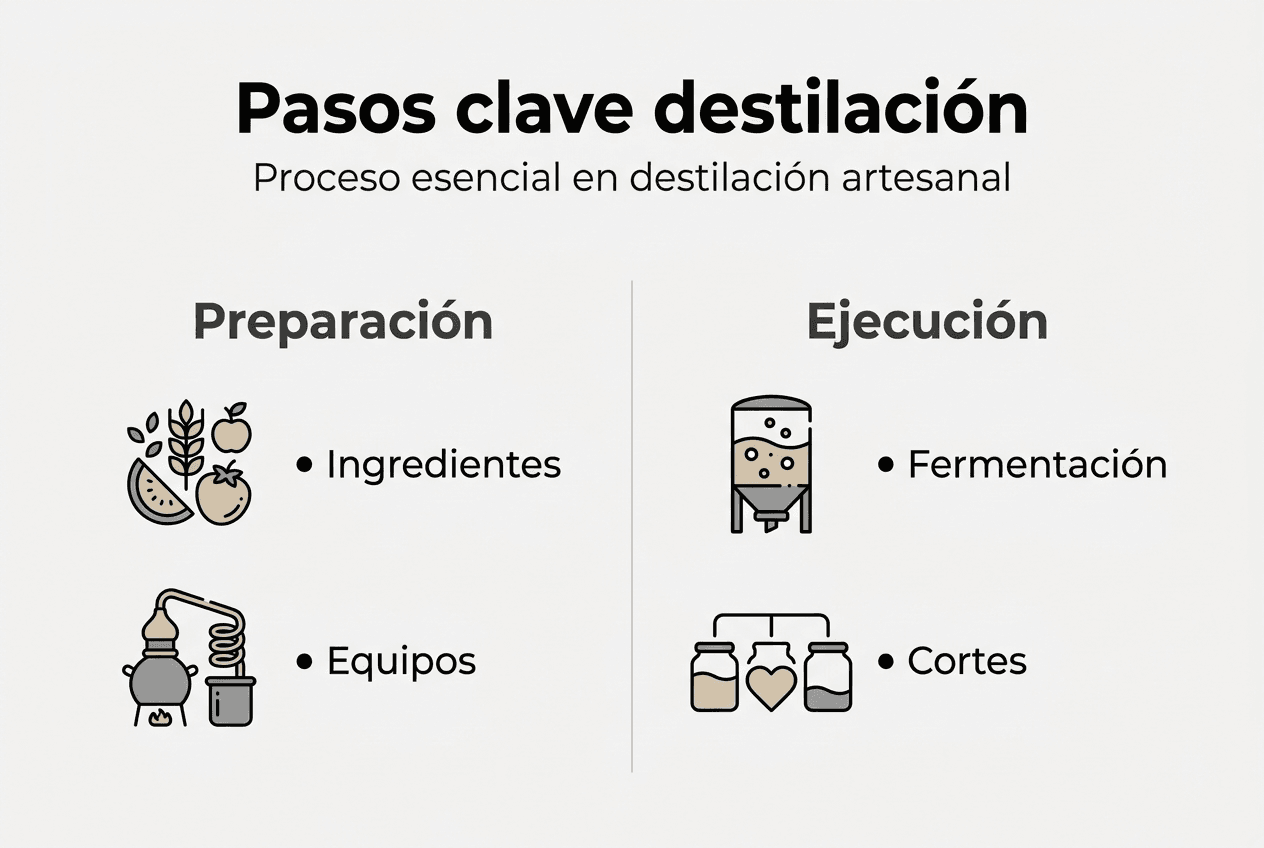
Distillation transforms that 6 to 12% ABV wash into a concentrated alcoholic spirit of 40 to 95% ABV through controlled heating. Gin uses neutral alcohol redistilled with botanicals, vodka involves multiple distillations for extreme purity, and bitters involve maceration and occasional distillation to refine bitter liqueurs. Heat the still gradually, observe when the first drops appear at approximately 78°C, and prepare to make the most important cuts of the entire process.
Numbered steps for basic distillation:
- Fill the still with fermented wash up to 70% of maximum capacity.
- Start gentle heating, gradually increasing temperature to 78°C.
- Collect the first drops in a separate container; these are the heads.
- When the aroma becomes clean and pleasant, switch to a container for the hearts.
- Upon detecting heavy or oily aromas, switch to the final container for the tails.
- Stop distillation when the temperature exceeds 96°C or the flow reduces drastically.
Precise cuts eliminate unwanted volatiles, improving the final aroma and flavor. The heads represent the first 3 to 5% of the distillate, containing methanol, acetone, and volatile esters that smell like solvent or glue. Discard this fraction completely. The hearts are the clean core, representing 60 to 70% of the total, with a pure alcohol aroma and subtle notes from the original wash. This is the fraction you will bottle. The tails are the last 20 to 30%, containing fusel oils, heavy compounds, and bitter flavors that cloud the distillate.
| Fraction | Percentage | Temperature | Characteristics | Use |
|---|---|---|---|---|
| Heads | 3 to 5% | 78 to 82°C | Acetone, solvents, methanol | Always discard |
| Hearts | 60 to 70% | 82 to 89°C | Clean ethanol, desired aromas | Final product |
| Tails | 20 to 30% | 89 to 96°C | Fusel oils, heavy flavors | Redistillation or discard |
For artisanal gin, the method varies by preference. You can macerate botanicals in neutral alcohol for 24 to 48 hours before distilling, or place them in a vapor basket inside the still for more subtle extraction. Juniper, coriander, angelica root, and citrus peel are the classic base. Experiment with local botanicals to create unique profiles. The essential bitter cocktails guide explains how bitters complement these flavors.
Artisanal vodka requires the opposite approach: eliminating flavor, not adding it. Distill your base wash two or three times, making strict cuts in each pass. Some distillers filter with activated carbon between distillations for greater purity. The goal is neutral alcohol of 95% ABV, which you then dilute with pure water to 40% for bottling. Artisanal vodka recipes demonstrate how purity allows other ingredients to shine in cocktails.
Professional tip: Save your tails in a separate container. While not suitable for direct consumption, you can add them to the next wash before distilling, recovering some of the lost alcohol. This traditional practice improves efficiency without compromising quality, as cuts in the new distillation will again remove undesirable compounds.
For artisanal bitters and amari, maceration dominates the process. Steep bitter roots like gentian, cinchona bark, aromatic herbs, and spices in 40 to 60% alcohol for weeks. Shake daily, taste regularly, and when the bitterness reaches the desired intensity, filter and optionally distill gently to refine. Some producers add sugar or honey to balance bitterness, creating complex amari that improve with time in the bottle.
Verification and Cultural Nuances in Artisanal Distillation
Evaluating your distillate requires a combination of objective and subjective criteria. Measure the alcohol content with a calibrated alcoholmeter; it should match your target of 40 to 50% ABV for most spirits. Observe clarity: gin and vodka should be crystal clear; any cloudiness indicates imprecise cuts or louching from excessive essential oils. Smell deeply: clean, balanced aromas, without solvent or acetone notes that indicate the presence of heads. Taste in small quantities: the flavor should be smooth, without excessive burning or unpleasant bitterness.
Common mistakes include late cuts that allow heads to contaminate hearts, distillation that is too fast producing poor fraction separation, and dilution with unpurified water introducing unwanted mineral flavors. In gin, louching occurs when essential oils from botanicals precipitate upon dilution, creating a milky appearance. This does not affect flavor but reduces visual appeal. To avoid this, distill at a lower temperature or reduce the amount of oily botanicals like star anise.
Frequent errors and solutions:
- Solvent taste: you cut heads too late, discard more of the initial fraction in the next distillation.
- Persistent cloudiness: fusel oils from tails, make earlier cuts or redistill.
- Weak aroma in gin: insufficient botanicals or short maceration, increase quantity or time.
- Excessive bitterness in bitter: prolonged maceration, reduce time or dilute with neutral alcohol.
Post-distillation resting allows flavors to integrate and rough edges to soften. Gin and vodka improve after 2 to 4 weeks in a glass bottle, allowing aromatic molecules to stabilize. Bitters and amari require months, even years, to reach optimal complexity. Store in a cool, dark place, avoiding temperature fluctuations that can affect the chemical stability of the distillate.
Artisanal distillation is an adapted European tradition, with an emphasis on small batches, terroir, and botanical balance for collectors who value authenticity over mass production. In Italy, families have distilled grappa for centuries using grape pomace. In England, the artisanal gin revolution has rescued forgotten local botanicals. In Eastern Europe, artisanal vodka keeps ancient rye and potato recipes alive. This cultural heritage enriches every bottle, turning the spirit into a vehicle of history and territory.
For collectors, unique batches represent opportunities to own unrepeatable expressions. Variations in botanical harvest, wild yeasts, and the microclimate of the production site create profiles that will never be exactly replicated. Document each batch with the date, ingredients, fermentation and distillation times, and tasting notes. This information increases historical value and allows you to track the evolution of your technique.
“Artisanal distillation is not just chemistry; it’s the art of capturing the liquid essence of plants, grains, and tradition, transforming them into sensory experiences that connect past and present in every sip.”
Professional tip: Create a distillation notebook where you record each batch with obsessive detail: exact cutting temperatures, botanical maceration time, ingredient origin, and sensory evaluations. After 10 or 20 batches, this data will reveal patterns that will elevate your technique from amateur to near-professional level, allowing you to replicate your best achievements and avoid past mistakes.
The identification of authentic artisanal spirits requires knowledge of these techniques. Serious producers document processes, reveal botanical suppliers, and explain the philosophy behind each decision. Look for transparency, numbered batches, and cultural narratives that connect the beverage to its territory and tradition. Genuine artisanal spirits tell stories that industrial production can never replicate.
Explore Our Artisanal Collection of Italian Spirits
Now that you understand the complexity and dedication behind each artisanal bottle, discover how Italian master distillers apply these ancient techniques with contemporary innovation. Our collection of artisanal gin features unique expressions where Mediterranean botanicals meet copper tradition, creating profiles ranging from balanced classics to audacious experimental ones inspired by mythology and pop culture.

For those seeking extreme purity, our selection of premium artisanal vodka demonstrates that neutrality does not mean an absence of character. Multiple distillations and Italian spring water produce a silky smoothness that transforms simple cocktails into memorable experiences. Each bottle represents limited batches where artisanal control guarantees exceptional consistency.
True enthusiasts can also explore our official Mezzanotte merchandise, where clothing and accessories celebrate artisanal distillation culture with designs that blend Italian aesthetics and contemporary cultural references. Wear your passion for unique spirits while building a collection that tells your own story.
Frequently Asked Questions About the Artisanal Distillation Process
Is it safe to distill alcohol at home for personal consumption?
Safety depends on technical knowledge and compliance with local regulations. Distilling produces flammable vapors that require adequate ventilation and no open flames. Correct cuts remove dangerous methanol from the heads. Consult your country's laws; many allow personal distillation without commercial sale, while others prohibit it completely.
What is the practical difference between a pot still and a distillation column?
A pot still produces distillates with more flavor and body because it allows aromatic compounds to pass through along with ethanol, ideal for gin and whiskey where character is desired. A fractional distillation column separates ethanol with higher purity through repeated reflux, perfect for neutral vodka. A pot still requires less equipment but offers less control over final purity.
How long does the entire process take from fermentation to finished product?
For gin or vodka, allow 10 to 14 days for fermentation, 4 to 6 hours for distillation, and 2 to 4 weeks for resting, totaling approximately 6 weeks. Bitters and amari require 4 to 12 weeks of maceration plus resting time, extending the process to 3 or 6 months. Patience is an essential virtue in quality craft distilling.
Are there legal restrictions on distilling alcohol at home?
Laws vary dramatically by country and region. In the United States, distilling alcohol without a federal permit is illegal even for personal consumption. In New Zealand and some European countries, small quantities for personal use are legal. Research local regulations before starting; fines for illegal distillation can be severe, and equipment may be confiscated.
What mistakes should I absolutely avoid as a beginner?
Never distill in a sealed container; pressure can cause an explosion. Do not use materials other than stainless steel, copper, or glass; other metals contaminate the distillate. Never consume heads; they contain toxic methanol. Avoid distilling too quickly to finish sooner; precise cuts require a slow and controlled flow. Finally, never sell homemade distillate without appropriate licenses.
How can I continuously improve my distillation technique?
Document each batch meticulously, comparing results to identify patterns. Join online communities of craft distillers to share experiences and learn from others' mistakes. Experiment with only one variable per batch to isolate the effects of specific changes. Read the guide to craft distillation to delve into advanced techniques. Mastery comes after dozens of batches and years of dedicated practice.
Recommendation
- Guide to Distilling Spirits 2026: Avoid 40% Common Mistakes – Mezzanotte | Distillery & Spirits
- What is craft distillation? 2026 guide – Mezzanotte | Distillery & Spirits
- Steps to buy quality spirits online 2026 – Mezzanotte | Distillery & Spirits
- 6 types of premium spirits you should know today – Mezzanotte | Distillery & Spirits