

Discover what botanical gin truly means: from legal definition to essential botanicals, production methods, and modern varieties to choose the perfect spirit.
What does botanical gin mean: complete guide 2026
Mar 18, 2026

Often, 'botanical gin' is confused with simple flavored gins, but the reality is far more fascinating. Botanical gin is a complex spirit where juniper dominates alongside other carefully selected botanicals. This guide will take you through the true meaning of botanical gin, the production methods that define its character, and the varieties that are captivating Italian enthusiasts. You'll discover how to recognize an authentic botanical gin and how to choose the perfect one for your palate.
Table of Contents
- Key Points to Remember
- What Exactly Does Botanical Gin Mean?
- Key Botanicals and Their Aromatic Influence
- Production Methods and Their Impact on Aromas
- Varieties of Botanical Gin: From Monobotanical to New Western Gin
- How to Choose and Taste the Ideal Botanical Gin for You
- Discover Unique Craft Botanical Gins on Mezzanotte Spirits
- Frequently Asked Questions About Botanical Gin
Key Points to Remember
| Point | Details |
|---|---|
| Legal Definition | Botanical gin is legally a spirit with predominant juniper and other plant botanicals |
| Botanical Varieties | Botanicals range from 7 to over 40 ingredients including herbs, spices, and citrus |
| Extraction Methods | Maceration and vapor infusion create distinct and characteristic aromatic profiles |
| Modern Types | Monobotanical and New Western Gins offer innovative approaches to aromatic profiles |
What Exactly Does Botanical Gin Mean?
The European definition of gin states that this spirit must contain juniper as an obligatory and predominant botanical. The term 'botanical' does not indicate a separate category, but emphasizes the very nature of gin as a spirit flavored with plant ingredients. Every gin is technically botanical because it uses botanicals to create its distinctive aromatic profile.
Juniper represents the soul of gin. Its berries impart those resinous and piney notes that immediately identify this spirit. Without the predominance of juniper, a product cannot legally be called gin. This rule protects the historical identity of the category and ensures consistency for consumers.
In addition to juniper, producers use a wide range of plant ingredients. Aromatic herbs like basil and thyme, spices such as cardamom and pink pepper, and fresh citrus zests contribute to the complexity. The minimum alcohol content must reach 37.5% vol to comply with European standards. This alcoholic base allows for the extraction and preservation of the essential oils of the botanicals.
There are various classifications within the gin category. London Dry Gin follows strict production rules with no post-distillation additions. Distilled Gin allows more flexibility with subsequent flavorings. Modern types of craft gin often experiment with local botanicals and innovative techniques, always keeping juniper as the aromatic North Star.
Key Botanicals and Their Aromatic Influence
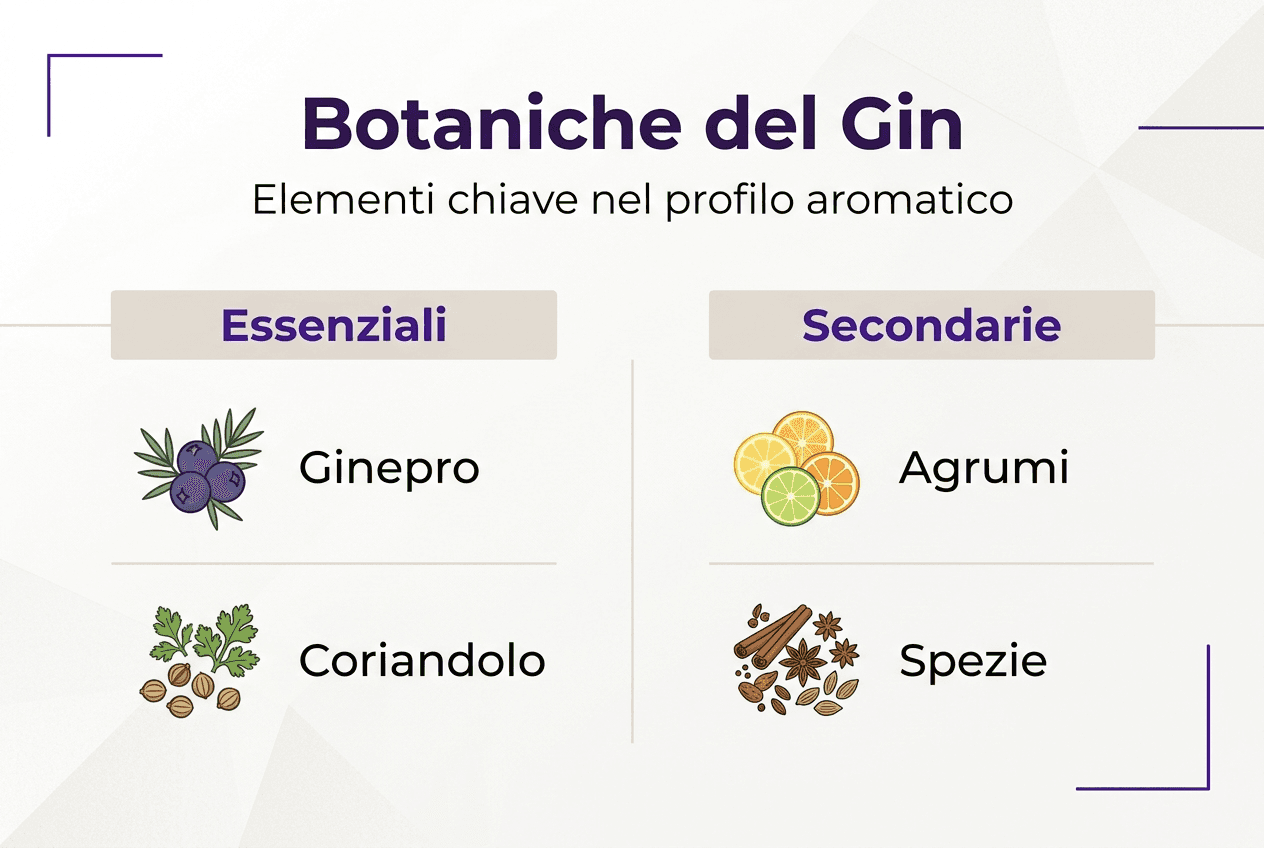
Juniper constitutes the mandatory aromatic foundation. Its mature berries release essential oils rich in pinene and myrcene, compounds that create those resinous and slightly bitter notes. The quality of juniper varies according to geographical origin. Tuscan berries offer different profiles compared to Balkan or Scandinavian ones.
Coriander seeds represent the second most common botanical. They add citrusy freshness with spicy nuances that balance the juniper's resin. Angelica root and orris (iris root) function as aromatic fixatives, binding volatile oils and prolonging the olfactory persistence. These basic botanicals are rarely absent from traditional recipes.
Citrus zests provide immediate vibrancy. Lemon, bitter orange, grapefruit, and bergamot introduce fresh and sunny notes. Many Italian distillers value local citrus fruits like Calabrian cedar or Sorrento lemon. These regional ingredients create distinctive territorial identities in contemporary craft gins.
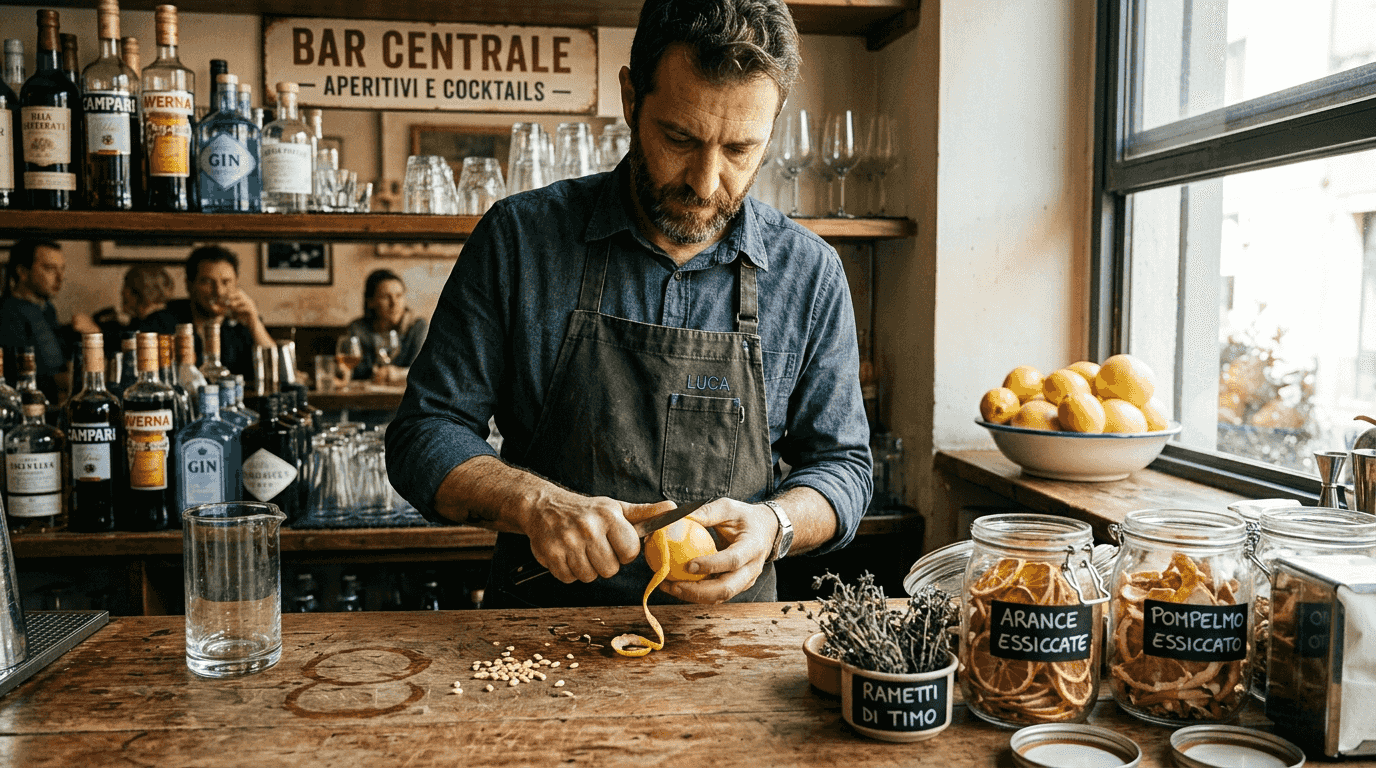
The number of botanicals varies considerably among producers. Some minimalist recipes use 7 essential botanicals for maximum aromatic clarity. Other craft distillers incorporate over 40 different ingredients, creating layered olfactory symphonies. Complexity does not automatically guarantee superior quality.
Pro Tip: Store botanicals in airtight containers away from light and heat. Balanced dosing is crucial; too many ingredients risk creating aromatic confusion instead of harmony. Start with simple recipes before experimenting with elaborate compositions.
The botanicals of gin are divided into functional categories. Top notes (citrus, fresh herbs) immediately hit the nose. Middle notes (spices, flowers) emerge during tasting. Base notes (roots, woods) linger in the finish. A well-balanced gin masterfully orchestrates these three dimensions.
| Botanical | Aromatic Function | Characteristic Notes |
|---|---|---|
| Juniper | Mandatory base | Resinous, piney, slightly bitter |
| Coriander | Citrus complement | Fresh, spicy, citric |
| Angelica | Fixative | Earthy, musky, persistent |
| Citrus | Vibrancy | Sunny, fresh, immediate |
| Cardamom | Complexity | Spicy, eucalyptus, warm |
Production Methods and Their Impact on Aromas
Two techniques dominate the aromatic extraction of botanicals: maceration and vapor infusion. The choice between these methods profoundly determines the final character of the spirit. Each approach offers specific advantages that distillers utilize according to the desired aromatic vision.
Maceration immerses botanicals directly in neutral alcohol for 24 to 48 hours. Essential oils completely dissolve in the alcohol base, creating robust and intense profiles. This method also extracts heavier and tannic compounds, imparting body and structure. Macerated gins often show a slightly amber color and a richer texture.
Vapor infusion places botanicals in a perforated basket above the still. The alcoholic vapor passes through the ingredients from below, collecting only the most volatile and delicate compounds. This technique produces fresher, cleaner, and lighter aromas. Vapor-infused gins maintain crystalline transparency and airy olfactory notes.
Some producers combine both techniques. They macerate robust botanicals like juniper and roots to extract structure, while vapor-infusing citrus and flowers to preserve freshness. This hybridization allows for granular control over the final aromatic profile. Craft gin production methods often include proprietary secrets passed down through generations.
Maceration process:
- Immerse selected botanicals in neutral alcohol 96% vol
- Let rest for 24 to 48 hours at controlled temperature
- Slowly distill in a discontinuous still
- Separate heads, hearts, and tails with precision
- Dilute the heart to commercial strength with demineralized water
Vapor infusion process:
- Place botanicals in the basket above the boiler
- Heat neutral alcohol until it evaporates
- Vapor passes through botanicals, extracting volatile oils
- Condense aromatic vapors in a refrigerated coil
- Collect only the purest heart fraction
Pro Tip: Maceration times drastically influence intensity. 24 hours produce more delicate profiles, 48 hours extract maximum potency. Experimenting with intermediate times allows finding the optimal point for each specific recipe.
Aromatic balance depends on the conscious choice of method. Gins intended for complex cocktails benefit from robust maceration that withstands dilution. Spirits for pure tasting shine with vapor infusion that enhances subtle nuances. The mastery lies in understanding which technique best enhances each botanical.
| Method | Duration | Aromatic Profile | Ideal for |
|---|---|---|---|
| Maceration | 24-48 hours | Robust, intense, structured | Classic cocktails, Negroni |
| Vapor Infusion | 3-6 hours | Delicate, fresh, light | Pure tasting, Gin & Tonic |
| Hybrid Method | Variable | Balanced, complex | Maximum versatility |
Varieties of Botanical Gin: From Monobotanical to New Western Gin
Monobotanical gins represent essentialism taken to the extreme. They use exclusively juniper with no other added botanicals. This category celebrates the purity and regional differences of the berries. Venetian juniper offers sweeter and more floral notes, Etnean juniper introduces volcanic mineral hints, while Sardinian juniper provides distinctive Mediterranean salinity.
These minimalist spirits allow appreciation of the intrinsic complexity of juniper itself. Each terroir imprints unique characteristics on the berries. Italian craft producers are rediscovering forgotten indigenous cultivars, creating monobotanical gins that tell precise territorial stories. This trend responds to the desire for authenticity and traceability among contemporary enthusiasts.
New Western Gin intentionally reduces the predominance of juniper. Other botanicals take center stage in the aromatic profile: Mediterranean citrus, alpine herbs, elderflowers. Juniper remains present to comply with the legal definition, but it no longer dominates the olfactory experience. This approach divides purists and innovators.
Italian brands are excelling in both categories. Ginepraio produces a Tuscan monobotanical that highlights local juniper. Malfy conquers international markets with citrus gins where lemon and pink grapefruit shine alongside juniper. These examples demonstrate how tradition and innovation can coexist, enriching the landscape.
The choice between traditional and innovative reflects personal preferences. Lovers of classic cocktails appreciate gins with juniper as the protagonist, maintaining identity in mixes. Those seeking new olfactory experiences gravitate towards New Western with unexpected botanical profiles. The varieties of botanical gin available today cater to every palate.
Characteristics of monobotanical gins:
- Only juniper used as a botanical
- Emphasis on terroir and geographical origin
- Clean and direct aromatic profile
- Ideal for understanding regional differences
- Minimalist and purist approach
Characteristics of New Western Gin:
- Juniper present but not dominant
- Focus on innovative and local botanicals
- Surprising and contemporary aromatic profiles
- Experimentation with non-traditional ingredients
- Creative and boundary-pushing approach
Pro Tip: Experiment with both categories to discover your preferred profile. Start with a monobotanical to calibrate your palate to pure juniper, then explore New Western to appreciate the creative possibilities. This progression educates the taste and expands the sensory horizon.
| Type | Juniper | Other Botanicals | Style | Italian Example |
|---|---|---|---|---|
| Monobotanical | 100% protagonist | Absent | Purist, territorial | Ginepraio Toscano |
| London Dry | Dominant | Traditional | Classic, balanced | Gin del Professore |
| New Western | Present | Protagonists | Innovative, creative | Malfy Con Limone |
How to Choose and Taste the Ideal Botanical Gin for You
Choosing a botanical gin starts with understanding your aromatic preferences. Do you prefer resinous and traditional profiles, or are you looking for innovative citrusy freshness? Geographical origin influences character: Alpine gins incorporate mountain herbs, while coastal ones highlight salinity and Mediterranean citrus. Look for producers who value local botanicals and authentic artisanal methods.
Storytelling and design are an integral part of the experience. Distilleries that tell the story of their botanicals, their origin, and their production philosophy create an emotional connection. Thoughtful packaging is not superficiality but respect for the consumer who invests in premium products. Labels that illustrate the botanicals used help to understand the profile before purchase.
Verify the declared production methods. Macerated gins offer intensity, while vapor-infused ones provide delicacy. Some producers specify post-distillation resting times, a period that allows the aromas to integrate harmoniously. International awards and recognitions indicate quality validated by experts, but always trust your personal palate.
5-step tasting guide:
- Pour 4 cl of gin into a balloon glass at room temperature
- Observe the color and clarity against natural light
- Bring to your nose and inhale gently to capture volatile notes
- Take a small sip, letting it spread over your entire tongue
- Add quality tonic water or ice to assess aromatic evolution
The ideal glass is the balloon (copa) with a long stem. The wide shape allows aromas to expand, while the stem prevents hand warmth from altering the temperature. Serve gin between 8 and 12 degrees Celsius to enhance the botanicals without anesthetizing the palate. Quality ice in large cubes dilutes slowly, preserving aromatic integrity.
Food pairings amplify the experience. Citrus gins pair well with raw fish and oysters. Herbaceous versions accompany fresh cheeses and grilled vegetables. Spicy spirits complement dark chocolate desserts. Craft gin tasting tips always include personal experimentation.
Pro Tip: Write down your impressions after each tasting. Record perceived botanicals, aromatic intensity, and final persistence. Re-taste the same gin at different times and with varied pairings to refine your understanding. This sensory diary accelerates the development of your personal taste.
Discover Unique Craft Botanical Gins on Mezzanotte Spirits
If this guide has sparked your curiosity about the world of botanical gin, Mezzanotte offers a curated selection of Italian craft spirits. Each bottle in the catalog tells a story through botanicals selected with maniacal care and packaging that celebrates pop culture, mythology, and contemporary design. The experience goes beyond a simple purchase.

Enthusiasts who value uniqueness and storytelling will find craft gin with distinctive aromatic profiles and strong identities. The catalog also includes craft vodka for those who wish to explore other premium spirits. Discover why pop culture and spirits unite in a sensory adventure that transforms every tasting into a memorable journey.
Frequently Asked Questions about Botanical Gin
What is the difference between botanical gin and regular gin?
Every gin is technically botanical because it uses plant botanicals to flavor neutral alcohol. The term ‘botanical gin’ emphasizes this fundamental characteristic but does not indicate a separate category. The real difference lies in the number and type of botanicals used: some gins use minimalist recipes with 7 ingredients, while others exceed 40 botanicals, creating layered complexity.
What are the most common botanicals in gin?
Juniper is legally mandatory and must be predominant. This is followed by coriander for citrus freshness, angelica root and orris as aromatic fixatives, and citrus peels (lemon, orange, grapefruit) for vibrancy. Many producers add cardamom, pink peppercorns, basil, thyme, and elderflower. The selection depends on the aromatic profile the distiller wants to create.
Why is juniper so important in gin?
Juniper defines gin's historical and legal identity. European regulations require it to be the predominant botanical; otherwise, the distillate cannot be called gin. Its berries impart characteristic resinous and piney notes that distinguish this spirit from flavored vodkas or other distillates. Without dominant juniper, we lose the very essence of the category.
How do production methods affect the taste of gin?
Maceration involves steeping botanicals in alcohol for 24 to 48 hours, extracting robust and intense flavors with greater body. Vapor infusion passes alcoholic vapor through botanicals placed in a basket, capturing only light volatile compounds for delicate and fresh profiles. Some distillers combine both techniques to balance structure and finesse, precisely controlling every aromatic nuance.
What distinguishes New Western Gin from traditional gin?
New Western Gin reduces the predominance of juniper, allowing other botanicals to shine in the foreground. Citrus, local herbs, and innovative ingredients become protagonists, while juniper remains in the background, respecting legal requirements. Traditional gin maintains juniper as the undisputed star, with other botanicals playing supporting roles. This distinction reflects opposing production philosophies: purism versus creative experimentation.
Recommendation
- The Complete Guide to Botanica Gin: Learn All About Botanica Gin 2026 – Mezzanotte | Distilleria & Spirits
- Gin Types: A Complete Guide to Varieties 2026 – Mezzanotte | Distilleria & Spirits
- What Differentiates Italian Gin: A Complete Guide 2026 – Mezzanotte | Distilleria & Spirits
- Botanicals in Gin Shape Aromatic Diversity 2026 – Mezzanotte | Distilleria & Spirits